Have you ever relied on your vehicle’s built-in navigation system only to discover that a road has changed, a new highway has opened, or your route information is outdated? As modern drivers increasingly expect real-time accuracy and seamless connectivity, traditional GPS systems often struggle to keep up with constantly changing road conditions.
To address these challenges, Toyota introduced Dynamic Navigation, an advanced navigation solution designed to provide drivers with more up-to-date routing information and an improved in-vehicle navigation experience. Unlike conventional navigation systems that depend on static map data, Toyota Dynamic Navigation leverages cloud-enhanced updates and intelligent route guidance to help drivers reach their destinations more efficiently.
Whether you’re commuting through busy urban areas, traveling on long road trips, or exploring unfamiliar destinations, having access to accurate navigation can save time, reduce stress, and improve overall driving confidence. However, many Toyota owners are still unsure about how Dynamic Navigation actually works, what features it includes, and whether it offers advantages over smartphone-based navigation apps such as Google Maps or Apple Maps.
In this guide, we’ll break down everything you need to know about Toyota Dynamic Navigation, including how the system operates, its key features, supported vehicle models, and the benefits it brings to everyday driving.
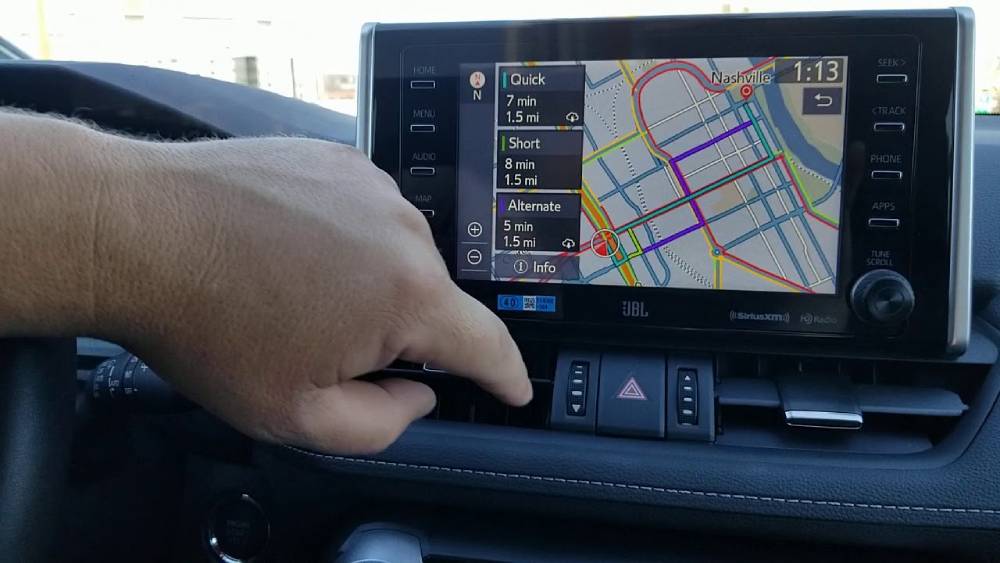
Toyota Dynamic Navigation is an advanced navigation system integrated into select Toyota vehicles that combines traditional GPS functionality with cloud-based map updates and enhanced routing capabilities. It was developed to overcome one of the biggest limitations of conventional in-car navigation systems: outdated map data.
In the past, vehicle navigation systems relied on static maps that required manual updates. As roads changed, new neighborhoods were developed, and traffic patterns evolved, many drivers found their built-in navigation systems becoming less accurate over time. Toyota Dynamic Navigation addresses this issue by providing access to updated map information through Toyota’s connected services platform.
The system is designed to help drivers receive more accurate route guidance while maintaining the convenience of a factory-installed navigation solution. Instead of depending entirely on a smartphone, drivers can access navigation features directly through the vehicle’s infotainment display.
Many people mistakenly assume that Dynamic Navigation is simply another GPS system. In reality, GPS is only one component of the technology. GPS satellites determine the vehicle’s location, while Dynamic Navigation uses additional data sources to improve route calculations and map accuracy.
Toyota introduced Dynamic Navigation to create a more modern driving experience that bridges the gap between traditional built-in navigation and constantly evolving digital mapping technologies. The result is a navigation solution that feels more responsive, reliable, and relevant to today’s connected drivers.
Toyota Dynamic Navigation begins by using Global Positioning System (GPS) satellites to determine the vehicle’s exact location. This process is similar to how most navigation systems operate and serves as the foundation for route guidance.
Once the vehicle’s location is established, the system accesses Toyota’s navigation database to retrieve map information and calculate the best available route. Unlike older navigation systems that rely solely on locally stored maps, Dynamic Navigation can utilize updated mapping information to improve route accuracy.
The system continuously analyzes available road data and calculates directions based on the driver’s destination. If road layouts have changed, new roads have been added, or certain routes have become less efficient, Dynamic Navigation can incorporate updated information into its recommendations.
When a destination is entered, the system generates turn-by-turn directions that are displayed on the infotainment screen and supported by voice guidance. This allows drivers to keep their focus on the road while receiving clear navigation instructions.
Consider a driver traveling to a city they have never visited before. During the trip, a major roadway is temporarily affected by construction. A traditional navigation system using outdated map data might continue directing the driver toward that route. Dynamic Navigation, however, is designed to utilize updated mapping information that can help provide more accurate guidance and reduce unnecessary detours.
By combining GPS positioning, updated map data, and intelligent route calculation, Toyota Dynamic Navigation delivers a more reliable navigation experience than many traditional in-vehicle GPS systems.
One of the most valuable features of Toyota Dynamic Navigation is its ability to provide regularly updated map information. Roads, intersections, and points of interest are constantly changing, and keeping navigation data current helps drivers avoid confusion when traveling in unfamiliar areas.
Another major advantage is enhanced route guidance. The system is designed to calculate efficient routes based on available map data and provide clear instructions throughout the journey. This can help reduce missed turns and improve overall navigation accuracy.
Toyota Dynamic Navigation also includes an extensive database of points of interest. Drivers can easily search for nearby gas stations, restaurants, hotels, shopping centers, hospitals, and other destinations directly from the vehicle’s infotainment system. This makes it easier to locate essential services while on the road.
Seamless integration with the vehicle’s multimedia system further improves the user experience. Navigation information is displayed on the vehicle’s touchscreen, and many models allow drivers to access navigation controls through steering wheel buttons or voice commands. This integrated design creates a safer and more convenient driving environment.
Another important benefit is navigation functionality in areas where cellular connectivity may be limited. While connected services enhance the overall experience, the navigation system can continue providing route guidance using onboard mapping resources. This feature can be especially useful during long-distance travel through rural regions where mobile network coverage may be inconsistent.
Together, these features make Toyota Dynamic Navigation a practical solution for drivers who prefer an integrated navigation experience without relying exclusively on smartphone applications.
To fully understand the value of Toyota Dynamic Navigation, it is important to compare it with traditional in-vehicle GPS systems. While both technologies are designed to help drivers reach their destinations, the way they handle map data and route guidance differs significantly.
Traditional GPS navigation systems rely primarily on map information stored directly within the vehicle. Although these systems can provide accurate directions when the maps are current, they often become less reliable as roads change over time. Updating map databases may require dealership visits, software downloads, or manual installation processes, which many vehicle owners delay or overlook.
Toyota Dynamic Navigation was created to address these limitations. By incorporating regularly updated mapping information, the system can provide more current route guidance and reflect changes in road infrastructure more effectively. This helps reduce situations where drivers encounter newly constructed roads, modified intersections, or outdated points of interest that are not reflected in older navigation databases.
Another advantage is route calculation efficiency. Traditional GPS systems often rely on static map information and predefined routing algorithms. Dynamic Navigation enhances this process by utilizing updated data sources to generate more accurate directions and improve the overall driving experience.
Points of interest also tend to remain more current within Dynamic Navigation. Businesses frequently open, relocate, or close, making an updated POI database particularly valuable for drivers traveling in unfamiliar areas.
For drivers who prefer a built-in navigation solution, Toyota Dynamic Navigation represents a significant improvement over conventional GPS technology by delivering greater accuracy, convenience, and long-term usability.
Many Toyota owners wonder whether Dynamic Navigation offers enough value when popular smartphone navigation apps such as Google Maps and Apple Maps are readily available. The answer largely depends on individual driving habits and preferences.
Google Maps is widely regarded as one of the most powerful navigation platforms available today. It offers extensive traffic information, frequent updates, real-time incident reporting, and a massive database of businesses and destinations. For drivers who regularly navigate congested urban environments, Google Maps often provides exceptionally detailed traffic insights and route alternatives.
Apple Maps has also evolved into a highly capable navigation solution, particularly for iPhone users. Its clean interface, intuitive design, and integration with the Apple ecosystem make it a popular choice for many drivers. Features such as Siri integration and seamless synchronization across Apple devices contribute to a convenient user experience.
Toyota Dynamic Navigation takes a different approach. Rather than relying on a smartphone, it is fully integrated into the vehicle itself. Navigation instructions appear directly on the infotainment display, and drivers can interact with the system through built-in controls and voice commands. This integration creates a cleaner and more seamless driving experience.
Another advantage of Dynamic Navigation is reduced dependence on mobile devices. Drivers do not need to worry about smartphone battery life, charging cables, overheating devices, or maintaining a stable connection during long trips.
For road trips, rural travel, and situations where mobile connectivity may be inconsistent, many drivers appreciate having a dedicated navigation system available directly within the vehicle. On the other hand, drivers who prioritize real-time traffic monitoring and frequently use smartphone-based ecosystems may find Google Maps or Apple Maps better suited to their needs.
Ultimately, each option offers distinct advantages, and many Toyota owners choose to use both Dynamic Navigation and smartphone navigation apps depending on the driving situation.
Toyota Dynamic Navigation is available on a variety of Toyota vehicles, although availability depends on model year, trim level, and multimedia package configuration. Not every Toyota vehicle includes the feature, so drivers should verify compatibility before assuming their vehicle is equipped with Dynamic Navigation.
Several popular Toyota models have offered Dynamic Navigation in certain trims and model years. These include the Toyota Camry, Toyota Corolla, Toyota RAV4, Toyota Highlander, Toyota Tacoma, Toyota Tundra, and Toyota Sequoia. Premium trims and vehicles equipped with larger multimedia displays are generally more likely to include advanced navigation features.
The availability of Dynamic Navigation has evolved as Toyota’s multimedia systems have advanced. Newer vehicles may feature updated connected services platforms, while older models may use previous-generation infotainment systems with different navigation capabilities.
Drivers who are unsure whether their vehicle supports Dynamic Navigation can check the multimedia settings menu within the infotainment system. Vehicle documentation, owner’s manuals, and official Toyota specifications can also provide confirmation regarding available navigation features.
It is important to note that certain navigation-related services may be tied to trial periods or connected service subscriptions depending on the vehicle’s model year and package configuration. Understanding the specific features included with a particular vehicle can help owners maximize the benefits of their navigation system.
For prospective buyers, checking navigation capabilities before purchasing a vehicle can be especially useful, particularly if built-in navigation is an important factor in the decision-making process.
Like any navigation technology, Toyota Dynamic Navigation comes with both advantages and limitations. Understanding these strengths and weaknesses can help drivers determine whether the system meets their specific needs.
One of the biggest advantages is improved map accuracy. Because the system is designed to utilize updated mapping information, drivers can benefit from more current road data compared to many traditional navigation systems. This can be especially valuable in rapidly developing areas where new roads and infrastructure changes occur frequently.
Another major benefit is seamless integration with the vehicle. Unlike smartphone-based navigation, Dynamic Navigation is built directly into the infotainment system. Drivers can access directions, search for destinations, and receive voice guidance without needing to mount a phone or manage multiple devices.
The system also provides a more organized driving experience. Navigation instructions are displayed clearly on the vehicle’s screen, while voice prompts help drivers stay focused on the road. For many users, this built-in convenience enhances overall comfort during daily commutes and long-distance travel.
Dynamic Navigation can also be particularly useful in areas with inconsistent cellular coverage. Because navigation functionality is not entirely dependent on a mobile phone, drivers can continue receiving route guidance even when signal strength becomes limited.
However, there are some potential drawbacks to consider. Availability varies depending on vehicle model, trim level, and model year. Not all Toyota vehicles include Dynamic Navigation, and some drivers may need to select higher trim packages to gain access to the feature.
In addition, some connected navigation features may be associated with subscription services after an initial trial period expires. While the exact terms vary by vehicle and region, this can influence long-term ownership costs.
Finally, smartphone navigation apps continue to evolve rapidly. Platforms such as Google Maps and Waze often provide highly detailed traffic information and community-driven updates that some drivers may find more comprehensive than a built-in navigation system.
Despite these limitations, many Toyota owners appreciate the convenience, reliability, and integrated design that Dynamic Navigation offers.
For many drivers, Toyota Dynamic Navigation delivers a practical balance between modern connectivity and the convenience of a factory-installed navigation system. Whether it is worth using depends largely on driving habits, travel frequency, and personal preferences.
Drivers who frequently travel long distances often find significant value in the system. Having navigation integrated directly into the vehicle eliminates the need to constantly rely on smartphones, charging cables, and mobile data connections. This can create a more streamlined and distraction-free driving experience.
The system can also be highly beneficial for drivers who regularly travel through unfamiliar regions. Updated maps, accurate points of interest, and clear route guidance can reduce uncertainty and make navigation more efficient.
Drivers who spend considerable time in rural areas may also appreciate the system’s ability to continue providing navigation support even when cellular coverage becomes less reliable. In these situations, a built-in navigation solution can offer additional peace of mind.
However, some users may find less value in Dynamic Navigation if they already depend heavily on Apple CarPlay, Android Auto, Google Maps, or Waze. These applications provide powerful navigation capabilities and are frequently updated at no additional cost beyond smartphone ownership and data usage.
For many Toyota owners, the ideal approach is not choosing one navigation solution exclusively. Instead, Dynamic Navigation serves as a dependable built-in system that complements smartphone navigation when needed. This flexibility allows drivers to take advantage of the strengths of both platforms.
Overall, Toyota Dynamic Navigation is a useful feature that enhances the driving experience by delivering updated routing information, integrated controls, and reliable navigation support. While it may not completely replace smartphone apps for every driver, it remains a valuable technology that many Toyota owners find worthwhile.
Frequently Asked Questions
The availability of connected navigation features can vary depending on the vehicle model, trim level, and region. Some Toyota vehicles include a complimentary trial period, after which certain services may require a subscription. Owners should consult their vehicle documentation or Toyota service information for specific details.
Yes. The system uses onboard navigation resources and GPS positioning to provide route guidance. While connected features may enhance the experience, basic navigation functionality can continue even when internet connectivity is limited.
How often is map information updated?
Update frequency depends on Toyota’s navigation service infrastructure and vehicle configuration. Dynamic Navigation is designed to provide more current mapping information than traditional navigation systems that rely solely on static map databases.
Neither system is universally better. Google Maps excels in real-time traffic intelligence and extensive destination information, while Toyota Dynamic Navigation offers seamless vehicle integration and reduced dependence on a smartphone. The best choice depends on the driver’s priorities.
Availability varies by model year and trim level. Popular Toyota models that have offered Dynamic Navigation include the Camry, Corolla, RAV4, Highlander, Tacoma, Tundra, and Sequoia, among others.
What happens when a free trial period expires?
The outcome depends on the vehicle and the specific connected services package. Some advanced features may require an active subscription, while certain navigation functions may continue operating through onboard systems. Owners should review Toyota’s service terms applicable to their vehicle.
Conclusion
Toyota Dynamic Navigation represents Toyota’s effort to modernize the traditional in-vehicle navigation experience by combining GPS technology with enhanced map updates and intelligent routing capabilities. As road networks continue to evolve and drivers increasingly expect accurate, up-to-date navigation, systems like Dynamic Navigation help bridge the gap between conventional built-in GPS and modern connected technologies.
One of the system’s greatest strengths is its seamless integration with the vehicle. Drivers can access navigation features directly through the infotainment display, receive voice-guided directions, and search for destinations without depending entirely on a smartphone. The ability to benefit from updated mapping information and maintain navigation functionality during long trips further enhances its practicality.
While smartphone applications such as Google Maps and Apple Maps remain strong alternatives, Toyota Dynamic Navigation offers unique advantages for drivers who value convenience, reliability, and an integrated driving experience. It can be especially beneficial for frequent travelers, road trip enthusiasts, and drivers who regularly explore unfamiliar destinations.
Ultimately, whether Toyota Dynamic Navigation becomes your primary navigation tool or serves as a reliable backup to smartphone apps, it provides meaningful benefits that can improve everyday driving. By understanding how Toyota Dynamic Navigation works and what features it offers, Toyota owners can make more informed decisions and get the most value from their vehicle’s technology.
If you’re considering a Toyota vehicle equipped with Dynamic Navigation, evaluating your driving habits and navigation preferences will help determine whether this feature is the right fit for your needs.