The Hyundai Palisade has several documented problems across different model years. Owners report issues with the windshield, wiper system, drivetrain, suspension, electrical components, engine, and safety equipment. However, each model year shows a different pattern of problems. A complaint on one Palisade does not mean every vehicle has the same defect.
Early Palisade models received more attention for windshield cracking and wiper failures. Later models show a different mix of mechanical and safety concerns. Hyundai also issued recalls for seat belts, engine components, electrical systems, and restraint equipment. These recalls identify verified safety concerns rather than individual owner experiences. Owner complaints and reliability surveys provide useful context, but they measure different types of problems.
Hyundai Palisade reliability also varies by model year. Some years have stronger ownership records, while others show more reported faults or recall activity. Buyers should therefore evaluate each model year separately. They should also check the vehicle identification number before making a purchase.
This guide explains the most common Hyundai Palisade problems and their typical symptoms. It also identifies affected model years and important safety recalls. Finally, it examines overall reliability and explains what buyers should inspect before purchasing a used Hyundai Palisade.
What Are the Most Common Hyundai Palisade Problems?
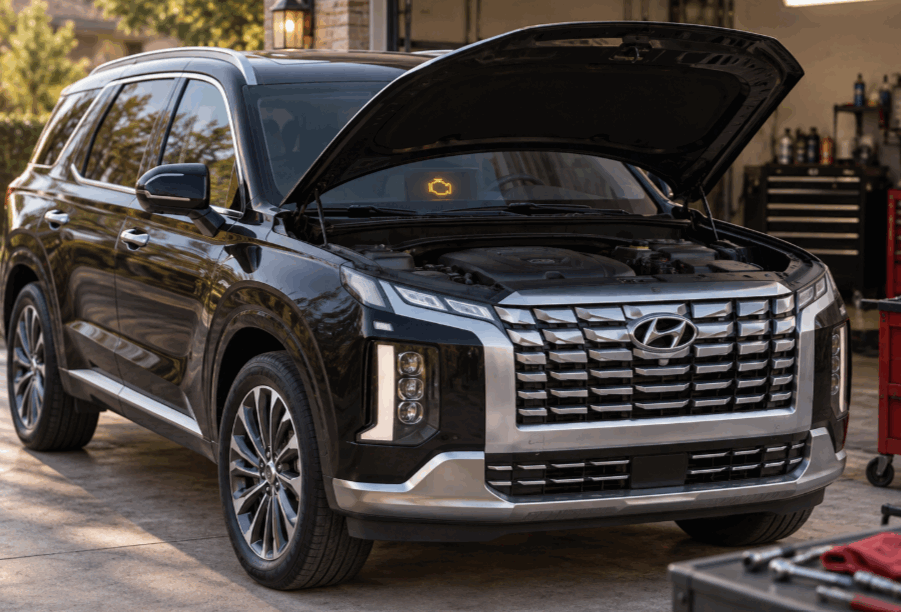
There are seven main Hyundai Palisade problem areas: the windshield, wipers, engine, drivetrain, suspension, electrical system, and safety equipment. The frequency of these problems changes by model year. Early Palisade models attract more windshield and wiper complaints. Later models show a different mix of mechanical, electrical, and safety concerns.
The 2020 Palisade stands out in owner complaint data. CarComplaints currently ranks it as the worst Palisade model year in its database. The site also identifies windshield cracking as the most reported Palisade problem. This pattern does not prove that every 2020 Palisade has defective glass. Complaint databases record individual experiences rather than the failure rate of all vehicles sold.
Windshield wiper failure has stronger evidence because Hyundai issued an official safety recall. NHTSA Recall 23V180 covers 167,085 Palisades from the 2021 through 2023 model years. Snow or ice can obstruct the driver side wiper arm. This condition can activate the motor circuit breaker and stop the wipers. Reduced visibility then increases crash risk. Hyundai addressed the problem by replacing the driver side wiper arm.
Other problem areas require the same distinction between complaints and verified defects. Owners have reported drivetrain, suspension, engine, and electrical faults across several model years. Hyundai has also issued safety recalls for specific components on certain vehicles. A recall carries more evidentiary weight than an isolated owner complaint. It confirms that Hyundai and NHTSA identified a defined safety issue within a specific vehicle population.
Model year therefore matters when evaluating Hyundai Palisade problems. A 2020 vehicle does not share the same problem profile as a 2024 or 2026 model. Buyers should connect each problem to its affected year, symptoms, severity, and recall status. This approach gives a more accurate reliability picture than counting complaints alone.
Why Do Some Hyundai Palisade Windshields Crack?
Some early Hyundai Palisade owners report windshield cracks after small impacts or without an obvious impact point. Reports appear most often for the 2020 and 2021 model years in CarComplaints data. However, public complaint data does not establish one confirmed mechanical cause for every reported crack.
The 2020 Palisade has the strongest complaint pattern. CarComplaints records 20 reports under its “windshield cracks easily” category. The reported problems occurred at an average of about 14,900 miles. The site lists a typical reported repair cost of about $1,690. Several owners describe small chips that quickly developed into larger cracks. Others report cracks that appeared with little or no noticeable impact.
The 2021 model also has documented windshield complaints. CarComplaints records reports of cracks without a visible impact. Its data places those reports at an average of about 8,500 miles. The site lists a typical reported cost of about $1,600 for that complaint category. These figures represent submitted owner reports. They do not represent an average repair price for every Palisade owner.
A cracked windshield needs prompt attention when the damage spreads into the driver’s viewing area. Large cracks can reduce visibility and weaken the glass. Replacement may also require additional calibration on vehicles with windshield mounted driver assistance equipment. The repair process should therefore include the glass and any affected camera or sensor functions.
Windshield cracking should not be confused with the Palisade wiper recall. The complaint pattern concerns damaged windshield glass. Recall 23V180 concerns a wiper system that can stop working under specific snow or ice conditions. Keeping these issues separate prevents owner complaints from being presented as an official glass defect recall.
Why Can Hyundai Palisade Windshield Wipers Stop Working?
Hyundai Palisade windshield wipers can stop working when snow or ice blocks the driver side wiper arm. This problem affects certain 2021 through 2023 Palisade vehicles. Hyundai addressed the condition through NHTSA Recall 23V180. The recall covers 167,085 vehicles in the United States.
Snow and ice create the problem by restricting movement of the driver side wiper arm. This resistance can activate the circuit breaker inside the wiper motor. The motor then stops operating until the circuit breaker resets. The wipers may also resume operation after the driver removes the obstruction.
A failed wiper system creates a direct safety risk during rain, snow, or other bad weather. The driver can lose forward visibility when the wipers stop moving. Hyundai identified reduced visibility as a condition that increases crash risk. The company did not identify a warning that appears before the failure.
Hyundai investigated this issue before expanding the recall population. NHTSA opened a recall query in December 2022 to examine the original recall scope. Hyundai reviewed additional field data during the investigation. The company had confirmed 20 unique incidents by March 9, 2023. Hyundai reported no confirmed crashes or injuries from those incidents.
Hyundai repairs the problem by replacing the driver side wiper arm. The replacement changes the system so the wiper can better handle the documented obstruction condition. Hyundai dealers perform the recall repair without charging the vehicle owner.
Owners should check the recall status by VIN rather than relying only on the model year. Recall eligibility depends on the specific vehicle and production information. A Palisade owner should also seek service if the wipers move intermittently or stop during bad weather.
What Engine Problems Have Been Reported on the Hyundai Palisade?
Hyundai Palisade owners have reported oil consumption, oil leaks, engine noise, cooling problems, and other engine related faults. However, available evidence does not show one common engine defect across every Palisade model year. Owner survey reports and official recalls also describe different types of evidence.
Consumer Reports records engine related owner complaints for the 2021 Palisade. One surveyed owner reported unusually high oil consumption over about 5,000 miles. The reliability data also tracks engine cooling, minor engine, and engine electrical problems. These categories include issues such as overheating, oil leaks, engine knock, battery faults, and ignition problems.
Owners should treat excessive oil consumption as a symptom that requires diagnosis. An engine can consume oil because of several different mechanical conditions. Low oil levels can also reduce lubrication inside the engine. Continued operation with insufficient oil may increase internal wear. A single owner report, however, does not prove that all Palisade engines share the same fault.
Cooling problems require similar attention. A cooling system controls engine temperature through components such as the radiator, water pump, thermostat, and cooling fan. Failure in one of these components can raise operating temperature. Drivers should investigate repeated overheating, coolant loss, or abnormal temperature readings before further engine damage occurs.
The strongest verified Palisade engine defect involves certain 2024 vehicles. Hyundai launched Recall 255 after investigating fractured engine valve springs. Hyundai identified 18 unique United States incidents between October 30, 2023 and January 25, 2024. The company reported no crashes, injuries, or fatalities from the condition during that period.
Why Were Some 2024 Hyundai Palisades Recalled for Engine Valve Springs?
Hyundai recalled 4,245 model year 2024 Palisades because an engine valve spring could fracture while driving. A damaged manufacturing die created surface irregularities on certain valve springs. Those irregularities could weaken the spring and cause it to break during engine operation.
A broken valve spring can produce more serious consequences than routine engine noise. The failure can cause the engine to lose drive power. In some cases, internal damage can also create a hole in the engine block. NHTSA states that loss of drive power raises crash risk. A damaged engine block can also increase fire risk.
Hyundai traced the affected vehicles to a specific valve spring production issue. This detail matters because the recall does not apply to every 2024 Palisade. Hyundai limited the campaign to vehicles that contained parts from the suspect production population.
Hyundai provides an engine subassembly replacement as the recall remedy. Dealers complete the repair without charging owners. A 2024 Palisade buyer should therefore check the VIN for Recall 255. The buyer should also confirm that Hyundai completed the repair before purchasing an affected vehicle.
What Transmission and Drivetrain Problems Have Hyundai Palisade Owners Reported?
Hyundai Palisade owners have reported transmission slipping, rough shifting, differential faults, CV joint problems, and other drivetrain issues. These reports appear across several model years. However, the available owner survey data does not establish one transmission defect that affects every Hyundai Palisade.
Transmission problems can change how the vehicle delivers power to the wheels. Drivers may notice slipping, delayed acceleration, rough gear changes, or unusual behavior under load. These symptoms require diagnosis because several components can produce similar driving characteristics. Transmission fluid condition, electronic controls, internal components, and drivetrain hardware can all affect vehicle response.
Consumer Reports includes transmission complaints from owners of the 2020 Palisade. One owner reported slipping in second gear. Another reported transmission slipping while driving uphill at about 100,000 miles. A separate owner reported harder shifting that eventually led to transmission replacement. These reports confirm that individual failures have occurred. They do not establish a failure rate for all 2020 Palisades.
Drivetrain complaints involve a different group of components. The Palisade drive system can include axles, CV joints, differentials, and all wheel drive hardware. Problems in these components may create vibration, fluid leaks, noises, or changes in power delivery. The exact symptoms depend on which component develops a fault.
Consumer Reports records several drive system complaints for the 2020 Palisade. One owner reported a leaking CV axle after about 102,000 miles. Another reported repeated replacement of a rear hub assembly. These cases illustrate why owners should identify the failed component before describing a problem as a transmission failure.
What Transmission Problems Have Hyundai Palisade Owners Reported?
Reported Hyundai Palisade transmission problems include slipping, rough shifting, and cases that required transmission replacement. Owners should pay attention when the engine speed rises without a matching increase in vehicle speed. Hard shifts, delayed engagement, or repeated hesitation can also indicate a transmission related problem.
Transmission slipping occurs when the transmission does not maintain the expected transfer of power between gears. The driver may feel hesitation or an unexpected change in engine speed. Internal wear can cause this symptom, but electronic controls and other components can produce similar behavior. A proper diagnosis should therefore come before any major repair decision.
The 2020 Consumer Reports survey provides specific examples. Owners reported second gear slipping and slipping while climbing hills. One respondent also described a transmission replacement after repeated hard shifting. The replacement reportedly corrected the shifting concern in that individual vehicle.
These reports should not support a statement that the Hyundai Palisade has a universal transmission defect. Consumer Reports collects experiences from surveyed owners. The reports identify real problems within the sample, but they do not prove that every vehicle from that model year will experience the same failure.
Drivers should arrange an inspection when transmission symptoms repeat. Continued slipping or harsh shifting can place additional stress on powertrain components. Buyers should also test acceleration at different speeds when evaluating a used Palisade. A service history can show whether previous owners already repaired or diagnosed a transmission concern.
What Drivetrain Problems Have Hyundai Palisade Owners Reported?
Reported Hyundai Palisade drivetrain problems include CV joint faults, differential concerns, axle leaks, and all wheel drive component problems. These failures can create noises or vibration that drivers sometimes mistake for transmission trouble.
A CV joint allows the axle to transfer power while the suspension and steering move. Damage can cause clicking, vibration, or lubricant leakage. Differential problems can create humming, grinding, binding, or abnormal behavior during turns. All wheel drive hardware can produce similar symptoms when a hub or related component fails.
The 2023 Palisade provides one useful owner reported example. A Consumer Reports respondent described an all wheel drive hub problem that affected the rear differential. The owner reported replacing the component once and experiencing the problem again. This case demonstrates a drivetrain failure, but it does not establish a model wide defect.
Consumer Reports also tracks drive system problems for other Palisade years, including 2020 and 2024. Its category covers axles, CV joints, differentials, transfer cases, driveline vibration, and all wheel drive components. The presence of the category does not mean every listed component has a confirmed recurring defect.
Owners should investigate repeated clunks, vibration, grinding, or driveline fluid leaks. Buyers should listen for these symptoms during a pre purchase road test. An independent inspection can then determine whether the noise comes from the drivetrain, suspension, or another system.
What Suspension Problems Have Hyundai Palisade Owners Reported?
Hyundai Palisade owners have reported leaking shocks, failed struts, rough ride quality, and knocking or clunking from the suspension. Reports appear in several early Palisade model years. The available data suggests that shock and strut concerns deserve attention during inspection.
Shocks and struts control body movement after the wheels encounter bumps. A worn or leaking component cannot control this movement as effectively. The vehicle may feel unusually harsh, bouncy, or unstable over uneven surfaces. Drivers may also hear knocks or clunks as suspension components move.
Consumer Reports includes several suspension reports from 2020 Palisade owners. Respondents described leaking shocks, failed rear shocks, rough ride quality, and rear suspension noises. One owner reported replacing rear shock absorbers at a cost of $1,800. That amount represents one owner experience rather than a standard Palisade repair price.
The 2021 model also has owner reported shock and strut concerns. Consumer Reports includes reports of a rough ride, fluid leakage, and clunking noises linked to failed shocks. One owner reported that the ride became noticeably rough near 40,000 miles before a repair corrected the problem.
Similar symptoms appear in reports for the 2022 Palisade. One Consumer Reports respondent described a continuous knocking sound from the rear. The dealer replaced both shock absorber assemblies, but the owner stated that the noise continued. This example shows why a rear knocking sound does not automatically confirm a failed shock. Other suspension components can create similar symptoms.
Owners should inspect the suspension when the Palisade develops persistent knocking, excessive bouncing, uneven ride quality, or visible shock leakage. A technician should identify the failed component before replacing parts. Used vehicle buyers should also test the Palisade on uneven pavement. This test can reveal noises or ride problems that may not appear on a smooth road.
What Electrical Problems Have Hyundai Palisade Owners Reported?
Hyundai Palisade owners have reported battery failures, keyless entry faults, warning light problems, and other electrical accessory issues. Infotainment complaints also include unstable Apple CarPlay and Android Auto connections. These problems do not share one confirmed electrical cause. Each symptom requires diagnosis before an owner can identify the failed component.
Consumer Reports records several electrical complaints for the 2023 Palisade. One owner reported that the vehicle suddenly stopped because the battery would not recharge fully. Another owner reported a failed sensor inside the driver door handle. The dealer replaced the door handle to restore keyless entry.
Electrical accessories depend on several modules, sensors, switches, wiring circuits, and power sources. A weak battery can cause several warning messages at the same time. A failed sensor may affect only one feature. Owners should therefore avoid assuming that every electronic warning indicates a major electrical system failure.
Drivers should investigate repeated battery discharge, warning lights, failed door sensors, or accessories that stop working. A technician can test battery condition and charging voltage first. The technician can then scan vehicle modules for stored fault codes. This process helps separate a simple battery problem from a module or wiring fault.
What Infotainment Problems Have Hyundai Palisade Owners Reported?
Hyundai Palisade infotainment complaints include unstable phone connections, slow responses, and repeated Apple CarPlay or Android Auto disconnections. These concerns mainly affect convenience rather than the mechanical operation of the vehicle. However, repeated failures can reduce access to navigation, calls, and other connected functions.
Consumer Reports records several examples for the 2023 Palisade. One owner reported that Apple CarPlay disconnected several times within an hour. Another owner described the wired connection as slow and unreliable. These reports show that connectivity faults have occurred, but they do not establish a defect across all 2023 vehicles.
Similar complaints appear in data for the 2022 Palisade. One owner reported that Android Auto repeatedly lost its connection after about six months. The dealer replaced the USB port, but the owner stated that the problem continued. This example shows why replacing one connection component does not always solve an infotainment fault.
Owners should first test another cable and compatible phone when a wired connection fails. They should also check the infotainment software version and USB port condition. Persistent failures may require dealer diagnosis or a software update. This approach avoids replacing hardware before confirming the actual cause.
Which Hyundai Palisade Safety Recalls Should Owners Know About?
Hyundai Palisade safety recalls have addressed wipers, engine components, electric oil pumps, seat belts, airbags, and electrical displays. The affected vehicles depend on model year, production date, and VIN. Owners should never assume that every vehicle from an affected year requires the same repair.
A recall provides stronger evidence than an individual owner complaint. Hyundai must identify a defined safety defect or regulatory noncompliance before conducting a safety recall. NHTSA then records the campaign and affected vehicle population. Owners can use the VIN to determine whether a specific Palisade still has an open recall.
Several Palisade recalls also affect only a limited production range. For example, the 2025 electric oil pump campaign covers 620 vehicles. Other campaigns involve hundreds of thousands of Palisades across several years. This difference makes VIN verification more useful than model year alone.
Which Safety Recalls Affect 2020 Through 2023 Hyundai Palisade Models?
Important recalls for 2020 through 2023 Palisades include wiper, tow hitch, seat belt, airbag, and electric oil pump campaigns. The exact recall combination changes by year. Some campaigns also overlap with later Palisade models.
Certain 2021 through 2023 Palisades fall under the windshield wiper recall discussed earlier. Snow or ice can restrict the driver side wiper arm. The obstruction can stop the wiper motor and reduce forward visibility. Hyundai repairs affected vehicles by replacing the driver side wiper arm.
Certain 2020 through 2022 Palisades also faced a tow hitch wiring harness fire concern. Moisture or debris could enter the accessory harness module and create an electrical short. Hyundai warned that thermal damage could increase fire risk. Owners of affected vehicles should confirm that Hyundai completed the required campaign repair.
Hyundai launched another electric oil pump recall for certain 2023 and 2024 Palisades. The affected pump controller could contain damaged electrical components. Heat damage could then affect the circuit board, connector, and wiring harness. Hyundai advised owners to park outside until completing the recall repair.
A broader seat belt recall now affects certain 2020 through 2025 Palisades. Hyundai found that components inside some buckle assemblies could interfere with the latch channel. Cold temperatures and slow insertion could make the problem more noticeable. The buckle may then fail to latch completely.
NHTSA opened its investigation after receiving reports of seat belt latching problems. The agency reviewed Palisades from the 2020 through 2023 model years. Hyundai later expanded its action to certain 2020 through 2025 vehicles. NHTSA closed the investigation after Hyundai launched Recall 25V607.
A separate 2026 recall also covers certain 2020 through 2025 Palisades for third row side curtain airbags. NHTSA testing found that the affected vehicles did not meet the required ejection mitigation performance. Improper airbag performance can increase injury risk during a crash. The campaign covers about 568,576 vehicles.
Hyundai developed a repair that adds protective film to the rear quarter window. Technicians also remove specific headliner foam on affected vehicles with dual sunroofs. Hyundai provides this recall repair without charging owners.
Which Safety Recalls Affect 2024 Through 2025 Hyundai Palisade Models?
The most important 2024 and 2025 Palisade recalls involve engine valve springs, electric oil pump controllers, seat belts, and side curtain airbags. Some 2024 vehicles also fall within an earlier electric oil pump campaign. Each recall addresses a different failure mechanism.
Certain 2024 Palisades contain engine valve springs that can fracture during operation. Manufacturing damage created irregularities on some springs. A fractured spring can cause a sudden loss of engine power. Severe internal damage can also increase fire risk.
The 2025 Palisade has a separate electric oil pump recall. Hyundai identified 620 potentially affected vehicles under NHTSA Recall 25V291. The affected vehicles came from a limited production period in February 2025.
The problem begins with insufficient sealing around the electric oil pump controller housing. Moisture can enter the housing and contaminate the printed circuit board. The contamination can cause an electrical short and thermal damage. That condition increases the risk of a vehicle fire.
Hyundai tells affected owners to park outside and away from structures until they complete the repair. Dealers replace the electric oil pump controller without charging owners. Hyundai also identified a burning smell and malfunction indicator light as possible warnings.
The 2020 through 2025 seat belt recall also includes 2024 and 2025 vehicles. The same applies to the side curtain airbag campaign announced in 2026. Owners of these model years should therefore check all open campaigns by VIN. A previous recall repair does not confirm that Hyundai completed later campaigns.
Which Safety Recalls Affect the 2026 Hyundai Palisade?
The redesigned 2026 Hyundai Palisade has recalls involving the instrument panel, power rear seats, and third row seat belt indicator. These problems belong to the new generation. They should not support conclusions about reliability of the 2020 through 2025 Palisade.
NHTSA Recall 26V047 addresses an instrument panel display software problem. The software can cause the display to fail. Drivers may then lose access to important information such as vehicle speed and warning indicators. NHTSA states that this condition increases crash risk.
Hyundai corrects the instrument panel problem through a software update. Owners may receive the update remotely when their vehicle supports the required service. A Hyundai dealer can also perform the update. This type of remedy differs from mechanical recalls that require component replacement.
NHTSA Recall 26V160 addresses power operated rear seats on certain 2026 Palisade and Palisade Hybrid vehicles. The campaign applies to vehicles with Limited or Calligraphy trim packages. The second or third row seat may fail to detect a person during powered movement. The seat can continue moving after contact and trap an occupant.
Hyundai reported 17 unique vehicle claims during its investigation. The data included reports involving the second and third row seat systems. Hyundai also reported one fatality that potentially involved the third row condition. The company developed software updates for the seat controller and infotainment system as the recall remedy.
Another campaign covers the third row seat belt status indicator. NHTSA Recall 26V169 affects certain 2026 Palisade and Palisade Hybrid vehicles with Limited and Calligraphy trims. Internal wiring in the driver side third row buckle can become damaged. The instrument panel may then show that the seat belt remains fastened when it is not.
A false seat belt status can prevent occupants from recognizing an unfastened belt. This condition increases injury risk during a crash. The recall does not mean that every 2026 Palisade has the defect. Owners should check the VIN to confirm whether Hyundai included their vehicle in the campaign.
The 2026 recalls also need separate interpretation because the model represents a redesigned generation. Early recalls identify specific safety concerns, but they do not provide enough evidence for a long term reliability conclusion. Reliability becomes clearer after more vehicles accumulate mileage and owners provide longer ownership histories.
Which Hyundai Palisade Model Years Have the Most Problems?
The 2020 Hyundai Palisade shows the strongest problem history among current model years, while the 2023 model also has weaker reliability data. However, each data source measures problems differently. Complaint totals show reported experiences. Reliability surveys compare owner experiences across vehicles from the same model year.
CarComplaints currently identifies the 2020 Palisade as the worst model year in its database. The site records 50 owner complaints for 2020, compared with 20 for 2021. It records seven for 2022, eight for 2023, and five for 2024. Windshield problems make up the largest problem category for the 2020 model.
These totals need careful interpretation. CarComplaints does not divide complaint counts by the number of vehicles sold. A model year with more reports does not automatically have a higher failure rate. Older vehicles also have more time and mileage to develop problems. Complaint data works best for identifying patterns rather than calculating reliability percentages.
Consumer Reports provides another useful comparison. It currently rates the 2020 Palisade as less reliable than other vehicles from the same model year. Its latest owner survey includes suspension, transmission, drivetrain, and other reported trouble areas. The 2020 model also has five NHTSA recalls listed by Consumer Reports.
The 2021 Palisade shows a more moderate reliability record. Consumer Reports currently rates it about average compared with other 2021 vehicles. Owner reports still include mechanical and electrical concerns. The model also has six NHTSA recalls listed in the current Consumer Reports data.
The 2022 Palisade also receives an about average reliability assessment. Owners have reported cooling, suspension, electrical, paint, and infotainment concerns. Some respondents also describe oil consumption and radiator problems. These reports identify issues worth checking, but they do not establish one widespread defect.
The 2023 Palisade deserves additional attention. Consumer Reports currently considers it less reliable than other vehicles from the same model year. Its owner survey includes problems involving the drivetrain, electrical accessories, body hardware, and other systems. The 2023 model has also received five NHTSA recalls.
The 2024 Palisade currently shows a stronger reliability result. Consumer Reports rates it more reliable than other vehicles from the same model year. However, certain 2024 vehicles still faced the engine valve spring recall discussed earlier. Stronger overall reliability does not eliminate the need for a VIN recall check.
The 2025 Palisade currently has about average reliability. Consumer Reports lists owner concerns involving body hardware, noises, paint, and other systems. It also lists three NHTSA recalls for the model. The shorter ownership history means its reliability record can still change as vehicles accumulate mileage.
The 2026 Palisade requires a different interpretation. Hyundai redesigned the vehicle for its second generation. Consumer Reports expects about average reliability, but this remains a prediction. The organization bases that prediction on data from the previous Palisade generation. Therefore, long term owner data for the redesigned model remains limited.
Overall, buyers should give the 2020 and 2023 Palisades more scrutiny based on current reliability evidence. The 2020 model has the strongest complaint pattern. The 2023 model has weaker relative reliability in the latest Consumer Reports data. This does not mean every vehicle from either year will develop serious problems.
Is the Hyundai Palisade Reliable?
The Hyundai Palisade has mixed reliability across model years rather than one consistent reliability record. Current evidence places some years near average, while 2020 and 2023 perform worse in relative reliability comparisons. The 2024 model currently performs better than its same year peers.
Reliability depends partly on the type of problem under consideration. A cracked windshield creates a different ownership burden from an engine failure. An infotainment connection problem also carries less safety risk than a failed seat belt buckle. A useful reliability assessment must consider frequency, severity, repair needs, and recall status together.
The 2020 Palisade presents the clearest reason for caution. Consumer Reports rates it below other vehicles from the same year. CarComplaints also identifies 2020 as the worst Palisade year in its own database. Windshield cracking accounts for a large share of the complaints submitted to that site.
The 2021 and 2022 models have a more balanced record. Consumer Reports currently rates both years about average for reliability. Owners still report mechanical and electrical problems, so average reliability does not mean problem free ownership. It means their overall survey performance remains closer to comparable vehicles from those years.
The 2023 model moves in the opposite direction. Consumer Reports rates it less reliable than other vehicles from the same model year. Reported trouble areas include drivetrain and electrical components. Buyers should also verify recall completion before purchasing one.
The 2024 model currently provides the strongest relative reliability result in this group. Consumer Reports rates it above other 2024 vehicles for reliability. Buyers still need to check whether a specific VIN falls under an applicable safety recall. The engine valve spring campaign shows why overall reliability and recall history require separate evaluation.
The 2025 model currently sits near the middle. Consumer Reports describes its reliability as about average. The model has a shorter ownership history than earlier Palisades. Future surveys may therefore change its reliability profile as owners accumulate more miles.
The 2026 Palisade does not yet have enough history for a strong long term conclusion. Consumer Reports predicts about average reliability for the redesigned model. It bases that estimate on the previous Palisade generation rather than a mature 2026 ownership sample. Early recalls should receive attention, but they do not prove poor long term reliability.
A used Palisade should therefore receive a model specific assessment. Buyers should examine the exact year, VIN, service records, recall history, and current mechanical condition. This approach gives a more accurate answer than labeling the entire Hyundai Palisade lineup reliable or unreliable.
What Is the Difference Between a Hyundai Palisade Complaint and a Recall?
A Hyundai Palisade complaint records an owner experience, while a recall identifies an official safety defect or safety standard issue. These two sources serve different purposes. Owners can file complaints about symptoms they experience. NHTSA and manufacturers use those reports with other data to identify possible defect trends.
NHTSA does not require a fixed number of complaints before opening an investigation. The agency reviews each complaint with other available information. An investigation may determine whether a larger safety problem exists. A complaint therefore provides useful evidence, but one complaint does not confirm a defect across an entire Hyundai Palisade model year.
A safety recall carries a different meaning. NHTSA states that a recall occurs when a manufacturer or the agency identifies an unreasonable safety risk. A recall can also result when a vehicle fails to meet minimum safety standards. Manufacturers must provide a remedy for affected vehicles. The remedy may involve repair, replacement, refund, or vehicle repurchase in rare cases.
Technical Service Bulletins and manufacturer communications also differ from recalls. These documents can provide dealers with repair information or service procedures. They do not automatically indicate a safety defect. Buyers should therefore identify the evidence type before judging a reported Hyundai Palisade problem.
This distinction matters when comparing reliability data. Ten owner complaints do not equal ten confirmed safety defects. A recall also does not mean every vehicle from that model year has the affected component. The VIN provides the most accurate way to determine whether a specific Palisade needs a recall repair.
How Can You Check a Hyundai Palisade for Open Recalls?
You can check a Hyundai Palisade for open recalls by entering its 17 character VIN into the NHTSA recall lookup tool. The VIN identifies the individual vehicle rather than the entire model year. NHTSA can then show unrepaired safety recalls associated with that specific VIN.
You can find the VIN on the lower left side of the windshield. It also appears on the vehicle registration and may appear on insurance documents. NHTSA identifies the VIN as a unique 17 character number that contains information about a specific vehicle.
Enter the VIN into the NHTSA recall search before buying a used Palisade. A result can show whether the vehicle still needs an official recall repair. NHTSA advises owners to arrange a free repair with a local dealer when an open safety recall appears.
A result showing zero unrepaired recalls requires some context. The NHTSA VIN search does not show recalls that owners already repaired. It may also omit a recently announced campaign while manufacturers continue identifying affected VINs. NHTSA recommends checking again because manufacturers add VIN information as recall populations become available.
Buyers should also review recalls by year, make, and model. This broader search can show recalls, investigations, complaints, and manufacturer communications for the Hyundai Palisade. The VIN search then confirms whether an open recall applies to the exact vehicle under consideration.
Recall status should form part of a larger pre purchase review. A completed recall does not reveal the condition of the transmission, suspension, windshield, or other non recalled components. Buyers should combine the VIN check with service records and a physical inspection.
What Should You Check Before Buying a Used Hyundai Palisade?
You should check the VIN, recall history, windshield, wipers, engine, transmission, drivetrain, suspension, electrical system, and service records before buying a used Hyundai Palisade. These areas connect directly to the problems reported across different model years. A proper inspection should focus on the exact vehicle rather than the reputation of the model year alone.
Start with the VIN and recall history. Enter the 17 character VIN into the NHTSA recall lookup before inspecting the vehicle. Confirm whether Hyundai has completed every applicable safety recall. Ask the seller for repair invoices when possible. A completed recall shows that Hyundai addressed that specific safety campaign, but it does not confirm the condition of unrelated components.
Inspect the windshield for chips, cracks, and previous replacement work. Early Palisade models received more windshield complaints than later years. Look closely around the edges of the glass and across the driver viewing area. Ask whether the windshield has already been replaced. Also confirm that any windshield mounted driver assistance equipment works correctly after replacement.
Test the windshield wipers at several speeds. Make sure both arms move smoothly and return to the correct position. Confirm recall completion on affected 2021 through 2023 vehicles. Any hesitation, unusual movement, or intermittent operation deserves further inspection.
Check the engine after a cold start. Listen for knocking, ticking, or other unusual mechanical noises. Inspect the engine bay for oil or coolant leaks. Review maintenance records for oil changes and cooling system repairs. Buyers considering a 2024 model should also verify whether the VIN falls within the valve spring recall population.
Evaluate the transmission during a complete road test. The vehicle should accelerate without repeated slipping, delayed engagement, or harsh gear changes. Test the Palisade at low speeds, highway speeds, and on an incline when possible. Repeated hesitation or an unexplained rise in engine speed can justify a professional transmission inspection.
Listen for drivetrain noises during acceleration and turns. Clicking, grinding, humming, or persistent vibration can indicate an axle, CV joint, hub, or differential problem. All wheel drive models deserve additional attention because they contain more drivetrain components than front wheel drive versions.
Drive the Palisade over uneven pavement to evaluate the suspension. Listen for clunks or knocking from the front and rear of the vehicle. Excessive bouncing or a harsh ride can indicate worn shocks or struts. Inspect visible shock components for fluid leakage when access allows.
Test every major electrical feature before purchasing the vehicle. Check door locks, keyless entry, cameras, sensors, warning lights, USB ports, Apple CarPlay, Android Auto, power seats, and climate controls. A weak battery can create several electronic symptoms at once. A diagnostic scan can help identify stored faults that do not appear during a short test drive.
Service history provides important context for all of these checks. Look for consistent oil changes, scheduled maintenance, previous transmission work, suspension repairs, windshield replacement, and recall completion. Repeated repairs for the same symptom deserve more attention than one documented repair with no recurrence.
A pre purchase inspection should complete the process. An independent technician can inspect areas that a normal road test may miss. The inspection can also help separate normal wear from a developing mechanical problem. This step becomes more important when buying a higher mileage 2020 or 2023 Palisade.
Should You Buy a Hyundai Palisade With a History of Problems?
You can buy a Hyundai Palisade with a history of problems if the specific vehicle has complete repairs, no unresolved safety recalls, and a good current mechanical condition. A model year with more complaints does not automatically make every vehicle from that year a poor purchase.
The exact repair history matters more than the existence of one past problem. A replaced shock, repaired electrical component, or completed recall may no longer create an ownership concern. Repeated failures deserve more caution. For example, several repairs for the same transmission or drivetrain symptom can indicate an unresolved issue.
Recall status also affects the purchase decision. A vehicle with an open safety recall needs the required repair. Buyers should confirm the remedy before completing the purchase when possible. A completed recall does not reduce the value of the vehicle in the same way as an unresolved mechanical failure. It shows that the manufacturer addressed a defined safety issue.
The 2020 Palisade deserves closer inspection because current complaint and reliability data show more concerns for that model year. Buyers should pay particular attention to the windshield, transmission, suspension, and recall history. The 2023 model also deserves additional scrutiny because current reliability data places it below comparable vehicles from the same year.
The 2021 and 2022 models currently show a more moderate reliability profile. The 2024 model has stronger relative reliability data, although certain vehicles require recall verification. The 2025 model has less long term ownership history, while the redesigned 2026 Palisade remains too new for a firm long term reliability conclusion.
Mileage also changes the buying decision. A well maintained higher mileage Palisade can present less risk than a neglected lower mileage vehicle. Maintenance records reveal whether previous owners changed fluids on schedule and addressed problems promptly. Current condition should therefore carry more weight than mileage alone.
An independent inspection provides the strongest final check. A technician can identify leaks, worn suspension parts, drivetrain noises, stored fault codes, and signs of previous repairs. Buyers should combine this inspection with the VIN recall search and service history.
A used Hyundai Palisade can still be a reasonable purchase when the evidence supports the individual vehicle. The safest approach is to evaluate the exact model year, VIN, maintenance history, repair history, and present condition together.