A Hyundai Palisade P0420 code means the vehicle’s Engine Control Module (ECM) has detected that the catalytic converter system efficiency is below the expected threshold. This diagnostic trouble code does not always mean the catalytic converter has failed. The code can also appear because of faulty oxygen sensors, exhaust leaks, engine performance problems, or other issues that affect the vehicle’s emission system.
Diagnosing a P0420 code correctly is important because replacing a catalytic converter without confirming the root cause can lead to unnecessary repair costs. The Hyundai Palisade uses oxygen sensors before and after the catalytic converter to monitor exhaust gas changes and determine whether the catalyst is working properly.
This guide explains what the Hyundai Palisade P0420 code means, the most common causes behind the problem, the symptoms drivers may notice, and the correct diagnostic process. It also covers repair options and explains when replacing the catalytic converter is necessary. Understanding how this code works helps Hyundai Palisade owners make better repair decisions and avoid replacing expensive parts without proper testing.
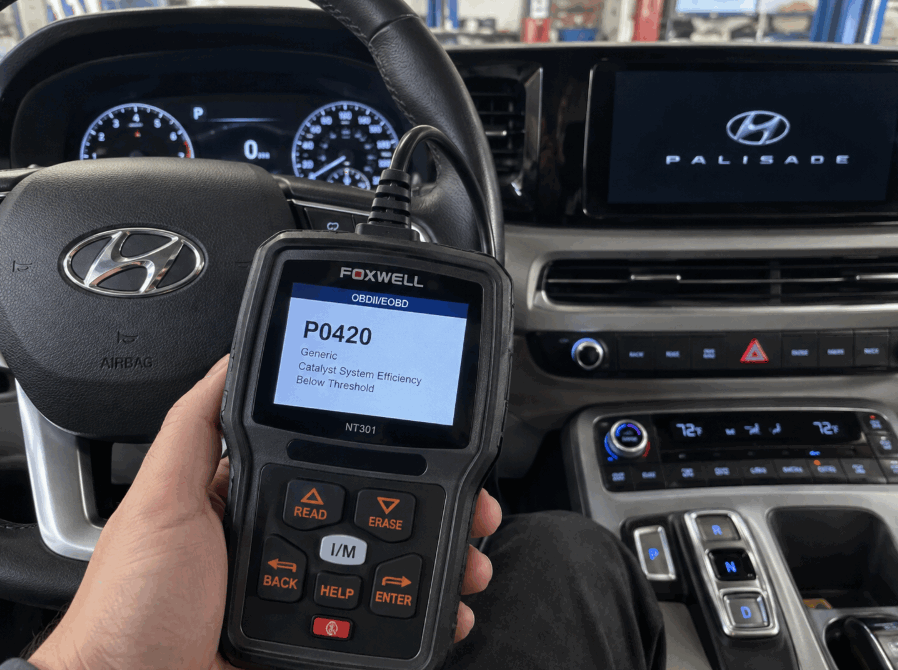
What Does the Hyundai Palisade P0420 Code Mean?
A Hyundai Palisade P0420 code indicates that the catalytic converter efficiency is below the threshold expected by the Engine Control Module (ECM). The ECM monitors the performance of the catalytic converter by comparing oxygen levels before and after the converter through the upstream and downstream oxygen sensors. When the difference between these sensor readings shows that the catalytic converter is not reducing exhaust pollutants effectively, the ECM stores the P0420 diagnostic trouble code and activates the Check Engine Light.
The catalytic converter is an essential part of the Hyundai Palisade emission control system. It converts harmful exhaust gases such as hydrocarbons, carbon monoxide, and nitrogen oxides into less harmful compounds before they leave the vehicle. A properly functioning catalytic converter should create a noticeable change in oxygen sensor signals because the catalyst stores and processes oxygen during exhaust treatment.
A P0420 code does not directly confirm that the catalytic converter has failed. The code only confirms that the ECM has detected insufficient catalyst efficiency based on the available sensor data. Other problems, including inaccurate oxygen sensor readings, exhaust leaks, engine misfires, or incorrect fuel mixture conditions, can create the same diagnostic result. This is why proper testing is required before replacing expensive emission components.
For Hyundai Palisade owners, understanding the meaning of P0420 helps prevent unnecessary repairs. A catalytic converter replacement can be costly, but the actual problem may come from a smaller component or an underlying engine issue that affects catalytic converter performance.
What Causes a P0420 Code on a Hyundai Palisade?
There are 5 main causes of a Hyundai Palisade P0420 code: catalytic converter failure, oxygen sensor problems, exhaust leaks, engine issues, and emission system contamination. These problems affect how the Engine Control Module (ECM) evaluates catalytic converter efficiency.
A damaged catalytic converter is the most common cause of P0420. The catalytic converter reduces harmful exhaust gases by using catalyst materials such as platinum, palladium, and rhodium. Excessive heat, physical damage, fuel contamination, or oil consumption can reduce its efficiency. When the converter cannot process exhaust gases properly, the ECM detects lower catalyst performance.
Faulty oxygen sensors can also trigger this code. The upstream oxygen sensor measures exhaust gases before the catalytic converter. The downstream oxygen sensor monitors exhaust gases after treatment. If either sensor provides incorrect data, the ECM may incorrectly identify a catalytic converter problem.
An exhaust leak can create inaccurate oxygen readings as well. Outside air entering the exhaust system changes sensor measurements. This can cause the ECM to calculate incorrect catalyst efficiency levels.
Engine problems are another important cause. Misfires, incorrect air fuel ratios, and excessive oil burning can send unprocessed fuel or contaminants into the exhaust system. These conditions increase catalytic converter damage over time.
Contamination from oil leaks, coolant leaks, or poor combustion can also reduce catalyst performance. A proper diagnosis should confirm the actual cause before replacing expensive parts. Checking oxygen sensor data, exhaust leaks, and engine conditions helps prevent unnecessary catalytic converter replacement.
What Are the Symptoms of P0420 on a Hyundai Palisade?
There are 6 common symptoms of a Hyundai Palisade P0420 code: Check Engine Light activation, reduced fuel efficiency, poor engine performance, unusual exhaust smell, failed emissions testing, and no noticeable driving symptoms. The severity depends on the actual cause behind the code and the condition of the emission system.
The Check Engine Light is the most common symptom of P0420. The ECM turns on the warning light when it detects that the catalytic converter efficiency is below the expected level. The vehicle may continue to operate normally because P0420 is often related to emissions performance rather than an immediate engine failure.
Reduced fuel efficiency can occur when the underlying problem affects combustion or exhaust flow. A damaged catalytic converter, faulty oxygen sensor, or incorrect air fuel mixture can prevent the engine from operating efficiently. Drivers may notice more frequent fuel stops or lower fuel economy compared with normal driving conditions.
Some Hyundai Palisade owners may experience reduced engine performance. A restricted catalytic converter can limit exhaust flow and make it harder for the engine to release exhaust gases. This restriction can cause slower acceleration, reduced power, or inconsistent engine response.
A sulfur or rotten egg smell from the exhaust can indicate catalytic converter problems. This smell occurs when the converter cannot properly process exhaust gases. It may appear when the catalyst materials inside the converter become damaged or contaminated.
Some vehicles with P0420 may fail emissions testing because the catalytic converter is not reducing pollutants effectively. However, some Hyundai Palisade vehicles show only a Check Engine Light without noticeable performance changes. Proper diagnosis is required because symptoms alone cannot confirm the exact cause of the code.
How Do You Diagnose a Hyundai Palisade P0420 Code?
Diagnosing a Hyundai Palisade P0420 code requires checking the entire emission system instead of immediately replacing the catalytic converter. A proper diagnosis identifies whether the problem comes from the catalytic converter, oxygen sensors, exhaust leaks, or an engine condition affecting emissions.
The first step is scanning the vehicle with an OBD II scanner. The scanner retrieves the stored P0420 code and provides additional information from the ECM. Technicians should review freeze frame data, including engine speed, temperature, fuel trim, and driving conditions when the code appeared. This information helps identify the situation that caused the ECM to detect low catalyst efficiency.
The next step is inspecting the exhaust system for leaks. An exhaust leak before the catalytic converter can introduce outside oxygen into the system. This changes oxygen sensor readings and may create an incorrect P0420 diagnosis. Checking exhaust connections, pipes, and gaskets helps eliminate false readings.
Oxygen sensor testing is also important during diagnosis. The upstream oxygen sensor should respond quickly to changes in exhaust oxygen levels. The downstream oxygen sensor should show a more stable signal because the catalytic converter removes oxygen fluctuations. Similar readings from both sensors may indicate reduced catalytic converter efficiency.
The catalytic converter should be tested only after other possible causes have been checked. Temperature testing, oxygen storage evaluation, and live data analysis can help confirm converter performance. This process prevents unnecessary replacement of an expensive component.
A complete Hyundai Palisade P0420 diagnosis focuses on finding the root cause. Replacing parts without proper testing may solve the warning light temporarily but may not fix the actual emission system problem.
Can a Weak Battery Cause Hyundai Palisade Radio Problems?
A weak battery can cause Hyundai Palisade radio problems because the infotainment system depends on a stable electrical supply to operate correctly. Although the vehicle battery mainly starts the engine, it also provides power to many electronic modules, including the head unit, audio system, and other vehicle control systems.
When battery voltage drops too low, the Hyundai Palisade infotainment system may behave unexpectedly. Common symptoms include slow screen startup, radio freezing, random system restarts, loss of audio functions, or difficulty connecting Bluetooth devices. In some cases, the radio may stop working after the vehicle sits unused for an extended period.
Battery related issues can also appear after a battery replacement. If the new battery is not properly installed or the vehicle experiences a voltage interruption during replacement, some electronic systems may require a restart or software reinitialization. The infotainment system may temporarily lose settings or show unusual behavior until it completes a new startup cycle.
A weak alternator can create similar problems because it fails to maintain the correct charging voltage while the engine is running. If the electrical system does not provide consistent power, the radio and other electronic components may experience intermittent failures.
To check whether the battery is causing Hyundai Palisade radio problems, look for additional warning signs. Slow engine cranking, dim interior lights, frequent electrical issues, or multiple electronic systems failing at the same time can indicate a battery or charging system problem.
However, a battery problem is not always the direct cause of a radio failure. If the battery voltage is normal and the issue only affects audio functions, the problem may come from the fuse, software, head unit, amplifier, or wiring connections.
Testing the battery and charging system before replacing expensive infotainment components is a practical step. A simple electrical inspection can help determine whether the radio problem comes from insufficient power or another system failure.
How Much Does It Cost to Fix P0420 on a Hyundai Palisade?
The cost to fix a Hyundai Palisade P0420 code depends on the actual cause, diagnostic requirements, and the parts that need replacement. A simple repair, such as fixing an exhaust leak or replacing a faulty oxygen sensor, usually costs less than replacing a catalytic converter.
The first cost factor is diagnosis. A professional inspection may include OBD II scanning, oxygen sensor testing, exhaust inspection, and catalytic converter evaluation. Proper diagnosis is important because P0420 does not confirm that the catalytic converter has failed. Replacing the converter without identifying the root cause can create unnecessary expenses.
Oxygen sensor replacement is one possible repair when a sensor provides incorrect readings. The total cost depends on the sensor location, parts quality, and labor time. Hyundai Palisade vehicles use multiple oxygen sensors, and each sensor has a different role in monitoring exhaust performance.
Catalytic converter replacement is usually the most expensive P0420 repair. The catalytic converter contains precious metals that help reduce harmful emissions. Its material cost and installation complexity make it significantly more expensive than smaller emission components.
Repair costs can also increase when P0420 is caused by another engine problem. Issues such as misfires, fuel system problems, or oil consumption must be repaired before installing a new catalytic converter. Otherwise, the replacement part may fail again.
The best approach is to diagnose the Hyundai Palisade P0420 code before buying replacement parts. Identifying the exact cause helps reduce repair costs and ensures that the correct component receives attention.
How Do You Fix a Hyundai Palisade P0420 Code?
Fixing a Hyundai Palisade P0420 code requires repairing the actual cause of low catalytic converter efficiency. The correct repair depends on whether the problem comes from the catalytic converter, oxygen sensors, exhaust system, or an engine condition affecting emissions.
The first repair step is correcting any engine problems that damage the emission system. Engine misfires, incorrect fuel mixture, and excessive oil consumption can send unburned fuel or contaminants into the exhaust. These conditions can reduce catalytic converter performance and cause the P0420 code to return after repair.
An oxygen sensor replacement may solve the problem when testing confirms inaccurate sensor readings. The upstream and downstream oxygen sensors provide important information to the ECM. A faulty sensor can create incorrect efficiency calculations and make a healthy catalytic converter appear defective.
Exhaust leaks should be repaired when they affect oxygen sensor readings. A leak before the catalytic converter can allow outside air to enter the exhaust system. Repairing damaged pipes, gaskets, or connections helps restore accurate emission monitoring.
A catalytic converter replacement is only necessary when testing confirms that the converter has lost efficiency. The converter should not be replaced based only on the presence of a P0420 code. Confirming failure through sensor data, temperature testing, or efficiency testing helps avoid unnecessary replacement costs.
Preventing future P0420 problems requires maintaining the Hyundai Palisade engine and emission system. Regular maintenance, timely repairs for engine problems, and proper fuel system care help protect catalytic converter performance and reduce the chance of recurring efficiency issues.
How Can You Prevent Future P0420 Problems on a Hyundai Palisade?
Preventing future Hyundai Palisade P0420 problems requires maintaining the engine, fuel system, and emission components in proper working condition. The catalytic converter depends on stable engine operation because combustion problems can quickly reduce its efficiency.
Regular engine maintenance is one of the most effective prevention methods. Replacing engine oil on schedule helps reduce the risk of oil contamination entering the exhaust system. Excessive oil consumption can damage catalytic converter materials and reduce their ability to process exhaust gases.
Fixing engine problems early also protects the emission system. Issues such as misfires, ignition problems, and incorrect fuel mixture conditions can increase exhaust temperature. High exhaust temperatures can damage the catalytic converter and trigger efficiency-related codes such as P0420.
Maintaining the fuel system helps prevent unburned fuel from reaching the catalytic converter. A properly working fuel injection system provides the correct air fuel mixture for efficient combustion. Poor fuel delivery can create additional stress on emission components.
Inspecting the exhaust system during regular maintenance can also prevent future problems. Damaged exhaust pipes, loose connections, or leaking gaskets can affect oxygen sensor readings. Early repair helps maintain accurate monitoring of catalytic converter performance.
Drivers should also respond quickly when the Check Engine Light appears. Some problems may seem minor at first but can create expensive emission system damage if ignored. Early diagnosis allows Hyundai Palisade owners to repair smaller issues before they affect the catalytic converter.
Proper maintenance does not guarantee that a P0420 code will never appear. However, it reduces the most common conditions that lead to catalytic converter efficiency problems and helps extend the life of the emission system.
What Is the Difference Between Hyundai Palisade P0420 and Other Catalyst Codes?
The main difference between Hyundai Palisade P0420 and other catalyst efficiency codes is the location of the catalytic converter problem detected by the ECM. P0420 refers to catalyst efficiency below threshold on Bank 1, while other codes may identify different banks or specific emission system conditions.
The P0420 code is related to the catalytic converter monitoring process. The ECM compares oxygen sensor signals before and after the catalytic converter to determine whether the converter is reducing exhaust pollutants effectively. When the system detects insufficient efficiency on Bank 1, it stores the P0420 code.
P0430 is another common catalyst efficiency code, but it applies to Bank 2 on engines that have multiple cylinder banks. The difference between P0420 and P0430 depends on the engine configuration and which exhaust bank the ECM identifies as having reduced catalyst performance.
Catalyst efficiency codes should not be treated as direct proof of catalytic converter failure. Both P0420 and P0430 can result from similar problems, including faulty oxygen sensors, exhaust leaks, engine misfires, or fuel system issues. The diagnostic process should always confirm the cause before replacing emission components.
Understanding the difference between catalyst codes helps Hyundai Palisade owners communicate more effectively with technicians and avoid unnecessary repairs. The code provides information about where the ECM detected a problem, but additional testing is required to identify the failed component.
A complete emission diagnosis considers the entire system, including the catalytic converter, oxygen sensors, exhaust system, and engine performance. This approach ensures that repairs address the actual source of the problem instead of only clearing the warning code.
Hyundai Palisade P0420 Code Conclusion
A Hyundai Palisade P0420 code means the ECM has detected lower than expected catalytic converter efficiency, but it does not always mean the catalytic converter must be replaced. The correct solution depends on identifying the actual cause behind the emission system problem.
The most common causes include catalytic converter deterioration, oxygen sensor problems, exhaust leaks, engine performance issues, and contamination from oil or fuel system problems. Each cause affects the way the ECM evaluates catalyst performance, which is why accurate diagnosis is necessary before starting repairs.
A proper repair process begins with checking stored diagnostic data, inspecting the exhaust system, testing oxygen sensor signals, and confirming catalytic converter performance. This approach helps prevent unnecessary replacement of expensive components and ensures that the repair addresses the original issue.
Hyundai Palisade owners can reduce the risk of future P0420 problems by maintaining the engine, repairing misfires quickly, monitoring fuel system performance, and responding early to Check Engine Light warnings. Regular maintenance protects the emission system and helps maintain long term vehicle reliability.
Understanding the Hyundai Palisade P0420 code allows drivers to make better repair decisions. The code is a diagnostic signal that points to a catalyst efficiency problem, not a final repair recommendation. Finding the root cause is the most important step in restoring proper emission system operation.