The Hyundai Palisade P0014 code indicates a problem with exhaust camshaft timing. The engine control module detects that the camshaft position has moved beyond the expected timing range. This issue affects the Variable Valve Timing system that controls engine performance and efficiency.
A Hyundai Palisade can trigger this code for several reasons. Common causes include dirty engine oil, a faulty Oil Control Valve, a damaged camshaft position sensor, or timing chain problems. Drivers may notice symptoms such as a Check Engine Light, rough idling, slow acceleration, or reduced fuel economy.
The P0014 code does not always mean the engine needs major repairs. However, ignoring the problem can create more serious issues with the engine timing system. A proper diagnosis helps identify the failed component before replacing unnecessary parts.
This guide explains what the Hyundai Palisade P0014 code means, why it appears, and how to fix it. It covers the symptoms, causes, diagnostic steps, and repair options that help vehicle owners understand this engine fault.
What Does the Hyundai Palisade P0014 Code Mean?
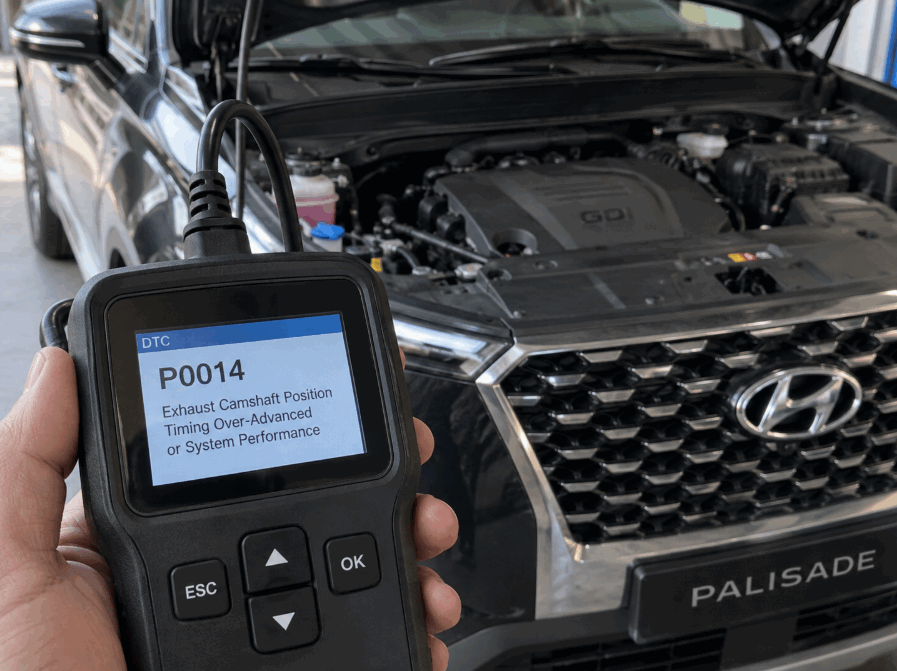
The Hyundai Palisade P0014 code means the engine control module has detected an exhaust camshaft timing position that is more advanced than the programmed limit. This OBD II trouble code is also known as “Exhaust Camshaft Position Timing Over Advanced.” The code points to a problem in the engine’s Variable Valve Timing system, which controls when the camshaft opens and closes the engine valves.
The Variable Valve Timing system helps the engine adjust valve operation based on driving conditions. The system uses components such as the Oil Control Valve, camshaft actuator, and engine oil pressure to change camshaft timing. When the exhaust camshaft moves too far ahead of the expected position, the ECM records the P0014 code and turns on the Check Engine Light.
The ECM monitors camshaft position through signals from the camshaft position sensor and crankshaft position sensor. It compares the actual camshaft angle with the target angle stored in the engine control system. If the difference exceeds the allowed range for a specific period, the ECM identifies a timing control problem and stores the P0014 diagnostic trouble code.
A Hyundai Palisade P0014 code does not directly identify one failed component. Instead, it shows that the engine cannot control exhaust camshaft timing correctly. The actual cause may come from restricted oil flow, a faulty VVT component, incorrect engine timing, or an electrical issue. A complete diagnosis helps locate the source before replacing parts.
What Are the Symptoms of a Hyundai Palisade P0014 Code?
A Hyundai Palisade with a P0014 code usually shows engine performance problems because the exhaust camshaft cannot maintain the correct timing position. The severity of symptoms depends on the cause of the fault, the condition of the VVT system, and how long the vehicle has operated with the issue.
The most common symptom is the Check Engine Light. The ECM activates this warning when it detects incorrect exhaust camshaft timing. Drivers may notice the warning light appear during normal driving, acceleration, or after the engine reaches operating temperature.
Another common symptom is rough engine idle. Incorrect camshaft timing changes how the engine manages air intake and exhaust flow. This imbalance can create unstable combustion, causing the engine to shake, vibrate, or run unevenly when the vehicle stops.
A Hyundai Palisade with P0014 may also experience reduced acceleration and engine hesitation. The engine cannot optimize valve timing when the VVT system does not respond correctly. As a result, the vehicle may feel slower when accelerating or may hesitate when the driver presses the accelerator.
Poor fuel economy can also appear with this trouble code. The engine relies on accurate camshaft timing to achieve efficient combustion. When the exhaust camshaft stays too advanced, the engine may burn fuel less efficiently and require more fuel to produce the same power.
Some vehicles may produce unusual engine noises, especially during startup or idle operation. A faulty Oil Control Valve, insufficient oil pressure, or incorrect timing adjustment can create abnormal sounds from the upper engine area. Drivers should inspect these symptoms early because continued operation may increase repair costs.
What Causes the Hyundai Palisade P0014 Code?
The Hyundai Palisade P0014 code appears when the engine cannot control exhaust camshaft timing within the expected range. There are 5 common causes that can trigger this fault: incorrect engine oil condition, a faulty Oil Control Valve, a damaged camshaft position sensor, timing chain problems, and electrical issues in the VVT system.
Incorrect or Dirty Engine Oil
Engine oil problems are one of the most common causes of VVT related faults. The Hyundai Palisade Variable Valve Timing system depends on clean oil flow and correct oil pressure to move the camshaft actuator. When oil becomes dirty, too thick, or too low, the system may not adjust camshaft timing correctly.
Old engine oil can restrict the oil passages inside the VVT system. This restriction prevents the Oil Control Valve from controlling oil pressure properly. As a result, the exhaust camshaft may remain in an advanced position and trigger the P0014 code.
Regular oil changes with the correct oil specification help maintain proper VVT operation. A vehicle with poor maintenance history has a higher risk of developing oil related timing problems.
Faulty Oil Control Valve
The Oil Control Valve is a key component that controls oil flow to the camshaft actuator. The ECM sends signals to this valve to adjust exhaust camshaft timing according to engine conditions.
A damaged or stuck Oil Control Valve can send incorrect oil pressure to the VVT actuator. The camshaft may advance too far or fail to return to the correct position. This condition causes the ECM to detect a timing difference and store the P0014 code.
Technicians usually inspect the valve for oil contamination, electrical problems, and mechanical movement before replacing it. Cleaning the valve may solve the problem in some cases, but a damaged valve requires replacement.
Faulty Camshaft Position Sensor
The camshaft position sensor provides real time information about camshaft movement to the ECM. The engine computer uses this signal to compare the actual camshaft position with the target position.
A failing sensor can send inaccurate data even when the mechanical timing system works correctly. The ECM may interpret the incorrect signal as an exhaust camshaft timing problem and activate the P0014 code.
A proper diagnosis should include checking sensor signals, wiring connections, and related fault codes before replacing the sensor.
Timing Chain Problems
A stretched or damaged timing chain can change the relationship between the crankshaft and camshaft. The ECM expects the camshaft to follow a specific timing pattern, but mechanical wear can cause the camshaft position to move outside the expected range.
Timing chain problems usually develop over time because of high mileage, poor lubrication, or insufficient maintenance. In severe cases, incorrect mechanical timing can affect engine performance and create additional engine damage.
Technicians must inspect timing marks and chain condition when other VVT components work correctly but the P0014 code remains active.
Electrical Problems in the VVT System
The VVT system depends on electrical signals between the ECM and related components. Damaged wiring, poor connections, or electrical faults can interrupt communication and prevent accurate camshaft control.
Electrical problems may affect the Oil Control Valve, camshaft position sensor, or other timing control components. A complete inspection of connectors and wiring helps identify these issues before replacing mechanical parts.
How Do You Diagnose Hyundai Palisade P0014 Code?
Diagnosing the Hyundai Palisade P0014 code requires a step by step inspection of the engine timing system. The goal is to identify the actual cause before replacing any parts.
The first step uses an OBD II scanner to read stored trouble codes from the ECM. Technicians should review freeze frame data because it shows engine conditions when the fault appeared. Related codes can also provide additional clues about sensor or VVT system problems.
The next step checks engine oil condition and level. The Hyundai Palisade VVT system needs clean oil and correct oil pressure to control camshaft timing. Low oil levels, dirty oil, or incorrect oil viscosity can prevent proper operation.
Technicians should then test the Oil Control Valve and other VVT components. The inspection includes checking electrical signals, oil flow, and camshaft response. A faulty Oil Control Valve can prevent the exhaust camshaft from returning to the correct position.
The final steps include checking camshaft position sensor signals and inspecting mechanical timing components. A damaged sensor, wiring problem, stretched timing chain, or incorrect timing alignment can cause the P0014 code.
A complete diagnosis helps confirm the failed component and prevents unnecessary repairs. Proper testing ensures the Hyundai Palisade engine receives the correct repair solution.
How Do You Fix Hyundai Palisade P0014 Code?
Fixing the Hyundai Palisade P0014 code requires repairing the component that causes incorrect exhaust camshaft timing. The correct repair depends on the results of the diagnostic process.
The first repair step checks the engine oil condition. If the oil is dirty, too low, or has the wrong viscosity, an oil change may restore proper VVT operation. Fresh oil helps the Oil Control Valve and camshaft actuator receive the correct pressure.
If the Oil Control Valve causes the problem, technicians may clean or replace the valve. A stuck valve cannot control oil flow correctly, which prevents the exhaust camshaft from reaching the correct position. Replacing a damaged valve usually restores normal VVT operation.
A faulty camshaft position sensor or damaged wiring also requires repair. Technicians should replace the sensor only after testing confirms the failure. Repairing electrical connections can solve the problem when wiring issues interrupt communication between the ECM and timing components.
Timing chain problems require a more extensive repair. A stretched timing chain or incorrect timing alignment can keep the exhaust camshaft in the wrong position. In these cases, technicians may need to replace the timing chain or adjust mechanical timing.
After completing repairs, the technician clears the P0014 code and performs a road test. The ECM must confirm that the exhaust camshaft timing operates within the correct range. A final scan ensures the problem has been resolved and prevents repeated faults.
Is It Safe to Drive a Hyundai Palisade With a P0014 Code?
Driving a Hyundai Palisade with a P0014 code depends on the severity of the timing problem and the vehicle’s current condition. A short drive may not cause immediate damage in some cases, but ignoring the issue for a long period can increase the risk of engine problems.
The P0014 code affects the exhaust camshaft timing system. When the Variable Valve Timing system cannot control camshaft position correctly, the engine may lose performance and operate less efficiently. Drivers may notice rough idling, hesitation, reduced acceleration, or poor fuel economy.
A Hyundai Palisade with mild symptoms may still operate normally for a short time. However, the vehicle should receive a diagnostic inspection as soon as possible. Continuing to drive with incorrect camshaft timing can increase stress on engine components and make repairs more expensive.
Drivers should stop using the vehicle and seek professional inspection if they notice severe symptoms. These symptoms include loud engine noises, significant power loss, difficulty starting, or an engine that runs unevenly. These signs may indicate a more serious problem with the timing system.
The safest approach is to diagnose the P0014 code early. A proper inspection can identify whether the issue comes from engine oil, the Oil Control Valve, sensors, or mechanical timing components. Early repairs help protect the Hyundai Palisade engine and prevent larger failures.
How Much Does It Cost to Fix Hyundai Palisade P0014 Code?
The cost to fix a Hyundai Palisade P0014 code depends on the failed component, diagnostic time, labor rates, and repair complexity. A simple oil service may solve the problem, while timing system repairs can require a larger investment.
An engine oil change is usually the lowest cost repair option. If dirty or incorrect oil affects the Variable Valve Timing system, replacing the oil and filter may restore proper camshaft control. Regular oil maintenance also helps prevent future VVT related problems.
Replacing an Oil Control Valve is another common repair for the Hyundai Palisade P0014 code. The total cost depends on the valve price and labor time. This repair is usually less expensive than internal engine timing repairs because technicians can access the component without major engine disassembly.
A camshaft position sensor replacement may cost more than an oil service but remains a relatively straightforward repair. Technicians should confirm sensor failure before replacement because similar symptoms can come from oil problems, wiring faults, or VVT components.
Timing chain repairs create the highest repair costs because they involve internal engine components. A stretched timing chain or incorrect timing alignment requires more labor and detailed inspection. The final cost depends on the extent of mechanical damage and the parts required.
The best way to reduce repair expenses is to diagnose the Hyundai Palisade P0014 code early. Accurate testing prevents unnecessary part replacements and helps identify the most cost effective solution.
What Other Hyundai Trouble Codes Are Related to P0014?
The Hyundai Palisade P0014 code belongs to a group of engine timing related trouble codes connected to the Variable Valve Timing system. Other related codes can help identify problems with camshaft position, oil control, or VVT operation.
The P0011 code is related to an intake camshaft timing problem. This code indicates that the intake camshaft position has moved beyond the expected timing range. Like P0014, it can result from oil flow problems, a faulty Oil Control Valve, or incorrect camshaft timing.
The P0012 code indicates that the intake camshaft timing is too delayed. This condition occurs when the ECM detects that the camshaft cannot reach the expected position. Low oil pressure, restricted oil passages, or VVT component failures can create this issue.
The P0021 code also relates to intake camshaft timing. It shows that the intake camshaft position has become more advanced than the ECM expects. This code shares similar diagnostic areas with P0014, including the VVT system and oil control components.
The P0022 code indicates an intake camshaft timing position that is too delayed. This problem may appear with VVT system failures, sensor issues, or mechanical timing problems.
Understanding related Hyundai trouble codes helps technicians compare symptoms and identify patterns within the engine timing system. These codes do not always point to the same failed component, but they provide valuable information during diagnosis.
Checking related codes together with the Hyundai Palisade P0014 code creates a more complete view of the engine condition. This approach helps technicians avoid unnecessary repairs and find the correct solution faster.
How Can You Prevent Hyundai Palisade VVT Problems?
Preventing Hyundai Palisade VVT problems requires regular engine maintenance and early attention to warning signs. The Variable Valve Timing system depends on clean oil, proper lubrication, and reliable electronic control to adjust camshaft timing correctly.
The most important prevention step is following the recommended engine oil change schedule. The VVT system uses engine oil pressure to operate components such as the Oil Control Valve and camshaft actuator. Old or contaminated oil can restrict oil flow and reduce system performance.
Using the correct engine oil specification also helps protect the VVT system. Incorrect oil viscosity can affect oil pressure and prevent the camshaft timing system from responding accurately. Vehicle owners should always follow Hyundai’s recommended oil requirements for their specific Palisade model.
Regular engine inspections can identify early signs of timing problems. Drivers should check for symptoms such as unusual engine noise, rough idle, reduced acceleration, or a Check Engine Light. Early diagnosis can prevent minor VVT issues from becoming expensive engine repairs.
Keeping the engine operating under proper conditions also supports long term reliability. Regular maintenance, timely repairs, and professional diagnostic checks help protect components such as the Oil Control Valve, camshaft sensors, and timing chain.
A Hyundai Palisade VVT system can provide reliable performance when the engine receives proper care. Preventive maintenance reduces the risk of P0014 and other camshaft timing related trouble codes.