Hyundai Palisade engine problems include excessive oil consumption, engine noise, rough idling, stalling, and loss of power. Some owners also report oil leaks and Check Engine Light warnings. Each problem has different causes and levels of severity.
Excessive oil consumption can lower the engine oil level between scheduled services. Low oil reduces lubrication and increases friction between moving engine parts. This condition can cause knocking, overheating, accelerated wear, or serious engine damage. Engine rattling or ticking can also indicate lubrication or internal mechanical problems.
Stalling and sudden power loss require faster attention. Fuel delivery faults, ignition problems, sensor failures, or internal engine damage can interrupt normal engine operation. A Check Engine Light can help identify the affected system. However, technicians must read the stored diagnostic trouble codes to find the actual cause.
This guide explains the common Hyundai Palisade engine problems and their symptoms. It also covers possible causes, diagnostic methods, repair options, affected model years, recalls, and warranty considerations. Used Palisade buyers will also learn which engine checks to perform before purchasing a vehicle.
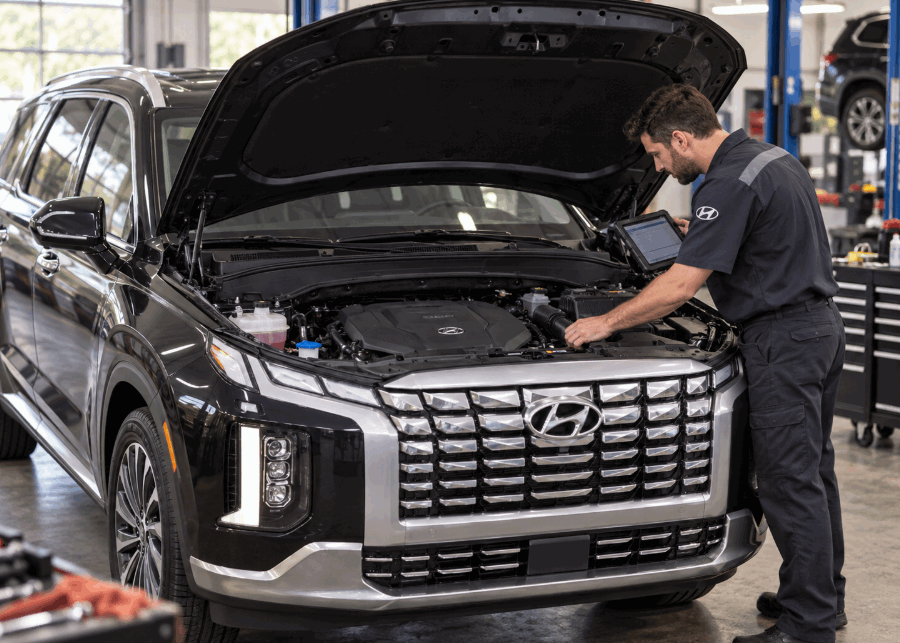
What Are the Most Common Hyundai Palisade Engine Problems?
There are six main Hyundai Palisade engine problems that owners should watch for. They include excessive oil consumption, abnormal engine noise, rough running, stalling, power loss, and oil leaks. A Check Engine Light may also appear when the engine control system detects a fault.
Excessive oil consumption deserves particular attention because low oil can affect several engine systems. Engine oil separates moving metal parts and reduces friction. A falling oil level weakens that protection. The engine can then develop noise, excessive heat, faster wear, or internal damage.
Owner complaint records include Palisade reports involving low oil, rough running, stalling, and abnormal engine noise. Reports exist across several model years, including 2020, 2021, and 2022 vehicles. These complaints show patterns worth investigating, but they do not prove that every Palisade has the same defect.
Engine knocking, ticking, and rattling also require proper diagnosis. Low oil can create mechanical noise because engine parts receive less lubrication. Misfires can produce rough operation and vibration. Fuel, ignition, sensor, or internal mechanical faults can create similar symptoms.
Stalling and sudden power loss present a greater driving risk. The engine may stop producing stable power when combustion becomes irregular. Fuel delivery faults or ignition failures can also interrupt normal operation. Serious internal damage can produce the same result.
Oil leaks create a different problem from internal oil consumption. A leak allows oil to escape through a damaged seal, gasket, housing, or connection. Internal consumption sends oil into areas where the engine burns it. Both conditions can lower the oil level and eventually reduce lubrication.
Drivers should treat each symptom as evidence, not as a diagnosis. A technician needs to identify the actual cause before choosing a repair. This approach prevents unnecessary parts replacement and reduces the chance of missing serious engine damage.
Why Does a Hyundai Palisade Consume Too Much Engine Oil?
A Hyundai Palisade can lose engine oil through internal consumption, external leakage, or another mechanical condition. Normal engines use a small amount of oil during operation. Excessive consumption becomes a concern when the level drops much faster than expected.
Hyundai published Technical Service Bulletin 23 EM 008H for gasoline engine oil consumption concerns. The bulletin applies to Hyundai gasoline models and explains a formal inspection process. Hyundai also recommends regular oil changes and periodic dipstick checks.
Internal oil consumption occurs when oil reaches the combustion process in excessive amounts. Worn or contaminated piston rings can contribute to this condition. Cylinder wall problems can also increase oil movement into the combustion chamber. Problems in the crankcase ventilation system may affect oil control as well.
External leakage produces a different pattern. Oil may escape around seals, gaskets, the drain plug, or the oil filter area. Drivers may notice oil under the vehicle or around engine components. A technician should locate any external leak before measuring internal oil consumption.
Hyundai uses mileage and added oil to calculate consumption during its inspection procedure. The bulletin requires mileage accumulation after technicians establish the starting oil level. Hyundai then compares driven miles with the amount of oil required to restore the correct level.
The Hyundai procedure uses 1,000 miles per quart as an important inspection threshold. A result above 1,000 miles per quart passes that stage of the procedure. A result below 1,000 miles per quart requires the next diagnostic or repair step. The final procedure can lead to engine replacement when the vehicle continues to fail the required test.
What Are the Signs of Excessive Oil Consumption in a Hyundai Palisade?
The clearest sign is a falling dipstick level between oil changes. Drivers may also need to add oil more frequently than expected. Some vehicles may develop rough running, engine noise, or performance changes after the oil level becomes very low.
Visible exhaust smoke can provide another clue when the engine burns oil internally. A burning smell may also appear in some cases. However, an engine can consume oil without producing obvious smoke. One 2020 owner complaint described severe oil loss without visible leakage or an early warning light.
Drivers should not wait for an oil warning light before checking the dipstick. A warning system does not replace direct oil level inspection. Regular checks help identify a falling level before lubrication becomes inadequate.
How Is Hyundai Palisade Oil Consumption Diagnosed?
Technicians first confirm the oil level and inspect the engine for external leaks. They also review maintenance history and recent oil service information. Any major leak requires repair before an accurate consumption test can continue.
The technician then fills the engine to the specified level and records the starting condition. Hyundai’s procedure uses markings on the oil filter and drain plug during the test. The vehicle must then accumulate the required mileage before technicians measure the oil again.
The technician calculates oil consumption from distance traveled and the oil needed to restore the correct level. This measurement separates a verified consumption concern from a vague impression of oil loss. Further testing may follow when the engine fails the consumption inspection.
Additional diagnosis can include compression testing, cylinder leak testing, and internal engine inspection when symptoms justify those steps. The goal is to locate the cause before selecting a repair. Accurate diagnosis also helps distinguish oil consumption from an external leak or another engine problem.
Why Does a Hyundai Palisade Engine Knock, Tick, or Rattle?
A Hyundai Palisade engine can knock, tick, or rattle because several mechanical conditions create abnormal noise. Low engine oil is one important cause to check first. Internal engine wear, valve train problems, combustion issues, or loose components can create similar sounds.
Engine oil forms a protective film between moving metal surfaces. A low oil level reduces this protection. Friction then increases between components that depend on continuous lubrication. The driver may hear ticking, tapping, rattling, or deeper knocking as the condition becomes more severe.
Oil consumption can therefore connect directly with abnormal engine noise. A Palisade that loses oil between services may eventually operate below its proper oil level. One 2020 owner complaint described severe oil consumption followed by stalling and loud engine noise. The owner found no oil reading on the dipstick after the incident. This report shows a possible relationship, but one complaint does not prove a universal Palisade defect.
The type of sound can provide useful diagnostic information. A light ticking sound often comes from the upper engine area or another moving component. A rattle may appear during startup, acceleration, or specific engine speeds. A deep knock can indicate a more serious internal mechanical condition. However, sound alone cannot confirm the failed component.
Technicians should reproduce the noise before replacing engine parts. They should check the oil level, oil condition, and visible leaks first. They can then inspect the ignition system and engine accessories. Further mechanical testing may become necessary when the noise continues.
Drivers should take persistent knocking seriously. Continued operation with inadequate lubrication can increase internal wear. Severe mechanical damage can become much more expensive than an early inspection.
Can Low Engine Oil Cause Knocking in a Hyundai Palisade?
Low engine oil can cause abnormal noise in a Hyundai Palisade because moving parts need adequate lubrication. The oil reduces direct metal contact inside the engine. An insufficient amount allows friction and heat to increase.
The severity depends on how low the oil level becomes and how long the engine runs that way. A slightly low level may not create an immediate symptom. A severely low level can reduce lubrication in critical areas. The driver may then notice ticking, knocking, increased vibration, or poor engine operation.
Low oil also requires a second question. The owner needs to determine why the oil level dropped. The engine may consume oil internally, leak it externally, or lose it after improper service. Adding oil corrects the level, but it does not correct the underlying cause.
Check the dipstick when abnormal engine noise appears. Inspect the vehicle for visible oil loss as well. Stop driving and arrange a professional inspection when loud knocking continues after correcting the oil level. A technician may need to inspect internal engine components before confirming the cause.
Why Does a Hyundai Palisade Stall or Lose Power While Driving?
A Hyundai Palisade can stall or lose power when the engine cannot maintain normal combustion or mechanical operation. Possible causes include low oil, ignition faults, fuel delivery problems, sensor faults, and internal engine damage. Certain recalled engine defects can also cause sudden power loss.
Stalling means the engine stops running while the vehicle is operating or coming to a stop. Loss of power describes a different condition. The engine may continue running, but the vehicle cannot accelerate normally. Both symptoms require diagnosis because several systems can produce similar behavior.
Fuel delivery problems can reduce the amount of fuel available for combustion. Ignition problems can prevent one or more cylinders from firing correctly. Sensor faults can send incorrect information to the engine control system. Serious mechanical damage can also prevent the engine from producing stable power.
Oil related problems create another possible pathway. Severe oil loss can reduce lubrication and damage internal engine components. Complaint records for the 2020 Palisade include a case involving abnormal oil consumption and sudden engine power loss. The vehicle stalled while entering a highway and later required dealer diagnosis. Owner complaints provide useful evidence of reported symptoms, but they do not establish a defect across all vehicles.
Official recall evidence provides a stronger connection for certain 2024 vehicles. Hyundai recalled 4,245 model year 2024 Palisades because engine valve springs could break while driving. A broken valve spring can cause a sudden loss of drive power. Hyundai also stated that a broken valve could enter the combustion chamber in rare cases. This condition could damage the engine block.
The cause therefore matters more than the symptom alone. A stalled Palisade does not automatically have an internal engine failure. Technicians need diagnostic codes, operating conditions, fluid levels, and mechanical tests to identify the actual problem.
What Should You Do If a Hyundai Palisade Loses Engine Power While Driving?
Maintain control of the vehicle first when a Hyundai Palisade suddenly loses power. Move away from active traffic when road conditions allow. Use the hazard lights when reduced speed creates a traffic risk.
Stop the vehicle in a safe location when the engine shakes, knocks, overheats, or runs abnormally. Continued driving can worsen mechanical damage. Turn the engine off when serious symptoms make further operation unsafe.
Check the dashboard for warning lights after reaching a safe location. A Check Engine Light, oil warning, or temperature warning can provide useful diagnostic context. Check the engine oil level after the vehicle reaches a safe condition. Do not open a hot cooling system.
Avoid repeatedly restarting the engine when it produces severe knocking or cannot maintain stable operation. Repeated operation can increase damage when an internal mechanical problem exists. Arrange towing when the vehicle cannot run normally or safely.
Owners should also check the vehicle identification number for open recalls. This step matters especially for certain 2024 Palisades. Hyundai Recall 255 covers specific vehicles with potentially defective engine valve springs. Dealers replace the engine sub assembly on affected vehicles under the recall procedure.
A proper diagnosis should determine whether the problem comes from fuel, ignition, electronics, lubrication, or internal engine damage. This process prevents guesswork and helps owners choose the correct repair.
Why Is the Check Engine Light On in a Hyundai Palisade?
The Check Engine Light turns on when the engine control system detects a fault. The light does not identify the failed part by itself. A scan tool must read the stored diagnostic trouble codes before diagnosis can begin.
Common causes include ignition faults, fuel delivery problems, sensor issues, air intake problems, and emissions system faults. A misfire can also trigger the warning. Each fault changes engine operation in a different way, so technicians must connect the code with the actual symptoms.
A diagnostic trouble code gives technicians a starting point. It does not always name the exact failed component. For example, a misfire code may come from a spark plug, ignition coil, fuel injector, compression problem, or another combustion fault.
The warning becomes more serious when the engine also shakes, loses power, overheats, or makes abnormal noise. These symptoms suggest that the vehicle may have a problem beyond a minor emissions fault. Continued driving can make some conditions worse.
Technicians usually scan the engine control module first. They then compare the stored codes with live engine data and physical symptoms. Further testing may include ignition checks, fuel pressure testing, sensor inspection, or compression testing.
Drivers should avoid replacing parts based only on the code description. A code can point to the affected system without proving which component caused the fault. Proper testing reduces unnecessary repairs and helps identify the real source of the problem.
Can You Drive a Hyundai Palisade With the Check Engine Light On?
You can sometimes continue driving when the Check Engine Light stays steady and the vehicle operates normally. The car still needs diagnosis, but the situation may not require an immediate stop.
A flashing Check Engine Light requires more caution. Flashing often signals an active misfire that can damage the catalytic converter. Reduce engine load and arrange diagnosis as soon as possible.
Stop driving when the warning appears with severe shaking, knocking, overheating, or sudden power loss. These symptoms can indicate a more serious engine problem. Continuing to drive may increase repair costs or create a safety risk.
Check the oil level when engine noise or oil related symptoms appear. Also watch the temperature gauge for overheating. Do not continue driving when the engine cannot maintain stable operation.
The safest response depends on the symptoms that appear with the warning light. A steady light with normal performance differs from a flashing light with severe vibration. Drivers should judge the complete condition, not the warning light alone.
Why Does a Hyundai Palisade Engine Shake or Idle Roughly?
A Hyundai Palisade can shake or idle roughly when one or more cylinders do not produce stable combustion. Common causes include misfires, spark plug problems, ignition coil faults, fuel injector issues, air intake problems, and low compression.
A misfire creates uneven power between cylinders. One cylinder may produce less force than the others. The imbalance sends vibration through the engine mounts and vehicle structure. Drivers may feel the shaking through the steering wheel, seat, or floor.
Ignition problems create one common pathway. A worn spark plug may fail to ignite the air and fuel mixture correctly. A weak ignition coil can produce the same result. Both problems can cause rough idle, hesitation, poor acceleration, and a Check Engine Light.
Fuel delivery problems can also create unstable combustion. A restricted or faulty injector may deliver too little fuel to one cylinder. The engine then runs unevenly because each cylinder no longer produces similar power.
Air intake or sensor faults can disturb the air and fuel mixture. Incorrect airflow information can cause unstable idle speed or poor combustion. Vacuum leaks can create similar symptoms by allowing unmetered air into the engine.
Low compression points to a more serious mechanical concern. Worn internal parts, valve problems, or cylinder damage can reduce pressure inside one cylinder. The engine may then shake even when the ignition and fuel systems work correctly.
Technicians should scan for diagnostic trouble codes before replacing parts. They can then test the ignition system, fuel delivery, airflow, and cylinder compression. This sequence helps separate a simple misfire from an internal engine problem.
Drivers should seek prompt diagnosis when rough idle appears with knocking, heavy vibration, power loss, or repeated stalling. These combinations suggest a higher risk of engine damage or unsafe operation.
Does the Hyundai Palisade Have a Valve Spring Engine Problem?
Certain 2024 Hyundai Palisade vehicles have a confirmed engine valve spring problem. Hyundai issued Recall 255 for this condition. NHTSA identifies the campaign as Recall 24V106. The recall covers 4,245 vehicles in the United States.
The affected valve springs can fracture while the engine runs. Hyundai traced the problem to fatigue cracking related to manufacturing damage. A damaged manufacturing die created surface irregularities on certain valve springs. These irregularities could weaken the spring over time.
A valve spring controls the movement of an engine valve. It helps the valve close correctly after the camshaft opens it. A broken spring can prevent the valve from operating normally. This failure can disrupt combustion and cause sudden power loss.
The problem can become more serious if the broken valve enters the combustion chamber. Hyundai states that this event can create a hole in the engine block in rare cases. A sudden loss of drive power increases crash risk. Damage to the engine block can also increase fire risk.
Drivers may notice sudden power loss when a valve spring fails. The engine may also stall or run abnormally. These symptoms require prompt inspection because continued operation may increase internal damage.
Hyundai instructs dealers to replace the engine subassembly on vehicles covered by Recall 255. The recall repair comes at no charge to the owner. This remedy addresses the affected engine rather than replacing only the individual valve spring.
Which 2024 Hyundai Palisade Vehicles Are Affected by the Valve Spring Recall?
Recall 255 applies to certain 2024 Hyundai Palisade vehicles, not every 2024 Palisade. Hyundai identifies affected vehicles through production records and individual vehicle identification numbers.
Hyundai service information lists certain Palisades produced from August 21, 2023, through October 12, 2023. These vehicles use the Lambda 3.8L engine covered by the recall procedure.
Owners should still check the individual VIN instead of relying only on the production date. NHTSA allows owners to enter a VIN and check for unrepaired recalls. A VIN search shows whether a specific vehicle still needs recall work.
This check also matters when buying a used 2024 Palisade. A model year alone cannot confirm whether Recall 255 applies to the vehicle. Buyers should verify recall status before completing the purchase.
Can a Hyundai Palisade Develop Engine Oil Leaks?
A Hyundai Palisade can develop an engine oil leak when a seal, gasket, plug, housing, or connection stops containing oil correctly. However, an oil leak does not automatically indicate a widespread Palisade engine defect. Owners should identify the exact leak location before deciding what needs repair.
An external oil leak allows engine oil to escape outside the lubrication system. Drivers may notice oil spots under the vehicle after parking. They may also find wet oil around engine components. A burning oil smell can appear when leaking oil reaches a hot surface.
Common inspection areas include the oil drain plug, oil filter area, gaskets, seals, and nearby engine surfaces. Recent maintenance also matters. An incorrectly installed filter or drain plug can cause oil loss after service.
Oil leakage differs from excessive internal oil consumption. An external leak leaves oil outside the engine. Internal consumption allows oil to enter the combustion process. Both conditions lower the oil level, but they require different repairs.
The dipstick can help identify ongoing oil loss. A falling oil level between inspections indicates that the engine is losing oil somewhere. The next step is to determine whether the oil leaves through an external leak or enters the combustion process.
Low oil becomes dangerous when the engine no longer receives adequate lubrication. Moving components generate more friction when the oil supply falls too far. Heat and wear can then increase inside the engine. Severe oil loss can eventually contribute to major mechanical damage.
Drivers should repair a persistent oil leak instead of repeatedly adding oil without diagnosis. Adding oil restores the level temporarily. It does not repair the failed seal, gasket, or other source of the leak.
A technician should clean contaminated areas when necessary and locate the highest point of fresh oil leakage. This method helps separate the true source from oil that spreads across lower engine surfaces. The technician can then repair the failed component and confirm that the oil level remains stable.
Can Hyundai Palisade Engine Problems Cause Overheating?
A Hyundai Palisade can overheat when the cooling system cannot control engine temperature. Common causes include low coolant, coolant leaks, thermostat faults, cooling fan problems, and poor coolant circulation. Severe internal engine damage can also raise operating temperature.
The cooling system removes heat from the engine during normal operation. Coolant absorbs heat and carries it toward the radiator. The radiator then releases that heat into the surrounding air. Any failure in this process can cause engine temperature to rise.
Coolant loss creates one common path to overheating. A leaking hose, loose clamp, damaged seal, or other cooling system fault can reduce coolant volume. The remaining coolant may no longer remove enough heat from the engine.
Certain 2023 Palisade vehicles had a documented coolant related service issue. Hyundai TSB 23 01 045H addressed an incorrect water outlet hose clamp on certain vehicles. The incorrect clamp could allow coolant to leak during engine operation. Hyundai instructed technicians to inspect the clamp and replace it when necessary.
A thermostat problem can also restrict coolant circulation. The thermostat controls coolant flow based on engine temperature. A thermostat that fails to open can trap heat inside the engine.
Cooling fan problems create another possible cause. The radiator needs airflow to release heat when the vehicle moves slowly or remains stationary. A failed fan or control problem can reduce that airflow.
Drivers should stop the vehicle when the temperature warning appears or the gauge enters the hot range. Continued operation can damage gaskets, cylinder heads, and other internal components. Severe overheating can eventually cause complete engine failure.
Do not open the cooling system while the engine remains hot. Pressurized coolant can cause serious burns. Allow the vehicle to cool before checking coolant levels or arranging an inspection.
Which Hyundai Palisade Model Years Have Reported Engine Problems?
Hyundai Palisade engine complaints appear across several model years, but the type and evidence level differ. The 2020 through 2023 models have owner reported engine concerns. Certain 2024 vehicles have a confirmed valve spring recall. Certain 2025 vehicles also have an electric oil pump recall.
Complaint totals should not determine reliability by themselves. Older vehicles have spent more time on the road and may accumulate more reports. Mileage, maintenance, production volume, and reporting behavior also affect complaint numbers.
Official recalls provide stronger evidence than individual owner reports. A recall confirms that the manufacturer identified a safety related defect in specific vehicles. Owner complaints identify symptoms that deserve investigation, but they do not prove a fleet wide defect.
What Engine Problems Have Been Reported for the 2020 Hyundai Palisade?
The 2020 Hyundai Palisade has owner reports involving oil consumption, low oil levels, stalling, rough running, and engine power loss. CarComplaints currently lists 77 NHTSA engine complaints for this model year.
One complaint described a vehicle that stalled at a traffic light. The owner later found an extremely low engine oil level. The dealer performed an oil consumption test, compression testing, and other diagnostic procedures.
Another report described significant oil consumption after an early oil change. The owner later experienced stalling and loud engine noise. The dipstick showed no measurable oil after the event.
These reports support close monitoring of oil level in affected vehicles. They do not prove that every 2020 Palisade will develop excessive oil consumption.
What Engine Problems Have Been Reported for the 2021 Hyundai Palisade?
The 2021 Hyundai Palisade has owner reports involving engine performance problems, oil consumption, and sudden power reduction. CarComplaints currently lists 16 NHTSA engine complaints for this model year.
More recent complaint records also describe excessive oil consumption in some 2021 vehicles. Some owners reported repeated low oil levels, stalling, or eventual engine replacement. These remain individual reports rather than a confirmed defect affecting every vehicle.
Hyundai also published engine service information that applies to diagnosis and engine replacement procedures. Service bulletins can help technicians follow approved repair methods. However, a service bulletin does not automatically mean that Hyundai issued a safety recall.
Owners should document oil levels, service intervals, warning lights, and drivability symptoms. This information can help a technician identify whether the problem involves oil consumption or another engine system.
What Engine Problems Have Been Reported for the 2022 Hyundai Palisade?
Owners of some 2022 Hyundai Palisade vehicles have reported oil consumption, rough operation, stalling, and engine related warning lights. Complaint databases also contain reports involving low oil levels after extended driving.
One owner report described repeated stalling and rough operation. A dealer later measured oil consumption at approximately one quart every 568 miles. This case represents one vehicle and should not define the entire model year.
These reports make oil level monitoring useful for owners who notice rough running or unexplained oil loss. A formal consumption test can provide better evidence than simply adding oil between services.
What Engine Problems Have Been Reported for the 2023 Hyundai Palisade?
The 2023 Hyundai Palisade has NHTSA owner reports involving Check Engine Light warnings, poor acceleration, rough operation, and stalling symptoms. CarComplaints currently displays 29 NHTSA engine complaint entries for this model year.
One reported case involved a Check Engine Light and difficulty increasing vehicle speed. The owner also described behavior that suggested the engine might shut off. This report shows a drivability concern but does not establish one specific mechanical cause.
Certain 2023 vehicles also received a Hyundai service bulletin for an incorrect water outlet hose clamp. The condition could allow coolant to leak during engine operation. Hyundai instructed technicians to inspect and replace the clamp when required.
A coolant leak can eventually contribute to overheating when enough coolant escapes. Owners should therefore investigate unexplained coolant loss instead of repeatedly refilling the reservoir.
What Engine Problems Have Been Reported for the 2024 Hyundai Palisade?
The most important documented 2024 Palisade engine issue involves fractured valve springs. Hyundai issued Recall 255 after identifying a manufacturing problem in certain engine valve springs.
Hyundai identified certain vehicles produced between August 21, 2023, and October 12, 2023. A valve spring can fracture while the engine runs. The failure can cause sudden power loss and serious internal engine damage.
Hyundai confirmed 18 unique United States incidents during its investigation before the recall decision. The company reported no related crashes, injuries, or fatalities during that investigation period.
The recall remedy requires replacement of the engine subassembly on affected vehicles. Owners should verify eligibility through the VIN rather than relying only on the model year.
What Engine Problems Have Been Reported for the 2025 Hyundai Palisade?
Certain 2025 Hyundai Palisade vehicles have an electric oil pump recall. Hyundai Recall 278 and NHTSA Recall 25V291 cover 620 potentially affected vehicles in the United States.
This recall does not describe excessive engine oil consumption or an internal engine lubrication failure. The problem involves the electric oil pump controller housing. Insufficient sealing can allow moisture to enter the controller and cause an electrical short.
Hyundai identified burning odors and a Malfunction Indicator Light as possible warnings. Thermal damage to the controller can increase vehicle fire risk. Hyundai reported no related crashes, fires, or fatalities when it filed the recall.
Owners should therefore keep this recall separate from Palisade oil consumption complaints. The systems, failure mechanisms, and repair procedures are different.
How Are Hyundai Palisade Engine Problems Diagnosed?
Technicians diagnose Hyundai Palisade engine problems by identifying the symptom first. They then inspect the systems that can produce that symptom. This process prevents unnecessary repairs and helps locate the actual failure.
The first inspection should include the engine oil and coolant levels. Low oil can cause noise, overheating, rough operation, and internal damage. Low coolant can increase engine temperature and lead to overheating. Visible leaks can also explain why either fluid level continues to fall.
Technicians should inspect oil leaks before starting an oil consumption test. Hyundai follows this sequence in its oil consumption procedure. Hyundai also instructs technicians to correct abnormal engine noise and relevant diagnostic trouble codes first. These conditions can interfere with an accurate oil consumption test.
The next step usually involves an electronic scan. A scan tool reads diagnostic trouble codes from the engine control module. These codes can identify misfires, sensor faults, fuel mixture problems, and other operating conditions.
A diagnostic code provides direction, but it does not always identify the failed component. For example, a cylinder misfire can result from an ignition coil, spark plug, fuel injector, or compression problem. Technicians must test the related systems before replacing parts.
Oil consumption requires a controlled measurement. Hyundai asks technicians to establish the correct oil level before mileage accumulation. They then measure how much oil the engine uses over a known driving distance. This process provides measurable evidence instead of relying on an owner’s estimate.
Hyundai also uses combustion chamber cleaning in certain oil consumption cases. The procedure addresses carbon deposits when the inspection conditions support that repair. Hyundai requires technicians to follow its specified process before moving to more extensive engine work.
Mechanical testing becomes important when electronic diagnosis cannot explain the symptoms. Compression testing can identify a weak cylinder. A cylinder leak test can help locate pressure loss. Internal inspection may become necessary when the engine produces severe noise or shows signs of mechanical damage.
Technicians should also inspect the vehicle identification number for open recalls. This step can immediately change the repair path. Certain 2024 Palisades qualify for engine replacement under Hyundai Recall 255.
A complete diagnosis should connect the symptom with measurable evidence. Fluid levels, diagnostic codes, mechanical tests, service history, and recall status provide that evidence. Replacing parts without this process increases the risk of an incorrect repair.
How Are Hyundai Palisade Engine Problems Fixed?
Hyundai Palisade engine problems require different repairs because each failure has a different cause. Minor faults may need a single component repair. Serious internal damage can require extensive engine work or complete engine replacement.
Oil consumption requires technicians to determine how the engine loses oil. External leakage needs repair at the leaking component. Internal consumption requires further testing because piston ring sealing, carbon deposits, or other internal conditions may affect oil control.
Hyundai provides a specific process for qualifying oil consumption concerns. Technicians first correct conditions that can invalidate the test. They then measure oil use over a controlled driving distance. Certain vehicles may receive combustion chamber cleaning before Hyundai considers further repair.
Ignition related misfires require a different repair path. Technicians may test spark plugs, ignition coils, electrical circuits, and cylinder operation. They should replace a component only after testing confirms the failure.
Fuel delivery problems can require injector, pressure, or control system repairs. Sensor faults may require electrical testing before component replacement. Damaged wiring or connectors can sometimes create the same symptoms as a failed sensor.
Oil leaks require technicians to locate the true source. Cleaning the affected area can help reveal fresh oil movement. The repair may involve a seal, gasket, plug, housing, or another oil containing component. Technicians should confirm the repair by checking for new leakage afterward.
Internal engine damage requires a more extensive inspection. Hyundai engine replacement guidance tells technicians to inspect related intake and exhaust components when internal damage occurs. Debris can enter connected systems and damage a replacement engine if technicians leave contamination behind.
Severe oil consumption can also affect connected engine components. Hyundai instructs technicians to inspect and clean parts such as the intake manifold, throttle body, crankcase ventilation system, and intake piping in relevant cases. This process reduces the chance that contamination will affect the repaired engine.
Certain 2024 Palisades follow a different repair path because Hyundai confirmed a valve spring safety defect. Hyundai replaces the engine subassembly on vehicles covered by Recall 255. The recall repair comes at no charge to the owner.
Owners should not choose a repair based only on the visible symptom. Knocking does not always require an engine replacement. Rough idle does not always require new spark plugs. Oil loss does not always mean internal engine damage.
The correct repair follows the confirmed cause. Proper diagnosis helps owners avoid unnecessary parts replacement. It also allows technicians to identify serious engine damage before continued driving makes the problem worse.
How Much Does It Cost to Fix Hyundai Palisade Engine Problems?
Hyundai Palisade engine repair costs range from basic diagnostic fees to several thousand dollars for major internal repairs. The final cost depends on the failed component, labor rate, model year, and amount of engine damage.
A professional diagnosis provides the best starting point. RepairPal estimates a Hyundai Palisade general diagnosis at $122 to $179. The same source estimates Check Engine Light diagnosis within a similar range. These figures exclude taxes, location differences, and additional repairs.
Ignition problems usually cost much less than internal engine damage. RepairPal estimates Hyundai Palisade ignition coil replacement at about $191 to $275. The exact amount changes slightly between model years and locations. Technicians should still test the coil before replacing it because spark plugs can create similar symptoms.
Oil leaks also vary widely in cost. An engine leak inspection costs about $122 to $179 according to RepairPal. A minor leak may only require a plug, seal, or related component. A larger gasket or engine repair can cost much more.
Major mechanical damage creates the highest repair bills. RepairPal lists a 2026 Palisade head gasket replacement at about $3,247 to $4,210. This example shows how quickly costs increase when technicians must open major engine components.
Complete engine replacement can cost more than many individual repairs. However, one universal Palisade engine replacement price would be misleading. Engine availability, labor hours, dealer pricing, warranty status, and related damage all change the final amount.
Owners should request a written diagnosis before approving an expensive repair. The estimate should identify the failed component and required labor. It should also show whether Hyundai warranty coverage or an active recall can reduce the owner’s cost.
Repair cost should follow diagnosis rather than symptoms. A rough idle may only require an ignition repair. The same symptom can also result from low compression or internal engine damage. Accurate testing determines which cost category actually applies.
Are Hyundai Palisade Engine Problems Covered by Warranty or Recall?
Hyundai may cover a Palisade engine problem when the failure meets the terms of an active factory warranty. Recall repairs follow different rules and do not depend on normal warranty coverage.
Hyundai provides a 10 year or 100,000 mile Powertrain Limited Warranty for the original owner. The coverage includes selected engine and transmission components. Hyundai applies the warranty to defects in materials or factory workmanship under normal use and maintenance.
The original owner requirement matters when buying a used Palisade. Hyundai reduces powertrain coverage for second and later owners to the remaining 5 year or 60,000 mile New Vehicle Limited Warranty. Hyundai confirms this transfer rule in its warranty information and customer guidance.
Warranty coverage does not mean Hyundai will pay for every engine problem. The dealer must determine whether the failure qualifies under the warranty terms. Maintenance history, vehicle age, mileage, ownership status, and cause of failure can affect the claim.
A safety recall works differently. The manufacturer must provide the approved recall remedy without charging the owner. NHTSA advises owners to check their VIN and complete any open recall at an authorized dealership.
Certain 2024 Palisades provide a clear example. Hyundai Recall 255 covers specific vehicles with engine valve springs that may fracture. NHTSA identifies the campaign as Recall 24V106. Hyundai instructs dealers to replace the engine subassembly on affected vehicles. The recall repair is free for eligible owners.
A Technical Service Bulletin does not provide the same coverage as a recall. Hyundai uses service bulletins to give technicians diagnostic or repair instructions for known service conditions. A bulletin can guide a repair without creating a free recall remedy.
Owners should therefore check three factors before paying for a major engine repair. They should confirm current warranty eligibility, search the VIN for open recalls, and ask the dealer about relevant service bulletins.
This distinction can significantly change the repair decision. An owner may face a large personal expense for an uncovered mechanical failure. The same owner may pay nothing when an active safety recall requires the repair.
How Can You Prevent Serious Engine Damage in a Hyundai Palisade?
Regular maintenance helps reduce the risk of serious Hyundai Palisade engine damage. Owners should monitor oil, coolant, warning lights, engine noise, and service intervals. Early detection often prevents a small problem from becoming a major repair.
Check the engine oil level regularly. Do not wait for the next scheduled oil change when the level starts falling. A repeated drop can indicate oil consumption, external leakage, or another lubrication problem.
Use the correct engine oil specification for the vehicle. The wrong viscosity or an unsuitable oil can affect lubrication and engine operation. Follow the maintenance schedule in the owner manual for oil and filter service.
Investigate unexplained oil loss instead of repeatedly adding oil. Adding oil restores the level for a short time. It does not identify why the engine keeps losing oil.
Pay attention to knocking, ticking, rattling, and new vibration. Persistent noise can indicate low oil or another mechanical problem. Early diagnosis can reduce the risk of internal damage.
Watch the engine temperature during normal driving. Stop the vehicle when the engine overheats or shows a serious temperature warning. Continued operation can damage gaskets, cylinder heads, and other engine components.
Do not ignore a flashing Check Engine Light. A flashing warning can indicate an active misfire. Continued driving may damage the catalytic converter and increase repair costs.
Complete open recalls as soon as possible. Recall repairs address confirmed safety defects in specific vehicles. Owners should use the VIN to confirm whether their Palisade has an incomplete recall.
Keep maintenance and repair records. Service history helps technicians understand previous problems and repairs. These records also provide useful evidence for warranty claims and future resale.
Owners can reduce engine risk with eight practical actions. Check oil regularly, monitor coolant, follow the service schedule, investigate leaks, diagnose abnormal noise, respond to warning lights, complete recalls, and keep service records.
Should You Buy a Used Hyundai Palisade With Engine Problems?
Do not buy a used Hyundai Palisade with unresolved engine symptoms until a qualified technician identifies the cause. The repair cost can range from a minor ignition fix to major internal engine work. A pre purchase inspection reduces the risk of inheriting an expensive problem.
Start the vehicle when the engine is cold. Cold startup can reveal noises that disappear after the engine warms. Listen for persistent knocking, ticking, or rattling.
Check the engine oil before the test drive. A very low level can indicate poor maintenance, leakage, or excessive consumption. Freshly added oil should not automatically reassure the buyer because the previous consumption rate remains unknown.
Inspect the area under the vehicle for fresh oil or coolant. Look around accessible engine surfaces for wet residue. A clean engine does not prove that no leak exists, but visible fluid loss deserves further inspection.
Watch the exhaust during startup and acceleration. Blue smoke can indicate that the engine burns oil. White smoke after full warmup can require further diagnosis. Normal condensation should disappear as the exhaust system heats.
Evaluate the idle quality. The engine should run smoothly without severe shaking or repeated speed changes. Rough idle can point to ignition, fuel, air, or compression problems.
Test acceleration during the drive. The Palisade should respond consistently without hesitation, sudden power loss, or repeated stalling. Any major drivability problem requires diagnosis before purchase.
Check the dashboard for warning lights. A seller may clear diagnostic codes shortly before a test drive, so a scan tool provides more information. Pending codes can reveal faults that have not yet turned the warning light back on.
Review the maintenance history. Look for regular oil changes, previous oil consumption tests, engine repairs, and cooling system work. Missing records increase uncertainty about how the vehicle received maintenance.
Ask whether the engine has ever been replaced. An engine replacement does not automatically make the vehicle a poor purchase. However, the buyer should verify why Hyundai replaced it and whether the replacement resolved the original problem.
Check the VIN for open recalls. This step matters especially for certain 2024 Palisades with the valve spring recall. Confirm whether an authorized Hyundai dealer completed the required repair.
A professional pre purchase inspection should include fluid checks, diagnostic scanning, leak inspection, and engine operation testing. Compression testing may also make sense when the vehicle shows mechanical symptoms.
The purchase decision should depend on verified condition, not the model year alone. A well maintained Palisade with complete records can present less risk than a newer vehicle with unresolved symptoms. Buyers should walk away when the seller cannot explain serious engine noise, oil loss, stalling, or warning lights.
What Should Hyundai Palisade Owners Do About Engine Problems?
Hyundai Palisade owners should respond to engine problems based on the symptom and its severity. Low oil, abnormal noise, rough running, stalling, overheating, and sudden power loss require different diagnostic steps. The most important action is to identify the cause before choosing a repair.
Check the engine oil and coolant when new symptoms appear. Scan the vehicle for diagnostic trouble codes when the Check Engine Light turns on. Stop driving when the engine develops severe knocking, overheating, repeated stalling, or major power loss.
Owners should also verify warranty and recall status before paying for expensive repairs. Certain 2024 Palisades qualify for engine replacement under the valve spring recall. Other engine concerns may require warranty review, diagnostic testing, or owner funded repairs.
Used Palisade buyers should inspect service records, fluid levels, warning lights, engine noise, and recall history. A professional inspection can reveal problems that a short test drive may miss.
The Hyundai Palisade does not have one single engine problem that explains every complaint. Oil consumption, mechanical noise, misfires, cooling issues, and recalled valve spring failures have different causes. Accurate diagnosis remains the best way to protect the engine and control repair costs.