Hyundai Palisade transmission problems can include rough shifting, acceleration hesitation, delayed gear engagement, transmission slipping, incorrect gear ratio faults, and electronic shifter problems. These symptoms do not always mean that the transmission has suffered complete mechanical failure. Some problems originate from transmission control software or electronic components, while others can indicate internal clutch slip or another mechanical fault.
The cause depends on the symptom, model year, diagnostic trouble code, and condition of the transmission system. Hyundai has issued technical service information for conditions such as hesitation during acceleration, rough shifting, incorrect gear ratio codes, and push button shifter malfunctions. This means that proper diagnosis should come before replacing major transmission components.
Drivers should pay attention to changes in shift quality, unusual engine speed increases, delayed movement after selecting Drive or Reverse, warning messages, and difficulty selecting a gear. Early diagnosis can help separate a software or sensor issue from a more serious internal transmission problem.
This guide explains the main Hyundai Palisade transmission problems, their symptoms, causes, diagnostic methods, repair options, recalls, technical service bulletins, repair costs, warranty considerations, and steps that can reduce the risk of further transmission damage.
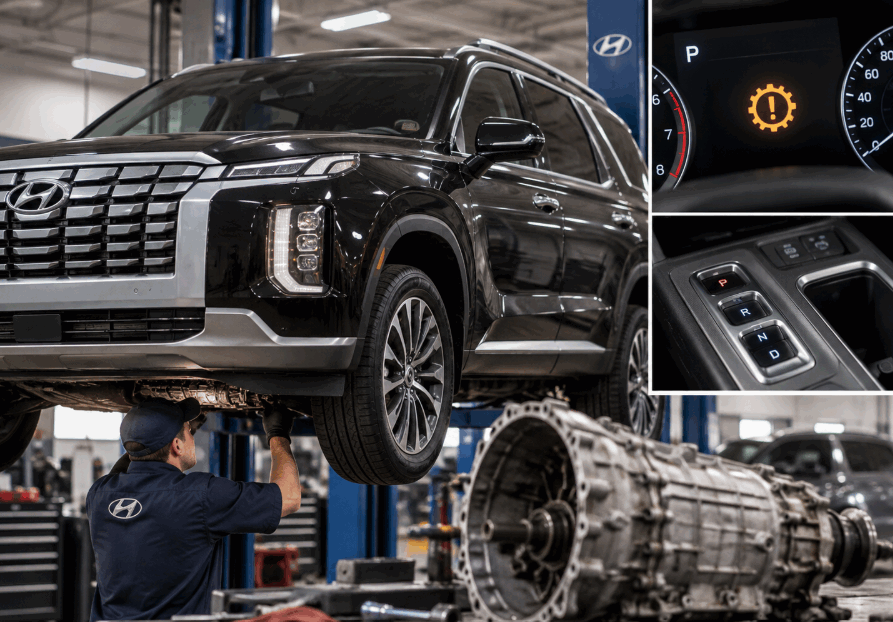
What Are the Most Common Hyundai Palisade Transmission Problems?
The most common Hyundai Palisade transmission problems include rough shifting, hesitation, delayed engagement, slipping, gear ratio faults, and shifter malfunctions. These problems do not share one cause. Software can affect some symptoms. Electronic components can cause others. Internal clutch damage can also create serious transmission faults.
Hyundai has documented several transmission related conditions for the Palisade. Certain 2022 models received updated ECU and TCU software. Hyundai designed the update to reduce hesitation from a stop and improve shift quality. Hyundai has also published procedures for gear ratio faults and push button shifter problems.
These conditions require different repairs. Rough shifting may involve transmission control logic. Slipping may involve internal clutch operation. A shifter fault may prevent the vehicle from selecting Drive or Reverse.
Drivers should identify the exact symptom before considering major transmission repairs.
Why Does a Hyundai Palisade Hesitate When Accelerating?
A Hyundai Palisade can hesitate when the engine and transmission do not respond as expected during acceleration. Drivers often notice the delay when moving away from a stop.
Hyundai documented this condition on certain 2022 Palisade models. The company updated ECU logic to reduce hesitation during acceleration. It also updated TCU logic to improve rough shifting and hesitation.
The Idle Stop and Go system can affect how the vehicle responds from a stop. The engine must restart before the drivetrain delivers full acceleration. Transmission clutch timing also affects the response.
Hesitation does not always indicate internal transmission damage. Software, throttle response, engine restart timing, or clutch engagement can create similar symptoms. A technician should check fault codes and available software updates before recommending major repairs.
Why Does a Hyundai Palisade Shift Hard or Jerk Between Gears?
A Hyundai Palisade shifts hard when a gear change creates an unusually strong change in drivetrain force. The driver may feel a bump, surge, or sudden engagement.
Several faults can create this behavior. Transmission software can change clutch timing and hydraulic pressure. Internal clutch problems can interrupt smooth torque transfer. Sensor faults can also send incorrect operating data to the transmission controller.
Hyundai addressed rough shifting in its software campaign for certain 2022 Palisade vehicles. The updated TCU logic aimed to improve shift quality and hesitation.
This example shows that harsh shifting does not always mean mechanical failure. Software related problems and internal damage can create similar sensations. Proper diagnosis must separate these causes.
Frequent or severe hard shifts require inspection. The same applies when the condition becomes progressively worse.
Why Does a Hyundai Palisade Transmission Slip?
A Hyundai Palisade transmission slips when it cannot maintain the expected gear ratio under load. The engine may rev faster without a matching increase in road speed. Acceleration may also feel weak or inconsistent.
The transmission controller compares input speed with output speed. It uses this information to confirm the selected gear ratio. Excessive clutch slip changes that relationship.
Hyundai identifies several diagnostic codes for incorrect gear ratios. Examples include P0731, P0732, P0733, P0734, and P0735. Other examples include P0729, P076F, and P0730.
Each code corresponds to a ratio fault in a specific gear. The code helps the technician identify where the transmission lost the expected ratio.
Confirmed clutch slip requires more attention than a minor rough shift. Slip creates friction inside the transmission. Friction generates heat. Continued heat can increase clutch wear and worsen the problem.
Hyundai’s diagnostic procedure can lead to transmission replacement when testing confirms internal clutch slip.
Why Does a Hyundai Palisade Have Trouble Shifting Into Drive or Reverse?
A Hyundai Palisade may fail to select Drive or Reverse because the electronic shift system cannot complete the gear request. A control fault does not automatically mean the transmission has failed.
The Palisade uses a push button shifter. The system relies on several components to select a gear correctly. These include the shift controls, position sensors, control units, actuators, and related wiring.
Hyundai identifies several symptoms in its shifter diagnostic guidance. The vehicle may fail to enter a gear. It may remain in Park. The instrument cluster may show the wrong gear. The engine may also fail to start.
A fault anywhere in the control chain can interrupt gear selection. The technician must therefore test the electronic system before replacing the transmission.
What Symptoms Indicate a Hyundai Palisade Transmission Problem?
There are 7 major signs of a Hyundai Palisade transmission problem. They include hesitation, harsh shifting, delayed engagement, slipping, gear selection problems, warning messages, and abnormal diagnostic codes.
Each symptom provides different diagnostic information. A single rough shift does not identify a failed component. Repeated slipping creates a stronger warning of an internal problem.
Drivers should record when each symptom appears. They should also note the selected gear and engine temperature. Warning lights and dashboard messages can provide additional clues.
Problems that affect power delivery require prompt diagnosis. Gear selection problems also deserve immediate attention. These faults can affect the driver’s ability to control vehicle movement.
What Does Transmission Hesitation Feel Like in a Hyundai Palisade?
Transmission hesitation feels like a delay between pressing the accelerator and receiving the expected response. The vehicle may pause before moving. It may also respond slowly after stopping.
Hesitation differs from transmission slipping. During hesitation, acceleration starts later than expected. During slipping, engine speed rises while vehicle speed fails to increase normally.
Certain 2022 Palisade models provide a documented example. Hyundai updated both ECU and TCU software to address hesitation and rough shifting.
This shows that hesitation can involve both engine and transmission control. It does not always originate from worn internal transmission parts.
What Does a Slipping Hyundai Palisade Transmission Feel Like?
A slipping transmission often causes engine speed to rise faster than vehicle speed. The driver may press the accelerator and hear the engine rev. The vehicle may still accelerate slowly.
Internal clutches must hold firmly to maintain each commanded gear. Excessive slip prevents the transmission from maintaining the correct ratio.
The control system can detect this mismatch. It may then store an incorrect gear ratio code.
Repeated RPM flare deserves attention, especially when diagnostic codes appear at the same time. This combination provides stronger evidence of a transmission fault than one isolated harsh shift.
What Does a Hyundai Palisade Shifter System Malfunction Mean?
A Shifter System Malfunction message means the electronic gear selection system has detected a fault. The problem can affect Park, Reverse, Neutral, or Drive.
The warning does not prove that the internal transmission has failed. The fault may involve the shifter, wiring, position signals, control modules, or actuators.
Hyundai also identifies related symptoms in its diagnostic guidance. The vehicle may remain in Park. It may fail to select a gear. The display may show the wrong gear. The engine may also refuse to start.
The technician must test the complete shift control system. Replacing the transmission without this diagnosis can lead to unnecessary repair costs.
What Transmission Warning Codes Can a Hyundai Palisade Store?
A Hyundai Palisade can store codes for gear ratio faults, sensors, solenoids, and electronic shift control problems. These codes help technicians narrow the diagnostic process.
Incorrect ratio codes become important when the vehicle shows signs of slipping. Examples include P0731 through P0735. Other relevant codes include P0729, P076F, and P0730.
Sensor and solenoid codes require a different diagnostic path. A technician should not treat every transmission code as evidence of internal mechanical failure.
The complete code pattern matters. One ratio code may suggest a specific gear problem. A ratio code combined with a sensor fault may point toward another cause.
Technicians should record all codes before clearing them. That information can help separate clutch faults, sensor faults, solenoid problems, and shifter system issues.
What Causes Hyundai Palisade Transmission Problems?
There are 5 main causes of Hyundai Palisade transmission problems. They include control software, internal clutch slip, sensor faults, shifter faults, and transmission fluid problems.
Each cause affects the transmission in a different way. Software can change shift timing. Clutch slip can prevent the transmission from holding a gear. Sensors can send incorrect information to the control unit. Shifter faults can interrupt gear selection.
The symptom alone does not always identify the cause. Rough shifting and hesitation can result from more than one fault. A diagnostic scan helps separate electronic faults from internal transmission damage.
Can TCU Software Cause Hyundai Palisade Rough Shifting or Hesitation?
TCU software can cause rough shifting or hesitation in some Hyundai Palisade vehicles. The TCU controls several parts of the shifting process. These include gear selection, clutch timing, and shift response.
Hyundai documented this issue on certain 2022 Palisade vehicles. The company released updated ECU and TCU software through Service Campaign T7V. Hyundai designed the ECU update to reduce hesitation after a stop. The TCU update targeted rough shifting and hesitation.
This update shows how software can affect shift quality. The transmission needs precise timing during each gear change. Poor control logic can create a delay or harsh engagement.
A software issue does not mean the transmission has internal damage. A technician should first check the vehicle identification number and software version. The technician can then confirm whether Hyundai released an applicable update.
Can Internal Clutch Slip Cause Hyundai Palisade Transmission Problems?
Internal clutch slip can cause serious Hyundai Palisade transmission problems. The transmission uses internal clutches to hold the correct gear ratio. These clutches must maintain enough friction under load.
Slip occurs when a clutch cannot hold the commanded gear. Engine speed and transmission output speed then lose their expected relationship. The transmission control system can detect this difference.
Hyundai describes incorrect ratio faults as excessive transmission clutch slip in a selected gear. Its 2024 bulletin includes the Palisade 3.8 liter with the eight speed transmission. The bulletin covers codes such as P0731, P0732, P0733, P0734, and P0735. It also covers P0729, P076F, and P0730.
Clutch slip can produce several symptoms. The engine may rev while acceleration remains weak. The transmission may also lose the expected gear ratio.
Continued slip creates extra friction. Friction produces heat and increases clutch wear. This process can make the original problem worse.
Hyundai directs technicians toward transmission replacement in a specific diagnostic situation. That procedure applies when only the listed incorrect ratio codes appear. Other fault codes require a different diagnostic path.
Can Transmission Sensors Cause Hyundai Palisade Shifting Problems?
Transmission sensors can cause shifting problems when they send missing or incorrect data. The transmission controller relies on speed and position signals. It uses those signals to manage gear changes.
Input and output speed sensors provide important operating data. The controller compares their signals during transmission operation. A missing or abnormal signal can affect diagnosis and shifting behavior.
Hyundai lists P0717 as an input speed sensor fault. It lists P0721 and P0722 for output speed sensor problems. Hyundai tells technicians to follow the relevant repair procedure when these codes appear.
The transmission range circuit also affects gear selection. Hyundai includes P0705 in its push button shifter diagnostic guidance. That code relates to the transmission range circuit.
A sensor code does not prove that the complete transmission has failed. Technicians should test the related circuit and component first.
Can the Push Button Shifter Cause a Hyundai Palisade Not to Go Into Gear?
The push button shifter system can prevent a Hyundai Palisade from entering the requested gear. This system uses electronic signals instead of a conventional mechanical shift lever.
The driver first presses a gear button. The system then sends the request to the related control components. Those components must confirm and execute the selected gear.
A fault can interrupt this process. Hyundai lists several related symptoms in its technical guidance. The vehicle may stay in Park. It may fail to enter a gear. The cluster may also show the wrong gear. Some faults can prevent the engine from starting.
Hyundai also lists several shifter related DTCs. These codes cover power faults, actuator faults, motor faults, and communication problems. Each fault requires a specific diagnostic path.
This distinction matters during diagnosis. A Palisade may fail to move because the shifter cannot complete a command. The internal transmission may still remain mechanically functional.
Can Transmission Fluid Cause Hyundai Palisade Shifting Problems?
Incorrect or unsuitable transmission fluid can contribute to transmission malfunction and poor operation. Automatic transmission fluid supports lubrication and hydraulic control. The transmission also needs the correct fluid specification.
Hyundai specifies approved SP IV automatic transmission fluid for the 2023 Palisade. The owner’s manual warns against using fluid that does not meet Hyundai specifications. Hyundai states that incorrect fluid can cause transmission malfunction or failure.
Fluid color alone does not confirm a problem. Hyundai notes that transmission fluid naturally becomes darker during vehicle use. The manufacturer does not recommend replacement based only on color.
Drivers should also follow the maintenance schedule for their exact model year. Driving conditions can change service requirements. Heavy traffic, towing, repeated short trips, and frequent stop and go driving can qualify as severe use.
Transmission fluid should not become a universal explanation for every shift complaint. Software faults, sensor problems, and clutch slip require different repairs.
How Are Hyundai Palisade Transmission Problems Diagnosed?
Technicians diagnose Hyundai Palisade transmission problems by matching symptoms with fault codes and Hyundai service procedures. A correct diagnosis should identify the faulty system before major parts replacement.
The process starts with the driver’s complaint. The technician should reproduce the symptom when possible. The technician should then scan the ECU and TCU for stored codes.
The code pattern helps determine the next step. Sensor codes require sensor diagnosis. Solenoid codes require another procedure. Incorrect ratio codes can point toward internal clutch slip.
What Should Be Checked First When a Hyundai Palisade Has Transmission Problems?
The first check should confirm the exact symptom and any stored diagnostic trouble codes. This creates a clear starting point for the repair.
A technician should first determine when the problem occurs. The condition may appear during acceleration, gear selection, or a specific shift. Temperature and vehicle speed can also affect the symptom.
The next step involves a diagnostic scan. Hyundai instructs technicians to connect its diagnostic system and check for DTCs. The technician should record the codes before clearing them.
The technician should then check applicable service information. This includes software campaigns and transmission TSBs. Certain 2022 vehicles may require an ECU and TCU update for hesitation or rough shifting.
Shifter symptoms require another diagnostic path. Hyundai provides a separate procedure for push button shifter faults on the Palisade.
This sequence prevents unnecessary repairs. It also separates control problems from internal mechanical faults.
How Do Diagnostic Trouble Codes Identify the Transmission Fault?
Diagnostic trouble codes identify the system where the transmission controller detected abnormal operation. They do not always identify the failed part directly.
Incorrect ratio codes provide one example. P0731 indicates an incorrect ratio in first gear. P0732 applies to second gear. Other codes cover the remaining transmission ratios.
Hyundai connects these codes with excessive clutch slip. However, the technician must also check for other stored faults. Sensor or solenoid codes can change the required procedure.
Speed sensor codes form another diagnostic group. P0717 relates to the input speed sensor. P0721 and P0722 relate to the output speed sensor.
Solenoid codes form a separate group. Hyundai lists faults for the torque converter solenoid and pressure control solenoid. It also lists codes for individual shift solenoids.
The complete code pattern therefore matters more than one code alone.
How Can a Technician Tell the Difference Between Software and Mechanical Failure?
A technician separates software faults from mechanical failure through codes, service information, and operating tests. The repair path changes according to the evidence.
Software related symptoms may appear without signs of internal clutch slip. Certain 2022 Palisades provide a clear example. Hyundai addressed rough shifting and hesitation with revised control software.
Mechanical failure creates different evidence. Incorrect ratio codes can show that the transmission cannot maintain the commanded ratio. Hyundai links these faults with excessive clutch slip.
A technician should also look for sensor and solenoid faults. These faults can change transmission behavior without internal clutch failure.
The diagnostic process therefore follows evidence. Software updates address control logic. Sensor repairs address incorrect input data. Internal transmission repairs address confirmed mechanical faults.
Does a Hyundai Palisade Need a Transmission Replacement for Every Transmission Problem?
No, a Hyundai Palisade does not need transmission replacement for every transmission problem. The correct repair depends on the root cause.
A software problem may only require an ECU or TCU update. Certain electronic shifter problems require component or circuit diagnosis. Sensor and solenoid faults follow their own repair procedures.
Internal clutch slip creates a different situation. Hyundai’s 2024 procedure instructs technicians to replace the transmission in a specific case. That step applies when only the listed incorrect ratio DTCs appear.
This distinction can prevent unnecessary replacement. Rough shifting alone does not confirm transmission failure. Hesitation alone does not confirm it either.
The technician should first identify the symptom, record the codes, and follow Hyundai’s procedure. That process provides stronger evidence than replacing parts based on driving feel alone.
How Do You Fix Hyundai Palisade Transmission Problems?
The correct fix depends on the exact cause of the Hyundai Palisade transmission problem. Software faults need a different repair from clutch slip. Shifter faults also require their own diagnostic path.
A technician should start with diagnostic codes and Hyundai service information. This step helps prevent unnecessary parts replacement. It also separates electronic faults from internal transmission damage.
Repairs can include software updates, sensor replacement, shifter repairs, wiring repairs, fluid service, or transmission replacement. The correct choice depends on test results.
Can a TCU Software Update Fix Hyundai Palisade Rough Shifting?
A TCU software update can fix rough shifting or hesitation when outdated control logic causes the symptom. Hyundai used this approach on certain 2022 Palisade vehicles.
The TCU controls shift timing and clutch operation. Updated software can change how the transmission responds during acceleration and gear changes.
Hyundai released revised TCU logic for certain vehicles with rough shifting and hesitation. The company also updated ECU logic to improve acceleration after a stop.
A software update will not repair worn internal clutches. It will not fix a damaged sensor or failed shifter component either.
Technicians should confirm whether an update applies to the vehicle. They should also check diagnostic codes before installing software.
How Are Hyundai Palisade Shifter Problems Fixed?
Hyundai Palisade shifter problems require diagnosis of the electronic gear selection system. The repair depends on which component interrupts the gear request.
The technician should first confirm the symptom. The vehicle may remain in Park. It may fail to select Drive or Reverse. The dashboard may also show the wrong gear.
The next step involves checking diagnostic codes. The technician can then test the shifter controls, wiring, position signals, and related modules.
A damaged component may need replacement. A wiring problem may require circuit repair. A control fault may require further electronic diagnosis.
The technician should not replace the transmission only because the vehicle will not enter a gear. The electronic shifter can create the same symptom.
How Are Incorrect Gear Ratio Codes Fixed?
Incorrect gear ratio codes require technicians to identify why the transmission cannot maintain the commanded ratio. Internal clutch slip is one possible cause.
The technician should scan all transmission codes first. The full code pattern determines the next diagnostic step.
Speed sensor faults require sensor diagnosis. Solenoid faults require another repair path. Incorrect ratio codes without related sensor faults can point toward internal clutch slip.
Hyundai has a specific procedure for this condition. That procedure can lead to transmission replacement when testing supports internal failure.
Drivers should not clear these codes before diagnosis. Stored codes provide important evidence about the fault.
When Does a Hyundai Palisade Transmission Need to Be Replaced?
A Hyundai Palisade transmission may need replacement when diagnosis confirms serious internal mechanical failure. Confirmed clutch slip is one example.
The transmission may also need replacement when it cannot maintain the commanded gear. Severe internal damage can create the same result.
Repeated slipping creates additional friction and heat. That heat can damage clutch materials and other internal components.
A harsh shift alone does not prove that replacement is necessary. Hesitation alone also does not confirm internal failure.
Technicians should complete the required tests before recommending a complete transmission. This approach reduces unnecessary repair costs.
Can You Drive a Hyundai Palisade With Transmission Problems?
You should only continue driving when the symptom is mild and the vehicle still shifts predictably. Serious slipping or gear selection faults require prompt inspection.
Transmission problems can become worse under load. Continued driving can increase heat and internal wear. Some faults can also affect vehicle control.
Drivers should pay attention to power loss, warning messages, burning smells, and abnormal gear behavior. These symptoms can signal a more serious problem.
When Should You Stop Driving a Hyundai Palisade With Transmission Problems?
Stop driving when the transmission can no longer transfer power or select gears safely. Loss of propulsion creates an immediate driving risk.
Severe slipping also requires attention. The engine may rev while the vehicle fails to accelerate normally. Continued driving can increase internal heat.
Stop driving if the vehicle refuses to stay in the selected gear. The same applies when Drive or Reverse does not engage reliably.
A strong burning smell also deserves immediate attention. Excessive heat can damage transmission components.
Warning messages should not be ignored when they appear with serious shifting symptoms. Arrange professional diagnosis before driving farther.
Can You Drive With a Hyundai Palisade Shifter System Malfunction?
Driving with a Shifter System Malfunction can be unsafe when the system cannot confirm the selected gear. The vehicle may fail to enter Drive, Reverse, or Park correctly.
The risk depends on the exact fault. A temporary warning with normal gear operation may require diagnosis soon. An unreliable gear selection system requires more caution.
Do not continue driving when the vehicle shows the wrong gear. Do not rely on the shifter when it fails to respond consistently.
The electronic shifter controls an essential driving function. Any fault that affects gear selection deserves prompt inspection.
Can Transmission Slipping Damage the Hyundai Palisade Transmission?
Continued transmission slipping can cause additional internal damage. Slip creates friction between clutch surfaces.
Friction produces heat. Excessive heat increases wear on clutch materials. The transmission may then slip more often.
This creates a damaging cycle. More slip produces more heat. More heat can accelerate internal wear.
Early diagnosis can limit further damage. Drivers should not ignore repeated RPM flare or weak acceleration.
A technician should scan the transmission for incorrect ratio codes. The technician can then determine whether the problem involves internal clutch slip or another fault.
Are There Hyundai Palisade Transmission Recalls or Technical Service Bulletins?
Yes, Hyundai has issued several technical service bulletins for Palisade transmission related conditions. Hyundai also issued a safety recall involving the transmission electric oil pump on certain vehicles.
A technical service bulletin and a recall serve different purposes. A TSB gives technicians instructions for diagnosing or repairing a known condition. A safety recall addresses a defect that creates a safety risk.
Hyundai issued TSB 22 01 002H for certain 2022 Palisade vehicles. This bulletin covers ECU and TCU software updates. Hyundai designed the updates to reduce hesitation from a stop and improve shift quality.
Hyundai also issued TSB 24 AT 002H for incorrect gear ratio faults. The bulletin includes the Palisade LX2 with the 3.8 liter engine and eight speed transmission. It covers several incorrect ratio codes linked to excessive clutch slip.
The diagnostic procedure requires technicians to check all stored transmission codes first. Sensor or solenoid faults require a different repair path. Incorrect ratio codes without related faults can indicate internal clutch problems.
Hyundai also published guidance for push button shifter faults. The Palisade appears in this diagnostic information from the 2020 model year onward. Symptoms include failure to leave Park, failure to select a gear, incorrect gear display, and a Shifter System Malfunction message.
These bulletins do not mean every Hyundai Palisade has a defective transmission. They provide repair procedures when a vehicle develops the specified symptoms.
Certain 2023 and 2024 Palisade vehicles were also included in Hyundai Recall 246. NHTSA identifies this campaign as 23V 526.
The recall concerns the transmission electric oil pump controller. Damaged electrical components can cause the controller to overheat. Excessive heat can damage the circuit board, connector, or wiring. This condition can increase the risk of fire.
Hyundai advised affected owners to park outside and away from structures until completing the repair. Dealers inspect the electric oil pump controller and replace it when necessary.
This recall differs from common transmission slipping or rough shifting. It concerns an electrical pump controller rather than internal transmission clutch operation.
Owners can check for open recalls by entering the vehicle identification number in the NHTSA recall database. The 17 character VIN identifies recalls that apply to a specific vehicle.
A recall that covers one model year does not affect every Palisade from that year. Production dates and installed components can limit the affected vehicle population.
Which Hyundai Palisade Model Years Have Documented Transmission Issues?
Hyundai service information documents transmission related conditions across several Palisade model years. However, the type of problem differs between vehicles and production periods.
Hyundai includes 2020 and later Palisade models in technical guidance for push button shifter faults. These problems can prevent the vehicle from leaving Park or selecting another gear. The dashboard may also display the wrong gear.
Hyundai’s incorrect ratio guidance also covers applicable Palisade models from 2020 onward. These diagnostic procedures apply when the transmission stores specific gear ratio codes. Such codes can indicate excessive clutch slip when other related faults are absent.
Certain 2022 Palisade vehicles have a more specific documented condition. Hyundai released Service Campaign T7V for affected models with the eight speed transmission. The campaign included revised ECU and TCU software.
Hyundai designed the ECU update to reduce hesitation during acceleration from a stop. The TCU update targeted rough shifting and hesitation. This provides an important distinction for 2022 owners. A rough shift may involve software rather than internal transmission failure.
Certain 2023 and 2024 models have another documented issue. Hyundai Recall 246 covers an electric oil pump controller that can overheat. The condition creates a fire risk in affected vehicles.
The recall does not prove that the transmission itself has failed. It also does not mean that every 2023 or 2024 Palisade has the problem. Owners need to verify recall status using the VIN.
These records do not provide enough evidence to identify one Palisade model year as the worst for transmission problems. A TSB confirms that Hyundai created a procedure for a specific condition. It does not establish the failure rate for every vehicle from that model year.
For this reason, owners and used vehicle buyers should focus on the individual vehicle. Check its VIN, service history, diagnostic codes, completed campaigns, and current transmission behavior before making a reliability judgment.
How Much Does It Cost to Fix Hyundai Palisade Transmission Problems?
Hyundai Palisade transmission repair costs can range from a few hundred dollars to more than $5,000. The final cost depends on the failed component and required repair.
A software update usually costs much less than mechanical transmission work. Sensor, wiring, and shifter repairs also cost less than complete transmission replacement in most cases. Warranty coverage can reduce or eliminate the owner’s cost.
Transmission fluid service provides one useful reference point. RepairPal currently estimates an average Hyundai Palisade transmission fluid change at about $182 to $238. The amount varies by model year and location. A 2023 Palisade estimate ranges from about $235 to $292 before taxes and related repairs.
Complete transmission replacement costs much more. Kelley Blue Book currently estimates dealer replacement for several 2020 through 2023 Palisade models at roughly $4,100 to $5,200. Location and model year change the exact amount. Parts account for most of that total. Labor can add more than $1,000 in some estimates.
These figures should serve as reference ranges rather than fixed prices. A diagnostic scan may reveal a software or electronic problem instead. In that situation, replacing the complete transmission would create unnecessary expense.
The repair location also affects cost. Hyundai dealers use factory diagnostic information and manufacturer procedures. Independent transmission shops may use different labor rates and replacement options.
Owners should request a diagnosis before approving a major repair. The estimate should identify the fault, required parts, labor cost, and warranty status. It should also state whether Hyundai has issued an applicable campaign or service bulletin.
Does the Hyundai Warranty Cover Palisade Transmission Problems?
Hyundai warranty coverage can cover eligible Palisade transmission repairs when a covered component fails because of a qualifying defect. Ownership status, mileage, vehicle age, and maintenance history affect coverage.
Hyundai provides a 10 year or 100,000 mile Powertrain Limited Warranty for the original owner. The warranty includes selected transmission and transaxle components. Hyundai requires the failure to involve defects in material or factory workmanship under normal use and maintenance.
Coverage changes after the original owner sells the vehicle. Hyundai states that subsequent owners receive powertrain component coverage under the 5 year or 60,000 mile New Vehicle Limited Warranty.
This difference matters when buying a used Palisade. A used vehicle may still have warranty coverage, but it may not retain the original 10 year powertrain period.
A technical service bulletin does not automatically create free repair coverage. A TSB tells technicians how to diagnose or repair a specific condition. Warranty eligibility still depends on the vehicle and the applicable coverage terms.
A safety recall works differently. Recall eligibility depends on the VIN and campaign population. Owners should check open campaigns before paying for repairs related to a recalled component.
Maintenance records can also become important during a warranty claim. Hyundai requires normal use and maintenance under its warranty terms. Owners should keep service invoices and follow the maintenance schedule for their model year.
The best approach is to provide the VIN to an authorized Hyundai dealer. The dealer can check warranty status, open recalls, service campaigns, and completed repairs.
How Can You Reduce the Risk of Hyundai Palisade Transmission Problems?
Regular maintenance and early diagnosis can reduce the risk of additional Hyundai Palisade transmission damage. Drivers should follow Hyundai’s service schedule and respond quickly to new symptoms.
Transmission fluid deserves special attention. The fluid supports lubrication, cooling, and hydraulic control inside the transmission. Hyundai also requires the correct fluid specification.
Service intervals depend on driving conditions and model year. For example, Hyundai’s 2023 Palisade maintenance guide lists no scheduled automatic transmission fluid replacement under normal usage. Under severe usage, Hyundai specifies replacement at 60,000 miles.
Owners should follow the manual for their exact vehicle. They should not apply one service interval to every Palisade model year.
Using the correct fluid is also important. Hyundai warns that poor quality lubricants can cause severe engine and transmission damage. The manufacturer instructs owners to use products that meet its specifications.
Drivers should also respond early to changes in transmission behavior. New hesitation deserves attention. Repeated harsh shifts also need diagnosis. The same applies to slipping, delayed engagement, warning messages, and gear selection problems.
Early diagnosis helps because minor and major faults can produce similar symptoms. A software issue may create rough shifting. A sensor problem may affect gear selection. Internal clutch slip can create a more serious ratio fault.
Owners should avoid clearing transmission codes before diagnosis. Stored codes can help technicians identify the original problem. Losing that information can make diagnosis more difficult.
Maintenance cannot prevent every transmission failure. However, correct fluid, proper service, and early diagnosis can reduce avoidable damage. These steps also help owners identify problems before they develop into more expensive repairs.
Does the 2026 Hyundai Palisade Hybrid Use the Same Transmission?
No, the 2026 Hyundai Palisade Hybrid does not use the same transmission as the gasoline model. Hyundai equips the hybrid with a six speed automatic transmission. The gasoline 2026 Palisade uses an eight speed automatic transmission.
The difference matters when researching Hyundai Palisade transmission problems. The hybrid uses a different powertrain architecture. Hyundai pairs its six speed transmission with a turbocharged 2.5 liter gasoline engine and an electric motor. The system produces 329 combined horsepower.
The gasoline Palisade uses an eight speed automatic transmission instead. Hyundai also equips both versions with electronic shift controls. However, the different transmissions require separate diagnostic information and service procedures.
Owners should therefore check the exact model year and powertrain before using a TSB for diagnosis. A bulletin for an older Palisade eight speed transmission does not automatically apply to the 2026 hybrid.
This distinction also matters when comparing transmission symptoms online. Similar symptoms can come from different components or control strategies. Hesitation in an older gasoline Palisade may involve a different system from hesitation in the newer hybrid.
Drivers should use the VIN, diagnostic codes, and Hyundai service information for their exact vehicle. This approach provides more reliable guidance than applying one Palisade transmission diagnosis to every model year and powertrain.