The Dodge Ram 1500 gas mileage depends on the engine, drivetrain, vehicle weight, and driving conditions. Different Ram 1500 configurations deliver different fuel economy results.
Drivers usually measure fuel efficiency through city MPG, highway MPG, and combined MPG ratings. These numbers help compare different truck models. However, real world fuel consumption changes based on driving habits, road conditions, cargo weight, and towing needs.
The Ram 1500 has several engine options. These include the 3.6L Pentastar V6, 5.7L HEMI V8, 3.0L EcoDiesel V6, and newer turbocharged engines. Each engine creates a different balance between fuel economy, power, and towing capability.
This guide explains Dodge Ram 1500 gas mileage by engine type and driving condition. It covers MPG ratings, real world fuel consumption, and factors that affect efficiency. It also explains how drivers can improve fuel economy and choose the right Ram 1500 model for their needs.
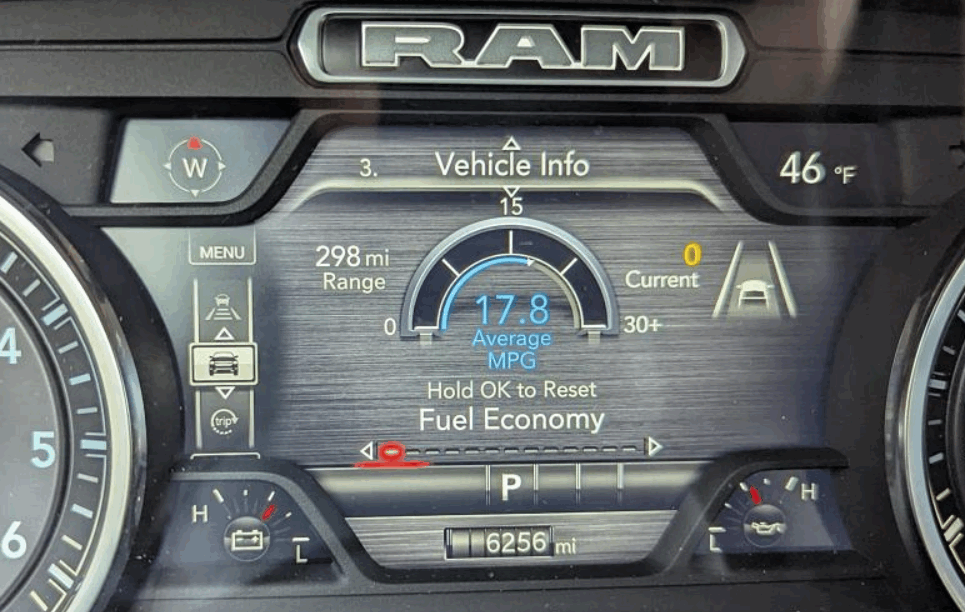
How Many Miles Per Gallon Does a Dodge Ram 1500 Get?
The Dodge Ram 1500 gets different fuel economy ratings depending on the engine, drivetrain, and model configuration. A Ram 1500 can achieve different MPG results because each powertrain uses fuel differently. Engine size, vehicle weight, and mechanical design directly affect fuel consumption.
The Ram 1500 fuel economy range depends on the selected engine option. Models with smaller or more efficient engines usually provide better MPG for daily driving. Models with larger engines often produce more horsepower and towing capability but consume more fuel under heavy loads.
EPA fuel economy ratings measure three main categories: city MPG, highway MPG, and combined MPG. City MPG represents fuel use during slower driving with frequent stops. Highway MPG measures efficiency during steady speed driving. Combined MPG combines both conditions into a single average number.
Real world Dodge Ram 1500 gas mileage often differs from EPA estimates. A driver who uses the truck mainly for highway commuting may achieve better fuel economy than a driver who frequently carries heavy loads or drives in urban traffic. Towing, aggressive acceleration, cold weather, and poor tire maintenance can also reduce miles per gallon.
The best Ram 1500 MPG depends on the driver’s purpose. A commuter may prioritize fuel efficiency, while a contractor or truck owner who regularly tows equipment may prioritize torque and capability. Choosing the right engine configuration helps balance fuel cost and performance.
What Is the Ram 1500 Gas Mileage by Engine Type?
The Ram 1500 gas mileage changes significantly based on the engine option. Each powertrain uses a different design to balance fuel efficiency, horsepower, and towing performance. Drivers who choose a Ram 1500 should consider how they use the truck because the most powerful engine is not always the most fuel efficient option.
The main engine factors that affect Ram 1500 MPG include engine displacement, fuel type, turbocharging technology, hybrid assistance, and vehicle weight. A smaller engine can reduce fuel consumption during daily driving, while a larger engine can provide stronger performance when carrying heavy loads or towing trailers.
How Does the Ram 1500 V6 Engine Affect Fuel Economy?
The 3.6L Pentastar V6 engine focuses on efficiency and everyday usability. This engine provides enough power for commuting, light towing, and general truck duties while maintaining competitive fuel economy.
The eTorque mild hybrid system improves the V6 engine’s efficiency by supporting the engine during acceleration and helping reduce fuel waste. The system uses electrical assistance to improve engine operation, especially during low speed driving and stop and go traffic.
The Ram 1500 V6 is suitable for drivers who need a dependable pickup truck without requiring maximum towing capability. It provides a practical balance between fuel consumption and daily performance.
How Does the Ram 1500 HEMI V8 Engine Affect Gas Mileage?
The 5.7L HEMI V8 engine prioritizes power and capability over maximum fuel efficiency. This engine produces strong horsepower and torque, which makes it popular among drivers who tow trailers, transport heavy cargo, or need additional performance.
The HEMI V8 can use more fuel because it has a larger displacement and higher power output. However, technologies such as cylinder deactivation help reduce fuel consumption during lighter driving conditions. The system allows the engine to operate with fewer active cylinders when full power is not required.
Drivers who frequently tow or carry heavy loads may accept lower MPG because the HEMI V8 provides stronger capability. For daily highway commuting without heavy loads, a smaller engine may deliver better fuel savings.
How Does the Ram 1500 Diesel Engine Compare for MPG?
The 3.0L EcoDiesel V6 delivers strong fuel efficiency because diesel engines produce high torque at lower engine speeds. This characteristic helps the Ram 1500 maintain efficiency during highway driving and towing situations.
The EcoDiesel engine is designed for drivers who want improved fuel economy without giving up truck capability. Diesel technology allows the engine to produce strong pulling power while using less fuel during long distance driving.
For drivers who spend more time on highways or regularly tow moderate loads, the diesel engine can provide an efficient balance between performance and fuel consumption. However, fuel savings depend on driving patterns, maintenance, and fuel prices.
What Factors Change Dodge Ram 1500 Real World MPG?
The real world Dodge Ram 1500 gas mileage changes based on how, where, and why the truck is driven. EPA fuel economy ratings provide a standard measurement, but daily driving conditions often create different results. Factors such as towing, driving habits, weather, and vehicle setup directly influence fuel consumption.
How Does Towing Affect Ram 1500 Fuel Economy?
Towing reduces Ram 1500 MPG because the engine must produce more power to move additional weight. A heavier trailer increases engine workload, requires more fuel, and creates more resistance during acceleration.
Trailer size and weight have a major effect on fuel economy. A lightweight trailer may create a small MPG reduction, while a large trailer can significantly lower fuel efficiency. Aerodynamic resistance also increases when towing tall or wide trailers because the truck needs more energy to maintain speed.
The engine choice affects towing fuel consumption as well. A diesel engine can maintain efficiency during heavy loads because it produces strong torque at lower engine speeds. A gasoline V8 engine can provide higher power output but may consume more fuel when working under continuous load.
How Does Driving Style Affect Ram 1500 MPG?
Driving habits play an important role in fuel efficiency. Rapid acceleration, frequent braking, and high speed driving increase fuel consumption because the engine requires more energy to maintain vehicle movement.
Smooth acceleration and consistent speeds help the Ram 1500 use less fuel. Highway driving usually creates better MPG results because the truck operates at a steady speed with fewer stops. City driving often produces lower MPG because repeated acceleration and idling increase fuel use.
Excessive idling also reduces fuel economy. The engine consumes fuel while the truck remains stationary, which lowers the average MPG calculation. Drivers who reduce unnecessary idling can improve overall fuel efficiency.
How Do Weather and Road Conditions Change Ram 1500 Fuel Consumption?
Weather conditions can change how efficiently a Ram 1500 uses fuel. Cold temperatures increase fuel consumption because the engine needs more time to reach operating temperature. Cold air can also increase resistance and affect tire pressure.
Road conditions create additional fuel demands. Driving uphill requires more engine power, while rough terrain increases energy consumption. Strong headwinds can also reduce highway MPG because the truck must work harder to maintain speed.
Tire condition and maintenance also affect fuel economy. Underinflated tires increase rolling resistance and force the engine to use more fuel. Regular maintenance, proper tire pressure, and efficient driving habits help maintain consistent Ram 1500 MPG.
How Far Can a Dodge Ram 1500 Travel on One Tank?
The Dodge Ram 1500 driving range depends on three main factors: fuel tank capacity, engine efficiency, and driving conditions. A truck with better gas mileage can travel farther between refueling stops, even when two models have similar fuel tank sizes.
The Ram 1500 typically uses a fuel tank designed to support long distance driving. The total driving range changes based on the selected engine and drivetrain. A fuel efficient engine can provide a longer range during highway travel, while a powerful engine may consume more fuel during towing or heavy duty operation.
Highway driving usually provides the best range because the engine operates at a consistent speed. A Ram 1500 traveling on open roads can achieve better fuel economy than the same truck used in heavy city traffic. Frequent stops, acceleration, and idling reduce the distance the truck can travel on a single tank.
Engine selection also affects long distance capability. Diesel powered Ram 1500 models are known for strong highway efficiency because diesel engines deliver high torque with lower fuel consumption during steady driving. Gasoline engines may provide more immediate power but often use more fuel when carrying heavy loads or towing.
Driving habits also determine how often a driver needs to refuel. Maintaining proper tire pressure, reducing unnecessary weight, and following regular maintenance schedules help preserve fuel efficiency. For owners who use their Ram 1500 for commuting or road trips, understanding driving range helps estimate fuel costs and plan longer journeys more effectively.
Is Dodge Ram 1500 Gas Mileage Good Compared With Other Trucks?
The Dodge Ram 1500 gas mileage is competitive among full size pickup trucks, but its fuel efficiency depends on the engine and configuration. Modern truck buyers often compare MPG ratings because fuel costs represent a major part of long term ownership expenses.
The Ram 1500 competes directly with trucks such as the Ford F 150, Chevrolet Silverado 1500, GMC Sierra 1500, and Toyota Tundra. Each model uses different engine technologies to balance fuel economy, performance, towing ability, and reliability.
How Does Ram 1500 MPG Compare With Ford F 150?
The Ford F 150 offers several powertrain options designed around fuel efficiency and performance. Hybrid technology and turbocharged engines help the F 150 achieve strong fuel economy in certain configurations.
The Ram 1500 focuses on a balance between comfort, capability, and efficiency. Engine choices such as the Pentastar V6, EcoDiesel, and newer turbocharged options allow drivers to select a configuration based on their priorities.
The comparison depends on the specific engine rather than the truck brand alone. A fuel efficient Ram 1500 configuration can compete closely with similar F 150 models, while high performance versions may prioritize power over MPG.
How Does Ram 1500 MPG Compare With Chevrolet Silverado 1500?
The Chevrolet Silverado 1500 provides multiple gasoline and diesel engine choices. Like the Ram 1500, its fuel economy changes based on engine size, drivetrain, and vehicle configuration.
The Silverado diesel option can provide strong highway efficiency because diesel engines produce high torque with lower fuel consumption during long distance driving. The Ram 1500 diesel models follow a similar approach by combining towing capability with improved fuel efficiency.
For everyday driving, the difference between the two trucks often depends on the selected engine and how the owner uses the vehicle. A lighter configuration with an efficient engine usually provides better MPG than a heavier towing focused setup.
How Does Ram 1500 MPG Compare With Toyota Tundra?
The Toyota Tundra uses modern hybrid and turbocharged engine technology to improve performance and efficiency. Its newer powertrain systems focus on producing strong torque while maintaining competitive fuel economy.
The Ram 1500 remains a strong option for drivers who want a combination of smooth driving, engine variety, and practical fuel efficiency. Buyers should compare specific trims and engines rather than only comparing truck names.
Overall, the best fuel economy choice depends on the driver’s needs. Drivers who prioritize commuting efficiency may choose a different configuration than those who need maximum towing strength. The most suitable Ram 1500 model is the one that matches the owner’s daily driving conditions and performance requirements.
How Can You Improve Dodge Ram 1500 Fuel Economy?
Improving Dodge Ram 1500 fuel economy requires a combination of proper maintenance, efficient driving habits, and smart vehicle use. Although drivers cannot change the engine design, they can reduce unnecessary fuel consumption through several practical actions.
Maintaining correct tire pressure is one of the simplest ways to protect Ram 1500 MPG. Underinflated tires create higher rolling resistance, which forces the engine to use more energy. Checking tire pressure regularly helps the truck move more efficiently and improves overall performance.
Reducing unnecessary weight also helps improve fuel efficiency. Extra tools, equipment, or unused cargo in the truck bed increase the workload on the engine. Removing items that are not needed can reduce fuel consumption during daily driving.
Driving style has a direct impact on gas mileage. Smooth acceleration, steady speeds, and fewer sudden stops help the Ram 1500 use fuel more efficiently. Highway driving usually provides better MPG because the engine operates at a consistent speed with fewer interruptions.
Regular maintenance keeps the truck operating at its best. Engine oil changes, air filter replacement, and scheduled inspections help maintain efficient engine performance. A poorly maintained vehicle often requires more fuel to produce the same level of power.
Finally, avoiding unnecessary idling can reduce fuel waste. Turning off the engine during long waiting periods helps preserve fuel and improves average MPG. These simple practices allow Ram 1500 owners to lower fuel costs while maintaining reliable truck performance.
What Should You Consider When Choosing a Ram 1500 for Better Fuel Economy?
Choosing the right Ram 1500 for better fuel economy depends on how the truck will be used. There is no single engine that provides the best result for every driver. The most efficient option depends on driving distance, towing needs, cargo requirements, and daily usage.
Drivers who focus on commuting and regular highway driving may benefit from an engine that prioritizes fuel efficiency. A smaller or more efficient powertrain can reduce fuel costs while still providing enough capability for everyday tasks. Drivers who frequently tow trailers or carry heavy loads may prefer a more powerful engine because towing performance becomes more important than maximum MPG.
The Dodge Ram 1500 gas mileage also depends on real world conditions. Weather, driving habits, vehicle maintenance, and payload can change fuel consumption significantly. EPA ratings provide useful comparisons, but actual MPG reflects how the truck operates in daily situations.
Maintaining proper tire pressure, reducing unnecessary weight, following service schedules, and driving efficiently can help every Ram 1500 achieve better fuel economy. These practices improve efficiency without affecting the truck’s reliability or capability.
Understanding Ram 1500 MPG ratings by engine and driving condition allows buyers to make better decisions. The best Ram 1500 configuration is the one that matches the driver’s priorities while providing the right balance between fuel efficiency, performance, and long term ownership value.