Hyundai Palisade Adaptive Cruise Control not working usually means the vehicle’s driver assistance system has detected a problem. The issue can come from the radar sensor, front camera, software, or operating conditions.
The Hyundai Palisade uses Adaptive Cruise Control, also known as Smart Cruise Control, to maintain a safe distance from vehicles ahead. The system combines radar data, camera information, vehicle speed, and braking control to adjust the driving speed automatically.
ACC does not work when the system cannot collect accurate information. A blocked radar sensor, dirty camera lens, bad weather, or a system error can prevent activation. Some problems appear temporarily, while others require inspection and calibration.
This guide explains why Hyundai Palisade Adaptive Cruise Control stops working. It covers common causes, warning messages, troubleshooting steps, and situations that require professional repair. Understanding these problems helps owners identify whether they can solve the issue themselves or need technical assistance.
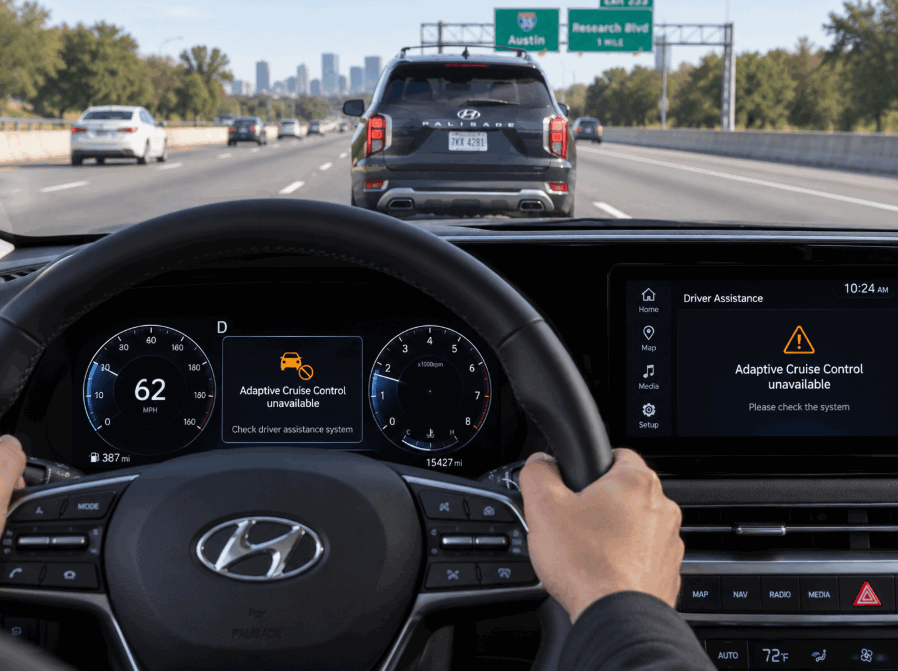
Why Is Hyundai Palisade Adaptive Cruise Control Not Working?
Hyundai Palisade Adaptive Cruise Control stops working when the system detects a condition that prevents safe operation. The ACC system depends on accurate information from multiple components, including the front radar sensor, windshield camera, vehicle speed sensors, and electronic control modules. When one of these components cannot provide reliable data, the system disables Adaptive Cruise Control.
The most common causes of Hyundai Palisade Adaptive Cruise Control failure include sensor blockage, camera obstruction, unsuitable driving conditions, software issues, and damaged system components. Each cause affects the way the vehicle detects surrounding traffic and controls the following distance.
A blocked front radar sensor is one of the most frequent reasons for ACC failure. The radar sensor measures the distance between the Palisade and the vehicle ahead. Dirt, mud, snow, ice, or road debris can interrupt the radar signal and cause the system to display a warning or become unavailable.
The front camera can also prevent ACC operation when it cannot recognize road conditions correctly. The camera sits behind the windshield and supports Hyundai’s driver assistance features. Dust, moisture, stickers, cracks, or poor visibility can reduce camera performance and trigger an ACC warning.
Hyundai Palisade Adaptive Cruise Control may also stop working because of temporary operating conditions. Heavy rain, fog, strong sunlight, or driving situations without a clear vehicle ahead can limit system performance. The vehicle may disable ACC until conditions return to normal.
Electrical problems and software errors create another group of ACC failures. The system requires communication between sensors, control modules, and vehicle systems. A weak battery, disconnected component, or outdated software can interrupt this communication and prevent ACC activation.
How Does Hyundai Palisade Adaptive Cruise Control Work?
Hyundai Palisade Adaptive Cruise Control works by combining radar detection, camera recognition, and vehicle control systems to maintain a safe following distance. The system does more than maintain a fixed speed. It monitors traffic conditions and adjusts acceleration or braking when another vehicle appears ahead.
The front radar sensor plays a key role in distance measurement. It sends signals toward vehicles in front of the Palisade and calculates their position and speed. The system uses this information to determine whether the vehicle needs to slow down or continue at the selected cruising speed.
The forward-facing camera provides additional information about the road environment. It helps the vehicle recognize lane conditions, vehicles, and other objects that affect driver assistance functions. The camera works together with the radar sensor to improve detection accuracy.
The electronic control unit (ECU) processes information from these sensors and controls the ACC response. When the system detects a slower vehicle ahead, the ECU communicates with the engine and braking systems to reduce speed. When the road becomes clear, the system allows the vehicle to return to the selected cruising speed.
Hyundai Palisade Adaptive Cruise Control also connects with other Hyundai ADAS features, such as Forward Collision-Avoidance Assist (FCA). These systems share sensor information to support safer driving. However, ACC remains a driver assistance feature, and the driver must always monitor the road and maintain control of the vehicle.
What Warning Messages Appear When Hyundai Palisade ACC Stops Working?
Hyundai Palisade Adaptive Cruise Control displays warning messages when the system detects a problem with its sensors, control modules, or operating conditions. These warnings help drivers understand why the ACC function becomes unavailable. The exact message can vary depending on the vehicle model year and system condition.
One common warning is “Smart Cruise Control Disabled.” This message appears when the vehicle cannot activate the ACC system. The cause may include blocked sensors, incorrect activation conditions, or a temporary system interruption. Drivers should check the radar sensor area and restart the vehicle before seeking further diagnosis.
Another warning is “Radar Blocked.” This message indicates that the front radar sensor cannot detect objects correctly. The radar area may have dirt, snow, ice, mud, or other obstacles that interrupt the sensor signal. Cleaning the sensor surface can restore normal operation when physical blockage causes the problem.
The Hyundai Palisade may also display “Check Driver Assistance System” when the vehicle detects an issue with its ADAS components. This warning can relate to the radar sensor, front camera, electrical communication, or software problems. A persistent warning requires a diagnostic scan to identify the affected system.
A Forward Safety System Error warning can also affect Adaptive Cruise Control availability. Hyundai Palisade shares information between ACC and other safety systems, including Forward Collision-Avoidance Assist. When one connected system detects a failure, the vehicle may limit several driver assistance functions.
Drivers should not ignore repeated ACC warning messages. A temporary warning may disappear after cleaning sensors or restarting the vehicle, but continuous alerts usually indicate a problem that requires inspection. Identifying the warning message helps narrow down the cause and prevents unnecessary repairs.
How Can You Fix Hyundai Palisade Adaptive Cruise Control Not Working?
You can fix Hyundai Palisade Adaptive Cruise Control not working by checking the sensors, removing possible obstructions, restarting the vehicle, and confirming the system operating conditions. Most temporary ACC problems come from blocked sensors or situations where the vehicle cannot collect accurate driving information.
The first step is to inspect the front radar sensor. The radar sensor usually sits behind the front grille area and helps the vehicle measure the distance from other vehicles. Dirt, snow, ice, mud, or road debris can block the radar signal. Cleaning the sensor surface with a soft cloth can restore ACC operation when the blockage causes the failure.
The next step is to check the front camera area behind the windshield. The camera supports Hyundai Palisade driver assistance functions by identifying vehicles and road conditions. Remove dust, moisture, stickers, or objects that block the camera view. A clean windshield area allows the camera to capture clearer information.
Restarting the Hyundai Palisade can also resolve temporary electronic errors. Turn off the vehicle, wait briefly, and start it again to allow the control modules to reload. This method may help when ACC stops working because of a temporary software or communication issue.
Drivers should also check whether the vehicle meets ACC activation conditions. The system may not activate when the vehicle speed is outside the required range, when road conditions prevent safe operation, or when another safety system has detected an issue.
If cleaning sensors and restarting the vehicle do not solve the problem, the vehicle may need a diagnostic inspection. A technician can check fault codes, sensor operation, software status, and calibration requirements to identify the exact cause.
What Causes Hyundai Palisade ACC Sensor Problems?
Hyundai Palisade ACC sensor problems happen when the radar sensor, front camera, or related electronic systems cannot collect accurate information. Adaptive Cruise Control requires precise data to measure vehicle distance and speed. Any issue that affects sensor accuracy can cause the system to disable or limit ACC operation.
A blocked radar sensor is one of the most common ACC sensor problems. The front radar sensor needs a clear path to detect vehicles ahead. Dirt, snow, ice, mud, or road debris can weaken the radar signal. When the system cannot measure distance correctly, the Hyundai Palisade may turn off Adaptive Cruise Control and display a warning message.
A damaged or misaligned radar sensor can also cause ACC failure. Front-end collisions, bumper repairs, or incorrect installation can change the sensor position. Even a small alignment change can affect how the radar calculates the distance and speed of surrounding vehicles.
The front camera creates another possible source of ACC problems. The camera requires a clear view through the windshield to recognize vehicles and road conditions. Windshield replacement, cracks, moisture, or objects blocking the camera area can reduce system accuracy and trigger driver assistance warnings.
Software and communication problems can affect ACC sensors as well. The radar sensor, camera, ECU, and other vehicle modules must exchange information continuously. A communication failure between these components can prevent the system from activating even when the sensors appear physically clean.
Regular sensor maintenance helps reduce ACC problems. Keeping the radar area clean, maintaining a clear windshield, and checking the system after collisions or repairs can help preserve Hyundai Palisade driver assistance performance.
Does Hyundai Palisade Adaptive Cruise Control Need Calibration?
Hyundai Palisade Adaptive Cruise Control needs calibration when the radar sensor or front camera cannot maintain accurate positioning after repairs or physical changes. Calibration allows the ADAS system to recognize objects correctly and measure vehicle distance with higher accuracy.
A windshield replacement is one of the most common situations that requires camera calibration. The forward-facing camera sits behind the windshield and depends on precise positioning to detect vehicles and road information. Even when a new windshield looks identical to the original, small differences in camera alignment can affect ACC and other driver assistance features.
Front-end repairs can also require radar sensor calibration. The radar sensor location can change after a collision, bumper replacement, or repair near the sensor mounting area. Since ACC depends on accurate distance measurements, an incorrectly positioned radar sensor may cause warning messages or unreliable system operation.
Hyundai Palisade owners may also need calibration after replacing ACC-related components. These components include the front radar sensor, forward camera, or related control modules. A technician uses specialized equipment to check sensor alignment and restore the correct operating position.
Calibration is usually not necessary for simple issues such as a dirty radar sensor or blocked camera view. Cleaning the affected area can solve problems caused by temporary obstructions. However, persistent ACC warnings after cleaning often indicate a deeper issue that requires professional diagnosis.
A properly calibrated Adaptive Cruise Control system improves the accuracy of Hyundai Palisade safety features. Regular calibration checks after major repairs help ensure that the vehicle’s ADAS technology works according to manufacturer specifications.
Can You Drive a Hyundai Palisade With Adaptive Cruise Control Not Working?
You can usually drive a Hyundai Palisade when Adaptive Cruise Control is not working because the vehicle can still operate with normal manual driving controls. However, the driver must control the speed, maintain a safe following distance, and monitor traffic conditions without ACC assistance.
When ACC stops working, the main limitation is the loss of automatic speed adjustment. The system can no longer slow down or accelerate based on the distance from vehicles ahead. The driver must use the accelerator and brake pedals to manage changing traffic situations.
A failed ACC system does not always mean that all Hyundai Palisade safety features have stopped working. Some driver assistance functions may continue operating depending on the specific problem. However, ACC shares information with other ADAS components, so a serious sensor or communication issue may affect additional safety systems.
Drivers should pay attention to dashboard warnings before continuing normal use. A temporary ACC warning caused by a dirty radar sensor or poor weather may disappear after the condition improves. A warning that remains after cleaning and restarting the vehicle usually indicates a problem that needs inspection.
You should avoid relying on Adaptive Cruise Control until the system works correctly again. ACC is designed to support the driver, not replace driver attention. If the system shows repeated errors, schedule a diagnostic check to identify the cause and restore proper operation.
How Can You Prevent Hyundai Palisade Adaptive Cruise Control Problems?
You can prevent Hyundai Palisade Adaptive Cruise Control problems by maintaining the radar sensor, keeping the camera area clear, and checking the system after vehicle repairs. Regular care helps the ACC system collect accurate information and reduces the chance of unexpected warnings.
Keeping the front radar sensor clean is one of the most important maintenance steps. The radar needs a clear surface to detect vehicles ahead. Dirt, insects, mud, snow, and ice can interfere with sensor performance. Cleaning the sensor area regularly helps maintain stable ACC operation.
Maintaining a clear windshield also protects the performance of the forward-facing camera. The camera depends on a clean view to recognize vehicles and road conditions. Drivers should remove dust, moisture, stickers, and other objects that block the camera area.
Vehicle repairs require additional attention because ACC components need precise alignment. After a collision, bumper repair, or windshield replacement, owners should check whether the radar sensor or camera requires inspection and calibration. Incorrect alignment can reduce the accuracy of Hyundai Palisade driver assistance systems.
Software updates and regular vehicle maintenance also support ACC reliability. Hyundai Palisade uses multiple electronic modules that communicate with each other. Keeping the vehicle systems updated and addressing warning messages early can help prevent larger driver assistance problems.
Drivers should also understand the limits of Adaptive Cruise Control. Weather conditions, road environments, and sensor limitations can affect system performance. Using ACC correctly and maintaining the related components helps the Hyundai Palisade provide more consistent driver assistance.
What Is the Difference Between Hyundai Adaptive Cruise Control and Smart Cruise Control?
Hyundai Adaptive Cruise Control and Hyundai Smart Cruise Control describe the same type of driver assistance technology. Adaptive Cruise Control is the general automotive term, while Smart Cruise Control (SCC) is Hyundai’s name for its version of adaptive speed and distance control.
Both systems help drivers maintain a selected cruising speed while adjusting the vehicle’s distance from traffic ahead. The technology uses sensors, such as the front radar sensor and forward-facing camera, to monitor surrounding vehicles and support automatic speed adjustments.
The main difference is the naming and features included by each manufacturer. Adaptive Cruise Control refers to the basic function of maintaining speed and following distance. Hyundai Smart Cruise Control combines this function with additional driver assistance technologies that work with the vehicle’s ADAS system.
Hyundai Palisade Smart Cruise Control can use information from multiple sensors to adjust driving behavior. When the system detects a slower vehicle ahead, it reduces speed to maintain a safer gap. When traffic conditions improve, it can return to the selected cruising speed.
Understanding the difference between these terms helps Hyundai Palisade owners search for the correct information. A driver looking for “Hyundai Palisade Adaptive Cruise Control not working” may also find relevant solutions by searching for “Hyundai Palisade Smart Cruise Control not working” because both terms refer to the same core system.
Adaptive Cruise Control and Smart Cruise Control still require driver attention. These systems support driving comfort and safety, but they do not replace the driver’s responsibility to control the vehicle.