The Hyundai Palisade Blind Spot Monitor helps drivers detect vehicles in hidden areas beside the vehicle. When this system stops working, it can reduce the effectiveness of important safety alerts. Most failures come from sensor blockage, radar problems, electrical issues, software errors, or calibration problems.
The Blind Spot Monitor works as part of Hyundai SmartSense. The system uses rear radar sensors to identify vehicles near the Palisade. It sends warnings through the side mirror indicators and the vehicle display when another vehicle enters the blind spot area.
A Hyundai Palisade Blind Spot Monitor problem does not always require expensive repairs. Drivers can often identify the cause by checking sensor areas, vehicle settings, battery condition, and warning messages. However, some problems require professional diagnosis because radar sensors and ADAS components need accurate calibration.
This guide explains the main reasons why the Hyundai Palisade Blind Spot Monitor is not working. It covers common symptoms, troubleshooting steps, repair options, and prevention methods. Understanding these causes helps owners maintain their vehicle’s safety systems and respond to warning signs correctly.
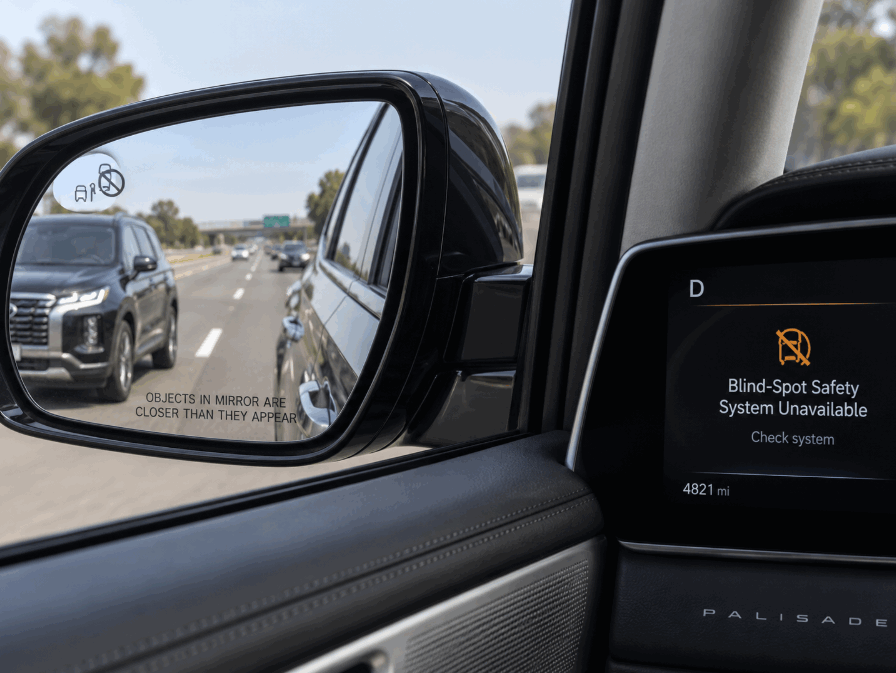
Why Is My Hyundai Palisade Blind Spot Monitor Not Working?
The Hyundai Palisade Blind Spot Monitor stops working when the system cannot receive accurate information from its sensors or control components. The most common causes include blocked radar sensors, damaged sensor hardware, low battery voltage, electrical faults, software problems, and calibration issues. Each problem affects how the system detects vehicles and provides warnings to the driver.
The Blind Spot Monitor depends on rear corner radar sensors that continuously scan areas beside and behind the vehicle. When these sensors cannot measure surrounding traffic correctly, the system may disable itself to prevent incorrect warnings. The vehicle may display messages such as “Blind Spot Safety System Disabled” or “Check Blind Spot Safety System” when it detects a problem.
One common cause is a blocked or dirty radar sensor. The Hyundai Palisade places these sensors near the rear bumper area, where they can collect dirt, mud, snow, or ice. A layer of material on the sensor surface can interfere with radar signals and reduce detection accuracy. Cleaning the sensor area can restore normal operation when blockage is the only issue.
Physical damage creates another common failure point. Rear bumper impacts, even minor collisions, can affect radar sensor alignment or damage internal components. A sensor that looks normal from the outside may still require inspection because radar systems depend on precise positioning.
Electrical problems can also stop the Blind Spot Monitor from working correctly. The system communicates with multiple electronic modules, including the vehicle’s control units. A weak battery, damaged wiring connection, or communication error can interrupt this process and trigger a safety system warning.
Software issues and calibration errors represent another category of problems. Hyundai Palisade ADAS features require accurate data from sensors and control modules. After certain repairs, such as bumper replacement or sensor replacement, technicians may need to perform calibration to restore proper operation.
How Does the Hyundai Palisade Blind Spot Monitor System Work?
The Hyundai Palisade Blind Spot Monitor uses radar sensors and electronic control systems to detect vehicles that enter the driver’s blind spot. The system monitors areas beside the rear corners of the vehicle and provides alerts when another vehicle creates a potential collision risk. This technology works as part of Hyundai SmartSense, which combines multiple driver assistance features to improve road awareness.
The system uses rear corner radar sensors to measure the distance and movement of nearby vehicles. These sensors send information to the vehicle’s control modules, which analyze whether another vehicle is traveling in a dangerous position. When the system identifies a vehicle in the blind spot area, it activates warning indicators on the side mirrors or vehicle display.
The Blind Spot Monitor does not operate as a standalone feature. It works together with other Hyundai SmartSense technologies, including Rear Cross Traffic Collision Warning and other Advanced Driver Assistance Systems. These systems share information from different sensors to help the vehicle provide more accurate safety warnings.
The radar sensors require precise positioning to function correctly. Even a small change in sensor angle can affect detection performance because radar technology depends on accurate signal direction and distance measurement. This is why Hyundai Palisade vehicles may require ADAS calibration after specific repairs, such as rear bumper replacement or sensor replacement.
Understanding how the Blind Spot Monitor works helps owners identify possible causes when the system fails. A warning message does not always indicate a damaged sensor. It may also point to a temporary blockage, communication problem, or calibration issue that affects the system’s ability to process sensor data.
Can Dirty or Damaged Sensors Cause Hyundai Palisade Blind Spot Monitor Failure?
Dirty or damaged sensors are among the most common reasons why a Hyundai Palisade Blind Spot Monitor stops working. The system depends on rear radar sensors to detect nearby vehicles, and any obstruction or physical damage can affect the accuracy of the radar signal. When the sensor cannot collect reliable information, the vehicle may temporarily disable the Blind Spot Monitor.
The Hyundai Palisade places its blind spot radar sensors near the rear bumper corners. This location allows the system to monitor vehicles approaching from the side and rear areas. However, the position also exposes the sensors to road conditions such as dust, mud, heavy rain residue, snow, and ice.
A blocked sensor reduces the radar’s ability to identify surrounding objects. For example, thick dirt or ice covering the sensor surface can interrupt the radar signal and cause the vehicle to display a warning message. Cleaning the rear bumper sensor areas with appropriate methods can solve the problem when the system failure comes from external blockage.
Physical damage creates a more serious issue because radar sensors require accurate alignment. A rear bumper impact can move the sensor position even when the bumper damage appears minor. Small alignment changes can affect detection range and cause inaccurate readings.
Drivers should inspect the rear bumper areas around the radar sensors after a collision, bumper repair, or aftermarket modification. If cleaning does not restore the Blind Spot Monitor, the vehicle may need a diagnostic scan or sensor calibration to identify the exact problem.
Can Battery or Electrical Problems Make the Hyundai Palisade Blind Spot Monitor Stop Working?
Battery and electrical problems can cause the Hyundai Palisade Blind Spot Monitor to stop working because the system depends on stable power and communication between multiple electronic components. The radar sensors, control modules, and vehicle safety systems need consistent electrical signals to process information correctly. When voltage drops or communication fails, the vehicle may disable the Blind Spot Monitor as a protective measure.
A weak vehicle battery is one possible cause of temporary safety system failures. Modern Hyundai Palisade models use many electronic systems that require reliable voltage during startup and operation. If the battery cannot provide enough power, the vehicle may show warning messages related to driver assistance features, including Blind Spot Safety System warnings.
Electrical connections can also affect system performance. Damaged wiring, loose connectors, or problems with related control modules can interrupt communication between the radar sensors and the vehicle computer. When the system cannot receive accurate sensor information, it may stop providing blind spot alerts.
The vehicle fuse system should also be considered during diagnosis. A damaged fuse can prevent power from reaching specific components and cause safety features to become unavailable. However, replacing a fuse without identifying the original cause may not solve the problem if another electrical issue exists.
Drivers can perform basic checks before visiting a repair facility. They can inspect whether other electronic systems show unusual behavior, check for battery-related symptoms, and review dashboard warning messages. If the Blind Spot Monitor remains disabled after restarting the vehicle, a professional diagnostic scan can identify communication errors and electrical faults.
How Do You Reset the Hyundai Palisade Blind Spot Monitor?
Resetting the Hyundai Palisade Blind Spot Monitor can help resolve temporary system errors caused by software glitches, sensor communication issues, or short term electrical problems. A reset does not repair damaged hardware, but it allows the vehicle to restart its safety systems and check whether the problem still exists.
The first step is to turn off the vehicle completely and restart it after a short period. This action allows the electronic control modules to reboot and reconnect with the radar sensors. If the system experienced a temporary communication error, the Blind Spot Monitor may return to normal operation after the restart.
Drivers should also check the sensor areas around the rear bumper before testing the system again. Dirt, mud, snow, or ice can block radar signals and cause the vehicle to disable the feature. Cleaning these areas helps the sensors collect accurate information from surrounding vehicles.
The vehicle settings should also be reviewed because the Blind Spot Safety feature can be manually disabled in some Hyundai Palisade models. Drivers should confirm that the system remains activated through the vehicle’s infotainment settings or driver assistance menu.
If the warning message remains after restarting and checking the sensors, the problem may require further diagnosis. A professional scan tool can identify fault codes stored in the vehicle’s control modules. These codes help technicians determine whether the issue involves a radar sensor, electrical connection, software problem, or calibration requirement.
A reset works best for temporary problems. Persistent Blind Spot Monitor failures usually indicate an underlying issue that requires inspection and repair.
Does Hyundai Palisade Blind Spot Monitor Need Calibration After Repairs?
The Hyundai Palisade Blind Spot Monitor may need calibration after certain repairs because the radar sensors require precise positioning to detect vehicles accurately. Calibration ensures that the system understands the correct sensor angle, detection range, and communication settings after a component change or physical impact.
Rear bumper repairs are one of the most common situations that can affect Blind Spot Monitor accuracy. The radar sensors sit behind the rear bumper area, so an accident or bumper replacement can change their position. Even a small adjustment in sensor alignment can affect how the system identifies vehicles near the blind spot area.
Sensor replacement also requires proper calibration. A new radar sensor cannot always operate correctly immediately after installation because the vehicle control system needs to recognize and adjust the component. Technicians use specialized diagnostic equipment to complete the calibration process and confirm that the ADAS features work correctly.
Calibration may also become necessary after modifications that affect the rear area of the vehicle. For example, aftermarket bumpers, incorrect repairs, or structural changes can interfere with radar performance. The Blind Spot Monitor depends on accurate measurements, so changes around the sensor location can influence system reliability.
Drivers should consider professional inspection when the Blind Spot Monitor remains unavailable after cleaning sensors and restarting the vehicle. A calibration issue often requires specialized tools because the problem does not come from a simple setting or temporary software error.
Maintaining proper calibration helps the Hyundai Palisade safety system provide reliable warnings. It also ensures that other connected ADAS features can continue working with accurate sensor information.
How Much Does It Cost to Fix a Hyundai Palisade Blind Spot Monitor?
The cost to fix a Hyundai Palisade Blind Spot Monitor depends on the cause of the failure, the damaged components, and the repair process required. Simple problems, such as sensor blockage or incorrect settings, may require little or no repair cost. More complex issues, such as radar sensor replacement or ADAS calibration, can require professional service and specialized equipment.
Cleaning the radar sensor area is usually the lowest cost solution because it only requires removing dirt, mud, snow, or other materials that block the sensor. This repair applies when the system stops working because the radar cannot detect surrounding vehicles correctly.
A diagnostic inspection creates another common repair cost. Technicians use scan tools to read fault codes from the vehicle’s electronic control modules. This process helps identify whether the problem comes from the radar sensor, wiring system, battery voltage, or software communication issue.
Radar sensor replacement costs more because the component itself requires specialized hardware. The final price depends on the Hyundai Palisade model year, sensor availability, and labor costs. If the vehicle also needs ADAS calibration after sensor replacement, the repair process becomes more complex.
Electrical repairs can vary significantly depending on the damaged component. A loose connection may require a simple repair, while damaged wiring or control modules may require more extensive work. A professional diagnosis helps prevent unnecessary part replacement.
Owners should avoid replacing sensors without confirming the cause of failure. A Blind Spot Monitor warning does not always mean the radar sensor has failed. Proper diagnosis helps identify the correct repair and reduces unnecessary costs.
When Should You Take a Hyundai Palisade to a Dealer for Blind Spot Monitor Repair?
You should take a Hyundai Palisade to a dealer or qualified repair facility when the Blind Spot Monitor remains unavailable after basic troubleshooting steps. A persistent warning usually indicates a problem that requires diagnostic equipment, sensor testing, or professional calibration.
A professional inspection is necessary when the system shows repeated warning messages such as “Blind Spot Safety System Disabled” or “Check Blind Spot Safety System.” These messages indicate that the vehicle detected a problem it cannot resolve automatically. Technicians can use diagnostic tools to identify stored fault codes and determine which component requires attention.
You should also seek professional service after a collision or rear bumper repair. Even minor impacts can affect radar sensor alignment because the Blind Spot Monitor depends on accurate sensor positioning. A vehicle may appear visually normal while the radar system requires adjustment or calibration.
Multiple driver assistance warnings appearing at the same time also require further inspection. The Hyundai Palisade uses connected ADAS components, so one sensor or communication problem can affect several safety features. A complete system scan helps identify whether the issue involves one component or multiple systems.
Professional repair is also recommended when replacing radar sensors, modifying the rear bumper, or repairing related electrical components. These repairs may require calibration procedures to restore accurate detection.
Basic checks such as cleaning sensors, restarting the vehicle, and reviewing settings can solve simple issues. However, continued Blind Spot Monitor failure requires accurate diagnosis to maintain the reliability of the vehicle’s safety systems.
How Can You Prevent Hyundai Palisade Blind Spot Monitor Problems?
Preventing Hyundai Palisade Blind Spot Monitor problems starts with maintaining the sensors, electrical system, and vehicle components that support the safety feature. The system depends on accurate radar information, so regular care helps reduce failures caused by blocked sensors, damaged components, and communication issues.
Keeping the rear bumper sensor areas clean is one of the most effective maintenance steps. Dirt, mud, snow, and ice can interfere with radar signals and reduce detection accuracy. Drivers should check these areas after driving through heavy rain, winter conditions, or muddy roads to ensure the sensors remain clear.
Maintaining a healthy vehicle battery also helps protect electronic safety systems. The Hyundai Palisade uses multiple control modules that require stable electrical power. Regular battery inspections can help prevent low voltage problems that may affect the Blind Spot Monitor and other Hyundai SmartSense features.
Drivers should also avoid modifications that affect the rear bumper or radar sensor locations. Aftermarket bumpers, incorrect repairs, or accessories placed near sensor areas can change radar performance. Any repair involving the rear bumper should include a system inspection to confirm proper sensor operation.
Regular vehicle inspections can help identify potential issues before they become major problems. Checking warning messages, monitoring driver assistance features, and addressing unusual system behavior early can improve the reliability of the Blind Spot Monitor.
Proper maintenance does not eliminate every possible failure, but it reduces the risk of common problems and helps the Hyundai Palisade safety system continue operating as designed.
What Should You Do If Your Hyundai Palisade Blind Spot Monitor Is Not Working?
A Hyundai Palisade Blind Spot Monitor that is not working usually points to a specific issue with the sensor system, electrical components, software communication, or calibration. The first steps should include checking the radar sensor areas, restarting the vehicle, and reviewing the safety system settings. These actions can solve simple problems caused by temporary errors or sensor blockage.
If the system continues to display warning messages, the problem may require professional diagnosis. Radar sensor damage, wiring faults, battery issues, and calibration errors need proper testing because the Blind Spot Monitor depends on accurate data from multiple vehicle components. Replacing parts without identifying the actual cause can lead to unnecessary repair costs.
Regular maintenance helps protect the Hyundai Palisade safety system. Keeping sensors clean, maintaining battery health, and checking the vehicle after bumper repairs can reduce the risk of future failures. A properly functioning Blind Spot Monitor improves driver awareness and supports safer decision making on the road.
Understanding the causes behind Blind Spot Monitor failures allows Hyundai Palisade owners to respond quickly when problems appear. Early inspection and correct repairs help maintain the reliability of Hyundai SmartSense and its advanced driver assistance features.