A Hyundai Palisade backup camera not working can make parking and reversing more difficult, especially when drivers rely on the rear view camera and parking assistance system every day. In most cases, this problem does not always mean the camera itself has failed. The issue may come from a damaged wiring connection, a power supply problem, an infotainment system error, or a software issue.
The Hyundai Palisade backup camera system works together with several vehicle components. The rear camera captures the image, the camera module processes the signal, and the infotainment display shows the rear view when the vehicle shifts into reverse. If any part of this system has a problem, the camera may show a black screen, display an error message, or stop working completely.
Finding the correct cause is important because replacing the backup camera without proper diagnosis can lead to unnecessary repair costs. A simple system reset or software update may solve some problems, while other cases may require wiring repairs or camera replacement.
This guide explains why a Hyundai Palisade backup camera may stop working, how to diagnose the problem, and what solutions can restore normal operation.
Why Is My Hyundai Palisade Backup Camera Not Working?
The Hyundai Palisade backup camera system depends on communication between the rear camera, electrical components, and infotainment system. When the driver shifts the vehicle into reverse, the system sends power to the rear camera and activates the display screen. The camera then sends video information through the wiring system to the infotainment unit.
If the system cannot complete this process, the backup camera may fail to display an image. The cause can range from a minor software issue to a physical hardware failure.
One common reason is a faulty backup camera module. The rear camera is installed in an exposed area where it can face rain, dust, temperature changes, and road debris. Over time, moisture or physical damage can affect the internal electronics and reduce camera performance.
Another possible cause is a damaged wiring harness or loose electrical connector. The backup camera needs a stable connection to receive power and transmit video signals. A loose connector, broken wire, or corrosion inside the connector can interrupt communication between the camera and the infotainment system.
Electrical problems can also affect camera operation. A weak battery, blown fuse, or unstable voltage supply may prevent the backup camera from turning on correctly. Modern vehicles like the Hyundai Palisade rely heavily on electronic control systems, so voltage issues can create multiple symptoms at the same time.
Software problems are another factor to consider. The infotainment system controls many vehicle functions, including the rear view camera display. A software glitch, outdated firmware, or temporary system error may cause the camera screen to freeze, disappear, or show an unavailable message.
In some situations, the problem is not the camera but the display system itself. If the infotainment screen, control module, or communication network has a fault, the camera image may not appear even when the camera hardware works properly.
Understanding these possible causes helps narrow down the problem before starting repairs. A proper diagnosis should check the entire backup camera system instead of focusing only on the camera unit.
What Are the Common Symptoms of a Hyundai Palisade Backup Camera Problem?
A Hyundai Palisade backup camera problem can appear in different ways depending on which component has failed. Identifying the exact symptom can help determine the most likely cause and reduce unnecessary troubleshooting.
One of the most common signs is a black screen when the vehicle is placed in reverse. The infotainment display may switch to camera mode, but no image appears. This situation often points to a camera power issue, wiring problem, or failed rear camera module.
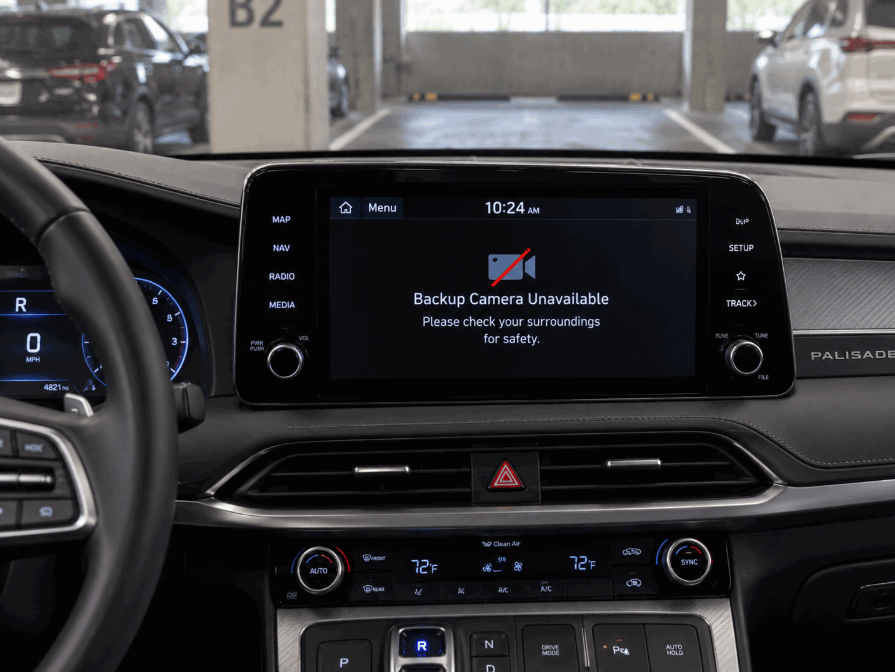
Some drivers may see a message such as “Camera unavailable” or a similar warning on the display. This usually means the infotainment system cannot communicate with the backup camera. Possible causes include a disconnected camera, software error, or communication failure between vehicle modules.
Another symptom is a flickering or unstable camera image. The screen may work normally at some times but lose the signal while driving or reversing. This type of problem often relates to a loose connector, damaged wiring, or an inconsistent power supply.
A blurry rear camera view is usually different from a complete camera failure. In many cases, the camera itself works, but the lens becomes dirty, scratched, or affected by moisture. Cleaning the lens may solve the problem without requiring any repair.
Intermittent operation is another common issue. The backup camera may work after starting the vehicle but fail later, or it may return to normal after restarting the infotainment system. These temporary problems often indicate software issues, electrical instability, or a connection problem.
Recognizing these symptoms allows owners to perform basic checks before visiting a repair facility. However, if the issue continues after simple troubleshooting, a deeper inspection of the camera system may be necessary.
How Do You Diagnose a Hyundai Palisade Backup Camera That Is Not Working?
Diagnosing a Hyundai Palisade backup camera problem starts with checking the complete camera system. The issue may come from the rear camera, wiring harness, electrical power, or infotainment system. A proper inspection helps identify the real cause before replacing any parts.
First, check what happens when you shift the vehicle into reverse. If the infotainment screen changes to camera mode but shows a black image, the system receives the reverse signal. In this case, the problem may involve the camera module, wiring connection, or power supply.
Next, restart the infotainment system and check the camera settings. A temporary software error can prevent the rear view camera from displaying correctly. If other features such as Bluetooth or navigation also have problems, the infotainment system may need further inspection.
The camera lens should also be checked for dirt, moisture, or physical damage. A dirty lens can create a blurry image, while water inside the camera housing may indicate hardware failure.
If the problem continues, inspect the fuse, wiring harness, and electrical connectors. Loose connections, damaged wires, or corrosion can interrupt the camera signal. For complex cases, a diagnostic scanner can help detect communication errors between the backup camera module and vehicle control systems.
A systematic diagnosis helps determine whether the Hyundai Palisade backup camera needs a reset, wiring repair, software update, or replacement. This approach saves time and prevents unnecessary repair costs.
How Do You Fix a Hyundai Palisade Backup Camera Problem?
Fixing a Hyundai Palisade backup camera problem depends on the cause of the failure. Some issues are simple and can be solved with basic troubleshooting, while others require electrical repair or component replacement. Identifying the correct cause helps avoid replacing the camera unnecessarily.
Start with a simple infotainment system reset. Temporary software glitches can prevent the rear view camera from connecting with the display. Restarting the system may restore normal operation without any additional repair.
If the problem is related to outdated software, updating the vehicle software can improve communication between the infotainment system and camera module. Software updates may fix errors that affect camera activation, image display, or system stability.
For image quality problems, clean the camera lens and check the camera housing for damage. Dirt, water, or debris can reduce visibility and make the camera appear faulty. Regular cleaning can help maintain a clear rear view.
When the issue comes from wiring problems, repair or replacement of damaged connectors and wires may be necessary. A loose electrical connection or corrosion can interrupt power and video signals between the camera and infotainment system.
If testing confirms that the backup camera module has failed, replacing the camera is usually the most effective solution. A replacement is often required when the camera has internal damage, water intrusion, or no video signal despite receiving proper power.
A complete repair should always follow proper diagnosis. Fixing the actual cause ensures the Hyundai Palisade backup camera works reliably and prevents repeated failures in the future.
When Does a Hyundai Palisade Backup Camera Need Replacement?
A Hyundai Palisade backup camera usually needs replacement when the camera hardware has failed and other system components work correctly. Before replacing the camera, technicians should confirm that the problem does not come from the wiring, fuse, power supply, or infotainment system.
One common sign of camera failure is a completely black screen even though the vehicle enters reverse mode normally. If the camera receives power but does not send a video signal, the internal camera module may be damaged.
Water intrusion is another reason a backup camera may require replacement. The rear camera is exposed to rain, washing, and road moisture. If water enters the camera housing, it can damage electronic components and create unstable operation or complete failure.
Physical damage can also affect camera performance. A cracked lens, damaged housing, or internal electronic failure may cause blurry images, missing video, or intermittent operation. In these cases, cleaning or resetting the system will not solve the problem.
Before installing a new camera, the technician should test the electrical connections and communication signals. This step confirms that the camera itself is the source of the issue.
The replacement process usually involves removing the damaged rear camera, checking the connector condition, installing the new unit, and testing the backup display function. After replacement, the system should provide a clear rear view image when the Hyundai Palisade shifts into reverse.
How Much Does It Cost to Fix a Hyundai Palisade Backup Camera?
The cost to fix a Hyundai Palisade backup camera depends on the cause of the problem and the repair method required. A simple software reset or camera lens cleaning may cost little or nothing, while replacing the camera module or repairing electrical problems can require a higher budget.
A diagnostic inspection is usually the first expense because technicians need to identify whether the problem comes from the camera, wiring, infotainment system, or another electrical component. This step helps prevent unnecessary part replacement.
Software updates or infotainment system resets are usually among the lower-cost solutions. If the issue comes from outdated software or a temporary system error, updating the vehicle software may restore normal camera operation without replacing hardware.
Wiring repairs can vary in cost depending on the damage location and repair difficulty. A loose connector may require a quick adjustment, while damaged wiring inside the vehicle may take more time to access and repair.
Backup camera replacement is usually the most expensive repair option. The total cost depends on the camera part price, labor charges, and whether the repair is completed at a Hyundai dealer or an independent automotive shop.
A dealership may provide factory-level diagnosis and original parts, but an independent repair shop may offer a more affordable solution for certain repairs. The best approach is to confirm the exact failure before spending money on replacement parts. A proper diagnosis ensures the Hyundai Palisade backup camera repair is cost-effective and long-lasting.
Can You Drive a Hyundai Palisade With a Broken Backup Camera?
A Hyundai Palisade can still be driven when the backup camera is not working, but the vehicle will lose an important parking and safety feature. The rear view camera helps drivers see areas behind the vehicle that may not be visible through the mirrors alone. Without this system, reversing and parking require more attention.
A failed backup camera does not usually affect the engine, transmission, or basic driving functions. The vehicle can continue operating normally if there are no other electrical warnings or system problems. However, drivers should use extra caution because rear visibility becomes limited.
A broken camera increases the risk of hitting objects, curbs, or other vehicles while reversing. This is especially important in crowded parking areas, narrow spaces, or locations with pedestrians. Drivers should check the surroundings carefully and use mirrors and direct visual checks until the camera is repaired.
Some Hyundai Palisade models may also rely on connected parking assistance features, such as parking sensors or driver assistance systems. If the camera failure is related to a wider electrical or software issue, other safety features may also be affected.
Although you can continue driving with a faulty backup camera, repairing the problem as soon as possible is recommended. Restoring the camera system improves visibility, increases parking confidence, and helps maintain the full functionality of the Hyundai Palisade safety technology.
How Can You Prevent Hyundai Palisade Backup Camera Problems?
Preventing Hyundai Palisade backup camera problems starts with regular care and early attention to warning signs. The rear view camera system contains electronic components that can be affected by dirt, moisture, physical damage, and electrical issues. Simple maintenance can help extend the life of the camera and improve reliability.
Keeping the camera lens clean is one of the easiest ways to maintain clear image quality. Dust, mud, rain marks, and road debris can reduce visibility and make the camera appear faulty. Cleaning the lens regularly helps ensure the rear view display remains clear.
Protecting the camera from moisture damage is also important. Water entering the camera housing can damage internal electronics and cause image problems. After washing the vehicle, check the camera area for cracks, loose parts, or signs of water buildup.
Regular vehicle electrical maintenance can also prevent camera failures. A weak battery or unstable voltage supply may affect electronic systems, including the infotainment system and backup camera module. Checking the battery condition and addressing electrical warnings early can reduce the risk of system problems.
Keeping the Hyundai Palisade software updated is another useful preventive measure. Software updates can improve infotainment performance and fix communication issues between vehicle systems.
Finally, drivers should pay attention to early warning signs such as flickering images, delayed camera activation, or error messages. Addressing these symptoms early can prevent a small issue from becoming a more expensive repair.
With proper maintenance and timely inspections, the Hyundai Palisade backup camera system can continue providing reliable rear visibility and support safer parking experiences.
What Other Hyundai Palisade Parking Assist Problems Can Occur?
The Hyundai Palisade parking assistance system includes several technologies that work together to improve visibility and safety while driving. Besides backup camera problems, owners may experience issues with parking sensors, surround view monitoring, blind spot detection, or other driver assistance features.
Parking sensor problems are one of the most common related issues. When sensors become dirty, damaged, or blocked by external objects, they may provide incorrect warnings or stop detecting nearby obstacles. Cleaning the sensor surface and checking for physical damage can often solve minor problems.
Some Hyundai Palisade models also include a surround view monitor system that uses multiple cameras to create a wider view around the vehicle. If one camera fails or communication between camera modules is interrupted, the system may display an incomplete image or show an error message.
Blind spot monitoring issues can also appear alongside other camera or electrical problems. These systems depend on sensors and vehicle communication networks to provide accurate warnings. A fault in one component may affect how other driver assistance features operate.
Software and electrical issues can influence multiple parking assistance technologies at the same time. If several features stop working together, the cause may involve the infotainment system, control module, battery voltage, or vehicle communication network rather than a single sensor.
Regular maintenance, software updates, and early diagnosis can help keep the Hyundai Palisade safety and driver assistance systems operating correctly. Understanding how these systems connect allows owners to identify problems faster and choose the right repair solution.
Frequently Asked Questions About Hyundai Palisade Backup Camera Problems
Why is my Hyundai Palisade backup camera showing a black screen?
A black screen on a Hyundai Palisade backup camera can happen because of a failed camera module, a wiring problem, a power supply issue, or an infotainment system error. If the display switches to reverse camera mode but no image appears, the system may not be receiving a proper video signal from the rear camera.
Start by checking simple causes such as a dirty camera lens or a temporary infotainment glitch. If restarting the system does not solve the issue, inspect the camera connection, fuse, and wiring before considering camera replacement.
How do I reset my Hyundai Palisade backup camera?
To reset the Hyundai Palisade backup camera, you can restart the infotainment system by turning the vehicle off and allowing the system to shut down completely. After a short period, restart the vehicle and shift into reverse to test the camera.
Some models may also require an infotainment system reset or software update. If the camera continues to fail after resetting, the problem may involve hardware, wiring, or a communication issue between vehicle modules.
Can a blown fuse cause the Hyundai Palisade backup camera to stop working?
Yes. A blown fuse can prevent the backup camera from receiving power. When the camera loses electrical power, the infotainment screen may show a black display or a camera unavailable message.
The fuse location and identification depend on the Hyundai Palisade model year. Always check the owner’s manual before inspecting or replacing any fuse.
How long does a Hyundai Palisade backup camera last?
A Hyundai Palisade backup camera can last many years under normal conditions. However, its lifespan depends on exposure to moisture, temperature changes, road debris, and electrical conditions.
Regular cleaning and early inspection of warning signs, such as image flickering or intermittent operation, can help prevent unexpected failure.
Should I replace the backup camera or repair the wiring?
The correct solution depends on the diagnosis. If the camera receives power but does not send a video signal, replacement may be necessary. However, if the problem comes from a damaged wire, loose connector, or corrosion, repairing the wiring can restore normal operation.
Testing the complete system before replacing parts is the best way to avoid unnecessary costs.
Final Thoughts
A Hyundai Palisade backup camera not working does not always mean the camera itself has failed. Problems can come from several areas, including the camera module, electrical connections, infotainment software, and vehicle control systems.
The best repair approach is to diagnose the problem step by step. Simple solutions such as cleaning the lens, resetting the system, or updating software may solve minor issues. More serious problems may require wiring repairs or camera replacement.
By understanding the common causes, symptoms, and repair options, Hyundai Palisade owners can restore their backup camera system efficiently and maintain safer parking and reversing performance.