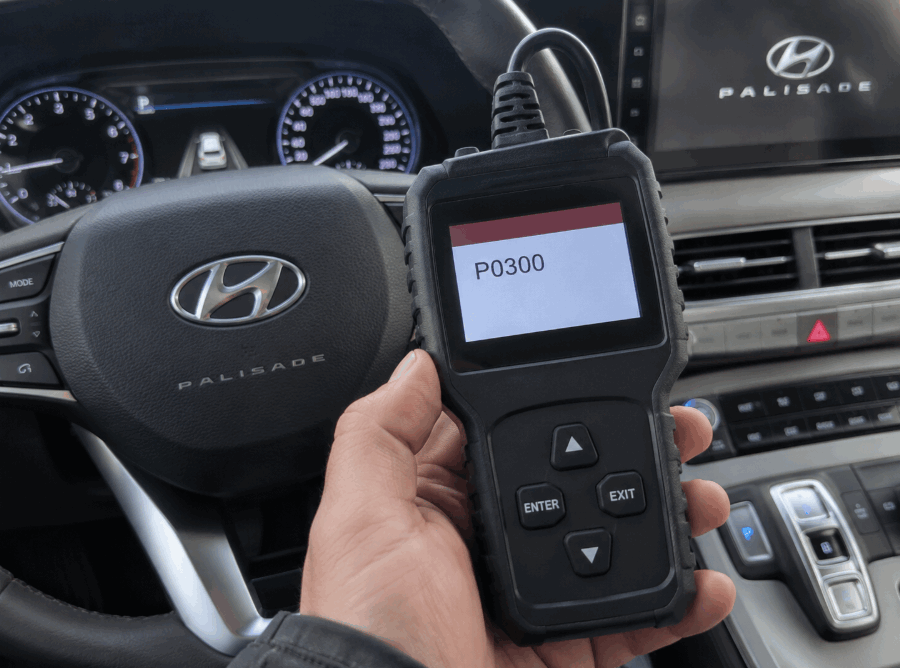
The Hyundai Palisade P0300 code means that the vehicle’s Engine Control Module (ECM) has detected random or multiple cylinder misfires during engine operation. Unlike cylinder specific misfire codes such as P0301 or P0302, the P0300 code does not identify one specific cylinder as the source of the problem. Instead, it indicates that the engine combustion process is unstable across multiple cylinders or that the ECM cannot determine the exact cylinder causing the misfire.
A Hyundai Palisade with a P0300 code may experience symptoms such as rough idling, engine vibration, hesitation during acceleration, reduced power, increased fuel consumption, or an illuminated Check Engine Light. The severity of these symptoms depends on the underlying cause, which can range from common maintenance issues such as worn spark plugs to more complex problems involving fuel delivery, air intake, or engine compression.
Diagnosing a Hyundai Palisade P0300 code requires a systematic inspection of the ignition system, fuel system, air intake components, and internal engine condition. This guide explains what the P0300 code means, the most common causes, the symptoms drivers should recognize, the correct diagnostic process, and the repair solutions that can restore normal engine performance.
What Does the Hyundai Palisade P0300 Code Mean?
The Hyundai Palisade P0300 code means the Engine Control Module (ECM) has detected random or multiple cylinder misfires during combustion. A misfire happens when one or more cylinders fail to burn the air and fuel mixture correctly, causing an imbalance in engine operation. The ECM monitors crankshaft speed changes and combustion patterns to identify when the engine is not producing consistent power from each cylinder.
The P0300 code is different from cylinder specific misfire codes because it does not point to one individual cylinder. Codes such as P0301, P0302, or P0303 indicate that the ECM has identified a misfire in a specific cylinder. The P0300 code appears when the misfire pattern moves between cylinders, affects multiple cylinders, or when the ECM cannot determine the exact cylinder responsible for the combustion problem.
The Hyundai Palisade uses multiple systems that must work together to maintain proper combustion, including the ignition system, fuel delivery system, air intake system, and engine mechanical components. A failure in any of these areas can interrupt the combustion process and trigger the P0300 trouble code.
When the ECM detects repeated misfires, it may activate the Check Engine Light to alert the driver. A continuous misfire can increase unburned fuel entering the exhaust system, which may damage components such as the catalytic converter. For this reason, the Hyundai Palisade P0300 code should be diagnosed rather than ignored, especially when the engine shows noticeable performance problems.
What Are the Symptoms of Hyundai Palisade P0300 Code?
A Hyundai Palisade with a P0300 code usually shows symptoms related to unstable combustion and inconsistent engine performance. The most common symptoms include rough idling, engine vibration, hesitation during acceleration, reduced power, poor fuel economy, and an illuminated Check Engine Light. These symptoms occur because one or more cylinders are not producing the expected amount of combustion power, which affects the balance of the entire engine.
One of the earliest signs of a Hyundai Palisade P0300 code is a rough or unstable idle. When the engine is running at low speed, each cylinder must contribute consistent power to maintain smooth operation. A misfire causes uneven crankshaft rotation, which the driver may feel as shaking, engine stumbling, or irregular vibrations while the vehicle is stopped.
Acceleration problems are another common symptom of a random cylinder misfire. The engine may hesitate when the driver presses the accelerator because combustion is not generating enough force to deliver smooth power. In severe cases, the vehicle may enter a reduced performance mode to protect engine components from further damage.
The Check Engine Light is a key warning sign associated with the P0300 code. A solid Check Engine Light usually indicates that the ECM has detected a fault that requires inspection, while a flashing Check Engine Light often indicates an active misfire that may damage the catalytic converter due to excessive unburned fuel entering the exhaust system.
Fuel economy can also decrease when a Hyundai Palisade experiences a P0300 misfire. When combustion becomes inefficient, the engine may consume more fuel to maintain normal operation. This results from incomplete fuel burning and reduced energy production from the air and fuel mixture.
What Causes Hyundai Palisade P0300 Code?
The Hyundai Palisade P0300 code can be caused by problems in several engine systems that affect the combustion process. The four main cause categories are ignition system problems, fuel system problems, air intake problems, and engine mechanical problems. Identifying the correct cause requires testing each system because the P0300 code only confirms that misfires are occurring, not which component has failed.
Ignition System Problems
Ignition system failures are among the most common causes of a Hyundai Palisade P0300 code. The ignition system must create a strong and consistent spark at the correct time to ignite the air and fuel mixture inside each cylinder. When spark delivery becomes weak or inconsistent, the combustion process becomes incomplete and causes engine misfires.
Worn spark plugs can trigger P0300 because they may no longer produce an effective spark. Over time, spark plug electrodes wear down, the gap changes, and the ignition system requires more voltage to create a spark. If the spark becomes too weak, the cylinder may fail to burn the fuel mixture properly.
Faulty ignition coils can also create random misfires. Ignition coils convert battery voltage into the high voltage needed for spark generation. When a coil begins to fail, it may produce inconsistent spark energy, especially under engine load during acceleration. This can result in hesitation, rough running, and a stored P0300 trouble code.
Fuel System Problems
Fuel system problems can cause a Hyundai Palisade engine to misfire when the cylinders do not receive the correct amount of fuel. Proper combustion requires a precise balance between air and fuel. If the fuel mixture becomes too lean or too rich, the engine may not burn efficiently.
A failing fuel injector can create misfires by delivering an incorrect amount of fuel or by developing a restricted spray pattern. A clogged injector may reduce fuel flow to a cylinder, while a leaking injector can create an overly rich mixture that prevents complete combustion.
Low fuel pressure can also contribute to a P0300 code. The fuel pump, fuel pressure regulator, or other fuel delivery components must maintain sufficient pressure for the injectors to operate correctly. When fuel pressure drops below the required level, multiple cylinders may experience unstable combustion.
Air Intake and Vacuum Problems
Air intake problems can trigger a Hyundai Palisade P0300 code by changing the air and fuel ratio inside the engine. The ECM calculates fuel delivery based on the amount of air entering the engine. When unmeasured air enters through a vacuum leak, the mixture can become too lean and cause combustion instability.
Vacuum leaks commonly occur through damaged hoses, intake manifold seals, or other air system components. These leaks often have a greater effect during idle conditions because the engine depends heavily on stable vacuum pressure for smooth operation.
A problem with air measurement components, such as the Mass Air Flow sensor, can also affect combustion accuracy. If the ECM receives incorrect airflow information, it may calculate the wrong fuel amount and create conditions that lead to misfires.
Engine Mechanical Problems
Engine mechanical problems are less common but can create serious Hyundai Palisade P0300 issues. The combustion process depends on each cylinder maintaining proper compression and mechanical timing. If these conditions are not met, the cylinder cannot generate normal power.
Low compression caused by worn piston rings, valve problems, or cylinder damage can prevent complete combustion. Timing system problems can also affect when the intake, compression, combustion, and exhaust processes occur. When these mechanical issues exist, replacing ignition or fuel components may not solve the misfire because the underlying problem is inside the engine.
A complete diagnosis should check mechanical condition when ignition, fuel, and air systems appear to operate correctly but the P0300 code continues to return.
How Do You Diagnose Hyundai Palisade P0300 Code?
Diagnosing a Hyundai Palisade P0300 code requires a structured process because the code only confirms a misfire condition. It does not identify the failed component. A correct diagnosis starts with ECM data and continues with ignition, fuel, air intake, and engine tests.
A systematic approach prevents unnecessary part replacement. It also helps technicians find the actual cause of the misfire before starting repairs.
Checking the Hyundai Palisade P0300 Code With an OBD-II Scanner
The first step is connecting an OBD-II scanner to the Hyundai Palisade. The scanner reads stored trouble codes and engine data from the ECM. It shows the P0300 code, related codes, freeze frame data, and engine conditions when the misfire occurred.
Freeze frame data helps identify when the problem happens. The information includes engine speed, coolant temperature, vehicle speed, and fuel trim values. These details show whether the misfire appears during idle, acceleration, or heavy engine load.
A diagnostic scanner can also display misfire counters. These counters show how often each cylinder experiences combustion problems. Although the P0300 code does not identify one cylinder, this information helps narrow down possible causes.
Testing Ignition and Fuel System Components
The next step is checking the ignition and fuel systems. Spark plugs and ignition coils control the combustion process. A damaged spark plug or weak ignition coil can create an inconsistent spark and cause engine misfires.
Technicians inspect spark plugs for common problems such as worn electrodes, carbon buildup, oil contamination, or incorrect gaps. These conditions reduce spark quality and prevent complete combustion.
Ignition coils require testing when spark plugs appear normal. A weak coil may produce enough power during idle but fail under acceleration. This creates hesitation, rough running, and repeated misfire events.
The fuel system also requires inspection. Fuel injectors must deliver the correct amount of fuel to each cylinder. A clogged injector can reduce fuel flow, while a leaking injector can create an incorrect fuel mixture.
Low fuel pressure can also trigger the Hyundai Palisade P0300 code. The fuel pump and fuel delivery components must maintain proper pressure for stable combustion. A fuel pressure test helps confirm whether the system provides enough fuel.
Checking Engine Mechanical Condition
Engine mechanical testing becomes necessary when ignition and fuel systems work correctly. The combustion process depends on proper compression and accurate engine timing.
A compression test measures how well each cylinder creates pressure during operation. Low compression can result from worn piston rings, damaged valves, or cylinder problems. These issues reduce combustion efficiency and create repeated misfires.
A leak down test provides more detailed information about compression loss. It helps identify whether air escapes through the valves, piston rings, or cylinder walls.
Engine timing should also be inspected when other systems appear normal. Incorrect timing changes the combustion sequence and can cause continuous misfires.
A complete Hyundai Palisade P0300 diagnosis follows a step by step testing process. This method reduces repair costs and ensures technicians fix the real cause of the engine problem.
How Do You Fix Hyundai Palisade P0300 Code?
Fixing a Hyundai Palisade P0300 code requires repairing the component that causes the engine misfire. The P0300 code only identifies a combustion problem, so technicians must diagnose the failed system before replacing parts.
The most common repairs involve the ignition system, fuel system, air intake system, and engine mechanical components. Each repair targets a different cause of unstable combustion.
Worn spark plugs are a common cause of Hyundai Palisade P0300 issues. Old spark plugs create a weaker spark and reduce combustion efficiency. Replacing damaged spark plugs restores proper ignition and helps the engine run smoothly.
Faulty ignition coils can also trigger random cylinder misfires. A weak coil cannot produce consistent spark energy, especially during acceleration. Replacing the defective coil can remove hesitation, vibration, and power loss.
Fuel system problems require different solutions. A clogged fuel injector may need cleaning or replacement to restore correct fuel delivery. Low fuel pressure may require repairs to the fuel pump or other fuel system components.
Vacuum leaks can cause a lean air fuel mixture and unstable combustion. Repairing damaged vacuum hoses or intake leaks helps the ECM maintain accurate fuel calculations.
Engine mechanical problems require deeper repairs. Low compression, valve damage, or timing issues may need professional engine service. These problems cannot be fixed by replacing ignition or fuel components alone.
A Hyundai Palisade P0300 repair should always follow accurate diagnosis. Correct testing prevents unnecessary part replacement and ensures the engine returns to normal performance.
How Much Does It Cost to Fix Hyundai Palisade P0300 Code?
The cost to fix a Hyundai Palisade P0300 code depends on the cause of the engine misfire and the required repair. The P0300 code does not identify one failed part, so repair costs vary between simple maintenance work and complex engine repairs.
A diagnostic inspection usually costs less than major repairs because technicians only need to identify the source of the misfire first. The inspection may include an OBD-II scan, ignition system testing, fuel system checks, and engine condition tests.
Spark plug replacement is one of the lower cost repairs for a Hyundai Palisade P0300 issue. If worn spark plugs cause the misfire, replacing them can restore normal combustion without replacing other components. Ignition coil replacement usually costs more because each coil requires testing and replacement when it fails.
Fuel system repairs can have a wider price range. A dirty fuel injector may only require cleaning, while a damaged injector or fuel pump may require replacement. The final cost depends on the failed component and the labor required.
Engine mechanical repairs usually cost the most because they involve internal components. Problems such as low compression, valve damage, or timing issues may require advanced repairs and longer service time.
The best way to control Hyundai Palisade P0300 repair costs is to diagnose the problem early. Ignoring a misfire can increase repair expenses by damaging the catalytic converter or causing additional engine problems.
Can You Drive a Hyundai Palisade With P0300 Code?
You can drive a Hyundai Palisade with a P0300 code for a short distance in some situations, but continuing to drive without diagnosis can increase the risk of engine and exhaust system damage. The level of risk depends on the severity of the misfire and the symptoms the vehicle shows.
A mild misfire may only cause slight engine vibration or reduced fuel efficiency. In this situation, the vehicle may still operate, but the driver should schedule a diagnostic inspection as soon as possible. A small ignition or fuel system problem can become more expensive if the underlying cause remains unresolved.
A flashing Check Engine Light requires immediate attention. A flashing light usually indicates an active misfire that sends unburned fuel into the exhaust system. This extra fuel can overheat and damage the catalytic converter, which is a more expensive component to replace.
Drivers should avoid heavy acceleration, high engine loads, and long trips when the Hyundai Palisade shows serious misfire symptoms. Strong vibrations, significant power loss, unusual engine noises, or a flashing Check Engine Light indicate that the vehicle needs professional inspection.
Ignoring a Hyundai Palisade P0300 code can also reduce engine performance and increase fuel consumption. The longer the engine operates with unstable combustion, the higher the chance of additional problems developing.
The safest approach is to diagnose the P0300 code early. Quick inspection helps identify the cause, prevents unnecessary damage, and allows the engine to return to normal operation.
How Can You Prevent Hyundai Palisade P0300 Code?
Preventing a Hyundai Palisade P0300 code requires regular maintenance and early attention to engine performance problems. A random cylinder misfire often develops when ignition, fuel, or air intake components lose their ability to maintain stable combustion.
Following the recommended maintenance schedule is one of the most effective prevention methods. Replacing spark plugs at the correct service interval helps maintain strong ignition performance. Worn spark plugs increase the chance of weak combustion and engine misfires.
Regular inspection of the ignition system also helps prevent P0300 problems. Checking ignition coils, spark plug condition, and related components allows drivers to identify early signs of failure before they affect engine operation.
Maintaining the fuel system supports consistent combustion. Using quality fuel, keeping fuel injectors clean, and addressing fuel delivery problems early help the engine receive the correct fuel amount for each cylinder.
The air intake system also requires proper care. Damaged vacuum hoses, intake leaks, or incorrect airflow readings can change the air fuel mixture and create unstable combustion. Inspecting these components during routine service reduces the risk of misfire conditions.
Drivers should also respond quickly when the Check Engine Light appears. Early diagnosis prevents small issues from becoming larger repairs. A Hyundai Palisade P0300 code often becomes more expensive when drivers continue operating the vehicle without identifying the cause.
Regular maintenance, timely inspections, and early troubleshooting help maintain engine reliability and reduce the chance of future P0300 misfire problems.