You can reset a Transmission Control Module (TCM) without a scanner on certain vehicles by following manufacturer-approved procedures, such as disconnecting the battery or performing a specific ignition sequence. However, not every vehicle supports a manual TCM reset, and disconnecting the battery does not guarantee that stored transmission adaptations or fault codes will be erased.
The TCM controls automatic transmission functions, including gear selection, shift timing, and clutch pressure. Resetting certain learned values may help restore normal shifting behavior after repairs or transmission servicing. However, a reset cannot fix damaged solenoids, faulty sensors, low transmission fluid pressure, or internal mechanical problems.
There are three important distinctions when resetting a TCM without diagnostic equipment: restarting the control module, clearing adaptive transmission values, and performing a transmission relearn. These procedures serve different purposes, and their availability depends on the vehicle’s make, model, year, and transmission design.
This guide explains how to identify applicable TCM reset methods, perform supported procedures safely, relearn transmission shifting, and verify the results. It also covers vehicle compatibility, common reset failures, and situations that require an OBD2 scanner or professional diagnostic equipment.
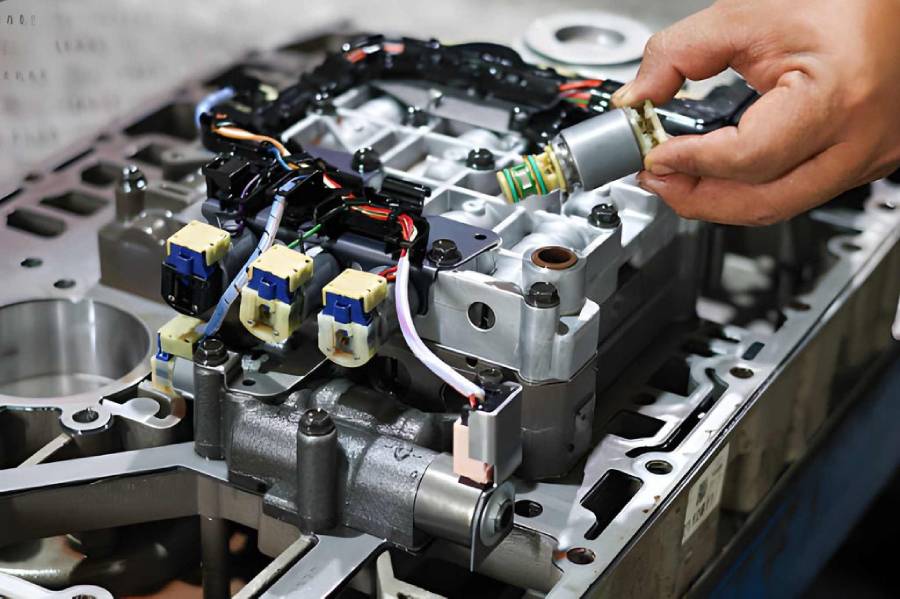
Can You Reset a Transmission Control Module Without a Scanner?
Yes, you can reset a Transmission Control Module (TCM) without a scanner on certain vehicles, but the available procedure depends on the transmission design, control module software, and manufacturer requirements. Some vehicles support basic module initialization after a power interruption, while others require a diagnostic scanner to erase adaptive transmission values or initiate a relearn procedure.
The TCM manages automatic transmission operation by processing information from components such as the throttle position sensor, transmission speed sensors, and transmission fluid temperature sensor. It uses these inputs to control gear changes, shift timing, and hydraulic pressure. Many modern transmissions also store adaptive values that compensate for clutch wear, operating conditions, and changes in transmission performance.
Resetting the TCM can involve three different operations: restarting the module, clearing stored adaptive values, or restoring specific transmission settings. These operations are not interchangeable. A module restart interrupts and restores electrical power, while an adaptive reset clears learned adjustments so the transmission can establish new operating values.
Disconnecting the vehicle battery may restart the TCM and erase certain volatile memory values. However, many modern transmission controllers retain adaptive information in nonvolatile memory, which preserves stored data even when electrical power is disconnected. These systems require a manufacturer-approved reset command or diagnostic service function.
A manual reset is therefore appropriate only when the vehicle manufacturer documents a supported procedure. It cannot repair damaged transmission components, eliminate persistent electrical faults, or replace required TCM programming.
How Do You Reset a Transmission Control Module Without a Scanner?
To reset a Transmission Control Module without a scanner, first identify the vehicle’s supported reset procedure using its make, model, model year, and transmission type. Battery disconnection and ignition-based procedures are not universal TCM reset methods, and performing an unsupported sequence may leave the transmission’s adaptive settings unchanged.
Before attempting a reset, park the vehicle on a level surface, engage the parking brake, place the transmission in Park, and switch off the ignition. Consult the owner’s manual or manufacturer service documentation for battery-disconnection precautions. Certain vehicles require special procedures to preserve electronic settings or reinitialize systems after power restoration.
How Do You Reset a TCM by Disconnecting the Battery?
To reset a TCM by disconnecting the battery, follow the manufacturer’s battery power interruption procedure and confirm that the vehicle supports this method. Disconnecting the battery can restart the transmission controller, but it does not necessarily erase adaptive transmission memory.
The general battery-disconnection process involves five steps:
- Turn off the vehicle. Remove the key or switch off the ignition completely. Keep the transmission in Park and engage the parking brake.
- Check manufacturer precautions. Confirm whether disconnecting the battery requires special preparations, such as maintaining electronic settings or following a specified shutdown period.
- Disconnect the negative battery terminal. Use the appropriate tool to loosen the negative terminal and secure the cable away from the battery post, following the manufacturer’s instructions.
- Restore the battery connection. Reconnect and secure the negative terminal according to the vehicle’s service procedure. Avoid overtightening the connection.
- Complete required initialization. Follow any manufacturer-specified procedures for electronic systems and transmission adaptation before evaluating vehicle operation.
Battery disconnection interrupts electrical power to the TCM or the Powertrain Control Module (PCM) when transmission control functions are integrated into the PCM. This power interruption can clear temporary operating information stored in volatile memory. However, adaptive shift values, diagnostic trouble codes, and calibration data stored in nonvolatile memory may remain unchanged.
For example, a vehicle with electronically stored clutch pressure adaptations may retain those values after the battery is reconnected. In that situation, a battery disconnect will not substitute for a dedicated transmission adaptive reset performed through compatible diagnostic equipment.
Can You Reset a TCM Using the Ignition and Accelerator Pedal?
Some vehicles support ignition or accelerator-pedal initialization procedures, but these sequences do not universally reset the TCM. Their functions vary by manufacturer and may involve throttle calibration, accelerator position learning, or other electronic control operations rather than transmission adaptive memory.
A commonly circulated procedure involves switching the ignition on without starting the engine, pressing the accelerator pedal, waiting for a specified period, and cycling the ignition. However, no single timing sequence or pedal position applies to all vehicles. Performing this procedure without confirming its intended function provides no reliable evidence that the TCM has been reset.
For vehicles with a documented ignition-based transmission procedure, follow the exact ignition positions, pedal inputs, waiting periods, and completion conditions specified in the manufacturer’s service instructions. The procedure must explicitly apply to the transmission controller or its adaptive learning system.
For example, an accelerator pedal relearn procedure intended for an electronic throttle control system should not be treated as a transmission reset. Although throttle inputs influence automatic transmission shift decisions, calibrating the accelerator pedal does not automatically clear stored transmission adaptations.
If the manufacturer requires a diagnostic command to reset transmission adaptive values, ignition cycling cannot replace that operation. Use a compatible scan tool or qualified automotive technician instead of repeating unsupported reset sequences.
Which Vehicles Allow a TCM Reset Without a Scanner?
Some Ford, Nissan, and Toyota vehicles support transmission initialization or relearning procedures without a scanner, but compatibility depends on the specific model, production year, transmission type, and control module software. No manufacturer uses a single manual TCM reset procedure across its entire vehicle lineup.
Ford vehicles equipped with electronically controlled automatic transmissions use adaptive strategies to adjust shift timing and clutch pressure. Certain Ford transmissions can relearn shift behavior during normal driving, but clearing their stored adaptive values may require a compatible diagnostic tool. For example, Ford’s 6F35 automatic transmission uses adaptive shift controls, and its service procedures distinguish between normal adaptive learning and diagnostic-tool functions. Disconnecting the battery does not guarantee that all transmission adaptations have been erased.
Nissan vehicles equipped with continuously variable transmissions (CVTs) use transmission control systems that regulate pulley ratios and hydraulic pressure. Certain Nissan CVT service operations, including control module replacement and calibration data initialization, require Nissan CONSULT diagnostic equipment or a compatible professional tool. An ignition cycle or battery disconnect cannot replace these programming functions. Nissan CVT owners should verify the exact transmission model before attempting any reset procedure.
Toyota vehicles also use adaptive transmission controls to adjust shifting according to operating conditions. Some Toyota automatic transmissions relearn shift behavior during driving, while specific initialization and memory reset operations require Toyota Techstream or another compatible diagnostic system. For example, replacing certain Toyota transmission components may require an adaptive memory reset followed by a prescribed road test. Simply disconnecting the battery does not complete these service operations.
The most reliable way to determine TCM reset compatibility is to check the manufacturer’s service information using the vehicle identification number (VIN). The documentation should identify whether the procedure requires battery power interruption, an ignition sequence, a driving cycle, or a diagnostic command. When no manual procedure is documented, do not assume that a generic reset sequence will work.
How Do You Relearn a Transmission After Resetting the TCM?
To relearn an automatic transmission after resetting the TCM, follow the manufacturer-specified adaptive learning procedure, which may involve controlled acceleration, steady-speed driving, deceleration, and repeated gear changes. The purpose is to allow the transmission controller to establish appropriate shift adjustments after its learned values have been cleared.
Transmission adaptive learning adjusts operating parameters such as clutch application timing, hydraulic pressure, and shift overlap. The TCM monitors sensor feedback during gear changes and uses that information to compensate for variations in transmission operation. These adjustments help maintain consistent shifting as transmission components experience normal wear.
After a confirmed adaptive reset, the transmission may initially shift differently because previously learned corrections are no longer available. Some vehicles complete adaptation during normal driving, while others require specific operating temperatures, throttle positions, gear changes, or diagnostic-tool commands. A battery disconnect that does not erase adaptive values does not necessarily initiate a new transmission relearn.
How Do You Perform a Transmission Relearn Drive Cycle?
To perform a transmission relearn drive cycle, use the driving conditions specified in the vehicle’s service manual. A typical adaptive learning process involves gradual acceleration, controlled gear changes, and smooth deceleration, but the exact sequence varies by transmission.
For vehicles that permit a driving-based relearn, the general process includes five stages:
- Check transmission operating conditions. Confirm that the transmission fluid level and condition meet manufacturer specifications and that no known mechanical or electrical faults remain.
- Warm up the transmission. Drive the vehicle until the transmission reaches the operating temperature required by the applicable service procedure.
- Accelerate smoothly. Apply light, consistent throttle input to allow the transmission to shift through the permitted forward gears without abrupt acceleration.
- Decelerate gradually. Reduce vehicle speed smoothly so the TCM can monitor downshifts and clutch release behavior under controlled conditions.
- Repeat the specified driving pattern. Complete the number of acceleration and deceleration cycles required by the manufacturer, then evaluate transmission shifting.
For example, a transmission that uses adaptive clutch pressure control may adjust its learned pressure values by comparing expected shift behavior with measured transmission speed changes. Repeated shifts under specified operating conditions allow the controller to refine those adjustments.
The time required for transmission relearning is not universal. Some adaptive adjustments occur during a prescribed road test, while others continue developing through subsequent driving cycles. Certain transmissions require a stationary clutch adaptation or scan-tool-initiated learning procedure before road testing can begin.
Perform the relearn on a safe road with suitable traffic conditions. Stop driving if the transmission slips severely, loses drive, produces abnormal mechanical noises, or displays a transmission overheating warning. A relearn procedure cannot compensate for a mechanical failure, incorrect transmission fluid pressure, or defective electronic components.
How Can You Tell if the TCM Reset Worked?
You can tell if a TCM reset worked by confirming that the intended reset procedure completed successfully and checking whether transmission shifting behaves as expected. However, smoother shifting alone does not prove that the module’s adaptive memory was cleared, particularly when the reset was attempted without a diagnostic scanner.
After completing a manufacturer-approved reset procedure, start the engine and check the dashboard for transmission-related warnings. With the brake pedal firmly applied, verify that the transmission engages the appropriate driving ranges without excessive hesitation, unusual noises, or severe vibration. A brief change in shift quality may occur after adaptive values have been cleared because the controller must establish new operating adjustments.
During a controlled road test, observe three transmission behaviors: gear engagement, shift smoothness, and response to acceleration. The transmission should engage the selected gear consistently, change gears without excessive slipping or harsh impacts, and respond appropriately to throttle input. For example, a vehicle that previously experienced abrupt upshifts may demonstrate smoother gear changes after a successful adaptive relearn, provided the original problem was related to incorrect learned shift values.
The most reliable confirmation of an adaptive TCM reset comes from manufacturer-specific diagnostic information. A compatible scanner may display reset completion status, adaptive learning values, or transmission-related diagnostic trouble codes. Without this information, drivers can evaluate operating behavior but cannot reliably confirm that stored adaptive data was erased.
If the check engine light remains illuminated, the transmission enters limp mode, or shifting problems continue, further diagnosis is necessary. A successful reset does not eliminate faults caused by defective sensors, hydraulic pressure problems, or damaged transmission components.
Why Is the Transmission Still Shifting Poorly After a TCM Reset?
A transmission may continue shifting poorly after a TCM reset because the underlying problem involves transmission fluid, hydraulic pressure, electrical components, mechanical wear, or control module faults rather than adaptive memory. Resetting the controller changes certain electronic operating values when supported, but it does not repair damaged components or correct persistent transmission malfunctions.
One common cause is an incorrect transmission fluid level or deteriorated fluid condition. Automatic transmissions rely on hydraulic pressure to engage clutches and control gear changes. Insufficient fluid can reduce hydraulic pressure, while contaminated or degraded fluid may interfere with valve body operation and clutch engagement. For example, a transmission with low fluid pressure may hesitate when shifting from Park into Drive even after its adaptive values have been reset. Fluid level must be checked using the manufacturer’s specified temperature and inspection procedure.
Faulty shift solenoids are another cause of persistent shifting problems. These electronically controlled valves regulate transmission fluid flow through the valve body. A solenoid that sticks, develops an electrical fault, or fails to regulate pressure correctly can produce delayed engagement, harsh shifting, or missing gears. Resetting the TCM cannot restore the mechanical or electrical operation of a defective solenoid.
Transmission speed sensors, wiring connections, and internal mechanical components can also affect shift performance. The TCM relies on accurate input and output speed signals to determine gear ratios and monitor transmission operation. Incorrect sensor information can disrupt shift commands, while worn clutch packs or damaged internal components may cause slipping regardless of the controller’s learned settings.
When Is a Diagnostic Scanner Required to Fix Transmission Problems?
A diagnostic scanner is required when the transmission fault cannot be identified through basic inspection or when the manufacturer specifies electronic testing, adaptive memory clearing, programming, or module initialization. A compatible scanner provides access to transmission diagnostic information that cannot be obtained through battery disconnection or ignition cycling.
A transmission-capable diagnostic scanner can retrieve stored and pending diagnostic trouble codes, monitor live sensor data, and perform supported service functions. For example, a scanner may reveal an input speed sensor fault, an incorrect transmission gear ratio, or a pressure control solenoid circuit problem. These findings help distinguish electronic faults from hydraulic or mechanical failures.
Not all OBD2 scanners provide the same capabilities. A basic code reader may retrieve generic powertrain trouble codes but lack access to manufacturer-specific TCM data, bidirectional controls, and transmission adaptive reset functions. Advanced diagnostic equipment may be necessary to command solenoids, perform clutch adaptations, or initialize a replacement transmission controller.
Professional diagnosis is particularly important when the transmission remains in limp mode, repeatedly slips between gears, fails to engage Drive or Reverse, or displays persistent warning indicators. Continuing to drive with severe transmission symptoms can increase internal wear and lead to additional damage.
A TCM reset should be treated as a specific service procedure, not a substitute for transmission fault diagnosis. Identifying the actual cause of poor shifting prevents unnecessary reset attempts and helps determine whether the vehicle requires fluid servicing, electrical repairs, transmission component replacement, or control module programming.
What Are the Signs That a Transmission Control Module May Need Attention?
The five main signs of a potential Transmission Control Module (TCM) problem are harsh shifting, delayed gear engagement, unpredictable gear changes, limp mode, and transmission-related warning lights. These symptoms indicate that the transmission control system requires inspection, but they do not necessarily mean the TCM itself is defective or needs resetting.
Harsh shifting occurs when the transmission engages gears with an unusually strong jolt or impact. The TCM controls shift timing and hydraulic pressure based on information from transmission speed sensors, engine load signals, and other electronic inputs. Incorrect control signals or adaptive values can contribute to abrupt gear changes. However, worn clutch components, valve body problems, and incorrect transmission fluid pressure can produce similar symptoms.
Delayed gear engagement occurs when the transmission takes longer than expected to respond after the driver selects Drive or Reverse. This delay may result from insufficient hydraulic pressure, worn internal components, faulty solenoids, or incorrect electronic control commands. For example, a vehicle that hesitates before moving forward after shifting into Drive may have a hydraulic pressure problem rather than a TCM memory issue.
Unpredictable gear changes and limp mode are additional warning signs. Limp mode is a protective operating strategy that restricts transmission functions when the control system detects certain faults. Depending on the vehicle, the transmission may remain in a specific gear, limit shifting, or reduce available performance to prevent further damage.
A check engine light or transmission warning indicator can also signal a control system problem. Diagnostic trouble codes related to shift solenoids, transmission speed sensors, gear ratio errors, or module communication can help identify the affected system.
These symptoms require diagnosis before attempting a TCM reset. Resetting adaptive values may be appropriate after certain transmission repairs, but it cannot correct defective wiring, damaged sensors, or mechanical transmission failures.
Read more: 4L60E Transmission Upgrades: Best Parts & Tips
What Is the Difference Between a TCM Reset and a Transmission Relearn?
A TCM reset clears or reinitializes specified control module information, while a transmission relearn establishes or updates adaptive values used to manage gear changes. The two procedures serve different purposes, although some manufacturer service operations require them to be performed together.
A TCM reset may restart the module, clear stored adaptive corrections, or initialize selected control functions, depending on the vehicle and the procedure performed. When adaptive values are cleared, the transmission controller loses previously learned adjustments related to clutch engagement, hydraulic pressure, or shift timing. However, a simple battery disconnect does not necessarily erase this information because many modern controllers use nonvolatile memory.
A transmission relearn allows the controller to establish appropriate operating adjustments using sensor feedback during specified transmission operations. For example, after replacing certain transmission components, the TCM may need to relearn clutch engagement characteristics to maintain smooth gear changes. Some vehicles complete this process during a prescribed drive cycle, while others require diagnostic-tool-assisted calibration.
The following table compares the two procedures.
| Feature | TCM Reset | Transmission Relearn |
|---|---|---|
| Primary purpose | Clear or initialize specified module values | Establish or update adaptive shift values |
| Main operation | Reset stored information or restart control functions | Adjust transmission operation using feedback |
| Effect on adaptive memory | May clear learned values | Creates or modifies learned values |
| Scanner requirement | Depends on vehicle and reset type | Depends on transmission design |
| Typical application | Manufacturer-specified servicing or troubleshooting | After adaptive reset or certain transmission repairs |
| Expected result | Module enters the specified reset state | Transmission develops appropriate shift adaptations |
A TCM reset does not automatically complete a transmission relearn. When the manufacturer requires both procedures, they must be performed in the specified sequence. Skipping a required relearn can result in poor shift quality, incomplete calibration, or continued transmission performance problems.
When Should You Replace a Transmission Control Module Instead of Resetting It?
You should replace a Transmission Control Module (TCM) when diagnostic testing confirms an internal module failure that cannot be corrected through wiring repairs, software updates, reprogramming, or manufacturer-approved reset procedures. Persistent shifting problems alone do not justify TCM replacement because defective sensors, solenoids, and transmission components can produce similar symptoms.
There are four main conditions that may indicate a TCM requires replacement: confirmed internal electronic failure, irreparable circuit damage, persistent module communication failure, and unsuccessful manufacturer-approved software recovery. For example, a TCM with damaged internal circuitry may fail to control transmission solenoids even when its power supply, ground connections, and external wiring are functioning correctly.
Before replacing the module, a technician should verify battery voltage, module power and ground circuits, wiring continuity, and communication network operation. Low voltage, corroded connectors, damaged wiring, or a faulty CAN bus connection can prevent a functioning TCM from communicating with other vehicle systems. Replacing the module without identifying these faults may leave the original transmission problem unresolved.
Diagnostic trouble codes also require careful interpretation. A code indicating lost communication with the TCM does not automatically establish that the module has failed. The technician must determine whether the problem originates from the controller, its electrical supply, the communication network, or another connected component.
TCM replacement is appropriate only after testing identifies the module as the failed component and confirms that repair or reprogramming is not a suitable solution. This approach prevents unnecessary replacement costs and reduces the risk of installing a new module without resolving the underlying fault.
Does a Replacement TCM Need Programming?
Many replacement Transmission Control Modules require programming, coding, or initialization before they can operate correctly with the vehicle. The exact requirements depend on the manufacturer, transmission model, module configuration, and whether the replacement unit is new, remanufactured, or previously installed in another vehicle.
TCM programming installs or configures the software and calibration data required to control a specific transmission. These calibrations determine how the controller interprets sensor inputs, operates shift solenoids, and manages hydraulic pressure. For example, a replacement module with incorrect transmission calibration may command inappropriate shift timing or fail to communicate correctly with other vehicle control units.
Certain vehicles also require vehicle identification number configuration, immobilizer-related synchronization, or transmission adaptive memory initialization. After programming, a manufacturer-specified relearn procedure may be necessary to establish appropriate clutch engagement and shift pressure adjustments.
A basic OBD2 code reader cannot perform most module programming operations. These procedures generally require manufacturer diagnostic software, compatible J2534 pass-through equipment, or a professional diagnostic scanner with the appropriate service functions. Stable battery voltage is also essential during programming because an interrupted software installation can leave the control module inoperative.
Disconnecting the battery or performing an ignition sequence cannot replace required TCM programming. Always confirm replacement module compatibility and manufacturer service requirements before installation