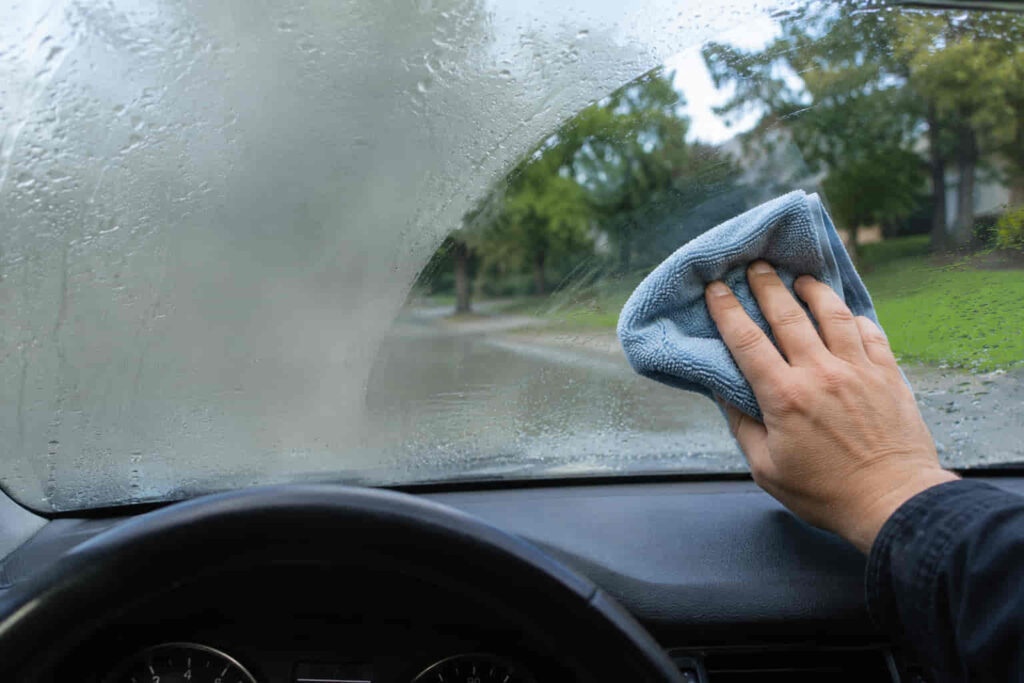
To get rid of a foggy windshield, turn on the front defroster, increase the fan speed, and activate the air conditioning to remove moisture from the cabin air. Use fresh air instead of recirculation to clear condensation inside the windshield. If the fog forms on the outside, use the windshield wipers and adjust the air conditioning to prevent the glass from becoming excessively cold.
A windshield fogs up when humid air contacts a glass surface that is cold enough for water vapor to condense. Interior fog commonly develops in cold weather when warm, moist cabin air meets a colder windshield. Exterior fog typically occurs in hot, humid weather when the air conditioning cools the glass below the surrounding air’s dew point.
The correct defogging method depends on where condensation forms, the outside temperature, and the vehicle’s climate control settings. Using the wrong settings can allow moisture to accumulate and reduce driving visibility.
This guide explains how to remove fog from the inside and outside of your windshield, adjust the defroster and A/C in different weather conditions, identify recurring condensation problems, and prevent your windshield from fogging up again.
What Is the Fastest Way to Get Rid of a Foggy Windshield?
The fastest way to get rid of a foggy windshield is to identify whether condensation is on the inside or outside of the glass and apply the appropriate defogging method. For interior fog, turn on the front defroster, increase the fan speed, activate the air conditioning, and select fresh outside air instead of recirculation. Set the temperature to warm so that heated, dehumidified air flows across the windshield. This combination removes moisture from the cabin air and warms the glass, reducing the conditions that cause condensation.
For exterior fog, use the windshield wipers to remove moisture from the glass. Outside condensation typically forms during hot, humid weather when the air conditioning cools the windshield below the surrounding air’s dew point. Slightly increasing the cabin temperature or redirecting cold airflow away from the windshield helps reduce the temperature difference and prevents fog from forming again. Interior defrost settings alone may not resolve exterior condensation.
If your windshield suddenly fogs up while driving, activate the appropriate defogging controls without taking your attention away from the road. Pull over safely if condensation significantly obstructs your visibility. Wait until the windshield is clear enough to see surrounding vehicles, pedestrians, and road conditions before continuing your journey.
Read more: kia seltos and soul engine recall
How Do You Remove Fog from the Inside of a Windshield?
To remove fog from the inside of a windshield, use the front defroster with warm airflow, activate the air conditioning to reduce humidity, and switch the ventilation system to fresh outside air. These settings work together to remove moisture from the cabin and warm the windshield surface, allowing condensation to evaporate while reducing the likelihood of new fog forming.
The front defroster directs airflow toward the windshield rather than the passenger compartment. Increasing the fan speed moves more conditioned air across the glass, while raising the temperature helps warm its interior surface. In vehicles equipped with automatic climate control, selecting the front defrost function typically adjusts airflow, temperature, and air intake settings automatically. Vehicles with manual climate controls require the driver to select these settings individually. The exact operation depends on the vehicle’s heating, ventilation, and air conditioning (HVAC) system.
Air conditioning improves interior windshield defogging by removing water vapor from the air passing through the HVAC system. When humid air moves across the cold evaporator coil, moisture condenses and drains away before the conditioned air enters the cabin. This dehumidification process works alongside the heater, allowing the system to deliver warm, relatively dry air to the windshield. However, some vehicles automatically disable A/C compressor operation at very low outdoor temperatures.
Fresh-air mode also helps control interior condensation by replacing moisture-laden cabin air with outside air. Recirculation continuously reuses cabin air, allowing humidity from passengers’ breathing, wet clothing, and damp floor mats to accumulate. Switching to outside-air intake helps remove this trapped moisture, particularly during cold weather when outdoor air contains less water vapor than the warmer cabin air.
If the air conditioning is unavailable, use the heater and front defroster with outside-air ventilation to clear the windshield. Opening a side window slightly can provide additional ventilation when weather conditions permit. However, warm airflow alone may remove condensation more slowly in humid conditions because it does not actively dehumidify the incoming air. Keep the windshield defroster operating until the glass is clear, and maintain sufficient ventilation to prevent moisture from accumulating again.
How Do You Remove Fog from the Outside of a Windshield?
To remove fog from the outside of a windshield, turn on the windshield wipers and adjust the air conditioning to prevent the glass from becoming excessively cold. Exterior condensation forms when warm, humid outdoor air contacts a windshield whose surface temperature is below the surrounding air’s dew point. This condition is particularly common during hot, humid weather when the vehicle’s air conditioning continuously cools the interior and windshield.
Windshield wipers provide an immediate solution by physically removing condensed water droplets from the exterior glass. However, condensation can return within seconds if the windshield remains colder than the surrounding humid air. Increasing the A/C temperature setting reduces excessive cooling, allowing the windshield to warm gradually. Redirecting cold airflow away from the windshield also helps prevent moisture from reforming on its outer surface.
The front defroster can help remove exterior fog when it delivers warm air across the windshield. However, blowing cold air directly against the glass in extremely humid conditions can worsen exterior condensation. Some vehicles automatically activate air conditioning when the defrost mode is selected, so drivers should adjust the temperature according to the location of the fog and their vehicle’s climate control system.
Persistent exterior fog may also become more noticeable when dirt, road grime, or oily residue accumulates on the windshield. Cleaning the exterior glass with an automotive glass cleaner and maintaining properly functioning wiper blades improves visibility by removing films that interfere with clear vision. If condensation continues to obstruct the road ahead, stop in a safe location until visibility is restored.
Why Does a Windshield Fog Up on the Inside or Outside?
A windshield fogs up when water vapor in the surrounding air condenses into tiny liquid droplets on the glass surface. This happens when the windshield temperature falls to or below the dew point of the air touching it. Condensation can develop on either side of the windshield, depending on the relationship between indoor humidity, outdoor humidity, and glass temperature.
Interior windshield fog forms when warm, moisture-rich cabin air contacts colder glass. Passengers release water vapor through breathing, while wet clothing, damp floor mats, and tracked-in rainwater increase humidity inside the vehicle. During cold weather, the windshield loses heat to the outside environment, making its interior surface colder than the cabin air. Once the glass temperature reaches the cabin air’s dew point, moisture condenses into droplets that scatter light and obstruct visibility.
Exterior windshield fog develops through the opposite temperature relationship. During hot, humid weather, the vehicle’s air conditioning lowers the cabin temperature and can cool the windshield below the dew point of the outdoor air. When warm outside air touches the chilled glass, water vapor condenses on its exterior surface. For example, a car operating with strong air conditioning on a humid summer morning may develop exterior fog even when the interior glass remains completely clear.
The location of the condensation determines how to identify the problem. If operating the windshield wipers clears the moisture, the fog is on the outside surface. If the wipers have no effect and moisture is visible on the cabin-facing glass, the condensation is inside. A persistent cloudy appearance that does not respond to either method may indicate dirt, oily residue, or another form of windshield contamination rather than water condensation.
Windshield fogging continues as long as the glass remains below the dew point of the air contacting it. Raising the glass temperature or reducing the moisture content of that air removes the conditions required for condensation to persist.
How Do You Defog a Windshield in Cold Weather?
To defog a windshield in cold weather, activate the front defroster, direct warm air toward the glass, increase the fan speed, and select fresh outside air. Turn on the air conditioning when available to reduce cabin humidity. These settings remove condensation by warming the windshield above the cabin air’s dew point and replacing moisture-laden air with drier air.
Cold-weather windshield fogging occurs because the glass loses heat to the outdoor environment while passengers release moisture through breathing. Wet shoes, snow-covered clothing, and damp floor mats increase cabin humidity, causing water vapor to condense on the cold interior glass. Outside-air ventilation helps reduce this moisture buildup because cold outdoor air generally contains less water vapor than warm cabin air. However, the A/C compressor may stop operating at low outdoor temperatures, depending on the vehicle’s HVAC design. The heater and fresh-air ventilation can still clear condensation without active A/C dehumidification.
Frost requires a different approach because it consists of frozen water rather than liquid condensation. If ice covers the exterior windshield, allow the defroster to warm the glass gradually before removing loosened ice with a suitable plastic scraper or automotive de-icer. Never pour hot water onto a frozen windshield because sudden temperature changes can crack the glass. Clear the entire windshield and other visibility-critical windows before driving, and keep the defroster operating as needed to prevent condensation from returning.
How Do You Defog a Windshield in Hot and Humid Weather?
To defog a windshield in hot and humid weather, use the windshield wipers to remove exterior condensation, increase the air conditioning temperature, and redirect cold airflow away from the glass. These adjustments help prevent the windshield from becoming colder than the surrounding air’s dew point, reducing moisture accumulation on its exterior surface.
Exterior windshield fogging occurs when warm, moisture-rich outdoor air contacts glass cooled by the vehicle’s air conditioning system. Water vapor condenses into tiny droplets that scatter light and reduce visibility. For example, driving with the A/C set to maximum cooling on a humid summer morning can create a cloudy layer on the outside of the windshield, even when the interior surface remains clear. Windshield wipers remove the moisture temporarily, while reducing excessive cooling addresses the underlying temperature difference.
Directing cold air through the windshield vents during extremely humid weather can worsen exterior condensation. Increasing the cabin temperature gradually and redirecting airflow toward the passenger compartment allows the windshield to warm, reducing repeated fog formation.
Hot weather can also cause interior windshield condensation when cabin humidity is high. In this situation, use the front defroster with A/C dehumidification rather than switching off the cooling system entirely. Always identify which glass surface is affected before adjusting the climate controls, and stop safely if fog obstructs your view of the road.
How Do You Keep Your Windshield Clear During Rain?
To keep your windshield clear during rain, activate the front defroster, turn on the air conditioning to reduce cabin humidity, and select fresh outside air instead of recirculation. Adjust the fan speed and temperature to clear interior condensation while using the windshield wipers to remove rainwater from the exterior glass. These settings address two separate visibility problems: moisture accumulating inside the windshield and water collecting on its outer surface.
Rainy weather increases cabin humidity when passengers enter with wet shoes, umbrellas, and clothing. Moisture evaporates from these materials and combines with water vapor released through breathing. When the windshield temperature falls below the cabin air’s dew point, condensation develops on the interior glass. The A/C system removes moisture from the air, while the defroster directs conditioned airflow across the windshield. Fresh-air ventilation also helps prevent humid cabin air from being continuously recirculated.
During heavy rain, maintain an appropriate wiper speed and keep the ventilation system operating to prevent condensation from returning. Avoid directing excessively cold air toward the windshield in hot, humid conditions because this can cause exterior fogging. If visibility remains obstructed despite adjusting the climate controls, pull over safely and identify the source of the moisture before continuing to drive.
How Do You Prevent a Windshield from Fogging Up Again?
To prevent a windshield from fogging up again, reduce moisture inside the vehicle, keep the glass clean, and maintain proper cabin ventilation. These three measures address the conditions that allow condensation to develop rather than simply removing fog after it appears. Maintaining a dry cabin is particularly important during cold or rainy weather when moisture accumulates faster and windshield temperatures fluctuate.
Excess cabin humidity is a primary cause of recurring interior windshield condensation. Wet floor mats, damp carpeting, soaked clothing, and water entering through damaged door or window seals introduce moisture that evaporates into the cabin air. Remove wet items, dry damp surfaces thoroughly, and inspect the vehicle for water leaks if moisture continues to accumulate. Rubber floor mats can help contain tracked-in rainwater or melted snow, but collected water should be emptied regularly. Keeping the cabin dry reduces the amount of water vapor available to condense on cold glass.
Cleaning the inside of the windshield also improves visibility and reduces the buildup of residue that can make fogging more noticeable. Oils, dust, and films from interior materials accumulate on glass surfaces, creating streaks and haze that scatter light. Use an automotive glass cleaner and a clean microfiber cloth to remove these contaminants without leaving additional residue. Cleaning does not eliminate condensation caused by high humidity, but it helps maintain a clearer surface when moisture develops.
Proper ventilation provides additional protection against recurring fog. Use fresh-air intake when interior humidity is elevated, and operate the A/C periodically when conditions permit to remove moisture from cabin air. Avoid leaving damp materials inside a closed vehicle for extended periods. An interior anti-fog treatment designed for automotive glass can also help delay visible condensation by changing how moisture spreads across the surface. Apply it only to compatible glass according to the manufacturer’s instructions, as incorrect application can leave streaks or reduce visibility. Combining moisture control, clean glass, and effective ventilation provides more reliable fog prevention than relying on a single treatment.
Why Does Your Windshield Keep Fogging Up Even with the Defroster On?
A windshield keeps fogging up even with the defroster on when the heating, ventilation, and air conditioning (HVAC) system cannot remove enough moisture or deliver sufficient airflow to the glass. The main causes include excessive cabin humidity, restricted airflow, ineffective A/C dehumidification, and malfunctioning heating components. Identifying the underlying cause is necessary when condensation repeatedly returns despite using the correct defrost settings.
A clogged cabin air filter can reduce the volume of air reaching the windshield. As the filter accumulates dust, pollen, and debris, airflow resistance increases, limiting the defroster’s ability to clear condensation. A failing blower motor, blocked ventilation duct, or defective airflow control door can produce similar symptoms. If the defroster operates at maximum fan speed but delivers weak airflow toward the windshield, inspect the cabin air filter and HVAC ventilation system.
Excessive interior moisture can also overwhelm a functioning defroster. Water entering through damaged door seals, blocked sunroof drains, or windshield leaks can soak carpeting and insulation. This trapped moisture gradually evaporates, continuously increasing cabin humidity. Recirculation can worsen the problem by retaining moisture-rich air inside the vehicle. Inspect damp floor mats and carpeting, eliminate water leaks, and restore fresh-air ventilation to reduce recurring condensation.
A leaking heater core is another possible cause of persistent windshield fogging. The heater core circulates engine coolant to produce warm cabin air. When it develops a leak, coolant may escape into the HVAC housing, creating vapor or a greasy film on the interior windshield. A sweet coolant odor, unexplained coolant loss, and damp passenger-side carpeting are warning signs that require professional inspection. These symptoms suggest a possible coolant leak but do not independently confirm heater core failure.
Have the HVAC system inspected if the windshield remains foggy despite proper settings, strong airflow, and a dry cabin. Persistent condensation accompanied by poor heating, unusual odors, or coolant loss indicates a problem that routine defogging cannot resolve. Do not continue driving when the windshield prevents a clear view of the road.
What Should You Avoid When Clearing a Foggy Windshield?
When clearing a foggy windshield, avoid using incorrect climate control settings, wiping the glass with dirty materials, and continuing to drive with obstructed visibility. These mistakes can make condensation worse, leave residue on the windshield, or increase the risk of a traffic accident. The safest approach is to identify the location of the fog and remove the moisture before driving.
Using air recirculation for extended periods can worsen interior windshield fogging by trapping humid air inside the cabin. Similarly, directing excessively cold air toward the windshield during hot, humid weather can cause exterior condensation. Avoid wiping fog with your hands, dirty towels, or clothing because skin oils and fabric residue can create streaks that scatter light, particularly during nighttime driving. Use a clean microfiber cloth when manual cleaning is necessary.
Never pour hot water onto a frozen windshield because sudden temperature changes can cause thermal stress and potentially crack the glass. Avoid operating windshield wipers over bonded ice, as this can damage the rubber blades or strain the wiper mechanism. Do not apply household chemicals or anti-fog treatments that are unsuitable for automotive glass.
If condensation obstructs your view while driving, pull over in a safe location and use the appropriate defogging settings. Resume driving only when the windshield provides a clear view of the road, surrounding vehicles, and pedestrians.