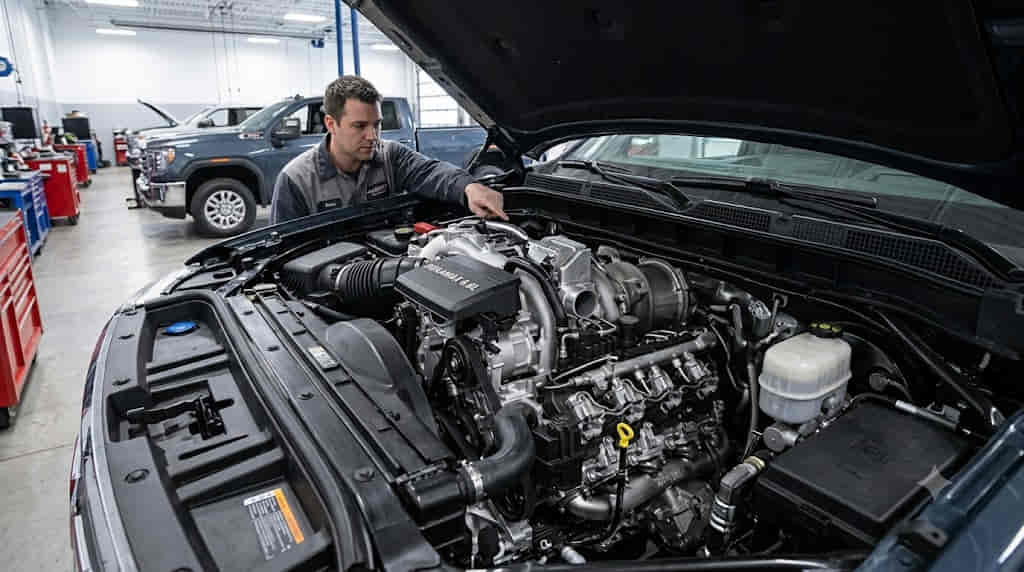
Forcing a regen on a Duramax L5P means initiating a service regeneration of the diesel particulate filter (DPF) when the engine’s normal regeneration process is insufficient or a service procedure is required. The L5P’s DPF captures soot from diesel exhaust, and regeneration raises exhaust temperatures to burn accumulated soot and help restore filter capacity. However, a forced regen is not always necessary or appropriate. The correct approach depends on the truck’s model year, DPF soot loading, active diagnostic trouble codes, sensor readings, and the regeneration procedures supported by its configuration.
There is an important difference between automatic DPF regeneration during normal driving and a forced service regeneration initiated through compatible diagnostic equipment. Automatic regeneration is managed by the engine control module (ECM) when operating conditions permit, while service regeneration follows a specific procedure and requires the vehicle to meet the manufacturer’s conditions. A warning light or incomplete regen does not automatically mean the DPF needs to be forced through another cycle.
Before attempting a forced regen, identify the warning message, check for relevant diagnostic trouble codes, and confirm that the exhaust aftertreatment system is safe to operate. Excessive soot accumulation, sensor faults, or other emissions-system problems may prevent regeneration or require repairs first. Understanding how L5P DPF regeneration works helps you choose the appropriate next step, avoid unnecessary component replacement, and reduce the risk associated with extremely hot exhaust gases.
What Is the Difference Between Automatic Regen and Forced Regen on a Duramax L5P?
Automatic regeneration and forced service regeneration both help remove accumulated soot from the diesel particulate filter (DPF) on a Duramax L5P, but they differ in how they are initiated and controlled. Automatic regeneration is managed by the engine control module (ECM) when the required operating conditions are met. Forced service regeneration is a diagnostic procedure initiated using compatible service equipment when the manufacturer’s procedure and the truck’s condition permit it. Understanding this distinction helps owners respond appropriately to DPF warnings instead of assuming every warning requires a forced regen.
Automatic DPF regeneration occurs as part of the truck’s normal emissions-control strategy. The ECM monitors relevant engine and exhaust-system information to determine when regeneration is needed and whether operating conditions allow it. During the process, exhaust temperatures rise enough to oxidize accumulated soot inside the DPF. Depending on the truck’s operating conditions, a driver may notice changes such as elevated idle speed, increased cooling-fan activity, or a different exhaust odor. These signs can vary by vehicle configuration, so the owner’s manual remains the best reference for interpreting regeneration behavior.
Forced service regeneration follows a different process because it is initiated through a diagnostic procedure rather than solely through the normal driving cycle. A technician uses compatible diagnostic equipment to request the procedure and checks whether the ECM permits it. The truck may need to meet specified conditions involving engine temperature, fuel level, soot loading, and the absence of certain active faults. The exact requirements vary by model year and service procedure, so a generic set of instructions should not replace the manufacturer’s specifications.
The two methods also serve different diagnostic purposes. If automatic regeneration is delayed because the truck has mainly been driven on short trips, following the owner’s manual instructions may be sufficient when the DPF warning and vehicle condition allow it. If regeneration repeatedly fails, a service regeneration may not solve the underlying issue. A faulty exhaust temperature sensor, a differential pressure sensor problem, or another aftertreatment-system fault may prevent the ECM from completing the process. In such cases, diagnostic testing should identify the cause before another regeneration is attempted.
Forced regeneration also requires particular attention to safety because exhaust temperatures can become extremely high. The procedure must be performed in an appropriate location and according to the applicable service instructions, away from dry grass, combustible materials, and other fire hazards. It should not be treated as a routine substitute for normal regeneration or as a way to bypass unresolved warning conditions. For a Duramax L5P, the appropriate choice depends on the specific DPF warning, diagnostic results, and manufacturer-approved procedure for that truck.
What Conditions Must Be Met Before Forcing an L5P Regen?
Before forcing a regen on a Duramax L5P, the truck must meet the manufacturer’s service conditions, and the diesel particulate filter (DPF) system must be in a condition that permits regeneration. The engine control module (ECM) determines whether a requested service regeneration can proceed based on relevant operating data and detected faults. Requirements vary by model year and diagnostic procedure, so there is no single set of conditions that applies to every L5P truck. Checking the correct service information and identifying the reason for the DPF warning should come before attempting to initiate regeneration.
Engine and exhaust-system conditions are important because DPF regeneration relies on elevated exhaust temperatures to oxidize accumulated soot. The engine may need to reach a specified operating temperature, and the truck must satisfy the conditions stated in its service procedure. Fuel level and other vehicle requirements should also be checked against the applicable instructions rather than assumed. If the ECM does not permit the procedure, repeatedly requesting a regen is unlikely to solve the problem and may delay the diagnosis of an underlying fault.
Diagnostic trouble codes are another critical factor. Certain active faults involving exhaust temperature sensors, DPF pressure measurements, or other emissions-control components may prevent regeneration because the ECM cannot verify that the process can occur safely and correctly. A technician should retrieve the codes and review the relevant data before deciding whether a service regen is appropriate. For example, an implausible exhaust temperature reading may indicate a sensor or circuit issue that needs diagnosis before regeneration can be attempted. The code itself is a diagnostic clue, not automatic proof that the named component must be replaced.
DPF soot loading also affects whether regeneration is appropriate. A filter containing a normal, manageable amount of accumulated soot may be eligible for regeneration, while excessive loading can trigger restrictions or require a different service procedure. Soot accumulation must also be distinguished from ash accumulation. Regeneration burns combustible soot, but it does not remove the noncombustible ash that gradually collects in the filter. If the filter is damaged, excessively restricted, or beyond the permitted regeneration threshold, forcing another cycle may be inappropriate.
Finally, the location and surrounding conditions must be suitable for the procedure. A service regen can produce extremely hot exhaust gases, creating a fire risk near dry vegetation, combustible debris, or other heat-sensitive materials. Follow the manufacturer’s safety instructions and use an appropriate service environment. If the truck has severe warnings, repeated failed regeneration attempts, abnormal engine behavior, or faults that prevent the ECM from authorizing the procedure, diagnose the cause before proceeding. Confirming these conditions helps prevent an unsuitable regeneration attempt and directs attention toward the repair the L5P actually needs.
Why Won’t a Duramax L5P Start or Complete a Regen?
A Duramax L5P may fail to start or complete a diesel particulate filter (DPF) regeneration because the engine control module (ECM) detects a fault, the operating conditions are unsuitable, or the aftertreatment system cannot achieve the conditions required for the process. Regeneration depends on reliable sensor information, appropriate exhaust temperatures, and a DPF condition that remains within the manufacturer’s permitted limits. When one of these requirements is not met, the ECM may delay, inhibit, or interrupt regeneration. Identifying the reason for the failure is more effective than repeatedly requesting another regen.
One possible cause is an active diagnostic trouble code involving the exhaust aftertreatment system. Exhaust temperature sensors provide information needed to monitor regeneration, while the DPF differential pressure sensor helps the control system assess pressure differences across the filter. Faults in these components, their wiring, or related circuits can produce readings that prevent the ECM from authorizing regeneration. For example, an implausible exhaust temperature reading may require electrical and sensor diagnosis before another regeneration attempt is appropriate. The specific code and its associated diagnostic procedure should guide the investigation.
Another cause is excessive soot accumulation or a restriction that has progressed beyond the conditions permitted for normal service regeneration. The DPF collects soot during engine operation, and regeneration oxidizes that combustible material. If soot loading becomes too high, the ECM may prevent a requested procedure to protect the exhaust system. A restricted filter can also require further assessment to determine whether regeneration remains appropriate. Because regeneration does not remove noncombustible ash or repair a physically damaged filter, another cycle is not a universal solution for every DPF restriction.
Operating conditions can also prevent a regen from completing. The engine may not reach the required operating state, the driving cycle may end before automatic regeneration finishes, or a fault may arise while the process is underway. Repeated short trips and extended low-load operation can affect opportunities for automatic regeneration, although they do not prove that either condition is the cause of a particular failure. The correct response depends on the warning message, diagnostic information, and operating requirements specified for the truck’s model year.
If an L5P repeatedly fails to regen, retrieve the diagnostic trouble codes and examine the relevant live data before attempting a forced service regeneration. Check whether the ECM is permitting the procedure and whether the sensor readings and soot-loading information support proceeding. If a fault prevents regeneration, repair and verify the underlying problem first. If the DPF is excessively restricted or the vehicle displays a severe warning, follow the manufacturer’s service guidance rather than continuing to drive or forcing additional cycles. This diagnostic approach helps distinguish a temporary operating limitation from a sensor fault, an aftertreatment-system malfunction, or a filter that requires more extensive service.
Read more: LLY Duramax Problems
What Are the Signs That a Duramax L5P Needs DPF Regeneration?
A Duramax L5P may need diesel particulate filter (DPF) regeneration when soot accumulation reaches a level at which the engine control module (ECM) requests the cleaning process. The most reliable indication is the DPF message or warning displayed by the truck, interpreted according to the owner’s manual for that model year. The ECM monitors relevant engine and exhaust-system data to determine when regeneration is needed and whether operating conditions permit it. Recognizing the difference between a routine regeneration request and a more serious emissions-system warning helps drivers choose the correct response.
A DPF warning message is one of the clearest signs that the truck needs attention. Depending on the model year and the level of soot accumulation, the instrument cluster may instruct the driver to continue driving under specified conditions or indicate that service is required. These messages do not all mean the same thing. A request to continue driving so that normal regeneration can occur differs from a warning that regeneration is unavailable or that the aftertreatment system needs diagnosis. Follow the exact instructions shown in the owner’s manual instead of assuming every DPF warning requires a forced regen.
Drivers may also notice changes in engine operation while active regeneration is taking place. These can include elevated idle speed, increased cooling-fan activity, or a noticeable change in exhaust odor. Such behavior may occur because the engine management system is adjusting operating conditions to raise exhaust temperature and burn accumulated soot in the DPF. However, these signs alone do not prove that regeneration is required or that the process has failed. Their meaning depends on the truck’s operating state and any accompanying warning messages.
A check engine light, reduced engine power, or repeated DPF warnings may indicate that the problem goes beyond a routine regeneration request. Possible causes include sensor faults, excessive soot loading, or another malfunction in the exhaust aftertreatment system. For example, a fault affecting exhaust temperature measurements may prevent the ECM from authorizing regeneration even when the driver expects it to occur. Diagnostic trouble codes and relevant live data help distinguish a system fault from a normal regeneration event.
The appropriate response depends on the severity of the warning and the truck’s condition. If the vehicle displays instructions for normal driving regeneration and has no warning that requires immediate service, follow the manufacturer’s guidance. If the warning persists, the truck loses power, or regeneration repeatedly fails, arrange diagnostic testing instead of attempting repeated forced cycles. This approach helps prevent unnecessary regeneration attempts and identifies whether the DPF needs a normal cleaning cycle, further diagnosis, or more extensive service.
How Do You Diagnose L5P DPF Regeneration Problems?
Diagnosing Duramax L5P DPF regeneration problems starts with identifying the warning message, retrieving diagnostic trouble codes, and examining the data reported by the exhaust aftertreatment system. A failed regeneration does not automatically mean the diesel particulate filter (DPF) needs replacement. The cause may involve excessive soot accumulation, an exhaust temperature sensor fault, inaccurate differential pressure readings, wiring problems, or another engine-management issue. A structured diagnosis helps determine whether the truck needs a normal regeneration cycle, a repair, or further DPF service.
The first step is to scan the engine control module (ECM) and relevant aftertreatment systems using diagnostic equipment compatible with the truck’s model year. Record stored and active trouble codes before clearing anything, because the codes and associated operating data can help establish why regeneration was delayed or interrupted. A DPF-related code identifies a condition that requires investigation, but it does not necessarily prove that the filter itself has failed. For example, a code associated with an exhaust temperature sensor may require checking the sensor circuit, connector, wiring, and reported temperature before considering DPF replacement.
The next step is to evaluate the sensor data used to monitor regeneration. Exhaust temperature sensors help the control system determine whether the required thermal conditions are present, while differential pressure measurements provide information about pressure across the DPF. These readings should be assessed under the conditions specified by the applicable diagnostic procedure. An implausible temperature reading or an abnormal pressure measurement may indicate a sensor fault, a restriction, or another system problem. The technician must compare the readings with the manufacturer’s specifications rather than relying on a single number without considering operating conditions.
DPF soot loading must also be evaluated to determine whether regeneration remains appropriate. Soot is combustible material that regeneration can oxidize, whereas ash is noncombustible residue that accumulates over time. This distinction matters because a regeneration cycle cannot remove ash or repair a cracked or otherwise damaged filter. If the soot loading exceeds the permitted threshold, the ECM may inhibit the procedure to protect the exhaust system. In that situation, follow the specified service procedure instead of repeatedly requesting a forced regen.
Finally, determine whether the ECM is authorizing regeneration and whether all required conditions are satisfied. If the system rejects the request, identify the reason using the diagnostic information and the correct service documentation. Once a fault has been repaired, verify the repair and reassess the system before attempting regeneration again. After the process, confirm that the original warning or performance concern has been resolved and that the relevant data falls within the manufacturer’s specifications. This approach helps distinguish an ordinary regeneration requirement from a sensor malfunction, excessive restriction, or a more serious aftertreatment-system problem.
Is It Safe to Force a Regen on a Duramax L5P?
Forcing a regen on a Duramax L5P is appropriate only when the vehicle meets the manufacturer’s service conditions and the diesel particulate filter (DPF) system is suitable for regeneration. A forced service regeneration raises exhaust temperatures to burn accumulated soot, so the procedure creates significant heat around the exhaust system. Although regeneration is a normal part of diesel emissions control, initiating it without checking the truck’s condition can create fire hazards, worsen an unresolved fault, or expose components to unsuitable operating conditions. The correct decision depends on the diagnostic results, the vehicle’s model year, and the applicable service instructions.
The most immediate safety concern is extremely hot exhaust gas. During regeneration, exhaust components can reach temperatures high enough to ignite dry vegetation, spilled fluids, paper, or other combustible materials nearby. A service regeneration should therefore take place in an appropriate location with adequate clearance from flammable materials and in accordance with the manufacturer’s safety precautions. It should never be initiated in a location where hot exhaust could endanger people, property, or surrounding materials. The operator must also account for exhaust emissions and ensure that the work area is suitable for running the engine during the procedure.
The condition of the DPF system is equally important. If the filter contains excessive soot, the ECM may prevent regeneration because the thermal load could become unsafe. A damaged filter, a faulty exhaust temperature sensor, or an unresolved aftertreatment-system fault may also make forced regeneration inappropriate. For example, if a sensor reports an implausible temperature, the control system may not be able to verify that regeneration is progressing correctly. Attempting to bypass that restriction instead of diagnosing the fault undermines the safeguards built into the system.
Repeatedly forcing regeneration is not a substitute for repairing the underlying cause of a DPF warning. If a regen fails more than once, the next step should be to review diagnostic trouble codes, assess soot loading, and inspect relevant sensor readings according to the applicable service procedure. Regeneration also does not remove accumulated ash or repair physical damage to the filter. A DPF that requires cleaning, inspection, or replacement must be handled using the appropriate service method rather than subjected to repeated regeneration attempts.
The safest approach is to confirm that forced service regeneration is permitted for the specific L5P configuration, follow the manufacturer’s procedure, and stop if the system reports a condition that prevents the process. If the truck has severe DPF warnings, reduced-power operation, excessive soot loading, or repeated regeneration failures, professional diagnosis is preferable to further attempts. These precautions help protect the exhaust system, the vehicle, and anyone near the truck while ensuring that the regeneration process addresses the correct problem.
What Should You Do If an L5P Regen Fails Repeatedly?
If a Duramax L5P repeatedly fails to complete diesel particulate filter (DPF) regeneration, diagnose the underlying cause before attempting another forced regen. Repeated failures may indicate an active emissions-system fault, excessive soot accumulation, inaccurate sensor readings, or operating conditions that prevent the engine control module (ECM) from authorizing or completing the process. A forced regeneration is intended to burn accumulated soot under approved conditions; it is not a repair for a malfunctioning sensor, a damaged DPF, or another unresolved engine problem.
The first step is to identify the exact warning message and retrieve the diagnostic trouble codes using compatible diagnostic equipment. Record the codes and relevant operating data before clearing anything, because this information can help explain why the previous regeneration attempts failed. Pay particular attention to faults involving exhaust temperature sensors, DPF differential pressure measurements, and other components in the aftertreatment system. For example, an implausible exhaust temperature reading may prevent the ECM from confirming that the required conditions are present. The associated circuit and sensor should be tested according to the manufacturer’s diagnostic procedure before another regen is requested.
The next step is to determine whether the DPF’s condition permits further regeneration. If soot accumulation exceeds the manufacturer’s permitted threshold, the ECM may inhibit the procedure because excessive soot can create an unsafe thermal load. In that situation, continuing to request forced regeneration is not an appropriate substitute for the specified service procedure. A technician may need to evaluate the filter’s restriction, condition, and service requirements. Because regeneration burns soot rather than noncombustible ash, it also cannot resolve every cause of DPF restriction.
Operating conditions and related engine faults should also be considered. A regeneration may be interrupted if the truck does not maintain the required conditions or if a fault develops during the process. Repeated short trips may limit opportunities for automatic regeneration, but they should not automatically be treated as the cause of every failed cycle. Diagnostic results should establish whether the issue involves the driving pattern, a sensor or control fault, excessive restriction, or another problem.
After identifying the cause, complete the required repair or service procedure and verify that the fault has been resolved. Only attempt another regeneration when the truck meets the applicable conditions and the ECM permits the process. If the vehicle displays a severe DPF warning, enters reduced-power operation, or continues to reject regeneration, consult a qualified diesel technician familiar with the L5P platform. Addressing the underlying fault is more effective than repeating a procedure that the system cannot complete safely.
How Can You Reduce Future DPF Regen Problems on a Duramax L5P?
You can reduce future DPF regeneration problems on a Duramax L5P by following the manufacturer’s maintenance schedule, responding promptly to dashboard warnings, and allowing the truck to complete automatic regeneration when operating conditions permit. The DPF collects soot from diesel exhaust, and regeneration raises exhaust temperatures to burn accumulated soot. When the truck repeatedly operates under conditions that prevent regeneration, soot can accumulate faster than the system removes it. Understanding the difference between normal regeneration behavior and a developing fault helps prevent unnecessary service interruptions.
Driving patterns are an important consideration. Repeated short trips, extended idling, and frequent low-load operation may limit the opportunities for the exhaust system to reach the conditions required for regeneration. When a DPF-related message appears, follow the instructions in the owner’s manual for the specific model year rather than assuming every warning requires a forced regen. For example, if the truck requests a particular driving procedure, follow the specified instructions when traffic, road conditions, and safety allow. Do not ignore escalating warnings or continue driving when the vehicle indicates that service is required.
Regular maintenance also helps protect the emissions system. Use the engine oil specification required by the manufacturer and observe the recommended oil-change interval, because the wrong oil or unsuitable maintenance practices can contribute to aftertreatment problems. Keep up with scheduled engine and fuel-system maintenance, and investigate warning lights or changes in engine performance instead of repeatedly clearing diagnostic codes. If the truck develops a sensor fault or another condition that interferes with regeneration, correcting it early can help prevent recurring DPF warnings.
Finally, avoid treating forced regeneration as routine preventive maintenance. A service regeneration should be performed when diagnostic findings and the applicable service procedure justify it, not simply because a particular mileage interval has passed. If the truck repeatedly requests regeneration, fails to complete a cycle, or returns to reduced-power operation, have the cause diagnosed before the problem becomes more severe. Keeping records of warning messages, diagnostic codes, and previous repairs can help a technician identify recurring faults and determine whether the issue is related to driving conditions, a sensor, excessive restriction, or another part of the aftertreatment system.