Honda P1457 Code is an OBD-II trouble code related to the EVAP system in many Honda vehicles. The EVAP system controls fuel vapors from the fuel tank. It stores these vapors and prevents them from entering the atmosphere.
The Engine Control Module (ECM) monitors EVAP system performance. When the ECM detects an abnormal condition, it saves the P1457 code and turns on the Check Engine Light.
Honda P1457 Code usually does not cause immediate engine failure. However, it shows that an EVAP component has a problem. The most common causes include a damaged EVAP canister, a faulty vent valve, leaking vapor hoses, or electrical issues.
Finding the exact cause of Honda P1457 requires proper diagnosis. Replacing parts without testing can increase repair costs and fail to solve the problem.
This guide explains what Honda P1457 means, why it appears, which symptoms drivers may notice, how technicians diagnose the issue, and which repairs can fix the EVAP system problem.
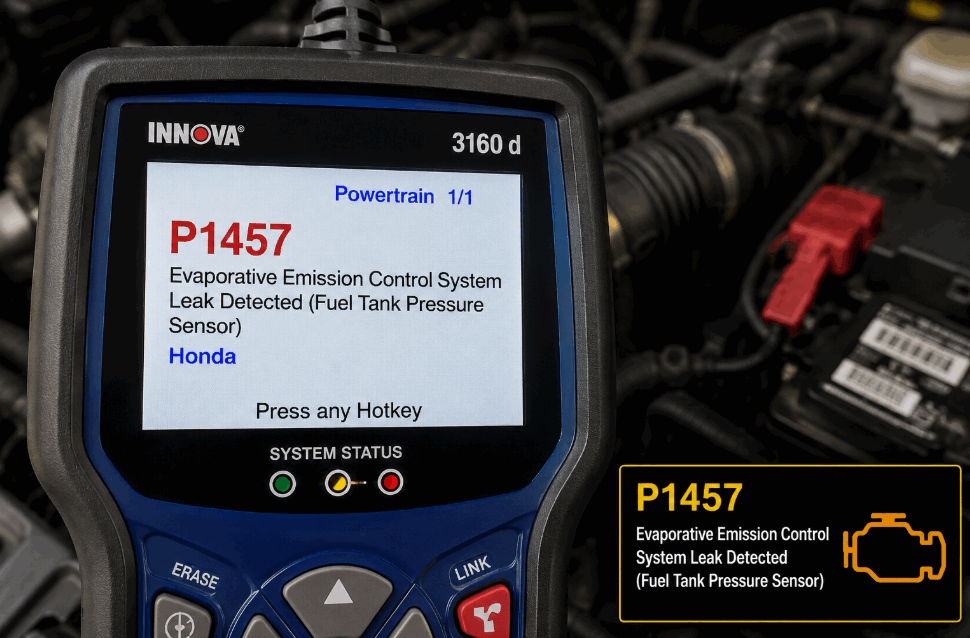
What Does Honda P1457 Code Mean?
Honda P1457 Code is an OBD-II diagnostic trouble code that identifies a problem with the EVAP system. In Honda vehicles, this code usually relates to an issue with the evaporative emission control system on the canister side. The EVAP system stores fuel vapors from the fuel tank and sends them back into the engine for combustion.
The Engine Control Module (ECM) uses sensors and valves to monitor EVAP pressure and vapor flow. When the system cannot maintain the expected pressure conditions, the ECM detects the abnormal reading and stores the P1457 code. The vehicle then activates the Check Engine Light to notify the driver about the emission system problem.
Honda P1457 does not usually indicate an internal engine problem. Unlike codes related to ignition, fuel injection, or engine timing, this code focuses on controlling fuel vapor emissions. A vehicle with this code may still drive normally because the EVAP system mainly affects emissions rather than basic engine operation.
The meaning of Honda P1457 can vary slightly depending on the vehicle model and production year. Honda Civic, Accord, CR-V, Odyssey, and other Honda vehicles may use different EVAP components, but the diagnostic process follows the same principle. Technicians must identify the failed component instead of replacing parts based only on the trouble code.
A correct diagnosis requires checking the EVAP system as a complete unit. The technician needs to inspect the fuel cap, vapor lines, EVAP canister, vent valve, purge valve, and related electrical connections. This approach prevents unnecessary repairs and ensures the actual cause of the Honda P1457 Code receives proper attention.
What Causes Honda P1457 Code?
Honda P1457 Code appears when the EVAP system cannot control or monitor fuel vapor correctly. The problem usually comes from a failed EVAP component, a vapor leak, or an electrical issue. There are five common causes that technicians check when diagnosing this trouble code.
Faulty EVAP Canister
A damaged EVAP canister is one of the most common causes of Honda P1457 Code. The EVAP canister contains activated charcoal that stores fuel vapors from the fuel tank. When the engine runs under the correct conditions, the system releases these vapors into the engine for combustion.
The charcoal inside the canister can become saturated with fuel or lose its ability to store vapor. This prevents the EVAP system from maintaining normal pressure during leak detection tests. A damaged canister can also create incorrect readings that cause the ECM to store the P1457 code.
Failed EVAP Vent Valve
A faulty EVAP vent valve can trigger Honda P1457 because the valve controls airflow into and out of the EVAP system. The ECM closes the valve during leak testing to check whether the system can hold pressure.
When the vent valve remains open, the system cannot create the required pressure condition. When the valve becomes stuck closed, fuel vapor movement becomes restricted. Both situations can prevent the EVAP system from completing its self-test.
Defective Purge Valve
A defective purge valve can also cause Honda P1457 Code. The purge valve controls when stored fuel vapors move from the EVAP canister into the engine intake system.
A purge valve that does not open or close correctly can disrupt vapor flow. This creates an imbalance in the EVAP system and may cause the ECM to detect abnormal operation.
EVAP Hose or Vapor Leak
Damaged EVAP hoses are another common reason for Honda P1457. The EVAP system depends on sealed connections between the fuel tank, charcoal canister, valves, and intake system.
Cracked hoses, loose connections, or damaged seals allow fuel vapors to escape. Even a small leak can prevent the system from passing its pressure test and trigger the trouble code.
Electrical Problems
Electrical problems can also create Honda P1457 Code even when EVAP components appear physically normal. Damaged wiring, corroded connectors, or poor electrical connections can interrupt communication between EVAP components and the ECM.
Technicians should test electrical signals before replacing expensive components. Proper diagnosis helps identify whether the issue comes from the component itself or the control system that operates it.
What Are the Symptoms of Honda P1457 Code?
Honda P1457 Code can create different symptoms depending on the failed EVAP component and the severity of the problem. Some drivers notice only the Check Engine Light, while others may experience fuel vapor odors or emissions-related issues. The EVAP system does not directly control engine combustion, so many vehicles continue to operate normally.
The most common symptom of Honda P1457 is an illuminated Check Engine Light. The ECM turns on the warning light when it detects an EVAP system problem that affects the vehicle’s emissions control process. A diagnostic scan can confirm that the stored trouble code is P1457.
A fuel vapor smell is another possible symptom. When the EVAP system cannot properly store or control fuel vapors, gasoline odors may appear near the vehicle. This often happens when the system has a damaged hose, faulty valve, or leaking EVAP component.
Some vehicles may experience failed emissions testing because Honda P1457 affects the vehicle’s vapor control system. The EVAP system plays an important role in reducing harmful fuel vapor emissions. A vehicle with an active P1457 code may not pass an emissions inspection until the issue is repaired.
Honda P1457 may also cause minor changes in fuel economy in certain situations. A malfunctioning EVAP system can affect how fuel vapors return to the engine. However, most drivers do not notice a significant performance change because the problem usually does not affect ignition, transmission, or engine power.
Many Honda owners report no noticeable driving problems when this code appears. The vehicle may accelerate, idle, and operate normally. However, ignoring the code for a long period can allow a small EVAP problem to develop into a larger repair issue.
How Do You Diagnose Honda P1457 Code?
Diagnosing Honda P1457 Code requires a systematic inspection of the EVAP system. The trouble code only identifies that the system has an abnormal condition. It does not specify which component has failed. Technicians need to test each related part to find the actual cause.
The first step is to scan the vehicle with an OBD-II scanner. The scanner reads the stored trouble code and provides additional information from the ECM, including freeze frame data. This information shows the operating conditions when the system detected the problem, such as engine temperature, vehicle speed, and fuel level.
The next step is a visual inspection of the EVAP components. Technicians check the fuel cap, vapor hoses, EVAP canister, vent valve, and purge valve for visible damage. A loose fuel cap, cracked hose, or disconnected line can create an EVAP leak and trigger Honda P1457.
Testing the EVAP valves helps determine whether the system controls fuel vapor correctly. The vent valve should open and close according to ECM commands, while the purge valve should regulate vapor flow into the engine. A valve that does not respond correctly can cause inaccurate pressure readings.
A smoke test is one of the most effective methods for finding EVAP leaks. During this test, technicians introduce smoke into the sealed EVAP system and observe where smoke escapes. This method can locate small leaks that are difficult to find through a visual inspection.
Electrical testing may also be necessary when mechanical components appear normal. Technicians check wiring, connectors, and voltage signals to confirm that the ECM communicates correctly with EVAP components. Proper diagnosis prevents unnecessary replacement of expensive parts and ensures the Honda P1457 Code receives the correct repair.
How Do You Fix Honda P1457 Code?
Fixing Honda P1457 Code requires repairing the specific EVAP component that causes the system failure. The trouble code itself does not confirm that one specific part needs replacement. A proper diagnosis must identify whether the problem comes from the EVAP canister, valves, hoses, electrical connections, or another related component.
Replacing the EVAP canister can fix Honda P1457 when the charcoal storage system becomes damaged or saturated. The canister collects fuel vapors from the fuel tank before sending them back into the engine. When the internal charcoal cannot store vapors correctly, the EVAP system may fail its pressure test and trigger the code.
Replacing a faulty EVAP vent valve is another common repair solution. The vent valve controls airflow during EVAP system testing and normal operation. If the valve cannot seal properly or respond to ECM commands, the system cannot maintain the correct pressure conditions. Installing a new valve restores proper vapor control.
A damaged purge valve may also require replacement. The purge valve regulates when stored fuel vapors enter the engine intake. When the valve remains open or closed at the wrong time, the EVAP system cannot operate correctly. Replacing the defective valve allows the ECM to control vapor flow again.
Repairing EVAP leaks can solve Honda P1457 when the issue comes from cracked hoses, loose connections, or damaged seals. Technicians usually replace broken hoses or tighten faulty connections to restore system integrity.
Electrical repairs may be necessary when wiring or connectors cause communication problems between EVAP components and the ECM. Cleaning corroded terminals, repairing damaged wires, or replacing connectors can restore normal system operation.
After completing repairs, technicians clear the trouble code and perform another EVAP system test. A successful repair should prevent the Honda P1457 Code from returning and confirm that the emission control system works correctly.
How Much Does It Cost to Fix Honda P1457 Code?
The cost to fix Honda P1457 Code depends on the failed EVAP component, diagnostic time, vehicle model, and labor rates. The trouble code itself does not determine the repair price because different components can create the same EVAP system problem.
A basic diagnostic inspection usually costs less than a major EVAP repair. Technicians often begin with an OBD-II scan and visual inspection before performing advanced tests such as an EVAP smoke test. This process helps identify the failed component before replacing any parts.
A fuel cap replacement is usually one of the lowest-cost repairs because the part is simple and easy to install. However, a fuel cap is not always the cause of Honda P1457. Replacing it without proper testing may not remove the trouble code.
An EVAP valve replacement usually creates a moderate repair cost because the technician needs to test the component and access its installation location. The vent valve and purge valve are common failure points, and replacing either component can restore normal EVAP operation.
An EVAP canister replacement often costs more because the component is larger and may require additional labor. The final price depends on the Honda model, part availability, and repair shop rates.
The most effective way to control repair costs is accurate diagnosis. Replacing multiple EVAP parts without confirming the failure can increase expenses without solving the actual problem. A professional inspection identifies the failed component and provides the most efficient repair solution.
Can You Drive With Honda P1457 Code?
You can usually drive with Honda P1457 Code for a short period because this trouble code does not normally indicate an immediate engine safety problem. The EVAP system controls fuel vapor emissions, not essential engine functions such as ignition, braking, or transmission operation.
However, ignoring Honda P1457 for a long time is not recommended. A faulty EVAP component can allow fuel vapors to escape and prevent the vehicle from meeting emission standards. In areas that require emissions testing, an active P1457 code may cause the vehicle to fail inspection.
Drivers should pay attention to additional symptoms that appear with the code. A strong fuel odor, poor engine operation, difficulty starting, or multiple warning lights may indicate a more serious issue that requires faster inspection.
A vehicle with Honda P1457 may continue operating normally because many EVAP failures do not affect daily driving performance. However, the underlying problem can become more expensive if a small leak damages other EVAP components or creates repeated diagnostic issues.
The safest approach is to diagnose the code as soon as possible. Checking the EVAP system early helps identify the failed component, prevents unnecessary repairs, and keeps the vehicle’s emission control system working correctly.
How Can You Prevent Honda P1457 Code From Returning?
Preventing Honda P1457 Code from returning requires maintaining the EVAP system and reducing conditions that damage fuel vapor control components. The EVAP system contains several valves, hoses, and storage components that must work together to control fuel vapors correctly.
Avoiding fuel tank overfilling is one important maintenance habit. Adding fuel after the pump automatically stops can force liquid fuel into the EVAP canister. The charcoal inside the canister is designed to store vapor, not liquid fuel. Excess fuel can saturate the canister and reduce its ability to control vapor flow.
Checking the fuel cap condition can also help prevent EVAP problems. A damaged seal, loose cap, or worn fuel cap can create a small vapor leak that affects system pressure. Drivers should make sure the fuel cap clicks securely after refueling and replace it if the seal shows signs of damage.
Following the recommended Honda maintenance schedule helps detect EVAP issues before they become larger problems. Regular inspections can identify cracked hoses, damaged connectors, or valve problems during routine service.
Keeping the EVAP system in good condition reduces the chance of repeated Honda P1457 Code problems. Proper fuel habits, regular inspections, and early diagnosis help maintain emission performance and prevent unnecessary repair costs.
Conclusion
Honda P1457 Code indicates a problem with the EVAP system that controls fuel vapor emissions in Honda vehicles. The code does not usually point to an engine failure, but it shows that one or more EVAP components cannot operate correctly.
The most common causes include a faulty EVAP canister, damaged vent valve, defective purge valve, vapor leaks, and electrical problems. Each cause requires a different repair approach, which makes accurate diagnosis the most important step before replacing any parts.
A proper inspection starts with an OBD-II scan and continues with EVAP component testing, hose inspection, and smoke testing when necessary. This process helps technicians identify the failed component and avoid unnecessary repair costs.
Drivers should not ignore Honda P1457 Code even when the vehicle feels normal. Repairing the issue early helps maintain the emission control system, prevents recurring Check Engine Light problems, and keeps the vehicle operating efficiently.
Understanding how the Honda EVAP system works allows owners to make better repair decisions. With correct diagnosis and the right repair method, Honda P1457 Code can be resolved effectively.