Honda manufactures the Civic in several countries, including Japan, the United States, Canada, and Thailand. The company uses a global production network to supply different markets around the world. Each market receives Civic models from specific factories based on demand, vehicle type, and regional production strategies.
Honda connects its manufacturing facilities through the same quality standards and engineering principles. Factories in different countries follow Honda’s production methods, inspection systems, and assembly procedures. This approach helps Honda maintain consistent vehicle quality across global markets.
Knowing where Honda builds the Civic helps buyers understand vehicle origin and production history. It also helps owners verify where their specific vehicle came from before purchasing a new or used model. This guide explains Honda Civic manufacturing locations, the countries that build Civic models, methods to check production origin, and the relationship between factory location and vehicle quality.
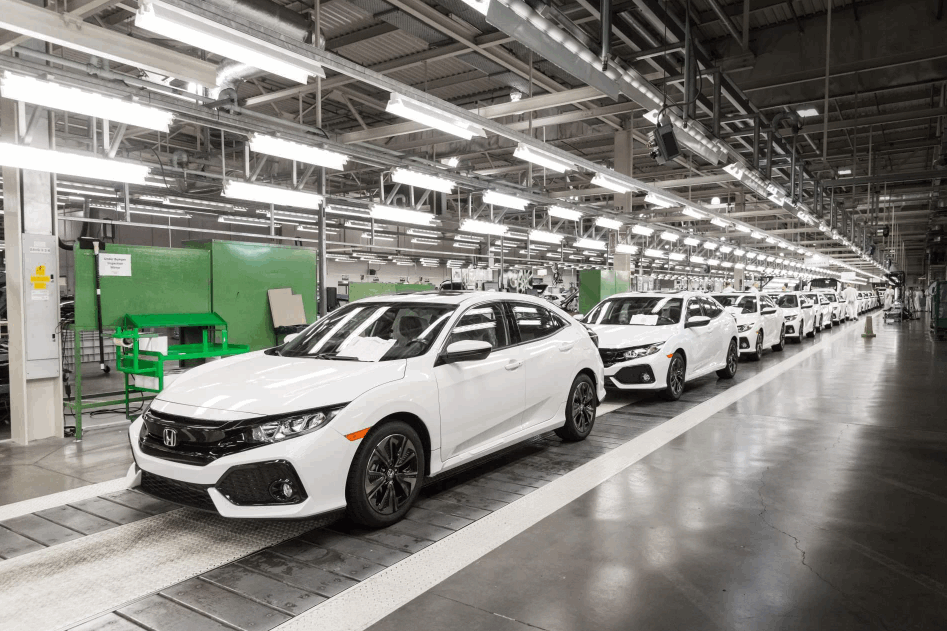
Where Is the Honda Civic Manufactured Today?
Honda manufactures the Civic in several countries through a global production network. The main Honda Civic manufacturing locations include Japan, the United States, Canada, and Thailand. Honda selects production facilities based on regional demand, manufacturing capacity, and market requirements. This strategy allows Honda to deliver Civic models efficiently to customers in different regions.
Japan remains an important part of Honda Civic production because Honda developed the Civic as a Japanese compact car in 1972. Japanese facilities contribute engineering knowledge, manufacturing technology, and quality control expertise to Honda’s global operations. Although Honda does not build every Civic model in Japan today, the country continues to influence Civic development and production standards.
North America represents one of the largest Honda Civic production regions. Honda builds many Civic models for the United States and Canadian markets at facilities such as Honda Manufacturing of Indiana and Honda Canada Manufacturing. These plants support local vehicle demand and reduce the need to import every Civic from overseas factories.
Honda also produces Civic models in Thailand for regional Asian markets. Thai manufacturing facilities help Honda serve Southeast Asian customers with vehicles designed for local market conditions. The production location of a Honda Civic depends on the model version, generation, and country where Honda sells the vehicle.
Therefore, there is no single answer to where the Honda Civic is manufactured. Honda uses multiple factories worldwide, and each facility plays a specific role in the company’s global vehicle production system.
Which Countries Manufacture the Honda Civic?
Honda manufactures Civic models in several countries to support different automotive markets. The main production countries include Japan, the United States, Canada, and Thailand. Each location contributes to Honda’s global manufacturing system by producing vehicles for specific regions and customer needs.
Japan represents the origin of Honda Civic development and remains an important manufacturing center for the brand. Honda established the Civic as a global compact car in Japan in 1972. Japanese production facilities have supported Civic engineering, advanced manufacturing techniques, and quality improvement processes for decades. Japan’s role connects the Civic name with Honda’s long history of automotive innovation.
The United States has become a major Honda Civic production location, especially for North American customers. Honda operates manufacturing facilities that produce Civic models for the US market. These factories allow Honda to respond quickly to regional demand while supporting local automotive production.
Canada also plays a significant role in Honda Civic manufacturing. Honda Canada Manufacturing in Ontario has produced Civic models for many years and supplies vehicles for Canadian and international markets. The facility combines local manufacturing resources with Honda’s global production standards.
Thailand serves as an important production hub for Honda in Southeast Asia. Thai factories manufacture Civic models for regional markets and support Honda’s expansion across Asian countries. Production in Thailand helps Honda adapt vehicles to local customer preferences and market conditions.
The manufacturing country of a Honda Civic depends on factors such as the target market, model generation, and production strategy. Honda does not assign one factory to all Civic vehicles because global production requires different facilities to support worldwide demand.
Where Is the Honda Civic Made for the US Market?
Honda manufactures many Civic models for the US market in North America. The main production facilities that supply US customers include Honda Manufacturing of Indiana and Honda Canada Manufacturing in Ontario. These factories allow Honda to produce vehicles closer to one of its largest automotive markets.
Honda Manufacturing of Indiana plays an important role in Civic production for American buyers. The plant in Greensburg, Indiana, produces Civic models using Honda’s global manufacturing systems. The facility uses advanced assembly processes, quality inspections, and standardized production methods to maintain Honda’s expected vehicle quality.
Honda Canada Manufacturing also contributes significantly to US market supply. The Alliston, Ontario facility has produced Honda vehicles for decades and has supported Civic production for North American customers. Its location allows Honda to distribute vehicles efficiently across Canada and the United States.
A Honda Civic sold in the US does not always come from the same factory. Production location depends on factors such as vehicle configuration, production schedule, and market demand. For example, different Civic body styles, including Sedan and Hatchback versions, may come from different Honda facilities depending on the production plan.
The manufacturing location does not mean that one Civic model automatically has better quality than another. Honda applies similar engineering standards, manufacturing procedures, and quality control systems across its global plants. The final assembly location identifies where Honda completed the vehicle, but Honda’s global production system determines the overall manufacturing quality.
For US buyers, checking the vehicle identification number (VIN) provides the most accurate way to confirm where a specific Honda Civic was manufactured. The VIN reveals important details about the vehicle’s production origin, including its assembly region and factory information.
Is the Honda Civic Still Manufactured in Japan?
Honda still connects the Civic with Japan, but the company no longer builds every Civic model in Japanese factories. Japan remains the birthplace of the Honda Civic and continues to influence the vehicle’s engineering, design philosophy, and manufacturing standards. However, Honda now uses a global production network to build Civic models closer to major markets.
Honda introduced the first Civic in Japan in 1972 as a small, efficient vehicle designed for urban transportation. The model later expanded into a global product and became one of Honda’s most recognized vehicles. As Civic demand increased worldwide, Honda established production facilities in different countries to support regional sales.
Japanese manufacturing facilities continue to support Honda’s automotive development and production expertise. These facilities contribute to engineering improvements, manufacturing technology, and quality control systems used throughout Honda’s global operations. However, many Civic models sold in markets such as the United States and Canada come from North American production plants.
The difference between a Japanese Honda Civic and a Civic built in another country does not simply depend on the assembly location. Honda applies global production standards across its factories. The company trains workers, manages manufacturing processes, and controls quality measurements to maintain consistency between production locations.
For buyers who want a Civic built in Japan, the vehicle’s production origin depends on the specific model, market, and production year. The most reliable method to identify the manufacturing location is checking the vehicle identification number (VIN), which provides information about the vehicle’s assembly origin.
A Honda Civic remains a Japanese-developed vehicle with global manufacturing support. Its production history reflects Honda’s transition from a single-country manufacturer into an international automotive company.
How Can You Check Where Your Honda Civic Was Manufactured?
You can check where your Honda Civic was manufactured by using the vehicle identification number (VIN). The VIN is a unique 17-character code assigned to every vehicle and contains information about the vehicle’s production origin, model details, and manufacturing sequence. Checking the VIN provides a more accurate answer than relying only on the brand’s country of origin.
The first character of the VIN usually identifies the region or country where Honda assembled the vehicle. For example, Civic models built in the United States, Canada, or Japan have different VIN identifiers that show their assembly locations. Owners can find the VIN on the driver’s side dashboard, the driver’s side door frame, vehicle registration documents, or insurance records.
The VIN helps distinguish between a vehicle’s brand origin and its actual manufacturing location. Honda is a Japanese company, but a Honda Civic sold in a specific market may come from a factory outside Japan. The assembly country shows where Honda completed the vehicle, while many components may come from suppliers across different regions.
You can also check the manufacturing label attached to the vehicle. This label usually includes information about the final assembly location and compliance details for the destination market. Dealerships and official Honda service centers can also help confirm production information using the vehicle’s VIN.
Knowing the manufacturing location helps buyers understand a Civic’s production history, especially when purchasing a used vehicle. However, the factory location alone does not determine reliability. Honda applies global quality standards across its production facilities, so buyers should also consider maintenance records, vehicle condition, mileage, and model history.
The VIN remains the most reliable tool for identifying where a specific Honda Civic was manufactured because it connects the vehicle directly with its production record.
Does the Honda Civic Manufacturing Location Affect Quality?
The Honda Civic manufacturing location does not directly determine vehicle quality because Honda applies the same global production standards across its factories. Honda manages its plants through standardized engineering processes, quality inspections, and manufacturing systems. A Civic built in the United States, Canada, Japan, or Thailand follows Honda’s requirements for safety, performance, and reliability.
The quality of a Honda Civic depends more on factors such as production control, vehicle maintenance, design generation, and ownership history. A well-maintained Civic from any Honda factory can provide long-term reliability. The assembly country only shows where Honda completed the vehicle, not the complete origin of every component used in production.
Honda uses a global supply chain that includes thousands of automotive components from different suppliers. Parts such as engines, transmissions, electronics, and interior components may come from multiple regions before Honda assembles the final vehicle. This means a Civic’s manufacturing quality comes from the complete production system rather than one specific factory location.
Some buyers believe that a Civic built in Japan automatically has higher quality than models built elsewhere. However, Honda’s international manufacturing approach focuses on maintaining consistent standards across all facilities. The company uses similar production methods, worker training programs, and inspection procedures to reduce differences between factories.
When evaluating a Honda Civic, buyers should focus on practical quality indicators. These include service records, accident history, mileage, mechanical condition, and proper maintenance. The manufacturing location can provide useful background information, but it should not be the only factor when judging a vehicle’s reliability.
A Honda Civic’s factory location explains where the vehicle was assembled, while its overall quality comes from Honda’s engineering, manufacturing systems, and long-term ownership care.
What Should You Know About Honda Civic Manufacturing Locations?
Honda Civic manufacturing locations reflect Honda’s global approach to vehicle production. Honda builds Civic models in multiple countries, including Japan, the United States, Canada, and Thailand, to support different automotive markets around the world. The exact factory depends on the Civic model, production year, and destination market.
The Honda Civic remains a Japanese-developed vehicle, but its production now extends beyond Japan. Honda uses international manufacturing facilities to improve supply efficiency and meet customer demand in different regions. Each factory follows Honda’s quality standards, production systems, and engineering principles.
For buyers who want to know where a specific Honda Civic was manufactured, the vehicle identification number (VIN) provides the most accurate information. The VIN confirms the assembly location and helps verify the vehicle’s production history.
The manufacturing location provides useful information about a Honda Civic’s origin, but it does not determine reliability by itself. Buyers should also evaluate maintenance records, vehicle condition, mileage, and ownership history when choosing a Civic.
Understanding Honda Civic production locations helps owners and buyers make better decisions. Whether a Civic comes from Japan, North America, or another Honda facility, the vehicle represents Honda’s global manufacturing strategy and long-standing focus on quality.