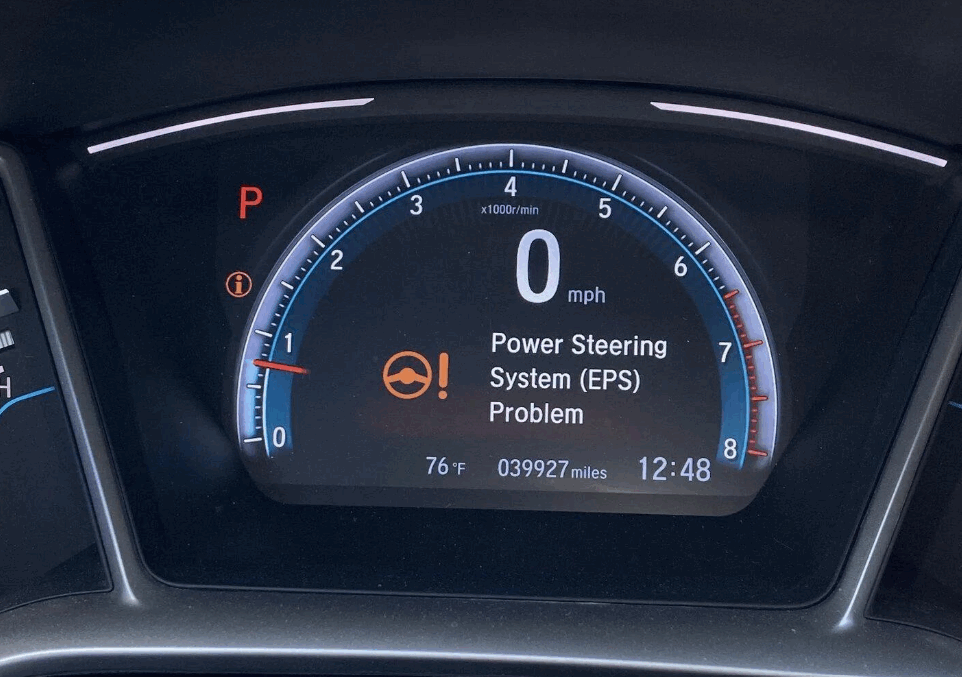
The Honda Civic Check Power Steering System warning means that the vehicle has detected a problem with its Electric Power Steering (EPS) system. This warning does not always indicate a complete steering failure, but it shows that the system cannot operate normally and requires proper diagnosis.
The Honda Civic uses an electronic steering assistance system that depends on several components, including the EPS motor, torque sensor, steering angle sensor, control module, and electrical power supply. When one of these components sends an abnormal signal or receives insufficient power, the vehicle may display the Check Power Steering System message on the dashboard.
The most common causes include weak batteries, charging system problems, sensor failures, wiring issues, and EPS component malfunctions. Identifying the exact cause is important because replacing parts without diagnosis can increase repair costs and may not solve the problem.
This guide explains what the Honda Civic Check Power Steering System warning means, why it appears, what symptoms indicate a failure, how to diagnose the problem, and which repair solutions can restore normal steering assistance.
What Does Honda Civic Check Power Steering System Mean?
The Honda Civic Check Power Steering System warning means the EPS system has detected a steering assistance problem. The vehicle uses this message to alert the driver about an issue that needs inspection.
Honda Civic models use an Electric Power Steering (EPS) system instead of a traditional hydraulic steering pump. The system uses electrical components to help the driver turn the steering wheel with less effort. The main components include the EPS motor, torque sensor, steering angle sensor, and EPS control module.
The torque sensor measures the driver’s steering input. The EPS control module analyzes this information and controls the electric motor. The motor then provides the correct amount of steering assistance based on vehicle speed and steering conditions.
A problem in any EPS component can trigger the warning message. A weak battery can reduce the power available for the steering system. A faulty sensor can send incorrect information to the control module. A damaged motor or wiring connection can also prevent the EPS system from working correctly.
The warning does not always mean that the Honda Civic has completely lost steering control. The steering wheel still connects mechanically to the steering rack. However, the driver may feel increased steering effort, especially when parking or driving at low speeds.
Drivers should not ignore this warning because the cause may become more serious over time. A proper diagnosis helps identify the failed component before replacing unnecessary parts. Checking the electrical system, scanning error codes, and testing EPS components can reveal the exact problem.
What Causes Honda Civic Check Power Steering System Warning?
The Honda Civic Check Power Steering System warning appears when the EPS system detects a problem with one of its electrical, electronic, or mechanical components. There are several common causes, but battery problems, sensor failures, wiring issues, and EPS component faults account for most cases.
A weak battery is one of the most common causes of EPS warnings. The Honda Civic EPS system requires stable electrical power to operate the steering motor and control module. When battery voltage drops, the EPS module may receive insufficient power and trigger a warning. This problem often appears during engine startup because the battery experiences the highest electrical demand at that moment.
The alternator can also cause power steering system problems. The alternator maintains battery charge while the engine runs. If it produces unstable voltage, the EPS system may detect an abnormal power supply. A charging system test can confirm whether the alternator provides the correct voltage range.
Faulty sensors are another major cause of the warning message. The torque sensor tells the EPS module how much steering assistance the driver needs. A damaged torque sensor can send inaccurate information, causing the system to reduce or disable steering assistance. The steering angle sensor can create similar problems when it provides incorrect steering position data.
The EPS control module and motor can also trigger the warning. The control module manages communication between the steering sensors and the electric motor. If the module develops an internal fault, it cannot control the steering assistance correctly. The EPS motor may fail because of internal wear, electrical damage, or excessive load.
Wiring and connection problems can create intermittent EPS failures. Loose connectors, damaged wires, and corrosion can interrupt communication between EPS components. These issues may cause the warning to appear temporarily and disappear after restarting the vehicle. However, the underlying problem usually remains until the electrical connection receives proper inspection.
Finding the exact cause requires a complete diagnosis instead of replacing parts based only on the warning message. Testing the battery, scanning diagnostic trouble codes, and checking EPS components helps identify the correct repair solution.
What Symptoms Indicate Honda Civic Power Steering System Problems?
The Honda Civic Power Steering System problem creates several noticeable symptoms before the system stops providing normal steering assistance. These symptoms usually appear because the EPS system cannot process steering input correctly or cannot deliver enough support through the electric motor.
The most common symptom is a heavier steering wheel. The Honda Civic normally uses EPS assistance to reduce the effort needed to turn the vehicle. When the system detects a fault, it may reduce or disable the electric assistance as a safety measure. The driver may notice increased steering resistance, especially when parking, making U turns, or driving at low speeds.
Another common symptom is an intermittent power steering warning. The warning may appear after starting the vehicle, during driving, or after electrical system changes. This usually happens when the EPS system detects unstable signals from sensors, inconsistent voltage from the battery, or temporary communication problems between control modules.
Some drivers may also notice unusual steering behavior. The steering wheel may feel heavier on one side, require more effort than usual, or provide inconsistent assistance during different driving conditions. These symptoms often indicate problems with the EPS motor, torque sensor, or steering control module.
The Honda Civic may also display other dashboard warnings when the EPS system experiences electrical problems. A weak battery or alternator issue can affect multiple vehicle systems because modern vehicles rely on stable electrical communication between different control modules. Drivers may see battery warnings, stability control warnings, or other electronic system alerts together with the power steering warning.
A sudden loss of steering assistance requires immediate attention because it affects vehicle control. Although the driver can still physically turn the steering wheel, the increased steering effort can make emergency maneuvers more difficult. Identifying symptoms early allows technicians to diagnose the cause before the problem develops into a larger repair.
How Do You Diagnose Honda Civic Check Power Steering System Warning?
The Honda Civic Check Power Steering System warning requires a systematic diagnosis because the message only shows that the EPS system has detected a problem. It does not identify the failed component directly. A proper inspection starts with the electrical system and continues through the EPS components.
The first step is checking the battery and charging system. The EPS system depends on stable voltage to operate the steering motor and control module. A technician can measure battery voltage and inspect alternator output to determine whether the vehicle receives enough electrical power. A weak battery, poor connection, or unstable charging voltage can create EPS warnings without any damage to the steering components.
The next step is scanning the Honda Civic with an OBD II diagnostic scanner. The EPS control module stores Diagnostic Trouble Codes (DTCs) when it detects abnormal operation. These codes help identify problems related to the torque sensor, steering angle sensor, EPS motor, communication lines, or voltage supply. Professional Honda diagnostic equipment can provide more detailed information than a basic scanner.
How Do You Check Honda Civic EPS Components?
After checking electrical power and error codes, technicians inspect the main EPS components. The torque sensor requires testing because it controls how much steering assistance the driver receives. An incorrect sensor signal can cause the EPS module to reduce assistance or activate the warning message.
The EPS motor and control module also require inspection. The technician checks whether the motor responds correctly to commands from the control module. They also examine wiring connections, connectors, and ground points because damaged electrical connections can interrupt communication between EPS components.
A complete diagnosis prevents unnecessary repairs. Replacing an EPS motor or control module without confirming the failure can create high repair costs without solving the original problem. The correct process identifies the damaged component first and then determines the most effective repair solution.
Can You Drive a Honda Civic With Check Power Steering System Warning?
You can drive a Honda Civic with the Check Power Steering System warning in some situations, but you should treat the warning as a potential safety issue. The ability to continue driving depends on whether the EPS system still provides steering assistance and what caused the warning to appear.
If the Honda Civic still responds normally and the steering wheel feels manageable, the vehicle may still be moved for a short distance. However, the driver should avoid long trips or demanding driving conditions until the system receives a proper inspection. The EPS system can reduce or stop providing assistance if it detects a serious fault, which increases the effort required to control the vehicle.
A sudden loss of steering assistance creates the biggest risk at low speeds. Parking, making sharp turns, and performing emergency maneuvers require more steering force when the EPS motor does not work correctly. Drivers with reduced physical ability may experience greater difficulty controlling the vehicle.
The warning becomes more urgent when it appears with other symptoms. A very heavy steering wheel, unusual steering behavior, battery warning light, or repeated EPS shutdowns indicate that the vehicle needs immediate diagnosis. These symptoms often point to electrical problems, sensor failures, or EPS component faults that can worsen over time.
Continuing to drive without checking the cause may increase repair complexity. For example, ignoring a weak battery problem can affect other electronic systems, while ignoring an EPS component failure can lead to a complete loss of steering assistance.
The safest approach is to inspect the vehicle as soon as possible. A technician can check the battery, scan EPS error codes, and test the steering system to determine whether the Honda Civic requires a simple electrical repair or a component replacement.
How Much Does It Cost to Fix Honda Civic Power Steering System Warning?
The cost to fix a Honda Civic Check Power Steering System warning depends on the failed component, diagnostic requirements, and repair method. The warning itself does not identify a specific part failure, so the final repair cost can range from a simple electrical repair to a more expensive EPS component replacement.
A battery related EPS problem usually costs less than repairing major steering components. A weak battery or poor battery connection can prevent the EPS system from receiving stable voltage. In this situation, replacing the battery, cleaning electrical connections, or repairing charging system issues may restore normal operation without replacing EPS components.
Sensor related repairs usually cost more because technicians need to diagnose the exact faulty sensor before replacement. The torque sensor and steering angle sensor play important roles in EPS operation. A faulty sensor can send incorrect information to the EPS control module, which may reduce steering assistance and activate the warning message.
EPS motor or control module failures usually create higher repair costs because these components require more labor and specialized testing. The EPS control module controls communication between different steering components, while the EPS motor provides the physical steering assistance. A failure in either component requires accurate diagnosis before replacement.
Repair costs also depend on whether the vehicle receives service from a Honda dealership or an independent repair shop. Dealerships often use manufacturer specific diagnostic equipment and trained technicians, while independent shops may offer lower labor costs.
The most effective way to control repair expenses is to diagnose the problem before replacing parts. A proper inspection identifies the failed component and prevents unnecessary replacements. Addressing the warning early also helps avoid additional damage to the electrical system and steering components.
How Can You Prevent Honda Civic Power Steering System Problems?
Preventing Honda Civic Power Steering System problems requires maintaining the electrical system, monitoring warning signs, and following regular vehicle inspections. The EPS system depends heavily on stable electrical power, so proper maintenance can reduce the risk of unexpected steering assistance failures.
Maintaining battery health is one of the most important prevention steps. The Honda Civic EPS system uses electrical power from the battery and charging system to operate the steering motor and control module. A weak battery can create unstable voltage and cause false EPS warnings. Checking battery condition, cleaning terminals, and replacing an aging battery can help maintain reliable system performance.
Regular electrical system inspections also protect EPS components. The alternator, wiring connections, fuses, and ground points affect how consistently the EPS system receives power. Loose connections or corrosion can interrupt communication between components and create intermittent warning messages.
Drivers should also respond quickly when the vehicle displays dashboard warnings. Small electrical issues can affect multiple systems if they remain unresolved. Early diagnosis helps identify problems before they damage more expensive components such as the EPS motor or control module.
Following the recommended Honda maintenance schedule provides another layer of protection. Regular inspections allow technicians to check vehicle electronics, battery performance, and steering system operation. Although EPS failures cannot always be prevented, consistent maintenance reduces the chance of sudden steering problems.
A Honda Civic with a healthy electrical system and regular inspections can maintain reliable steering assistance for many years. Preventive maintenance is usually less expensive than repairing a complete EPS failure after the warning has been ignored.
Honda Civic Check Power Steering System: Causes, Fixes, and Diagnosis
The Honda Civic Check Power Steering System warning indicates that the Electric Power Steering (EPS) system has detected an abnormal condition that requires attention. The warning does not always mean that the vehicle has lost steering control, but it shows that one or more components are not operating within normal conditions.
The most common causes include weak batteries, charging system problems, sensor failures, wiring issues, and EPS component malfunctions. Because the warning message does not identify the exact failure, proper diagnosis is the most important step before replacing any parts.
Checking battery voltage, scanning EPS error codes, and inspecting steering components help identify the real cause of the problem. This approach prevents unnecessary repairs and ensures that the correct component receives attention.
Maintaining the battery, electrical connections, and steering system can reduce the risk of future EPS problems. Honda Civic owners should respond quickly when the warning appears because early inspection can prevent more expensive repairs and maintain safe steering performance.
For related maintenance information, continue learning about Honda Civic dashboard warning lights, battery maintenance, and vehicle electrical system checks to better understand how different systems work together.