Seeing the Honda Accord Emission System Problem warning on your dashboard can be stressful, especially when the car still seems to drive normally. The message does not point to one exact failed part. Instead, it means the vehicle has detected a fault that may affect fuel delivery, combustion, exhaust gases, or overall engine performance.
The problem can be caused by something simple, such as a loose fuel cap, but it may also involve a faulty oxygen sensor, damaged spark plugs, a bad ignition coil, an EVAP leak, a fuel injector issue, or a failing catalytic converter. This wide range of possible causes often leads drivers to replace parts without completing a proper diagnosis first. As a result, repair costs can quickly increase while the warning remains active.
Ignoring the warning is not always safe. A minor issue may reduce fuel economy, while a serious misfire can damage the catalytic converter and lead to much more expensive repairs. The best approach is to understand the symptoms, scan the vehicle for diagnostic codes, and identify the actual source of the fault.
This guide explains the most common causes of the Honda Accord Emission System Problem, the symptoms you should watch for, how to diagnose the issue, and the most effective ways to fix it.
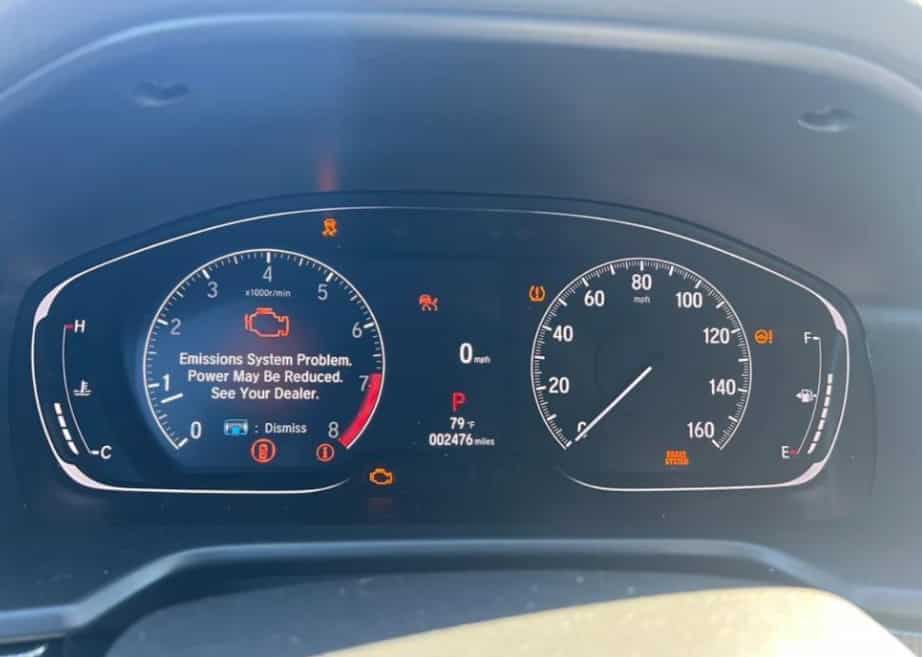
What Does the Honda Accord Emission System Problem Mean?
The Honda Accord Emission System Problem warning tells you that the vehicle has detected a fault in the emissions control system. It does not point to one failed component. Instead, it alerts you that one or more parts are not working correctly. The onboard diagnostic system monitors engine performance every time you drive. When it detects abnormal data, it stores a diagnostic trouble code and displays the warning.
The emissions control system reduces harmful exhaust gases while helping the engine run efficiently. Several components work together to achieve this goal. These include the oxygen sensors, catalytic converter, fuel injectors, EVAP system, spark plugs, ignition coils, and the engine control module. If one component fails, the entire system can lose efficiency. As a result, fuel consumption may increase, engine performance may decline, and exhaust emissions may rise.
Many drivers believe this warning always means the catalytic converter has failed. That is not true. A loose fuel cap, worn spark plug, faulty oxygen sensor, leaking vacuum hose, or defective purge valve can trigger the same message. Since different problems produce similar symptoms, replacing parts without testing often wastes time and money.
The Honda Accord Emission System Problem warning often appears with the Check Engine Light. A steady light usually means the vehicle needs inspection soon. A flashing light often signals an active engine misfire. You should stop driving if the engine shakes, loses power, or produces unusual noises. The safest approach is to scan the vehicle for diagnostic trouble codes first. After that, inspect the affected system and repair the root cause instead of replacing parts by guesswork.
Common Symptoms of a Honda Accord Emission System Problem
The Honda Accord Emission System Problem warning rarely appears without a reason. In many cases, the vehicle shows additional symptoms before the problem becomes serious. Recognizing these signs early can help you avoid expensive repairs and prevent further damage to the engine or emissions system.
The most common symptom is the Check Engine Light. It may appear together with the emission system warning or shortly afterward. A steady light usually indicates a fault that requires diagnosis, while a flashing light often points to an active engine misfire that needs immediate attention.
You may also notice rough idling or engine vibration. The engine may shake when stopped at a traffic light or feel unstable during acceleration. These symptoms often result from ignition problems, fuel injector issues, or an incorrect air and fuel mixture.
Reduced engine performance is another common sign. The vehicle may accelerate more slowly than usual or hesitate when you press the accelerator. Some Honda Accord models may even limit engine power to protect critical components from additional damage.
Poor fuel economy can also indicate an emissions system fault. When sensors send inaccurate data, the engine control module may inject too much or too little fuel. This reduces combustion efficiency and increases fuel consumption.
Some drivers report a strong fuel smell or unusual exhaust odor. Others experience hard starting, occasional stalling, or failed emissions inspections. Although these symptoms vary, they often indicate that one or more emissions related components require attention. Scanning the vehicle for diagnostic trouble codes is the fastest way to identify the source of the problem and begin the correct repair.
Top 10 Common Causes of a Honda Accord Emission System Problem
Loose or Damaged Fuel Cap
A loose or damaged fuel cap is one of the simplest causes of the Honda Accord Emission System Problem warning. Although the fuel cap looks like a small component, it plays an important role in sealing the fuel tank and preventing gasoline vapors from escaping into the atmosphere. If the cap is not tightened correctly or the rubber seal becomes worn, the EVAP system may detect a pressure leak and trigger the warning.
Many drivers notice the message shortly after refueling. In some cases, the fuel cap was not turned until it clicked into place. A cracked cap or damaged sealing ring can create the same problem. Before replacing any expensive parts, inspect the fuel cap carefully. Make sure the seal is clean, free from damage, and properly seated. Tighten the cap until it clicks several times, then drive the vehicle through a few normal trips. If the warning disappears, the issue was likely a minor EVAP leak. If it remains, scan the vehicle for diagnostic trouble codes to determine whether another component is responsible.
Faulty Oxygen Sensor
A faulty oxygen sensor is one of the most common reasons for the Honda Accord Emission System Problem warning. The sensor measures the amount of oxygen in the exhaust gases and sends this information to the engine control module. The module uses these readings to adjust the air and fuel mixture for efficient combustion. When the sensor provides inaccurate data, the engine may burn too much or too little fuel.
A failing oxygen sensor can cause several noticeable symptoms. The Check Engine Light may turn on, fuel economy may decrease, and the engine may idle roughly or hesitate during acceleration. In some cases, you may also notice increased exhaust emissions or a slight loss of power. These symptoms often develop gradually, making the problem easy to overlook.
A diagnostic scan usually reveals a sensor related trouble code, but the sensor itself is not always the root cause. Damaged wiring, exhaust leaks, or engine misfires can produce similar readings. For this reason, inspect the wiring and surrounding components before replacing the sensor. A complete diagnosis helps identify the real fault, prevents unnecessary repairs, and restores normal engine performance more efficiently.
Failing Catalytic Converter
A failing catalytic converter can also trigger the Honda Accord Emission System Problem warning. The catalytic converter reduces harmful exhaust gases before they leave the tailpipe. It converts pollutants into less harmful emissions through a chemical reaction. When the converter loses efficiency, the onboard diagnostic system detects the change and stores a fault code.
Common symptoms include reduced engine performance, poor fuel economy, sluggish acceleration, and a strong sulfur or rotten egg smell from the exhaust. Some drivers also notice a loss of power when climbing hills or accelerating at higher speeds. If the converter becomes severely restricted, exhaust flow decreases and engine performance can drop significantly.
Many people replace the catalytic converter as soon as they see a related trouble code. However, this approach often leads to unnecessary expenses. A converter usually fails because another problem has existed for some time. Engine misfires, leaking fuel injectors, faulty oxygen sensors, or excessive oil consumption can all damage the converter over time. If you replace the converter without fixing the original cause, the new unit may fail as well.
Before replacing the catalytic converter, inspect the ignition system, fuel system, and oxygen sensors. Confirm the diagnosis with live data and diagnostic trouble codes. Identifying the root cause first helps protect the new converter, improves engine performance, and prevents the Honda Accord Emission System Problem warning from returning.
EVAP System Leak or Faulty Purge Valve
An EVAP system leak or a faulty purge valve is another common cause of the Honda Accord Emission System Problem warning. The Evaporative Emission Control System prevents fuel vapors from escaping into the atmosphere. Instead of releasing these vapors, the system stores them in a charcoal canister and sends them back to the engine to burn during normal operation. Even a small leak can trigger the onboard diagnostic system and illuminate the warning.
A damaged purge valve may fail to open or close at the correct time. When this happens, the engine may receive an incorrect amount of fuel vapor. You may notice rough idling, difficult starting after refueling, reduced fuel economy, or a strong gasoline smell around the vehicle. In some cases, the Check Engine Light appears before any noticeable driving symptoms develop.
Cracked vacuum hoses, loose fittings, damaged seals, and a leaking charcoal canister can produce similar symptoms. Because these faults often look alike, a visual inspection alone may not reveal the real problem. Many technicians use a smoke test to locate small EVAP leaks that are difficult to detect with the naked eye.
After identifying the failed component, replace the damaged part and clear the diagnostic trouble codes. Complete a normal drive cycle to confirm the repair. A proper diagnosis not only restores the EVAP system but also prevents the Honda Accord Emission System Problem warning from returning.
Dirty or Failing Fuel Injectors
Dirty or failing fuel injectors can also cause the Honda Accord Emission System Problem warning. Fuel injectors deliver a precise amount of fuel into each cylinder. This process helps maintain the correct air and fuel mixture for efficient combustion. When an injector becomes clogged or fails to operate properly, the engine cannot burn fuel evenly. As a result, performance and emissions both suffer.
One or more faulty injectors can produce several noticeable symptoms. The engine may idle roughly, hesitate during acceleration, or lose power under load. Fuel economy often decreases because the engine control module attempts to correct the air and fuel mixture. In more severe cases, the engine may misfire, vibrate at low speeds, or become difficult to start after sitting for several hours.
Injector problems develop for many reasons. Poor quality fuel, carbon deposits, water contamination, and normal wear can all reduce injector performance over time. Ignoring these issues may increase exhaust emissions and place additional stress on the catalytic converter.
Start the diagnosis by scanning the vehicle for diagnostic trouble codes and reviewing fuel trim data. If an injector appears restricted, professional cleaning may restore normal operation. However, cleaning will not repair an injector with internal electrical or mechanical damage. In that situation, replacement is the most reliable solution. Correcting injector problems early helps restore engine performance, improve fuel efficiency, and prevent the Honda Accord Emission System Problem warning from returning.
Worn Spark Plugs or Faulty Ignition Coils
Worn spark plugs or faulty ignition coils are among the most common causes of the Honda Accord Emission System Problem warning. Spark plugs ignite the air and fuel mixture inside each cylinder, while ignition coils provide the high voltage needed to create a strong spark. When either component fails, combustion becomes incomplete and the engine cannot operate efficiently.
The first signs often include rough idling, engine hesitation, and reduced acceleration. The vehicle may shake during low speed driving or feel less responsive when climbing hills. In many cases, the Check Engine Light appears together with the emission system warning. A flashing Check Engine Light usually indicates an active engine misfire that requires immediate attention.
Driving with a misfire can cause more than poor performance. Unburned fuel may enter the exhaust system and overheat the catalytic converter. This can shorten its lifespan and lead to a much more expensive repair. For that reason, you should never ignore repeated misfires or persistent engine vibration.
Inspect the spark plugs for excessive wear, carbon deposits, or oil contamination. Test the ignition coils if the engine continues to misfire after replacing worn plugs. Always identify the affected cylinder before replacing parts. A systematic diagnosis reduces repair costs, restores smooth engine operation, and helps eliminate the Honda Accord Emission System Problem warning more effectively.
Vacuum Leak or Intake Air Leak
A vacuum leak or intake air leak can trigger the Honda Accord Emission System Problem warning by allowing unmetered air to enter the engine. The engine control module calculates the correct air and fuel mixture based on sensor data. When extra air enters through a cracked hose, damaged gasket, or loose intake connection, the engine receives more air than expected. This creates a lean mixture and reduces combustion efficiency.
Common symptoms include rough idling, slow acceleration, engine hesitation, and occasional stalling. Some drivers also notice a whistling sound from the engine bay or experience reduced fuel economy. If the leak becomes larger, the engine may struggle to maintain a stable idle, especially after a cold start.
Vacuum leaks often develop as rubber hoses age and lose flexibility. Heat from the engine can also weaken intake seals over time. Even a small leak may cause incorrect sensor readings and trigger diagnostic trouble codes related to the air and fuel mixture.
Begin the inspection by checking vacuum hoses, intake ducts, and manifold gaskets for visible damage. Look for loose clamps, cracked rubber, or disconnected lines. If no obvious damage appears, a smoke test can help locate hidden leaks. Repairing the leak restores the correct air and fuel ratio, improves engine performance, and helps clear the Honda Accord Emission System Problem warning after the system completes its diagnostic checks.
Faulty Mass Air Flow or Manifold Absolute Pressure Sensor
A faulty Mass Air Flow sensor or Manifold Absolute Pressure sensor can also trigger the Honda Accord Emission System Problem warning. These sensors help the engine control module determine how much air enters the engine. The module uses this information to calculate the correct amount of fuel for efficient combustion. When either sensor sends inaccurate data, the air and fuel mixture becomes too rich or too lean, increasing exhaust emissions and reducing engine performance.
Drivers often notice rough idling, sluggish acceleration, poor throttle response, and reduced fuel economy. The engine may hesitate during acceleration or stall unexpectedly at low speeds. In some cases, the Check Engine Light appears before any obvious performance issues develop. As the problem becomes more severe, the vehicle may struggle to maintain consistent power.
Sensor problems can result from dirt buildup, electrical faults, damaged wiring, or normal wear. A contaminated Mass Air Flow sensor often produces incorrect airflow readings, while a failing Manifold Absolute Pressure sensor may miscalculate engine load. Both situations can confuse the engine control module and trigger emission related diagnostic trouble codes.
Start by scanning the vehicle for fault codes and reviewing live sensor data. Inspect the electrical connectors for corrosion or loose terminals before replacing any components. If the Mass Air Flow sensor is dirty, cleaning it with a sensor safe cleaner may restore normal operation. Replace the sensor only after confirming that it no longer provides accurate readings. A proper diagnosis helps eliminate the Honda Accord Emission System Problem warning and restores smooth, efficient engine performance.
How to Diagnose a Honda Accord Emission System Problem
Diagnosing a Honda Accord Emission System Problem requires a step by step approach. The warning light can appear because of several different faults, including sensor failures, vacuum leaks, ignition problems, or issues within the EVAP system. Replacing parts without proper testing often wastes money and fails to solve the problem. A complete diagnosis helps identify the exact cause before any repairs begin.
The first step is to connect an OBD II scanner and read all stored and pending diagnostic trouble codes. These codes provide valuable information about the system that triggered the warning. Common codes may point to oxygen sensors, catalytic converter efficiency, EVAP leaks, engine misfires, or airflow sensor problems. Record every code before clearing the system.
Next, inspect the engine bay for obvious signs of damage. Check the fuel cap, vacuum hoses, intake ducts, electrical connectors, and wiring for cracks, loose connections, or corrosion. Small air leaks or damaged connectors can produce incorrect sensor readings and activate the Honda Accord Emission System Problem warning.
After the visual inspection, review live engine data with the scan tool. Monitor fuel trim values, oxygen sensor activity, Mass Air Flow readings, and engine coolant temperature. If necessary, perform additional tests such as a smoke test for vacuum leaks, a fuel pressure test, or ignition system testing to confirm the faulty component.
Once the repair is complete, clear the trouble codes and complete a normal drive cycle. Scan the vehicle again to verify that no new codes appear and that the Honda Accord Emission System Problem warning has been resolved successfully.
How to Fix a Honda Accord Emission System Problem
Fixing a Honda Accord Emission System Problem depends on the underlying cause. After completing a proper diagnosis, repair only the component that has failed instead of replacing multiple parts unnecessarily. This approach saves money and reduces the risk of future problems.
Start with the simplest repairs. Tighten or replace a damaged fuel cap if it no longer seals correctly. Replace worn spark plugs, faulty ignition coils, or a failed oxygen sensor when testing confirms they are defective. If the issue involves the EVAP system, repair leaking hoses or replace a malfunctioning purge valve. Clean a dirty Mass Air Flow sensor with a sensor safe cleaner, but replace it if cleaning does not restore accurate readings.
For more serious problems, additional repairs may be required. A clogged catalytic converter usually needs replacement, but you should first correct the condition that caused it to fail, such as repeated engine misfires or excessive oil consumption. Dirty fuel injectors may respond to professional cleaning, while damaged injectors should be replaced to restore proper fuel delivery.
After completing the repair, clear all diagnostic trouble codes with an OBD II scanner. Drive the vehicle through a complete drive cycle so the engine control module can run its emission system tests. Scan the vehicle again to confirm that no new codes return and that the Honda Accord Emission System Problem warning remains off.
Regular maintenance is the best way to prevent future emission system issues. Replacing ignition components on schedule, using high quality fuel, and addressing small engine problems early can improve reliability, reduce emissions, and help your Honda Accord perform efficiently for many years.
Frequently Asked Questions
Can I drive with a Honda Accord Emission System Problem warning?
Yes, you can usually drive for a short distance if the vehicle runs normally and the Check Engine Light is steady. However, you should diagnose the Honda Accord Emission System Problem as soon as possible. Ignoring the warning may lead to poor fuel economy, increased emissions, or damage to expensive components such as the catalytic converter.
What causes a Honda Accord Emission System Problem?
The warning can appear because of several issues, including a loose fuel cap, faulty oxygen sensor, EVAP system leak, worn spark plugs, failing ignition coils, clogged fuel injectors, vacuum leaks, or a damaged catalytic converter. A diagnostic scan is the fastest way to identify the exact cause.
How much does it cost to fix a Honda Accord Emission System Problem?
Repair costs vary depending on the failed component. Replacing a fuel cap is inexpensive, while a catalytic converter can cost significantly more. A professional diagnosis helps prevent unnecessary repairs and keeps costs under control.
Will the emission system warning reset itself?
The warning may disappear after the problem is repaired and the vehicle completes several successful drive cycles. In some cases, you may need to clear the diagnostic trouble codes with an OBD II scanner before the warning turns off completely.
Can a bad battery cause an emission system warning?
Yes. A weak battery or charging system can create unstable voltage that affects sensors and the engine control module. Although this is less common, electrical problems can sometimes trigger the Honda Accord Emission System Problem warning.
How can I prevent future emission system problems?
Follow the recommended maintenance schedule, replace worn ignition components on time, tighten the fuel cap after refueling, use quality fuel, and investigate any Check Engine Light promptly. Regular maintenance helps keep the emission system working properly and reduces the risk of future warning messages.
Conclusion
A Honda Accord Emission System Problem does not always indicate a major mechanical failure, but it should never be ignored. The warning can result from something as simple as a loose fuel cap or as serious as a failing catalytic converter. Understanding the common causes, recognizing the early symptoms, and following a proper diagnostic process can help you fix the problem before it becomes more expensive.
The most effective repair begins with an accurate diagnosis. Reading diagnostic trouble codes, inspecting the affected components, and confirming the root cause will help you avoid unnecessary part replacements. Whether the issue involves an oxygen sensor, an EVAP system leak, worn spark plugs, or a faulty airflow sensor, addressing the problem early can restore engine performance, improve fuel efficiency, and reduce harmful emissions.
Regular maintenance is the best way to keep your Honda Accord running reliably. Replacing worn components on schedule, using quality fuel, and responding quickly to warning lights can prevent many emission related problems before they develop into costly repairs.
If your Honda Accord Emission System Problem warning has appeared, do not wait until the symptoms become worse. Diagnose the issue as soon as possible or consult a qualified technician. Taking action early will protect your engine, lower long term repair costs, and help your Honda Accord continue to perform safely and efficiently for years to come.