Imagine you’re driving your GMC Terrain on a rainy afternoon when a warning suddenly appears on the dashboard: “Service StabiliTrak.” Within seconds, the traction control light illuminates, and you begin to wonder whether your SUV is still safe to drive. For many owners, this unexpected message can be confusing and even alarming, especially if the vehicle seems to be running normally.
The Service StabiliTrak message is one of the most common dashboard warnings reported by GMC Terrain owners. While it doesn’t always indicate a serious mechanical failure, it should never be ignored. The StabiliTrak system is a critical safety feature designed to improve vehicle stability by monitoring wheel speed, steering angle, and traction. When the system detects a fault or receives incorrect data from one of its components, it may disable itself and display the warning message to alert the driver.
Fortunately, the problem is often easier and less expensive to fix than many people assume. In some cases, the culprit is a faulty wheel speed sensor, a weak battery, damaged wiring, or a steering angle sensor that simply needs recalibration. However, more complex issues involving the ABS module or engine management system can also trigger the warning.
In this comprehensive guide, you’ll learn exactly what the GMC Terrain Service StabiliTrak Message means, the most common causes behind it, the symptoms to watch for, how to diagnose the problem step by step, estimated repair costs, and the most effective solutions to restore your vehicle’s stability control system. By the end of this article, you’ll have a clear understanding of what to do when this warning appears and whether it’s safe to continue driving your GMC Terrain.
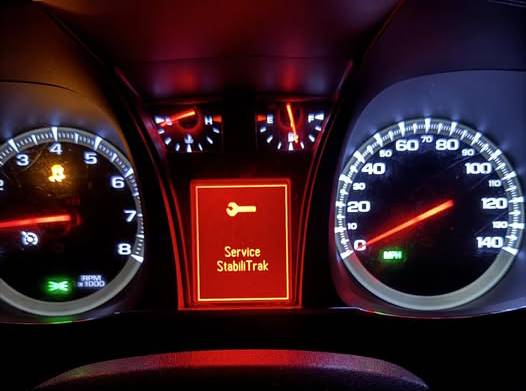
What Does the GMC Terrain Service StabiliTrak Message Mean?
When the Service StabiliTrak message appears on your GMC Terrain’s dashboard, it indicates that the vehicle has detected a problem within its Electronic Stability Control (ESC) system or one of its supporting components. This warning does not always mean the StabiliTrak system itself has failed. Instead, it often signals that the system can no longer operate correctly because it is receiving inaccurate information from one or more sensors.
StabiliTrak is GMC’s electronic stability control technology designed to help drivers maintain control during sudden steering maneuvers or when driving on slippery roads. The system continuously monitors several vehicle parameters, including wheel speed, steering angle, brake pressure, lateral acceleration, and yaw rate. If it detects that the vehicle is beginning to skid or lose traction, it automatically applies braking force to individual wheels and may reduce engine power to help restore stability.
Because StabiliTrak works closely with the Anti-lock Braking System (ABS), Traction Control System (TCS), engine control module, and steering system, a malfunction in any of these related components can trigger the warning message. In some cases, you may also notice the ABS warning light, traction control light, or check engine light appearing at the same time.
Once the system detects a fault, it may temporarily disable stability control as a protective measure. Although your GMC Terrain will usually remain drivable, you will lose an important safety feature that is especially valuable during emergency maneuvers or adverse weather conditions. This is why the warning should be diagnosed as soon as possible rather than ignored.
Common Causes of the GMC Terrain Service StabiliTrak Message
Several different issues can cause the Service StabiliTrak warning to appear. Some are inexpensive and easy to repair, while others require advanced diagnostics or professional service. Understanding the most common causes can help narrow down the problem before replacing unnecessary parts.
A faulty wheel speed sensor is one of the leading causes of this warning. Each wheel has a sensor that measures rotational speed and sends data to the ABS and StabiliTrak systems. Dirt, corrosion, physical damage, or normal wear can cause inaccurate readings, preventing the stability control system from functioning correctly.
A defective steering angle sensor is another frequent culprit. This sensor measures the direction of the steering wheel and helps the system determine whether the vehicle is following the driver’s intended path. If the sensor loses calibration or fails electronically, the StabiliTrak system may disable itself to avoid making incorrect stability adjustments.
Problems within the ABS control module can also trigger the warning. Since StabiliTrak depends heavily on ABS data, communication failures, internal module faults, or damaged hydraulic control units may result in multiple dashboard warnings appearing simultaneously.
Low battery voltage is often overlooked but can significantly affect modern vehicle electronics. A weak battery, failing alternator, or poor electrical connection may cause communication errors between control modules, leading to intermittent StabiliTrak warnings, particularly during cold weather or immediately after starting the engine.
Damaged wiring and corroded electrical connectors are also common, especially on older vehicles or those frequently exposed to moisture, road salt, or rough driving conditions. Broken wires near the wheel hubs are particularly susceptible to damage because they move continuously with the suspension.
Other possible causes include a faulty yaw rate sensor, brake pedal position sensor, wheel bearing failure, engine misfires, throttle body problems, or software issues within the powertrain control module. Because several systems interact with StabiliTrak, a professional diagnostic scan is often the fastest way to identify the exact source of the problem.
Symptoms That Often Accompany the Service StabiliTrak Message
The Service StabiliTrak message rarely appears by itself. In many cases, drivers notice additional warning lights or changes in vehicle performance that provide valuable clues about the underlying issue.
One of the most common symptoms is the illumination of the traction control light. Since traction control and StabiliTrak share many of the same sensors and control modules, a fault in one system often affects the other. The ABS warning light may also appear if the problem involves a wheel speed sensor or ABS module.
Some GMC Terrain owners report that the check engine light comes on simultaneously. This can occur when engine-related faults interfere with the vehicle’s ability to manage stability control. Problems such as throttle body malfunctions, ignition misfires, or electronic throttle control issues may cause both warnings to appear together.
Another noticeable symptom is reduced engine performance. In certain situations, the vehicle may enter a reduced power mode to protect critical systems. Drivers may experience slower acceleration, delayed throttle response, or limited engine output until the fault is repaired.
Cruise control may become unavailable because it relies on accurate information from the vehicle’s safety systems. Some drivers also notice slightly heavier steering, rough transmission shifting, or unusual braking behavior, depending on which component has failed.
On slippery roads, the absence of StabiliTrak assistance becomes more apparent. The vehicle may feel less stable during sharp turns or sudden lane changes because the electronic stability system is no longer able to intervene when traction is lost.
Although some of these symptoms may seem minor at first, they should not be ignored. Prompt diagnosis can prevent additional damage, reduce repair costs, and ensure that your GMC Terrain continues to provide the level of safety it was designed to deliver.
Is It Safe to Drive With the Service StabiliTrak Message?
Whether it is safe to continue driving after seeing the Service StabiliTrak message depends on the underlying cause of the warning and the vehicle’s behavior. In many situations, the GMC Terrain remains drivable because the engine, transmission, and braking systems continue to function normally. However, the electronic stability control system may be disabled, leaving the vehicle with reduced protection during emergency maneuvers or slippery driving conditions.
If the warning appears without any noticeable changes in performance and no additional warning lights are illuminated, you can usually drive cautiously to your destination or the nearest repair shop. Even so, avoid aggressive acceleration, hard braking, and high-speed cornering because the vehicle no longer has the full benefit of StabiliTrak intervention if traction is lost.
You should exercise extra caution if road conditions are wet, icy, or covered with loose gravel. The absence of electronic stability control can increase the risk of skidding, especially during sudden steering corrections or panic braking. Drivers who regularly travel through areas with heavy rain or snow should have the problem diagnosed as soon as possible.
In some cases, the warning is accompanied by the Check Engine Light, ABS Light, or Reduced Engine Power message. If this happens, the issue may involve multiple vehicle systems rather than the stability control system alone. You may notice poor acceleration, rough shifting, abnormal braking performance, or inconsistent steering response. These symptoms indicate that the vehicle should be inspected immediately.
If the steering feels unusually heavy, the brakes respond unpredictably, or the engine begins running roughly, it is safest to stop driving and arrange for professional assistance. Continuing to drive under these conditions could increase the likelihood of an accident or cause additional damage to related components.
Ignoring the warning for an extended period is never recommended. Even if the vehicle appears to drive normally, the underlying fault may worsen over time, leading to more expensive repairs and reducing the effectiveness of important safety systems.
How to Diagnose the Problem
Accurately diagnosing the Service StabiliTrak message requires a systematic approach. Since several electronic systems work together, replacing parts without confirming the cause can become expensive and ineffective. Following a logical diagnostic process helps identify the actual fault while minimizing unnecessary repairs.
Begin by connecting a professional OBD-II scanner capable of reading manufacturer-specific ABS and stability control codes. Basic code readers may only display engine-related diagnostic trouble codes, while advanced scanners can access the ABS control module, body control module, and electronic stability system. Record every stored and pending code before clearing any warnings.
Next, inspect the vehicle’s battery and charging system. A healthy battery should typically measure around 12.6 volts with the engine off and between 13.7 and 14.7 volts while the engine is running. Low voltage can cause communication errors between electronic control modules, leading to intermittent StabiliTrak warnings.
Carefully inspect each wheel speed sensor and its wiring harness. Look for damaged insulation, loose connectors, excessive corrosion, or debris covering the sensor tip. Because these sensors are exposed to water, dirt, and road salt, they are among the most common failure points.
Check the steering angle sensor using a diagnostic scanner to verify that its readings change smoothly as the steering wheel is turned. If the values appear erratic or remain fixed, recalibration or replacement may be required.
Inspect the brake system for worn wheel bearings, damaged tone rings, or excessive wheel play. Mechanical issues can affect wheel speed sensor readings even when the sensors themselves are functioning correctly.
If all sensors appear normal, evaluate the ABS control module and related wiring for communication faults. Some vehicles may also require software updates to correct known stability control issues addressed by the manufacturer.
Common diagnostic trouble codes associated with the Service StabiliTrak message include:
| DTC Code | Typical Meaning |
|---|---|
| C0035 | Left Front Wheel Speed Sensor Circuit |
| C0040 | Right Front Wheel Speed Sensor Circuit |
| C0050 | Right Rear Wheel Speed Sensor Circuit |
| C0242 | Traction Control System Performance |
| U0121 | Lost Communication With ABS Control Module |
| U0100 | Lost Communication With Engine Control Module |
| P2138 | Accelerator Pedal Position Sensor Correlation |
After completing repairs, clear the stored codes and perform a road test to verify that the warning does not return under normal driving conditions.
How to Fix the GMC Terrain Service StabiliTrak Message
The appropriate repair depends entirely on what triggered the warning. Once the root cause has been identified through proper diagnostics, many issues can be resolved without replacing expensive components unnecessarily.
If a dirty or faulty wheel speed sensor is responsible, begin by cleaning the sensor and inspecting the tone ring for damage. Dirt, rust, or metallic debris can interfere with accurate wheel speed readings. If cleaning does not resolve the issue, replacing the sensor is usually straightforward and relatively inexpensive.
When the steering angle sensor has lost calibration, many repair shops can perform a recalibration using a professional scan tool. If the sensor has failed internally, replacement may be necessary before the system can be recalibrated successfully.
A weak battery or failing alternator should be addressed immediately. Installing a new battery or repairing the charging system often resolves intermittent electronic communication faults that trigger the Service StabiliTrak warning.
Damaged wiring should be repaired using high-quality automotive connectors and weather-resistant insulation. Pay particular attention to wiring near the suspension components, where constant movement can eventually cause broken conductors or worn insulation.
If diagnostic testing identifies a defective ABS control module, replacement may be required. Because this repair often involves programming and brake system bleeding procedures, it is generally best performed by a qualified technician or dealership.
Some GMC Terrain models may also benefit from software updates released by the manufacturer. Updated control module programming can resolve known electronic issues without replacing any hardware.
After all necessary repairs have been completed, clear the fault codes using a diagnostic scanner and perform a thorough road test. During the test drive, monitor wheel speed sensor data, steering angle readings, and ABS communication to ensure the StabiliTrak system is functioning correctly. If no new codes appear and the warning message does not return, the repair can be considered successful.
GMC Terrain Service StabiliTrak Repair Costs
The cost of repairing a Service StabiliTrak warning can vary significantly depending on the failed component, the model year of your GMC Terrain, labor rates in your area, and whether original equipment manufacturer (OEM) or aftermarket parts are used. Some repairs are relatively inexpensive, while others require advanced diagnostics and specialized programming.
The table below provides estimated repair costs commonly reported by repair shops across the United States.
| Repair | Estimated Cost (USD) |
|---|---|
| Diagnostic Scan | $75–$200 |
| Wheel Speed Sensor Replacement | $100–$300 |
| Steering Angle Sensor Replacement | $200–$500 |
| Brake Pedal Position Sensor | $120–$300 |
| Battery Replacement | $150–$350 |
| Wiring Repair | $100–$600 |
| Wheel Bearing Replacement | $250–$700 |
| Yaw Rate Sensor Replacement | $300–$700 |
| ABS Module Replacement | $800–$1,800 |
In many cases, the issue turns out to be a failed wheel speed sensor or low battery voltage, making the repair relatively affordable. However, replacing the ABS control module or repairing extensive wiring damage can become considerably more expensive due to labor and programming requirements.
Before authorizing major repairs, consider requesting a detailed diagnostic report and obtaining a second opinion if the estimate involves high-cost components. Proper diagnosis can prevent unnecessary part replacements and save hundreds of dollars.
How to Prevent Future StabiliTrak Problems
Although not every StabiliTrak issue can be prevented, regular maintenance greatly reduces the likelihood of unexpected dashboard warnings. Keeping your GMC Terrain in good mechanical and electrical condition allows the stability control system to operate as intended.
Inspect the battery and charging system at least once a year, especially before winter. A weak battery is one of the most overlooked causes of intermittent electronic faults.
During routine brake service, ask your technician to inspect the wheel speed sensors, tone rings, and wiring harnesses for signs of wear, corrosion, or physical damage. Catching these issues early can prevent larger problems later.
Avoid driving through deep water whenever possible. Excessive moisture can damage electrical connectors, contaminate wheel speed sensors, and accelerate corrosion in critical wiring connections.
Keep wheel bearings and suspension components in good condition. Excessive bearing play or damaged hubs can interfere with accurate wheel speed measurements, even when the sensors themselves are functioning properly.
If your vehicle receives a manufacturer recall or software update related to the electronic stability control system, schedule the update promptly. Updated software often resolves known communication or calibration issues that may trigger false warnings.
Finally, never ignore warning lights on the dashboard. Addressing small electrical or sensor problems early is often far less expensive than waiting until multiple systems begin to fail.
Frequently Asked Questions
Can I reset the Service StabiliTrak message myself?
In some situations, yes. If the warning was triggered by a temporary electrical issue, clearing the diagnostic trouble codes with an OBD-II scanner may remove the message. However, if the underlying problem remains unresolved, the warning will usually return shortly after driving.
Will disconnecting the battery clear the warning?
Disconnecting the battery may temporarily erase certain stored fault codes, but it does not repair the actual problem. Once the vehicle detects the same fault again, the Service StabiliTrak message will reappear.
Can a bad battery trigger the Service StabiliTrak warning?
Yes. Low battery voltage can interfere with communication between electronic control modules, causing false stability control warnings. Replacing a weak battery often resolves intermittent electronic issues.
Can bad wheel bearings cause the Service StabiliTrak message?
Yes. Worn wheel bearings can create excessive movement that affects wheel speed sensor readings. As a result, the ABS and StabiliTrak systems may receive inaccurate information and display warning messages.
Is it expensive to repair the Service StabiliTrak system?
Not always. Many repairs involve inexpensive components such as wheel speed sensors or battery replacement. More costly repairs generally involve the ABS control module or extensive electrical wiring.
Can I continue driving with the warning displayed?
If the vehicle handles normally and no additional warning lights are present, you can usually drive cautiously to a repair facility. However, you should avoid delaying repairs because the stability control system may be disabled, reducing safety during emergency maneuvers.
Does the Service StabiliTrak warning affect fuel economy?
The warning itself does not directly reduce fuel economy. However, if the underlying problem involves the engine, throttle body, or ignition system, fuel efficiency may decrease until the fault is repaired.
How long does it take to repair?
Simple repairs such as replacing a wheel speed sensor may take less than an hour. More complex repairs involving the ABS module, wiring harnesses, or software programming can require several hours or even a full day.
Conclusion
Seeing a GMC Terrain Service StabiliTrak Message on your dashboard can be unsettling, but it does not always indicate a major mechanical failure. In many cases, the warning is caused by relatively common issues such as a faulty wheel speed sensor, a weak battery, damaged wiring, or a steering angle sensor that requires recalibration. Identifying the root cause early is the key to avoiding unnecessary repairs and preventing more serious problems from developing.
Because the StabiliTrak system plays a vital role in maintaining vehicle stability and traction, it should never be ignored. Even if your GMC Terrain appears to drive normally, the loss of electronic stability assistance can increase the risk of losing control on wet, icy, or uneven roads. Prompt diagnosis using a professional scan tool can quickly identify the source of the problem and help restore the system to full operation.
Routine maintenance, regular battery inspections, and timely attention to warning lights are the best ways to keep your GMC Terrain operating safely and reliably. By understanding the causes, symptoms, diagnostic process, and repair options outlined in this guide, you can make informed decisions and minimize repair costs while ensuring your vehicle continues to deliver the safety and confidence it was designed to provide.