A Ford P0720 code means the Powertrain Control Module (PCM) detects an invalid signal from the transmission Output Speed Sensor (OSS). The sensor monitors the speed of the transmission output shaft. It sends real-time data to the PCM so the transmission can shift at the correct time. The PCM also uses this information to calculate vehicle speed and control torque converter operation.
When the sensor signal becomes weak, erratic, or disappears, the PCM stores the P0720 diagnostic trouble code. It also turns on the Check Engine Light. In many Ford vehicles, the transmission may shift harshly, hesitate between gears, or enter limp mode. These symptoms often reduce driving performance and make the vehicle harder to control.
A faulty Output Speed Sensor is a common cause of this code, but it is not the only one. Damaged wiring, loose connectors, contaminated transmission fluid, and internal transmission faults can produce the same warning. In some cases, a failing PCM or TCM also triggers the code. Replacing the sensor without proper testing may waste time and money.
This guide explains everything you need to know about the Ford P0720 code. You will learn what the code means, what causes it, how to diagnose it, and how to repair it correctly. The guide also covers repair costs, affected Ford models, and maintenance tips that help prevent the problem from returning.
What Does Ford P0720 Code Mean?
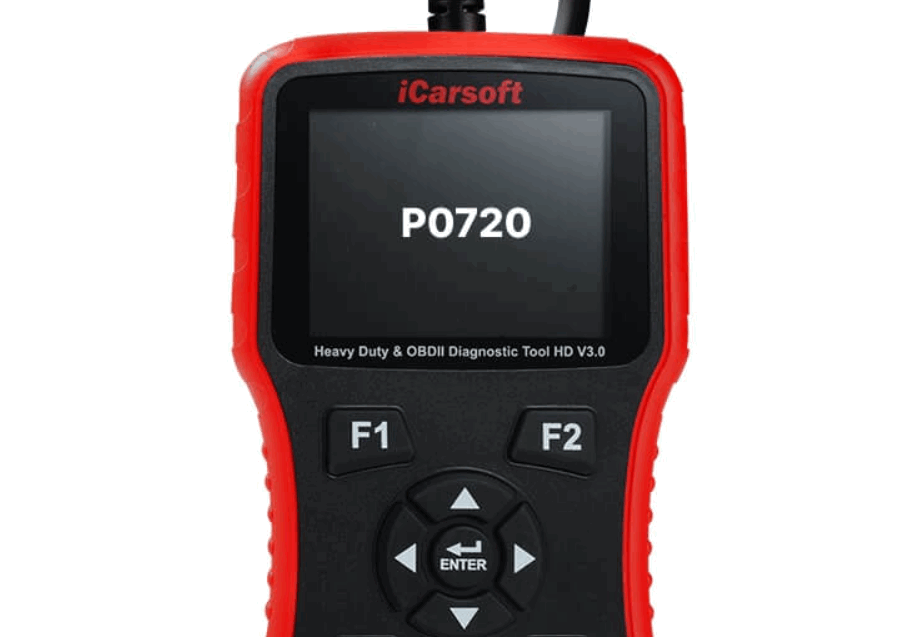
A Ford P0720 code indicates that the Powertrain Control Module (PCM) receives an incorrect or missing signal from the Output Speed Sensor (OSS). The PCM compares this signal with data from other sensors to monitor transmission performance. When the values no longer match the expected operating range, the PCM stores Diagnostic Trouble Code P0720 and turns on the Check Engine Light. The code signals a fault in the output speed sensor circuit rather than confirming that the sensor itself has failed.
The Output Speed Sensor measures the rotational speed of the transmission output shaft. It continuously sends speed data to the PCM while the vehicle is moving. The PCM uses this information to determine shift timing, torque converter lockup, and vehicle speed calculations. Accurate sensor data allows the transmission to select the correct gear and maintain smooth operation under different driving conditions.
An incorrect output speed signal affects several transmission functions. The PCM may delay gear changes because it cannot calculate the actual output shaft speed. It may also command harsh shifts or place the transmission into limp mode to reduce the risk of internal damage. Drivers often notice inconsistent acceleration, poor shift quality, or a speedometer that behaves abnormally because multiple systems rely on the same speed information.
The P0720 code does not always indicate a defective Output Speed Sensor. Broken wires, corroded connectors, low transmission fluid, damaged wiring harnesses, and internal transmission problems can interrupt the signal before it reaches the PCM. In less common cases, a faulty PCM or Transmission Control Module (TCM) may misinterpret sensor data and trigger the code. A complete diagnosis should identify the exact cause before any parts are replaced.
Ford vehicles equipped with automatic transmissions commonly use the Output Speed Sensor to optimize shift quality and improve fuel efficiency. When the sensor circuit fails, the transmission loses one of its primary feedback signals. Diagnosing the problem early helps prevent unnecessary wear on transmission components and reduces the risk of more expensive repairs later.
What Are the Symptoms of Ford P0720 Code?
A Ford P0720 code often causes noticeable transmission problems because the PCM no longer receives accurate output shaft speed data. The most common symptom is the Check Engine Light, which appears as soon as the system detects an abnormal signal. Many drivers also notice changes in shift quality before any other warning signs appear. These symptoms usually become more obvious as the sensor circuit continues to fail.
Harsh or delayed shifting is one of the earliest signs of a P0720 code. The PCM depends on Output Speed Sensor data to determine the correct shift points. When the signal becomes unreliable, the transmission may hesitate before changing gears or shift with excessive force. Some Ford vehicles may skip gears entirely because the control module cannot calculate the correct transmission speed.
Transmission slipping can also occur when the PCM receives incorrect speed information. The engine speed may increase without a matching increase in vehicle speed, especially during acceleration. Drivers often describe this condition as the engine revving higher than normal while the vehicle responds slowly. Poor acceleration and reduced driving performance usually follow because the transmission cannot select the most appropriate gear.
Many Ford models enter limp mode after the PCM detects a persistent P0720 fault. Limp mode limits transmission operation to protect internal components from further damage. The vehicle may remain in a single gear, accelerate slowly, and refuse to shift normally. Although the vehicle may still move, driving in this condition should only be a temporary solution until proper repairs are completed.
A faulty Output Speed Sensor circuit can also affect the speedometer and cruise control system. The speedometer may display incorrect readings or fluctuate unexpectedly because several vehicle systems rely on accurate speed data. Cruise control may stop working or disengage without warning. In some cases, drivers also experience reduced fuel economy because incorrect shift timing forces the engine to operate at less efficient RPM levels.
Not every Ford vehicle displays every symptom at the same time. Some vehicles only illuminate the Check Engine Light during the early stages of the fault. Others develop severe shifting problems within a short period. Diagnosing the code as soon as the first symptoms appear helps prevent unnecessary transmission wear and reduces the chance of more expensive repairs.
What Causes Ford P0720 Code?
A Ford P0720 code develops when the Powertrain Control Module (PCM) cannot receive a stable output speed signal from the transmission. The Output Speed Sensor remains the most common cause, but it is not the only one. Electrical faults, transmission problems, and control module failures can all interrupt communication between the sensor and the PCM. Identifying the exact cause prevents unnecessary parts replacement and shortens the repair process.
A failed Output Speed Sensor is the leading cause of the P0720 code. The sensor operates in a harsh environment where it experiences constant heat, vibration, and exposure to transmission fluid. Over time, the internal electronics can deteriorate and produce weak or inconsistent signals. Once the signal falls outside the expected range, the PCM stores the diagnostic code and begins using backup operating strategies to protect the transmission.
Damaged wiring and loose electrical connectors also trigger this fault on many Ford vehicles. The Output Speed Sensor relies on a clean electrical circuit to deliver accurate information. Broken wires, worn insulation, corrosion, or moisture inside the connector can interrupt the signal before it reaches the PCM. Even a partially damaged connector may create an intermittent fault that appears only under certain driving conditions, making the problem more difficult to diagnose.
Transmission fluid condition also affects sensor performance. Low fluid levels reduce hydraulic pressure and increase transmission operating temperatures. Dirty or contaminated fluid allows metal particles and debris to circulate through the transmission, which may interfere with sensor operation or indicate internal component wear. If the transmission suffers mechanical damage, such as a worn output shaft, damaged tone ring, or failing clutch pack, the sensor may report abnormal speed readings even though it still functions correctly.
Although less common, a faulty PCM or Transmission Control Module (TCM) can also generate a Ford P0720 code. Software errors, damaged internal circuits, or communication failures may cause the control module to misinterpret valid sensor data. For this reason, technicians should always inspect the sensor, wiring, connectors, and transmission condition before replacing expensive electronic control modules. A systematic diagnosis identifies the true source of the fault and helps restore normal transmission performance with the correct repair.
How Serious Is Ford P0720 Code?
A Ford P0720 code is a moderate to serious transmission fault that requires prompt attention. The vehicle may continue to drive for a short period, but ignoring the problem increases the risk of transmission damage. The PCM depends on accurate Output Speed Sensor data to control gear changes and monitor transmission performance. Without reliable information, the transmission cannot operate as intended.
Many Ford vehicles remain drivable after the P0720 code appears. However, drivers often experience harsh shifting, delayed gear engagement, or limited acceleration. Some models activate limp mode to protect the transmission from further damage. Limp mode restricts normal shifting and keeps the transmission in a limited operating range. This protection strategy reduces stress on internal components but also makes the vehicle less practical for daily driving.
Driving with a P0720 code for an extended period can increase wear on several transmission parts. Incorrect shift timing creates additional heat and places extra stress on clutch packs, valve body components, and the torque converter. Excessive heat also accelerates transmission fluid breakdown, reducing its ability to lubricate and cool internal components. Over time, these conditions can turn a simple sensor-related repair into a major transmission overhaul.
Safety can also become a concern when the transmission fails to respond correctly. Delayed acceleration may reduce driver confidence when merging onto highways or crossing busy intersections. Unexpected gear changes can make the vehicle feel unstable, especially during heavy acceleration or while towing. Although the P0720 code rarely causes an immediate loss of engine power, poor transmission performance can still increase driving risks in demanding situations.
The severity of a Ford P0720 code depends on the root cause. A damaged connector or failed Output Speed Sensor usually requires a relatively straightforward repair. Internal transmission damage or a faulty PCM often involves more time, specialized equipment, and higher repair costs. Diagnosing the code early remains the best way to limit repair expenses and restore normal transmission performance before additional failures develop.
How Do You Diagnose Ford P0720 Code?
Diagnosing a Ford P0720 code requires a systematic approach because several components can produce the same fault. Starting with the simplest inspections helps eliminate common problems before more advanced testing begins. Replacing the Output Speed Sensor without confirming the actual cause often wastes time and increases repair costs. A complete diagnosis should verify the sensor, the electrical circuit, the transmission, and the control modules.
The first step is to connect an OBD-II scanner and read all stored diagnostic trouble codes. Recording freeze frame data provides valuable information about vehicle speed, engine load, transmission temperature, and engine RPM when the fault occurred. If additional transmission codes such as P0721, P0722, P0715, or P0700 appear together with P0720, they may indicate a broader transmission or electrical problem instead of a single sensor failure.
The next step is to inspect the transmission fluid and the Output Speed Sensor circuit. Low fluid levels, burned fluid, or metal debris may indicate internal transmission wear. After checking the fluid, inspect the wiring harness from the sensor to the PCM. Look for broken insulation, loose terminals, corrosion, moisture, or damaged connectors. Even a small amount of corrosion can interrupt the sensor signal and trigger an intermittent fault.
After the visual inspection, test the Output Speed Sensor with a digital multimeter according to Ford’s service specifications. Measure the sensor resistance and verify that the reference voltage and ground circuits operate correctly. If the electrical values fall outside the manufacturer’s specifications, replace the sensor or repair the affected circuit. When the sensor passes all electrical tests, compare live data from the Output Speed Sensor with vehicle speed and engine speed while driving. Stable and consistent readings usually indicate that the sensor operates correctly.
If every previous test confirms normal operation, inspect the PCM and the transmission for deeper faults. Check for software updates, communication errors, or damaged control module connectors before considering PCM replacement. If live data remains abnormal despite a healthy electrical system, inspect internal transmission components such as the tone ring, output shaft, and clutch assemblies. Following this diagnostic sequence allows technicians to identify the true cause of the Ford P0720 code while avoiding unnecessary repairs.
How Do You Fix Ford P0720 Code?
Fixing a Ford P0720 code begins with identifying the exact source of the fault. The repair should always match the diagnostic results instead of relying on trial and error. Many vehicles only require a simple sensor or wiring repair, while others need more extensive transmission work. Completing the correct repair the first time improves transmission performance and prevents the code from returning.
A faulty Output Speed Sensor is the most common repair for a P0720 code. After confirming that the sensor fails the manufacturer’s electrical specifications, replace it with a high-quality OEM or equivalent component. Once the new sensor is installed, reconnect the electrical connector securely and clear the diagnostic trouble code with an OBD-II scanner. A short road test should confirm that the transmission shifts smoothly and that the code does not return.
If the sensor operates correctly, inspect and repair the electrical circuit. Replace damaged wires, clean corroded terminals, and secure any loose connectors. Electrical faults often create unstable sensor signals that mimic a failed Output Speed Sensor. Restoring a clean and reliable connection allows the PCM to receive accurate speed data and return the transmission to normal operation.
Transmission fluid should also receive careful attention during the repair process. Replace old or contaminated fluid if it appears dark, smells burned, or contains excessive metal particles. Correct fluid levels help maintain hydraulic pressure and reduce operating temperatures. If the transmission fluid contains a large amount of debris, perform additional inspections because internal component wear may have caused the P0720 code instead of the sensor circuit.
Some vehicles require more advanced repairs after the basic inspections are complete. A PCM or TCM software update may resolve communication problems if Ford has released a calibration update for the affected model. Internal transmission damage, including a worn tone ring, damaged output shaft, or failed clutch assembly, may require professional rebuilding or replacement. After completing every repair, clear the stored codes, perform a road test under different driving conditions, and verify that live data from the Output Speed Sensor remains stable. Confirming proper operation ensures that the original fault has been eliminated rather than temporarily hidden.
How Much Does It Cost to Fix Ford P0720 Code?
The cost to repair a Ford P0720 code depends on the root cause of the fault. A failed Output Speed Sensor usually represents the least expensive repair, while internal transmission damage can become a major investment. Labor rates, vehicle model, transmission type, and replacement part quality also affect the final repair bill. An accurate diagnosis before replacing any parts remains the best way to avoid unnecessary expenses.
Replacing the Output Speed Sensor typically costs between $150 and $350, including parts and labor. The sensor itself usually ranges from $40 to $150, while labor depends on how easily technicians can access the transmission housing. Many Ford models allow straightforward sensor replacement, although some vehicles require additional disassembly that increases labor time.
Electrical repairs usually cost less than major transmission work. Repairing damaged wiring, replacing corroded connectors, or restoring a broken harness generally costs between $100 and $300. The final price depends on the location of the damaged circuit and the amount of wiring that requires replacement. Correcting these electrical faults often resolves the P0720 code without replacing additional transmission components.
Transmission fluid service represents another common repair when contaminated or low fluid contributes to the fault. A complete fluid and filter service typically costs between $150 and $400, depending on the transmission design and the type of fluid recommended by Ford. If technicians discover excessive metal debris during the service, they usually recommend additional inspections because internal transmission wear may have caused the abnormal sensor readings.
The highest repair costs occur when the PCM, TCM, or internal transmission components fail. Programming or replacing a control module may cost $500 to $1,500, while rebuilding or replacing an automatic transmission can exceed $2,500 to $5,000. Drivers who diagnose the Ford P0720 code early often avoid these expensive repairs because technicians can correct minor electrical or sensor problems before they damage major transmission components. Investing in a professional diagnosis usually costs far less than replacing parts based on guesswork.
Which Ford Models Commonly Experience P0720 Code?
The Ford P0720 code can appear on almost any Ford vehicle equipped with an automatic transmission. However, it occurs more frequently on models that accumulate high mileage or operate under demanding conditions such as towing, frequent stop-and-go traffic, or heavy commercial use. Transmission wear, aging electrical components, and poor maintenance increase the likelihood of Output Speed Sensor circuit failures over time. While the diagnostic code remains the same, the underlying cause may differ depending on the transmission design and vehicle application.
The Ford F-150 is one of the models most commonly associated with the P0720 code because many owners use it for towing and hauling. Higher transmission loads generate additional heat and place greater stress on sensors, wiring, and internal transmission components. Older F-150 models equipped with the 4R70W, 4R75E, 6R80, or 10R80 automatic transmissions may develop sensor circuit problems after years of heavy use. Regular transmission fluid service helps reduce the risk of premature component failure.
SUV models such as the Ford Explorer, Ford Escape, and Ford Edge also experience P0720, particularly after extended mileage. Daily commuting, frequent acceleration, and changing road conditions gradually wear electrical connectors and wiring harnesses. Moisture and road debris can also damage sensor connectors located near the transmission. These issues often create intermittent faults before the Output Speed Sensor fails completely.
Passenger cars including the Ford Fusion and Ford Focus may display the P0720 code because of wiring faults, contaminated transmission fluid, or sensor wear. Some vehicles show only the Check Engine Light during the early stages, while others develop harsh shifting or delayed gear engagement. Prompt diagnosis usually prevents additional transmission damage and keeps repair costs relatively low.
The Ford Ranger and Ford Expedition can also develop the P0720 code after years of service or frequent operation under heavy loads. Regardless of the model, technicians should avoid assuming that every P0720 code results from a failed Output Speed Sensor. A complete inspection of the sensor circuit, transmission fluid, wiring harness, and control modules provides the most accurate diagnosis. Following the same diagnostic process across all Ford models improves repair accuracy and reduces the chance of repeated transmission problems.
How Can You Prevent Ford P0720 Code?
Preventing a Ford P0720 code starts with regular transmission maintenance and early attention to minor warning signs. Although some electronic components eventually wear out, routine inspections reduce the risk of unexpected sensor failures and expensive transmission repairs. Most P0720 faults develop gradually rather than appearing without warning. Detecting small problems early often prevents damage to the Output Speed Sensor circuit and other transmission components.
Maintaining clean transmission fluid is one of the most effective ways to protect the transmission. Fresh fluid lubricates moving parts, controls operating temperatures, and provides the hydraulic pressure required for smooth gear changes. Old or contaminated fluid loses its protective properties and allows excessive heat and wear to develop inside the transmission. Following Ford’s recommended service interval helps extend the life of both mechanical and electronic components.
Inspecting the wiring harness and electrical connectors during routine maintenance also reduces the likelihood of sensor circuit problems. Heat, vibration, moisture, and road debris gradually damage insulation and electrical terminals. Loose connectors or corroded pins can interrupt communication between the Output Speed Sensor and the PCM long before the sensor itself fails. Repairing these issues early often prevents intermittent faults that later become permanent diagnostic trouble codes.
Drivers should also pay close attention to changes in transmission behavior. Delayed shifting, harsh gear engagement, slipping, or unusual transmission noises often appear before a warning light turns on. Scanning the vehicle for pending diagnostic codes during routine maintenance can identify developing problems before they become serious. Addressing these symptoms immediately reduces repair costs and helps maintain consistent transmission performance.
Regular maintenance cannot eliminate every cause of a Ford P0720 code, but it significantly lowers the risk of unexpected failures. Combining scheduled transmission service with routine electrical inspections and prompt repairs creates the best long-term protection. A proactive maintenance plan keeps the transmission operating efficiently and helps prevent minor faults from developing into major repairs.
Conclusion
A Ford P0720 code indicates that the PCM can no longer rely on the signal from the Output Speed Sensor circuit. Although a failed sensor remains the most common cause, damaged wiring, contaminated transmission fluid, faulty control modules, and internal transmission problems can produce the same diagnostic code. Identifying the exact cause through a systematic diagnosis is essential because replacing parts without testing often increases repair costs without solving the problem.
Most vehicles continue to operate after the P0720 code appears, but delaying repairs increases the risk of transmission damage and poor driving performance. Early diagnosis allows technicians to correct simple electrical faults before they affect major transmission components. This approach improves repair accuracy, reduces unnecessary expenses, and helps restore normal shifting performance more quickly.
Routine transmission maintenance remains the best defense against future problems. Clean transmission fluid, secure electrical connections, and regular diagnostic inspections help protect the Output Speed Sensor circuit and extend transmission life. By responding quickly to the first warning signs, Ford owners can minimize repair costs and maintain reliable transmission performance for years to come.