Yes, Valvoline changes transmission fluid through its automatic transmission fluid exchange service at participating locations. The service replaces used transmission fluid during routine vehicle maintenance. However, service availability depends on the vehicle, transmission type, and location. Valvoline lists automatic transmission fluid exchange among its preventive maintenance services.
The type of transmission fluid service matters because vehicles use different fluids and maintenance procedures. Automatic transmissions and CVT systems have different fluid requirements. The vehicle manufacturer’s specifications should determine the correct fluid and service interval. A transmission fluid exchange also differs from transmission repair. Replacing the fluid does not fix every transmission problem.
Cost also matters when you consider this service. Several factors can affect the price at Valvoline. These factors include the vehicle, transmission type, fluid requirements, service procedure, and location. This guide explains Valvoline’s transmission fluid service in detail. It also covers vehicle compatibility, service costs, maintenance timing, and situations that require professional transmission diagnosis.
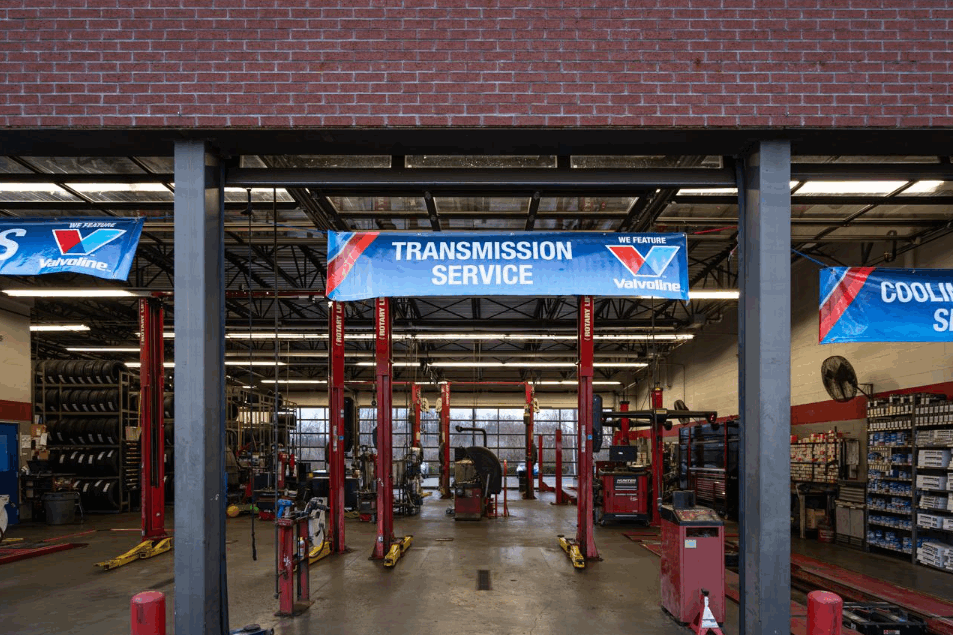
What transmission fluid service does Valvoline provide?
Valvoline provides an Automatic Transmission Fluid Exchange service at participating locations. The service replaces used automatic transmission fluid as part of routine vehicle maintenance. Valvoline includes this service among its preventive maintenance offerings.
Automatic transmission fluid supports several important functions inside a transmission. It helps lubricate internal components and supports the hydraulic operation of the transmission. Over time, heat and normal operation can affect the condition of the fluid. Replacing used fluid helps maintain the transmission according to its recommended maintenance requirements.
Valvoline’s transmission fluid service focuses on fluid exchange rather than transmission repair. A fluid exchange does not diagnose or repair every mechanical problem inside a transmission. Issues such as persistent shifting problems, unusual noises, or transmission leaks may require a separate inspection. Drivers should therefore distinguish routine fluid maintenance from professional transmission repair.
Service availability also depends on the vehicle and location. Different vehicles require different transmission fluids and service procedures. Valvoline’s service information advises customers to follow the vehicle manufacturer’s recommendations. Checking the vehicle’s maintenance requirements before scheduling service helps ensure that the correct transmission fluid and procedure match the vehicle.
Is Valvoline transmission fluid service suitable for every vehicle?
No, you should not assume that every vehicle needs the same transmission fluid service at Valvoline. Transmission systems use different fluid specifications and maintenance procedures. Your vehicle’s manufacturer determines the required transmission fluid and recommended maintenance schedule. Valvoline also advises following the vehicle manufacturer’s recommendations when servicing automatic transmission fluid.
Automatic transmissions require fluid that matches the system’s specifications. The correct fluid helps the transmission perform its lubrication and hydraulic functions. Using a service designed for one transmission does not mean that the same procedure applies to another vehicle. Your vehicle’s year, make, model, and transmission type provide important information when you check service requirements.
CVT vehicles also need special attention because a continuously variable transmission uses its own fluid specifications. You should not assume that conventional automatic transmission fluid works for a CVT. Always check the owner’s manual or manufacturer maintenance information before requesting a transmission fluid service.
Location also affects service availability. Valvoline offers automatic transmission fluid exchange as part of its preventive maintenance services, but the available service can vary by location and vehicle requirements. Before visiting a Valvoline service center, confirm that the location can perform the required service for your specific vehicle. This approach helps you avoid using the wrong fluid or requesting a procedure that does not match the manufacturer’s requirements.
How much does Valvoline charge to change transmission fluid?
Valvoline does not provide one universal price for every transmission fluid service. The cost depends on factors such as the vehicle, transmission requirements, fluid type, service procedure, and service location. These factors make a vehicle specific quote more useful than a single average price.
The vehicle itself can affect the total cost because different transmissions require different fluids and service procedures. A vehicle with a specific transmission design may require a particular fluid specification. The amount of fluid required can also affect the final service price. You should therefore provide your vehicle’s year, make, and model when asking Valvoline about transmission fluid service.
The service location can also affect pricing. Valvoline operates multiple service locations, and the available services may vary between locations. Before you visit, confirm that the location offers automatic transmission fluid exchange for your vehicle. You can also ask for the current price and confirm exactly what the quoted service includes.
The best way to estimate your cost is to verify three details before scheduling the service. First, confirm that the location services your transmission type. Second, confirm which transmission fluid your vehicle requires. Third, ask for the current price for that specific service. This approach gives you a more accurate estimate than relying on a general transmission fluid change price.
What is included in a transmission fluid exchange?
A transmission fluid exchange replaces used automatic transmission fluid with fresh fluid that meets the vehicle’s requirements. Valvoline identifies Automatic Transmission Fluid Exchange as a preventive maintenance service. The service focuses on the transmission fluid rather than repairing internal transmission components.
Transmission fluid performs important functions inside an automatic transmission. It helps lubricate internal components and supports the hydraulic functions that allow the transmission to operate. The fluid also helps manage heat during normal transmission operation. As the vehicle accumulates mileage and operating time, the fluid can require replacement according to the manufacturer’s maintenance schedule.
A fluid exchange is not the same as every type of transmission service. Some vehicles use different service procedures based on their transmission design. CVT systems, for example, have specific fluid requirements that differ from conventional automatic transmissions. You should therefore check the manufacturer’s specifications before choosing a transmission fluid service.
A transmission fluid exchange also does not automatically include transmission repair. Problems such as persistent shifting issues, unusual noises, or other mechanical faults require separate evaluation. The purpose of routine fluid service is to maintain the transmission fluid according to the vehicle’s maintenance requirements. It should not replace professional diagnosis when the transmission already shows signs of a mechanical problem.
When should you change your transmission fluid?
You should change your transmission fluid according to the maintenance schedule for your vehicle. There is no single transmission fluid interval that applies to every vehicle. Transmission design, fluid specification, driving conditions, and manufacturer recommendations all affect the appropriate service schedule. Valvoline advises following the vehicle manufacturer’s recommendations when servicing automatic transmission fluid.
Your owner’s manual provides the most relevant starting point. It identifies the required transmission fluid and the recommended maintenance interval for your vehicle. Some vehicles may require transmission fluid service at a specific mileage or time interval. Others may use a maintenance schedule that depends on driving conditions. Following the manufacturer’s schedule helps you avoid applying a generic interval to a transmission with different requirements.
Driving conditions can also affect transmission maintenance. Frequent towing, heavy loads, repeated stop and go driving, and high operating temperatures can place greater demands on a transmission. These conditions can affect how the transmission operates and how quickly its fluid experiences normal wear. If your vehicle operates under demanding conditions, check the manufacturer’s maintenance guidance for the appropriate service schedule.
You should also consider the condition of the vehicle before requesting a fluid exchange. A routine maintenance service makes sense when the vehicle follows a scheduled transmission fluid replacement. However, persistent shifting problems, unusual noises, fluid leaks, or other transmission symptoms may require diagnosis instead of routine maintenance alone. A fluid change should follow the vehicle’s maintenance requirements rather than serve as a substitute for transmission repair.
What are the signs that your transmission fluid needs attention?
Transmission problems can show up through changes in shifting, unusual noises, leaks, or other changes in vehicle behavior. These signs do not prove that old transmission fluid caused the problem. They indicate that the transmission needs attention and may require inspection before you choose a fluid service.
Shifting problems deserve particular attention. A transmission that slips, shifts roughly, or delays engagement may have a fluid related issue. However, the same symptoms can also come from mechanical or electronic faults. Replacing transmission fluid without identifying the underlying cause may not solve the problem.
Transmission fluid leaks provide another important warning sign. A leak can reduce the amount of fluid available for proper transmission operation. Low fluid levels can affect transmission performance and may allow further problems to develop. You should identify and repair the source of a leak rather than rely on a fluid exchange alone.
Unusual transmission noises also require careful evaluation. Grinding, whining, clunking, or other abnormal sounds can indicate a problem that needs professional diagnosis. Routine transmission fluid maintenance supports normal vehicle maintenance, but it does not replace transmission repair. If your vehicle shows persistent symptoms, have the transmission evaluated before choosing a routine fluid exchange.
Should you change transmission fluid at Valvoline or a dealership?
Valvoline can suit routine transmission fluid maintenance when the location offers the required service for your vehicle. Valvoline provides automatic transmission fluid exchange as part of its preventive maintenance services. However, your vehicle’s manufacturer recommendations should guide the required fluid and maintenance procedure.
A dealership may suit vehicles that require manufacturer specific procedures or specialized transmission service. The dealership can also provide vehicle specific maintenance information based on the manufacturer’s service requirements. This option can make sense when your vehicle has unusual transmission requirements or when you want service from a provider closely associated with the vehicle manufacturer.
A transmission repair specialist becomes more relevant when your vehicle already shows persistent transmission problems. Symptoms such as slipping, abnormal shifting, unusual noises, or fluid leaks may require diagnosis rather than routine fluid replacement. A fluid exchange cannot replace an inspection when the transmission has a mechanical problem.
Your choice should therefore depend on the service your vehicle needs. Choose Valvoline for appropriate routine fluid maintenance when the location supports your vehicle’s requirements. Consider a dealership for manufacturer specific service needs. Choose a transmission repair specialist when the vehicle requires diagnosis or repair rather than routine fluid maintenance.
Can changing transmission fluid fix transmission problems?
Changing transmission fluid does not fix every transmission problem. A fluid exchange supports routine transmission maintenance, but it does not repair damaged internal components or resolve every cause of poor transmission performance. You should identify the cause of a transmission problem before treating a fluid change as the solution.
Transmission symptoms can have different causes. Slipping, delayed engagement, unusual shifting, or abnormal noises may indicate a problem that needs professional diagnosis. A fluid related issue may contribute to some symptoms, but mechanical or electronic faults can produce similar behavior. This distinction matters because replacing the fluid without diagnosing the problem may leave the underlying fault unresolved.
Fluid leaks also require separate attention. A leak can affect the amount of transmission fluid available for normal operation. Adding or replacing fluid does not repair the source of the leak. A technician needs to identify the leak and determine whether the transmission has suffered additional damage.
Routine maintenance and transmission repair serve different purposes. A transmission fluid exchange maintains the fluid according to the vehicle manufacturer’s requirements. A repair addresses a specific fault within the transmission system. If your vehicle shows persistent symptoms, professional diagnosis should come before routine fluid service.
Should you use Valvoline for a transmission fluid change?
Yes, Valvoline can be a suitable option for routine transmission fluid maintenance when the location offers the required service for your vehicle. Valvoline provides automatic transmission fluid exchange as part of its preventive maintenance services.
Your vehicle’s requirements should determine whether the service fits your needs. Check the manufacturer’s recommended transmission fluid, maintenance schedule, and service procedure before booking an exchange. Different transmission types can require different fluids and maintenance procedures, so you should not assume that one service applies to every vehicle.
Cost also depends on your vehicle and service requirements. Factors such as transmission type, fluid specification, fluid quantity, service procedure, and location can affect the final price. Confirm the service availability and current price for your specific vehicle before visiting a Valvoline location.
Most importantly, separate routine maintenance from transmission repair. A fluid exchange can support scheduled maintenance, but it cannot repair every transmission problem. If your vehicle has persistent slipping, unusual shifting, abnormal noises, or fluid leaks, seek a professional diagnosis before choosing a routine fluid service.