A Dodge Ram key fob can stop working because of a dead or weak battery, incorrect battery installation, poor battery contact, damaged buttons or internal electronics, signal or detection problems, lost programming, or a vehicle-side electrical issue. Checking the key fob battery and comparing the faulty fob with a working spare are the first steps to identify the cause.
The symptoms also help narrow down the problem. A completely unresponsive key fob points toward a battery, contact, or internal fob failure. A fob that works only at close range may indicate reduced battery or signal performance. If the buttons work but the truck displays “Key Fob Not Detected,” the problem requires checking how the vehicle detects and authorizes the key rather than assuming the remote itself has completely failed.
Troubleshooting should therefore follow a specific sequence: inspect the key fob, test the spare key, check the battery and contacts, identify which functions have failed, and then investigate programming or vehicle-side systems when necessary. This process helps avoid replacing or reprogramming a Dodge Ram key fob before simpler causes have been eliminated.
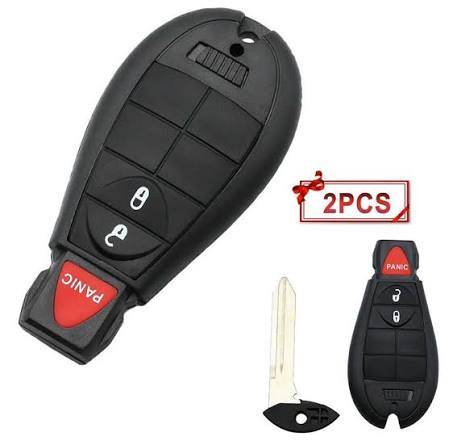
Why Is My Dodge Ram Key Fob Not Working?
A Dodge Ram key fob can stop working because of a weak or dead battery, incorrect battery installation, poor battery contact, damaged buttons or electronics, signal or detection problems, programming issues, or a fault on the vehicle side. The specific symptom helps determine which cause should be checked first.
A weak or dead battery is one of the first components to inspect when the entire key fob becomes unresponsive or its operating range decreases. The battery supplies power to the transmitter inside the fob, so insufficient voltage can prevent the remote from sending a reliable signal to the truck. If the key fob works only when you stand close to the vehicle, replacing the battery is a practical first diagnostic step.
Incorrect battery installation can cause the same symptom even when the battery is new. The replacement battery must be the correct type, positioned in the correct orientation, and seated firmly against the electrical contacts. Bent, dirty, or poorly positioned contacts can interrupt the electrical connection between the battery and the key fob circuit board.
Physical damage can cause individual buttons or the entire Dodge Ram key fob to stop responding. Repeated drops, moisture exposure, worn button contacts, or damage to the internal circuit board can interfere with the commands sent by the fob. A useful clue is whether only one function has failed. For example, an unlock button that does not respond while the lock button still works points more strongly toward a button or internal contact problem than a completely dead battery.
Signal and vehicle-detection problems create a different failure pattern. The key fob may have sufficient battery power but the truck may fail to receive or recognize its signal. Signal interference, a damaged fob transmitter, or a problem with the vehicle’s receiving or keyless-entry system can produce this condition. A “Key Fob Not Detected” message is therefore different from a remote that simply has one non-working button.
Programming or pairing should be investigated after basic battery and physical checks have been completed. A key fob that does not communicate correctly with the vehicle may require further diagnosis or programming, but reprogramming should not be treated as the automatic solution every time a remote stops working.
The spare key fob provides one of the most useful diagnostic comparisons. If the spare fob works normally while the primary fob does not, the fault is more likely to be inside the primary key fob. If neither fob works, the vehicle-side electrical, receiving, or keyless-entry system deserves more attention.
How Can You Diagnose a Dodge Ram Key Fob That Is Not Working?
Diagnose a Dodge Ram key fob by comparing it with the spare fob, checking its operating range, testing each button, and identifying whether the truck can detect the key. These checks separate battery and key-fob faults from problems that originate in the vehicle.
Does the spare Dodge Ram key fob work?
A working spare key fob indicates that the primary fob is the more likely source of the problem. Both remotes communicate with the same vehicle, so comparing their behavior under the same conditions removes several vehicle-side variables from the diagnosis.
Test the spare key from the same location and use the same functions that fail on the primary fob. For example, press lock and unlock on both remotes while standing the same distance from the truck. If the spare consistently operates the doors but the primary remote produces no response, inspect the primary fob’s battery, contacts, buttons, and internal condition before investigating the truck.
A different diagnostic path is required when neither key fob works. Two remotes failing at the same time makes a single damaged fob a less useful explanation. The investigation should then include conditions shared by both keys, including the vehicle’s receiving system, electrical supply, or other components involved in keyless access and key detection.
Does the key fob work only when you are close to the truck?
A Dodge Ram key fob that works only at close range may have reduced battery or signal performance. The remote must transmit a signal strong enough for the vehicle to receive it, and reduced transmission performance can shorten the usable distance before the key fob becomes completely unresponsive.
Test the remote at several distances from the vehicle under similar conditions. If it operates consistently beside the truck but fails at the distance where it previously worked, inspect and replace the key fob battery before moving to more complex repairs. Testing again after battery replacement shows whether battery condition was responsible for the reduced range.
Operating range alone does not prove that the battery is defective. Environmental signal interference and internal key-fob damage can also affect communication. A new correctly installed battery that produces no improvement means the diagnosis should continue rather than repeatedly replacing batteries.
The number of working buttons helps identify whether the problem affects the entire key fob or one specific function. A complete loss of lock, unlock, panic, and other available remote functions points toward a power, signal, or major internal failure, while one failed button suggests a more localized problem.
For example, a key fob that locks the truck normally but does not unlock it is still receiving power and transmitting at least one command. The failed unlock function can therefore direct attention toward the button, its internal contact, or the corresponding vehicle-side function. By contrast, a remote that produces no response from any button should first be checked for battery power, battery contact, physical damage, and communication failure.
Remote start should also be evaluated separately from basic lock and unlock operation. If the doors respond normally but remote start does not, the key fob is clearly capable of communicating with the vehicle for at least some commands. The troubleshooting process should therefore investigate the failed function rather than immediately classify the entire key fob as defective.
Does the truck display “Key Fob Not Detected”?
A “Key Fob Not Detected” message means the truck is not successfully detecting or recognizing the key required for the relevant vehicle operation. This symptom should be diagnosed as a detection or communication problem rather than treated as proof that every function of the key fob has failed.
Start by checking whether the remote buttons still operate the locks. A key fob that locks and unlocks the doors but triggers a detection warning during starting presents a different problem from a fob that is completely dead. The first pattern narrows the investigation toward key detection and authorization, while the second requires broader checks of battery power, the fob itself, and communication with the truck.
Next, test a known-working spare fob under the same conditions. If the vehicle detects the spare normally, attention returns to the primary key. If the same detection problem occurs with both fobs, further vehicle-side diagnosis becomes more important. This comparison prevents a vehicle detection fault from being misdiagnosed as two separate failed key fobs.
How Do You Fix a Dodge Ram Key Fob That Is Not Working?
Fix a Dodge Ram key fob by inspecting the fob, testing the spare key, checking the battery and its contacts, testing the key away from possible interference, and then investigating detection or programming problems if the basic fixes do not restore operation. Following this order helps separate a simple battery problem from key-fob damage or a vehicle-side fault.
Start by inspecting the key fob for visible damage. Check the housing for cracks, loose sections, water exposure, stuck buttons, or signs that the case has been dropped or crushed. Press each button individually and compare how it feels. A button that sticks, feels unusually soft, or does not produce the same tactile response as the others can indicate damage to the button or its internal contact.
Test the spare key fob before replacing parts. Use the spare from the same location and test the same functions, including lock and unlock. A working spare points toward a problem with the primary key fob, while two non-working fobs increase the likelihood that the problem is associated with the vehicle or a condition affecting both keys. This comparison can prevent unnecessary replacement of a functioning remote.
Check the key fob battery next. Remove the existing battery carefully, verify its type, inspect its orientation, and examine the metal contacts inside the fob. The battery must sit firmly against the contacts to supply power to the circuit. A new battery will not solve the problem if it is installed backward, does not fit correctly, or cannot make reliable electrical contact.
Test the key fob again after the battery has been installed correctly. Try several functions instead of relying on a single button. Test lock, unlock, and other available remote functions while standing near the truck, then move farther away. Restored operation after battery replacement identifies the previous battery or its connection as the likely cause.
Move away from potential sources of signal interference when a key fob behaves inconsistently in one location. A remote that fails in a specific area but works normally elsewhere may be experiencing a communication problem rather than a permanent internal failure. Testing in another location provides a simple way to distinguish location-specific interference from a fob that consistently fails.
Continue with vehicle-detection checks when the remote buttons work but the truck does not recognize the key for starting. This symptom shows that at least part of the fob is operating, so replacing the entire key immediately may not address the actual problem. Compare the behavior with a spare key and note whether the vehicle displays a key-detection warning.
Programming or professional diagnosis should come after these basic checks unless the circumstances already point directly to a programming issue. Do not assume that every Dodge Ram key fob needs to be reset or reprogrammed after a battery replacement. The exact requirements can differ by model year, key system, and vehicle configuration.
If both known-working key fobs fail under the same conditions, shift the diagnosis toward the truck. The keyless-entry receiver, key-detection system, vehicle electrical supply, or another related component may require testing. At that stage, an automotive locksmith or qualified automotive service provider can help determine whether the problem originates in the key, programming, or vehicle.
How Do You Replace the Battery in a Dodge Ram Key Fob?
Replace a Dodge Ram key fob battery by identifying the correct replacement battery, opening the fob without damaging its housing, installing the battery in the correct orientation, checking the contacts, closing the case, and testing every available remote function. The exact battery and opening method should be confirmed for the specific key fob rather than assumed from the Dodge Ram name alone.
Battery replacement is most relevant when the fob is completely unresponsive, works intermittently, or operates only at a shorter distance than before. However, these symptoms do not prove that the battery is the only possible cause. Testing the remote after installation is necessary to determine whether the replacement actually corrected the fault.
How do you find the correct battery for your Dodge Ram key fob?
Find the correct Dodge Ram key fob battery by checking the battery already installed in the remote and confirming the specification for the specific fob and vehicle model year. Dodge Ram trucks span different generations and key systems, so a battery specification should not be applied universally without verifying compatibility.
Open the key fob carefully and read the identifying code printed on the existing coin-cell battery when it is still available and appears to be the correct battery. The replacement should match the required size and specification so that it fits securely and makes proper contact with the terminals.
Vehicle model year is another important qualifier. A Dodge Ram or Ram 1500, 2500, or 3500 from one generation may use a different fob design from another generation. When the existing battery cannot be used as a reliable reference, confirm the specification using information for the exact vehicle year and key-fob design.
Avoid choosing a battery simply because it physically fits inside the case. A battery that does not match the required specification can create unreliable operation or fail to establish the intended electrical connection. Correct identification should therefore come before installation.
How do you install the new key fob battery correctly?
Install the new battery by placing it in the same required orientation as the original battery and ensuring that it sits firmly against the key fob’s electrical contacts. Correct battery type alone is insufficient when the battery is reversed, loose, or separated from a contact.
Open the fob with care to avoid cracking the housing or damaging internal components. Observe the orientation of the old battery before removing it. Taking note of which side faces upward provides a useful reference when positioning the replacement.
Inspect the battery compartment after removing the old battery. Look for bent contacts, contamination, corrosion, or components that appear displaced. The metal contacts create the electrical path between the battery and the key fob circuitry, so a poor connection can produce the same symptoms as a discharged battery.
Insert the replacement battery in the required orientation and make sure it is seated securely. Close the key fob housing completely without forcing the case together. A case that does not close normally can indicate that the battery is positioned incorrectly or that an internal component has moved.
Test the key fob immediately after reassembly. Start with lock and unlock, then test the other functions available on the specific remote. If normal operation returns, the battery or its previous connection was the likely source of the problem. If the Dodge Ram key fob still does not work after a correctly installed new battery, continue troubleshooting instead of assuming that another new battery will solve the fault.
Why Is My Dodge Ram Key Fob Not Working After a Battery Change?
A Dodge Ram key fob can remain unresponsive after a battery change because the replacement battery is incorrect, installed backward, not seated against the contacts, weak or defective, or because the original problem was not caused by the battery. Damage to the fob during battery replacement can also prevent it from working.
Check the replacement battery first. The battery must match the specification required by the specific key fob. A coin-cell battery that appears similar or fits inside the compartment is not sufficient evidence that it is the correct replacement. Compare the new battery with the original battery or verify the required specification for the specific Dodge Ram model year and key-fob design.
Check battery orientation next. Coin-cell batteries have positive and negative sides, and reversing the battery prevents the key fob circuitry from receiving power correctly. Reopen the fob and compare the installed orientation with the markings inside the battery compartment or the position of the original battery when that information is available.
Battery contact is another important cause of failure after replacement. The battery must sit securely against the metal terminals inside the fob. A contact that becomes bent or displaced while the old battery is removed can interrupt the electrical circuit even when the new battery is correctly positioned. Inspect the contacts and confirm that the replacement battery is firmly seated rather than loose inside the compartment.
A newly purchased battery can also have insufficient charge. If the battery type, orientation, and contacts are correct but the key fob remains completely unresponsive, testing another known-good battery of the correct specification can eliminate the replacement battery itself as the variable. Repeatedly installing new batteries without checking the other components, however, does not provide a useful diagnosis.
Inspect the fob for damage caused during disassembly when the failure started immediately after the battery was changed. Excessive force used to separate the housing can damage the case, move internal components, or affect the circuit board and button contacts. A fob that worked immediately before being opened but does not work after reassembly requires inspection of both the battery installation and the components disturbed during the procedure.
The battery may also have been unrelated to the original fault. For example, a damaged button, internal circuit problem, detection failure, or vehicle-side issue will remain after a new battery is installed. A Dodge Ram key fob that still fails with a verified battery and correct installation should therefore be diagnosed beyond the battery rather than automatically reprogrammed.
Use the spare key fob to determine the next diagnostic direction. If the spare works normally, continue investigating the primary fob. If neither fob works, examine conditions shared by both keys and consider a vehicle-side problem. This comparison provides more diagnostic value than repeatedly replacing the battery in the same non-working remote.
Why Does My Dodge Ram Say “Key Fob Not Detected”?
A Dodge Ram displays “Key Fob Not Detected” when the vehicle cannot successfully detect or recognize the key required for the relevant operation. The cause can involve the key fob battery, the fob’s position or signal, internal key-fob damage, interference, or the vehicle-side detection system.
Start by determining whether the remote buttons still work. If lock and unlock respond normally but the truck reports that the key fob is not detected during starting, the fob is still capable of performing at least some communication functions. That distinction narrows the diagnosis compared with a key fob that produces no response from any button.
Check the key fob battery when detection becomes intermittent or the remote has also developed a reduced operating range. Insufficient battery power can affect reliable communication between the fob and vehicle. Install a verified replacement battery correctly, confirm contact with the terminals, and test the truck again.
The position of the key fob can also affect diagnosis. Move the fob away from other electronic devices or objects that could interfere with communication and test it again. A detection problem that occurs only under particular conditions or in a specific location points toward a different cause from a fob that is never detected anywhere.
Compare the primary and spare key fobs under the same conditions. If the Dodge Ram detects the spare but repeatedly fails to detect the primary key, the primary fob becomes the main diagnostic target. Its battery, internal electronics, transmitter, physical condition, and programming status may require further investigation.
If the vehicle reports the same detection problem with both fobs, the diagnosis should expand to the truck. A condition affecting the receiving or key-detection system can prevent otherwise functional keys from being recognized. Vehicle electrical problems can also affect systems involved in key detection, making vehicle-side diagnosis more relevant when multiple keys produce the same symptom.
Do not treat “Key Fob Not Detected” as automatic proof that the key needs reprogramming. Programming is one possible diagnostic direction, but battery condition, physical fob condition, communication, and vehicle-side factors should be considered first. This order reduces the chance of paying for programming when the actual failure is elsewhere.
Emergency starting procedures should also be treated as model-specific rather than universal. Dodge Ram and Ram trucks cover multiple model years, generations, ignition systems, and key-fob designs. Use the starting procedure specified for the exact vehicle when the normal key-detection process fails instead of applying instructions written for a different Ram model or year.
Why Won’t My Dodge Ram Key Fob Unlock the Doors?
A Dodge Ram key fob may fail to unlock the doors because the fob has insufficient battery power, the unlock button or its internal contact is damaged, the fob cannot communicate reliably with the truck, or the problem is within the vehicle’s door-lock system. Testing the other key-fob buttons and the spare fob helps determine whether the fault belongs to the remote or the truck.
Start by testing every available button on the primary key fob. If lock, panic, and other remote functions also fail, the problem affects more than the unlock command. Check the battery, battery contacts, physical condition, and overall communication of the fob before focusing on the door locks themselves.
A different diagnosis applies when the lock button works but the unlock button does not. The successful lock command demonstrates that the fob has power and can communicate with the vehicle under those conditions. A worn unlock button, damaged internal contact, or another fault associated with that specific function becomes more relevant than a completely dead battery.
Compare the primary remote with a known-working spare. If the spare locks and unlocks the truck normally while the primary key cannot unlock it, inspect the primary fob. If the unlock function fails with both remotes, investigate a condition shared by both keys rather than assuming that two unlock buttons failed independently.
The behavior of individual doors provides another diagnostic clue. If the key fob successfully unlocks some doors but one specific door remains locked, shift the diagnosis toward that door or its locking mechanism. The remote has already transmitted an unlock command that the vehicle received, so replacing the entire key fob is unlikely to be the logical first repair for an isolated door problem.
Intermittent unlocking should also be tested at different distances. A remote that unlocks the truck reliably at close range but fails farther away may have reduced battery or signal performance. Install a verified battery correctly and retest the same function at the same distances to determine whether battery condition affected the operating range.
Do not classify every door-unlock problem as a failed Dodge Ram key fob. The pattern of working and non-working functions provides the distinction. No remote functions working points toward a broader fob or communication problem; one key-fob button failing points toward that function; one vehicle door failing while the others respond points toward the affected door system.
Why Won’t My Dodge Ram Start With the Key Fob?
A Dodge Ram may not start with the key fob when the vehicle cannot detect or authorize the key, when the fob has a battery or communication problem, or when the failed function is related specifically to remote start rather than the entire key fob. Determine whether the problem affects normal starting, remote start, or both before replacing or reprogramming the fob.
Normal starting and remote starting are separate diagnostic situations. A truck that recognizes the key during normal starting but refuses a remote-start command has already demonstrated that key detection can work under at least one operating condition. Conversely, a truck displaying “Key Fob Not Detected” during a normal start requires attention to key detection and authorization.
Why does the key fob work but remote start does not?
A Dodge Ram key fob can lock and unlock the truck normally while remote start remains unavailable because successful door-lock commands do not prove that every condition required for remote start has been satisfied. The symptom therefore should not be treated as evidence that the entire key fob has failed.
Confirm the distinction by testing the basic remote functions first. Lock and unlock the truck several times from a normal operating distance. Consistent responses demonstrate that the fob has power and can send commands that the vehicle receives. This evidence moves the diagnosis away from a completely dead remote.
Test remote start separately and observe what the truck does. A complete lack of response, a brief response followed by cancellation, and a remote-start function that previously worked but has stopped are different symptoms. Record any dashboard or vehicle messages because they can help identify whether the truck is rejecting the command for a condition unrelated to basic key-fob communication.
Avoid replacing the key fob solely because remote start fails while other remote functions operate normally. The correct diagnostic target is the failed remote-start function and the conditions associated with it. Model year, equipment, configuration, and vehicle condition can affect how that system operates, so model-specific information becomes important at this stage.
Why does the truck not detect the key fob when starting?
The truck does not detect the key fob when starting when communication or recognition between the key and the vehicle’s detection system is unsuccessful. A weak fob battery, damaged fob, communication interference, or vehicle-side detection problem can produce this symptom.
Check whether lock and unlock still work before performing more complex diagnosis. If neither remote commands nor key detection work, inspect the battery and overall fob condition first. If remote commands work but starting produces a detection warning, focus more specifically on the detection process.
Test the spare key under identical conditions. A spare that starts the truck normally while the primary key repeatedly produces a detection warning isolates the problem more strongly to the primary key or its ability to be recognized. A spare that produces the same warning increases the importance of vehicle-side diagnosis.
Do not repeatedly replace key-fob batteries when a verified battery produces no change. Battery replacement is a diagnostic step, not proof that every detection problem originates from insufficient key-fob power. Once battery installation, contacts, physical condition, and comparison with the spare have been checked, further diagnosis should follow the evidence produced by those tests.
The exact backup or emergency starting method should be verified for the specific Dodge Ram or Ram model year and key system. Different generations and configurations can use different procedures, so instructions for one truck should not automatically be applied to another.
Does a Dodge Ram Key Fob Need to Be Reset or Reprogrammed?
A Dodge Ram key fob does not automatically need to be reset or reprogrammed when it stops working or after its battery is replaced. Check the battery, battery installation, electrical contacts, physical condition, spare key, and vehicle response before treating programming as the cause.
Battery failure and programming failure are different problems. The battery supplies electrical power to the key fob, while programming allows the vehicle and key system to recognize the required key information. Replacing a discharged battery addresses the power source; it does not by itself establish that the programming has been lost.
This distinction is especially important when a Dodge Ram key fob remains unresponsive after a battery change. Confirm that the replacement battery is correct, installed in the proper orientation, firmly seated, and making contact with the terminals. If these conditions are not satisfied, attempting to reprogram the key does not correct the underlying electrical problem.
The spare key provides another useful test before programming is considered. If the spare operates the truck normally but the primary key does not, the fault remains associated with the primary fob or its recognition. If neither key works, the diagnostic scope should expand to systems shared by both keys rather than assuming that both remotes independently lost their programming.
Programming becomes a stronger diagnostic direction after basic fob problems have been eliminated and evidence indicates that the vehicle is not recognizing the affected key correctly. For example, a primary fob with a verified battery that consistently fails while a known-working spare operates normally requires further investigation of the primary fob, including its programming status and internal electronics.
Do not apply one reset or programming procedure to every Dodge Ram truck. The required procedure depends on the vehicle model year, key system, and configuration. Dodge Ram and later Ram trucks span multiple generations and key technologies, so a procedure written for one model year may not apply to another.
Professional equipment may also be required when programming cannot be completed through a procedure supported by the specific vehicle. An automotive locksmith or dealership with the appropriate equipment can determine whether the key is capable of being programmed, whether a replacement key is required, and whether the problem originates elsewhere in the vehicle’s key system.
The diagnostic sequence should therefore remain consistent: verify battery power, inspect battery contacts, test the buttons, compare the spare fob, observe vehicle detection, and investigate programming only when the earlier results support it. This sequence prevents programming from becoming a default repair for unrelated key-fob failures.
When Should You Replace a Dodge Ram Key Fob?
Replace a Dodge Ram key fob when diagnosis confirms that the fob itself is damaged or no longer functions reliably and battery replacement, correct battery contact, and other appropriate basic fixes do not restore operation. Physical damage, persistent button failure, internal electronic failure, and repeated communication problems can justify replacement.
Visible physical damage is one reason to investigate replacement. A cracked housing alone does not always mean that the electronics have failed, but severe impact, water intrusion, or damage that reaches the internal circuit board can affect reliability. Inspect the case, buttons, battery compartment, contacts, and internal components that are visible when the fob is safely opened.
Persistent button failure can also justify repair or replacement. If one button repeatedly fails while the other functions remain normal, the problem may be localized to the button or its internal contact rather than the entire remote. This distinction matters because replacing the complete key fob is not always the only possible response to a damaged housing or individual button component.
Repeated intermittent operation is another warning sign when a verified battery and correct battery contact have already been established. A fob that works unpredictably despite these checks can contain an internal fault affecting power delivery, button input, or signal transmission. Compare it with the spare remote under the same conditions before concluding that the truck is responsible.
A working spare provides strong diagnostic value when replacement is being considered. If the spare consistently controls and starts the same truck while the primary fob consistently fails under identical conditions, the evidence points more strongly toward the primary fob. This comparison reduces the risk of replacing a key when the actual problem belongs to the vehicle.
Replacement should not be based only on a “Key Fob Not Detected” message. The same symptom can involve battery power, communication, recognition, or the vehicle-side detection system. Confirming that the primary fob fails while the spare works provides a more useful basis for deciding whether the affected key needs professional testing or replacement.
Distinguish complete key-fob replacement from replacing only damaged external components. A worn or cracked shell does not necessarily mean that a functional circuit board must be discarded. Conversely, replacing the shell will not repair failed internal electronics. The correct repair depends on which component has actually failed.
A replacement key may also require additional services before it can perform all intended vehicle functions. Key cutting, programming, and compatibility requirements depend on the specific Dodge Ram or Ram model year and key system. Confirm these requirements before purchasing a replacement instead of assuming that a physically similar fob will operate the truck.
The replacement decision should therefore follow diagnosis rather than precede it. A dead battery requires a battery, a damaged case may require a housing repair, a failed internal fob may require replacement, and a vehicle-side fault requires vehicle diagnosis. Identifying which condition exists prevents one repair from being used for four different problems.
Should You Call a Locksmith or Dodge Ram Dealer for a Key Fob Problem?
Call a qualified automotive locksmith or Dodge Ram dealer when battery replacement and basic diagnosis do not restore key-fob operation, programming may be required, a replacement key needs to be configured, or the problem may involve the vehicle’s key-detection system. The better option depends on the specific fault, vehicle model year, key system, and services the provider can perform.
An automotive locksmith is a practical option when the problem centers on the key itself. Depending on the provider’s equipment and capabilities, an automotive locksmith may be able to test the fob, supply a compatible replacement, cut a physical key when required, and perform key programming. Confirm these capabilities before scheduling service because not every locksmith supports every Dodge Ram or Ram key system.
A dealer is another option when the problem requires model-specific diagnosis, key programming, or investigation of vehicle-side components. Dealer service becomes particularly relevant when multiple known-working keys produce the same problem or when diagnosis indicates that the truck is not detecting keys correctly. In those situations, replacing the primary fob without examining the vehicle may leave the original fault unresolved.
Use the results of earlier tests when deciding which service you need. If a spare fob works normally and the primary key has a verified battery but remains unresponsive, ask for diagnosis of the affected fob and its programming status. If neither fob works, explain that both keys produce the same symptom so the provider can include the vehicle-side system in the diagnosis.
Do not choose between a locksmith and dealer based only on an assumption that one will always cost less. The total cost depends on the required service, key-fob type, model year, replacement components, programming requirements, and local labor rates. A lower initial price for a replacement fob provides little value if additional cutting, programming, or diagnosis is still required.
Before authorizing replacement, confirm what the quoted service includes. Determine whether the price covers the key fob itself, programming, physical key cutting when applicable, and diagnostic work. This distinction makes two service quotes easier to compare and reduces the risk of purchasing a key that still requires additional work before it can operate the truck.
How Can You Prevent Dodge Ram Key Fob Problems?
Prevent Dodge Ram key fob problems by maintaining the battery, protecting the fob from physical and moisture damage, keeping the battery contacts intact, testing all remote functions periodically, and maintaining a working spare key. These actions reduce avoidable failures and provide a backup when the primary fob stops working.
Replace a weakening battery before the key fob becomes completely unreliable. Reduced operating range or intermittent response can provide a reason to inspect the battery, particularly when the fob has no visible physical damage. Verify the correct battery specification and installation for the specific key-fob design rather than installing a coin cell based only on physical similarity.
Protect the fob from drops, crushing forces, and moisture. The housing protects the circuit board, battery contacts, and button components inside the remote. A cracked case or damaged seal can expose those components to additional physical or environmental damage, turning a housing problem into an electronic failure.
Handle the battery contacts carefully during battery replacement. The metal terminals must maintain reliable contact with the battery, and bending or displacing them can create intermittent power even with a new battery installed. Open the housing carefully, observe the original battery position, and avoid forcing components during removal or reassembly.
Test each key-fob function periodically rather than waiting until every function fails. Lock, unlock, panic, and remote start where equipped represent different commands. A single button that begins working intermittently provides a more specific diagnostic clue than discovering several problems after the fob has deteriorated further.
Keep a known-working spare key fob available. A spare key provides both emergency access and a diagnostic reference. If the primary fob suddenly stops working, testing the spare under the same conditions helps determine whether the problem follows the key or remains with the vehicle.
The same principle applies when changing batteries in a spare key. A spare that has remained unused for a long period should not automatically be assumed to be a reliable diagnostic control. Verify that it works before the primary fob fails so that its behavior provides meaningful information during troubleshooting.
Preventive maintenance cannot eliminate every Dodge Ram key fob failure because internal electronics and vehicle-side systems can still develop faults. It does, however, remove several avoidable causes and makes later diagnosis more precise. A verified spare, correctly installed battery, intact fob, and known history of the remote provide useful evidence when a new keyless-entry or detection problem appears.