The starter solenoid on a Dodge Ram 1500 is located on the starter motor assembly, so finding the starter is the fastest way to locate the solenoid. The starter assembly is mounted low on the engine near the transmission bellhousing and is generally accessed from underneath the truck. The solenoid can be identified as the smaller electrical component attached to the starter, with battery and control-circuit connections running to its terminals.
The exact position and ease of access can differ by model year, engine configuration, and Ram generation. This distinction matters because the Dodge Ram 1500 has been produced with multiple powertrains, so a location or removal procedure for one configuration should not automatically be applied to every truck.
The starter solenoid should also not be confused with the starter relay. The solenoid is associated with the starter assembly, while the starter relay is part of the electrical control circuit and is located elsewhere in the vehicle. The sections below explain how to locate and identify the Dodge Ram 1500 starter solenoid, how its location can vary, how to distinguish it from the starter relay, and how to diagnose, test, and replace it when starting problems occur.
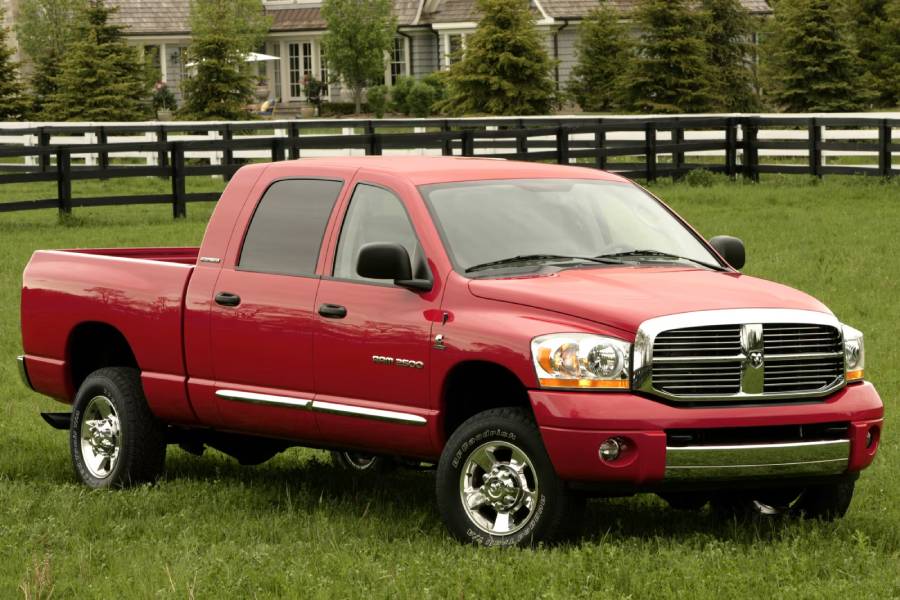
Where Is the Starter Solenoid Located on a Dodge Ram 1500?
The starter solenoid on a Dodge Ram 1500 is located on the starter motor assembly, which is mounted low on the engine near the transmission bellhousing. In practical terms, you need to locate the starter motor first because the solenoid is attached to the starter rather than mounted as a separate component elsewhere in the engine bay.
The starter is generally accessed from underneath the Ram 1500. Look toward the area where the engine connects to the transmission and identify the starter motor by its cylindrical housing and heavy electrical cable. The starter solenoid is the smaller cylindrical electrical component mounted directly to the starter assembly. A heavy-gauge cable from the positive side of the battery connects to the starter/solenoid assembly, along with a smaller control-circuit connection used to activate the starter.
The exact orientation of the starter assembly can differ depending on the model year, engine, and drivetrain configuration. For this reason, the transmission bellhousing and starter motor are more useful reference points than relying on a fixed distance or position that may not apply to every Ram 1500. Once the starter motor is identified, the attached solenoid can normally be distinguished by its electrical terminals and its position on the starter housing.
Do not confuse the starter solenoid with the starter relay. The starter solenoid is associated with the starter motor underneath the truck, while the starter relay belongs to the electrical control circuit and is located away from the starter assembly. If you are looking inside the fuse or power distribution box, you are looking for the starter relay rather than the starter-mounted solenoid.
Is the Starter Solenoid Attached to the Starter on a Dodge Ram 1500?
Yes, the starter solenoid is attached to the starter motor assembly on the Dodge Ram 1500 configurations covered by this article. The two components work together during engine cranking but perform different functions. The solenoid acts as an electromagnetic switch that helps engage the starter drive and allows electrical current to reach the starter motor.
When the starting circuit activates the solenoid, the solenoid helps engage the starter drive with the engine’s flywheel or flexplate and completes the high-current circuit needed to operate the starter motor. The starter motor then converts electrical energy from the battery into mechanical rotation, cranking the engine until combustion begins. This relationship explains why a solenoid problem and a starter motor problem can produce similar no-crank symptoms.
The physical relationship between these components also makes the starter motor the primary reference point when searching for the solenoid. Instead of looking around the engine compartment for a separate solenoid, locate the starter near the engine-to-transmission connection and inspect the starter assembly itself. The attached component with the electrical terminals is the solenoid.
The starter motor and starter solenoid should still be treated as separate entities during diagnosis. A functioning electrical control circuit does not automatically prove that the starter motor is functional, and a no-crank condition does not automatically prove that the solenoid has failed. The battery, battery terminals, cables, grounds, starter relay, wiring, solenoid, and starter motor are all parts of the starting circuit that may need to be checked before replacing components.
Does the Dodge Ram 1500 Starter Solenoid Location Change by Model Year or Engine?
The Dodge Ram 1500 starter solenoid remains associated with the starter assembly, but the exact starter position and access path can vary by model year, engine, drivetrain, and generation. Dodge and Ram have used multiple engine and chassis configurations across the 1500 lineup, so one photograph or removal procedure should not be treated as universal for every truck.
On older Dodge Ram 1500 models, the first step is still to locate the starter where the engine and transmission meet. Later Ram 1500 models follow the same basic starting-system principle: the solenoid is associated with the starter rather than being a separate solenoid that owners should search for in the engine compartment. What changes between configurations is primarily the orientation of the starter, the surrounding components, and the amount of working space available to reach its mounting bolts and electrical connections.
Engine configuration can also affect access. Different engines occupy the engine bay and underbody space differently, while exhaust components, drivetrain hardware, shields, wiring, and other nearby parts can change the route used to reach the starter. A procedure that provides easy access on one engine may therefore require a different approach on another configuration.
For this reason, identify the truck’s model year, engine, and drivetrain before using model-specific removal instructions, torque specifications, socket sizes, or wiring diagrams. For location purposes, however, the most reliable reference remains the same: find the starter assembly at the engine-to-transmission area, then identify the starter solenoid by its position and electrical connections on that assembly.
How Can You Identify the Starter Solenoid on a Dodge Ram 1500?
Identify the Dodge Ram 1500 starter solenoid by first locating the starter motor and then finding the smaller electrical component associated with the starter assembly. The starter motor has a larger cylindrical housing, while the solenoid is distinguished by its electrical terminals and connections to the starter circuit.
Start with the heavy positive battery cable. The starter requires substantial current to crank the engine, so a heavy-gauge cable runs from the battery electrical system to the starter/solenoid assembly. Following this cable toward the starter can help distinguish the assembly from nearby sensors, wiring connectors, shields, and mechanical components.
Next, examine the electrical connections on the starter assembly. The solenoid receives battery power through the high-current connection and a control signal through the starting circuit. These electrical terminals are an important visual clue because the solenoid functions as the switching and engagement component between the vehicle’s starting controls and starter motor.
Use the engine-to-transmission connection as a second reference point. The starter must engage the engine’s flywheel or flexplate during cranking, which is why the starter assembly is positioned near the transmission bellhousing rather than randomly within the engine compartment. Combining this mounting location with the cylindrical starter housing, attached solenoid, heavy battery cable, and smaller control connection provides a more reliable identification method than relying on component color or shape alone.
Do not identify the starter solenoid by searching the fuse or power distribution box. A starter-related component found there is more likely to be the starter relay or another part of the control circuit. The starter solenoid and starter relay participate in the same starting sequence, but they are physically separate components with different locations and functions.
Where Is the Starter Relay Located on a Dodge Ram 1500?
The starter relay on a Dodge Ram 1500 is located in the vehicle’s under-hood fuse and power distribution system rather than on the starter motor. Its exact position within the fuse or power distribution system varies by model year, so the fuse-box cover diagram or the correct service information for the truck should be used to identify the relay.
The starter relay and starter solenoid are separate components despite being part of the same starting circuit. The relay handles a lower-current control function that helps send the start command through the electrical system. The starter solenoid is associated with the starter assembly and controls the high-current connection needed to operate the starter motor while also participating in starter-drive engagement.
This distinction explains why searching for the starter relay under the truck will lead to the wrong component. To find the solenoid, locate the starter assembly near the engine-to-transmission connection. To find the starter relay, inspect the under-hood fuse and power distribution system and use the vehicle-specific identification diagram.
The distinction is also important during diagnosis. A failed relay can prevent the start command from reaching the starter circuit, while a failed solenoid can prevent the starter from operating correctly even when the upstream control circuit is functioning. Battery condition, cables, grounds, fuses, relay operation, control wiring, the solenoid, and the starter motor should therefore be considered as separate diagnostic points instead of assuming that every no-crank condition indicates a failed solenoid.
How Do You Access the Starter Solenoid on a Dodge Ram 1500?
Access the Dodge Ram 1500 starter solenoid by safely reaching the starter assembly from underneath the truck and locating the solenoid attached to that assembly. The exact access route depends on the model year, engine, drivetrain, and components surrounding the starter, so vehicle-specific service information should be checked before removing parts.
Start by parking the truck on a stable, level surface and securing it against movement. Disconnect the negative battery cable before handling starter electrical connections. The starter circuit carries high current directly from the battery, so disconnecting battery power reduces the risk of an accidental short circuit while working around the starter terminals.
Next, gain safe access to the underside of the vehicle using appropriate lifting and support equipment when additional clearance is required. Never rely solely on a hydraulic jack to support a vehicle while working underneath it. Once access is established, locate the area where the engine meets the transmission and identify the starter motor using its cylindrical housing and heavy electrical cable.
Locate the solenoid on the starter assembly before disconnecting anything. Note the positions of the heavy battery connection and smaller control-circuit connection so they can be identified correctly if the starter assembly is removed. Taking a clear reference photo before disconnecting the wiring can also help preserve the original cable and terminal arrangement during reassembly.
Access does not necessarily require removing the starter. If the goal is only to locate or visually inspect the solenoid and its connections, identifying the starter assembly may be sufficient. Removal becomes necessary when testing or repair requires access that cannot be obtained with the starter installed.
The amount of clearance around the starter can differ between Ram 1500 configurations. Exhaust components, shields, wiring, drivetrain components, and other hardware may restrict access on specific models. Check the service procedure for the exact model year and powertrain before removing surrounding components or applying model-specific torque values.
What Are the Symptoms of a Bad Starter Solenoid on a Dodge Ram 1500?
A bad starter solenoid can cause a Dodge Ram 1500 to click without cranking, fail to crank, start intermittently, or show abnormal starter operation. These symptoms occur because the solenoid is involved in switching battery current to the starter motor and engaging the starter drive during the starting sequence. However, these symptoms do not prove that the solenoid itself has failed.
A clicking sound when attempting to start the engine is one of the most recognizable symptoms. The click indicates that part of the starting circuit is responding, but the starter motor may not be receiving or using enough current to crank the engine. A defective solenoid can produce this condition, but a weak battery, corroded battery terminals, damaged cables, poor ground connections, or a defective starter motor can produce a similar result.
A complete no-crank condition is another possible symptom. The engine does not rotate when the ignition system requests a start because the starter motor is not operating. Diagnosis should begin upstream rather than immediately replacing the solenoid. Battery condition, terminal connections, starting-system fuses, the starter relay, control wiring, solenoid operation, and the starter motor should be checked in a logical sequence.
Intermittent starting can also indicate an electrical or mechanical problem within the starter circuit. A Ram 1500 may start normally on one attempt and fail to crank on another. Worn electrical contacts, loose connections, damaged wiring, starter components, or solenoid faults can create intermittent behavior, making testing more reliable than diagnosis based on the symptom alone.
Abnormal starter operation can provide another clue. For example, starter engagement that does not occur correctly or operation that differs from a normal cranking cycle requires inspection of the starter assembly and its control circuit. Stop repeated starting attempts when the starter behaves abnormally because continued operation can increase electrical and mechanical stress on starting-system components.
The key diagnostic principle is that a starting symptom identifies a system to test, not automatically a component to replace. A no-crank Ram 1500 involves several connected entities: battery, battery terminals, positive cable, grounds, fuse protection, starter relay, control wiring, starter solenoid, and starter motor. Testing these components in sequence reduces the risk of replacing a functional starter or solenoid.
How Do You Test a Dodge Ram 1500 Starter Solenoid?
Test a Dodge Ram 1500 starter solenoid by checking the battery and cable connections first, verifying that the starting command reaches the starter circuit, and then determining whether the solenoid and starter respond correctly. This diagnostic order separates upstream electrical faults from a failure at the starter assembly.
Begin with the battery because the starter motor requires a large amount of electrical current during cranking. Inspect the battery terminals for looseness, corrosion, or damaged connections and confirm that the battery is adequately charged. A weak battery can produce clicking or no-crank symptoms that closely resemble a defective starter solenoid.
Inspect the starter circuit connections next. Check the heavy positive cable supplying the starter assembly and the relevant ground connections for looseness, corrosion, physical damage, or excessive resistance. A cable can appear connected while still creating enough resistance to prevent the starter from receiving the current required for normal operation.
The starter relay and control side of the circuit should then be considered. The solenoid needs a start signal before it can perform its switching function. If that command does not reach the starter assembly, replacing the solenoid will not correct the underlying fault. Fuse protection, relay operation, wiring, connectors, and related control components should therefore be checked before condemning the starter-mounted components.
Electrical testing at the starter can determine whether the required power and start signal reach the assembly. A multimeter can be used as part of this diagnosis, but the exact terminals, expected readings, and testing procedure should be matched to the specific model year and starting-system configuration. Avoid applying universal terminal layouts or specifications to every Dodge Ram 1500 because electrical designs can differ across generations.
The test results should narrow the fault logically. If the battery and cable connections are functional but the required start command never reaches the starter assembly, diagnosis should remain focused on the upstream control circuit. If the appropriate electrical inputs reach the starter assembly but the starter does not respond correctly, the solenoid or starter motor becomes a stronger suspect.
Voltage-drop testing can also identify resistance in the high-current side of the circuit that a basic visual inspection may miss. Excessive resistance in a positive cable, connection, or ground path can reduce the voltage available to the starter during cranking. This matters because replacing the starter or solenoid will not solve a voltage-loss problem elsewhere in the circuit.
Do not bypass or short starter terminals as a casual diagnostic method. The starter circuit carries substantial current, and the vehicle can crank unexpectedly when the circuit is energized directly. Use the correct wiring information and electrical test procedure for the specific Ram 1500, especially when diagnosis requires measurements at an energized starter circuit.
A complete diagnosis therefore follows a defined path: battery → terminals and cables → grounds → fuse and relay circuit → control signal → starter solenoid → starter motor. This sequence helps distinguish a defective solenoid from the other electrical faults capable of producing the same no-crank or clicking symptoms.
Dodge Ram 1500 Starter Solenoid Replacement
Can You Replace Only the Starter Solenoid on a Dodge Ram 1500?
You can replace only the starter solenoid on some Dodge Ram 1500 starter assemblies, but replacing the complete starter assembly is often the more practical repair when the solenoid and starter are serviced as one unit. The correct approach depends on the model year, engine, starter design, replacement-part availability, and the condition of the starter motor itself.
Replacing only the solenoid makes sense when the solenoid is available as a separate serviceable component and testing confirms that the starter motor remains functional. This approach targets the failed component rather than replacing the entire assembly. However, the starter may still need to be removed from the truck to gain sufficient access to the solenoid, which means much of the labor can be similar to replacing the complete starter.
A complete starter replacement becomes more reasonable when the starter motor shows wear, the solenoid is integrated into the replacement assembly, or diagnosis cannot isolate the failure to the solenoid alone. Installing a complete assembly also avoids removing the starter again shortly afterward if an older starter motor fails after a solenoid-only repair.
Part availability is another deciding factor. Aftermarket and remanufactured starters are commonly sold as complete assemblies containing both the starter motor and solenoid. A separate solenoid may not be offered for every starter design or Ram 1500 configuration. Check the model year, engine, drivetrain, and starter part number before ordering either component.
Diagnosis should determine the repair rather than the clicking or no-crank symptom alone. Confirm battery condition, cable integrity, grounds, relay operation, control voltage, and starter operation before purchasing parts. A poor cable connection or upstream electrical fault will remain after a new solenoid or complete starter is installed.
How Do You Replace the Starter Solenoid on a Dodge Ram 1500?
Replacing a Dodge Ram 1500 starter solenoid generally requires disconnecting the battery, accessing the starter assembly, disconnecting its electrical connections, removing the starter when required, replacing the serviceable solenoid or complete starter assembly, and testing the starting system after installation. The exact removal procedure varies by model year, engine, drivetrain, and starter design.
Begin by parking the Ram 1500 on a level surface, securing the vehicle against movement, and disconnecting the negative battery cable. The starter has a direct high-current connection to the battery, so battery isolation is required before loosening electrical connections at the starter assembly.
Gain safe access to the starter from underneath the truck when the configuration requires it. Use properly rated lifting and support equipment if the vehicle must be raised. Locate the starter at the engine-to-transmission area and confirm that you have identified the correct assembly before removing wiring or fasteners.
Document the electrical connections before disconnecting them. A reference photo can record the original positions of the battery cable and control-circuit wiring. Remove the electrical connections using the appropriate tools while preventing unnecessary twisting or pulling on the cables and connectors.
Remove the starter mounting fasteners when starter removal is necessary to service the solenoid. Support the starter as the final fastener is removed because the assembly can drop once it is no longer secured to the engine or transmission housing. Additional shields or nearby components should only be removed when required by the service procedure for the specific truck.
Inspect the removed starter assembly before installing replacement parts. Check the electrical terminals, cables, mounting surfaces, connectors, and visible starter components for corrosion, heat damage, looseness, or physical deterioration. Finding damage outside the solenoid at this stage can prevent the same starting problem from remaining after reassembly.
Replace the solenoid separately only when the starter design supports solenoid service and the correct replacement component is available. Install a complete starter assembly when the starter and solenoid are serviced together or when diagnosis indicates that replacing the complete unit is the appropriate repair.
Reinstall the starter and reconnect the electrical connections in their correct positions. Use the service specifications for the exact model year, engine, and starter configuration when tightening mounting bolts and electrical terminals. Universal torque values should not be applied across all Dodge Ram 1500 configurations.
Reconnect the battery only after the starter assembly, wiring, shields, and any other removed components are correctly installed. Start the engine and observe the cranking cycle. The starter should engage, crank the engine consistently, and disengage after the engine starts without abnormal clicking, grinding, or continued starter operation.
If the Ram 1500 still has the original no-crank or intermittent-start condition after replacement, continue diagnosing the starting circuit rather than replacing additional components without testing. Battery cables, grounds, relay circuits, control wiring, connectors, and other starting-system components can produce symptoms similar to a failed starter solenoid.
How Much Does It Cost to Replace a Dodge Ram 1500 Starter Solenoid?
The cost to replace a Dodge Ram 1500 starter solenoid depends primarily on whether the solenoid can be replaced separately or the repair requires a complete starter assembly. Model year, engine configuration, replacement-part type, labor time, and local shop rates also affect the final repair cost.
A solenoid-only repair can reduce the parts cost when the starter design allows the solenoid to be serviced separately. However, lower parts cost does not always produce a proportionally cheaper repair. The starter may still need to be removed to access the solenoid, so the labor required for a solenoid replacement can overlap substantially with the labor required to install a complete starter.
Replacing the complete starter assembly generally costs more in parts because the replacement includes both the starter motor and solenoid. The advantage is that the repair addresses both components at the same time. This option can make more sense when the existing starter has accumulated substantial use, shows signs of wear, or cannot be reliably separated from the suspected solenoid problem during diagnosis.
Replacement-part selection also changes the price. New, remanufactured, OEM, and aftermarket starter assemblies can have different purchase prices and warranty terms. Compare parts using the truck’s exact model year, engine, drivetrain, and starter specifications rather than selecting a starter solely because it is listed for a Ram 1500.
Labor cost depends on starter accessibility and the shop’s hourly rate. A configuration that provides direct access to the starter can require less labor than one where shields or surrounding components restrict removal. Regional labor rates create another price difference between repair facilities.
For an accurate estimate, obtain a quote using the truck’s exact configuration and ask whether the quoted repair covers a separate solenoid or a complete starter assembly. The source material provided for this article does not establish verified current price ranges for Dodge Ram 1500 starter-solenoid replacement, so a fixed dollar estimate should not be presented without additional current pricing research.
Should You Replace the Starter Solenoid Yourself or Take the Ram 1500 to a Mechanic?
Replace the Dodge Ram 1500 starter solenoid yourself when you can safely access the starter, diagnose the starting circuit correctly, and perform the required electrical and mechanical work. Take the truck to a mechanic when the cause of the no-crank condition remains uncertain or safe starter access is not available.
DIY replacement requires more than locating the solenoid. You need to isolate battery power, safely work around or underneath the truck, identify starter wiring correctly, remove electrical connections without damaging them, remove and reinstall the starter when necessary, and use the correct service specifications during reassembly. The ability to test the starting circuit is equally important because replacing a functional solenoid will not correct a weak battery, damaged cable, poor ground, failed relay, or wiring fault.
A professional diagnosis is the better option when multiple starting-system faults remain possible. Clicking, intermittent cranking, and complete no-crank conditions can originate at several points between the battery and starter motor. A technician can test the battery, high-current circuit, voltage drop, control circuit, relay, solenoid, and starter before determining which component requires repair.
Professional service is also appropriate when the starter cannot be reached safely with the equipment available. Working underneath a vehicle requires stable support, sufficient clearance, and appropriate tools. A hydraulic jack alone should never be treated as safe support while a person is underneath the truck.
The decision should therefore be based on two factors: diagnostic certainty and safe access. DIY repair is reasonable when the fault has been isolated and the starter can be serviced safely. Professional repair is the stronger choice when either condition is missing because accurate diagnosis prevents unnecessary parts replacement, while proper lifting and support reduce the physical risks associated with working underneath the Ram 1500.