Choosing between Pennzoil and Mobil 1 is not as simple as picking the more popular brand. Both manufacturers produce premium full synthetic motor oils that meet or exceed the latest industry standards, yet they rely on different technologies, additive packages, and engineering philosophies to protect modern engines. As a result, the better choice depends on your vehicle, driving habits, manufacturer requirements, and maintenance goals rather than the brand name alone.
Pennzoil has built its reputation around PurePlus Technology, which converts natural gas into a highly pure synthetic base oil. Mobil 1, meanwhile, has become one of the most recognized synthetic oil brands by focusing on long-term engine protection, extended drain intervals, and a wide range of OEM approvals for luxury and performance vehicles. Both oils satisfy demanding specifications such as API SP and ILSAC GF-6, making them suitable for many gasoline engines equipped with turbochargers and direct fuel injection.
This comparison examines every factor that influences engine oil performance, including wear protection, engine cleanliness, oxidation resistance, oil life, fuel economy, cold-start performance, high-temperature stability, OEM certifications, and overall value. Instead of relying on marketing claims, the article explains how each product performs in real-world conditions and identifies the situations where one oil provides a measurable advantage over the other. By the end, you will have a clear understanding of which synthetic oil is the better choice for your engine and why.
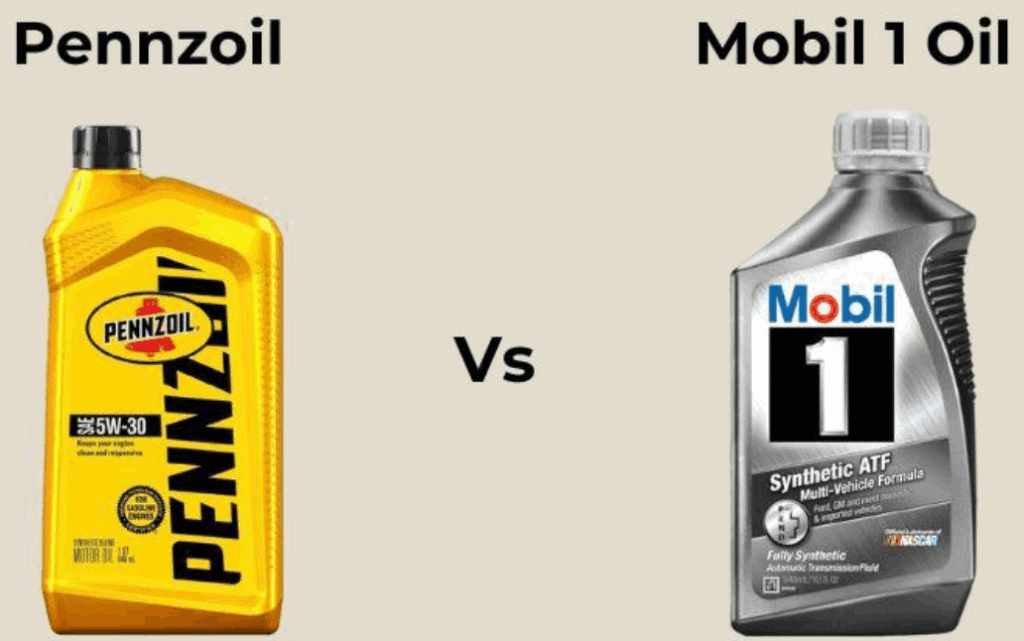
What Are the Main Differences Between Pennzoil and Mobil 1?
Pennzoil and Mobil 1 are two of the most trusted synthetic motor oil brands on the market. Both oils protect modern engines well, but they use different technologies and target different priorities. Pennzoil focuses on engine cleanliness, while Mobil 1 emphasizes long-term durability and broad manufacturer approvals.
Pennzoil developed PurePlus Technology to produce its synthetic base oil from natural gas instead of crude oil. This process creates a cleaner base oil with fewer impurities. As a result, the oil helps reduce sludge and engine deposits over time. Cleaner internal components also improve oil circulation and support consistent lubrication throughout the service interval.
Mobil 1 uses a different strategy. The brand designs its synthetic oils to maintain stable viscosity under demanding conditions. Its formulations resist oxidation, thermal breakdown, and oil evaporation during extended operation. These characteristics help protect engines that operate under heavy loads, high temperatures, or long highway trips.
Another major difference is product selection. Pennzoil offers product lines such as Platinum, Ultra Platinum, and High Mileage. Each line targets a specific type of driver or engine condition. Mobil 1 provides a broader portfolio, including Advanced Fuel Economy, Extended Performance, ESP, Truck & SUV, and High Mileage. This wider range gives drivers more options for European vehicles, performance cars, and engines with longer oil change intervals.
Manufacturer approvals also separate the two brands. Both companies meet current API and ILSAC standards. However, Mobil 1 carries a larger number of OEM approvals from manufacturers such as Porsche, Mercedes-Benz, BMW, Volkswagen, and General Motors. Pennzoil also holds important approvals, but its portfolio is generally smaller depending on the product line.
Neither brand is universally better. Pennzoil stands out for engine cleanliness and deposit control. Mobil 1 excels in durability, extended drain performance, and compatibility with premium vehicle manufacturers. The best choice depends on your vehicle specifications, driving conditions, and the oil requirements listed in your owner’s manual.
Which Synthetic Oil Provides Better Engine Protection?
Engine protection is the most important factor when comparing Pennzoil vs Mobil 1. Both oils reduce friction, prevent wear, and protect critical engine components. However, they achieve these results through different formulations and performance priorities. Pennzoil focuses on keeping internal parts clean, while Mobil 1 concentrates on maintaining stable protection under demanding operating conditions.
Pennzoil uses a high-purity synthetic base oil produced through PurePlus Technology. The cleaner base oil helps reduce sludge and carbon deposits before they accumulate on engine components. Cleaner surfaces allow the oil to flow more efficiently and maintain a stronger lubricating film between moving parts. This consistent lubrication helps reduce metal-to-metal contact during everyday driving and repeated stop-and-go traffic.
Mobil 1 emphasizes long-term durability under higher levels of mechanical stress. Its synthetic formulations resist viscosity breakdown, oxidation, and thermal degradation during extended operation. These characteristics help the oil maintain a protective film when the engine operates at high temperatures or under heavy loads. Drivers who frequently tow, drive long highway distances, or operate performance vehicles often value this additional stability.
Cold-start protection also plays an important role in engine wear because most wear occurs before the oil reaches every moving component. Both Pennzoil and Mobil 1 flow quickly at low temperatures and meet current API SP and ILSAC GF-6 standards. Their low-temperature performance helps reduce startup friction and improves lubrication during the first few seconds after ignition. As a result, both products provide excellent protection for modern gasoline engines equipped with turbochargers or direct fuel injection.
Neither oil clearly outperforms the other in every situation. Pennzoil provides an advantage when engine cleanliness and deposit control are the highest priorities. Mobil 1 performs exceptionally well when engines operate under sustained heat, heavy loads, or extended oil change intervals. The better choice depends on how the vehicle is driven and the specifications recommended by the manufacturer.
Which Oil Keeps an Engine Cleaner?
Engine cleanliness has a direct impact on long-term performance and reliability. A cleaner engine allows oil to circulate more efficiently, reduces harmful deposits, and helps critical components operate as designed. Both Pennzoil and Mobil 1 contain detergent and dispersant additives, but their formulations focus on different strengths.
Pennzoil has built its reputation around engine cleanliness. The brand uses PurePlus Technology to create a synthetic base oil from natural gas. This process produces a highly pure base oil with fewer impurities than many conventional base stocks. The cleaner foundation allows the additive package to control sludge, varnish, and carbon deposits more effectively throughout the oil change interval. As a result, internal engine parts remain cleaner and maintain better lubrication over time.
Mobil 1 also delivers excellent cleaning performance through an advanced additive system. Its detergents help suspend contaminants and prevent deposits from attaching to engine surfaces. The oil continues to protect pistons, valve train components, and turbochargers even after prolonged exposure to heat. This resistance to oxidation helps reduce sludge formation and keeps the oil stable during extended service intervals.
Engine cleanliness becomes even more important in modern turbocharged and direct-injection engines. These engines generate higher temperatures and produce more combustion byproducts than older designs. If deposits accumulate, they can restrict oil flow, increase friction, and reduce overall efficiency. Regular oil changes with a high-quality synthetic oil help minimize these risks and support consistent engine performance.
Pennzoil holds a slight advantage for drivers who place engine cleanliness above all other factors. Its high-purity synthetic base oil is specifically designed to minimize deposit formation from the beginning. Mobil 1 remains an excellent alternative because it combines strong cleaning performance with exceptional thermal stability. In normal driving conditions, both oils keep engines remarkably clean when used according to the manufacturer’s recommended service schedule.
Which Oil Lasts Longer Between Oil Changes?
Oil life depends on more than the mileage shown on the label. A long-lasting engine oil must resist oxidation, maintain its viscosity, and protect critical engine components throughout the service interval. Pennzoil and Mobil 1 both perform well in these areas, but Mobil 1 offers a stronger advantage for drivers who prefer extended oil change intervals.
Pennzoil formulates its synthetic oils to deliver stable performance throughout the manufacturer’s recommended maintenance schedule. The high-purity base oil helps reduce oxidation and slows the formation of sludge and harmful deposits. This cleaner formulation allows the oil to maintain consistent lubrication while supporting reliable engine performance under normal driving conditions. For most daily drivers, Pennzoil Platinum and Ultra Platinum provide dependable protection until the next scheduled oil change.
Mobil 1 places greater emphasis on long-term durability. Several product lines, especially Mobil 1 Extended Performance, are specifically engineered for longer drain intervals when the vehicle manufacturer allows them. The formulation resists thermal breakdown, controls oxidation, and maintains viscosity even after prolonged exposure to heat and mechanical stress. These characteristics help the oil continue protecting moving engine parts during extended highway driving and demanding operating conditions.
Driving habits also influence how long engine oil remains effective. Frequent short trips, stop-and-go traffic, heavy towing, and dusty environments accelerate oil degradation regardless of the brand. On the other hand, consistent highway driving usually places less stress on the lubricant and allows it to maintain its protective properties for a longer period. Following the oil life monitoring system and the manufacturer’s maintenance schedule remains more important than relying on a maximum mileage claim.
Mobil 1 has the advantage for extended oil change intervals because several of its products are designed specifically for long-term durability. Pennzoil remains an excellent choice for drivers who follow standard maintenance schedules and want consistent protection with outstanding engine cleanliness. In both cases, changing the oil at the correct interval is the best way to maximize engine life and maintain long-term performance.
Which Oil Performs Better in Extreme Temperatures?
Extreme temperatures place additional stress on engine oil. The right synthetic oil must flow quickly during cold starts and remain stable when the engine operates under intense heat. Pennzoil and Mobil 1 both deliver excellent performance across a wide temperature range, but each brand highlights different strengths that appeal to different driving conditions.
Cold-weather performance depends on how quickly the oil reaches critical engine components after startup. Both Pennzoil and Mobil 1 maintain excellent low-temperature fluidity and meet modern industry standards for winter performance. Fast oil circulation reduces friction during the first few seconds after ignition, which is when significant engine wear can occur. This rapid lubrication also improves engine responsiveness and helps protect timing chains, valve train components, and turbochargers.
High temperatures create a different challenge because heat accelerates oxidation and causes oil to lose viscosity over time. Pennzoil uses its high-purity synthetic base oil to improve thermal stability and reduce deposit formation under elevated temperatures. This cleaner formulation helps the oil maintain consistent performance during daily commuting, long-distance travel, and moderate towing applications. Drivers who operate their vehicles in hot climates can expect reliable lubrication throughout the recommended service interval.
Mobil 1 is widely recognized for maintaining stability under severe operating conditions. Its synthetic formulations resist thermal breakdown and evaporation during prolonged exposure to extreme heat and heavy engine loads. This added durability makes Mobil 1 a popular choice for high-performance vehicles, frequent highway driving, heavy towing, and engines that regularly operate at higher temperatures. Stable viscosity also helps maintain a strong protective oil film when engine components experience greater mechanical stress.
Both oils perform exceptionally well in cold and hot environments, making either one suitable for year-round driving. Pennzoil offers excellent protection for everyday driving with strong resistance to sludge and heat-related deposits. Mobil 1 provides an additional margin of stability for demanding applications where the engine experiences continuous high temperatures or sustained heavy loads. Choosing the correct viscosity grade recommended by the vehicle manufacturer remains just as important as selecting the oil brand itself.
Which Oil Has Better OEM Approvals?
OEM approvals show whether an engine oil meets the performance standards established by vehicle manufacturers. These certifications often require stricter testing than general industry specifications. When an oil carries the correct approval, drivers can feel more confident that it meets the lubrication, durability, and emissions requirements for a specific engine.
Both Pennzoil and Mobil 1 meet important industry standards, including API SP and ILSAC GF-6 for many gasoline engine oils. These certifications confirm that the oils provide protection against wear, sludge, oxidation, and low-speed pre-ignition in modern turbocharged and direct-injection engines. For many drivers, these standards are sufficient because they match the requirements listed in the owner’s manual.
The biggest difference appears in the number of manufacturer approvals. Mobil 1 offers one of the broadest OEM approval portfolios in the industry. Many of its products meet specifications from Mercedes-Benz, BMW, Porsche, Volkswagen, General Motors, and other global manufacturers. These approvals make Mobil 1 a common factory-fill oil and a popular choice for European luxury vehicles that require manufacturer-specific engine oil specifications.
Pennzoil also holds several important OEM approvals across its product lineup. Many Pennzoil Platinum and Ultra Platinum oils meet requirements from manufacturers such as Chrysler, General Motors, and Ferrari, depending on the viscosity grade and product series. These certifications demonstrate that Pennzoil delivers strong performance in engine protection, cleanliness, and fuel efficiency. However, its approval portfolio is generally smaller than Mobil 1’s, particularly in the European automotive market.
Mobil 1 has a clear advantage if your vehicle requires a specific OEM approval. Its wider range of certified products makes it easier to find an oil that matches demanding manufacturer specifications. Pennzoil remains an excellent choice for vehicles that approve its formulations because it combines high-quality synthetic technology with strong engine cleanliness. Before purchasing either brand, always verify that the viscosity grade and OEM approval match the exact requirements listed in your vehicle owner’s manual.
Which Oil Offers Better Value for Different Types of Drivers?
The best value depends on how and where you drive. Pennzoil and Mobil 1 both deliver premium engine protection, but each brand serves different types of drivers more effectively. Comparing their strengths against real driving conditions makes it easier to choose the right oil instead of paying for features you may never use.
Pennzoil is an excellent choice for daily commuters who follow regular maintenance schedules. Its high-purity synthetic base oil helps keep the engine clean while providing reliable protection during city driving and frequent stop-and-go traffic. Drivers who value smooth engine operation, deposit control, and consistent performance often find that Pennzoil delivers outstanding value without paying for capabilities they rarely need.
Mobil 1 is better suited for drivers who place higher demands on their engines. Long highway trips, heavy towing, spirited driving, and high-performance vehicles generate more heat and mechanical stress than normal commuting. Mobil 1 maintains stable viscosity under these conditions and offers several product lines designed for extended oil change intervals. This combination makes it an attractive option for drivers who prioritize durability and long-term protection.
Vehicle type also influences the decision. Pennzoil performs exceptionally well in many modern gasoline engines used for everyday transportation. Mobil 1, however, offers a broader selection for European luxury vehicles, performance cars, trucks, and SUVs that require specific manufacturer approvals. This wider product range allows owners to select an oil that closely matches their vehicle’s engineering requirements.
Price should never be the only factor when comparing synthetic motor oils. A lower purchase price does not always produce better long-term value if the oil fails to meet the manufacturer’s specifications. Likewise, paying more for premium features provides little benefit if your driving conditions do not require them. Selecting the correct viscosity grade and OEM-approved formulation is more important than choosing the most expensive product on the shelf.
Pennzoil offers excellent value for everyday drivers who want superior engine cleanliness and dependable protection. Mobil 1 provides greater value for demanding applications, extended service intervals, and vehicles that require a wider range of OEM approvals. Matching the oil to your driving habits and your vehicle’s specifications remains the most effective way to maximize engine performance and long-term reliability.
Pennzoil vs Mobil 1: Side-by-Side Comparison
Comparing specifications side by side makes it easier to identify the strengths of each brand. Pennzoil and Mobil 1 both rank among the leading full synthetic motor oils, but they excel in different performance categories. Instead of focusing on a single feature, drivers should evaluate engine cleanliness, wear protection, oil life, OEM approvals, and overall suitability for their vehicle.
Pennzoil stands out for its PurePlus Technology, which produces a highly refined synthetic base oil from natural gas. This cleaner foundation helps minimize sludge and carbon deposits while supporting efficient oil circulation throughout the engine. Drivers who prioritize engine cleanliness and consistent everyday performance often appreciate this advantage, especially when following the manufacturer’s recommended maintenance schedule.
Mobil 1 distinguishes itself through exceptional durability and an extensive range of specialized formulations. Its synthetic oils maintain stable viscosity under prolonged heat, heavy loads, and extended driving conditions. The brand also offers one of the widest selections of OEM-approved products, making it a preferred option for many European luxury vehicles, performance cars, trucks, and SUVs.
The comparison becomes clearer when performance categories are viewed together. Pennzoil delivers outstanding deposit control and smooth daily operation. Mobil 1 provides stronger support for extended drain intervals and demanding applications. Both oils meet modern API and ILSAC standards, and both protect turbocharged and direct-injection gasoline engines when the correct viscosity grade is selected.
| Feature | Pennzoil | Mobil 1 |
|---|---|---|
| Synthetic Technology | PurePlus Technology | Advanced synthetic formulation |
| Engine Cleanliness | Excellent | Excellent |
| Wear Protection | Excellent | Excellent |
| High-Temperature Stability | Excellent | Excellent+ |
| Cold-Start Performance | Excellent | Excellent |
| Extended Oil Life | Very Good | Excellent |
| OEM Approvals | Strong | Extensive |
| Performance Driving | Very Good | Excellent |
| Daily Driving | Excellent | Excellent |
| Overall Value | Excellent for daily drivers | Excellent for demanding applications |
Both products belong to the premium synthetic oil category, so neither represents a poor choice. Pennzoil offers greater value for drivers who emphasize engine cleanliness and regular maintenance. Mobil 1 becomes the stronger option when longer oil life, severe operating conditions, or manufacturer-specific approvals are the primary concerns.
Which Synthetic Oil Should You Choose?
Choosing between Pennzoil and Mobil 1 ultimately depends on your vehicle rather than brand loyalty. The best synthetic oil is the one that matches your engine’s specifications, driving conditions, and maintenance schedule. Even the highest-quality oil cannot deliver optimal protection if it does not meet the manufacturer’s viscosity and certification requirements.
Pennzoil is an excellent choice for drivers who want outstanding engine cleanliness and reliable protection during everyday driving. Its PurePlus Technology helps reduce sludge and deposits while maintaining smooth engine operation throughout the recommended oil change interval. For commuters, family vehicles, and drivers who replace their oil according to the manufacturer’s schedule, Pennzoil provides exceptional performance and long-term value.
Mobil 1 is better suited for demanding operating conditions. Drivers who frequently travel long distances, tow heavy loads, or own high-performance and European vehicles often benefit from its superior thermal stability and broader range of OEM approvals. Product lines such as Mobil 1 Extended Performance also appeal to owners whose vehicles allow longer service intervals between oil changes.
Price should remain a secondary consideration after compatibility. An oil that fully meets your vehicle’s requirements delivers greater long-term value than a cheaper product that lacks the proper certification. Likewise, purchasing a premium formulation with features your vehicle does not require may provide little practical benefit.
Pennzoil is the better choice if your priority is engine cleanliness, smooth daily performance, and dependable protection. Mobil 1 is the stronger option if you need extended drain capability, maximum durability under severe conditions, or a product with extensive OEM approvals. In either case, following the manufacturer’s recommended viscosity grade and maintenance schedule will have a greater impact on engine life than the brand name alone.
Frequently Asked Questions
Is Pennzoil better than Mobil 1?
Neither brand is universally better. Pennzoil excels in engine cleanliness and deposit control, while Mobil 1 performs exceptionally well during extended drain intervals and severe operating conditions. The better choice depends on your vehicle and the manufacturer’s oil requirements.
Is Mobil 1 worth the higher price?
Mobil 1 can justify its higher price if your vehicle requires specific OEM approvals or operates under demanding conditions. Drivers with performance vehicles, luxury models, or extended maintenance schedules often benefit the most from its advanced formulations.
Can I switch from Pennzoil to Mobil 1?
Yes. You can switch between Pennzoil and Mobil 1 if both oils use the correct viscosity grade and meet the specifications required by your vehicle manufacturer. No special flushing procedure is normally required during a routine oil change.
Which oil is better for turbocharged engines?
Both brands provide excellent protection for modern turbocharged gasoline engines. Choosing an oil that meets the required API, ILSAC, or OEM specification is more important than selecting one brand over the other.
Which oil lasts the longest?
Mobil 1 generally offers a longer service life through product lines such as Extended Performance. However, the actual oil change interval should always follow the manufacturer’s maintenance schedule or the vehicle’s oil life monitoring system.
Which oil is best for high-mileage vehicles?
Both manufacturers offer dedicated high-mileage formulations that help protect aging engines and condition engine seals. The better option depends on your engine’s condition, mileage, and the specifications recommended in the owner’s manual.
Conclusion
Pennzoil and Mobil 1 have earned their reputation by delivering outstanding protection for modern engines. Both brands meet the demands of today’s gasoline engines, but they focus on different performance priorities. Pennzoil emphasizes engine cleanliness through its PurePlus Technology, while Mobil 1 concentrates on long-term durability, thermal stability, and broad manufacturer approvals.
For most daily drivers, either oil will provide excellent protection when the correct viscosity grade and specification are selected. Drivers who value cleaner engine internals and consistent everyday performance may prefer Pennzoil. Those who operate under severe conditions, own European vehicles, or want extended oil change intervals may find Mobil 1 to be the better investment.
The most important decision is not choosing the most popular brand. It is selecting an oil that matches your vehicle’s engineering requirements. Always verify the recommended viscosity grade, API classification, and OEM approval before purchasing engine oil. Following the correct maintenance schedule will do more to extend engine life than changing brands alone.
Whether you choose Pennzoil or Mobil 1, using a high-quality synthetic oil that meets your vehicle’s specifications is the most effective way to maximize engine performance, reliability, and long-term durability.