A Dexos D 0W-20 equivalent is a motor oil that meets the required Dexos D performance specification and has the SAE 0W-20 viscosity grade specified for the engine. Using another 0W-20 oil based only on viscosity does not confirm compatibility. The oil must also satisfy the performance requirements defined for the vehicle and engine.
Dexos D and 0W-20 describe different properties of motor oil. SAE 0W-20 identifies how the oil flows at low and operating temperatures, while Dexos D defines performance requirements for specific engine applications. Therefore, two oils can have the same 0W-20 viscosity but meet different specifications and serve different engine requirements.
Choosing a replacement requires checking the oil specification, viscosity grade, approval status, and vehicle application. The owner’s manual provides the primary reference because oil requirements can differ by engine and model year. The information printed on the motor oil container can then be compared with those requirements.
This guide explains what qualifies as a Dexos D 0W-20 equivalent, whether regular 0W-20 can replace it, which specifications require attention, and how to select a compatible motor oil without relying on viscosity alone.
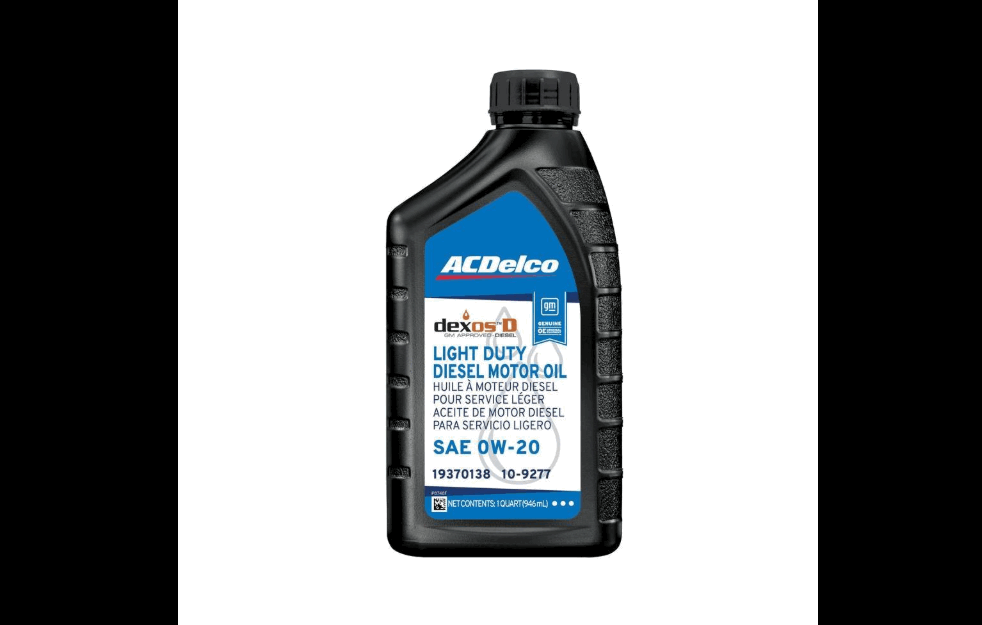
What Is Equivalent to Dexos D 0W-20 Motor Oil?
A Dexos D 0W-20 equivalent is an SAE 0W-20 motor oil that satisfies the required Dexos D performance standard for the specific engine application. Matching the viscosity grade alone is not enough. A replacement must provide the performance characteristics required by the engine manufacturer and should have the appropriate approval when the vehicle specifies Dexos D.
There are four main factors to check when comparing replacement oils: viscosity, specification, approval status, and engine compatibility. SAE 0W-20 identifies the viscosity grade and describes how the lubricant behaves at lower and higher operating temperatures. The Dexos D specification addresses a different set of performance requirements. As a result, two motor oils labeled 0W-20 are not automatically interchangeable.
Approval status also matters when evaluating an equivalent. An oil carrying the required Dexos D approval provides clearer evidence of compliance than choosing a product simply because its manufacturer recommends it for a similar application. Statements such as “meets requirements” or “recommended for” should not automatically be interpreted as identical to an official approval. The exact wording on the product information should be checked before making the substitution.
The safest replacement process starts with the vehicle owner’s manual. Confirm the required oil specification first, then verify the SAE viscosity and approval information on the replacement product. This method identifies compatibility through documented engine requirements rather than assuming that every 0W-20 motor oil provides the same level or type of performance.
Can You Use Regular 0W-20 Instead of Dexos D 0W-20?
Regular 0W-20 should not replace Dexos D 0W-20 unless the oil also satisfies the specification required by the vehicle manufacturer. The 0W-20 label confirms a viscosity grade, but it does not confirm that the oil meets Dexos D performance requirements. For this reason, viscosity should be treated as one compatibility factor rather than proof that two motor oils are equivalent.
SAE 0W-20 describes how an oil behaves across specific temperature conditions. The 0W portion relates to low temperature viscosity, while the 20 grade represents viscosity characteristics at higher operating temperatures. These properties affect oil circulation and lubrication, but they do not identify every performance requirement that an engine oil must satisfy.
Dexos D serves a different purpose. It identifies performance requirements intended for applicable engine designs and operating conditions. Therefore, two products can both carry an SAE 0W-20 viscosity grade while having different specifications, approvals, and intended applications. Choosing between them requires checking more than the large viscosity number printed on the front of the container.
Check the owner’s manual before substituting regular 0W-20 for Dexos D 0W-20. Compare the required specification with the approval and product information provided by the oil manufacturer. Use the alternative when its documented requirements match the engine application. This approach prevents a shared viscosity grade from being mistaken for complete oil compatibility.
Which Motor Oils Can Be Used as Dexos D 0W-20 Equivalents?
Motor oils that carry the required Dexos D approval and match the SAE 0W-20 viscosity specified for the vehicle are the most direct Dexos D 0W-20 equivalents. The replacement should match both requirements because an SAE viscosity grade identifies oil flow characteristics, while the required specification confirms a broader set of performance characteristics for the intended engine application.
The first group to consider is officially approved Dexos D 0W-20 motor oil. These products provide the clearest replacement choice when the owner’s manual specifically requires Dexos D and SAE 0W-20. Approval allows the driver to verify compatibility through a defined specification instead of relying only on viscosity or general marketing claims.
The second group includes oils whose manufacturers state that they meet or are suitable for Dexos D applications. These products require closer verification. A statement that an oil is recommended for an application does not necessarily represent the same approval status as an officially licensed product. Check the current product data sheet and manufacturer information before treating such an oil as a direct substitute.
Product names alone should not determine the replacement. Motor oil formulations, approvals, and product specifications can change over time. Instead, identify the specification required in the owner’s manual, confirm that SAE 0W-20 is the required viscosity, and verify the current approval status of the product. This process provides stronger evidence of compatibility than selecting another oil simply because the bottle displays 0W-20.
Can Other Oil Specifications Replace Dexos D?
Another oil specification should not be treated as a Dexos D replacement unless the oil also satisfies the specification required for the vehicle. Standards such as API and ILSAC can share certain performance requirements with an OEM specification, but meeting one standard does not automatically prove compliance with another. The required specification in the owner’s manual remains the primary reference when selecting an equivalent oil.
API classifications establish performance requirements for engine oils used in applicable engine categories. ILSAC standards also define lubricant performance characteristics, including requirements related to engine protection and efficiency. Dexos specifications are manufacturer requirements associated with specific applications. Although these standards can overlap in several performance areas, their names should not be used interchangeably when determining oil compatibility.
The same principle applies to other dexos specifications. A motor oil carrying another dexos approval is not automatically a Dexos D equivalent. Sharing the dexos name or the SAE 0W-20 viscosity grade does not establish identical performance requirements or vehicle applications. The specification requested for the engine must still be verified separately.
Use another specification only when the vehicle manufacturer documents it as acceptable for the engine or when the selected oil also carries the required Dexos D approval. Check the owner’s manual first and compare it with the current product specifications. This provides a clear basis for substitution and avoids assuming equivalency from API, ILSAC, dexos branding, or viscosity alone.
Which Vehicles Require Dexos D 0W-20 Oil?
Vehicles require Dexos D 0W-20 when their engine manufacturer specifies both Dexos D and SAE 0W-20. The exact requirement depends on the engine, model year, and manufacturer instructions. Therefore, drivers should not assume that every GM vehicle using 0W-20 also requires Dexos D.
The owner’s manual provides the main reference for choosing the correct motor oil. First, find the engine oil or recommended fluids section. Then, identify the required oil specification and SAE viscosity grade. When the manual calls for Dexos D and SAE 0W-20, choose an oil that matches both requirements.
Engine design also affects oil selection. One manufacturer can use several engines with different lubrication requirements across its vehicle range. Two engines may both use SAE 0W-20 but require different oil specifications. Manufacturers can also change oil requirements between model years. As a result, the vehicle brand and viscosity grade cannot confirm compatibility on their own.
Drivers can verify the correct oil through five steps. Identify the vehicle and engine first. Check the owner’s manual and locate the required oil specification. Confirm the recommended SAE viscosity grade. Next, compare these requirements with the motor oil product information. Finally, verify the oil’s approval status when the manufacturer requires a specific approval.
This process connects the replacement oil to the actual engine requirement. It also prevents drivers from choosing oil based only on the GM brand or the 0W-20 label.
What Happens If You Use the Wrong Oil Instead of Dexos D 0W-20?
Using the wrong oil instead of Dexos D 0W-20 can reduce the engine’s ability to operate under its intended lubrication requirements. The level of risk depends on the oil used, the engine design, and the operating conditions. A different oil does not always cause immediate engine damage. However, it may not provide the performance that the manufacturer requires.
Motor oil performs several jobs inside an engine. It lubricates moving components, controls friction, manages heat, and helps keep internal surfaces clean. The required oil specification sets performance criteria for these functions. An oil with the correct 0W-20 viscosity may still differ in other performance characteristics when it does not meet Dexos D requirements.
Using an incorrect specification can also affect long term engine protection. Deposits, wear, and lubricant degradation depend partly on how the oil performs during normal operation. Modern engines may also place specific demands on lubricants because of their design and emissions control systems. Therefore, matching only the viscosity grade leaves important requirements unchecked.
Drivers should correct an oil specification mismatch according to the vehicle manufacturer’s guidance. First, confirm what oil the engine requires. Next, identify the specification of the oil currently in the engine. Then, follow the recommended oil change procedure when the two do not match. This approach addresses the mismatch without assuming that one use of a different oil has already caused engine damage.
Can You Mix Dexos D 0W-20 With Another 0W-20 Oil?
You should not routinely mix Dexos D 0W-20 with another 0W-20 oil unless both products meet the requirements for your engine. The same viscosity grade does not guarantee the same specification. Each product may use a different formulation and carry different approvals. For regular maintenance, use an oil that matches the requirements in the owner’s manual.
Mixing becomes more relevant when the engine needs an oil top up. In that situation, first check the specification of the oil you plan to add. An SAE 0W-20 label only confirms its viscosity grade. It does not confirm Dexos D compliance. Choose an oil with the required specification whenever the correct product is available.
Drivers should also separate an emergency top up from a complete oil change. A temporary need to restore the proper oil level creates a different situation from choosing oil for routine service. After using a different product, check the manufacturer’s guidance and confirm the correct specification. This helps you decide whether the engine needs an earlier oil change.
For routine oil changes, keep the selection process simple. Check the required specification and confirm the 0W-20 viscosity. Then verify the product information and approval status. Using one suitable oil throughout the service interval removes unnecessary uncertainty about compatibility. More importantly, it ensures that oil selection follows the engine requirements rather than the viscosity number alone.
How Do You Choose the Correct Dexos D 0W-20 Replacement?
Choose the correct Dexos D 0W-20 replacement by matching the oil specification, SAE viscosity, approval status, and engine application. Do not start with the brand or product name. Start with the requirements that the vehicle manufacturer provides for the specific engine.
First, check the owner’s manual and find the required oil specification. This requirement determines the performance standard that the replacement oil must satisfy. Next, confirm the recommended SAE viscosity. Choose SAE 0W-20 when the manufacturer specifies that viscosity for the engine and operating conditions.
Then, verify the approval status of the replacement oil. Read the product label and check the manufacturer’s current technical information. Look for the exact specification that your vehicle requires. Do not treat phrases such as “recommended for” as proof of an official approval without further verification.
Finally, match the product to the vehicle and engine. The same manufacturer can use different oil requirements across engines and model years. For example, two vehicles may both require 0W-20 while calling for different performance specifications. Checking the engine application prevents viscosity alone from controlling the decision.
Use the same five step process whenever you compare replacements. Check the required specification. Confirm the SAE viscosity. Verify the approval status. Match the engine application. Confirm the final choice against the owner’s manual. This process provides a consistent way to select a Dexos D 0W-20 equivalent without relying on assumptions about brands or viscosity alone.
Conclusion
The correct Dexos D 0W-20 equivalent must satisfy the oil requirements that the vehicle manufacturer specifies for the engine. An SAE 0W-20 viscosity grade alone does not prove compatibility. Drivers also need to check the required performance specification and the product’s approval status before choosing a replacement.
Use four factors to evaluate any alternative: specification, viscosity, approval, and engine application. Start with the owner’s manual because engines and model years can have different lubrication requirements. Then compare those requirements with the current technical information for the motor oil. This approach also helps distinguish an official approval from a general manufacturer recommendation.
Most importantly, avoid choosing a replacement based only on the 0W-20 label, product brand, or another oil standard. Confirm that the product meets the requirements for the specific engine. Following this process provides a clear and consistent way to select a Dexos D 0W-20 replacement for routine maintenance.