Choosing between a DCT vs CVT transmission can be surprisingly difficult, especially if you are buying a new car for the first time. Both transmissions are designed to replace the traditional manual gearbox, yet they deliver completely different driving experiences. Some drivers value quick acceleration and responsive gear changes, while others prioritize smooth operation, fuel efficiency, and everyday comfort. Understanding these differences is essential because the transmission affects far more than how a vehicle shifts gears. It also influences performance, maintenance costs, long term reliability, fuel consumption, and overall driving satisfaction.
The growing popularity of automatic vehicles has made the debate between DCT vs CVT more relevant than ever. Many manufacturers now equip compact cars, family SUVs, hybrid models, and even performance vehicles with one of these two transmission types. However, marketing materials often highlight only the advantages while overlooking the compromises. As a result, many buyers choose a vehicle without fully understanding how the transmission will perform in heavy traffic, on long highway journeys, or after years of daily use.
This comprehensive DCT vs CVT comparison explains the key differences in simple and practical terms. You will learn how each transmission works, where each one performs best, and what advantages and disadvantages you should expect during ownership. We will also compare acceleration, fuel economy, driving comfort, maintenance requirements, reliability, and common problems to help you make an informed decision. By the end of this guide, you will have a clear understanding of which transmission is better for your driving style, budget, and long term ownership goals rather than relying on general opinions or outdated assumptions.
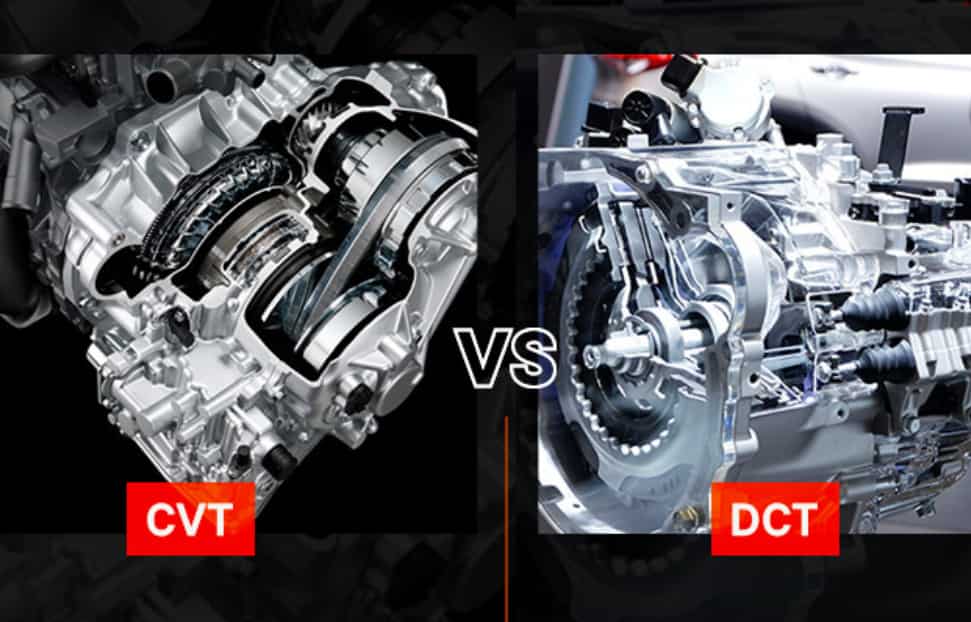
DCT vs CVT at a Glance
Comparing a DCT vs CVT side by side helps you understand their strengths much faster. Although both transmissions automate gear changes, they rely on completely different engineering concepts and deliver very different driving experiences. A Dual Clutch Transmission prioritizes fast gear changes and responsive performance. A Continuously Variable Transmission focuses on smooth acceleration and excellent fuel economy for everyday driving.
The table below highlights the most important differences before we explore each transmission in detail.
| Feature | DCT | CVT |
|---|---|---|
| Full Name | Dual Clutch Transmission | Continuously Variable Transmission |
| Operating Principle | Uses two independent clutches to preselect gears | Uses adjustable pulleys connected by a belt or chain |
| Gear Structure | Fixed gear ratios | Continuously changing gear ratios |
| Shift Speed | Extremely fast | No traditional gear shifts |
| Acceleration | Quick and responsive | Smooth and progressive |
| Driving Feel | Sporty and engaging | Comfortable and refined |
| Fuel Economy | High efficiency at moderate and high speeds | Excellent efficiency during daily commuting |
| Low Speed Driving | May hesitate in heavy traffic | Delivers smooth operation in stop and go traffic |
| Highway Driving | Responds quickly during overtaking | Maintains steady cruising efficiency |
| Engine Noise | Keeps engine speed lower during acceleration | Holds higher engine speed during hard acceleration |
| Maintenance Complexity | Requires more complex clutch and mechatronic components | Relies on belts, chains, pulleys, and hydraulic systems |
| Typical Repair Cost | Clutch and mechatronic repairs often cost more | Internal pulley or belt repairs can become expensive |
| Best For | Drivers who enjoy performance | Drivers who value comfort and efficiency |
The comparison clearly shows that each transmission serves a different purpose. A DCT delivers rapid gear changes with minimal power interruption, giving drivers stronger acceleration and a more engaging driving experience. Manufacturers often install DCTs in sports cars, premium sedans, and performance oriented SUVs because they improve responsiveness under aggressive driving.
A CVT takes a different approach. Instead of shifting between fixed gears, it continuously adjusts the transmission ratio to keep the engine operating within its most efficient range. This design improves fuel economy, reduces unnecessary engine strain, and creates smoother acceleration, especially during city driving where vehicles frequently stop and start.
Choosing between DCT vs CVT requires more than comparing transmission types. You should also consider the vehicle’s engine, transmission calibration, cooling system, maintenance history, and your daily driving habits. These factors often influence long term ownership satisfaction more than the transmission itself.
What Is a DCT Transmission?
A Dual Clutch Transmission, or DCT, is an advanced automatic transmission that combines the efficiency of a manual gearbox with the convenience of an automatic. Unlike a conventional automatic transmission that relies on a torque converter, a DCT uses two separate clutches to manage gear changes. One clutch controls the odd numbered gears, while the other controls the even numbered gears. This unique design allows the transmission to prepare the next gear before completing the current shift, resulting in faster and more seamless gear changes.
When the vehicle accelerates, the transmission switches from one clutch to the other in a fraction of a second. This process reduces power loss during shifting and delivers quicker throttle response. Drivers often notice stronger acceleration, smoother high speed performance, and a more connected driving experience. For this reason, many performance cars, sports sedans, and premium vehicles use DCT technology. Today, many mainstream manufacturers also equip family cars and compact SUVs with DCTs to improve both efficiency and driving dynamics.
Manufacturers produce two main types of DCT systems, including dry clutch and wet clutch designs. Dry clutch systems weigh less and improve fuel efficiency, making them suitable for smaller vehicles with lower torque output. Wet clutch systems use transmission fluid to cool the clutch plates, allowing them to handle greater power and higher temperatures. This design works well in larger vehicles and performance oriented models.
A DCT suits drivers who value quick acceleration, responsive handling, and an engaging driving experience. While it may feel less refined in slow moving traffic than some other automatic transmissions, it rewards drivers with impressive performance and efficient power delivery under most driving conditions.
What Is a CVT Transmission?
A Continuously Variable Transmission, commonly known as a CVT, is an automatic transmission that delivers power without using fixed gear ratios. Instead of shifting between traditional gears, a CVT relies on a pair of variable diameter pulleys connected by a steel belt or chain. As the pulleys change size, the transmission continuously adjusts the gear ratio to match the engine speed and driving conditions. This design allows the engine to operate within its most efficient range while providing smooth and uninterrupted acceleration.
Unlike conventional automatic transmissions, a CVT does not produce noticeable gear changes during acceleration. Drivers experience a steady increase in speed rather than the familiar shift points found in manual, automatic, or dual clutch transmissions. This smooth operation makes a CVT especially effective for city driving, where frequent stops and constant speed changes occur throughout the day.
Many manufacturers choose CVTs because they improve fuel economy and reduce unnecessary engine load. Compact cars, hybrid vehicles, family sedans, and crossover SUVs often use this transmission to maximize efficiency without sacrificing everyday comfort. Modern CVTs also include advanced electronic controls that respond to throttle input, road conditions, and driving habits. Some models even simulate traditional gear shifts to create a more familiar driving feel.
A CVT is an excellent choice for drivers who prioritize comfort, fuel efficiency, and low stress commuting. Although it may not deliver the sharp acceleration or sporty character of a Dual Clutch Transmission, it offers predictable performance, smooth power delivery, and excellent efficiency during daily driving. For many commuters and families, these advantages make a CVT a practical and reliable transmission for long term ownership.
DCT vs CVT: Key Differences
Although both transmissions eliminate the need for manual gear changes, they achieve this goal through completely different engineering principles. A Dual Clutch Transmission focuses on performance, fast gear changes, and direct power delivery. A Continuously Variable Transmission emphasizes smooth operation, fuel efficiency, and everyday driving comfort. Understanding these fundamental differences helps you choose the transmission that best matches your driving style and long term expectations.
The biggest difference lies in how each transmission transfers power. A DCT uses two separate clutches and multiple fixed gears. While one clutch delivers power to the wheels, the second clutch prepares the next gear in advance. This process allows the transmission to complete gear changes almost instantly, creating rapid acceleration and responsive performance. In contrast, a CVT replaces fixed gears with adjustable pulleys connected by a steel belt or chain. Instead of shifting between gears, the system continuously changes the gear ratio to keep the engine operating at its most efficient speed.
The driving experience also differs significantly. A DCT feels responsive and engaging because every gear change delivers a clear connection between the engine and the wheels. Drivers often appreciate this behavior during highway driving, mountain roads, and spirited acceleration. A CVT creates a smoother experience because it eliminates noticeable gear shifts. This characteristic reduces interruptions during acceleration and makes stop and go traffic more comfortable.
Fuel efficiency represents another important difference. Both transmissions can deliver excellent economy, but they achieve it in different ways. A DCT minimizes power loss during gear changes, while a CVT continuously selects the most efficient gear ratio for current driving conditions. As a result, many compact cars and hybrid vehicles achieve excellent fuel consumption with a CVT, while many performance oriented models rely on a DCT to balance efficiency with stronger acceleration.
Maintenance and long term ownership also deserve careful consideration. A DCT contains more complex mechanical components, including dual clutches and sophisticated electronic controls. Repair costs may increase when these components wear out. A CVT features fewer moving parts, but its belt, chain, and pulley system requires proper maintenance to ensure long term reliability. Choosing between DCT vs CVT ultimately depends on whether you value performance, comfort, efficiency, or a balanced combination of all three.
DCT vs CVT: Pros and Cons
Every transmission offers unique advantages and disadvantages. A Dual Clutch Transmission excels in performance and responsiveness, while a Continuously Variable Transmission focuses on comfort and efficiency. Comparing their strengths and weaknesses helps you understand which option fits your driving habits and long term ownership goals.
DCT Pros
A DCT delivers exceptionally fast gear changes because it prepares the next gear before completing the current one. This design improves acceleration and keeps power flowing with minimal interruption. Drivers often enjoy sharper throttle response, quicker overtaking, and a more engaging driving experience. Many modern DCTs also include manual shift mode and paddle shifters, giving drivers greater control without sacrificing the convenience of an automatic transmission. In addition, a DCT transfers power efficiently, which helps many vehicles achieve competitive fuel economy despite their strong performance.
DCT Cons
A DCT does not perform equally well in every situation. Some models hesitate during low speed driving because the clutches repeatedly engage and disengage in heavy traffic. Drivers may also notice slight jerks while parking or crawling through congested streets. Maintenance and repairs can cost more than other automatic transmissions because the clutch assembly and electronic control system require specialized service. Replacing major components often involves significant labor and expensive parts.
CVT Pros
A CVT provides smooth and consistent acceleration without noticeable gear changes. This characteristic creates a relaxed driving experience, especially in urban traffic where frequent stops occur. The transmission continuously selects the most efficient gear ratio, helping reduce fuel consumption and improve engine efficiency. Many compact cars, hybrid vehicles, and family sedans benefit from this design because it lowers operating costs and supports comfortable daily commuting. The simple driving behavior also appeals to new drivers who prefer predictable performance.
CVT Cons
A CVT places comfort ahead of sporty performance. Hard acceleration often produces higher engine speed before the vehicle gains momentum, creating the familiar rubber band sensation that some drivers dislike. The transmission also offers less direct feedback than a DCT, making enthusiastic driving feel less engaging. Although many modern CVTs have become more reliable, poor maintenance can shorten the lifespan of the belt, chain, or pulley system. Repair costs can become substantial when these internal components require replacement.
DCT vs CVT: Performance Comparison
Performance is one of the biggest factors that separates a DCT from a CVT. Although both transmissions deliver automatic operation, they create completely different driving experiences. A DCT prioritizes speed and responsiveness, while a CVT focuses on smooth acceleration and consistent efficiency. The better choice depends on how and where you drive.
A DCT delivers power almost instantly because it preselects the next gear before completing the current shift. This design minimizes power interruption and helps the vehicle accelerate more quickly. Drivers often notice faster throttle response, stronger passing performance, and more confidence when merging onto highways or climbing steep roads. The transmission also maintains a direct connection between the engine and the wheels, creating a more engaging driving experience.
A CVT approaches performance from a different perspective. Instead of shifting through fixed gears, it continuously adjusts the gear ratio to keep the engine within its optimal power range. This process creates smooth and uninterrupted acceleration without the sudden changes that occur in traditional gearboxes. While a CVT rarely feels as aggressive as a DCT, it delivers predictable performance that suits daily commuting and relaxed driving.
High speed driving highlights another important difference. A DCT responds quickly when the driver requests additional power, making overtaking feel effortless and controlled. A CVT may take slightly longer to build acceleration because it first adjusts the engine speed before transferring additional power to the wheels. Modern CVTs have improved significantly, but many drivers still prefer the quicker response of a DCT during spirited driving.
Overall, drivers who enjoy dynamic handling, rapid acceleration, and stronger engine response will likely prefer a DCT. Drivers who value smooth operation, consistent performance, and comfortable everyday transportation will appreciate the characteristics of a CVT. Neither transmission outperforms the other in every situation. Each one excels when it matches the driver’s priorities and the vehicle’s intended purpose.
DCT vs CVT: Fuel Economy Comparison
Fuel economy often plays a major role when buyers compare a DCT vs CVT. Both transmissions can reduce fuel consumption, but they achieve this goal through different engineering approaches. A DCT improves efficiency by minimizing power loss during gear changes, while a CVT continuously adjusts the gear ratio to keep the engine operating within its most efficient speed range.
A CVT often delivers better fuel economy during city driving. Frequent stops, slow traffic, and constant speed changes allow the transmission to optimize engine speed without shifting between fixed gears. As a result, the engine burns less fuel while maintaining smooth and consistent acceleration. This advantage explains why many compact cars, hybrid vehicles, and family sedans rely on CVTs to achieve competitive fuel economy ratings.
A DCT performs especially well during steady highway driving. The transmission selects fixed gear ratios that reduce engine speed at cruising velocity while transferring power with very little energy loss. Modern DCT systems also complete gear changes almost instantly, allowing the engine to maintain efficient operation during acceleration and overtaking. In many real world highway conditions, a well calibrated DCT can match or even exceed the fuel efficiency of some CVT equipped vehicles.
Vehicle weight, engine size, driving habits, and transmission calibration often influence fuel consumption more than the transmission itself. An aggressive driving style can increase fuel usage regardless of transmission type, while smooth acceleration and steady cruising help both systems operate more efficiently. Regular maintenance also supports better fuel economy by keeping transmission components in optimal condition.
When comparing DCT vs CVT, no single transmission always consumes less fuel. A CVT usually offers the greatest advantage in urban environments where efficiency and comfort matter most. A DCT often performs just as efficiently on open roads while delivering stronger acceleration and a more responsive driving experience. Drivers should evaluate their daily driving conditions before deciding which transmission offers the best balance between performance and fuel economy.
DCT vs CVT: Reliability and Durability
Reliability remains one of the most important factors when choosing between a DCT vs CVT. Many drivers assume one transmission always lasts longer than the other, but real world results tell a different story. Build quality, engineering, maintenance, driving habits, and manufacturer calibration all influence long term durability. A well maintained DCT can provide years of dependable service, while a properly cared for CVT can also deliver excellent reliability.
A DCT contains two clutches, multiple gears, and an advanced electronic control system. These components work together to deliver quick gear changes and strong performance. However, the added complexity means more parts can wear over time. Frequent stop and go traffic, aggressive acceleration, and poor maintenance may increase clutch wear and shorten the service life of some components. Modern DCT designs have improved significantly, and many manufacturers have refined clutch materials and transmission software to increase durability.
A CVT uses a different mechanical layout that relies on variable pulleys and a steel belt or chain instead of fixed gears. This design reduces shift shock and keeps the engine operating within an efficient speed range. Regular fluid changes and proper cooling help protect internal components from excessive wear. Ignoring maintenance or placing the transmission under continuous heavy loads can reduce its lifespan and increase the risk of expensive repairs.
Driving conditions also play an important role. Drivers who tow heavy trailers, climb steep roads frequently, or accelerate aggressively place greater stress on any transmission. Drivers who accelerate smoothly, follow the recommended maintenance schedule, and use the vehicle within its intended limits often enjoy longer transmission life regardless of whether the vehicle uses a DCT or a CVT.
Instead of asking which transmission lasts longer, buyers should evaluate the reliability record of the specific vehicle they plan to purchase. A well engineered transmission from a reputable manufacturer, combined with consistent maintenance, usually delivers better long term value than choosing a transmission type based on general assumptions alone.
Common DCT Problems vs Common CVT Problems
Every transmission can develop problems as mileage increases, but the type of issue often depends on the transmission design, maintenance history, and driving conditions. Understanding the most common symptoms helps owners identify potential problems early and reduce the risk of expensive repairs.
A DCT commonly develops issues related to the clutch system and electronic controls. Drivers may notice hesitation when moving from a complete stop, rough gear engagement, delayed acceleration, or unexpected warning lights on the dashboard. Some vehicles also produce vibration or slight shuddering during low speed driving, especially in heavy traffic where the clutches engage and disengage repeatedly. In many cases, worn clutch components, outdated transmission software, overheating, or faulty sensors contribute to these symptoms. Regular software updates and timely servicing often improve shift quality and extend component life.
A CVT usually shows different warning signs. Drivers may hear unusual whining noises, experience delayed acceleration, or notice engine speed increasing without a matching increase in vehicle speed. Some vehicles also develop vibration during acceleration or feel less responsive under heavy throttle. These symptoms can result from worn belts, stretched chains, damaged pulleys, contaminated transmission fluid, or excessive heat. Ignoring these early signs may allow minor wear to develop into major internal damage.
Preventive maintenance remains the most effective way to avoid serious transmission problems. Following the recommended service schedule, using the correct transmission fluid, and addressing unusual noises or warning lights without delay can significantly improve long term reliability. Drivers should also avoid aggressive acceleration before the transmission reaches normal operating temperature, especially in cold weather.
Neither transmission deserves a reputation for being unreliable simply because some models experienced well documented issues. Manufacturers continue to improve transmission software, materials, and cooling systems with every new generation. Buyers should research the reliability history of a specific vehicle rather than judging every DCT or CVT by isolated cases. A well maintained transmission often provides many years of dependable performance regardless of its design.
DCT vs CVT: Maintenance Costs
Maintenance costs often influence the final decision when buyers compare a DCT vs CVT. Although both transmissions require regular servicing, the long term cost of ownership depends on maintenance schedules, replacement parts, labor rates, and driving habits. Proper maintenance usually costs far less than repairing major transmission damage, making routine service an important investment for any vehicle owner.
A DCT often requires specialized maintenance because it combines mechanical components with advanced electronic controls. Some models need periodic transmission fluid changes, while others also require clutch inspections or software updates to maintain smooth operation. If the clutch assembly, mechatronic unit, or electronic control module fails, repair costs can increase because these components require specialized equipment and experienced technicians. Premium vehicles with high performance DCT systems often carry even higher repair expenses due to their more complex engineering.
A CVT generally follows a simpler maintenance routine, but owners should never ignore the recommended service intervals. Fresh transmission fluid helps reduce heat, protect internal components, and maintain smooth operation. Delaying fluid replacement can accelerate wear on the belt, chain, pulleys, and bearings, increasing the likelihood of expensive repairs. Some manufacturers describe their transmission fluid as long lasting, but many experienced technicians still recommend regular inspections and fluid replacement under demanding driving conditions.
Driving style has a direct impact on maintenance costs for both transmission types. Frequent hard acceleration, heavy towing, and continuous operation in extreme temperatures place additional stress on internal components. Gentle acceleration, smooth braking, and regular inspections help reduce unnecessary wear and extend transmission life.
Owners should consider the total cost of ownership instead of focusing only on repair bills. Routine maintenance, driving habits, vehicle quality, and the availability of qualified technicians all influence long term expenses. Whether you choose a DCT or a CVT, consistent maintenance remains the most effective way to improve reliability, control repair costs, and maximize the lifespan of the transmission.
Which Transmission Is Better for Different Driving Needs?
Choosing between a DCT and a CVT depends on your daily driving habits rather than a single performance metric. Each transmission excels in different situations, so understanding where you spend most of your time behind the wheel can help you make a better long term decision.
A CVT is an excellent choice for drivers who spend most of their time in city traffic. Smooth acceleration, seamless power delivery, and efficient engine operation make stop and go driving more comfortable and less stressful. Many compact cars, hybrid vehicles, and family sedans use CVTs because they improve fuel economy while delivering a relaxed driving experience during everyday commuting.
A DCT performs better when drivers prioritize responsiveness and stronger acceleration. Fast gear changes allow the vehicle to react quickly during highway merging, overtaking, and climbing steep roads. Drivers who enjoy a more engaging driving experience often appreciate the direct connection between the engine and the wheels. For this reason, many sports cars, premium sedans, and performance oriented SUVs feature Dual Clutch Transmissions.
Comfort and driving confidence also influence the decision. New drivers and families often prefer a CVT because it delivers predictable acceleration without noticeable gear changes. Drivers who value precise control and quicker throttle response usually find a DCT more rewarding, especially during long highway trips or spirited driving.
Neither transmission offers a universal solution for every driver. A CVT stands out for comfort, fuel efficiency, and daily commuting, while a DCT excels in performance, responsiveness, and driver engagement. Matching the transmission to your driving style, budget, and long term ownership expectations will help you choose the option that provides the greatest overall satisfaction.
Final Verdict: DCT vs CVT, Which Transmission Should You Choose?
After comparing every major aspect of a DCT vs CVT, it becomes clear that neither transmission is universally better. Each one offers distinct advantages that suit different driving styles, vehicle types, and ownership expectations. The right choice depends on what you value most every time you get behind the wheel.
A Dual Clutch Transmission is the better option if you enjoy quick acceleration, responsive handling, and a more engaging driving experience. Fast gear changes, efficient power delivery, and strong highway performance make a DCT an excellent match for performance oriented vehicles and drivers who appreciate dynamic driving characteristics. If you frequently travel on open roads or simply enjoy a sportier feel, a DCT will likely meet your expectations.
A Continuously Variable Transmission is a smarter choice for drivers who prioritize comfort, fuel efficiency, and smooth everyday operation. Its ability to maintain optimal engine speed helps reduce fuel consumption while providing seamless acceleration in urban traffic. Families, commuters, and first time buyers often appreciate the relaxed driving experience and lower operating costs that many CVT equipped vehicles provide.
Long term satisfaction depends on more than transmission design alone. Vehicle quality, manufacturer engineering, maintenance history, and driving habits all play an important role in reliability and ownership costs. Researching the specific model you plan to purchase is just as important as comparing transmission types.
Ultimately, the DCT vs CVT debate has no single winner. Choose a DCT if performance and driver involvement matter most. Choose a CVT if comfort, efficiency, and daily practicality rank higher on your priority list. By matching the transmission to your lifestyle instead of following general opinions, you will make a more confident and informed buying decision.