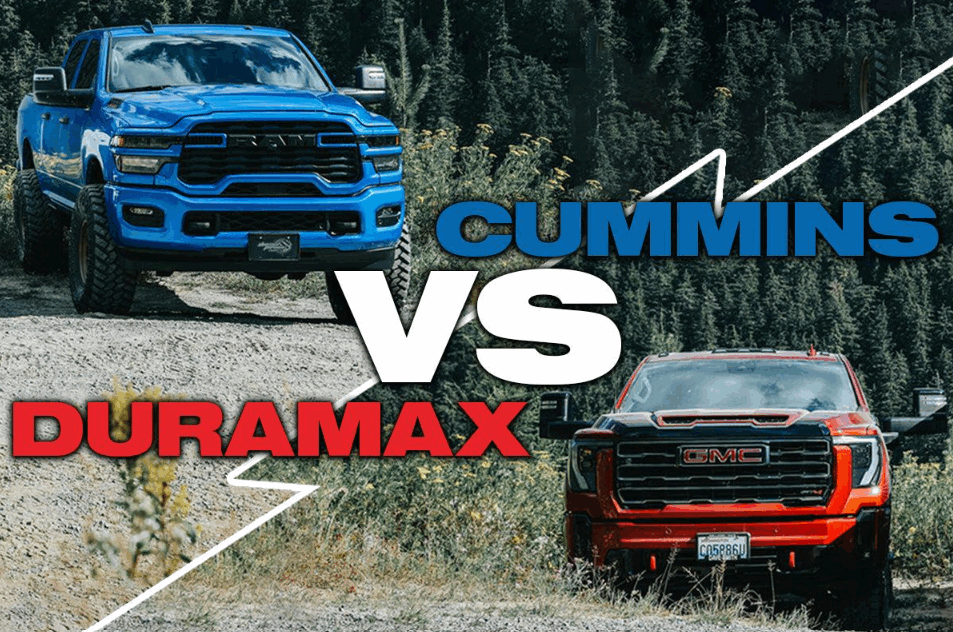
Choosing between Cummins and Duramax is one of the biggest decisions for anyone shopping for a heavy duty diesel truck. Both engines have earned strong reputations for delivering impressive towing capability, dependable performance, and long service life. However, they achieve those results through different engineering approaches. Cummins relies on an inline six-cylinder design that emphasizes low-end torque and durability, while Duramax uses a turbocharged V8 that focuses on higher horsepower, smoother acceleration, and refined everyday driving.
The right engine depends on how you plan to use your truck rather than which specification sheet looks more impressive. A contractor who tows heavy equipment every day may value maximum torque and long-term reliability. By comparison, an owner who drives long highway distances or uses a pickup as both a work vehicle and a family truck may prioritize responsive performance, fuel efficiency, and driving comfort. Understanding these differences is essential because maintenance costs, resale value, towing performance, and ownership experience can vary significantly over the life of the vehicle.
This guide compares Cummins and Duramax across every factor that matters to truck buyers. You will learn how the two diesel engines differ in design, performance, towing capability, reliability, maintenance costs, fuel economy, aftermarket support, and long-term value. By the end of this comparison, you will have a clear understanding of which diesel engine is better for your specific driving needs instead of relying on brand loyalty or marketing claims.
What Are the Main Differences Between Cummins and Duramax?
Cummins and Duramax differ mainly in engine design and driving characteristics. Cummins uses a turbocharged inline six-cylinder diesel engine. Duramax relies on a turbocharged V8 diesel engine. This fundamental difference affects torque delivery, horsepower, maintenance, and the overall ownership experience.
Cummins focuses on producing strong torque at low RPM. As a result, the engine performs exceptionally well when towing heavy trailers or carrying large payloads. The inline-six layout also contains fewer moving parts than a V8. This design simplifies maintenance and contributes to excellent long-term durability. For that reason, many commercial operators and fleet owners choose Cummins for demanding workloads.
Duramax takes a different approach. The V8 configuration produces higher horsepower and delivers power more smoothly across the RPM range. Consequently, trucks equipped with a Duramax engine feel quicker during acceleration and more responsive on the highway. Many Chevrolet Silverado HD and GMC Sierra HD models also pair the engine with an Allison automatic transmission, which improves shift quality and creates a refined driving experience.
Each engine offers unique advantages beyond raw performance. Cummins stands out for durability, mechanical simplicity, and outstanding aftermarket support. Duramax excels in driving comfort, engine refinement, and balanced everyday performance. Therefore, neither engine is the better option for every buyer. Drivers who tow heavy loads regularly often prefer Cummins because of its low-end torque and proven longevity. Meanwhile, those who value smooth acceleration, higher horsepower, and daily comfort often find Duramax to be the better fit.
Which Diesel Engine Delivers Better Performance?
Performance depends on how you expect your truck to work every day. Cummins delivers exceptional low-end torque, while Duramax produces higher horsepower and faster acceleration. Both engines perform well under demanding conditions, but each one excels in different situations.
Cummins generates strong pulling power at lower engine speeds. This characteristic allows the engine to move heavy loads with less effort and maintain consistent performance on steep grades. Drivers who tow large fifth-wheel trailers, horse trailers, or construction equipment often appreciate this predictable power delivery. The engine also works efficiently at lower RPM, which reduces strain during long towing trips.
Duramax focuses on responsive acceleration and broad power delivery. Higher horsepower helps the truck merge onto highways, pass slower traffic, and maintain speed with confidence. The V8 design also delivers smoother engine operation, creating a more refined driving experience during daily use. When paired with the Allison transmission, Duramax provides quick and seamless gear changes that improve both comfort and performance.
Engine braking is another important factor for heavy-duty trucks. Cummins models equipped with an integrated exhaust brake provide outstanding downhill control when towing heavy trailers. Duramax also offers effective exhaust braking, although many experienced truck owners consider Cummins to have a slight advantage during long mountain descents. This additional control reduces brake wear and improves driver confidence on challenging roads.
Overall, neither engine dominates every performance category. Cummins stands out for low-end torque, heavy towing, and sustained pulling power. In contrast, Duramax delivers stronger acceleration, higher horsepower, and a smoother driving experience. The better performer ultimately depends on whether your priority is maximum towing capability or refined everyday performance.
Which Engine Is Better for Towing and Heavy-Duty Work?
Cummins is generally the better choice for frequent heavy towing, while Duramax offers a more balanced experience for drivers who combine towing with everyday driving. Both engines deliver impressive towing capability. However, they achieve that performance through different strengths.
Cummins produces high torque at low engine speeds. This characteristic allows the truck to pull heavy trailers with less effort and maintain steady power during long climbs. The inline-six engine also develops torque smoothly, giving drivers greater control when starting from a stop or towing on uneven terrain. As a result, many RV owners, farmers, and commercial operators prefer Cummins for demanding workloads.
Duramax also performs exceptionally well when towing heavy loads. Its higher horsepower helps the truck accelerate more quickly and maintain highway speeds with confidence. This advantage becomes noticeable when merging into traffic or passing slower vehicles while pulling a trailer. In addition, the Allison automatic transmission delivers smooth and timely gear changes, reducing driver fatigue during long trips.
Control matters just as much as power when towing. Cummins trucks equipped with an integrated exhaust brake provide excellent downhill braking performance. The system helps maintain a safe speed without placing excessive stress on the service brakes. Duramax also includes an effective exhaust braking system on newer models, although many experienced owners still give Cummins a slight advantage for extended mountain driving.
The best towing engine depends on your workload. Cummins is an excellent option if you regularly tow heavy equipment, large campers, or fifth-wheel trailers. Its low-end torque and strong engine braking make difficult jobs feel easier. On the other hand, Duramax is better suited for drivers who want strong towing capability without sacrificing daily comfort, smooth acceleration, or highway performance.
Which Engine Is More Reliable Over the Long Term?
Cummins has built a reputation for exceptional long-term reliability, while Duramax combines strong durability with modern engineering. Both diesel engines can exceed 300,000 miles when owners follow the recommended maintenance schedule. Nevertheless, their long-term reliability depends on engine design, maintenance habits, and the model year.
Cummins benefits from its inline-six architecture. The engine uses fewer moving parts than a V8, which reduces mechanical complexity over time. This simple layout also makes many repairs easier to perform. In addition, the engine produces high torque without operating at high RPM for extended periods. Lower engine stress contributes to its reputation for lasting several hundred thousand miles under demanding conditions. Many well-maintained Cummins engines continue to operate beyond 500,000 miles in commercial service.
Duramax also delivers excellent reliability when owners perform regular maintenance. Modern Duramax engines provide strong performance, refined operation, and dependable durability. However, some generations have experienced issues with components such as the CP4 high-pressure fuel pump, injectors, or emissions systems. These problems do not affect every truck, but repair costs can become significant if preventive maintenance is ignored. Choosing a newer model with updated components often reduces these concerns.
Maintenance plays a greater role than brand loyalty. Regular oil changes, high-quality fuel filters, clean diesel fuel, and timely servicing help both engines achieve a long service life. Ignoring routine maintenance increases wear on critical components and shortens engine lifespan regardless of the manufacturer. Owners who follow factory service intervals usually experience fewer unexpected repairs and lower long-term ownership costs.
Overall, Cummins holds a slight advantage in long-term durability because of its proven inline-six design and mechanical simplicity. Duramax remains an excellent choice for buyers who value reliability together with refined performance and modern technology. Both engines can provide decades of dependable service when owners maintain them properly and address minor issues before they become major repairs.
Which Engine Costs Less to Maintain?
Cummins generally costs less to maintain over the long term because of its simpler engine design and broad parts availability. Duramax also offers reasonable ownership costs, but some repairs can become more expensive due to its complex fuel and emissions systems. The total maintenance cost for either engine depends on mileage, driving conditions, and how consistently the truck receives scheduled service.
Routine maintenance remains similar for both engines. Owners should replace engine oil, fuel filters, air filters, and transmission fluid at the recommended intervals. Regular inspections also help identify worn belts, hoses, and cooling system components before they cause larger problems. Following the factory maintenance schedule reduces unexpected repairs and extends engine life.
Cummins benefits from an inline-six configuration with fewer moving parts than a V8 engine. This design simplifies access to many components during routine service and repairs. Parts are widely available, and many independent diesel repair shops have extensive experience working on Cummins engines. As a result, labor costs are often more predictable, especially after the factory warranty expires.
Duramax delivers excellent reliability, but several components may increase repair costs on certain model years. High-pressure fuel pumps, fuel injectors, turbochargers, and emissions equipment such as the DEF system, DPF, and EGR valve require careful maintenance. When these systems fail, replacement costs can be substantial because repairs often involve specialized parts and additional labor. Preventive maintenance helps reduce these risks and improves long-term reliability.
Overall, Cummins usually offers a lower long-term maintenance cost for owners who keep their trucks for many years. Duramax remains a strong option because routine servicing is straightforward and modern models have improved reliability. Buyers who prioritize lower repair costs often lean toward Cummins, while those who value refined performance may consider the additional maintenance expense worthwhile.
Which Engine Offers Better Fuel Economy?
Duramax generally delivers slightly better fuel economy during daily driving, while Cummins remains highly efficient under heavy towing conditions. The actual difference is often small because fuel consumption depends more on vehicle weight, transmission, driving habits, terrain, and trailer size than on the engine alone.
Duramax benefits from its V8 design and advanced fuel management system. The engine produces strong horsepower while maintaining efficient combustion at highway speeds. As a result, many owners report excellent fuel economy during long-distance travel without a trailer. The smooth power delivery also reduces unnecessary throttle input, which helps improve overall efficiency during normal driving.
Cummins focuses on producing high torque at low RPM rather than maximizing horsepower. This characteristic allows the engine to maintain speed without working as hard when pulling heavy loads. Lower engine speeds often translate into stable fuel consumption during towing, especially on long highway routes. Although unloaded fuel economy may trail Duramax slightly in some situations, the difference becomes much smaller when both trucks tow similar trailers.
Driving conditions also influence real-world fuel economy. Frequent stop-and-go traffic, aggressive acceleration, oversized tires, and poor maintenance can increase fuel consumption regardless of the engine. In contrast, consistent highway speeds, proper tire pressure, clean fuel filters, and regular servicing help both Cummins and Duramax operate more efficiently. Drivers who tow beyond the recommended capacity should also expect higher fuel consumption because the engine must work harder under heavier loads.
Overall, Duramax holds a slight advantage for drivers who spend most of their time commuting or traveling without a trailer. Cummins becomes equally competitive when towing heavy equipment or traveling long distances with substantial payloads. Instead of focusing only on published fuel economy figures, buyers should consider how they will use the truck throughout the year before making a final decision.
Which Engine Has Better Aftermarket Support?
Cummins has the stronger aftermarket ecosystem, although Duramax also offers excellent upgrade potential. Both engines support a wide range of performance modifications, replacement parts, and tuning solutions. However, Cummins has remained a favorite among diesel enthusiasts for many years because of its simple design and extensive parts availability.
Cummins owners can choose from countless aftermarket components to improve performance or extend engine life. Popular upgrades include larger turbochargers, upgraded fuel injectors, high-flow intake systems, exhaust systems, and heavy-duty transmission components. Many enthusiasts also install custom engine tuning to increase horsepower and torque while maintaining reliable operation. Since the aftermarket community is well established, owners can easily find compatible parts for both older and newer engine generations.
Duramax also benefits from a large aftermarket industry. Performance tuning, turbo upgrades, intercoolers, lift pumps, and suspension components are widely available from leading manufacturers. In addition, many modern tuning solutions allow owners to optimize throttle response, towing performance, or fuel efficiency based on their driving needs. As a result, Duramax owners have plenty of opportunities to customize their trucks without sacrificing everyday drivability.
Community support is another important advantage. Cummins has built one of the largest diesel enthusiast communities in North America. Owners can access technical guides, maintenance tutorials, online forums, and experienced repair specialists with ease. Duramax owners also benefit from active communities, although the available resources are slightly less extensive than those dedicated to Cummins platforms.
Overall, both engines offer outstanding aftermarket support. Cummins takes a slight lead because of its larger performance market, simpler engine architecture, and decades of community knowledge. Duramax remains an excellent platform for owners who want to increase power, improve towing capability, or personalize their trucks while preserving the smooth driving experience that has made the engine popular among heavy-duty pickup buyers.
Which Diesel Engine Provides Better Long-Term Value?
Cummins provides better long-term value for buyers who prioritize durability and lower ownership costs, while Duramax appeals to drivers who value comfort, technology, and strong resale demand. Both engines retain their value well because heavy-duty diesel trucks remain highly desirable in both the new and used markets. However, long-term value extends beyond resale price and includes maintenance costs, reliability, fuel efficiency, and overall ownership experience.
Cummins has earned a reputation for exceptional longevity. Many well-maintained engines remain in service for hundreds of thousands of miles without requiring major internal repairs. This reputation attracts buyers who plan to keep their trucks for many years or accumulate high annual mileage. Strong aftermarket support and widespread parts availability also help reduce ownership costs over time. Consequently, older Ram Heavy Duty models equipped with a Cummins engine often maintain impressive resale values.
Duramax also performs well in the used truck market. Buyers appreciate its refined driving characteristics, responsive acceleration, and modern features. Chevrolet Silverado HD and GMC Sierra HD models equipped with Duramax engines continue to attract strong demand because they combine heavy-duty capability with everyday comfort. In addition, newer Duramax generations have addressed several reliability concerns found in earlier models, making them even more attractive to long-term owners.
Ownership goals should guide the final decision. Buyers who tow heavy trailers throughout the year often recover more value from Cummins because of its proven durability and lower long-term maintenance costs. In contrast, drivers who split their time between work and daily commuting may benefit more from Duramax because it offers a smoother ride, quicker acceleration, and a more refined driving experience. Choosing the engine that matches your daily workload usually delivers greater value than focusing on resale price alone.
Overall, both diesel engines represent excellent long-term investments when they receive proper maintenance. Cummins holds a slight advantage for maximum durability and cost-effective ownership. Meanwhile, Duramax stands out for balanced performance, modern refinement, and consistently strong market demand. The better long-term value ultimately depends on how you plan to use your truck over the next several years.
Frequently Asked Questions About Cummins vs Duramax
Is Cummins more reliable than Duramax?
Cummins is generally considered more reliable over the long term because of its inline-six design and lower mechanical complexity. The engine contains fewer moving parts than a comparable V8, which helps reduce wear over time. Many well-maintained Cummins engines exceed 500,000 miles without major internal repairs. Duramax also delivers excellent reliability, especially in newer generations. However, some older models have experienced issues with fuel system and emissions components that can increase repair costs.
Which diesel engine lasts longer?
Both engines can last well beyond 300,000 miles when owners follow the recommended maintenance schedule. Cummins often has a slight advantage because its simple engine architecture is designed for continuous heavy-duty use. Regular oil changes, quality fuel filters, and timely maintenance remain the most important factors regardless of the engine you choose.
Which engine has lower maintenance costs?
Cummins usually costs less to maintain over many years. The engine design simplifies many repairs, and replacement parts are widely available. Duramax also has predictable routine maintenance costs, but repairs involving the fuel system, turbocharger, or emissions equipment may require a larger investment on certain model years.
Which diesel engine is better for towing?
Cummins is the preferred option for frequent heavy towing because it delivers exceptional low-end torque and excellent engine braking. These characteristics improve control when pulling large trailers or driving through mountainous terrain. Duramax also offers impressive towing capability, but its strengths become more apparent during highway driving and mixed daily use.
Is Duramax faster than Cummins?
Yes. Duramax generally accelerates faster because it produces higher horsepower and delivers smoother power across a wider RPM range. This advantage improves highway merging, passing performance, and everyday driving. Cummins responds differently by focusing on steady pulling power instead of rapid acceleration, making it better suited for demanding towing applications.
Conclusion
Choosing between Cummins and Duramax ultimately depends on how you expect your truck to perform every day. Cummins stands out for exceptional durability, outstanding low-end torque, lower long-term maintenance costs, and excellent towing performance. These strengths make it an ideal choice for commercial operators, heavy haulers, and owners who plan to keep their trucks for many years.
Duramax takes a different approach by combining strong horsepower, smooth acceleration, refined driving manners, and advanced technology. It delivers an excellent balance between work capability and everyday comfort, making it a compelling option for drivers who regularly commute, travel long distances, or use their truck for both personal and professional purposes.
Neither diesel engine is universally better because each one excels in different situations. Buyers who prioritize maximum towing capability, mechanical simplicity, and proven longevity will likely find greater value in Cummins. Meanwhile, drivers who prefer responsive performance, modern refinement, and a comfortable driving experience may benefit more from Duramax.
Before making a final decision, consider how often you tow, the weight of your typical payload, your annual mileage, and your long-term maintenance budget. Matching the engine to your actual driving needs will provide greater satisfaction than choosing a truck based solely on horsepower or brand reputation. Both Cummins and Duramax remain among the most capable diesel engines available, and either one can deliver years of dependable performance when maintained properly.