If your Dodge Caravan airbag light is on, the Supplemental Restraint System (SRS) has detected a fault that requires attention. The warning light does not necessarily mean an airbag will deploy unexpectedly, but it often indicates that part of the airbag system may not function correctly in a collision. Depending on the Diagnostic Trouble Code (DTC), the issue may involve a faulty clock spring, damaged seat belt pretensioner, occupant classification sensor, crash sensor, wiring harness, low system voltage, or the airbag control module itself.
Because the SRS continuously monitors its components, even a minor electrical fault can trigger the warning light and store a diagnostic code. While some causes are relatively inexpensive to repair, others require specialized diagnostic equipment capable of reading manufacturer-specific SRS codes. Ignoring the warning light is not recommended because it can compromise occupant protection during an accident and may prevent the vehicle from passing a safety inspection in jurisdictions where SRS functionality is required.
This guide explains why the Dodge Caravan airbag light turns on, the most common causes ranked by likelihood, how technicians diagnose the fault, the appropriate repair methods, typical repair costs, and whether it is safe to continue driving with the warning light illuminated. By the end of the article, you’ll understand how the SRS works, what each common failure means, and how to determine the most effective solution without replacing parts unnecessarily.
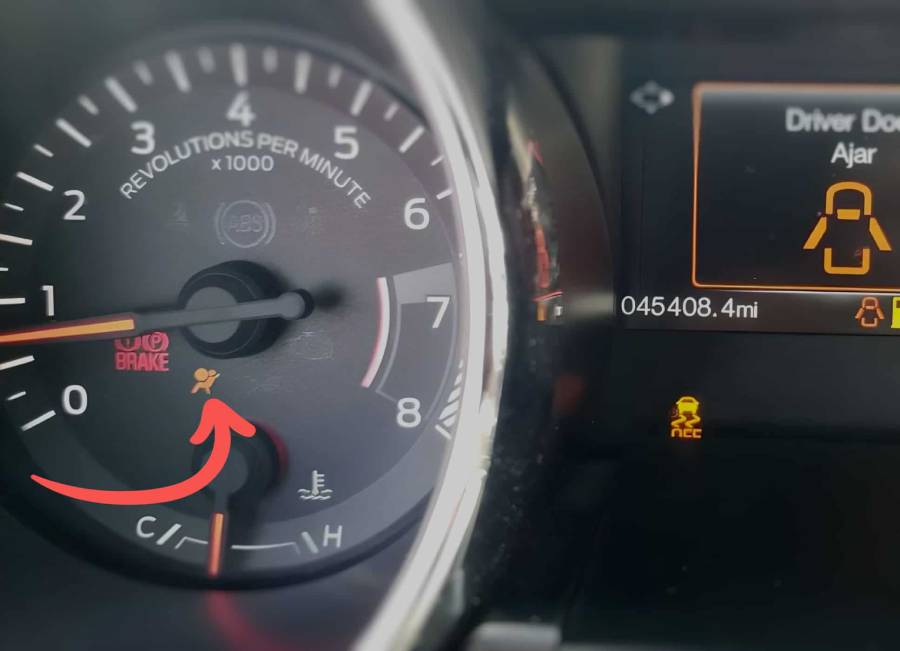
Why Does the Dodge Caravan Airbag Light Turn On?
The Dodge Caravan airbag light turns on when the Supplemental Restraint System (SRS) detects a fault that could prevent one or more airbag components from operating as designed. Every time you start the engine, the SRS control module performs a self-diagnostic of the entire restraint system. If it detects an electrical fault, abnormal resistance, communication failure, or malfunctioning component, it stores a Diagnostic Trouble Code (DTC) and illuminates the airbag warning light on the instrument cluster.
The SRS is designed to work together with airbags, seat belt pretensioners, crash sensors, and occupant detection systems to reduce injuries during a collision. Because these components rely on continuous communication with the airbag control module, even a minor issue such as a loose connector beneath the front seat or a temporary voltage drop can trigger the warning light. The light remains on until the underlying fault is repaired and the stored DTC is cleared using an SRS-compatible diagnostic scanner.
What Does the Airbag Warning Light Indicate?
An illuminated airbag warning light indicates that the SRS has detected a fault requiring diagnosis. Contrary to a common misconception, the warning light does not identify which component has failed. Instead, it confirms that the control module has recognized an abnormal condition somewhere within the restraint system.
Depending on the specific fault, one or multiple airbags may be disabled. In some cases, the seat belt pretensioners may also fail to activate during a collision because they share the same safety network. The only reliable way to determine the affected component is to retrieve the manufacturer-specific SRS diagnostic code using a professional scan tool.
Does the Airbag Light Mean the Airbags Are Disabled?
Yes, in many cases an illuminated airbag light means that part or all of the airbag system may be disabled until the fault is repaired. The SRS is designed with a fail-safe strategy that prioritizes predictable system behavior over uncertain deployment. When a critical fault is detected, the control module may disable one or more deployment circuits to reduce the risk of unintended airbag activation.
The exact behavior depends on the stored fault code. For example, a failed passenger occupancy sensor may disable only the passenger airbag, while a defective airbag control module or communication failure can affect multiple restraint functions simultaneously. Because deployment status varies by fault, drivers should never assume the airbags remain fully operational when the warning light is illuminated.
Can the Warning Light Turn On Intermittently?
Yes. The Dodge Caravan airbag light can turn on intermittently when an electrical connection becomes unstable or a component begins to fail. Unlike permanent faults, intermittent problems may appear only under certain driving conditions, such as turning the steering wheel, adjusting the driver’s seat, driving over rough roads, or after starting the engine with a weak battery.
Intermittent warnings are commonly associated with worn clock springs, loose seat connectors, partially damaged wiring, or low battery voltage. Although the light may switch off temporarily, the underlying fault usually remains stored in the SRS control module and should be diagnosed before it progresses into a permanent failure.
What Are the Most Common Causes of a Dodge Caravan Airbag Light?
Can a Faulty Clock Spring Trigger the Warning Light?
Yes. A worn or damaged clock spring is one of the most common causes of an illuminated airbag light in the Dodge Caravan. The clock spring is a spiral electrical connector located behind the steering wheel that maintains electrical contact while the wheel rotates. It supplies power and communication to the driver’s airbag, horn, and steering wheel-mounted controls.
Over time, repeated steering wheel movement can wear the internal ribbon cable, creating an open circuit or intermittent electrical connection. When this occurs, the SRS control module detects abnormal resistance and stores a fault code related to the driver’s airbag circuit. Drivers may also notice that the horn or steering wheel buttons stop functioning, providing an additional clue that the clock spring has failed.
Can Damaged Seat Belt Pretensioners Cause the Light?
Yes. A defective seat belt pretensioner can activate the Dodge Caravan airbag warning light because it is integrated into the Supplemental Restraint System. Pretensioners tighten the seat belt instantly during a collision to reduce occupant movement before the airbags deploy.
Internal electrical faults, previous accident damage, or damaged wiring can prevent the pretensioner from communicating correctly with the airbag control module. Even if the seat belt appears to operate normally during daily driving, the stored SRS code will keep the warning light illuminated until the defective component is repaired or replaced.
Can a Passenger Seat Occupancy Sensor Fail?
Yes. The passenger seat occupancy sensor is another common source of SRS warning lights. This sensor determines whether the front passenger seat is occupied and whether the passenger airbag should be armed. If the sensor sends implausible weight readings or loses communication with the control module, the SRS records a fault and illuminates the warning indicator.
Symptoms may include the passenger airbag status light behaving abnormally or inconsistent recognition of passengers sitting in the front seat. Accurate diagnosis usually requires reading live sensor data with a professional scan tool rather than relying solely on stored fault codes.
Can Crash Sensors Develop Faults?
Yes. Crash sensors can fail because of age, corrosion, water intrusion, impact damage, or internal electrical defects. These sensors monitor vehicle deceleration and transmit collision data to the airbag control module within milliseconds during an accident.
When the module detects missing, implausible, or inconsistent signals from a crash sensor, it records an SRS fault code and activates the warning light. Depending on the vehicle configuration, the Dodge Caravan may use multiple impact sensors positioned around the front and sides of the vehicle, making proper diagnosis essential before replacing any sensor.
Can Wiring or Loose Connectors Trigger SRS Codes?
Yes. Wiring problems and loose electrical connectors are among the most frequent electrical causes of an illuminated airbag light. The SRS continuously monitors circuit resistance, so even slight increases caused by corrosion, damaged insulation, moisture, or partially disconnected connectors can be interpreted as a fault.
Connectors located beneath the front seats are particularly susceptible because they are exposed to repeated seat movement, vibration, and accidental damage during interior cleaning or repair work. A thorough visual inspection combined with circuit testing is often necessary before replacing expensive SRS components.
Can a Weak Battery or Charging System Cause the Warning Light?
Yes. Low battery voltage can temporarily trigger the Dodge Caravan airbag warning light. The SRS control module depends on a stable electrical supply during startup and operation. If battery voltage drops below the required threshold because of an aging battery, poor alternator performance, or loose battery terminals, the module may record undervoltage faults.
In many cases, restoring proper charging voltage and clearing the stored DTC resolves the warning. However, if the light returns shortly afterward, additional diagnosis is required to determine whether another SRS component has failed.
Can the Airbag Control Module Fail?
Yes, although it is less common than sensor or wiring faults. The airbag control module functions as the central computer for the Supplemental Restraint System, processing information from crash sensors, seat occupancy sensors, pretensioners, and airbag circuits before determining whether deployment is necessary during a collision.
Module failures may result from internal electronic defects, previous collision deployment, water damage, or severe electrical problems. Because replacement modules often require programming and vehicle-specific calibration, technicians typically eliminate wiring and sensor faults before concluding that the control module itself is defective.
How Do You Diagnose a Dodge Caravan Airbag Light?
Diagnosing a Dodge Caravan airbag light requires reading the Supplemental Restraint System (SRS) fault codes before inspecting or replacing any components. Because the airbag system uses a dedicated control module, the diagnostic process differs from troubleshooting engine or transmission problems. Identifying the exact Diagnostic Trouble Code (DTC) significantly reduces unnecessary repairs and ensures the correct component is tested first.
A complete diagnosis typically includes scanning the SRS module, reviewing stored and pending fault codes, inspecting related wiring and connectors, testing electrical circuits, and verifying that repaired components communicate correctly with the control module. Skipping any of these steps increases the risk of replacing functional parts while leaving the actual fault unresolved.
Why Is a Standard OBD-II Scanner Usually Insufficient?
A standard OBD-II scanner usually cannot access the Dodge Caravan’s airbag control module. Most consumer-grade code readers are designed to retrieve powertrain-related diagnostic codes, such as engine, transmission, and emissions faults. The SRS operates on a separate communication network and requires a scan tool capable of reading manufacturer-specific airbag data.
Professional diagnostic tools can retrieve active and stored SRS codes, display live sensor information, monitor seat occupancy status, and perform system calibrations after repairs. Without these capabilities, technicians cannot accurately determine which component triggered the warning light.
Which SRS Trouble Codes Are Commonly Found?
The stored Diagnostic Trouble Code provides the starting point for every airbag system diagnosis. While the exact code varies by model year, most Dodge Caravan SRS faults fall into several categories.
Common code groups include:
- Driver airbag circuit faults
- Passenger airbag circuit faults
- Clock spring communication faults
- Seat belt pretensioner circuit faults
- Occupant classification sensor failures
- Crash sensor communication errors
- Airbag control module internal faults
- Low system voltage or power supply faults
Each code identifies the affected circuit rather than automatically confirming that the component itself has failed. For example, a driver’s airbag circuit code may be caused by a damaged clock spring, corroded connector, broken wire, or defective airbag module. Additional electrical testing is necessary before replacing parts.
How Does a Technician Identify the Failed Component?
Technicians identify the failed component by combining diagnostic codes with electrical testing and physical inspection. After retrieving the fault code, they examine the wiring diagram for the affected circuit and measure resistance, continuity, and voltage at key connection points.
If the stored code points to the driver’s airbag circuit, the inspection usually begins with the clock spring, steering wheel connectors, and wiring leading to the airbag module. If the fault involves the passenger seat, technicians inspect the seat occupancy sensor, pretensioner connectors, and harness beneath the seat. This systematic approach isolates the root cause while minimizing unnecessary replacement of expensive SRS components.
What Should Be Inspected Before Replacing Parts?
Every electrical connection should be inspected before replacing any SRS component. Loose connectors, damaged insulation, moisture intrusion, corrosion, and poor ground connections frequently produce the same warning light as a failed sensor or module.
Technicians also verify battery condition and charging voltage because unstable electrical supply can generate intermittent SRS faults. If all wiring passes inspection, attention shifts to the component identified by the stored DTC. Performing these basic inspections first often resolves the issue without replacing major parts.
How Do You Fix a Dodge Caravan Airbag Warning Light?
The correct repair depends entirely on the diagnostic fault code and the component that has failed. Resetting the warning light without repairing the underlying problem will only cause the light to return after the next system self-test. A permanent repair restores communication between the affected component and the SRS control module while ensuring all deployment circuits operate within factory specifications.
Replace a Faulty Clock Spring
Replacing a defective clock spring is one of the most common repairs for a Dodge Caravan airbag warning light. A worn internal ribbon cable interrupts communication between the steering wheel and the SRS control module, causing the driver’s airbag circuit to fail.
After installation, the steering wheel must be centered correctly to prevent premature damage to the new clock spring. The stored fault code should then be cleared, followed by another system scan to confirm that communication has been restored.
Repair Damaged Wiring
Repairing damaged wiring eliminates many intermittent SRS faults without replacing expensive components. Wiring repairs may involve cleaning corroded terminals, replacing damaged connectors, repairing broken wires, or securing loose harnesses that have been damaged by seat movement or vibration.
Because airbag circuits are highly sensitive to resistance changes, repairs should follow manufacturer-approved procedures and use appropriate electrical connectors rather than temporary splices.
Replace Defective Sensors
Faulty crash sensors and occupant detection sensors should be replaced if diagnostic testing confirms they no longer operate within specification. These sensors provide essential input to the airbag control module during both normal operation and collision events.
After replacement, some sensors require calibration or initialization using a professional scan tool to ensure the control module recognizes the new component and verifies proper communication.
Repair or Replace Seat Belt Pretensioners
A damaged seat belt pretensioner must be repaired or replaced to restore full SRS functionality. Pretensioners contain pyrotechnic devices that tighten the seat belt during a collision, making them an integral part of the airbag system rather than a separate safety feature.
If a pretensioner has deployed during a previous accident, replacement is mandatory because it cannot be reset or reused. Associated wiring and connectors should also be inspected for collision-related damage before completing the repair.
Reprogram or Replace the Airbag Control Module
Airbag control module replacement is typically reserved for confirmed module failures or post-collision repairs. Internal electronic faults, water damage, or stored crash data that cannot be cleared may require installation of a replacement module.
Most replacement modules must be programmed with the vehicle’s configuration and VIN before the SRS becomes fully operational. Depending on the repair procedure, technicians may also perform occupancy sensor calibration and system verification before returning the vehicle to service.
Clear SRS Codes After Repairs
The final step is clearing the stored SRS codes and verifying that the warning light remains off. After repairs are completed, technicians erase all stored fault codes using an SRS-compatible diagnostic scanner and perform another self-test to confirm that no active faults remain.
If the warning light returns immediately after clearing the codes, the original problem has not been fully corrected or another fault exists within the system. A final scan should confirm that all SRS components communicate correctly and that no additional Diagnostic Trouble Codes are present before the vehicle is considered fully repaired.
Is It Safe to Drive With the Dodge Caravan Airbag Light On?
No, it is not recommended to continue driving a Dodge Caravan with the airbag warning light illuminated. Although the vehicle will usually remain drivable, the Supplemental Restraint System (SRS) may not provide its intended level of protection during a collision. The warning light indicates that the control module has detected a fault affecting one or more safety components, and the system should be inspected as soon as possible.
The severity of the issue depends on the stored Diagnostic Trouble Code. A minor wiring fault may disable only a single airbag circuit, while a control module failure or communication error can affect multiple airbags and seat belt pretensioners. Because the warning light does not identify which safety functions remain operational, drivers should assume the restraint system cannot provide full protection until the fault has been diagnosed and repaired.
Driving for a short distance to a repair facility is generally acceptable if the vehicle operates normally and no other critical warning lights are present. However, continuing to drive for weeks or months without diagnosis increases the risk of reduced occupant protection in the event of an accident.
Can You Reset the Dodge Caravan Airbag Light Yourself?
You can only reset the Dodge Caravan airbag light after the underlying fault has been repaired. Simply clearing the warning light without fixing the problem does not restore normal SRS operation. During the next ignition cycle, the airbag control module performs another self-test. If the fault is still present, the warning light will immediately return.
Many owners attempt to disconnect the battery in hopes of resetting the airbag light. While disconnecting the battery may erase temporary electrical settings in some vehicle systems, it does not remove stored SRS Diagnostic Trouble Codes or repair defective components. Modern Dodge Caravan models require an SRS-compatible scan tool to erase airbag fault codes after successful repairs.
Some scan tools marketed to DIY users can read and clear SRS codes, but compatibility varies by model year. Before purchasing a scanner, verify that it specifically supports Chrysler, Dodge, and Jeep Supplemental Restraint System diagnostics rather than only generic OBD-II functions.
If the warning light returns immediately after clearing the codes, the repair was either incomplete or another fault remains in the system. Repeatedly clearing codes without diagnosing the cause only delays the proper repair and provides no improvement in vehicle safety.
How Much Does It Cost to Repair a Dodge Caravan Airbag Light?
The cost to repair a Dodge Caravan airbag warning light depends on the failed component, diagnostic labor, and whether replacement parts require programming or calibration. Electrical repairs generally cost less than replacing electronic control modules or multiple safety components.
The table below summarizes the typical repair cost ranges for the most common SRS faults.
| Repair | Typical Parts Cost | Typical Total Repair Cost |
|---|---|---|
| Diagnostic scan | $50–$150 | $50–$150 |
| Clock spring replacement | $80–$250 | $200–$500 |
| Seat occupancy sensor replacement | $150–$400 | $300–$700 |
| Crash sensor replacement | $100–$300 | $250–$600 |
| Seat belt pretensioner replacement | $150–$400 | $300–$800 |
| Wiring or connector repair | $20–$150 | $100–$400 |
| Airbag control module replacement | $300–$900 | $600–$1,500 |
Actual repair costs vary according to the vehicle’s model year, regional labor rates, OEM versus aftermarket replacement parts, and whether additional programming is required. Vehicles involved in previous collisions often require multiple SRS components to be replaced simultaneously, increasing the total repair cost.
DIY Repair Costs
DIY repairs are generally limited to simple inspections and certain component replacements. Owners with mechanical experience may replace accessible parts such as a clock spring or repair damaged connectors if they follow factory service procedures and disconnect the battery before working on the airbag system.
However, many SRS repairs require manufacturer-specific diagnostic equipment to confirm the fault, perform calibration procedures, and clear stored airbag codes. Without these capabilities, even a correctly installed replacement part may not extinguish the warning light.
Professional Repair Costs
Professional repairs include both diagnosis and post-repair system verification. Qualified technicians use dedicated SRS scan tools to retrieve fault codes, monitor live sensor data, perform calibration procedures, and verify that every restraint component communicates correctly with the airbag control module before returning the vehicle to service.
Although professional repairs generally cost more than DIY repairs, they significantly reduce the risk of replacing unnecessary parts and ensure the Supplemental Restraint System meets factory operating requirements.
Parts Commonly Replaced
Most Dodge Caravan airbag warning lights are resolved by replacing one of several frequently failing components rather than the entire airbag system. The most commonly replaced parts include:
- Clock spring
- Seat occupancy sensor
- Seat belt pretensioner
- Front impact sensor
- Side impact sensor
- Damaged wiring connectors
- Airbag control module
- Battery or charging system components that cause persistent low-voltage faults
Replacing components based solely on assumptions can become significantly more expensive than performing a complete diagnosis first. Identifying the exact failure through SRS fault codes and electrical testing remains the most cost-effective approach for repairing an illuminated airbag warning light.
Can a Recalled Airbag Component Cause the Warning Light?
Yes, a recalled airbag component can cause the Dodge Caravan airbag warning light if the defective part develops a fault or fails self-diagnostic testing. While not every recall results in an illuminated warning light, defective airbags, faulty control modules, or damaged electrical components included in a safety recall can trigger SRS Diagnostic Trouble Codes.
Several Dodge Caravan model years have been included in manufacturer safety recalls involving airbag-related components. Depending on the production year and vehicle identification number (VIN), recalls may involve the driver’s airbag, passenger airbag inflator, clockspring assembly, or Occupant Restraint Control (ORC) module.
If your Dodge Caravan airbag light appears unexpectedly, checking for outstanding recalls should be part of the diagnostic process. Manufacturers repair recall-related defects at no cost to the owner, provided the vehicle is covered by the recall campaign. Before paying for repairs, verify your VIN through the official Dodge or National Highway Traffic Safety Administration (NHTSA) recall database to determine whether your vehicle qualifies for a free repair.
It is important to understand that not every illuminated airbag light is caused by a recall. Most SRS warning lights result from normal component wear, electrical faults, or sensor failures rather than manufacturer defects. A professional diagnosis remains necessary to distinguish recall-related problems from ordinary mechanical failures.
How Can You Prevent Future Airbag System Problems?
Regular inspection and proper electrical system maintenance significantly reduce the likelihood of future Dodge Caravan airbag faults. Although some components eventually wear out with age, many SRS warning lights are caused by preventable electrical issues rather than sudden component failure.
Maintain a healthy battery and charging system because unstable voltage is a frequent cause of intermittent SRS faults. Replace aging batteries before they begin producing repeated low-voltage conditions, and inspect battery terminals regularly for corrosion or loose connections.
Avoid placing excessive force on wiring beneath the front seats. Repeatedly sliding the seats to their maximum positions, storing heavy objects underneath, or pulling on wiring harnesses during interior cleaning can damage electrical connectors connected to the seat occupancy sensor and seat belt pretensioner.
Repair water leaks promptly. Moisture entering the cabin can corrode SRS connectors, damage wiring, and eventually affect the airbag control module. If water has entered the vehicle after flooding, windshield leaks, or heater core failure, inspect electrical connectors before corrosion spreads throughout the restraint system.
Address warning lights immediately instead of waiting for additional symptoms. Small electrical faults often begin as intermittent problems before becoming permanent failures. Early diagnosis usually reduces repair costs because damaged wiring or loose connectors can often be repaired before they damage more expensive components.
Avoid installing aftermarket steering wheels, seat modifications, or electrical accessories that interfere with factory SRS wiring. Any modification affecting the steering column, seats, or restraint system should follow manufacturer specifications to preserve proper airbag operation.
Frequently Asked Questions
Why Did the Airbag Light Come On After Replacing the Battery?
The airbag light may appear after battery replacement if the SRS control module detects low system voltage, interrupted communication, or an existing fault during startup. In many cases, the warning light remains illuminated because the previous fault code is still stored in memory. If battery voltage has returned to normal but the light remains on, the SRS should be scanned for Diagnostic Trouble Codes to determine whether another issue exists.
Will Disconnecting the Battery Reset the Airbag Light?
No. Disconnecting the battery does not permanently reset the Dodge Caravan airbag warning light. While removing battery power may reset certain electronic systems, SRS Diagnostic Trouble Codes remain stored inside the airbag control module until they are cleared with a compatible scan tool after the underlying fault has been repaired.
Can Low Voltage Trigger an SRS Warning?
Yes. Low battery voltage is a common cause of temporary SRS warning lights. During engine startup, voltage that drops below the control module’s operating threshold may generate undervoltage fault codes. If the battery or charging system is weak, the warning light may appear repeatedly until the electrical problem is corrected.
Will the Vehicle Pass Inspection With the Airbag Light On?
In many regions, a vehicle with an illuminated airbag warning light may fail a safety inspection. Inspection requirements vary by state or country, but many jurisdictions consider the Supplemental Restraint System an essential safety feature. Before scheduling an inspection, repair the fault and confirm that no active SRS Diagnostic Trouble Codes remain.
Can the Airbags Deploy Unexpectedly if the Warning Light Is On?
Unexpected airbag deployment is uncommon when the warning light is illuminated. In most situations, the SRS control module adopts a fail-safe strategy that disables affected deployment circuits rather than increasing the risk of accidental deployment. However, because the exact system status depends on the stored fault, the vehicle should not be considered fully protected until the warning light has been diagnosed and repaired.