The Cummins ISM is a 10.8-liter, six-cylinder diesel engine designed for heavy-duty vehicle applications, with specifications varying by horsepower rating, engine configuration, model year, and application. The ISM was offered in multiple power ratings, allowing the same engine platform to serve trucks, motorhomes, buses, and vocational vehicles with different performance requirements.
Cummins ISM engine specs center on its 10.8-liter displacement, inline-six cylinder configuration, horsepower and torque ratings, bore and stroke dimensions, physical dimensions, weight, and fluid capacities. Horsepower and torque are particularly important when identifying an ISM because different engine ratings can produce substantially different performance while retaining the same basic displacement and architecture.
Dimensions, weight, oil capacity, and other specifications can also differ according to the engine configuration and installed components. For this reason, a specification associated with one ISM version should not automatically be applied to every ISM engine.
This guide covers the Cummins ISM engine specifications in detail, including displacement, bore and stroke, horsepower, torque, dimensions, weight, oil and coolant capacities, engine configuration, and common vehicle applications.
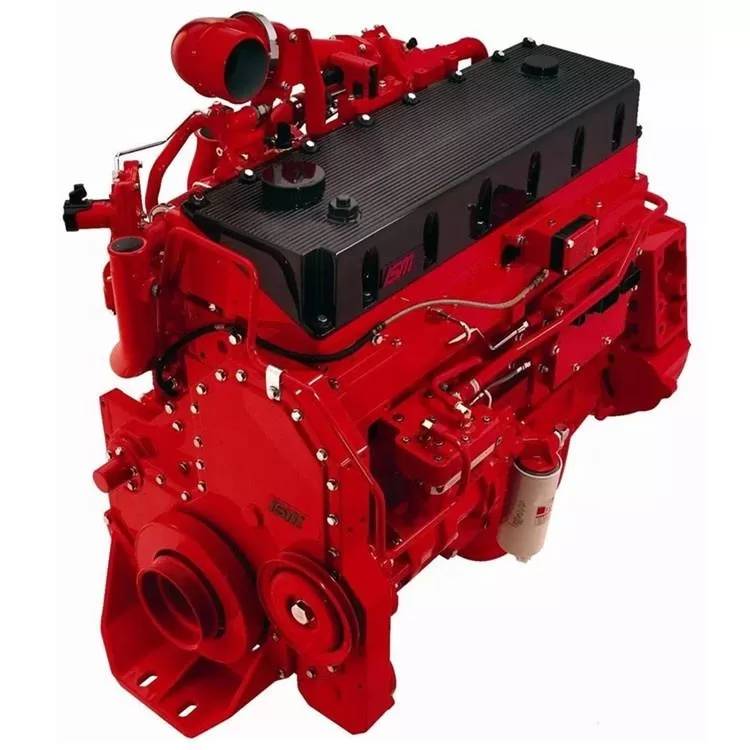
What Are the Cummins ISM Engine Specs?
The Cummins ISM is a 10.8-liter inline-six diesel engine with output ratings that reach 500 hp and 1,550 lb-ft of peak torque in EPA 2007 on-highway applications. Cummins offered different ISM calibrations for heavy-duty trucks, transit buses, motorhomes, fire and emergency vehicles, and vocational applications, so horsepower, torque, weight, and fluid specifications must be matched to the specific engine configuration.
The EPA 2007 ISM family illustrates how much specifications can vary within the same engine platform. Across the applications listed by Cummins, advertised power spans 280–500 hp and peak torque spans 925–1,550 lb-ft. Heavy-duty truck configurations are listed at 280–425 hp and 1,150–1,550 lb-ft, while motorhome versions reach 450–500 hp and 1,550 lb-ft. Transit-bus configurations use lower ratings of 280–330 hp and 925–1,150 lb-ft.
The following table summarizes the main Cummins ISM specifications. Dimensions are based on the closely related 10.8-liter Cummins QSM configuration where noted because Cummins’ current EPA 2007 ISM application pages provide weight and performance data but do not publish a universal length, width, and height specification for every ISM installation.
| Specification | Cummins ISM Specification |
|---|---|
| Engine type | Inline-six diesel |
| Displacement | 10.8 L / approximately 660–661 cu in |
| Number of cylinders | 6 |
| Bore | 4.92 in / 125 mm |
| Stroke | 5.79 in / 147 mm |
| Advertised horsepower | 280–500 hp across EPA 2007 applications |
| Peak torque | 925–1,550 lb-ft across EPA 2007 applications |
| Governed speed | 2,100 rpm |
| Clutch engagement torque | 700 lb-ft / 949 N·m |
| Aspiration | Turbocharged |
| Oil system capacity | 10.2 U.S. gal / 38.6 L on several EPA 2007 configurations |
| Engine dry weight | About 2,206 lb / 1,000 kg on several EPA 2007 configurations |
| System weight | About 2,268 lb / 1,028 kg on several EPA 2007 configurations |
| Bore × stroke | 4.92 × 5.79 in / 125 × 147 mm |
| Reference length* | 51.4 in / 1,306 mm |
| Reference width* | 36.0 in / 914 mm |
| Reference height* | 50.4 in / 1,280 mm |
*The dimensional figures are published by Cummins for a 10.8-liter QSM configuration sharing the 125 × 147 mm bore-and-stroke architecture. Installation dimensions can vary with engine configuration and attached equipment, so these measurements should not be treated as universal dimensions for every ISM installation.
Horsepower and torque require particular attention when identifying an ISM. For example, Cummins lists an EPA 2007 ISM 280 transit-bus rating at 280 hp with 925 lb-ft of peak torque at 1,400 rpm, while an ISM 410 truck-oriented rating produces 410 hp and 1,550 lb-ft at 1,200 rpm. The ISM 425V vocational rating reaches 425 hp with 1,550 lb-ft at 1,200 rpm. These differences show why displacement alone cannot identify the performance specification of an individual ISM.
Model year also affects the available ratings. Cummins’ EPA 2004 ISM lineup included versions such as the ISM 475 and ISM 500, with the ISM 500 available with peak torque ratings of 1,450 or 1,550 lb-ft. The EPA 2007 family also reached 500 hp in selected applications, but its available ratings depended on whether the engine was configured for a truck, motorhome, transit bus, fire apparatus, or another application.
What Is the Cummins ISM Engine Displacement?
The Cummins ISM has a displacement of approximately 10.8 liters, or about 660–661 cubic inches. It uses six cylinders arranged in an inline configuration. Cummins’ 10.8-liter engine specifications list a 125 mm bore and 147 mm stroke, equivalent to approximately 4.92 inches and 5.79 inches.
Engine displacement represents the combined swept volume of all six cylinders as the pistons move through their strokes. The ISM’s 10.8-liter displacement therefore describes the engine’s physical cylinder capacity rather than its horsepower rating. Two ISM engines can share the same displacement while producing different horsepower and torque because output also depends on calibration, fuel delivery, turbocharging, emissions equipment, and application-specific ratings.
The 10.8-liter displacement is especially important when comparing the ISM with other Cummins engines because model names and horsepower figures alone do not define engine size. A 280-hp ISM and a 500-hp ISM can belong to the same 10.8-liter engine family even though their performance ratings differ substantially.
What Are the Cummins ISM Bore and Stroke Dimensions?
The Cummins 10.8-liter architecture uses a 4.92-inch (125 mm) bore and a 5.79-inch (147 mm) stroke. Bore measures the internal diameter of each cylinder, while stroke measures the distance the piston travels between the upper and lower limits of its movement. Cummins publishes the same 125 × 147 mm dimensions for its 10.8-liter QSM family.
The stroke is approximately 22 mm longer than the bore diameter. This bore-and-stroke combination produces the swept volume across six cylinders that gives the engine its approximately 10.8-liter displacement. These physical dimensions remain distinct from performance ratings: horsepower and peak torque can change between ISM calibrations without requiring a corresponding change in the basic displacement.
Bore and stroke are also useful identification and comparison specifications because they describe the engine’s underlying geometry rather than a software-controlled output rating. When comparing an ISM with another Cummins engine family, displacement, cylinder count, bore, and stroke provide a more complete description of the basic engine architecture than horsepower alone.
How Much Horsepower Does a Cummins ISM Engine Have?
The Cummins ISM produces 280 to 500 horsepower (209 to 373 kW) across the EPA 2007 engine family, while heavy-duty truck ratings range from 310 to 425 hp. The exact output depends on the engine rating and vehicle application. Cummins used the same ISM platform at different power levels for heavy-duty trucks, vocational vehicles, motorhomes, transit buses, and fire and emergency vehicles.
Heavy-duty truck versions demonstrate the range of available calibrations. Cummins lists conventional ratings including the ISM 310, 330, 350, 370, and 410, plus vocational and SmartTorque configurations. The ISM 410 produces 410 hp, while the ISM 425V vocational version reaches 425 hp. This means an engine identified only as a “Cummins ISM” cannot be assigned an exact horsepower figure without checking its specific rating.
Higher horsepower ratings were available for applications that required additional power. EPA 2007 motorhome versions include the ISM 450 at 450 hp and ISM 500 at 500 hp. Both are governed at 2,100 rpm. Fire and emergency applications also extend to 500 hp, with Cummins listing 365, 385, 400, 435, 450, and 500 hp configurations for this application category.
The production period also matters when comparing ISM horsepower specifications. Cummins’ EPA 2004 ratings for engines built from January 2004 through December 2006 included the ISM 475 and ISM 500 in addition to lower-output models. Therefore, horsepower should be matched to the model, emissions generation, and application rather than treated as one fixed specification for every ISM.
| Cummins ISM Rating | Advertised Horsepower | Peak Torque |
|---|---|---|
| ISM 280 | 280 hp | 1,150 lb-ft @ 1,200 rpm |
| ISM 310 | 310 hp | 1,150 lb-ft @ 1,200 rpm |
| ISM 330 | 330 hp | 1,250 or 1,350 lb-ft @ 1,200 rpm |
| ISM 350 | 350 hp | 1,250 or 1,350 lb-ft @ 1,200 rpm |
| ISM 370 | 370 hp | 1,350 or 1,450 lb-ft @ 1,200 rpm |
| ISM 410 | 410 hp | 1,550 lb-ft @ 1,200 rpm |
| ISM 425V | 425 hp | 1,550 lb-ft @ 1,200 rpm |
| ISM 450* | 450 hp | 1,550 lb-ft @ 1,200 rpm |
| ISM 500* | 500 hp | 1,550 lb-ft @ 1,200 rpm |
*The 450- and 500-hp figures shown here correspond to EPA 2007 motorhome ratings. Cummins offered different rating combinations for other applications.
How Much Torque Does a Cummins ISM Engine Produce?
The Cummins ISM produces 925 to 1,550 lb-ft (1,254 to 2,102 N·m) of peak torque across the EPA 2007 family. The narrower heavy-duty truck range is 1,150 to 1,550 lb-ft (1,559 to 2,102 N·m). Most truck ratings listed by Cummins reach peak torque at 1,200 rpm, giving the ISM substantial low-speed pulling force for heavy vehicle applications.
Torque changes substantially between ISM calibrations even when displacement remains the same. For example, the conventional ISM 310 produces 1,150 lb-ft at 1,200 rpm, while the ISM 410 produces 1,550 lb-ft at the same engine speed. The difference is 400 lb-ft even though both belong to the same ISM engine family.
Several horsepower ratings were also available with more than one torque rating. Cummins lists the 370-hp ISM with either 1,350 or 1,450 lb-ft and the 350-hp version with either 1,250 or 1,350 lb-ft. The 330-hp version likewise appears with 1,250 or 1,350 lb-ft. Horsepower alone therefore does not identify the torque specification of every ISM calibration.
Cummins also offered SmartTorque ratings that could provide different torque levels according to operating conditions. The EPA 2007 ISM 350 ST is listed at 1,350/1,450 lb-ft, while the ISM 330 ST is rated at 1,250/1,350 lb-ft. These configurations demonstrate why the engine’s complete rating information is more useful than simply identifying displacement and advertised horsepower.
Application changes the available torque range as well. EPA 2007 motorhome versions rated at 450 and 500 hp both produce 1,550 lb-ft at 1,200 rpm. Fire and emergency versions range from 1,350 to 1,550 lb-ft, while Cummins lists 925 to 1,150 lb-ft for the broader transit-bus application range. The appropriate torque specification must therefore correspond to the engine’s intended application.
How Do Cummins ISM Horsepower and Torque Ratings Differ?
Horsepower measures the rate at which the Cummins ISM performs work, while torque represents the rotational force the engine delivers through the drivetrain. The two specifications are related, but they describe different aspects of engine performance. For a heavy-duty diesel engine, the torque rating is particularly relevant to pulling a loaded vehicle from low engine speeds, climbing grades, and maintaining vehicle movement under load.
The Cummins rating data makes this distinction clear. An EPA 2007 ISM 410 produces 410 hp and 1,550 lb-ft of peak torque, while an ISM 370 configuration produces 370 hp and up to 1,450 lb-ft. The 40-hp difference therefore accompanies a torque difference of up to 100 lb-ft in these specific configurations.
Horsepower does not always increase in direct proportion to peak torque. Cummins’ EPA 2007 motorhome ISM 450 and ISM 500 provide a clear example: the two engines are advertised at 450 and 500 hp respectively, but both are rated at 1,550 lb-ft of peak torque at 1,200 rpm. The 50-hp increase does not produce a higher published peak-torque figure in these two configurations.
The same principle appears in older ISM specifications. Cummins lists an EPA 2004 ISM 500 with either 1,450 or 1,550 lb-ft of peak torque, while the ISM 475 was available with 1,550 lb-ft. This confirms that engine model, calibration, emissions generation, and torque rating must be considered together when determining the performance specifications of a specific Cummins ISM.
What Are the Cummins ISM Engine Dimensions?
A 10.8-liter Cummins QSM reference configuration measures approximately 51.4 inches (1,306 mm) long, 36.0 inches (914 mm) wide, and 50.4 inches (1,280 mm) high. These dimensions provide a useful physical reference for the 10.8-liter engine architecture, but they should not be treated as universal installation dimensions for every Cummins ISM.
| Dimension | Inches | Millimeters |
|---|---|---|
| Length | 51.4 in | 1,306 mm |
| Width | 36.0 in | 914 mm |
| Height | 50.4 in | 1,280 mm |
Cummins does not publish one universal length, width, and height figure across its current EPA 2007 ISM application pages. Engine packaging changes when accessories, cooling components, intake and exhaust hardware, and application-specific equipment are added. A truck installation can therefore occupy a different amount of space from a motorhome, bus, or vocational installation even when the basic engine belongs to the same 10.8-liter family.
The distinction between engine dimensions and installation dimensions is important when replacing an engine or evaluating available engine-bay space. Published engine dimensions describe a specified engine configuration, while installation clearance must account for components around the engine as well. Vehicle-specific installation drawings or the documentation associated with the engine serial number provide a more reliable basis for a fitment decision than a generic ISM dimension figure.
Why Can Cummins ISM Engine Dimensions Vary?
Cummins ISM dimensions can vary because the engine was produced in different configurations for different vehicle applications. The core 10.8-liter architecture remains consistent, but attached components can change the overall physical envelope of the engine.
The intake and exhaust arrangement is one source of variation. Turbocharger plumbing, air-handling components, exhaust hardware, and emissions equipment occupy space around the core engine. Their locations and configurations can differ according to the vehicle and emissions generation.
Accessories create another source of dimensional variation. Components such as the alternator, air-conditioning compressor, fan drive, starter, brackets, and associated hardware can change the width, height, or effective installation length. An engine measured as a basic assembly therefore should not automatically be assumed to have the same dimensions after all vehicle-specific equipment is installed.
For an engine swap or replacement, the engine serial number and application-specific documentation should be checked before using published dimensions for clearance calculations. This approach separates a general Cummins ISM specification from the dimensions of the complete installed powertrain.
How Much Does a Cummins ISM Engine Weigh?
Several EPA 2007 Cummins ISM configurations have a published dry engine weight of approximately 2,206 lb (1,000 kg) and a system weight of approximately 2,268 lb (1,028 kg). The difference between these figures shows why an ISM weight specification should identify what is included in the measurement rather than presenting a single number without context.
Dry engine weight generally represents the engine without operating fluids and certain installation-specific equipment. System weight can include additional components associated with the engine system. The complete installed powertrain will weigh more after fluids, accessories, transmission-related components, cooling hardware, and vehicle-specific equipment are included.
The approximately 2,206-lb dry figure also puts the ISM’s physical size into context. The engine combines a 10.8-liter displacement and six-cylinder architecture with the structural mass required for heavy-duty diesel operation. Its weight must therefore be considered when evaluating vehicle axle loading, engine mounts, chassis compatibility, or an engine replacement.
Weight can vary between configurations, so 2,206 lb should not be treated as the exact weight of every ISM ever produced. The engine dataplate, serial number, model year, and application should be identified when an exact weight is required for installation, transport, or engineering calculations.
What Are the Cummins ISM Oil and Coolant Capacities?
Cummins lists an oil-system capacity of approximately 10.2 U.S. gallons (38.6 liters) for several EPA 2007 ISM configurations, while coolant capacity requires additional application-specific information. Fluid capacities should be checked against the engine configuration because oil-pan design and the vehicle cooling system can affect the amount required during service.
Oil capacity is an engine specification, but coolant capacity can describe more than the engine itself. A complete vehicle cooling system includes components such as the radiator, hoses, reservoir, and related plumbing. The total coolant required by a truck, motorhome, or bus can therefore differ even when the vehicles use engines from the same ISM family.
This distinction matters during maintenance. Filling according to a generic capacity without checking the applicable service information can result in an incorrect fluid level. The engine serial number and manufacturer documentation should be used when exact service-fill quantities are required.
How Much Oil Does a Cummins ISM Engine Hold?
Several EPA 2007 Cummins ISM configurations list an oil-system capacity of 10.2 U.S. gallons, equivalent to approximately 38.6 liters. This figure provides a useful reference for the ISM, but the applicable oil-pan and engine configuration should be verified before a complete oil change.
Oil-system capacity does not necessarily equal the exact quantity poured into the engine during every routine service. Residual oil can remain in passages, the oil cooler, filter-related components, and other parts of the lubrication system after draining. Service procedures therefore rely on the correct specification together with the engine’s oil-level indicator rather than capacity alone.
The oil filter also forms part of the lubrication service. A filter replacement can change the amount required to restore the system to its correct operating level. For this reason, owners and technicians should use the capacity as a specification reference and confirm the final level according to the appropriate Cummins service procedure.
How Much Coolant Does a Cummins ISM Engine Hold?
There is no single coolant-capacity figure that should be applied to every Cummins ISM installation. The required coolant volume depends on whether the specification refers only to the engine or to the complete vehicle cooling system.
A complete cooling system can include the engine water passages, radiator, expansion or surge tank, heater circuit, hoses, and application-specific plumbing. A motorhome with long coolant lines can therefore require a different total volume from a conventional truck using the same basic engine family.
The safest way to determine coolant capacity is to identify the engine and vehicle application first, then use the corresponding Cummins and vehicle-manufacturer service information. This is more accurate than applying a generic ISM coolant quantity across trucks, buses, motorhomes, and vocational vehicles.
Coolant type and concentration are also separate specifications from coolant capacity. The correct total volume does not compensate for an incorrect coolant formulation or mixture. Both requirements should be verified when servicing the cooling system.
What Type of Engine Is the Cummins ISM?
The Cummins ISM is a 10.8-liter, inline-six, turbocharged diesel engine designed primarily for heavy-duty on-highway and vocational applications. Its six cylinders are arranged in a single longitudinal row, giving the engine the inline-six architecture widely used in heavy-duty diesel powertrains.
The ISM combines its 10.8-liter displacement with application-specific electronic engine controls and fuel delivery. Cummins calibrated the engine at different horsepower and torque levels rather than using one output specification across every vehicle. This explains why engines with the same basic ISM architecture can have substantially different performance ratings.
Turbocharging allows the engine to force more intake air into the cylinders than a naturally aspirated engine can draw at atmospheric pressure. The additional air supports the fuel quantity required to produce the ISM’s heavy-duty power and torque outputs. Turbocharger and air-handling configurations can differ according to model year and emissions generation, so these components should be matched to the specific engine rather than generalized across the entire production family.
The ISM’s combination of 10.8-liter displacement, six-cylinder architecture, and multiple output calibrations allowed Cummins to use the platform across several commercial-vehicle categories. The engine could therefore be configured around the operating requirements of a highway truck, transit bus, vocational vehicle, fire apparatus, or motorhome without changing its basic identity as an ISM.
What Vehicles Use the Cummins ISM Engine?
The Cummins ISM was used in heavy-duty trucks, vocational vehicles, transit buses, fire and emergency vehicles, and motorhomes. Cummins published separate ISM ratings for these applications because each vehicle category places different demands on horsepower, peak torque, engine speed, and duty cycle.
Heavy-duty highway applications require sustained pulling power while carrying substantial loads. Vocational vehicles place additional emphasis on low-speed torque and operation under changing loads. Transit buses operate under repeated acceleration and deceleration, while motorhomes combine substantial vehicle mass with highway-speed operation. These differences explain why Cummins offered multiple ISM calibrations instead of one universal horsepower and torque rating.
The application also provides useful context when identifying an unknown ISM. A 500-hp rating, for example, should not automatically be expected in every truck installation simply because 500-hp ISM versions existed. The vehicle type, engine rating, model year, and emissions generation must be considered together.
Which Trucks Use the Cummins ISM Engine?
Cummins offered the ISM for heavy-duty truck and vocational truck applications with multiple horsepower and torque ratings. EPA 2007 heavy-duty configurations include ratings such as the ISM 310, ISM 330, ISM 350, ISM 370, and ISM 410, while vocational configurations extend to the ISM 425V.
The ISM 310 illustrates the lower end of the truck performance range, producing 310 hp and 1,150 lb-ft of peak torque in the applicable rating. At the upper end of the cited truck range, the ISM 425V produces 425 hp and 1,550 lb-ft. Between these points, Cummins provided several calibrations to match vehicle weight, gearing, duty cycle, and performance requirements.
The ISM was therefore not tied to one truck specification. When researching an individual truck, the vehicle manufacturer, model year, engine dataplate, and engine serial number provide stronger identification evidence than assuming a particular rating based solely on the ISM name.
Is the Cummins ISM Used in Motorhomes and RVs?
Yes. Cummins offered the ISM for motorhome and RV applications, including EPA 2007 ratings of 450 and 500 hp. These versions provide 1,550 lb-ft of peak torque at 1,200 rpm, giving large motorhomes the low-speed torque required to move substantial vehicle mass while retaining higher horsepower for highway operation.
The ISM 450 and ISM 500 also demonstrate why horsepower cannot be used alone to predict peak torque. The two motorhome ratings differ by 50 hp, yet both are listed with 1,550 lb-ft of peak torque. Their performance differences therefore extend beyond simply assigning a proportionally higher peak-torque value to the higher-horsepower engine.
Motorhome installations also demonstrate why generic engine dimensions and coolant capacities require caution. The chassis builder determines much of the surrounding cooling-system layout, plumbing, accessories, and installation packaging. Engine-family specifications can identify the basic powerplant, but chassis-specific documentation remains necessary for service quantities and installation measurements.
Is the Cummins ISM Used in Buses and Vocational Vehicles?
Yes. Cummins offered ISM configurations for transit buses and vocational vehicles in addition to highway trucks and motorhomes. EPA 2007 transit-bus ratings cover approximately 280–330 hp and 925–1,150 lb-ft of peak torque, while vocational configurations include substantially higher torque ratings.
Transit applications prioritize performance characteristics suited to frequent starts, stops, and changes in vehicle speed. A lower advertised horsepower figure therefore does not mean that a transit-bus ISM is simply an inferior version of a higher-output motorhome engine. The calibration reflects a different operating context and duty cycle.
Vocational applications require another performance profile. Cummins offered the ISM 425V at 425 hp and 1,550 lb-ft of peak torque, illustrating how the same 10.8-liter engine family could be calibrated for demanding work applications. Fire and emergency vehicles were another ISM application category, with ratings extending to 500 hp in the EPA 2007 family.
These application differences reinforce a central point when reading Cummins ISM specifications: the model designation identifies the engine family, while the complete rating identifies how a particular engine was configured to perform.
How Can You Identify a Cummins ISM Engine Specification?
Identify the exact Cummins ISM specification by checking the engine dataplate and engine serial number before relying on a generic specification table. The ISM name identifies the engine family, but it does not by itself establish the exact horsepower, torque, calibration, production configuration, or service specifications of an individual engine.
The Engine Serial Number (ESN) is one of the most useful identifiers because it connects the physical engine to configuration-specific technical information. When an exact replacement part, fluid specification, service procedure, or performance rating is required, ESN-based information is more reliable than selecting specifications from another ISM with a similar appearance.
The engine dataplate can provide additional identification information. Depending on the engine and production configuration, relevant information can include the model designation, serial number, horsepower rating, and other manufacturing data. These identifiers allow the owner or technician to narrow a broad “Cummins ISM” specification down to the actual engine being serviced.
A Cummins Control Parts List (CPL), when applicable to the engine information being researched, provides another level of configuration context. The CPL helps distinguish component and calibration combinations within an engine family. Two engines that share the ISM designation and displacement should therefore not be assumed to use every identical component or service specification.
For practical identification, use the information in this order: confirm that the engine is an ISM, locate its ESN and dataplate information, determine its production/emissions generation, and then verify its application and performance rating. This process is more accurate than identifying an engine from horsepower, displacement, or vehicle type alone.
Are All Cummins ISM Engine Specifications the Same?
No. Cummins ISM engine specifications are not identical across every model year, rating, and vehicle application. The 10.8-liter displacement and inline-six architecture define the core engine family, while horsepower, torque, emissions equipment, fluid capacities, accessories, and installation specifications can depend on the individual configuration.
Horsepower provides a clear example. EPA 2007 ISM applications span approximately 280 to 500 hp, but this does not mean every application was offered across that entire range. Transit buses occupy a lower portion of the range, heavy-duty trucks use their own set of ratings, and motorhome versions include 450- and 500-hp configurations.
Torque varies independently enough to require separate verification. A 330-hp or 350-hp ISM can appear with more than one torque rating, while higher-horsepower configurations can share the same 1,550 lb-ft peak-torque specification. The engine’s horsepower number therefore cannot always be used to infer its exact torque calibration.
Physical and service specifications also require configuration context. Engine weight depends on what components are included in the published measurement, oil capacity can depend on the lubrication-system configuration, and total coolant capacity is influenced by the vehicle’s complete cooling system. Installation dimensions can change with accessories and surrounding equipment.
The Engine Serial Number is the most reliable starting point when exact Cummins ISM specifications are required for a specific engine. A general specification table is useful for identifying the engine family and comparing common ratings, but ESN-specific technical information should take priority for repairs, replacement parts, fluid service, engine swaps, and other work where specification accuracy directly affects the result.