The 5.9L Cummins is a turbocharged inline-six diesel engine with 359 cubic inches (5.9 liters) of displacement, but its horsepower, torque, valvetrain, fuel injection system, and compression ratio vary by model year. In Dodge Ram applications, the 5.9 Cummins evolved through several major configurations from 1989 through 2007, including the 12-valve and 24-valve versions.
The engine retains several fundamental dimensions across its production history, including a 4.02-inch (102 mm) bore and 4.72-inch (120 mm) stroke. The specifications that changed most significantly were the fuel injection system and factory output. Earlier engines used mechanically controlled injection systems, while later versions moved to electronically controlled injection and eventually high-pressure common-rail technology. These changes contributed to substantial differences in horsepower and torque between early and late 5.9 Cummins engines.
This guide breaks down 5.9 Cummins engine specs by year and generation, including displacement, bore, stroke, compression ratio, horsepower, torque, valvetrain, and fuel system. It also explains the major specification differences between 12-valve and 24-valve engines so owners can identify which specifications apply to their engine.
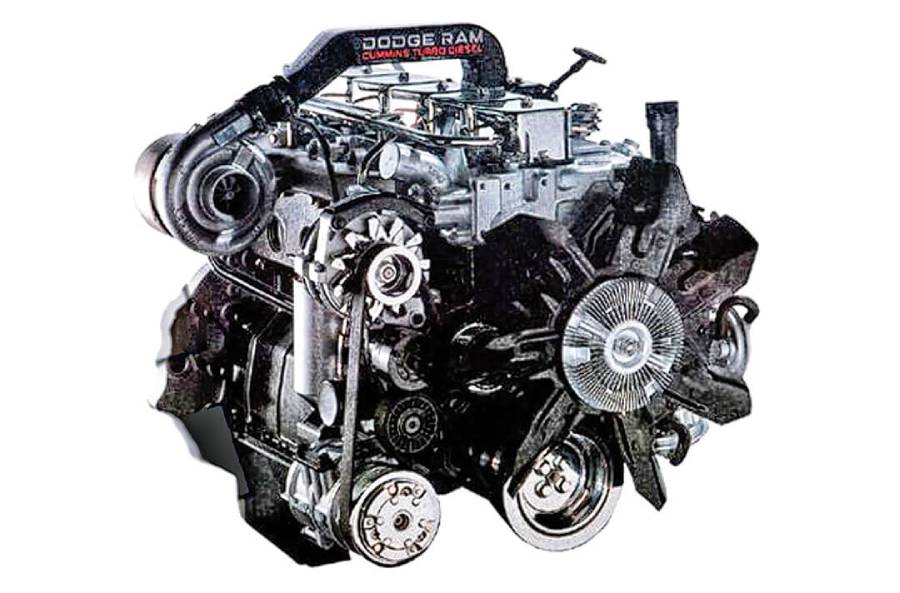
What Are the 5.9 Cummins Engine Specs?
The 5.9 Cummins is a 5.9-liter (359-cubic-inch) turbocharged inline-six diesel engine with a 4.02-inch bore and 4.72-inch stroke. Its core dimensions remained largely consistent across the Dodge Ram production run, while horsepower, torque, compression ratio, valvetrain, and fuel injection specifications changed as Cummins updated the engine.
| Specification | 5.9 Cummins Engine Spec |
|---|---|
| Engine type | Turbocharged diesel |
| Configuration | Inline-six |
| Displacement | 5.9 L / 359 cu in |
| Bore | 4.02 in / 102 mm |
| Stroke | 4.72 in / 120 mm |
| Valvetrain | 12-valve or 24-valve |
| Valves per cylinder | 2 or 4 |
| Aspiration | Turbocharged |
| Fuel | Diesel |
| Fuel injection | Mechanical or electronic, depending on year |
| Compression ratio | Varies by generation |
| Horsepower | Varies by model year and configuration |
| Torque | Varies by model year and configuration |
| Block material | Cast iron |
| Cylinder head material | Cast iron |
| Dodge Ram model years | 1989–2007 |
The 5.9-liter displacement comes from six cylinders arranged in a straight-line configuration, with each cylinder using the same 4.02-inch bore and 4.72-inch stroke. The relatively long stroke compared with the bore is one characteristic of the engine’s design and contributes to its emphasis on low-speed torque rather than high-RPM operation.
Not every 5.9 Cummins has the same cylinder head or valvetrain. Earlier Dodge Ram engines use a 12-valve configuration with two valves per cylinder, while later engines use a 24-valve configuration with four valves per cylinder. This distinction is one of the easiest ways to divide the 5.9 Cummins family into major generations.
Fuel delivery also changed substantially during the engine’s production history. The Dodge Ram 5.9 Cummins progressed from mechanically controlled injection systems to electronically controlled injection and then to high-pressure common-rail injection. Because these systems affect fuel delivery and engine management, horsepower and torque specifications must be matched to the appropriate model year rather than treated as universal figures for every 5.9 Cummins.
How Did 5.9 Cummins Engine Specs Change by Year?
5.9 Cummins specifications changed through four major Dodge Ram engine periods: 1989–1993, 1994–1998, 1998.5–2002, and 2003–2007. The most important changes involved the valvetrain, fuel injection system, engine controls, horsepower, and torque rather than the engine’s basic 5.9-liter displacement.
| Model Years | Configuration | Valves | Fuel Injection | Key Specification Change |
|---|---|---|---|---|
| 1989–1993 | 5.9L 12-valve | 12 | Mechanical | Early Dodge Ram Cummins configuration |
| 1994–1998 | 5.9L 12-valve | 12 | Mechanical | Updated mechanical injection system |
| 1998.5–2002 | 5.9L 24-valve ISB | 24 | Electronic | 24-valve head and electronic fuel control |
| 2003–2007 | 5.9L 24-valve common rail | 24 | High-pressure common rail | Common-rail injection and higher factory output |
The 1989–1993 engines established the original 12-valve configuration used in Dodge Ram pickups. These engines combined a mechanically controlled fuel system with a turbocharged inline-six layout. Their straightforward mechanical design distinguishes them from the electronically controlled versions introduced later.
The 1994–1998 engines retained the 12-valve cylinder head but received a different mechanical fuel injection system. This generation is therefore separate from the 1989–1993 engine even though both have 12 valves and share the same basic displacement, bore, and stroke.
A larger architectural change arrived during the 1998 model year with the 1998.5 24-valve engine. Increasing the valvetrain from 12 to 24 valves provided four valves per cylinder instead of two. The engine also moved to electronically controlled fuel delivery, creating a clear technical boundary between the earlier 12-valve engines and the 1998.5–2002 ISB versions.
The 2003–2007 5.9 Cummins introduced high-pressure common-rail fuel injection, representing another major change in fuel delivery and engine control. These later engines retained the 24-valve configuration but should not be treated as identical to the 1998.5–2002 engines. Their common-rail system and revised factory calibrations produced different horsepower and torque ratings across the final years of 5.9 Cummins Dodge Ram production.
For this reason, a specification such as “5.9 Cummins horsepower” or “5.9 Cummins torque” requires a model year or generation to produce an accurate answer. Displacement alone identifies the engine family, but model year, valve count, fuel system, transmission, and factory calibration determine many of the performance specifications.
What Are the 1989–1993 5.9 Cummins Engine Specs?
The 1989–1993 5.9 Cummins is a 12-valve, turbocharged inline-six diesel engine with 5.9 liters of displacement and mechanical fuel injection. This first-generation Dodge Ram Cummins uses two valves per cylinder and established the basic 4.02-inch bore and 4.72-inch stroke dimensions retained throughout the 5.9L engine family.
The engine is commonly identified as the early 6BT 5.9 Cummins. Unlike later electronically controlled versions, the 1989–1993 engine relies on mechanical fuel delivery. This configuration limits the number of electronic engine-management components and makes the first-generation engine mechanically distinct from both the later P-pump 12-valve and 24-valve engines.
| Specification | 1989–1993 5.9 Cummins |
|---|---|
| Configuration | Inline-six |
| Displacement | 5.9 L / 359 cu in |
| Bore | 4.02 in / 102 mm |
| Stroke | 4.72 in / 120 mm |
| Valvetrain | OHV, 12 valves |
| Valves per cylinder | 2 |
| Aspiration | Turbocharged |
| Fuel | Diesel |
| Fuel injection | Mechanical direct injection |
| Injection pump | Bosch VE rotary pump |
| Block material | Cast iron |
| Cylinder head material | Cast iron |
The 12-valve cylinder head uses one intake valve and one exhaust valve per cylinder, producing 12 valves across the six-cylinder engine. A camshaft operating through a pushrod-based valvetrain controls these valves. This architecture remained part of the Dodge Ram 5.9 Cummins through the first half of the 1998 model year before the 24-valve design replaced it.
How Much Horsepower and Torque Does a 1989–1993 5.9 Cummins Produce?
The 1989–1993 5.9 Cummins was factory-rated at approximately 160 horsepower and 400 lb-ft of torque in its early Dodge Ram application. These figures are substantially lower than those of later 5.9 Cummins versions because factory output increased as the fuel system, engine controls, turbocharging, and vehicle configurations evolved.
The significance of the early 5.9 Cummins is therefore not peak horsepower. Its 400 lb-ft torque rating provides substantially more low-speed pulling force relative to its horsepower output, which matches the requirements of a heavy-duty pickup diesel engine. The engine develops useful torque without relying on the higher engine speeds associated with many gasoline engines.
Factory ratings should also be separated from modified output. Mechanical 12-valve engines are frequently discussed in the context of performance modifications, but an upgraded engine no longer represents the stock 1989–1993 specification. A year-by-year specification comparison should therefore use factory ratings rather than horsepower figures from modified trucks.
What Fuel System Does the 1989–1993 5.9 Cummins Use?
The 1989–1993 5.9 Cummins uses a mechanically controlled Bosch VE rotary injection pump. The pump meters and distributes diesel fuel to the six cylinders without the electronic injection control found on later 24-valve engines.
Mechanical fuel delivery is one of the defining attributes of the first-generation Dodge Ram Cummins. The Bosch VE pump performs fuel-metering functions mechanically, while individual injector lines carry pressurized fuel from the pump to each cylinder. Combustion begins when fuel is injected directly into the cylinder at the required point in the compression cycle.
The VE pump also provides a practical identification point. A 12-valve 5.9 Cummins equipped with a Bosch VE rotary injection pump belongs to the earlier configuration rather than the later 1994–1998 P7100-equipped generation. This distinction matters because two engines can share the same 5.9-liter displacement and 12-valve cylinder-head layout while using different injection systems.
What Are the 1994–1998 12-Valve 5.9 Cummins Engine Specs?
The 1994–1998 12-valve 5.9 Cummins retains the 5.9-liter inline-six architecture but replaces the earlier Bosch VE rotary injection pump with a Bosch P7100 inline injection pump. The engine continues to use a cast-iron block, cast-iron cylinder head, turbocharger, and two valves per cylinder.
| Specification | 1994–1998 12-Valve 5.9 Cummins |
|---|---|
| Configuration | Inline-six |
| Displacement | 5.9 L / 359 cu in |
| Bore | 4.02 in / 102 mm |
| Stroke | 4.72 in / 120 mm |
| Valvetrain | OHV, 12 valves |
| Valves per cylinder | 2 |
| Aspiration | Turbocharged |
| Fuel | Diesel |
| Fuel injection | Mechanical direct injection |
| Injection pump | Bosch P7100 inline pump |
| Block material | Cast iron |
| Cylinder head material | Cast iron |
The Bosch P7100 injection pump is the principal specification that separates this generation from the 1989–1993 12-valve engine. Both generations retain mechanical injection, but the pump design and fuel-delivery configuration are different. For this reason, the terms “12-valve Cummins” and “P-pump Cummins” are related but not interchangeable across the entire 1989–1998 period.
The fundamental internal dimensions remained consistent at a 4.02-inch bore and 4.72-inch stroke. Consequently, the transition from the VE-pump engine to the P7100 generation did not create a new displacement. The important changes occurred in fuel delivery and factory calibration rather than basic cylinder dimensions.
How Much Horsepower and Torque Does a 1994–1998 5.9 Cummins Produce?
The 1994–1998 12-valve 5.9 Cummins was offered with different factory horsepower and torque ratings depending on model year and transmission configuration. Output increased beyond the approximately 160-horsepower, 400-lb-ft level associated with the earlier first-generation engine, with later P7100 configurations receiving higher factory ratings.
This variation makes model year and transmission important qualifiers when comparing 12-valve specifications. A manual-transmission truck and an automatic-transmission truck from the same general generation can carry different factory ratings. Listing a single horsepower number for every 1994–1998 12-valve engine would therefore remove information necessary to identify the correct specification.
The output differences also demonstrate why the injection pump should be treated as a central attribute when comparing 5.9 Cummins generations. The displacement remained 5.9 liters, but changes in fuel delivery and calibration allowed Cummins and Dodge to alter engine output without changing the engine’s basic bore-and-stroke architecture.
What Fuel System Does the 1994–1998 12-Valve Cummins Use?
The 1994–1998 12-valve Cummins uses a Bosch P7100 inline mechanical injection pump, commonly called the P-pump. It replaced the Bosch VE rotary pump used on the 1989–1993 Dodge Ram Cummins while retaining mechanical control of diesel injection.
The P7100 uses individual pumping elements associated with the engine’s cylinders rather than the rotary distribution arrangement of the VE pump. The injection system sends high-pressure fuel through dedicated lines to the injectors, where fuel enters each cylinder for combustion. This process remains mechanical rather than being commanded by the electronic fuel-management architecture of later 24-valve engines.
The P7100 therefore provides one of the clearest ways to distinguish the two major 12-valve periods. A VE-pump 12-valve belongs to the 1989–1993 group, while a factory P7100-equipped Dodge Ram 12-valve belongs to the 1994–1998 period. The next major transition occurred during the 1998 model year, when the 5.9 Cummins moved from 12 valves to 24 valves and from mechanical to electronically controlled fuel injection.
What Are the 1998.5–2002 24-Valve 5.9 Cummins Engine Specs?
The 1998.5–2002 5.9 Cummins uses a 24-valve cylinder head, electronically controlled fuel injection, and the same basic 5.9-liter inline-six architecture as the earlier 12-valve engine. The transition to 24 valves increased the number of valves per cylinder from two to four and marked one of the largest design changes in the Dodge Ram 5.9 Cummins production history.
| Specification | 1998.5–2002 5.9 Cummins |
|---|---|
| Configuration | Inline-six |
| Displacement | 5.9 L / 359 cu in |
| Bore | 4.02 in / 102 mm |
| Stroke | 4.72 in / 120 mm |
| Valvetrain | OHV, 24 valves |
| Valves per cylinder | 4 |
| Aspiration | Turbocharged |
| Fuel | Diesel |
| Fuel injection | Electronically controlled direct injection |
| Injection pump | Bosch VP44 |
| Block material | Cast iron |
| Cylinder head material | Cast iron |
The 24-valve cylinder head uses two intake valves and two exhaust valves per cylinder, producing 24 valves across six cylinders. The additional valves distinguish the ISB configuration from the 12-valve engines used previously while retaining the inline-six arrangement and 5.9-liter displacement.
Electronic fuel control is the second major distinction. Earlier 12-valve engines use the mechanically controlled Bosch VE or P7100 pump, whereas the 1998.5–2002 engine uses a Bosch VP44 electronically controlled rotary injection pump. Electronic control allows fuel delivery to respond to engine operating information rather than relying exclusively on mechanical regulation.
How Much Horsepower and Torque Does a 1998.5–2002 5.9 Cummins Produce?
The 1998.5–2002 5.9 Cummins was produced with multiple horsepower and torque ratings, with output depending on model year, transmission, and engine calibration. Factory output increased during this period, so one horsepower or torque figure should not be applied to every VP44-equipped 24-valve engine.
The highest-output versions appeared toward the end of this generation. These engines demonstrate how Cummins could increase factory performance while retaining the same 5.9-liter displacement, 4.02-inch bore, and 4.72-inch stroke. Changes to fuel delivery, calibration, turbocharging, and supporting components allowed different outputs to exist within the same basic engine architecture.
Transmission configuration is also relevant when identifying factory specifications. Certain manual-transmission applications received different ratings from automatic-transmission versions. For an exact factory horsepower or torque figure, the model year and drivetrain configuration should therefore be identified together.
What Changed When the 5.9 Cummins Switched From 12 Valves to 24 Valves?
The transition from the 12-valve to the 24-valve 5.9 Cummins changed three major areas: cylinder-head airflow, fuel-system control, and engine management. The displacement and fundamental bore-and-stroke dimensions remained essentially unchanged, so the transition represented an evolution of the 5.9-liter platform rather than an increase in engine displacement.
The cylinder head changed from two valves per cylinder to four. Each cylinder gained a second intake valve and a second exhaust valve, increasing the total from 12 to 24 valves. This arrangement changed how intake air and exhaust gases move through the cylinder head and provided a foundation for later increases in factory output.
Fuel control changed from the fully mechanical Bosch P7100 system to the electronically controlled Bosch VP44 system. Electronic management allowed injection operation to interact with sensor inputs and engine controls, making the fuel system substantially different from the mechanical arrangement found on the previous generation.
The change also created a useful identification boundary for owners. A factory 1994–early-1998 P7100-equipped engine is a 12-valve configuration, while a factory 1998.5–2002 VP44-equipped engine is a 24-valve configuration. Identifying the valve count and injection pump can therefore narrow down the applicable specification set before checking the exact model year.
What Are the 2003–2007 5.9 Cummins Common-Rail Engine Specs?
The 2003–2007 5.9 Cummins is a 24-valve, turbocharged inline-six diesel that uses high-pressure common-rail fuel injection. It represents the final major version of the 5.9-liter Cummins used in Dodge Ram heavy-duty pickups before the platform transitioned to the larger 6.7-liter Cummins.
| Specification | 2003–2007 5.9 Cummins |
|---|---|
| Configuration | Inline-six |
| Displacement | 5.9 L / 359 cu in |
| Bore | 4.02 in / 102 mm |
| Stroke | 4.72 in / 120 mm |
| Valvetrain | OHV, 24 valves |
| Valves per cylinder | 4 |
| Aspiration | Turbocharged |
| Fuel | Diesel |
| Fuel injection | High-pressure common rail |
| Injection control | Electronic |
| Block material | Cast iron |
| Cylinder head material | Cast iron |
The common-rail system is the defining specification of this generation. Instead of using a VP44 distributor-style injection pump to meter and distribute each injection event, the common-rail architecture maintains pressurized fuel in a shared rail. Electronically controlled injectors then meter fuel into individual cylinders according to commands from the engine-management system.
This architecture separates the 2003–2007 engine from the earlier 1998.5–2002 24-valve version even though both have 24 valves and 5.9 liters of displacement. Consequently, identifying an engine only as a “24-valve 5.9 Cummins” is not enough to determine its fuel-system specifications. The model year or injection system must also be identified.
How Much Horsepower and Torque Does a 2003–2007 5.9 Cummins Produce?
The 2003–2007 common-rail 5.9 Cummins received progressively higher factory horsepower and torque ratings, with the exact output determined by model year and configuration. Later versions represent the highest factory-output stage of the 5.9 Cummins used in Dodge Ram pickups.
The increase did not result from greater displacement. The engine continued to use the 5.9-liter capacity and established bore-and-stroke dimensions. Instead, common-rail fuel delivery, electronic engine management, turbocharging, and calibration allowed Cummins to increase output while retaining the same fundamental displacement.
This distinction is important when comparing early and late engines. A 1989 12-valve and a later common-rail engine are both called “5.9 Cummins,” but their factory performance and fuel-management systems are substantially different. Displacement identifies the engine family; model year and generation identify the applicable horsepower and torque specifications.
What Fuel System Does the 2003–2007 5.9 Cummins Use?
The 2003–2007 5.9 Cummins uses electronically controlled high-pressure common-rail direct injection. Pressurized diesel fuel is supplied to a common rail and then delivered through electronically controlled injectors to the six cylinders.
A common rail separates the generation and pressurization of the fuel supply from the timing of individual injection events. This gives the engine-management system greater control over when and how fuel is delivered compared with the fully mechanical systems of the earlier 12-valve engines.
The progression of 5.9 Cummins fuel systems can therefore be divided into four clear stages: Bosch VE for 1989–1993, Bosch P7100 for 1994–1998 12-valve engines, Bosch VP44 for 1998.5–2002 24-valve engines, and high-pressure common rail for 2003–2007 engines. These four fuel-system periods provide one of the most useful frameworks for distinguishing 5.9 Cummins specifications by year.
The common-rail version completed the development path of the 5.9 Cummins in Dodge Ram applications. It retained the engine family’s established displacement and inline-six configuration while combining the 24-valve cylinder head with more precise electronic fuel control. For specification comparisons, this makes the 2003–2007 engine a separate generation rather than simply another version of the earlier VP44 24-valve engine.
What Are the Bore, Stroke, and Displacement of a 5.9 Cummins?
The 5.9 Cummins has a 4.02-inch (102 mm) bore, a 4.72-inch (120 mm) stroke, and a displacement of approximately 5.9 liters or 359 cubic inches. These dimensions define the basic cylinder geometry of the 5.9L inline-six diesel and remained fundamental specifications throughout its major Dodge Ram generations.
| Specification | 5.9 Cummins |
|---|---|
| Displacement | 5.9 L |
| Displacement | 359 cu in |
| Bore | 4.02 in / 102 mm |
| Stroke | 4.72 in / 120 mm |
| Cylinders | 6 |
| Configuration | Inline-six |
| Bore-to-stroke relationship | Undersquare / long-stroke |
The 4.72-inch stroke is longer than the 4.02-inch cylinder bore, making the 5.9 Cummins an undersquare, or long-stroke, engine. This geometry is relevant to the engine’s operating characteristics because piston travel is relatively long compared with cylinder diameter. The design fits the low-speed, high-torque operating requirements of a diesel engine intended for heavy-duty pickup applications.
Displacement represents the combined swept volume of all six cylinders rather than the physical external size of the engine. Bore determines cylinder diameter, while stroke measures the distance the piston travels between top dead center and bottom dead center. Combining these dimensions across six cylinders produces approximately 5.9 liters of total displacement.
The bore, stroke, and displacement are especially useful when comparing generations because these specifications remained much more consistent than the fuel system and factory output. A 12-valve engine and a later 24-valve engine can therefore share the same fundamental displacement while having substantially different injection systems, cylinder heads, horsepower ratings, and torque ratings.
What Compression Ratio Does a 5.9 Cummins Have?
The 5.9 Cummins does not have one compression ratio that applies to every model year because the specification changed across engine generations and configurations. The correct compression ratio should therefore be matched to the specific model year and engine version rather than inferred from the 5.9-liter displacement alone.
Compression ratio describes the relationship between cylinder volume when the piston is at bottom dead center and cylinder volume when the piston reaches top dead center. Diesel engines use high compression to raise the temperature of the air inside the cylinder sufficiently for injected diesel fuel to ignite without a spark plug.
Changes in compression ratio can accompany changes in piston design, combustion chamber geometry, emissions requirements, fuel delivery, and engine calibration. This means two 5.9 Cummins engines with identical bore, stroke, and displacement can still have different compression specifications.
For an owner identifying an unknown engine, compression ratio is less practical as a visual identifier than valve count or fuel system. Model year, 12-valve versus 24-valve configuration, and injection system should be established first. The corresponding factory compression ratio can then be matched to that engine specification.
How Much Horsepower Does a Stock 5.9 Cummins Have?
A stock 5.9 Cummins does not have one universal horsepower rating; factory output increased substantially between the first 1989 Dodge Ram engines and the final common-rail versions. Model year, fuel system, transmission, and factory calibration determine which horsepower specification applies.
| 5.9 Cummins Period | Configuration | Horsepower Characteristic |
|---|---|---|
| 1989–1993 | 12-valve, Bosch VE | Early factory-output range |
| 1994–1998 | 12-valve, Bosch P7100 | Higher output with multiple factory ratings |
| 1998.5–2002 | 24-valve, Bosch VP44 | Multiple electronically controlled ratings |
| 2003–2007 | 24-valve, common rail | Highest factory-output period of the 5.9L Dodge Ram application |
The first-generation Dodge Ram Cummins began at approximately 160 horsepower, providing a useful baseline for the development of the engine family. Later versions increased factory horsepower without increasing displacement from 5.9 liters. The gains came primarily through changes in fuel delivery, turbocharging, engine management, airflow, and calibration.
Horsepower must also be qualified as stock or modified. The 5.9 Cummins, particularly its mechanically injected versions, is frequently discussed with aftermarket performance figures. Those numbers should not be mixed with OEM specifications because modifications to fueling, turbocharging, intake, exhaust, or engine calibration can produce outputs substantially different from the factory rating.
For an accurate stock horsepower figure, identify the engine’s model year first and transmission or factory configuration second. This prevents a specification from a high-output manual-transmission version, for example, from being incorrectly applied to another engine from the same general generation.
How Much Torque Does a Stock 5.9 Cummins Have?
Stock 5.9 Cummins torque varies by model year and configuration, with the early Dodge Ram version producing approximately 400 lb-ft and later generations receiving progressively higher factory ratings. As with horsepower, a single torque value cannot accurately describe every 5.9 Cummins produced for Dodge Ram trucks.
Torque is particularly relevant to the 5.9 Cummins because the engine was designed for applications that require substantial pulling force at relatively low engine speeds. Its inline-six diesel configuration, long 4.72-inch stroke, turbocharging, and diesel combustion characteristics support the low-RPM torque delivery required for towing and carrying heavy loads.
The relationship between horsepower and torque also changed as the engine evolved. Cummins retained the 359-cubic-inch displacement while changing injection technology from the Bosch VE to the P7100, VP44, and eventually common-rail injection. Each stage allowed different fuel-delivery and calibration strategies, contributing to changes in factory torque output.
Transmission configuration can affect the published factory torque rating within the same generation. For this reason, an exact torque specification should be associated with the relevant year, engine calibration, and transmission, rather than with the phrase “5.9 Cummins” alone.
The progression from approximately 400 lb-ft in the early Dodge Ram application to substantially greater output in later versions illustrates one of the defining characteristics of the 5.9 Cummins production history: the basic 5.9-liter displacement remained stable while the engine’s performance specifications evolved around it. This distinction explains why model-year identification is necessary whenever horsepower or torque is used to compare two 5.9 Cummins engines.
What Fuel Injection Systems Were Used on the 5.9 Cummins?
The Dodge Ram 5.9 Cummins used four major fuel-injection configurations: the Bosch VE rotary pump, Bosch P7100 inline pump, Bosch VP44 electronically controlled pump, and high-pressure common-rail injection. The progression of these systems provides one of the clearest ways to separate the major 5.9 Cummins generations.
| Model Years | Engine Version | Fuel Injection System | Control Type |
|---|---|---|---|
| 1989–1993 | 12-valve 5.9 Cummins | Bosch VE rotary pump | Mechanical |
| 1994–1998 | 12-valve 5.9 Cummins | Bosch P7100 inline pump | Mechanical |
| 1998.5–2002 | 24-valve 5.9 Cummins | Bosch VP44 rotary pump | Electronic |
| 2003–2007 | 24-valve 5.9 Cummins | High-pressure common rail | Electronic |
The first two systems are associated with the 12-valve generation and rely primarily on mechanical fuel control. The VP44 represents the transition to electronic control, while the common-rail system separates fuel pressurization from individual electronically controlled injection events. The sequence reflects the broader development of the 5.9 Cummins from a mechanically controlled diesel toward increasingly precise electronic engine management.
Fuel-system identification is also useful because displacement alone cannot distinguish these engines. All four configurations belong to the 5.9-liter Cummins family, but their injection components and control methods are different. Identifying the pump or common-rail system can therefore help determine which generation-specific specifications apply to an engine.
Which 5.9 Cummins Engines Use the Bosch VE Injection Pump?
The 1989–1993 Dodge Ram 5.9 Cummins uses the Bosch VE rotary injection pump. This system belongs to the first 12-valve Cummins generation used in Dodge pickups and operates through mechanical rather than electronic fuel control.
The VE is a distributor-style rotary injection pump. A central pumping and distribution mechanism supplies high-pressure diesel fuel to the appropriate injector according to engine operation. Separate high-pressure lines then connect the injection pump with the injectors.
The combination of a 12-valve cylinder head and Bosch VE pump is therefore a strong identifier for an early Dodge Ram 5.9 Cummins. A 12-valve engine equipped with the later P7100 belongs to the subsequent 1994–1998 generation instead.
Which 5.9 Cummins Engines Use the Bosch P7100 Injection Pump?
The 1994–1998 12-valve Dodge Ram 5.9 Cummins uses the Bosch P7100 inline mechanical injection pump. The P7100 replaced the Bosch VE used during the 1989–1993 period without changing the engine from mechanical to electronic injection control.
The P7100 uses an inline pumping arrangement rather than the VE pump’s rotary distributor design. Its fuel-delivery architecture makes the P7100 a separate system even though both pumps serve mechanically injected 12-valve 5.9 Cummins engines.
This distinction divides the 12-valve Dodge Ram era into two useful specification groups: 1989–1993 VE-pump engines and 1994–1998 P7100-pump engines. Therefore, identifying an engine simply as a 12-valve Cummins does not provide enough information to determine its injection-pump specification.
Which 5.9 Cummins Engines Use the Bosch VP44 Injection Pump?
The 1998.5–2002 24-valve 5.9 Cummins uses the Bosch VP44 electronically controlled rotary injection pump. Its introduction coincided with the transition from the 12-valve engine to the 24-valve ISB configuration in Dodge Ram applications.
The VP44 differs from the earlier VE and P7100 systems because electronic controls participate in fuel-delivery management. This allows injection operation to respond to engine-management inputs rather than relying exclusively on mechanical control.
A combination of 24 valves and a VP44 pump identifies the 1998.5–2002 generation within the Dodge Ram 5.9 Cummins family. This is important because the next 24-valve generation uses common-rail injection instead, despite retaining the same displacement and four-valve-per-cylinder arrangement.
Which 5.9 Cummins Engines Use Common-Rail Injection?
The 2003–2007 5.9 Cummins uses electronically controlled high-pressure common-rail fuel injection. This system replaced the VP44 configuration and became the final major fuel-injection architecture used with the 5.9 Cummins in Dodge Ram pickups.
Common-rail injection maintains a supply of pressurized fuel in a shared rail connected to the engine’s injectors. Electronic control determines individual injection events, allowing fuel delivery to be managed separately from the mechanical distribution method used by earlier injection pumps.
The common-rail system provides a clear distinction between the two 24-valve periods. A 1998.5–2002 24-valve engine uses the VP44, while a 2003–2007 24-valve engine uses common-rail injection. Valve count alone is therefore insufficient for identifying the exact generation.
What Is the Difference Between a 12-Valve and 24-Valve 5.9 Cummins?
The primary difference between a 12-valve and 24-valve 5.9 Cummins is the cylinder-head valvetrain: the 12-valve engine uses two valves per cylinder, while the 24-valve engine uses four valves per cylinder. The change also coincides with major differences in fuel injection and electronic engine control.
| Specification | 12-Valve 5.9 Cummins | 24-Valve 5.9 Cummins |
|---|---|---|
| Cylinders | 6 | 6 |
| Configuration | Inline-six | Inline-six |
| Displacement | 5.9 L / 359 cu in | 5.9 L / 359 cu in |
| Bore | 4.02 in / 102 mm | 4.02 in / 102 mm |
| Stroke | 4.72 in / 120 mm | 4.72 in / 120 mm |
| Total valves | 12 | 24 |
| Valves per cylinder | 2 | 4 |
| Dodge Ram period | 1989–1998 | 1998.5–2007 |
| Major fuel systems | Bosch VE, Bosch P7100 | Bosch VP44, common rail |
| Fuel control | Mechanical | Electronic |
| Aspiration | Turbocharged | Turbocharged |
The 12-valve configuration uses one intake valve and one exhaust valve for each of its six cylinders. This produces 12 total valves. Dodge Ram applications used this arrangement from 1989 through the first portion of the 1998 model year.
The 24-valve configuration uses two intake valves and two exhaust valves per cylinder, increasing the total to 24. The additional intake and exhaust valves change airflow through the cylinder head while the engine retains its six-cylinder inline architecture and 5.9-liter displacement.
Fuel control provides another major distinction. The Dodge Ram 12-valve generations use mechanically controlled Bosch VE and P7100 injection pumps. The 24-valve period introduced electronic fuel management, first through the VP44 system and later through high-pressure common-rail injection.
However, “12-valve versus 24-valve” does not identify every specification difference between two 5.9 Cummins engines. There are two major fuel-system groups within each valve-count category. A 1989 VE-pump engine differs from a 1996 P7100 engine even though both have 12 valves, while a 2000 VP44 engine differs from a 2005 common-rail engine even though both have 24 valves.
The most accurate identification sequence is therefore model year → valve count → fuel system → factory configuration. This sequence narrows the engine to the correct generation before horsepower, torque, compression ratio, and other specifications are applied.
How Much Does a 5.9 Cummins Engine Weigh?
A 5.9 Cummins engine weighs roughly 1,000 pounds, but the exact published weight depends on the engine generation and which installed components are included in the measurement. A bare engine, long block, dry engine, and fully dressed engine do not represent the same measurement, so weight figures should always be interpreted according to their configuration.
The cast-iron construction contributes significantly to the engine’s mass. The 5.9 Cummins uses a cast-iron block and cast-iron cylinder head rather than lightweight aluminum construction. Its turbocharger, fuel-injection equipment, manifolds, and other installed accessories add additional weight when they are included in an assembled-engine specification.
Engine weight is particularly important when planning an engine swap. A vehicle designed for a lighter gasoline engine may require consideration of front suspension capacity, axle loading, engine mounts, and chassis configuration before accepting the mass of a 5.9 Cummins.
Published weights can differ because sources do not always measure the same configuration. The most useful 5.9 Cummins weight specification should state whether the figure represents dry weight and which accessories are installed. Comparing two weight figures without matching these conditions can create an inaccurate difference between engine generations.
How Much Oil Does a 5.9 Cummins Engine Hold?
A Dodge Ram 5.9 Cummins generally has an engine-oil capacity of about 12 U.S. quarts, or approximately 11.4 liters, with an oil-filter change, although the correct service specification should be confirmed for the exact model year. Oil capacity should not be confused with the amount that drains from the engine during every oil change because residual oil can remain within the lubrication system.
The lubrication system circulates engine oil through critical components such as crankshaft bearings, connecting-rod bearings, valvetrain components, and the turbocharger. Oil performs several functions at the same time: it reduces friction, carries heat away from lubricated surfaces, suspends contaminants, and provides a protective film between moving components.
For routine maintenance, the correct filling procedure is more important than adding a fixed quantity without verification. Add the specified amount for the engine configuration, run the engine as required to circulate oil through the new filter, allow the oil level to stabilize, and verify the final level with the dipstick according to the applicable service procedure.
Owners should also match engine oil to the specification required for their model year and operating conditions. Oil capacity describes how much lubricant the engine holds; oil specification describes which lubricant should be used. These are separate maintenance requirements and should not be treated as interchangeable information.
How Can You Identify Which 5.9 Cummins Engine You Have?
You can identify a Dodge Ram 5.9 Cummins by checking four primary attributes: model year, valve count, fuel-injection system, and engine identification information. Using these attributes together is more reliable than identifying the engine from displacement alone because all major versions share the same nominal 5.9-liter capacity.
The model year provides the fastest starting point. Dodge Ram 5.9 Cummins engines can be organized into four principal specification periods: 1989–1993, 1994–1998, 1998.5–2002, and 2003–2007. Once the model-year period is established, valve count and fuel-system characteristics can narrow the identification further.
Valve count separates the family into two broad groups. 1989 through early 1998 Dodge Ram Cummins engines use 12 valves, while 1998.5–2007 versions use 24 valves. A 12-valve cylinder head has two valves per cylinder, while a 24-valve head has four valves per cylinder.
The injection system provides a more specific generation identifier. A Bosch VE pump points to the 1989–1993 configuration, while a Bosch P7100 identifies the later mechanically injected 12-valve period. A Bosch VP44 identifies the 1998.5–2002 24-valve generation, while high-pressure common-rail injection identifies the final 2003–2007 5.9 Cummins period.
| Identifying Feature | 5.9 Cummins Generation |
|---|---|
| 12 valves + Bosch VE | 1989–1993 |
| 12 valves + Bosch P7100 | 1994–1998 |
| 24 valves + Bosch VP44 | 1998.5–2002 |
| 24 valves + common rail | 2003–2007 |
Engine identification information should be used when an exact specification is required. This becomes particularly important when an engine has been swapped into another vehicle because the truck’s model year may no longer correspond to the installed engine.
The identification process should therefore follow a consistent order: check the engine identification information, establish the model-year range, identify the valve configuration, and confirm the fuel system. Once the exact generation is known, specifications such as factory horsepower, torque, compression ratio, and service capacities can be matched more accurately.
Which Dodge Ram Trucks Came With the 5.9 Cummins?
The 5.9 Cummins was offered in Dodge Ram heavy-duty pickup applications from the 1989 model year through 2007, with different engine generations appearing as the Ram platform evolved. The engine is primarily associated with Ram 250 and Ram 350 heavy-duty trucks, while exact availability depends on model year and configuration.
| Model Years | Dodge Ram Application Context | 5.9 Cummins Version |
|---|---|---|
| 1989–1993 | First-generation Dodge Ram diesel applications | 12-valve, Bosch VE |
| 1994–1998 | Second-generation Ram heavy-duty applications | 12-valve, Bosch P7100 |
| 1998.5–2002 | Second-generation Ram heavy-duty applications | 24-valve, Bosch VP44 |
| 2003–2007 | Later Ram heavy-duty applications | 24-valve, common rail |
The 1989 introduction of the Cummins-powered Dodge pickup established the first 12-valve generation, combining the 5.9-liter turbocharged inline-six with the Bosch VE mechanical injection system. These trucks provide the starting point for the Dodge Ram 5.9 Cummins timeline covered in this guide.
The second-generation Ram brought the P7100-equipped 12-valve configuration beginning with the 1994 model year. During the 1998 model year, the engine transitioned to the 24-valve configuration, which means 1998 requires more precise identification than most other years. Referring only to a “1998 5.9 Cummins” can be insufficient because early and later configurations belong to different specification groups.
From 1998.5 through 2002, Ram applications used the electronically controlled VP44 24-valve engine. The 2003 model year then introduced the common-rail 5.9 Cummins generation, which remained the principal final stage of the 5.9-liter engine’s Dodge Ram application before the larger 6.7-liter Cummins succeeded it.
Truck model year is therefore useful for identifying engine specifications, but it should not be the only evidence when purchasing a used engine or inspecting a modified vehicle. Engine swaps, replacement engines, and component conversions can break the normal relationship between truck year and engine generation. Confirming the actual engine and fuel system prevents specifications from the original vehicle configuration from being incorrectly applied to a replacement engine.
Is the 5.9 Cummins a Reliable Engine?
The 5.9 Cummins is generally regarded as a durable diesel engine, but reliability depends on the specific generation, maintenance history, operating conditions, and modifications. The 1989–2007 Dodge Ram production span includes four major fuel-system configurations, so reliability characteristics should be evaluated by model year rather than applied uniformly to every 5.9 Cummins.
The engine’s basic architecture supports heavy-duty operation. Its inline-six configuration uses a cast-iron block and cast-iron cylinder head, while the 5.9-liter displacement and long 4.72-inch stroke are designed around the low-speed torque requirements of diesel truck applications. However, these fundamental specifications do not mean every component has the same service life. Fuel-system components, turbocharger components, cooling-system parts, sensors, electrical components, and drivetrain-related equipment have different failure patterns depending on generation and use.
The 1989–1993 and 1994–1998 12-valve engines use mechanically controlled injection systems, with the Bosch VE and Bosch P7100 pumps separating the two periods. The 1998.5–2002 24-valve generation introduced the electronically controlled Bosch VP44, while the 2003–2007 version moved to high-pressure common-rail injection. These differences matter because a fuel-system issue associated with one generation should not automatically be described as a weakness of every 5.9 Cummins.
Maintenance history is equally important when evaluating a used engine. Regular engine-oil and filter changes, correct fuel-system maintenance, proper cooling-system service, and timely repair of leaks or abnormal operating conditions help protect major engine components. A high-mileage engine with documented maintenance can therefore represent a different ownership risk from a lower-mileage engine with an unknown service history.
Aftermarket modifications add another variable. Changes to fuel delivery, turbocharging, engine calibration, intake, exhaust, or supporting drivetrain components can move the engine outside its original factory operating conditions. For that reason, factory specifications and stock-engine reliability should be separated from claims about heavily modified 5.9 Cummins engines.
For buyers, model year, fuel system, maintenance records, current mechanical condition, and modification history are five useful factors to check before judging the reliability of a specific 5.9 Cummins. These factors provide more useful information than mileage or the 5.9 Cummins name alone because they establish which engine generation is present and how that particular engine has been operated.
A detailed reliability assessment should be handled separately from an engine-specification guide. Topics such as generation-specific failure points, expected service life, inspection procedures, repair costs, and common problems create a separate search intent and are better covered in a dedicated 5.9 Cummins reliability and common problems guide.