Why does your Chevy Express AC blow warm air on a hot day? This issue frustrates many van owners, especially those who rely on their vehicles for daily work or long trips. A weak AC system reduces comfort and signals potential problems inside the cooling system.
Many drivers go straight to a mechanic and face high repair costs. In most cases, an AC recharge can cost hundreds of dollars. At the same time, DIY solutions often feel confusing or risky for beginners.
The truth is simple. You can recharge your Chevy Express AC at home if you follow the right steps. You do not need advanced tools or expert skills. You only need a clear guide and basic safety awareness.
In this Chevy Express AC recharge guide, you will learn how to restore cold air step by step. This method helps you save money and avoid common mistakes. More importantly, it gives you full control over your vehicle’s cooling performance.
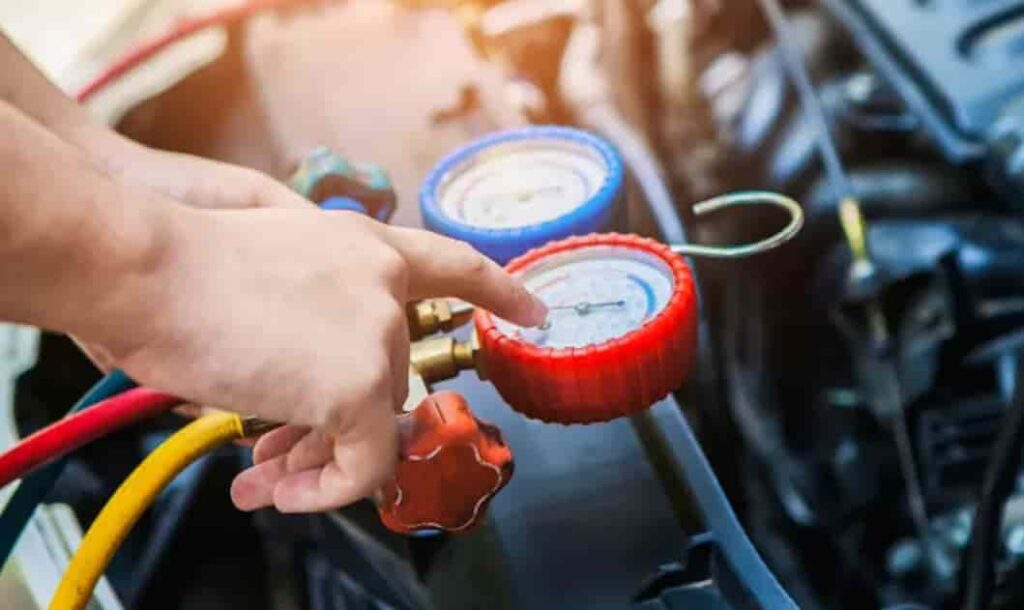
Chevy Express AC System Overview
To recharge your AC correctly, you first need to understand how the system works. This knowledge helps you avoid mistakes and diagnose problems faster.
In simple terms, your Chevy Express uses an air conditioning system that circulates refrigerant to remove heat from the cabin. Instead of creating cold air directly, the system transfers heat from inside the vehicle to the outside environment.
At the center of this process is the compressor. It pressurizes the refrigerant and keeps it moving through the system. As a result, the refrigerant can travel through each component efficiently.
After that, the refrigerant flows into the condenser. Here, it releases heat and changes into a liquid state. Then, it passes through an expansion device, which lowers both pressure and temperature.
Once the refrigerant reaches the evaporator, it absorbs heat from the cabin air. Because of this process, the air blowing into your vehicle feels cold and refreshing.
Most Chevy Express models use R134a refrigerant, especially older ones. However, newer versions may use R1234yf, which is more environmentally friendly. Therefore, choosing the correct refrigerant is essential to avoid system damage.
When refrigerant levels drop, cooling performance decreases. In many cases, this issue comes from small leaks rather than normal usage. For that reason, recharging the AC should always go together with a quick system check.
By understanding this cycle, you gain more control over the process. Instead of guessing, you can recharge your AC with confidence and accuracy.
Signs Your Chevy Express Needs an AC Recharge
Before you recharge your AC, you need to confirm that low refrigerant is the real issue. In many cases, drivers misdiagnose the problem and waste time or money on the wrong fix.
The most common sign is weak cooling performance. Your AC may still blow air, but it does not feel cold enough. In some situations, the air may even feel warm during hot weather.
Another clear symptom is slow cooling. Even after running the AC for several minutes, the cabin temperature drops very slowly. As a result, your driving experience becomes uncomfortable, especially on long trips.
You may also notice unusual noises from the compressor. For example, a clicking or rattling sound can indicate that the system struggles due to low refrigerant levels.
In addition, visible signs can appear. Moisture or fog on the inside of windows may suggest that the AC system is not working efficiently. Although this symptom seems minor, it often points to deeper cooling issues.
However, not every AC problem comes from low refrigerant. A faulty compressor, clogged condenser, or electrical issue can produce similar symptoms. Therefore, it is important to observe multiple signs before deciding to recharge the system.
By identifying these warning signs early, you can take action at the right time. This helps you avoid bigger repairs and keeps your Chevy Express running with consistent cooling performance.
Tools and Materials Needed for AC Recharge
Before you begin the Chevy Express AC recharge process, you need to prepare the right tools and materials. Proper preparation not only makes the job easier but also reduces the risk of mistakes.
First, you need an AC recharge kit. Most kits include a can of refrigerant and a hose with a built in pressure gauge. For many Chevy Express models, R134a is the correct choice. However, you should always check your vehicle specifications before buying.
Next, a pressure gauge is essential if your kit does not include one. This tool helps you monitor the system while adding refrigerant. Without it, you risk overcharging the system, which can lead to serious damage.
In addition, safety gear is important. You should wear gloves and safety glasses during the process. Refrigerant can cause skin irritation or injury if it comes into direct contact.
You may also want to keep a thermometer nearby. This allows you to measure the air temperature from the vents. As a result, you can clearly see whether the recharge improves cooling performance.
Finally, make sure your engine area is clean and easy to access. A well prepared workspace helps you work faster and avoid connecting to the wrong port.
With the right tools in place, the entire process becomes much more straightforward. More importantly, you reduce the chances of costly errors and ensure a safer DIY experience.
Chevy Express AC Recharge Port Location
Before adding refrigerant, you must locate the correct service port. This step is critical because connecting to the wrong port can damage your AC system or even cause injury.
In your Chevy Express, you will find two AC service ports. One is the low pressure port, and the other is the high pressure port. For an AC recharge, you must always use the low pressure port.
The low pressure port usually sits on the larger AC line between the compressor and the evaporator. In most cases, it has a black or blue cap marked with the letter L. Because of its size and position, it is easier to access than the high pressure port.
On the other hand, the high pressure port is smaller and often located near the condenser. It may have a red cap or a warning label. You should never connect your recharge kit to this port. Doing so can lead to dangerously high pressure levels.
To make things easier, most AC recharge hoses only fit the low pressure port. This design helps prevent mistakes. However, you should still double check before connecting anything.
If you are unsure, refer to your vehicle manual or look for a diagram under the hood. Taking a few extra seconds to confirm the correct port can save you from expensive repairs.
Once you identify the correct port, you are ready to move on to the actual recharge process. Accuracy at this step ensures everything that follows will be safe and effective.
Step by Step Chevy Express AC Recharge Guide
Now that you understand the system and have prepared the tools, you can begin the Chevy Express AC recharge process. Follow each step carefully to ensure safe and effective results.
Step 1: Start the Engine and Set AC to Maximum
First, start your engine and let it run. Then, turn the AC to the coldest setting and set the fan speed to maximum. This creates the right conditions for accurate pressure readings.
At the same time, open all doors or windows. This prevents the system from cycling off too quickly during the recharge process.
Step 2: Locate the Low Pressure Port
Next, find the low pressure port under the hood. As mentioned earlier, this port is usually on the larger AC line and marked with an L.
Before connecting anything, remove the cap and check for dirt or debris. A clean connection helps prevent contamination inside the system.
Step 3: Connect the Recharge Hose
After that, attach the recharge hose to the low pressure port. Push it firmly until it clicks into place.
Make sure the connection is secure. A loose connection can cause refrigerant leaks or incorrect pressure readings.
Step 4: Check the Pressure Reading
Once connected, read the pressure on the gauge. This step tells you whether your system is actually low on refrigerant.
If the pressure is below the recommended range, you can proceed. However, if the reading is already normal, adding more refrigerant may cause overcharging.
Step 5: Add Refrigerant Slowly
Now, begin adding refrigerant. Hold the can upright and press the trigger gently.
Add the refrigerant in short bursts instead of continuously. Then, wait a few seconds between each burst. This allows the system to stabilize and gives you more accurate readings.
While doing this, keep an eye on the pressure gauge. Stop immediately once it reaches the recommended level.
Step 6: Monitor Cooling Performance
Finally, check the air coming from the vents. Place your hand near the airflow or use a thermometer for better accuracy.
If the air feels noticeably colder, the recharge is successful. Otherwise, the issue may involve leaks or other AC components.
By following these steps, you can safely complete a Chevy Express AC recharge at home. More importantly, you avoid common mistakes that often lead to expensive repairs.
Common Mistakes to Avoid During Chevy Express AC Recharge
Even though the recharge process seems simple, many drivers still make critical mistakes. These errors can reduce cooling performance or even damage the entire AC system.
One of the most common mistakes is overcharging the system. Many people think adding more refrigerant will make the air colder. In reality, too much refrigerant increases pressure and reduces efficiency. As a result, the AC system may perform worse or fail completely.
Another frequent issue is using the wrong type of refrigerant. Some Chevy Express models use R134a, while newer ones may require R1234yf. Therefore, always check your vehicle specifications before starting. Using the wrong refrigerant can lead to expensive repairs.
In addition, many drivers skip checking for leaks. Low refrigerant often indicates a leak somewhere in the system. If you ignore this problem, the AC will lose cooling again after a short time. For that reason, a quick inspection can save you time and money.
Improper connection is also a common mistake. If the hose is not attached securely, refrigerant may leak during the process. This not only wastes material but also creates safety risks.
Finally, some people rush through the process. Adding refrigerant too quickly prevents accurate pressure readings. Instead, you should work slowly and monitor the system at each step.
By avoiding these mistakes, you protect your AC system and extend its lifespan. More importantly, you ensure that your Chevy Express delivers consistent and reliable cooling.
Chevy Express AC Recharge Cost
Understanding the cost helps you decide whether to go DIY or visit a mechanic. In most cases, the price difference is significant.
If you choose the DIY method, the cost is relatively low. A standard AC recharge kit usually ranges from 30 to 80 dollars. This option works well for minor refrigerant loss and basic maintenance.
On the other hand, professional service is much more expensive. A mechanic may charge between 150 and 300 dollars for a full AC recharge. The price can increase if the system requires leak detection or additional repairs.
However, cost is not the only factor. A professional service offers more accuracy and can detect hidden issues. Meanwhile, DIY gives you control and saves money, but it requires careful execution.
For most drivers, DIY is a great starting point if the AC problem is minor. Still, if the system fails again quickly, you should consider professional inspection.
How Long Does a Chevy Express AC Recharge Last
After completing a recharge, many drivers wonder how long the cooling will last. The answer depends on the condition of your AC system.
In a healthy system, refrigerant can last between one and three years. The system is sealed, so it should not lose refrigerant quickly under normal conditions.
However, if your AC loses cooling within a few weeks or months, a leak is likely present. Small leaks are common in older vehicles and can occur in hoses, seals, or connections.
Therefore, it is important to monitor performance over time. If cooling remains consistent, your recharge was successful. If not, further inspection is necessary.
Regular maintenance can extend the life of your AC system. Checking components and running the AC periodically helps maintain proper pressure and lubrication.
Conclusion
A proper Chevy Express AC recharge can restore cold air and improve your driving experience without high repair costs. With the right tools and a clear understanding of the process, you can handle this task at home with confidence.
Throughout this guide, you have learned how the AC system works, how to identify warning signs, and how to recharge it step by step. More importantly, you now understand how to avoid common mistakes that could damage your system.
While DIY recharging is effective for many situations, always stay alert for signs of deeper issues. Persistent problems often indicate leaks or component failure that require professional attention.
Taking control of your vehicle maintenance not only saves money but also gives you peace of mind. A well functioning AC system ensures comfort, especially during long drives or hot weather conditions.
Have you tried recharging your Chevy Express AC yourself? Share your experience or questions and keep the conversation going.