Chevy block casting numbers help identify Chevrolet engine blocks by connecting a stamped or cast identification number to documented engine specifications, production periods, and vehicle applications. These numbers are particularly useful when restoring classic Chevrolet vehicles, inspecting a used engine, selecting replacement parts, or determining which engine family a block belongs to. However, a casting number alone does not always establish an engine’s exact displacement, original configuration, or authenticity.
This guide explains how to find Chevy block casting numbers, look them up, and interpret the information associated with them. It covers Chevrolet small-block engines, big-block engines, and LS engine families, along with casting date codes and other identification markings that help narrow down the results. You will also learn why a single casting number can appear in multiple applications and why additional verification matters when identifying an engine.
The most reliable identification process combines the block casting number with the casting date, engine assembly code, suffix code, and partial vehicle identification number (VIN), when available. Understanding how these identifiers work together makes it easier to distinguish a documented engine application from an assumption based on a single number.
What Are Chevy Block Casting Numbers?
Chevy block casting numbers are identification numbers cast into a Chevrolet engine block during manufacturing. These numbers help identify the block’s design, documented engine applications, and approximate production period. Unlike markings added during engine assembly, casting numbers are formed as part of the casting process and remain on the block as physical identification features.
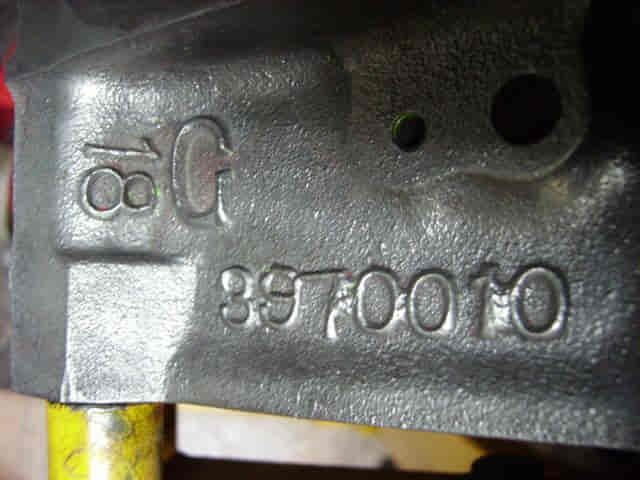
The primary purpose of a Chevrolet engine block casting number is to narrow down the identity of the engine block. For example, the casting number 3970010 is commonly associated with Chevrolet small-block V8 engines, including applications involving the 302, 327, and 350 cubic-inch engine families. Because the same casting number can correspond to more than one application, the number should be checked against reliable reference data rather than treated as definitive proof of engine displacement.
A casting number also differs from an engine assembly code. The casting number identifies the block casting design, while an assembly code provides information associated with the engine’s assembly, such as its production details and intended application. Depending on the engine and the markings available, a date code and partial vehicle identification number (VIN) can provide additional evidence for identifying the engine’s production history.
When identifying a Chevy engine, the most reliable approach is to interpret these markings together. The block casting number provides the starting point, the casting date helps establish when the block was manufactured, and the assembly markings help narrow down the original engine configuration. This combined method is particularly valuable when inspecting used engines or restoring classic Chevrolet vehicles, where replacement blocks and modified engine assemblies may complicate identification.
Read more: Is the 3.0 Duramax Made by Isuzu
Where Are Chevy Engine Block Casting Numbers Located?
Chevy engine block casting numbers are commonly located on the rear portion of the engine block, near the bellhousing flange, although the exact position depends on the engine family and block design. On many traditional Chevrolet V8 engines, the number is cast into the rear of the block and may be difficult to read when the engine remains installed in the vehicle. Identifying the correct location before searching for the number helps prevent confusion with other engine markings.
On classic Chevrolet small-block and big-block V8 engines, the rear block area near the transmission mounting surface is an important place to inspect. The casting number usually appears as raised characters integrated into the metal rather than as characters stamped into a machined surface. Dirt, grease, corrosion, paint, and limited access can make these characters difficult to distinguish, especially on older engines that have accumulated decades of use.
The casting number should not be confused with the engine assembly code or partial VIN. These markings serve different identification purposes and may appear on separate surfaces of the block. An assembly code is typically stamped into a machined pad, while a partial VIN, when present, provides information that can help connect an engine to a particular vehicle. Their locations and formats vary according to engine generation and production period, so the correct reference should match the engine being examined.
To identify the block accurately, record the complete casting number exactly as it appears, including every digit. Compare the result with a reference covering the relevant Chevrolet engine family, then locate the casting date and other identification markings where applicable. If the engine is still installed, access may be restricted by the transmission, firewall, or surrounding components. In that situation, a flashlight, inspection mirror, or clear photograph can help document the number without removing the engine. The objective is to obtain a readable identification number before drawing conclusions about displacement, production year, or original application.
How Do You Look Up Chevy Block Casting Numbers?
To look up Chevy block casting numbers, first record the complete number from the engine block, then compare it with a reliable Chevrolet engine identification reference. The result should be checked against the engine family, documented displacement, production period, and known vehicle applications. This process helps narrow down the block’s identity without assuming that a single casting number proves the engine’s exact configuration.
The first step is to distinguish the casting number from other markings. Chevrolet engine blocks can carry a casting number, a casting date code, an engine assembly code, and, on applicable engines, a partial vehicle identification number. Each marking provides a different piece of information. Entering an assembly code into a casting-number database, for example, can produce an incorrect or incomplete result because the two identifiers serve different purposes.
After recording the number, search for the exact sequence in a reference dedicated to Chevrolet engine blocks. Check whether the reference identifies the engine as a small-block, big-block, or LS-family engine, and examine every documented application associated with the result. Pay particular attention to the displacement and production-year information. Some casting numbers are associated with multiple engine configurations, so the first matching result is not necessarily the only valid application.
The next step is to compare the casting number with the casting date and other available engine markings. The casting date helps establish when the block was manufactured, while assembly codes and partial VINs can provide additional evidence about the engine’s production history. These identifiers are especially useful when the block has been removed from its original vehicle or when the engine may have been rebuilt with replacement components.
A reliable lookup should produce a consistent identification rather than a conclusion based on one matching number. If two references list different applications, compare their source documentation, production periods, and engine-family details before deciding which result fits the block. The final identification should distinguish between what the casting number confirms, what the supporting codes suggest, and what still requires physical inspection or further documentation.
Chevrolet small-block casting numbers cover several engine displacements, including 283, 302, 305, 307, 327, 350, and 400 cubic inches. These engines share a general small-block architecture, but their crankshaft strokes, production applications, and internal specifications differ. A casting-number reference helps narrow down the possible engine configurations, while the block’s assembly code and physical specifications provide additional evidence.
One well-documented example is casting number 3970010, which appears in several Chevrolet small-block applications. Reference databases associate this casting with the 302-cubic-inch engine used in the 1969 Camaro Z/28, certain 327-cubic-inch applications, and 350-cubic-inch engines produced across a broader period. This example demonstrates why a casting number should not be interpreted as a unique displacement identifier. The assembly stamping, casting date, and other available markings must support the final identification.
Other small-block casting numbers also have multiple documented applications. For example, casting number 3932386 is associated with 302-, 327-, and 350-cubic-inch applications in 1969 reference tables. Casting number 3956618 is similarly listed for the 1969 302, as well as certain 327 and 350 applications. These records illustrate the importance of checking the production year and engine-specific details rather than relying on a single database entry.
When identifying an SBC engine, the correct approach is to start with the complete block casting number and establish its documented applications. Next, compare the casting date with the relevant production period and inspect the engine assembly code, suffix code, and partial VIN when available. If the markings do not establish the displacement conclusively, physical specifications such as bore and stroke may be needed. This method provides a more reliable identification than assuming that every block carrying a particular casting number contains the same engine configuration.
Chevrolet Big Block (BBC) casting numbers help identify larger-displacement V8 engine blocks used in vehicles such as performance cars, full-size passenger cars, and trucks. Common big-block engine families include the 396, 402, 427, and 454 cubic-inch engines. However, a casting number does not automatically identify one exact displacement because the same block casting may have been used across different production years or engine configurations.
To identify a Chevy big-block engine, begin by recording the complete casting number from the block and comparing it with a reference that specifically covers Chevrolet big-block engines. Confirm that the result belongs to the correct engine family, then review the listed production years and applications. The production period matters because Chevrolet revised engine designs and reused certain block castings across multiple applications. A matching number is therefore the starting point for identification, not conclusive proof of the engine’s original specifications.
The casting number should also be compared with the casting date and engine assembly stamping. The casting date indicates when the block was manufactured, while the assembly code and suffix code can help identify the engine’s intended configuration. Where available, a partial vehicle identification number can provide additional evidence linking the engine to a particular vehicle. These details are especially useful when examining a used engine that has been separated from its original car or truck.
A reliable big-block identification requires consistency across all available evidence. If a casting reference lists several possible displacements, do not select one solely because it is the most familiar or valuable version. Compare the date, assembly markings, vehicle application, and physical engine specifications where necessary. This process helps distinguish a block that is compatible with a particular engine configuration from an engine whose original displacement and history have been fully established.
Chevrolet LS engine block casting numbers help identify blocks belonging to the Gen III and Gen IV small-block V8 families. These engines were used across a range of Chevrolet and GM vehicles, including performance cars, trucks, and SUVs. Although LS engines share design characteristics, they differ in displacement, block material, cylinder configuration details, and production application. Identifying the casting number is therefore an important first step, but it does not establish every specification of the complete engine.
Begin by locating and recording the casting number on the block, then compare it with a reference that specifically documents LS-family engines. Check the listed engine applications and production years, and confirm that the result is consistent with the block’s general design. LS identification requires particular care because similar-looking engines may have different displacements or internal components. For example, identifying a block as belonging to the LS family does not by itself prove that the engine is a 4.8L, 5.3L, 5.7L, or 6.0L configuration.
The next step is to compare the casting number with other available identification information. Casting dates can help establish the block’s manufacturing period, while engine identification labels, assembly markings, and vehicle records may provide additional context. The original vehicle’s VIN and production documentation can be particularly useful when the engine remains in its factory installation. If the engine has been swapped or rebuilt, however, vehicle information alone may not establish the specifications of the current engine assembly.
For a dependable LS engine identification, treat the block casting number as one part of a larger verification process. Compare the reference result with the casting date, engine markings, and physical specifications when needed. If the block has been rebuilt, remember that its original casting identifies the block itself rather than confirming that every internal component remains factory-original. This distinction helps prevent incorrect conclusions when buying, restoring, or documenting a Chevrolet LS engine.
Chevy block casting date codes help establish when an engine block was manufactured. Unlike a block casting number, which identifies a particular casting design or family of applications, the casting date provides a time reference that can be compared with the engine’s documented production period. This distinction matters when identifying a classic Chevrolet engine because the same casting number may appear across multiple model years or engine configurations.
Chevrolet casting date codes commonly combine a letter representing the month, one or more digits representing the day, and a final digit or digits representing the year. The exact interpretation depends on the code format and the period in which the block was produced. For example, a date code beginning with a letter may indicate the month, but the remaining digits must be interpreted according to the applicable Chevrolet convention. The year should not be assigned based on the final digit alone when multiple production years are possible.
To decode a casting date accurately, first record the code exactly as it appears on the block. Then identify the relevant date-code format and compare the result with the casting number’s documented production range. The decoded date should make sense alongside the engine family and known vehicle applications. If a block’s date appears to fall outside the documented period for that casting, recheck the characters and the reference before drawing a conclusion. Raised characters can be difficult to read because of dirt, corrosion, paint, or limited visibility.
The casting date is most useful when interpreted alongside the engine assembly code, suffix code, and partial VIN where available. A block manufactured shortly before a vehicle’s assembly date may be consistent with the vehicle’s production history, but the date alone does not prove that the engine is original to that vehicle. Replacement engines, rebuilt assemblies, and engine swaps can all affect the relationship between block manufacture and vehicle production. Accurate identification therefore requires the date code to support, rather than replace, the other available evidence.
A Chevy block casting number and an engine suffix code identify different aspects of a Chevrolet engine. The casting number identifies the engine block casting and its documented applications, while the suffix code is part of the engine assembly identification system and can indicate the engine’s original configuration and intended vehicle application. Understanding this distinction is essential because the two codes are not interchangeable and should not be interpreted using the same reference.
The block casting number is typically raised in the metal and formed when the engine block is cast. It helps researchers identify the block design, production period, and possible engine applications. The suffix code, by contrast, is commonly found within the engine assembly stamping on a machined pad. Its meaning depends on the complete stamping, including the assembly date or other associated characters where applicable. The location and format of these markings can vary by engine family and production period, so the correct identification procedure depends on the specific engine being examined.
These identifiers provide complementary evidence. A casting number may correspond to several engine displacements or vehicle applications, while a suffix code can narrow the possibilities by identifying a particular factory engine configuration. For example, a block casting associated with multiple small-block applications cannot, by itself, establish whether the original engine was configured as a 327 or a 350 cubic-inch V8. The suffix code and other assembly markings may help distinguish those applications when the relevant documentation is available.
For a reliable identification, record the block casting number and the complete engine assembly stamping separately. Compare each marking with a reference that covers the correct Chevrolet engine family and production period, then check the casting date and partial VIN when available. If the codes conflict, investigate whether the block has been replaced, the engine has been rebuilt, or a character has been misread. Neither code alone guarantees that the engine remains in its original factory configuration, but together they provide stronger evidence than either identifier can provide independently.
Chevy block casting numbers can help narrow down an engine’s possible original displacement, but they do not always confirm the exact cubic-inch size on their own. A single casting number may correspond to several engine configurations produced during different years or for different vehicle applications. For this reason, identifying a block as a particular Chevrolet engine family is not the same as proving that the original engine was a 283, 327, 350, 396, 427, or 454 cubic-inch configuration.
The reason is that a casting number identifies the block design rather than every detail of the completed engine assembly. Displacement depends on the cylinder bore and crankshaft stroke, and engines sharing a block casting may have different internal specifications. A block’s documented applications can therefore establish a range of plausible configurations, but additional evidence is needed to identify which configuration was originally assembled. Reference databases should be treated as identification tools, not as automatic proof of a specific displacement.
The engine assembly code and suffix code can help narrow the possibilities by linking the engine to a documented factory configuration. The casting date establishes when the block was manufactured, while a partial VIN, when present and legible, can provide evidence connecting the engine to a particular vehicle. These markings should be checked together because a casting date alone does not prove originality, and a vehicle’s VIN does not necessarily establish the specifications of an engine installed later.
When the original displacement remains uncertain, physical inspection may be necessary. Measurements of the cylinder bore and crankshaft stroke can help establish the engine’s actual displacement, provided the relevant components and measurements are verified correctly. This is particularly important for rebuilt engines, which may contain replacement or modified internal components. The most defensible conclusion separates the displacement supported by the block casting reference from the displacement confirmed by assembly documentation or physical measurements.
A Chevy casting number can return multiple results because Chevrolet reused certain block castings across different engine configurations, production years, and vehicle applications. The casting number identifies the block casting design, but it does not necessarily identify one unique completed engine. As a result, a lookup reference may list several possible displacements or applications for the same number. These results are not automatically contradictory; they may reflect legitimate differences in how the block was used.
One reason for multiple results is that engines with different displacements can share a block casting. For example, Chevrolet small-block casting number 3970010 is documented in multiple 302-, 327-, and 350-cubic-inch applications. The casting number alone therefore cannot establish which displacement the engine originally had. The assembly code, suffix code, casting date, and other identifying information help narrow the possible applications and establish which result best matches the specific block.
Another reason is the difference between a block’s production period and the model year of the vehicle in which it was installed. Engine blocks were manufactured before final vehicle assembly, and a casting may have been used across more than one model year. Replacement engines and later engine swaps can also create situations in which the engine’s manufacturing date does not correspond directly to the vehicle’s production date. A casting-number reference may consequently list applications that span multiple years or vehicle types.
When a lookup returns several results, compare each result against the complete set of available markings rather than selecting the first entry. Check the engine family, production period, casting date, assembly stamping, suffix code, and partial VIN where applicable. If the evidence still supports more than one configuration, report the identification as a range of documented possibilities instead of claiming an exact displacement. This approach preserves the distinction between what the casting number confirms and what additional evidence is needed to establish the engine’s original configuration.