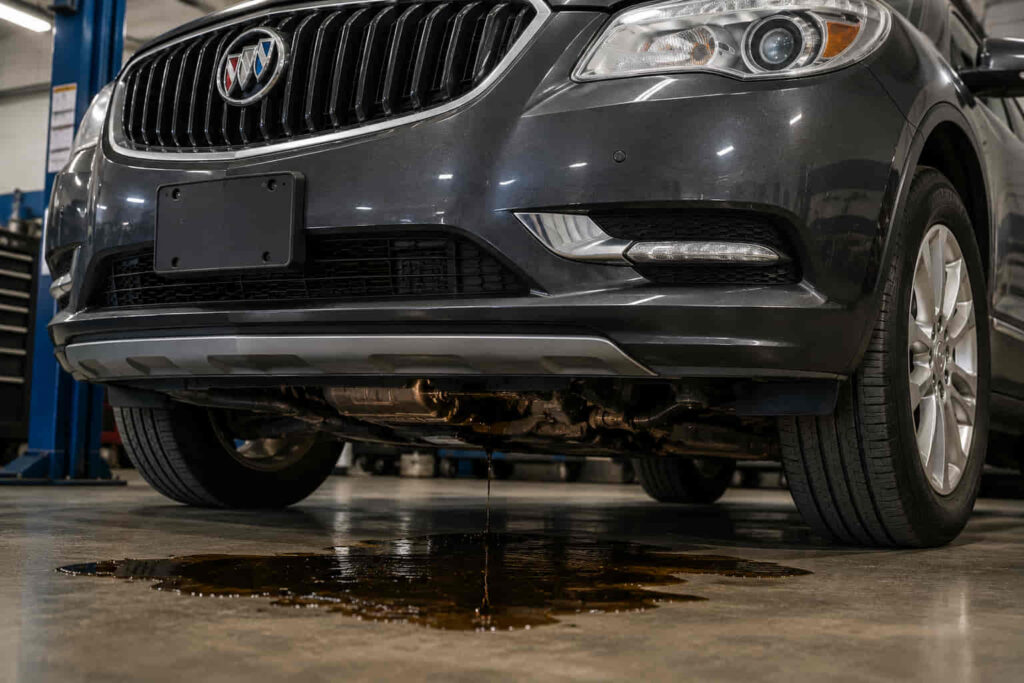
A Buick Enclave oil leak occurs when engine oil escapes from the lubrication system because a gasket, seal, connection, or engine component can no longer keep the oil contained. The engine oil system is designed to circulate lubricant through internal components while maintaining proper pressure and preventing oil from reaching areas where it should not be present.
The Buick Enclave uses a V6 engine design in many model years, with multiple sealing points that protect the oil system during operation. Over time, heat cycles, engine vibration, aging materials, and normal wear can cause gaskets and seals to lose their ability to maintain a tight seal. When this happens, oil may begin leaking onto the engine surface or dripping underneath the vehicle.
Many Buick Enclave owners notice oil leaks through visible spots on the driveway, a burning oil smell, declining oil levels, or oily residue around the engine compartment. However, the location of the oil on the ground does not always indicate the actual source because oil can travel along engine surfaces before dripping down.
Identifying the exact leak location is important because different oil leaks require different repair approaches. A minor gasket leak may require a relatively simple repair, while leaks involving major seals or difficult-to-access engine areas can require more extensive labor.
This guide explains the common causes of Buick Enclave oil leaks, the most frequent leak locations, warning signs, diagnostic methods, repair options, costs, and ways to prevent future oil system problems.
Why Is My Buick Enclave Leaking Oil?
A Buick Enclave oil leak usually occurs because engine sealing components wear out, become damaged, or lose their ability to contain oil under normal operating conditions. The engine oil system depends on multiple gaskets, seals, and connections to keep lubricant inside the engine while allowing oil to circulate through moving components.
One of the most common causes is gasket deterioration. Engine gaskets are exposed to repeated heating and cooling cycles, which can gradually harden the material and reduce sealing effectiveness. As the gasket becomes less flexible, small gaps may form and allow oil to escape.
The valve cover gasket is a common area to inspect because it seals the upper section of the engine where the cylinder heads and valve components are located. When this gasket begins to fail, oil may appear around the top of the engine and may eventually run down onto lower components, making the leak appear to come from another location.
Oil pan gasket problems can also cause leaks because the oil pan holds the engine oil supply at the bottom of the engine. Damage from road debris, worn sealing material, or loose fasteners can allow oil to escape from this area.
Other possible sources include timing cover seals, oil filter housing connections, drain plug seals, and rear main seals. Some leaks are easier to repair because the affected component is accessible, while others require more labor because the leaking area is located deeper within the engine assembly.
For example, a Buick Enclave showing oil drops near the front of the engine may have a timing cover leak, while oil collecting around the bottom of the vehicle may originate from the oil pan or another higher component that allows oil to travel downward.
Where Does a Buick Enclave Oil Leak Usually Come From?
The most common Buick Enclave oil leak locations include the valve cover area, timing cover, oil pan, oil filter housing, and engine sealing points. Identifying the exact location is important because oil can spread across engine surfaces and create misleading signs.
The valve cover area is one of the first places technicians inspect because it is located near the top of the engine and exposed to constant temperature changes. A leaking valve cover gasket may leave oil residue around the upper engine area and can sometimes create a burning oil smell if oil reaches hot engine components.
The timing cover is another potential leak source, especially on engines with higher mileage. The timing cover protects internal timing components and relies on sealing surfaces to prevent oil from escaping. Because this area can require significant labor to access, accurate diagnosis is important before beginning repairs.
The oil pan is located underneath the engine and is responsible for storing engine oil. A damaged oil pan gasket or loose drain plug can create visible oil spots beneath the vehicle. This type of leak is often easier to identify because the oil appears near the lowest point of the engine.
Oil filter housing and related connections can also develop leaks. During oil changes, improper installation of filters, damaged seals, or worn components can allow oil to escape from the filtration area.
Rear main seal leaks are generally more complex because the seal is located between the engine and transmission area. Repairing this type of leak often requires significant labor because access to the component is limited.
For example, if a Buick Enclave leaves oil spots after parking overnight, inspecting the highest point where fresh oil appears is usually more accurate than only looking at where the oil reaches the ground.
Read more: Buick Tire Pressure Sensor Reset
What Are the Signs of a Buick Enclave Oil Leak?
The most common signs of a Buick Enclave oil leak include visible oil spots, declining engine oil levels, burning oil smells, oily engine surfaces, and warning indicators related to engine lubrication. Recognizing these signs early helps prevent low oil conditions that can increase friction and damage internal engine components.
Visible oil underneath the vehicle is often the first indication noticed by owners. Fresh engine oil usually appears as dark brown or black fluid, although the exact appearance can vary depending on the oil age and maintenance history. The location of the oil spot can provide clues, but it does not always identify the exact leak source because oil can move across different engine surfaces before reaching the ground.
A decreasing oil level between oil changes is another important warning sign. The engine requires a specific amount of oil to maintain proper lubrication, and a leak that allows oil to escape gradually can reduce the amount available for critical engine components.
A burning oil smell may occur when leaking oil contacts hot engine parts such as exhaust components. This condition is often noticeable after driving because engine temperatures increase during operation. In some cases, visible smoke may appear from the engine compartment when oil reaches high-temperature surfaces.
Oil residue around the engine can also indicate a leak. Technicians often inspect areas around gaskets, seals, and oil system connections to identify where fresh oil is appearing.
For example, a Buick Enclave owner who notices a burning smell after highway driving may have oil leaking onto hot components, even if there are no large oil puddles underneath the vehicle.
How Do You Find the Source of a Buick Enclave Oil Leak?
Finding the source of a Buick Enclave oil leak requires tracing fresh oil back to its highest point because oil movement can make the visible drip location different from the actual leak source. A proper diagnosis prevents unnecessary repairs by identifying the failed gasket, seal, or component responsible for the leak.
The first step is usually a visual inspection of the engine compartment and underside of the vehicle. Technicians look for fresh oil residue, wet areas, and accumulation patterns around common leak points such as valve covers, timing covers, oil pans, and filter connections.
Cleaning the engine area can help improve diagnosis because old oil residue may hide the location of a new leak. After the area is cleaned, the vehicle can be monitored to determine where fresh oil first appears during operation.
For difficult-to-find leaks, technicians may use ultraviolet dye added to the engine oil. After the vehicle operates normally for a period of time, a UV light can reveal the path of the leaking oil and identify the exact source.
Oil leaks can be challenging to diagnose because gravity causes oil to move downward. A leak from the upper engine area may eventually appear near the bottom of the vehicle, creating the impression that the lower component is damaged.
For example, oil found near the Buick Enclave oil pan does not always mean the oil pan gasket has failed. The actual source may be a valve cover gasket or another component located higher on the engine.
How Serious Is a Buick Enclave Oil Leak?
The seriousness of a Buick Enclave oil leak depends on the leak location, the amount of oil lost, and how quickly the problem is addressed. A small leak may not immediately affect engine operation, but ignoring it can allow the condition to worsen and create more expensive repairs.
Minor leaks from aging gaskets may develop slowly and only leave small oil marks after parking. Although these leaks may not cause immediate engine failure, they indicate that sealing components are beginning to deteriorate and should be monitored.
More severe leaks can reduce engine oil levels quickly and affect lubrication. When engine components operate with insufficient oil, friction increases and heat can build up, potentially causing damage to bearings, moving parts, and other internal components.
Oil leaks near hot exhaust components create another concern because leaking oil can produce smoke and strong odors. In extreme cases, excessive oil accumulation in high-temperature areas may create additional safety risks.
The best approach is to evaluate the leak based on oil loss rate rather than appearance alone. A small visible leak that causes rapid oil loss may require more urgent attention than a larger-looking residue from an older leak.
For example, a Buick Enclave that loses a small amount of oil over several months may require scheduled gasket repair, while a vehicle that requires frequent oil top-ups should be inspected immediately to prevent engine damage.
How Do You Fix a Buick Enclave Oil Leak?
Fixing a Buick Enclave oil leak requires repairing the component that allows oil to escape rather than simply adding more engine oil. The correct repair depends on the location of the leak, the condition of the sealing component, and the amount of oil loss occurring during vehicle operation.
If the leak comes from a worn gasket, replacing the gasket is usually the primary solution. Components such as valve cover gaskets and oil pan gaskets can lose their sealing ability after years of exposure to engine heat and vibration. Installing a new gasket restores the barrier that prevents oil from escaping.
Seal-related leaks may require replacement of specific engine seals. Some seals are relatively accessible, while others require more labor because they are located between major engine components. The repair process depends on the design of the engine and the location of the failed seal.
Oil pan leaks may involve replacing the oil pan gasket, repairing damage to the pan itself, or correcting issues around the drain plug area. Since the oil pan is located underneath the engine, it is also more exposed to road debris and external impact.
More complex repairs, such as rear main seal replacement or timing cover repairs, require additional labor because technicians must remove surrounding components to access the leaking area. Accurate diagnosis is especially important for these repairs because incorrect identification can lead to unnecessary repair costs.
After the leak source has been repaired, the engine oil level should be checked and the surrounding area should be inspected to confirm that the leak has stopped.
For example, replacing a leaking valve cover gasket on a Buick Enclave may resolve oil residue around the top of the engine, while a rear main seal leak requires a more involved repair process because of its location.
How Much Does Buick Enclave Oil Leak Repair Cost?
The cost of repairing a Buick Enclave oil leak depends mainly on the location of the leak, the required replacement parts, and the amount of labor needed to access the damaged component. Simple gasket repairs are generally less expensive than repairs involving internal engine seals or difficult-to-reach areas.
A diagnostic inspection is often the first cost involved because technicians need to identify the actual leak source before performing repairs. Since oil can travel across engine surfaces, replacing a visible but unrelated component can waste time and money.
Repairs involving accessible components, such as certain gasket replacements or oil system connections, usually require less labor. More complex repairs involving timing covers or rear main seals can cost significantly more because technicians need additional time to remove and reinstall surrounding components.
The vehicle’s model year, engine condition, and repair location also influence the final cost. A newer Buick Enclave with a minor gasket issue may require a simpler repair compared with an older vehicle where multiple seals and components have aged.
Regular maintenance history can also affect repair needs. Vehicles that receive consistent oil changes and inspections may allow technicians to identify leaks earlier before they develop into larger problems.
For example, a Buick Enclave with a small valve cover gasket leak may require a straightforward repair, while a vehicle leaking from a rear main seal may involve a much higher labor cost because of the additional access required.
How Can You Prevent Buick Enclave Oil Leaks?
Preventing Buick Enclave oil leaks requires regular maintenance, proper oil service, and early attention to signs of gasket or seal deterioration. Although aging components naturally wear over time, proper care can reduce the chance of major oil-related problems.
Regular oil changes are one of the most important maintenance practices because clean engine oil helps reduce internal wear and supports proper engine operation. Using the correct oil specification also helps maintain the performance of seals and lubrication components.
Checking the engine oil level regularly allows owners to detect problems before the vehicle reaches a low-oil condition. A gradual decrease in oil level may indicate a developing leak that should be inspected before it becomes more severe.
During routine maintenance, technicians can inspect areas around gaskets, seals, and oil system connections for early signs of leakage. Identifying small leaks early often reduces repair complexity and prevents additional engine contamination.
Drivers should also pay attention to warning signs such as oil spots, burning oil smells, or visible residue around the engine. Ignoring these symptoms can allow a minor sealing issue to develop into a larger repair.
For example, a Buick Enclave owner who notices a small oil stain under the vehicle and schedules an inspection early may prevent a slow gasket leak from becoming a significant oil loss problem.