The 3.6 Pentastar firing order is 1-2-3-4-5-6, following the engine’s ignition sequence to deliver smooth power, balanced combustion, and consistent performance. Chrysler designed this firing order to work with the Pentastar’s 60-degree V6 architecture, allowing each cylinder to fire at the correct moment while minimizing vibration and mechanical stress. Understanding this sequence is essential when diagnosing engine misfires, replacing spark plugs, installing ignition coils, or interpreting diagnostic trouble codes.
Many vehicle owners mistakenly confuse the firing order with the cylinder numbering. Although these two concepts are closely related, they serve different purposes during engine operation and maintenance. Knowing the location of Cylinder 1, identifying Bank 1 and Bank 2, and understanding how the Powertrain Control Module coordinates ignition timing can prevent unnecessary repairs and reduce diagnostic errors.
This guide explains the complete 3.6 Pentastar firing order, cylinder numbering, and engine layout in a logical sequence. It also shows how the cylinder diagram supports maintenance procedures, why the firing order is important for engine efficiency, and how it helps diagnose common ignition problems. Whether you own a Jeep, Dodge, Chrysler, or Ram equipped with the 3.6L Pentastar engine, this article provides the technical knowledge needed to service the engine accurately and confidently.
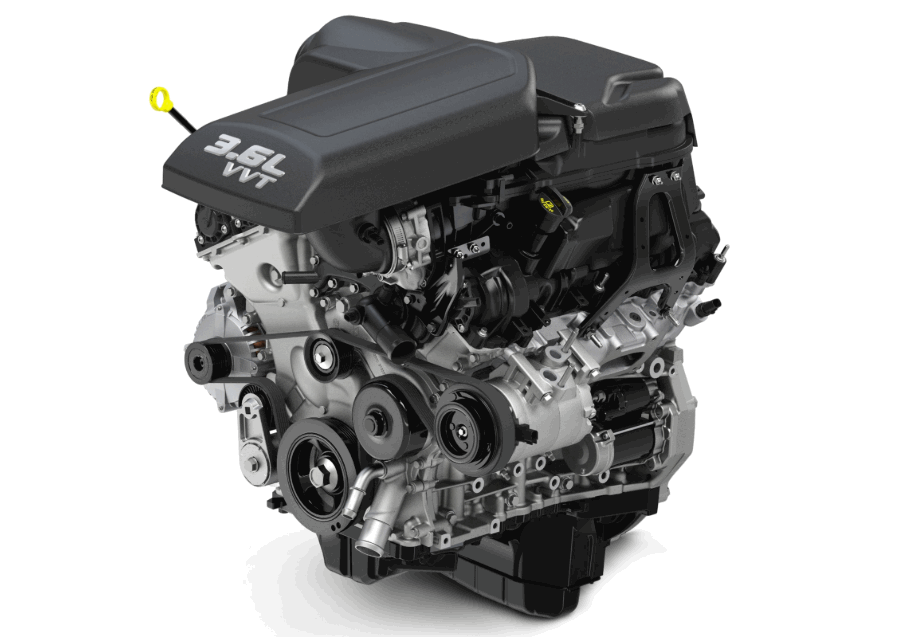
What Is the Correct 3.6 Pentastar Firing Order?
The 3.6 Pentastar firing order is 1-2-3-4-5-6. This ignition sequence determines the exact order in which each cylinder fires during the combustion cycle. Every ignition event is precisely controlled by the Powertrain Control Module (PCM), which continuously monitors the crankshaft and camshaft position sensors to ensure each spark plug fires at the correct time. A properly synchronized firing order allows the engine to deliver smooth acceleration, stable idle quality, and consistent power output under different driving conditions.
The firing order works together with the engine’s cylinder numbering rather than replacing it. While the firing order identifies the ignition sequence, the cylinder numbering identifies the physical location of each cylinder inside the engine block. Understanding both systems is essential because technicians rely on them when diagnosing misfire codes, replacing ignition coils, inspecting spark plugs, or performing compression tests. Confusing these two concepts can lead to incorrect repairs and unnecessary replacement of functioning components.
Chrysler engineered the 3.6L Pentastar as a 60-degree DOHC V6 engine to achieve balanced combustion and reduced vibration. The sequential 1-2-3-4-5-6 firing pattern distributes combustion forces evenly across the crankshaft, reducing torsional stress and helping the engine operate more smoothly throughout its RPM range. This balanced design also contributes to lower engine noise, improved fuel efficiency, and reduced emissions by maintaining consistent combustion timing in every cylinder.
The same firing order is used across virtually every production version of the 3.6L Pentastar engine installed in Jeep, Dodge, Chrysler, and Ram vehicles. Although individual models may differ in intake design, exhaust routing, or engine calibration, the ignition sequence remains unchanged because the engine’s internal architecture is identical. Before replacing ignition components or diagnosing a cylinder-specific fault, always verify the firing order together with the cylinder numbering to ensure accurate troubleshooting and avoid misdiagnosis.
How Are the Cylinders Numbered on the 3.6 Pentastar Engine?
The 3.6L Pentastar engine uses a fixed cylinder numbering system across all production models. This layout helps technicians identify each cylinder quickly during maintenance and engine diagnostics. It also reduces mistakes when replacing ignition components or interpreting trouble codes.
When viewed from the front of the vehicle, Bank 1 sits on the passenger side in most longitudinal applications. Cylinder 1 is at the front of the bank, followed by Cylinders 3 and 5 toward the rear. Bank 2 sits on the opposite side and contains Cylinders 2, 4, and 6 from front to rear. Chrysler keeps this numbering system consistent across most Jeep, Dodge, Chrysler, and Ram vehicles equipped with the 3.6L Pentastar engine.
Knowing the cylinder numbering is just as important as knowing the firing order. Diagnostic tools always identify faults by cylinder number instead of ignition sequence. For example, the P0302 trouble code points to a misfire in Cylinder 2. The same numbering system also guides spark plug replacement, ignition coil testing, injector inspection, and compression testing.
Service manuals, wiring diagrams, and repair procedures all reference the same cylinder layout. Each ignition coil, spark plug, and fuel injector matches a specific cylinder location. Technicians often inspect the cylinders in numerical order to avoid missing any components. This simple workflow improves repair accuracy and saves diagnostic time.
Always confirm the engine orientation before starting a repair. Some vehicles mount the 3.6L Pentastar longitudinally, while others use a transverse layout. The engine position may change, but Chrysler does not change the cylinder numbering or the firing order. Once you locate Cylinder 1 and identify Bank 1, the remaining cylinder positions become easy to recognize.
What Does the 3.6 Pentastar Cylinder Diagram Show?
The 3.6 Pentastar cylinder diagram shows the exact position of each cylinder, ignition coil, and spark plug on the engine. It helps technicians identify the correct cylinder before performing repairs or diagnosing ignition problems. A clear diagram also reduces the risk of replacing the wrong component during routine maintenance.
The engine uses a V6 configuration with two cylinder banks. Bank 1 contains Cylinders 1, 3, and 5, while Bank 2 contains Cylinders 2, 4, and 6. Cylinder 1 sits at the front of Bank 1 and serves as the reference point for many service procedures. Once you locate Cylinder 1, the remaining cylinder positions follow a simple front-to-rear sequence.
The diagram also identifies the location of every ignition coil and spark plug. Each cylinder has its own coil mounted directly above the spark plug. This coil-on-plug design eliminates traditional spark plug wires and improves ignition efficiency. It also makes replacing a faulty coil faster because technicians can access each unit individually.
A cylinder diagram becomes especially valuable during engine diagnostics. When a scan tool reports a misfire code such as P0304, the diagram immediately shows the location of Cylinder 4. The same reference helps when testing injectors, checking compression, or swapping ignition coils to confirm a faulty component. Instead of guessing cylinder locations, technicians can follow the diagram and complete each diagnostic step with greater accuracy.
Although the engine may appear different between Jeep, Dodge, Chrysler, and Ram models, the cylinder layout remains the same. Chrysler keeps the cylinder numbering and firing order consistent across all versions of the 3.6L Pentastar engine. Learning to read the cylinder diagram makes future maintenance easier and helps prevent costly installation mistakes.
Why Is the 3.6 Pentastar Firing Order Important?
The 3.6 Pentastar firing order plays a critical role in engine performance, reliability, and fuel efficiency. It controls the sequence in which each cylinder completes the combustion cycle. The correct ignition sequence allows the engine to produce smooth and consistent power during every revolution of the crankshaft.
A balanced firing order reduces engine vibration and mechanical stress. Each combustion event occurs at the proper interval, allowing the crankshaft to rotate evenly under load. This balanced operation minimizes unwanted vibration, lowers engine noise, and improves driving comfort. It also helps protect internal components from excessive wear over time.
The firing order also improves combustion efficiency. Each cylinder receives a spark at the precise moment needed for complete fuel combustion. Efficient combustion increases engine power while reducing fuel consumption and exhaust emissions. The Powertrain Control Module continuously adjusts ignition timing to maintain this balance under different driving conditions.
Accurate ignition timing is equally important during engine diagnostics. A technician who understands the firing order can identify ignition problems more quickly and interpret diagnostic trouble codes with greater confidence. This knowledge also supports compression testing, injector testing, and ignition coil inspections. Following the correct firing sequence prevents unnecessary repairs and shortens diagnostic time.
Incorrect assumptions about the firing order can lead to installation errors and repeated engine problems. Swapping ignition coils or spark plugs without confirming the correct cylinder sequence may leave the original fault unresolved. In some cases, it can even create additional misfire codes. Understanding the firing order before starting any repair improves diagnostic accuracy and helps restore normal engine performance more efficiently.
Which Vehicles Use the 3.6 Pentastar Engine?
The 3.6L Pentastar engine powers a wide range of vehicles produced by Chrysler, Dodge, Jeep, and Ram. Since its introduction in 2011, it has become one of Stellantis’ most widely used V6 engines. Manufacturers selected this engine because it delivers a strong balance of power, fuel efficiency, and long-term reliability. Although individual vehicles have different tuning and drivetrain configurations, they share the same basic engine architecture.
Jeep uses the 3.6 Pentastar in several popular models, including the Wrangler, Grand Cherokee, Gladiator, Cherokee, and Commander in selected markets. These vehicles rely on the engine to provide dependable performance for daily driving, highway travel, and off-road conditions. The engine delivers smooth power across a broad RPM range, making it suitable for both recreational and commercial use.
Dodge, Chrysler, and Ram also use the 3.6L Pentastar across multiple product lines. Common applications include the Dodge Charger, Challenger, Durango, Chrysler 300, Chrysler Pacifica, Ram 1500, and Ram ProMaster. While horsepower, transmission options, and engine calibration may vary between models, the internal engine design remains the same. As a result, the cylinder numbering and firing order stay consistent across these applications.
The 3.6 Pentastar firing order remains 1-2-3-4-5-6 regardless of the vehicle model. Chrysler did not change the ignition sequence when installing the engine in different platforms. This consistency allows technicians to follow the same repair procedures, diagnostic methods, and service information for every compatible vehicle. Once you understand the cylinder layout and firing order on one 3.6L Pentastar engine, you can apply the same knowledge to nearly every Jeep, Dodge, Chrysler, or Ram equipped with this V6 engine.
What Are the Most Common Ignition Problems on the 3.6 Pentastar?
Most ignition problems on the 3.6L Pentastar engine involve faulty ignition coils, worn spark plugs, or damaged fuel injectors. These components work together to produce efficient combustion in every cylinder. When one part fails, the engine may develop a misfire, lose power, or idle roughly. Early diagnosis helps prevent additional damage and restores normal engine performance.
A failed ignition coil is one of the most common causes of a cylinder-specific misfire. The coil supplies high voltage to the spark plug at the correct moment in the firing sequence. When it stops working, the affected cylinder cannot burn the air-fuel mixture completely. Drivers often notice hesitation during acceleration, reduced fuel economy, and an illuminated Check Engine Light. Diagnostic trouble codes such as P0301 through P0306 usually identify the affected cylinder.
Worn or damaged spark plugs can produce similar symptoms. As the electrodes wear, the spark becomes weaker and less consistent. Incomplete combustion may cause rough idle, slow throttle response, and higher fuel consumption. Replacing spark plugs at the recommended service interval helps maintain reliable ignition and protects the ignition coils from unnecessary stress.
Fuel injectors can also create misfire conditions. A clogged or malfunctioning injector may deliver too little fuel, while a leaking injector may supply too much. Either condition disrupts the combustion process and affects engine performance. Technicians often compare injector operation with ignition system tests to determine the true source of the problem.
Accurate diagnosis requires more than reading a fault code. Technicians usually verify the cylinder number, inspect the ignition coil and spark plug, and perform additional tests if necessary. Compression testing, injector testing, and coil swapping help isolate the faulty component before replacement. Following this systematic process reduces unnecessary repairs and ensures the engine returns to normal operation as quickly as possible.
Conclusion
Understanding the 3.6 Pentastar firing order is essential for accurate engine maintenance and efficient diagnostics. The correct firing order, 1-2-3-4-5-6, works together with the engine’s cylinder numbering to deliver smooth power, balanced combustion, and reliable performance. Knowing both systems helps eliminate confusion during spark plug replacement, ignition coil installation, and misfire diagnosis.
The cylinder diagram, bank identification, and ignition sequence all provide valuable reference points when servicing the engine. Whether you are troubleshooting a Check Engine Light, interpreting a diagnostic trouble code, or performing routine maintenance, identifying the correct cylinder first improves repair accuracy and reduces unnecessary parts replacement.
Because Chrysler uses the same firing order and cylinder numbering across nearly every 3.6L Pentastar application, the knowledge in this guide applies to most Jeep, Dodge, Chrysler, and Ram vehicles equipped with this V6 engine. By understanding how the ignition system operates and following the correct service procedures, you can diagnose problems more confidently, extend engine life, and maintain consistent performance over the long term.