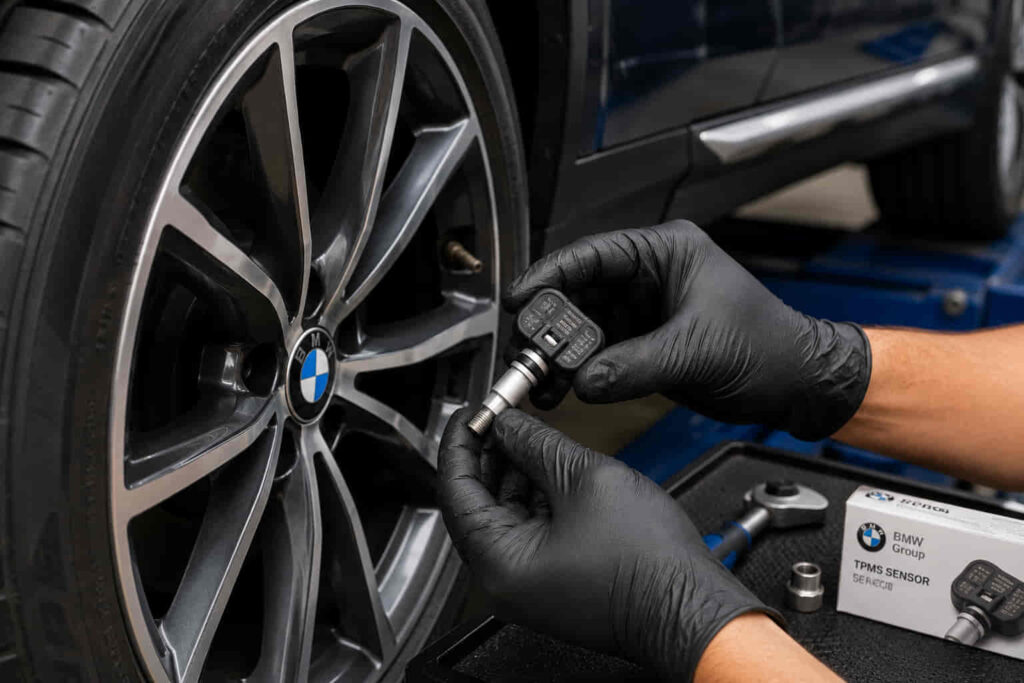
BMW TPMS sensor replacement is required when a tire pressure monitoring sensor stops communicating, provides inaccurate readings, or reaches the end of its internal battery life. The BMW Tire Pressure Monitoring System, also known as RDC (Remote Control for Tire Pressure Monitoring), plays an important role in vehicle safety by continuously monitoring tire pressure and temperature.
Unlike traditional tire pressure checks that require manual measurement, BMW TPMS sensors provide real-time information from each wheel to the vehicle’s electronic systems. When the system detects abnormal pressure changes or loses communication with a sensor, it can trigger a warning message on the dashboard and display incorrect tire information.
A BMW TPMS sensor is a small electronic device installed inside the wheel assembly. Because the sensor uses an integrated battery that cannot usually be replaced separately, a failed unit normally requires complete sensor replacement rather than repair.
However, a TPMS warning does not always mean the sensor itself is damaged. Problems can also come from incorrect tire installation, sensor compatibility issues, communication failures, or the need for system reset after replacement. Proper diagnosis helps determine the exact cause before replacing components.
Understanding how BMW TPMS sensors work, why they fail, and how replacement is performed helps owners maintain accurate tire monitoring, avoid unnecessary repairs, and ensure the system continues operating correctly after service.
How Does the BMW TPMS System Work?
The BMW TPMS system works by using electronic sensors installed inside each wheel to measure tire pressure and temperature, then transmitting this information to the vehicle’s control system. BMW refers to its direct tire pressure monitoring technology as RDC (Remote Control for Tire Pressure Monitoring), which allows the vehicle to monitor tire conditions more accurately than traditional pressure checks.
Each TPMS sensor contains a pressure sensor, temperature sensor, transmitter, and an internal battery. The sensor continuously measures tire conditions and sends wireless data to the RDC control module. The vehicle then processes this information and displays tire pressure information through the instrument cluster or iDrive system.
The system operates through a communication chain between the wheel sensor and vehicle electronics. When a tire loses pressure, the sensor detects the pressure change and sends a signal to the vehicle. The driver then receives a warning that allows the issue to be inspected before it affects handling, fuel efficiency, or tire safety.
BMW TPMS sensors are designed to work with specific vehicle communication systems, meaning compatibility is important when replacing a sensor. A sensor that physically fits the wheel may still fail to communicate correctly if it does not match the BMW’s RDC system.
The internal battery is one of the most important factors affecting TPMS sensor lifespan. Unlike external batteries, the sensor battery is sealed inside the unit and is not normally replaceable. Once the battery reaches the end of its service life, replacing the complete sensor is usually the correct solution.
For example, a BMW may show accurate tire pressure readings for years, but once one sensor battery becomes weak, that wheel may stop reporting pressure information while the other wheels continue operating normally.
What Are the Signs You Need a BMW TPMS Sensor Replacement?
The main signs that a BMW TPMS sensor needs replacement include warning lights, missing tire pressure data, inaccurate readings, and communication failures between the sensor and vehicle system. These symptoms indicate that the TPMS system is no longer receiving reliable information from one or more wheels.
The most common sign is the TPMS warning light appearing on the dashboard. This warning may indicate low tire pressure, but it can also appear when a sensor fails to communicate with the vehicle. A proper diagnosis is necessary because the warning does not always mean the tire itself has a pressure problem.
Another common symptom is that one tire does not display pressure information while other tires show normal readings. This often happens when the sensor battery has failed or the sensor transmitter can no longer send data to the RDC module.
Incorrect pressure readings are another indication of a possible sensor issue. If the displayed tire pressure does not match the actual pressure measured manually, the sensor may be damaged or providing inaccurate data.
Communication errors can also occur after tire replacement, wheel changes, or sensor installation. BMW TPMS sensors require proper compatibility and recognition by the vehicle system. A newly installed sensor may not function correctly if it is not programmed or relearned.
Physical damage can also cause sensor failure. During tire mounting or removal, improper equipment use can damage the sensor body, valve stem, or internal components.
However, replacing the sensor immediately after seeing a warning is not always necessary. The problem may involve incorrect tire pressure, sensor synchronization, damaged wiring, or a temporary communication issue.
For example, if a BMW displays a TPMS warning after installing new wheels, the issue may be caused by incompatible sensors rather than a mechanical fault with the tires.
Read more: How to Update BMW Software
Why Do BMW TPMS Sensors Fail?
BMW TPMS sensors fail mainly because of battery depletion, physical damage, environmental exposure, or communication problems between the sensor and vehicle system. Since each sensor contains electronic components that operate continuously inside the wheel, its lifespan is affected by both usage conditions and the age of the vehicle.
The most common cause of TPMS sensor failure is the internal battery reaching the end of its service life. BMW TPMS sensors are powered by sealed batteries designed to last several years, but once the battery becomes weak, the sensor may stop transmitting accurate information to the RDC control module.
Unlike regular batteries that can be removed and replaced, TPMS sensor batteries are integrated into the sensor housing. This design protects the electronics from tire movement and moisture but means that a failed battery usually requires replacing the complete sensor.
Physical damage is another common cause, especially during tire installation or removal. Tire-changing equipment can damage the sensor if the technician does not position tools correctly around the valve area. A damaged sensor may continue working intermittently before completely losing communication.
Corrosion and moisture exposure can also affect TPMS sensor performance. Although sensors are designed to operate inside the wheel environment, damaged seals or harsh conditions can allow moisture to affect internal electronic components.
Incorrect sensor compatibility can create problems after replacement. BMW vehicles require sensors that communicate correctly with the specific RDC system. Installing an incompatible sensor may result in warning messages or failure to display tire pressure information.
Communication issues between the sensor and vehicle module can also occur due to programming or relearn problems. A new sensor may be physically installed correctly but still require the vehicle system to recognize its identification signal.
For example, a BMW that receives a TPMS warning shortly after new tires are installed may not have a tire problem. The issue may come from an old sensor damaged during installation or a replacement sensor that has not been properly synchronized.
How Do You Replace a BMW TPMS Sensor?
Replacing a BMW TPMS sensor involves removing the tire, installing a compatible sensor, and ensuring that the vehicle recognizes the new component correctly. Because the sensor is mounted inside the wheel, replacement requires tire removal and should be performed carefully to avoid damaging the new sensor or the wheel assembly.
The first step is confirming that the sensor is actually the cause of the TPMS problem. A technician typically checks diagnostic information, sensor communication status, and tire pressure readings before removing the existing component.
Once the faulty sensor is identified, the tire must be removed from the wheel. The old TPMS sensor is then detached from the valve area and replaced with a compatible new unit. Proper installation is important because the sensor must maintain a secure connection and accurate position inside the wheel.
After installing the new sensor, the tire is mounted and balanced again. Wheel balancing is important because removing and reinstalling tire components can affect weight distribution and driving comfort.
The vehicle may then require a relearn procedure or system reset. BMW TPMS systems need to recognize the new sensor signal and connect it with the correct wheel position. Without this step, the vehicle may continue displaying a warning even though the physical replacement was completed.
The replacement process can vary depending on the BMW model, sensor type, and production year. Some newer BMW vehicles use advanced sensors that require additional programming or diagnostic procedures.
Professional installation is recommended because TPMS replacement involves both mechanical tire work and electronic system calibration.
For example, replacing a BMW TPMS sensor on a 3 Series may involve installing the new sensor, mounting the tire, balancing the wheel, and performing a system initialization through the vehicle interface.
Does a BMW TPMS Sensor Need Programming After Replacement?
A BMW TPMS sensor may require programming, initialization, or relearn procedures after replacement depending on the vehicle model, sensor type, and communication system. Installing a new sensor physically inside the wheel does not always mean the BMW will immediately recognize and display the correct tire information.
BMW TPMS systems use unique sensor identification signals to communicate with the vehicle’s RDC control module. When a new sensor is installed, the vehicle may need to learn the new sensor data before the tire pressure information appears correctly.
Some replacement sensors come pre-programmed for specific BMW models, while others require configuration before installation. Compatibility between the sensor and the vehicle’s RDC system is important because an incorrect sensor may fail to communicate even if it fits the wheel correctly.
The relearn process allows the BMW system to identify the new sensor and associate it with the correct wheel position. Depending on the model, this process may happen automatically after driving or may require a diagnostic tool to complete.
After replacement, a TPMS reset through the BMW iDrive system may also be necessary. The reset allows the vehicle to establish a new reference point for tire pressure monitoring after sensor replacement or tire service.
Professional programming may be required when the sensor is not automatically recognized or when advanced diagnostic procedures are needed. BMW-specific tools can verify sensor communication, read fault codes, and confirm that the system is operating correctly.
For example, a BMW with a newly installed TPMS sensor may still display a warning message until the vehicle completes the relearn process and confirms communication with the new sensor.
How Do You Reset BMW TPMS After Sensor Replacement?
Resetting BMW TPMS after sensor replacement allows the vehicle to recalibrate the tire pressure monitoring system and recognize the updated sensor information. The reset process is necessary because BMW needs a new reference point after changes to tire pressure, sensor installation, or wheel service.
The reset procedure is usually performed through the vehicle’s iDrive system. The driver initiates the tire pressure reset function, and the vehicle begins monitoring the sensors while driving under normal conditions.
During calibration, the BMW system compares sensor data and establishes the correct operating values. The process may require several minutes of driving because the vehicle needs time to collect information from each wheel.
If the reset process does not complete successfully, the problem may not be the reset procedure itself. Possible causes include an incompatible sensor, incorrect installation, weak sensor battery, or communication failure between the sensor and RDC module.
A failed reset should be diagnosed rather than repeated multiple times because the underlying issue may require additional inspection. Diagnostic equipment can identify whether the new sensor is transmitting correctly and whether the vehicle is receiving the signal.
The reset process also helps prevent false warnings after tire service. When tires are replaced, seasonal wheels are installed, or pressure settings change, recalibration ensures the BMW system continues monitoring accurately.
For example, after replacing one TPMS sensor on a BMW X5, completing the TPMS reset allows the vehicle to recognize the new sensor and remove the previous warning message if no other issues exist.
How Much Does BMW TPMS Sensor Replacement Cost?
BMW TPMS sensor replacement costs depend on the sensor type, BMW model, labor requirements, programming needs, and whether an original or aftermarket component is used. The total repair expense includes both the sensor itself and the work required to install and configure the system correctly.
The sensor price varies depending on whether the owner chooses an OEM BMW sensor or a compatible aftermarket option. OEM sensors are designed specifically for BMW systems and typically provide strong compatibility, while aftermarket sensors may offer lower costs but require careful verification.
Labor costs are affected by the fact that the sensor is located inside the wheel. The tire must be removed, the sensor replaced, and the wheel balanced again after installation.
Additional costs may apply if programming or diagnostic procedures are required. Some BMW models automatically recognize compatible sensors, while others may require specialized tools to complete the relearn process.
Replacing multiple sensors at the same time may be considered when several sensors are approaching the end of their service life. Since TPMS sensors often have similar operating ages, replacing only one failed sensor may mean another sensor requires replacement later.
The most cost-effective approach depends on the vehicle condition, sensor age, and repair requirements. Choosing the correct compatible sensor and completing proper calibration is more important than selecting the lowest initial price.
For example, replacing a single failed BMW TPMS sensor may involve a lower repair cost, while replacing all four sensors during a complete tire service may require a larger investment but provide longer-term reliability.
How Can You Prevent BMW TPMS Problems?
Preventing BMW TPMS problems requires proper tire maintenance, correct sensor installation, and regular inspection during tire service. Since TPMS sensors operate inside the wheel and rely on electronic components, careful maintenance helps extend their service life and prevent unexpected warnings.
Maintaining correct tire pressure is one of the simplest ways to protect the system. Proper inflation reduces unnecessary stress on tires and allows the TPMS sensors to provide accurate readings.
Using compatible sensors during replacement is also important. BMW TPMS systems depend on correct communication between the sensor and vehicle electronics, so incorrect components can create ongoing warning messages.
Tire installation should always be performed carefully because improper equipment use can damage TPMS sensors. Technicians familiar with BMW wheels and sensor placement can reduce the risk of accidental damage during tire changes.
Inspecting TPMS sensors during tire replacement is another effective approach. When tires are already removed, checking sensor condition can help identify aging components before they fail completely.
Battery lifespan should also be considered. Since TPMS sensor batteries cannot normally be replaced separately, replacing older sensors during major tire service may prevent future communication problems.
For example, a BMW owner replacing a full set of tires on an older vehicle may choose to inspect or replace aging TPMS sensors at the same time to avoid additional tire removal costs later.