BMW engine coolant type depends on the coolant specification for each model, engine, and production year. BMW has changed its coolant requirements across different vehicle generations. Therefore, owners should check the required specification before choosing a product. Coolant color alone does not confirm whether a product suits a specific BMW.
The correct coolant controls engine temperature and protects the cooling system from corrosion. It also supports the radiator, water pump, thermostat, seals, and other components. Different BMW generations may use different cooling system materials and coolant formulations. As a result, a coolant that works in one BMW may not suit another model or production year.
Drivers should also check whether the product comes as a concentrate or a premixed formula. Concentrated coolant requires dilution according to the product and vehicle requirements. Premixed coolant already contains the intended proportion of coolant and water.
This guide explains BMW engine coolant types, specifications, colors, and model compatibility. It also covers aftermarket coolant, universal coolant, mixing, coolant to water ratios, and replacement intervals. You will also learn what can happen when you use the wrong coolant in a BMW.
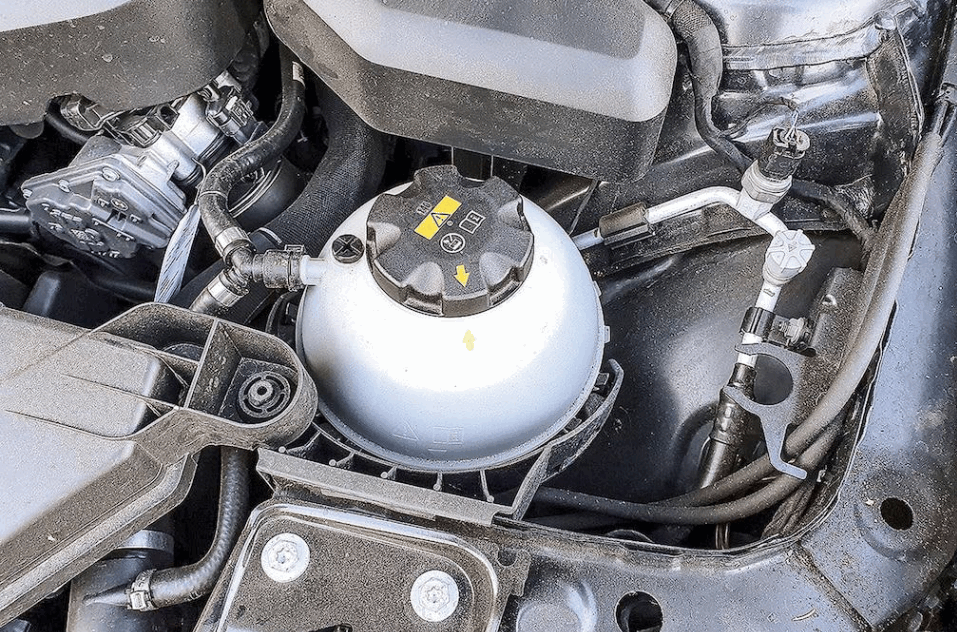
What Type of Engine Coolant Does a BMW Use?
BMW uses engine coolant that meets the specific requirements for its engine and cooling system. The correct coolant type depends on the BMW model, engine, and production year. For this reason, drivers should confirm the required coolant specification before adding or replacing coolant.
BMW coolant helps regulate engine temperature and protect cooling system components from corrosion. Most coolant formulas combine an antifreeze base with corrosion inhibitors and other additives. These ingredients protect components such as the radiator, water pump, thermostat, and coolant passages. The correct formula also supports stable cooling system performance in both hot and cold conditions.
BMW has used different coolant requirements across its vehicle generations. Changes in engine design, cooling system materials, and coolant technology can affect compatibility. A coolant suitable for an older BMW does not automatically suit a newer model. The same principle applies when comparing different BMW engines from the same production period.
Drivers should choose BMW coolant by specification and compatibility instead of color or brand alone. Coolant manufacturers use dyes to help identify their products, but color does not define the complete chemical formula. An aftermarket product may suit a BMW if it meets the required specification. In contrast, a coolant with a familiar color may still have an incompatible formulation.
The safest approach is to identify the exact vehicle first. Check its model, engine, and production year. Then match those details with the required coolant specification before choosing a coolant product.
What Coolant Specifications Does BMW Require?
BMW requires coolant that meets the specification assigned to the vehicle and its cooling system. The exact requirement can vary by model, engine, and production year. Drivers should therefore verify the correct specification before buying, topping up, or replacing engine coolant.
A coolant specification defines more than the basic antifreeze function. It also covers the formulation needed to protect the cooling system during normal operation. Coolant contains corrosion inhibitors that help protect metal surfaces and cooling system components. The correct formulation also needs to work with the materials that BMW uses throughout the system.
BMW coolant requirements have changed as engines and cooling systems have evolved. This makes the vehicle specification more useful than coolant color when selecting a product. Color comes from dye and helps distinguish coolant products. However, it does not provide enough information to confirm chemical compatibility.
Brand name alone also does not determine whether a coolant suits a BMW. Genuine BMW coolant provides a straightforward option when it matches the vehicle requirement. An aftermarket coolant may also work when its manufacturer clearly states that the product meets the required specification and application.
Drivers should follow a simple selection order. First, identify the exact BMW model, engine, and production year. Next, find the coolant specification required for that vehicle. Finally, select a coolant that meets that requirement. This process reduces uncertainty and provides a stronger basis for coolant selection than relying on brand, packaging, or color.
Does BMW Coolant Type Change by Model and Year?
BMW coolant type can change by model, engine, and production year because BMW has updated its cooling system requirements over time. Drivers should not assume that every BMW uses the same coolant. The correct choice depends on the requirements that apply to the specific vehicle.
Different BMW generations use different engines, cooling system designs, and component materials. These differences can affect the coolant formulation that the system requires. BMW may also update coolant requirements as its engine technology develops. As a result, two vehicles that carry the BMW badge may require different coolant specifications.
Model name alone does not provide enough information for an accurate coolant choice. The BMW 3 Series, 5 Series, X3, and X5 each include several generations and engine options. A coolant recommendation for one generation does not automatically apply to every vehicle within the same model family. Production year and engine information provide additional context for identifying the correct requirement.
This distinction becomes especially important when maintaining an older BMW or switching to a different coolant product. Drivers should verify compatibility before topping up or replacing the existing coolant. This approach prevents a broad model based recommendation from overriding the requirements of the actual vehicle.
How Can You Find the Correct Coolant for Your BMW?
Find the correct BMW coolant by identifying the model, production year, engine, and required coolant specification. Check the vehicle documentation or applicable BMW maintenance information for the specification. Then compare that requirement with the coolant manufacturer’s compatibility information. Choose the product only when its stated application matches the requirements of your BMW.
What Color Coolant Does BMW Use?
BMW coolant can have different colors because the required coolant formulation varies across vehicle generations and applications. Drivers may encounter different coolant colors when maintaining BMW vehicles. However, color alone does not identify the correct coolant type for a specific BMW.
Coolant manufacturers add dye to their formulas to give the liquid a recognizable color. The dye can help drivers notice coolant in the expansion tank or identify a visible leak. It can also help distinguish one product from another. However, the color does not provide a complete description of the coolant chemistry or specification.
For this reason, drivers should not match a new coolant to the existing fluid based only on appearance. Two coolant products can share a similar color while following different formulations or requirements. A visible color match does not prove that both products provide the same corrosion protection or material compatibility.
The same rule applies when the existing coolant has changed in appearance. Age, contamination, previous maintenance, and mixing can make visual identification less reliable. Checking the required specification provides more useful information than inspecting the coolant color in the expansion tank.
Use coolant color as an identification clue rather than a compatibility standard. First, identify the BMW model, engine, and production year. Then confirm the required coolant specification and select a product that meets it. The correct specification and vehicle compatibility should determine which BMW coolant you use, not color alone.
Can You Use Aftermarket or Universal Coolant in a BMW?
You can use an aftermarket coolant in a BMW when the product meets the coolant requirements for that specific vehicle. The brand on the container does not determine compatibility by itself. Drivers should compare the product specification and stated applications with the requirements of their BMW before use.
Genuine BMW coolant offers a direct option when BMW specifies it for the vehicle. Aftermarket manufacturers also produce coolants for European vehicles and specific BMW applications. A suitable aftermarket product needs the correct formulation for the cooling system. Its manufacturer should also provide clear compatibility information for the intended application.
Universal coolant requires more careful evaluation. The word “universal” suggests broad compatibility, but it does not replace the requirements of a specific vehicle. BMW models span different generations, engines, and cooling system designs. A general compatibility claim therefore provides less useful information than a clear match with the required coolant specification.
Drivers should also avoid choosing between genuine, aftermarket, and universal coolant based on price or color alone. Instead, compare the required specification with the information on the product label and technical documentation. Check the exact BMW application when the manufacturer provides a compatibility list.
The selection process remains the same for every coolant brand. Identify the BMW model, engine, and production year first. Confirm the required coolant specification next. Then choose a product that matches those requirements. Compatibility with the specific BMW matters more than whether the coolant carries an OEM, aftermarket, or universal label.
Can You Mix Different Types of BMW Coolant?
You should only mix BMW coolant types when both products meet the same requirements and their manufacturers confirm compatibility. Coolants can use different formulations and additive packages. Mixing incompatible products can change the protection that the cooling system receives.
Engine coolant does more than control freezing and boiling temperatures. Its additives also protect metal surfaces and cooling system components against corrosion. Different coolant technologies can use different inhibitor packages to provide this protection. Mixing formulas without confirming compatibility can interfere with their intended performance.
Coolant color does not provide enough information to make this decision. Two products with the same color can use different formulations. Two products with different colors may also have compatibility that you cannot determine by appearance. Drivers should compare coolant specifications and manufacturer information instead of relying on dye color.
Take extra care when you do not know which coolant already sits in the cooling system. Check the vehicle history and previous service records when available. You can also identify the coolant requirement from the BMW model, engine, and production year. Avoid adding an unknown product simply because its color matches the existing fluid.
A coolant replacement or cooling system flush may provide a clearer solution when the existing coolant remains unknown or contaminated. Follow the applicable BMW service information before choosing this option. Confirm both specification and compatibility before mixing two coolant products in a BMW.
What Coolant to Water Ratio Should You Use in a BMW?
Use the coolant to water ratio specified for your BMW and the coolant product you choose. A 50:50 mixture is common for many engine coolant applications, but drivers should not treat this ratio as universal. The correct concentration depends on the coolant formula, vehicle requirements, and operating conditions.
Coolant concentrate requires water before use at the specified dilution ratio. Water helps transfer heat through the cooling system, while antifreeze and additives provide freeze and corrosion protection. The correct concentration balances these functions. Too much or too little concentrate can reduce the performance that the coolant mixture should provide.
Use distilled or deionized water when the coolant manufacturer or applicable BMW instructions require it. These types of water contain fewer minerals than typical tap water. Minerals can remain inside the cooling system and contribute to deposits over time. Always follow the instructions for the specific coolant instead of assuming that every concentrate needs the same amount of water.
Premixed coolant requires a different approach. The manufacturer has already combined coolant and water at the intended concentration. Drivers normally add a compatible premixed product without diluting it again. Adding extra water changes its concentration and can reduce its intended freeze, boiling, and corrosion protection.
Check the product type before adding coolant to a BMW. Identify whether the container holds concentrate or a ready to use mixture. Then follow the required concentration and vehicle specification. The correct BMW coolant mixture depends on both product formulation and vehicle requirements, not a single ratio for every BMW.
What Happens If You Use the Wrong Coolant in a BMW?
Using the wrong coolant in a BMW can reduce corrosion protection and affect cooling system performance. An incompatible formula may not provide the protection that the engine and cooling system require. The level of risk depends on the coolant formula, vehicle requirements, concentration, and length of use.
Coolant protects more than the engine against extreme temperatures. Its additive package also helps control corrosion inside the cooling system. An unsuitable coolant may provide the wrong inhibitor chemistry for the application. Over time, inadequate protection can contribute to corrosion or deposits within the system.
Incorrect coolant can also affect components that depend on stable coolant chemistry. These components include the radiator, water pump, thermostat housing, seals, hoses, and coolant passages. Material compatibility matters because BMW has changed engines and cooling system designs across vehicle generations. This is one reason drivers should match coolant to the specific vehicle.
Mixing incompatible coolant types can create another problem. The resulting mixture may no longer provide the intended properties of either original product. Adding too much water or using concentrate without the correct dilution can also change freeze, boiling, and corrosion protection.
Do not judge coolant suitability by color alone. Check the BMW model, engine, production year, and required coolant specification. Then compare those requirements with the coolant manufacturer’s information. Using a compatible coolant at the correct concentration provides the strongest basis for protecting a BMW cooling system.
How Often Should BMW Engine Coolant Be Changed?
BMW engine coolant should be changed according to the service requirements for the specific model, engine, and production year. BMW vehicles span many generations, so one replacement interval does not apply to every model. Drivers should check the applicable maintenance information before setting a coolant change schedule.
Coolant condition also matters when deciding whether the system needs service. Engine coolant protects the cooling system against corrosion while helping control operating temperature. Its condition can decline because of age, contamination, incorrect mixing, or problems within the cooling system. These factors can justify inspection or service before a normal maintenance interval.
Cooling system repairs can also affect coolant replacement. Work on the radiator, water pump, thermostat, expansion tank, or coolant hoses may require technicians to drain some or all of the coolant. In this situation, the replacement coolant should meet the specification for the vehicle. The system also needs the correct coolant concentration after the repair.
Drivers should investigate coolant that looks contaminated or has an unknown service history. The same applies when previous maintenance records do not identify the coolant type. Simply adding a product with a similar color does not confirm compatibility with the existing coolant.
Check the vehicle requirements, coolant condition, and maintenance history when planning a coolant change. The correct BMW coolant replacement schedule depends on the specific vehicle and its service requirements rather than one fixed interval for every BMW.
Which BMW Engine Coolant Type Should You Choose?
Choose the BMW engine coolant type that meets the specification for your exact model, engine, and production year. BMW coolant requirements can differ across vehicle generations. For this reason, specification and vehicle compatibility should guide your final choice.
Start by identifying your BMW model, engine, and production year. Next, check the coolant specification that applies to the vehicle. Compare this requirement with the coolant manufacturer’s product information before adding the fluid. Do not use coolant color as the main selection method because color does not confirm chemical compatibility.
Check the product concentration as well. Coolant concentrate requires the correct amount of water, while premixed coolant already contains water at its intended ratio. Follow the applicable vehicle and product instructions to maintain the correct concentration.
Genuine BMW coolant provides one option, while a compatible aftermarket product may provide another. In either case, the coolant must suit the specific application. Matching the coolant specification, vehicle requirements, and correct concentration provides the clearest way to choose coolant for a BMW.