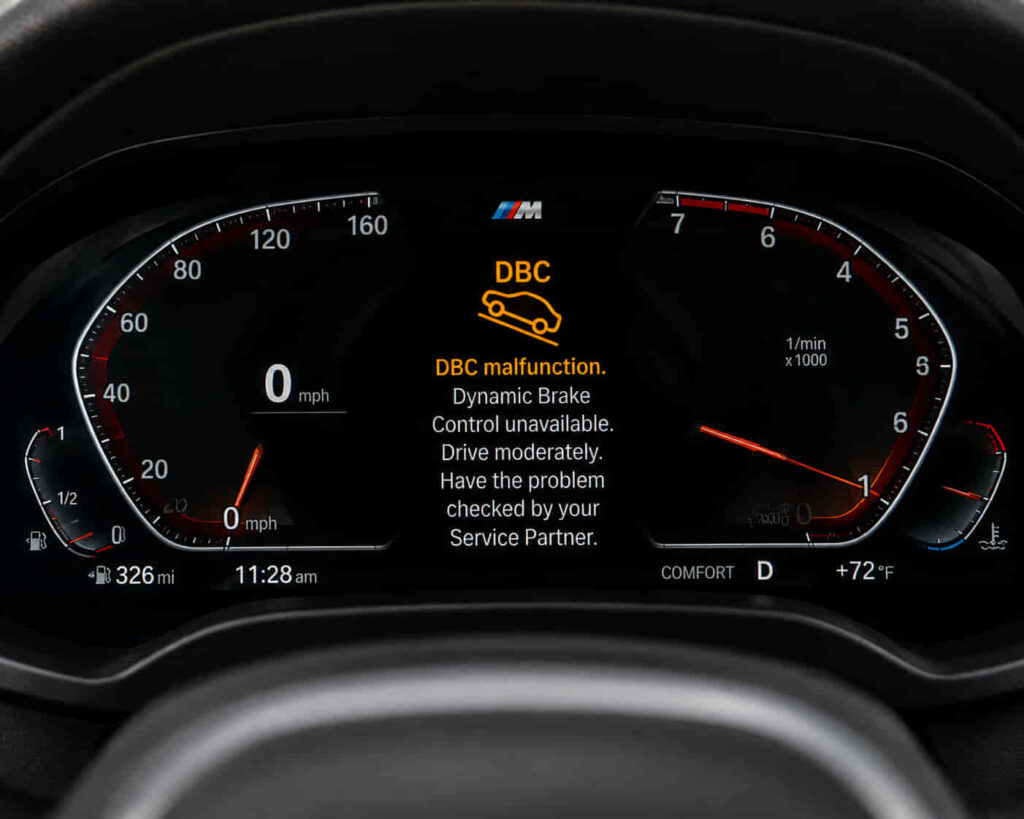
BMW DBC Malfunction means the vehicle has detected a condition affecting the Dynamic Brake Control system responsible for providing additional brake assistance during emergency braking situations. The warning indicates that the brake assistance system has identified an abnormal condition, but it does not directly identify which component has failed.
Dynamic Brake Control (DBC) is part of BMW’s electronic braking safety network. Unlike a traditional braking system that relies only on mechanical and hydraulic operation, DBC works together with other vehicle control systems, including the DSC (Dynamic Stability Control) module, ABS system, brake sensors, and hydraulic pressure control components to improve braking response when the driver applies the brakes quickly.
The DBC system continuously monitors braking information from multiple sources. When the driver presses the brake pedal, the system evaluates input data, checks vehicle conditions, and determines how additional brake assistance should be applied. If the vehicle detects incorrect sensor information, communication problems, unstable voltage, or a control system fault, it may activate the BMW DBC Malfunction warning.
A common misunderstanding is that BMW DBC Malfunction means the entire brake system has failed. In reality, DBC is a brake assistance function designed to support braking performance, especially during emergency situations. The warning may be caused by problems with electronic control components, sensors, wiring, electrical supply, or communication between braking modules.
The symptoms can vary depending on the source of the problem. Some BMW owners may only see the DBC warning message, while others may experience additional ABS or DSC warnings, changes in brake assistance behavior, or multiple electronic system alerts appearing at the same time.
The correct repair approach begins with identifying which part of the brake assistance system has stopped working correctly. Replacing brake components without diagnosis can lead to unnecessary repairs because the actual cause may come from a sensor, module, or electrical issue rather than the braking hardware itself.
This guide explains the common causes of BMW DBC Malfunction, how the Dynamic Brake Control system works, how to diagnose each possible failure, and when professional brake system diagnosis is required.
Can BMW ABS or DSC Module Problems Cause DBC Malfunction?
BMW ABS or DSC module problems can cause DBC Malfunction because the Dynamic Brake Control system depends on these electronic brake control modules to process braking information and manage brake assistance functions. The ABS and DSC systems are central parts of BMW’s electronic braking network, controlling wheel speed data, brake pressure regulation, and vehicle stability information required for proper DBC operation.
The Dynamic Brake Control system does not operate as an independent component. It relies on communication between the brake pedal input, DSC module, ABS system, hydraulic control system, and various sensors. When the ABS or DSC module detects incorrect information or cannot communicate properly, the DBC system may become unavailable because it cannot confirm that brake assistance can be applied correctly.
A module-related DBC problem does not automatically mean the ABS or DSC control unit has completely failed. The issue may involve software faults, internal electronic problems, communication errors, unstable voltage, damaged connectors, or incorrect signals from another brake system component.
ABS or DSC module problems often create multiple warning messages at the same time. BMW owners may see DBC Malfunction together with ABS, DSC, traction control, or brake system warnings because these systems share the same electronic network and safety information.
Diagnosing BMW ABS or DSC-related DBC problems requires scanning brake control modules, checking stored fault codes, verifying module communication, testing electrical supply, and evaluating sensor information. Identifying whether the module itself has failed or is reacting to another system fault is essential before replacing expensive brake control components.
Can Brake Pressure Sensor Problems Cause BMW DBC Warning?
Brake pressure sensor problems can cause BMW DBC Malfunction because the Dynamic Brake Control system requires accurate hydraulic pressure information to determine how the braking system is responding. The brake pressure sensor provides important feedback that allows the electronic brake system to monitor braking force and confirm that the expected pressure level is being achieved.
The DBC system uses information from multiple inputs to provide brake assistance. When the driver applies the brake pedal, the system evaluates pedal input, vehicle speed, wheel movement, and hydraulic pressure data. If the pressure information does not match expected values, the system may disable DBC operation and display a warning.
A brake pressure sensor issue does not automatically mean the hydraulic braking system itself has failed. The problem may involve the sensor, electrical connections, wiring, communication signals, or inaccurate readings caused by another brake control component.
A faulty pressure sensor can create symptoms such as DBC warnings, ABS or DSC messages, inconsistent brake assistance, or a warning that appears intermittently. Because the sensor provides information used by multiple brake safety systems, a single inaccurate signal can affect several functions.
Diagnosing BMW brake pressure sensor problems requires checking sensor readings, comparing actual brake system behavior, inspecting wiring connections, and scanning ABS/DSC fault information. Accurate pressure data is essential for allowing the Dynamic Brake Control system to provide reliable brake assistance.
Read more: BMW Passenger Restraint System Malfunction
Can Wheel Speed Sensor Problems Cause BMW DBC Malfunction?
BMW wheel speed sensor problems can cause DBC Malfunction because the Dynamic Brake Control system relies on accurate wheel movement information to manage braking assistance and stability functions. Wheel speed sensors provide continuous data about how fast each wheel is rotating, allowing the ABS and DSC systems to monitor traction, braking behavior, and vehicle stability.
The DBC system works together with ABS and DSC to determine how the vehicle responds during braking situations. When the driver applies the brake pedal, the system uses wheel speed information along with other sensor inputs to evaluate whether additional brake assistance is required. If a wheel speed sensor provides incorrect information or stops communicating, the brake control system may disable certain assistance functions.
A wheel speed sensor problem does not automatically mean that the sensor itself has completely failed. The issue may involve damaged wiring, connector corrosion, incorrect sensor readings caused by contamination, reluctor ring problems, or communication faults between the sensor and ABS module.
Wheel speed sensor failures often create multiple symptoms because the same information is used by several safety systems. BMW owners may notice DBC Malfunction appearing together with ABS, DSC, traction control warnings, or changes in electronic stability functions.
Diagnosing BMW wheel speed sensor problems requires checking ABS fault codes, comparing individual wheel speed readings, inspecting sensor wiring, examining connectors, and verifying communication with brake control modules. Accurate wheel speed data is essential because the DBC system depends on reliable information to provide proper brake assistance.
Can Brake Pedal Sensor Problems Cause BMW DBC Failure?
BMW brake pedal sensor problems can cause DBC failure because the Dynamic Brake Control system requires accurate information about driver braking input before it can provide additional brake assistance. The brake pedal sensor communicates the driver’s braking intention to the electronic brake control system, allowing the vehicle to determine how and when braking support should be applied.
The DBC system evaluates brake pedal movement, braking force, vehicle speed, and other operating conditions before activating its assistance functions. If the brake pedal sensor provides incorrect information, delayed signals, or inconsistent readings, the system may not be able to determine the driver’s braking demand correctly.
A brake pedal sensor issue does not automatically mean the mechanical brake pedal or brake system has failed. The problem may involve sensor calibration, electrical connection problems, wiring faults, software issues, or incorrect signals being sent to the DSC/ABS module.
Brake pedal sensor problems may create symptoms such as DBC warnings, inconsistent brake assistance, delayed system response, or additional electronic brake warnings. Because the sensor is part of the input system, an incorrect signal can affect how the vehicle interprets driver commands.
Diagnosing BMW brake pedal sensor problems requires checking sensor data, brake input signals, fault codes, wiring connections, and communication between the pedal sensor and brake control modules. Confirming accurate brake input information helps determine whether the problem comes from the sensor or another part of the braking system.
Can Low Battery Voltage Cause BMW DBC Malfunction?
Low battery voltage can trigger BMW DBC Malfunction because the Dynamic Brake Control system depends on stable electrical power to operate brake control modules, sensors, and communication systems correctly. Modern BMW braking systems are electronically controlled, meaning voltage stability is essential for the ABS, DSC, and DBC systems to process information accurately.
The DBC system requires continuous communication between multiple electronic components. The DSC module, ABS control unit, brake sensors, and other vehicle systems must receive sufficient electrical power to monitor braking conditions and provide assistance when required. When voltage drops below the expected level, control modules may enter protection mode, lose communication temporarily, or store fault information.
A low-voltage condition does not automatically mean that the braking components are damaged. The issue may occur because of a weak battery, charging system problems, poor electrical connections, damaged ground points, or a previous battery replacement event that interrupted module operation.
BMW DBC warnings caused by voltage issues often appear together with other electronic warnings, including ABS, DSC, or stability control messages. This happens because multiple vehicle systems depend on the same electrical network and may respond to unstable power conditions.
Diagnosing BMW DBC problems related to voltage requires checking battery condition, charging system performance, electrical connections, module communication, and stored brake system fault codes. Confirming the electrical condition helps determine whether the DBC system has a real component failure or is reacting to an unstable power supply.
Can You Drive With BMW DBC Malfunction?
Driving with BMW DBC Malfunction depends on the specific cause of the warning because the issue may affect only brake assistance functions or indicate a larger problem within the electronic braking system. Dynamic Brake Control is designed to provide additional braking support during emergency situations, so a malfunction means that this assistance function may not be available.
A DBC warning does not automatically mean that the vehicle has lost all braking capability. The standard hydraulic braking system may continue to operate, but electronic assistance features connected to ABS, DSC, and brake control systems may be limited or disabled.
The severity depends on the symptoms and related warnings. A vehicle showing only a temporary electronic fault may behave differently from one displaying multiple brake warnings, changes in brake pedal response, or ABS and DSC system failures.
Ignoring a DBC warning can reduce the vehicle’s ability to provide additional brake support when needed. Because the system is connected to important safety functions, the cause should be identified instead of assuming the warning is harmless.
BMW DBC Malfunction should be diagnosed as soon as possible, especially when the warning remains active, appears with ABS or DSC messages, or changes the vehicle’s braking behavior. Proper diagnosis determines whether the issue is a temporary electronic fault or an actual brake system problem.
Why Is BMW DBC Malfunction Showing With ABS and DSC Warning?
BMW DBC Malfunction often appears together with ABS and DSC warnings because these systems share the same electronic control network and rely on common sensor information. The Dynamic Brake Control system works together with ABS and DSC to monitor braking conditions, vehicle stability, and wheel behavior.
The relationship between these systems means that one component failure can affect multiple functions. For example, a failed wheel speed sensor may provide incorrect information to the ABS module, which then affects DSC operation and causes the DBC system to become unavailable.
A combined ABS, DSC, and DBC warning does not automatically mean that all three systems have failed. In many cases, one underlying issue creates multiple warning messages because these systems depend on shared data and communication pathways.
Common shared causes include sensor faults, low voltage conditions, wiring problems, ABS/DSC module issues, and communication errors between control units.
Diagnosing combined BMW ABS, DSC, and DBC warnings requires identifying the first fault recorded in the system rather than replacing components based only on the number of warning messages. The root cause usually exists in the component or signal affecting multiple brake control systems.
How Do You Reset BMW DBC Malfunction?
Resetting BMW DBC Malfunction can clear stored electronic faults after a repair, but it does not fix failed sensors, damaged wiring, module problems, or brake system faults. The DBC system stores fault information when it detects abnormal operation, and the warning may remain until the cause has been corrected.
A reset may help when the warning was caused by a temporary condition such as a voltage interruption, communication error, or temporary module issue. However, if the system detects an active fault, the warning will usually return because the underlying problem remains.
Clearing fault codes without diagnosis can hide important information about the brake system condition. The DBC system monitors safety-related functions, so understanding why the warning appeared is more important than simply removing the message.
BMW DBC reset should be treated as a final diagnostic step after identifying and repairing the cause. The correct process is to diagnose the fault, repair the affected component or system, clear stored codes, and verify that brake assistance functions correctly.
How Do You Diagnose BMW DBC Malfunction?
Diagnosing BMW DBC Malfunction requires identifying whether the failure comes from sensors, ABS/DSC modules, electrical supply, wiring, communication systems, or brake control components. The DBC warning indicates that the brake assistance system has detected a problem, but it does not identify the failed component by itself.
The diagnostic process begins by scanning the brake control system and retrieving fault codes from the ABS and DSC modules. These codes provide information about whether the problem involves wheel speed signals, pressure information, module communication, voltage supply, or another brake-related function.
After identifying the affected system, the technician must evaluate the related components. This may include checking battery voltage, testing sensors, inspecting wiring connections, verifying module communication, and confirming proper operation of the hydraulic brake system.
A common mistake is replacing brake components immediately because the vehicle displays a DBC warning. In many cases, the actual cause may be an electrical problem, sensor issue, or communication fault rather than a mechanical brake failure.
The correct BMW DBC diagnostic sequence is: scan brake modules → identify fault codes → test sensors and electrical systems → inspect ABS/DSC communication → repair cause → verify brake assistance operation.
How Much Does BMW DBC Repair Cost?
BMW DBC repair costs depend on the failed component, diagnostic complexity, and whether the problem involves sensors, electronic modules, wiring, or brake system components. Because DBC is connected to several braking systems, the repair requirement varies depending on the actual cause of the warning.
A sensor replacement or wiring repair requires a different solution compared with replacing an ABS module, DSC control unit, or other electronic brake components. Accurate diagnosis is essential because replacing expensive parts without confirming the failure source can increase costs unnecessarily.
The final repair approach depends on whether the fault is located in the sensor system, electrical network, control modules, or brake assistance components.
BMW DBC repair costs are determined by the diagnosed cause rather than the warning message itself.
When Should BMW DBC Problems Be Diagnosed Professionally?
Professional diagnosis is recommended when BMW DBC Malfunction warnings remain active, appear together with ABS or DSC warnings, braking behavior changes, or the system requires module testing. Dynamic Brake Control is part of BMW’s safety braking network, so accurate diagnosis is essential when the system reports a fault.
A professional evaluation becomes especially important when the issue involves ABS modules, DSC communication, brake pressure sensors, wheel speed sensors, or electrical problems. These systems require specialized diagnostic equipment to identify the exact failure point.
Ignoring repeated DBC warnings may reduce the vehicle’s ability to provide brake assistance during emergency situations. Even when normal braking appears available, the warning indicates that an electronic safety function requires attention.
The correct diagnostic path is:
warning appears → scan brake system → identify affected component → test sensors and modules → repair cause → verify DBC operation
BMW DBC Malfunction is a brake assistance system warning, not a specific component diagnosis. Understanding the relationship between DBC logic, ABS, DSC, sensors, hydraulic systems, and vehicle communication networks is essential for restoring reliable brake assistance.