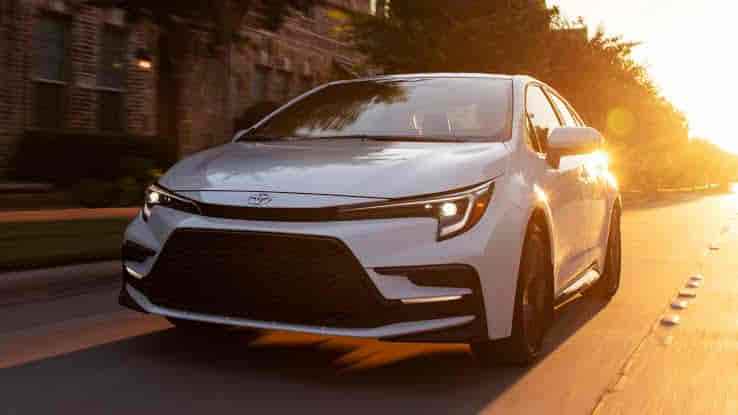
Choosing a used Toyota Corolla can look deceptively simple. The Corolla has built a reputation for reliability, affordable maintenance, strong fuel economy, and impressive longevity, but that reputation does not mean every model year is equally attractive on the used-car market. When you search for the best years for Toyota Corolla, you are really trying to answer a more important question: which Corolla gives you the strongest balance of reliability, ownership cost, safety, comfort, and long-term value for the money?
That distinction matters because buying an older Corolla is not simply about finding the lowest price. A seemingly inexpensive car can become costly when deferred maintenance, excessive oil consumption, transmission problems, worn suspension components, accident damage, or unresolved recalls begin appearing after purchase. On the other hand, a carefully maintained Corolla with higher mileage can sometimes be a smarter investment than a newer example with a poor service history.
The best Corolla years are therefore determined by more than age alone. Powertrain durability, transmission design, known reliability issues, safety equipment, fuel economy, maintenance requirements, depreciation, and the condition of the individual vehicle all influence whether a particular year deserves consideration.
In this guide, we will examine the best years for Toyota Corolla, the model years that deserve additional caution, the most reliable Corolla generations, and the factors you should consider before buying a used Corolla. The goal is not simply to name a winner, but to help you identify the Corolla that is most likely to deliver dependable transportation without turning a bargain purchase into an expensive ownership experience.
What Makes a Toyota Corolla Year the Best to Buy?
When comparing the best years for Toyota Corolla, reliability should be the starting point, but it should not be the only factor. A Corolla can have an excellent reputation for durability while still having particular model years with more reported problems than others. Complaint data illustrates this difference clearly. For example, CarComplaints identifies the 2002 Corolla as its worst model year because of costly engine oil-consumption complaints, while the 2009 Corolla has the highest overall complaint count in its database.
A better way to evaluate a Corolla is to consider the complete ownership picture. The engine and transmission should have a strong durability record, but the vehicle should also offer reasonable maintenance costs, acceptable fuel economy, useful safety equipment, and good parts availability. These factors become increasingly important when comparing an older Corolla with a newer generation because the cheapest car to purchase is not necessarily the cheapest car to own.
The distinction between model year and vehicle condition is equally important. A 2013 Corolla with a documented maintenance history, clean title, no major accident damage, and consistent servicing can be a much safer purchase than a lower-mileage example from a theoretically better year that has been neglected. Mileage should therefore be interpreted together with service records, previous ownership, driving conditions, and the vehicle’s current mechanical condition.
Known problems also deserve close attention. Some Corolla generations have been associated with issues such as excessive oil consumption, water-pump problems, transmission behavior, or other age-related failures. Complaint databases can help identify patterns, but complaint volume is not the same thing as a mechanical failure rate, and it should not be used as the sole basis for declaring a model year good or bad.
Safety and technology can further change the buying decision. A newer Corolla may cost more initially but provide substantially more modern driver-assistance features than an older model. For instance, the 2017 Corolla introduced Toyota Safety Sense-P as standard equipment, bringing features such as pre-collision warning, pedestrian detection, lane departure alert with steering assist, automatic high beams, and adaptive cruise control to the lineup.
Finally, recall history should always be considered before buying any used Corolla. A vehicle with an open safety recall should not be evaluated solely on its purchase price or reliability reputation. The National Highway Traffic Safety Administration provides a VIN-based recall search that allows buyers to verify whether applicable safety recalls have been completed.
The best Toyota Corolla year is therefore the one that combines a strong powertrain history with reasonable ownership costs, appropriate safety equipment, a fair market price, and excellent individual condition. Once those criteria are established, it becomes much easier to separate the genuinely attractive Corolla years from those that deserve additional caution.
Read more: Toyota P0741
Best Years for Toyota Corolla
When looking for the best years for Toyota Corolla, several model years stand out because they combine Toyota’s proven powertrain reputation with reasonable used-car pricing, strong fuel economy, modern safety features, and a relatively mature platform. There is no single Corolla year that is perfect for every buyer, but some periods offer a particularly attractive balance between purchase price and long-term ownership.
For buyers seeking an affordable older Corolla, the 2009 to 2013 period remains worth considering, particularly when the individual vehicle has strong maintenance records. These cars benefit from relatively straightforward mechanical layouts, abundant parts availability, and a large pool of technicians familiar with the platform. However, buyers should not treat the entire period as equally desirable. The condition of an older Corolla becomes increasingly important as age, mileage, previous repairs, rust, and deferred maintenance begin to outweigh the advantages of the original design.
The 2015 to 2019 Corolla is arguably more compelling for many used-car shoppers who want a balance between affordability and modern features. Consumer Reports describes the 2014 to 2019 generation as a strong used-car value, with the Corolla delivering approximately 32 mpg overall in the earlier years and 36 mpg overall in later years. The organization also identifies the 2017 model year as particularly significant because Toyota made forward collision warning and automatic emergency braking standard.
Among these years, 2017, 2018, and 2019 deserve particular attention. Consumer Reports reports that the 2017 Corolla is more reliable than other cars from the same model year, while its 2018 and 2019 evaluations also show stronger-than-average reliability. The 2019 model is described as much more reliable than other vehicles from its model year.
For buyers who want a newer Corolla without paying for the latest model, the 2020 to 2022 period can also be attractive. The 2020 model introduced a major redesign, meaning buyers receive a newer platform, updated styling, modern technology, and improved safety equipment. Consumer Reports currently describes the 2020 Corolla as more reliable than other vehicles from the same model year, while its 2022 evaluation likewise places the Corolla above average for reliability.
However, there is an important distinction between choosing a best year and choosing the newest possible year. The 2020 redesign brings advantages, but redesign years can also carry more uncertainty because manufacturers are introducing substantially updated systems. Consumer Reports specifically identifies 2020 as a Corolla redesign year. This makes a well-maintained 2018 or 2019 Corolla particularly interesting for buyers who prioritize proven reliability and lower purchase costs over having the newest generation.
The 2016 Corolla is another sensible middle-ground choice. It belongs to the same broader generation that received strong used-car value recognition, while being less expensive than later examples in many markets. Consumer Reports reports one NHTSA recall for the 2016 model and identifies some owner-reported climate-system concerns, including A/C compressor and blower-related issues, which means prospective buyers should still inspect the individual vehicle carefully.
The key takeaway is that the best years for Toyota Corolla are not necessarily determined by a single reliability ranking. For an inexpensive older car, a well-maintained 2010 to 2013 Corolla may make sense. For a balance of reliability, safety, technology, and used-market value, 2017 to 2019 models are particularly appealing. For buyers who prefer a newer platform and can afford a higher purchase price, 2020 to 2022 models provide a more modern ownership experience.
Most importantly, these model-year recommendations should be treated as a starting point rather than a substitute for inspecting the actual vehicle. A Corolla’s maintenance history, accident record, mileage, rust condition, transmission behavior, engine condition, and completed recalls can have a greater impact on ownership than a one-year difference in the model’s production date.
Best Toyota Corolla Years for Reliability
When reliability is the main priority, the best years for Toyota Corolla are generally the ones that combine a proven powertrain with a mature design and a manageable level of age-related deterioration. This is particularly important when shopping for a used Corolla because reliability is not simply a characteristic of the model year. It is the result of the interaction between the original engineering, maintenance history, mileage, driving conditions, and the condition of individual components after years of use.
The 2017 to 2019 Corolla stands out as a particularly strong period for buyers who want modern equipment without moving into the latest generation. Consumer Reports currently rates the 2017 Corolla’s predicted reliability at 4 out of 5 and describes it as more reliable than other vehicles from the same model year. The organization gives similar reliability assessments to the 2018 and 2019 models, with the 2019 Corolla rated substantially better than other vehicles from its model year. (consumerreports.org)
This period also benefits from Toyota’s expansion of active safety technology. Beginning with the 2017 model, Toyota made its Safety Sense-P package standard on the Corolla, providing technology such as a pre-collision system with pedestrian detection, lane departure alert with steering assist, automatic high beams, and dynamic radar cruise control. That makes these years especially attractive for buyers who want reliability without sacrificing modern driver assistance. (pressroom.toyota.com)
Older Corolla models can also deliver excellent longevity when properly maintained. The 2009 to 2013 period is attractive because these cars are mechanically familiar, relatively inexpensive to maintain, and supported by a mature aftermarket. However, age changes the reliability equation. A Corolla from this period may have a durable engine and transmission but still require substantial spending on suspension components, seals, cooling-system components, brakes, tires, air-conditioning parts, or other systems affected by time and mileage.
Buyers considering older Corollas should also distinguish between different engines and production periods rather than assuming that every Corolla shares exactly the same reliability profile. Certain older Corolla generations have documented concerns involving excessive oil consumption. CarComplaints, for example, identifies the 2002 Corolla as its worst model year based on reported engine problems and unusually high repair costs. (carcomplaints.com) This illustrates why the phrase “Toyota Corolla reliability” should never be interpreted as a guarantee that every model year or engine configuration is trouble-free.
The 2020 to 2022 Corolla provides another compelling reliability option for buyers who prefer a newer vehicle. These cars belong to the current-generation platform introduced for the 2020 model year and offer newer safety technology, updated infotainment, and more contemporary interior and exterior design. Consumer Reports currently rates the 2020 Corolla as more reliable than other vehicles from the same model year, while its 2022 evaluation also shows above-average reliability. (consumerreports.org)
Even among these stronger years, maintenance history remains the deciding factor. A Corolla that has received regular oil changes, appropriate transmission service, timely cooling-system maintenance, and prompt repairs is much more likely to provide dependable service than one that has been neglected. This is particularly important when buying a used Corolla privately, where a clean exterior can conceal years of deferred mechanical maintenance.
Ultimately, the most reliable Corolla is not necessarily the one with the lowest mileage or the newest badge. For many used-car buyers, a well-maintained 2017 to 2019 Corolla offers one of the strongest combinations of proven reliability, modern safety, reasonable operating costs, and age. A carefully inspected older Corolla can still be an excellent value, while a newer example may be preferable when safety technology, lower age-related maintenance, and longer remaining service life justify the additional purchase price.
Toyota Corolla Years to Avoid
Calling a particular Corolla year a “year to avoid” requires some nuance. Toyota Corolla has generally maintained a strong reliability reputation, so it would be misleading to suggest that every vehicle from a problematic model year is automatically a bad purchase. The more useful approach is to identify years with documented patterns of complaints or known issues and then determine whether a specific vehicle has been properly maintained and repaired.
One of the clearest examples is the 2002 Toyota Corolla. CarComplaints identifies 2002 as the worst Corolla model year in its database, with engine-related complaints standing out as a major concern. Excessive oil consumption is particularly important because an engine that consumes substantial amounts of oil can suffer accelerated internal wear if the owner fails to monitor and replenish the oil. For a used-car buyer, a 2002 Corolla therefore deserves considerably more scrutiny than its reputation as an inexpensive Toyota might initially suggest. (carcomplaints.com)
The 2009 Corolla also deserves careful inspection, although the situation is more complicated than simply labeling it a bad car. CarComplaints records a high number of complaints for the 2009 model, with engine and steering-related issues appearing among the reported problems. High complaint volume alone does not establish a high failure rate because databases can be influenced by vehicle sales volume, vehicle age, owner reporting behavior, and the severity of individual incidents. Nevertheless, the pattern provides a reason to inspect a 2009 example carefully rather than buying it solely because it carries the Corolla name. (carcomplaints.com)
Older Corolla buyers should also pay particular attention to oil consumption. An engine that requires frequent oil top-ups may indicate an underlying mechanical issue rather than normal operating behavior. Before purchasing an older Corolla, checking the oil level, inspecting for leaks, reviewing maintenance records, and asking the seller about oil consumption can provide valuable clues about the engine’s condition.
Age itself is another reason some older Corolla years may be less attractive. Even when the engine and transmission remain durable, rubber components, suspension parts, seals, cooling-system components, air-conditioning components, and electrical systems can deteriorate with time. A low purchase price can therefore be deceptive. Spending less on the vehicle initially does not necessarily mean spending less over the first several years of ownership.
Recall history should also influence the buying decision. A model year with a recall is not automatically one to avoid because recalls are often issued to correct specific safety or mechanical defects. What matters is whether the particular vehicle has an open recall and whether the required repair has been completed. NHTSA provides a VIN-based search tool that allows buyers to check the recall status of an individual vehicle. (nhtsa.gov)
The safest interpretation of Toyota Corolla years to avoid is therefore to treat certain model years as higher-priority inspection candidates rather than universally defective vehicles. A well-maintained 2009 Corolla with documented repairs and excellent mechanical condition may still be a better purchase than a neglected 2018 model. Conversely, a low price should never be used to justify ignoring serious engine, transmission, structural, or safety concerns.
For buyers comparing multiple used Corollas, the strongest strategy is to avoid vehicles with unclear maintenance histories, significant oil-consumption symptoms, unresolved recalls, severe rust, accident-related structural damage, or transmission problems. Model year can narrow the search, but the condition and history of the specific car should make the final decision.
Best Toyota Corolla Years by Generation
Looking at the best years for Toyota Corolla by generation provides a more useful perspective than comparing model years in isolation. Each generation represents a different combination of engine technology, transmission design, safety equipment, manufacturing maturity, and age. For a used-car buyer, understanding where a particular Corolla sits within its generation can help explain why some years offer a better balance of reliability and value than others.
The tenth-generation Corolla, sold in the United States from the late 2000s into the early 2010s, remains relevant because of its relatively straightforward mechanical design and low-cost ownership potential. Models from approximately 2009 through 2013 can be attractive to buyers on a tighter budget, particularly when maintenance records are complete. However, age is now a major consideration. At this point, condition, rust, previous accidents, oil consumption, and replacement of aging components can matter more than the original reliability of the platform.
The eleventh-generation Corolla, introduced for the 2014 model year, represents one of the strongest used-car generations for buyers who want modern features without paying for a newer vehicle. Toyota significantly updated the exterior and interior design while retaining a familiar naturally aspirated four-cylinder powertrain. The later years of this generation are particularly attractive because the platform had matured while Toyota continued adding safety and technology improvements.
Within this generation, 2017 to 2019 deserves special attention. The 2017 Corolla received Toyota Safety Sense-P as standard equipment, making active safety technology much more accessible. Consumer Reports also currently rates the 2017 Corolla as more reliable than other vehicles from the same model year, while the 2018 and 2019 models maintain strong reliability assessments. (pressroom.toyota.com)
The twelfth-generation Corolla arrived for the 2020 model year and brought a substantially more modern vehicle. Built on Toyota’s TNGA platform, the new Corolla offered updated driving dynamics, contemporary safety technology, and a more sophisticated interior. Toyota also continued developing the Corolla’s hybrid offering in selected markets, broadening its appeal to buyers focused on fuel economy. (pressroom.toyota.com)
The first year of a major redesign should still be evaluated carefully rather than automatically being considered the best choice. A newer platform can provide important advantages, but buyers may prefer a later model year once the generation has matured. For this reason, the 2021 and 2022 Corolla can be especially interesting for shoppers who want the newer generation while avoiding some of the uncertainty associated with the initial redesign year.
The newest Corolla generations also provide stronger safety and technology than older models, but that does not necessarily make them the best financial choice for every buyer. Higher purchase prices, depreciation, insurance costs, and financing expenses can outweigh the advantages for someone whose priority is inexpensive transportation.
Ultimately, the best Corolla generation depends on the buyer’s priorities. Older generations can deliver exceptional value when purchase price and mechanical simplicity matter most. The later eleventh generation offers an attractive balance of proven reliability, affordability, and modern safety. The twelfth generation is better suited to buyers who value newer technology, improved refinement, and a longer remaining service life.
This generational perspective also reinforces an important principle: the best years for Toyota Corolla are usually found toward the mature portion of a well-regarded generation, but the individual vehicle’s condition still matters more than a simple year-based ranking. A carefully maintained Corolla from a less desirable year can outperform a neglected example from a highly rated year.
Best Toyota Corolla Years for Fuel Economy
Fuel economy is one of the reasons the Corolla remains popular with used-car buyers, but the best years for Toyota Corolla are not necessarily identical to the years that deliver the lowest fuel consumption. Engine configuration, transmission, vehicle weight, driving conditions, tire condition, and maintenance all influence how efficiently a Corolla uses fuel. Official EPA ratings are therefore useful for comparing model years, but real-world consumption can vary significantly between individual vehicles.
The later eleventh-generation Corolla is particularly appealing to buyers who want efficient transportation without moving into a hybrid. Toyota’s 2017 Corolla, for example, paired its 1.8-liter four-cylinder engine with a continuously variable transmission in most configurations, and Toyota reported EPA estimates as high as 40 mpg highway for certain versions. The same model also benefited from Toyota Safety Sense-P becoming standard, making it an attractive combination of fuel efficiency and safety technology. (pressroom.toyota.com)
The 2018 and 2019 Corolla continue this efficiency-focused formula. Their relatively lightweight construction and efficient 1.8-liter powertrain make them well suited to commuters who spend substantial time driving in urban and suburban environments. For many used-car buyers, these years offer a particularly good compromise because they can deliver modern fuel economy without the higher purchase price associated with a newer Corolla.
The 2020-generation Corolla brought further changes to the powertrain and vehicle platform. Toyota introduced the new-generation sedan with a 1.8-liter engine in L and LE versions and a more powerful 2.0-liter engine in SE and XSE variants. The 1.8-liter configuration was designed with efficiency in mind, while the 2.0-liter version prioritized stronger performance. (pressroom.toyota.com)
For buyers who place fuel economy above everything else, Corolla Hybrid models deserve separate consideration. Toyota introduced the 2020 Corolla Hybrid in the United States, with an EPA-estimated 53 mpg city and 52 mpg highway at launch. That represents a major efficiency advantage over conventional gasoline-powered Corolla variants, particularly for drivers who spend much of their time in stop-and-go traffic. (pressroom.toyota.com)
However, the most fuel-efficient Corolla on paper is not necessarily the cheapest Corolla to own. Hybrid versions may have a higher initial purchase price, while older gasoline models can be significantly less expensive to acquire and maintain. The right choice depends on annual mileage, fuel prices, expected ownership period, and the condition of the individual vehicle.
Maintenance also plays a major role in real-world fuel consumption. Underinflated tires, poor wheel alignment, worn spark plugs, dirty air filters, dragging brakes, and engine problems can all reduce efficiency. A well-maintained older Corolla may therefore achieve better real-world economy than a newer vehicle that has been neglected.
For most used-car shoppers, the 2017 to 2019 Corolla offers an excellent balance of fuel economy, reliability, safety, and purchase price. Buyers who prioritize maximum fuel savings and are comfortable paying more for a newer vehicle should also consider the 2020-and-newer Corolla Hybrid. The key is to compare the total cost of ownership rather than focusing only on the EPA fuel-economy number displayed on the window sticker.
Best Toyota Corolla Years for Value
The best years for Toyota Corolla from a value perspective are not necessarily the cheapest ones on the used-car market. True value comes from the relationship between purchase price, reliability, fuel consumption, maintenance requirements, safety equipment, depreciation, and the amount of useful service life remaining. A Corolla that costs slightly more upfront can be the better financial decision if it reduces the likelihood of major repairs and provides several additional years of dependable transportation.
For many buyers, the 2017 to 2019 Corolla represents one of the strongest value points in the used market. These vehicles are old enough to have experienced significant depreciation compared with newer Corollas, yet they remain modern enough to provide contemporary safety and technology. The 2017 model is particularly notable because Toyota made Safety Sense-P standard, bringing important driver-assistance features to every Corolla trim. (pressroom.toyota.com)
The value proposition becomes even stronger when the vehicle has a documented service history. A used Corolla with regular oil changes, appropriate transmission maintenance, properly maintained cooling systems, and timely repairs is more likely to deliver predictable ownership costs. Buyers should therefore compare maintenance records alongside asking prices rather than assuming that the lowest-priced Corolla represents the best deal.
Older 2009 to 2013 Corollas can offer exceptional upfront value for buyers working with a limited budget. Their purchase prices are generally lower because of age, and parts and repairs are widely understood by independent repair shops. However, the financial calculation changes when age-related repairs begin accumulating. Suspension components, air-conditioning systems, cooling-system parts, seals, tires, brakes, and other wear items may require attention even when the engine and transmission remain healthy.
At the other end of the spectrum, 2020 to 2022 Corollas can make sense for buyers who are willing to spend more initially in exchange for a newer platform, modern safety technology, improved interior design, and more remaining vehicle life. Consumer Reports currently describes the 2020 Corolla as more reliable than other vehicles from the same model year, while the 2022 model also receives a favorable reliability assessment. (consumerreports.org)
Depreciation is another important part of the value equation. Buying a nearly new Corolla can provide the latest technology and warranty coverage, but the original owner typically absorbs the largest portion of early depreciation. A lightly used Corolla that is several years old can therefore offer an attractive middle ground, providing much of the newer-car experience without paying the full new-car premium.
Fuel economy also contributes to long-term value. The Corolla’s efficient four-cylinder engines keep operating costs relatively low, while Corolla Hybrid models can reduce fuel consumption even further. However, buyers should calculate expected fuel savings against the higher purchase price of a hybrid rather than assuming that better fuel economy automatically means lower total ownership costs.
The most important value principle is simple: buy the best-condition Corolla you can reasonably afford rather than chasing the absolute lowest price. A clean title, strong maintenance history, independent inspection, reasonable mileage, and absence of serious mechanical problems can make a slightly more expensive Corolla a far better investment than a bargain vehicle with hidden defects.
For many shoppers, a 2017 to 2019 Toyota Corolla provides the most balanced combination of price, reliability, fuel economy, safety, and remaining service life. A well-maintained older model can be an excellent budget choice, while a 2020-or-newer Corolla may offer better long-term value for buyers who prioritize newer technology and lower age-related maintenance. The right decision ultimately depends on how much you drive, how long you intend to keep the vehicle, and the condition of the specific Corolla you are considering.
What Toyota Corolla Mileage Is Too High?
Mileage is one of the first numbers used to judge a used Toyota Corolla, but it should not be treated as a simple cutoff point. There is no universal mileage at which a Corolla suddenly becomes unreliable. A well-maintained Corolla with high mileage can remain a dependable daily driver, while a lower-mileage vehicle with neglected maintenance can require expensive repairs soon after purchase. When evaluating the best years for Toyota Corolla, mileage should therefore be considered together with service history, mechanical condition, driving environment, and previous ownership.
A Corolla with around 100,000 miles is not automatically a high-risk purchase. At this stage, the vehicle may still have substantial useful life if the previous owner followed the recommended maintenance schedule. What matters is whether major maintenance and wear-related repairs have been addressed as the vehicle aged. Oil changes, cooling-system maintenance, brake work, suspension repairs, tire replacement, and other routine services provide clues about how seriously the vehicle was maintained.
Once a Corolla approaches or exceeds 150,000 miles, the inspection becomes increasingly important. The engine and transmission may still operate well, but age and mileage increase the likelihood that components outside the powertrain will need attention. Suspension bushings, wheel bearings, engine mounts, air-conditioning components, cooling-system parts, seals, and other systems can begin requiring replacement. These expenses do not necessarily mean the vehicle is a bad purchase, but they should be reflected in the price.
At 200,000 miles and beyond, condition becomes far more important than model year. A high-mileage Corolla with detailed maintenance records and a clean mechanical inspection can still be useful transportation, especially when purchased at an appropriate price. However, buyers should expect more frequent repairs and should have enough financial flexibility to handle age-related failures. At this mileage, an independent pre-purchase inspection is particularly valuable.
The type of driving that produced the mileage also matters. Highway miles are not automatically harmless, but steady-speed driving generally places different stresses on a vehicle than repeated short trips, heavy stop-and-go traffic, or severe-duty operation. A Corolla used primarily for long-distance commuting may have accumulated substantial mileage while experiencing relatively consistent operating conditions. A lower-mileage city car may have experienced frequent cold starts, short trips, and repeated braking and acceleration.
Maintenance history can therefore outweigh the odometer. A 160,000-mile Corolla with complete records, consistent oil changes, documented repairs, and a clean inspection can be a better purchase than a 90,000-mile example with no records and obvious signs of neglect. This is particularly important when comparing older Corolla years because many vehicles now on the used market have passed through multiple owners.
Buyers should also consider how the asking price reflects mileage. Paying a premium for a low-mileage Corolla only makes sense if the vehicle’s condition, history, and remaining service life justify it. Conversely, an inexpensive high-mileage Corolla can become poor value if the buyer immediately needs to replace major components.
For that reason, there is no single number that defines a Corolla as too high mileage. Around 150,000 miles should trigger a more thorough inspection, while vehicles above 200,000 miles require particularly careful evaluation, but neither figure automatically disqualifies a Toyota Corolla. The best purchase is the vehicle whose mileage is supported by its maintenance history and current mechanical condition.
What to Check Before Buying a Used Toyota Corolla
Finding one of the best years for Toyota Corolla is only the first step. The specific vehicle you buy can be far more important than the model year printed on the registration. A used Corolla should be evaluated as an individual vehicle, with its maintenance history, mechanical condition, accident history, mileage, and recall status examined before money changes hands.
Start by reviewing the vehicle’s maintenance records and history. Consistent oil changes are particularly important because the engine depends on clean oil and proper lubrication throughout its service life. Look for evidence of routine maintenance as well as major repairs. A seller who can provide detailed service invoices gives you considerably more information than one who simply says the car has “always been maintained.”
The engine should be inspected and, ideally, started from cold. Listen for unusual noises during startup and observe whether the engine settles into a stable idle. Check for visible oil or coolant leaks around the engine and inspect the condition of the fluids. Any evidence of excessive oil consumption deserves further investigation, particularly when considering an older Corolla because some model years have documented oil-consumption complaints. (carcomplaints.com)
The transmission deserves equal attention during the test drive. Depending on the model year and configuration, the Corolla may use different transmission technologies, so the behavior expected from one year should not necessarily be applied to another. The transmission should engage smoothly, respond predictably to throttle inputs, and avoid abnormal noises, hesitation, harsh engagement, or unexpected RPM behavior.
The suspension and steering systems should also be evaluated because these components experience significant wear as mileage accumulates. Listen for knocking or rattling over uneven roads and pay attention to whether the vehicle tracks straight without requiring constant steering correction. Uneven tire wear can provide clues about alignment, suspension wear, or previous accident damage.
The vehicle’s braking system, tires, air conditioning, electrical equipment, infotainment system, lights, windows, locks, and other accessories should be tested rather than assumed to work. Small problems can quickly add up after purchasing a used vehicle, especially when several systems have reached the end of their service life simultaneously.
The underside of the Corolla should receive careful attention as well. Rust can be particularly important depending on where the vehicle has spent its life. Inspect the underbody, suspension mounting points, brake lines, exhaust system, and other exposed components for corrosion or damage. A vehicle that spent years in a region where road salt is common may require considerably more scrutiny than an otherwise identical Corolla from a mild climate.
Accident history should also be investigated. Cosmetic repairs do not necessarily make a Corolla a bad purchase, but structural damage can have long-term consequences. Look for inconsistent panel gaps, differences in paint texture, overspray, replacement panels, and other evidence that may warrant further investigation. A professional vehicle-history report can provide additional context, but it should not replace a physical inspection.
Finally, verify the vehicle’s VIN and recall status before purchasing. NHTSA’s recall search allows buyers to determine whether a specific vehicle has an unresolved safety recall. Toyota also provides model-specific ownership and service resources that can help verify vehicle information and maintenance requirements. (nhtsa.gov)
The most valuable step is a pre-purchase inspection by an independent mechanic. Even if the Corolla appears clean, a professional can identify leaks, worn components, diagnostic codes, underbody damage, and other issues that may not be obvious during a short test drive. This is especially important for older or high-mileage vehicles.
Ultimately, the right used Corolla is not simply the one with the “best” model year. It is the example that combines a desirable generation with documented maintenance, sound mechanical condition, a clean history, reasonable mileage, and a purchase price that reflects its actual condition.
Is an Older Toyota Corolla Still Worth Buying?
An older Toyota Corolla can still be an excellent purchase when the price, condition, and maintenance history make sense. In fact, the appeal of an older Corolla is one reason this model remains so common in the used-car market. Its relatively simple mechanical design, broad parts availability, efficient engines, and strong reputation for durability can make an older example considerably less expensive to own than many comparable vehicles. However, age introduces its own risks, so choosing an older Corolla requires looking beyond the reputation of the badge.
The biggest advantage is usually the lower purchase price. A ten-year-old Corolla can provide reliable transportation without the depreciation associated with buying a new vehicle. For buyers who prioritize affordable transportation over the latest technology, this can make an older Corolla financially attractive. The money saved on the purchase can also be reserved for maintenance and repairs, which is often a smarter strategy than spending the entire budget on a newer car.
However, an older vehicle can have substantial age-related wear even when its mileage is relatively low. Rubber seals, suspension bushings, engine mounts, hoses, cooling-system components, air-conditioning parts, and electrical components can deteriorate simply because of time. This means an older Corolla may require repairs that have little connection to the reliability of its original engine or transmission.
The condition of the individual vehicle therefore becomes critical. A carefully maintained Corolla with complete service records can remain a sensible purchase long after newer but poorly maintained vehicles have developed expensive problems. Conversely, a cheap Corolla with missing records, warning lights, severe rust, oil-consumption concerns, or evidence of major accident damage can quickly become a financial burden.
Safety is another factor that should influence the decision. Older Corolla models generally lack some of the advanced driver-assistance technologies that became increasingly common in newer generations. Toyota’s expansion of Toyota Safety Sense into the Corolla lineup, including standard Safety Sense-P on the 2017 model, makes later examples more attractive to buyers who place a high value on modern collision-avoidance technology. (pressroom.toyota.com)
The decision also depends on how long you intend to keep the vehicle. If you need inexpensive transportation for several years and have access to a trustworthy mechanic, an older Corolla can make excellent financial sense. If you want minimal maintenance, newer technology, stronger safety equipment, and a longer period before age-related repairs become common, paying more for a newer generation may be justified.
This is why the best years for Toyota Corolla should never be separated from the condition of the specific vehicle. A well-maintained older Corolla can be one of the most cost-effective used cars available, while a neglected example can undermine the entire financial advantage of buying used.
Before committing to an older Corolla, calculate the total ownership cost rather than focusing only on the asking price. Include expected maintenance, insurance, fuel, tires, brakes, potential repairs, and any immediate work identified during the pre-purchase inspection. If the numbers remain attractive after accounting for those expenses, an older Corolla can still be a very smart choice.
Frequently Asked Questions About the Best Years for Toyota Corolla
What is the most reliable Toyota Corolla year?
There is no single model year that is objectively the most reliable for every buyer, but the 2017 to 2019 Corolla stands out as a particularly strong combination of reliability, safety, fuel economy, and used-market value. Consumer Reports currently rates the 2017, 2018, and 2019 Corolla favorably for reliability, with the 2019 model performing substantially better than other vehicles from its model year. (consumerreports.org)
What year Corolla should I avoid?
The 2002 Corolla deserves particular caution because CarComplaints identifies it as the worst Corolla model year in its database, largely because of reported engine problems and excessive oil consumption. The 2009 Corolla also has a high number of complaints and should receive a thorough inspection before purchase. (carcomplaints.com)
Which Corolla generation is the best?
For many used-car shoppers, the later years of the eleventh-generation Corolla offer an excellent balance. The 2017 to 2019 models combine a proven platform with improved safety technology and relatively affordable used-car pricing. The twelfth generation is preferable for buyers who prioritize newer technology, updated driving dynamics, and a longer remaining service life.
Is a 10-year-old Toyota Corolla worth buying?
Yes, provided the individual vehicle has been maintained properly and passes a thorough inspection. At approximately ten years old, age-related maintenance becomes more important, but a well-maintained Corolla can still provide dependable transportation. The maintenance history should carry more weight than the vehicle’s age alone.
How many miles can a Toyota Corolla last?
A Corolla can potentially remain in service for well over 200,000 miles when properly maintained, although longevity varies considerably according to maintenance, driving conditions, climate, previous ownership, and repairs. Reaching high mileage should not be viewed as a guarantee of continued reliability, and buyers should evaluate the mechanical condition of the individual vehicle.
Is a used Corolla better than a used Civic?
Both the Toyota Corolla and Honda Civic can be strong used-car choices, but the better option depends on the specific model year, condition, price, powertrain, maintenance history, and buyer priorities. Comparing the two by brand reputation alone can overlook important differences between individual generations and vehicles.
What is the best Corolla year for fuel economy?
The answer depends on whether you are considering conventional gasoline models or hybrids. Later gasoline Corollas offer strong fuel economy, while the 2020 Corolla Hybrid launched in the United States with EPA estimates of 53 mpg city and 52 mpg highway, making it one of the most efficient Corolla choices available in that market. (pressroom.toyota.com)
Conclusion
Finding the best years for Toyota Corolla is ultimately about choosing the right combination of model year, condition, maintenance history, safety equipment, mileage, and purchase price. While the Corolla has earned its reputation as one of the more dependable compact cars, that reputation should not encourage buyers to overlook the differences between generations or individual vehicles.
For shoppers seeking a strong balance of reliability, safety, fuel economy, and affordability, the 2017 to 2019 Corolla is particularly compelling. Older Corollas can still offer exceptional value when their maintenance history is excellent, while 2020-and-newer models make more sense for buyers who prioritize newer technology, modern safety systems, and longer remaining service life.
The most important lesson is that the best Toyota Corolla year is not always the year with the highest reliability rating. A well-maintained vehicle from a slightly less desirable year can be a better purchase than a neglected example from a highly rated year. Service records, mechanical condition, accident history, recall status, rust, and a professional pre-purchase inspection should all influence the final decision.
If you are currently considering a used Corolla, look beyond the asking price and model year. Consider how much the car will cost to maintain, how efficiently it uses fuel, what safety equipment it provides, and how much reliable service you can reasonably expect from it. When those factors align, a carefully chosen Corolla can remain an exceptionally practical used car for years to come.