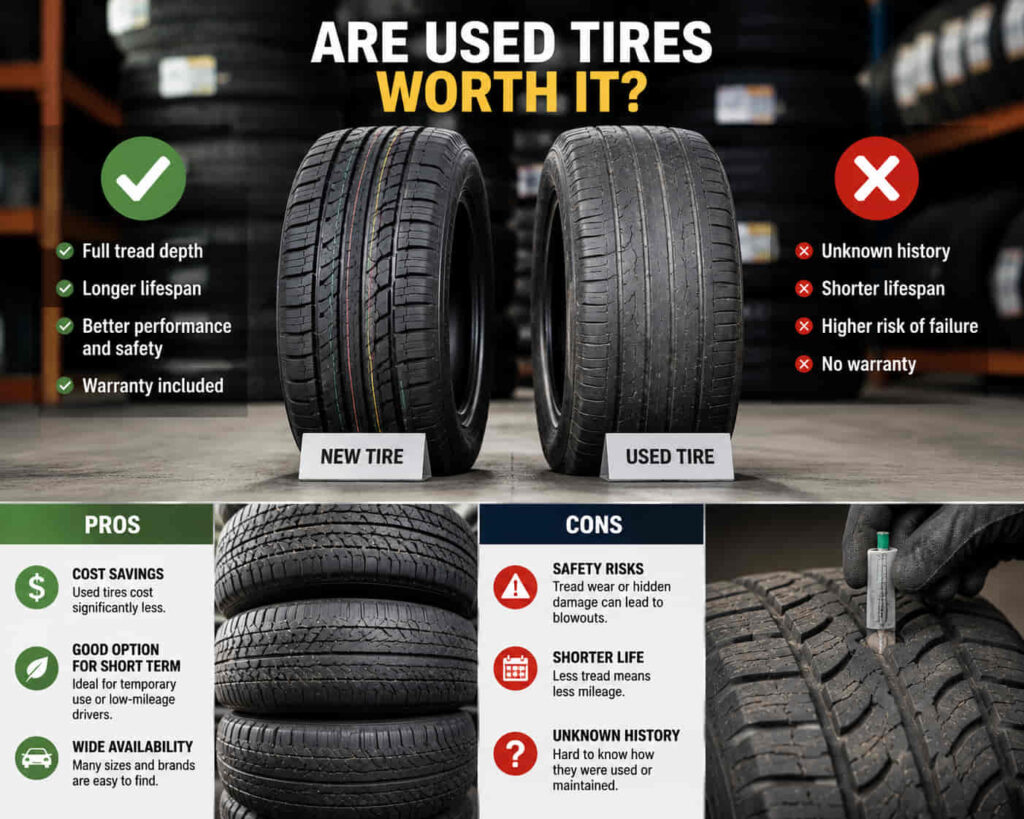
Used tires can be worth buying for drivers who need to reduce replacement costs, but their value depends on tire condition, remaining lifespan, and proper safety evaluation. Unlike new tires that come with predictable performance and full tread life, used tires have a history of previous use, meaning buyers must carefully assess factors such as tire age, tread depth, damage, and maintenance condition.
The main reason drivers consider used tires is cost savings. A set of quality used tires can cost significantly less than buying a new set, making them attractive for vehicle owners with limited budgets or those needing a temporary replacement solution. However, a lower purchase price does not automatically mean better value because a tire with limited remaining life may require replacement sooner.
The quality of used tires varies widely. A lightly used tire from a reputable brand with sufficient tread depth and no structural damage can provide reliable performance, while an old or poorly maintained tire may create safety risks despite its low price.
The decision depends on understanding the balance between upfront savings and long-term reliability. Used tires can be a smart choice when buyers know what to inspect and purchase from trustworthy sellers. They are less suitable for drivers who cannot verify tire history or require maximum reliability for demanding driving conditions.
This guide explains used tire safety, inspection methods, lifespan, cost savings, advantages, risks, and whether buying used tires is the right decision.
Are Used Tires Safe to Buy?
Used tires can be safe to buy when they have sufficient tread depth, acceptable age, no structural damage, and a verified usage history. The safety of a used tire depends less on the fact that it has been previously owned and more on its current physical condition.
A tire loses performance over time because rubber compounds naturally age, even when the tire is not heavily used. Factors such as exposure to sunlight, temperature changes, improper storage, and long periods without use can accelerate rubber deterioration. This means a tire with plenty of remaining tread is not automatically safe if the rubber has aged significantly.
Tread depth is one of the most important indicators when evaluating a used tire. Adequate tread allows the tire to maintain traction and remove water from the contact surface during wet conditions. A tire with worn tread may increase stopping distances and reduce vehicle control, especially on wet roads.
The tire’s sidewalls and internal structure also require careful inspection. Cuts, cracks, bulges, exposed cords, or previous severe impacts can indicate structural damage that may increase the risk of tire failure.
Previous repair history is another important factor. A professionally repaired puncture in an acceptable area may not automatically make a tire unsafe, but improper repairs or multiple repairs can reduce reliability.
For example, a two-year-old premium tire with even wear and no damage may provide safer performance than a cheaper tire that is older, cracked, or poorly maintained.
How Do You Check Used Tires Before Buying?
Checking a used tire before purchase requires evaluating its tread condition, age, physical damage, and previous usage history. A proper inspection helps buyers avoid purchasing tires that appear inexpensive but have limited remaining value.
The first factor to examine is tread wear. The tread should have enough depth remaining for safe driving, with even wear across the tire surface. Uneven wear patterns can indicate alignment problems, suspension issues, or improper inflation during previous use.
The manufacturing date is another critical factor. Every tire includes a DOT code that identifies when it was produced. Tire age matters because rubber compounds become harder and less flexible over time, which can reduce traction and increase the possibility of cracking.
The sidewalls should be inspected for visible damage. Small surface marks may not always indicate serious problems, but deep cracks, bulges, or signs of impact damage can suggest that the tire has structural issues.
Buyers should also consider the tire’s previous application. A tire removed from a lightly driven passenger vehicle may have very different wear characteristics compared with a tire previously used on a heavily loaded truck or vehicle driven in harsh conditions.
Purchasing from a reputable tire dealer can reduce uncertainty because professional sellers often inspect and categorize used tires before offering them to customers.
For example, a buyer choosing a set of used Michelin tires from a trusted tire shop with verified tread depth and age information may receive better value than purchasing unknown tires from an unverified seller.
How Long Do Used Tires Last?
The lifespan of used tires depends on their remaining tread depth, tire age, previous driving conditions, and how well they were maintained before purchase. Unlike new tires that begin with full tread life, used tires start with a reduced service life, meaning buyers must evaluate how much usable performance remains.
Remaining tread depth is one of the strongest indicators of how long a used tire can continue operating safely. A tire with deeper remaining tread generally provides more mileage potential than a tire that is already close to its replacement limit. However, tread depth alone does not determine lifespan because aging rubber and hidden damage can reduce performance.
Tire age is another important factor. Even if a tire has limited mileage, the rubber compound naturally becomes less flexible over time. Older tires may experience reduced traction, especially in wet conditions, because hardened rubber cannot maintain the same level of road contact as newer rubber.
Previous usage also affects remaining life. A tire previously used on smooth highways may have experienced less stress than a tire used for frequent heavy loads, aggressive driving, or rough road conditions. Storage conditions also influence durability because prolonged exposure to heat, sunlight, or moisture can accelerate deterioration.
For example, a lightly used tire that is three years old with even wear and proper storage may provide several years of useful service, while a tire with similar tread depth but significant cracking may need immediate replacement.
How Much Money Can You Save With Used Tires?
Used tires can reduce upfront replacement costs significantly, especially when buyers choose quality tires with sufficient remaining life. The financial advantage is the main reason many drivers consider purchasing pre-owned tires instead of buying a complete new set.
The amount saved depends on factors such as tire brand, tire size, remaining tread, and market demand. Premium used tires from brands such as Michelin, Bridgestone, or Continental may allow buyers to access higher-quality products at a lower initial cost compared with purchasing new premium tires.
However, the true value of used tires depends on cost relative to remaining lifespan. A tire that costs half the price of a new tire but has only one-third of its useful life remaining may not provide the best long-term value.
Used tires are often most beneficial in specific situations. Drivers with older vehicles, temporary transportation needs, or limited budgets may find used tires provide a practical solution without requiring a large immediate expense.
The financial calculation should also include potential replacement timing. A cheaper tire that requires replacement sooner may reduce the initial savings advantage.
For example, purchasing a set of high-quality used tires with 70% tread remaining can provide meaningful savings, while buying very cheap tires near the end of their usable life may create additional costs in the future.
Used Tires vs New Tires: Which Option Is Better?
New tires are generally better for drivers who want maximum lifespan, predictable performance, and full manufacturer support, while used tires are better for buyers prioritizing lower upfront costs. The better choice depends on budget, driving habits, vehicle importance, and risk tolerance.
New tires provide advantages because buyers receive full tread depth, known manufacturing history, manufacturer warranties, and predictable performance characteristics. This makes them the preferred option for drivers who rely heavily on their vehicles or regularly transport passengers.
Used tires provide financial benefits because they allow drivers to reduce initial spending. They can also provide access to premium tire brands that may otherwise exceed a buyer’s budget.
The main difference between the two options is certainty. With new tires, buyers know the complete history and expected starting condition. With used tires, buyers must evaluate the remaining quality because previous usage can affect performance and durability.
For everyday commuting, a carefully inspected used tire can provide good value. However, vehicles used for long-distance travel, family transportation, or demanding driving conditions often benefit from the reliability and longer lifespan of new tires.
For example, a driver needing temporary tires for a vehicle they plan to sell soon may find used tires practical, while a family purchasing tires for a vehicle used every day may prefer the confidence of new tires.
Read more: Are Laufenn Tires Good
What Are the Advantages of Used Tires?
The main advantages of used tires are lower upfront costs, access to premium tire brands at reduced prices, and practical value for drivers with specific budget or short-term needs. Used tires provide an alternative for vehicle owners who need replacement tires but want to avoid the higher cost of purchasing a completely new set.
One of the biggest advantages is affordability. A set of used tires can cost significantly less than new tires, allowing drivers to restore vehicle functionality without making a large immediate investment. This is especially useful for older vehicles where the owner may not want to spend more on tires than the vehicle’s current value justifies.
Another advantage is access to higher-quality tire brands. Some drivers can purchase used premium tires with remaining tread life for a similar price as new budget tires. This allows them to benefit from better construction, improved materials, and stronger brand reputation while maintaining a lower budget.
Used tires can also be a practical temporary solution. Drivers who need tires for a short period, plan to sell a vehicle, or need time before purchasing a new set may find inspected used tires provide reasonable value.
From an environmental perspective, extending the usable life of tires can also reduce waste. Reusing tires that are still in safe condition keeps functional products in circulation and delays disposal.
For example, a vehicle owner planning to keep an older commuter car for another year may find a carefully inspected set of used tires provides enough reliability without the expense of premium new tires.
What Are the Risks of Buying Used Tires?
The main risks of buying used tires are unknown usage history, reduced remaining lifespan, hidden damage, and limited warranty protection. These risks are the reason buyers should evaluate used tires based on condition rather than price alone.
The biggest challenge with used tires is uncertainty. A buyer may not know whether the tire was previously exposed to excessive heat, heavy loads, aggressive driving, improper storage, or road hazards. These factors can affect the tire’s internal structure even when visible damage is not immediately obvious.
Reduced lifespan is another limitation. Because used tires have already consumed part of their service life, buyers usually receive fewer miles compared with a new set. The initial savings may become less valuable if the tires require replacement sooner than expected.
Hidden damage can also create safety concerns. Internal separation, previous impact damage, or improper repairs may not always be visible during a quick inspection. This is why professional evaluation is important when purchasing used tires.
Warranty coverage is another difference compared with new tires. Many used tires do not include the same manufacturer protection or replacement guarantees available with new products.
For example, a very inexpensive used tire with unknown history may create more risk than a slightly more expensive option from a reputable dealer with documented inspection information.
Are Used Tires Worth Buying?
Used tires are worth buying when they are properly inspected, have sufficient remaining tread life, and come from a trustworthy seller. They can provide meaningful cost savings for drivers who understand the limitations and are willing to evaluate tire condition carefully.
Used tires are most suitable for buyers who prioritize affordability, need a temporary solution, or can verify important factors such as tire age, tread depth, and previous condition. They can be a practical choice for secondary vehicles, older cars, or situations where reducing immediate expenses is important.
However, used tires are less suitable for drivers who need maximum reliability and predictability. Vehicles used for frequent long-distance travel, family transportation, or demanding driving conditions often benefit from the longer lifespan and known history of new tires.
The decision should be based on value rather than price alone. A quality used tire from a reputable brand with significant remaining tread can provide better value than a new low-quality tire, while a worn or aged used tire may create unnecessary safety and replacement costs.
For example, a driver purchasing inspected used Michelin or Bridgestone tires with verified condition may receive excellent value, while buying unknown tires from an unreliable source may create more problems than savings.
Overall, used tires can be a smart purchase for informed buyers. They are not automatically better or worse than new tires; their value depends on condition, remaining lifespan, and how well they match the driver’s needs.
Are Used Tires Worth It?
Used tires can be worth buying for drivers who want to reduce replacement costs and are willing to evaluate tire condition carefully before making a purchase. The value of used tires does not come only from their lower price but from the balance between remaining tread life, tire age, safety condition, and expected performance.
The biggest advantage of used tires is affordability. They allow drivers to access functional replacement tires at a lower upfront cost and may provide opportunities to purchase higher-quality brands within a smaller budget. However, the lower price also comes with less certainty because buyers must consider previous usage, hidden damage, and reduced remaining lifespan.
Used tires are a practical choice when they are inspected properly, purchased from a trustworthy seller, and matched with the vehicle’s needs. A carefully selected used tire with good tread depth and acceptable age can provide reliable performance for everyday driving.
However, drivers who prioritize maximum safety confidence, long-term ownership value, and predictable performance may prefer new tires. New tires provide full tread life, manufacturer support, and a clearer understanding of future performance.
Overall, used tires can be a smart and cost-effective option when buyers focus on quality rather than price alone. They are worth considering for informed drivers who understand how to evaluate tire condition and recognize the importance of safety factors before purchasing.