Honda Civics are reliable vehicles because they combine durable engineering, affordable maintenance, strong resale value, and a long history of dependable ownership. The Honda Civic has remained one of the most recognized compact cars worldwide because drivers often choose it for consistent performance rather than short term appeal.
Reliability is one of the most important factors when buying a vehicle because repair frequency, maintenance expenses, and long term durability directly affect ownership costs. A Honda Civic that receives proper maintenance can reach high mileage while continuing to provide efficient daily transportation.
However, reliability does not mean a vehicle is completely free from problems. Different Honda Civic generations have experienced specific issues related to transmissions, electrical systems, engine components, and normal wear. Understanding these factors helps buyers make better decisions when choosing between a new Civic and a used model.
This guide examines Honda Civic reliability by analyzing lifespan, common problems, maintenance costs, and ownership experience. It also explains which factors influence Honda Civic durability and whether this compact car remains a smart choice for drivers looking for a dependable vehicle.
Are Honda Civics Reliable Compared to Other Compact Cars?
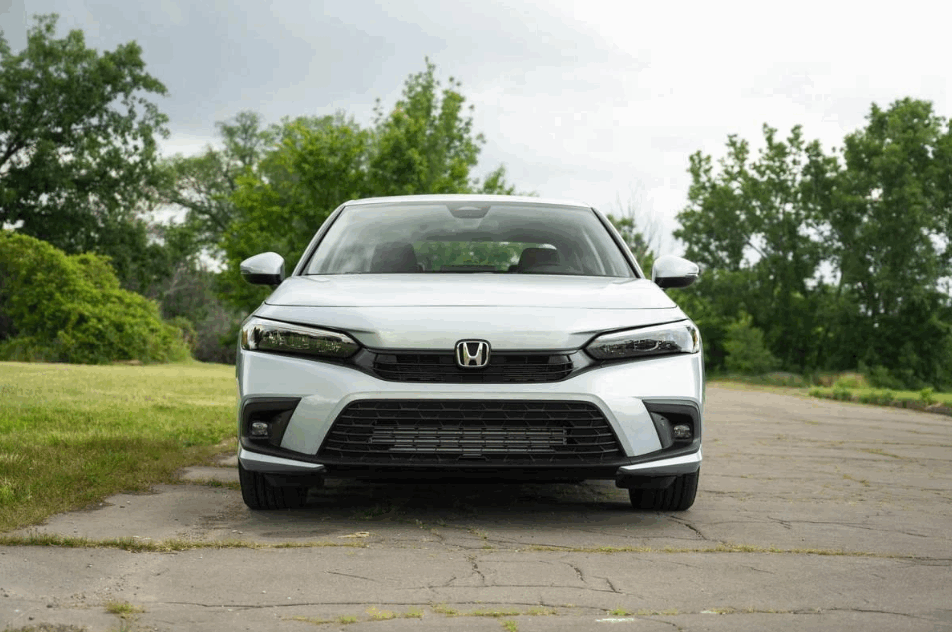
Honda Civics are reliable compact cars because they use durable engines, simple mechanical designs, and affordable maintenance systems. The Civic has earned a strong reputation through decades of production. Many drivers choose this model because it delivers consistent performance and predictable ownership costs.
Honda focuses on efficiency and durability when developing Civic models. The company builds engines that can handle high mileage when owners follow regular maintenance schedules. The Civic powertrain uses proven technology that helps reduce major repair risks. Routine services such as oil changes and fluid replacements also help maintain long term performance.
The Honda Civic competes with other reliable compact cars, including the Toyota Corolla, Mazda3, and Hyundai Elantra. The Toyota Corolla has a reputation for exceptional durability. The Mazda3 attracts buyers who value driving quality and premium materials. The Honda Civic provides a balanced combination of reliability, fuel efficiency, practicality, and repair affordability.
Parts availability also strengthens Honda Civic ownership. Millions of Civics exist on roads worldwide. Mechanics understand the vehicle platform, and owners can find replacement parts easily. This situation reduces repair delays and keeps maintenance expenses manageable.
The Civic also maintains strong resale value because buyers trust its reliability. A dependable vehicle creates lower ownership risks for used car buyers. Many people choose older Honda Civics because they expect reliable transportation without excessive repair costs.
For these reasons, the Honda Civic remains one of the strongest choices in the compact car segment. Its combination of durability, affordability, and ownership confidence explains why many drivers consider it a reliable long term vehicle.
How Long Do Honda Civics Usually Last?
Honda Civics usually last between 200,000 and 300,000 miles when owners follow proper maintenance practices. Many Civic owners continue driving their vehicles beyond this range because Honda designs its engines and mechanical systems for long term durability.
The lifespan of a Honda Civic depends mainly on maintenance quality, driving conditions, and repair history. Regular oil changes protect engine components by reducing friction and preventing excessive wear. Scheduled services also help owners identify small problems before they develop into expensive repairs.
Driving habits also affect Civic longevity. A vehicle that receives smooth acceleration, proper braking, and regular inspections usually experiences less stress on important components. In contrast, aggressive driving, neglected maintenance, and poor repair decisions can shorten the vehicle’s useful life.
Different Honda Civic generations show different reliability patterns. Older models gained popularity because of their simple naturally aspirated engines and straightforward mechanical systems. Newer models add advanced technology, improved safety features, and more efficient engines while maintaining Honda’s focus on durability.
A high mileage Honda Civic does not automatically mean the vehicle has reached the end of its life. A well maintained Civic with 150,000 miles can provide better reliability than a poorly maintained Civic with 80,000 miles. Buyers should focus on maintenance records, previous ownership, and overall vehicle condition rather than mileage alone.
For example, a Honda Civic with consistent oil changes, transmission servicing, and timely repairs can continue operating reliably for many years. This long lifespan is one of the main reasons the Civic remains popular among commuters, first time car buyers, and used vehicle shoppers.
What Are the Most Common Honda Civic Problems?
Honda Civics are reliable vehicles, but they can develop specific problems depending on the model year, mileage, and maintenance history. Reliability means a vehicle has fewer major failures over time, not that it never requires repairs. Understanding common Honda Civic problems helps buyers prepare for ownership costs and avoid poor purchase decisions.
One common concern involves transmission performance. Some Honda Civic models with continuously variable transmissions (CVT) require careful maintenance to maintain smooth operation. Owners who replace transmission fluid according to the recommended schedule can reduce the risk of performance issues. Delayed servicing can increase wear and create problems such as hesitation, vibration, or rough acceleration.
Electrical problems represent another category of Civic issues. Older models may experience problems with components such as power windows, sensors, infotainment systems, or dashboard controls. These problems usually affect convenience rather than the vehicle’s ability to operate, but they can increase repair expenses as the vehicle ages.
Engine related concerns also depend on the specific Civic generation. Some turbocharged Honda Civic models require careful oil maintenance because turbo systems operate under higher temperatures and pressure. Older naturally aspirated engines generally have simpler designs and fewer complex components, which often makes repairs easier.
Suspension wear is another normal ownership issue, especially in high mileage Civics. Components such as shocks, struts, bushings, and control arms gradually wear because they absorb road impacts over thousands of miles.
Most Honda Civic problems occur because of age, mileage, or neglected maintenance rather than poor engineering. A vehicle inspection, maintenance history review, and recall check can help buyers identify potential problems before purchasing a used Honda Civic.
Which Honda Civic Years Are the Most Reliable?
The most reliable Honda Civic years are usually the models that combine proven engines, improved safety features, and strong maintenance records. Buyers should evaluate each generation separately because Honda has changed engine technology, transmissions, and vehicle systems throughout the Civic’s history.
Older Honda Civic generations gained a reputation for durability because they used simple mechanical designs. Models from the early 2000s became popular among used car buyers because their naturally aspirated engines could handle high mileage with regular maintenance. These vehicles often had fewer electronic systems, which reduced the number of potential repair points.
Newer Honda Civic generations continue this reliability trend while adding modern technology. The 10th and 11th generation Civics introduced more efficient engines, improved interior quality, and advanced safety systems. Turbocharged engines in newer models provide stronger performance, but owners must follow maintenance schedules carefully to protect long term reliability.
Choosing the right Civic year requires more than looking at reliability rankings. Buyers should check maintenance records, accident history, mileage, and previous ownership conditions. A well maintained older Civic can provide better reliability than a newer model that received poor care.
Some Civic years may experience more complaints because of specific components or design changes. Buyers should research recalls and known issues before making a purchase decision. A vehicle history report can reveal important information about previous repairs and ownership patterns.
The most reliable Honda Civic is not always the newest or the oldest model. The best choice is a Civic with a strong maintenance history, reasonable mileage, and proper care from previous owners.
Is Honda Civic Maintenance Expensive?
Honda Civic maintenance is usually affordable because the vehicle uses widely available parts, simple service procedures, and reliable mechanical systems. Compared with many compact cars, the Civic offers predictable ownership costs because routine maintenance does not require expensive specialized repairs.
Regular maintenance plays an important role in protecting Honda Civic reliability. Owners should follow the recommended service schedule, including oil changes, brake inspections, tire rotations, and fluid replacements. These services prevent premature wear and help the engine, transmission, and suspension systems maintain proper performance.
The annual maintenance cost of a Honda Civic depends on factors such as model year, mileage, location, and driving conditions. Newer Civics usually require fewer repairs because they have newer components and warranty protection. Older Civics may need additional services because parts naturally wear after years of use.
Honda Civic repair costs remain reasonable because the vehicle has strong aftermarket support. Many repair shops understand Honda systems, and replacement parts are widely available. This availability helps reduce labor time and allows owners to choose from different repair options.
Compared with other compact cars, the Civic often provides a strong balance between reliability and maintenance expenses. A Toyota Corolla may offer similar dependability, while some competitors may provide lower initial purchase prices. However, the Civic’s combination of fuel efficiency, durability, and resale value makes its total ownership cost attractive.
Owners who maintain their Honda Civic consistently usually experience fewer unexpected repairs. Preventive maintenance creates a lower risk ownership experience and helps the vehicle deliver reliable performance throughout its lifespan.
Is Buying a Used Honda Civic a Good Decision?
Buying a used Honda Civic is a good decision for many drivers because the model offers strong reliability, affordable maintenance, and high resale value. The Civic remains popular in the used car market because buyers often look for vehicles that provide dependable transportation without excessive ownership costs.
A used Honda Civic can deliver excellent value when buyers choose a vehicle with proper maintenance records. Service history provides important information about how previous owners cared for the car. Records of regular oil changes, transmission services, and scheduled inspections show that the vehicle received proper attention throughout its life.
Mileage should not be the only factor when evaluating a used Civic. A Honda Civic with higher mileage and consistent maintenance can perform better than a lower mileage vehicle with neglected service. Buyers should examine the engine condition, transmission performance, suspension components, and electrical systems before completing a purchase.
A professional inspection can help identify hidden problems before buying a used Honda Civic. Mechanics can evaluate important areas such as fluid leaks, accident damage, brake condition, and previous repairs. This step reduces the risk of purchasing a vehicle with expensive issues.
The Honda Civic also benefits from strong resale demand. Many used car buyers recognize the Civic as a reliable compact car, which helps maintain its market value. Owners can often sell their vehicles more easily compared with less established models in the same segment.
A used Honda Civic suits drivers who need efficient daily transportation, low maintenance costs, and long term reliability. However, buyers should select the right vehicle condition rather than choosing a Civic only because of the brand reputation.
Should You Buy a Honda Civic Based on Its Reliability?
You should consider buying a Honda Civic if you want a reliable compact car with affordable maintenance, strong durability, and predictable ownership costs. The Civic has maintained its reputation because Honda combines efficient engines, practical designs, and long term engineering improvements across multiple generations.
Honda Civic reliability comes from several factors, including durable powertrains, accessible repairs, and strong owner support. A properly maintained Civic can often reach 200,000 miles or more, which makes it a practical choice for drivers who want a vehicle that can serve them for many years.
However, buyers should evaluate each Civic individually instead of relying only on the model name. Maintenance history, previous ownership, mileage, and repair records directly affect the vehicle’s condition. A carefully maintained used Civic can provide excellent reliability, while a neglected example can create unnecessary repair expenses.
The Honda Civic remains a strong option for commuters, first time car buyers, and drivers who prioritize long term value. It offers a combination of reliability, efficiency, and resale strength that few compact cars can match.
Before purchasing, buyers should research specific model years, inspect the vehicle condition, and review maintenance records. Choosing the right Honda Civic based on evidence rather than reputation helps create a more reliable ownership experience.