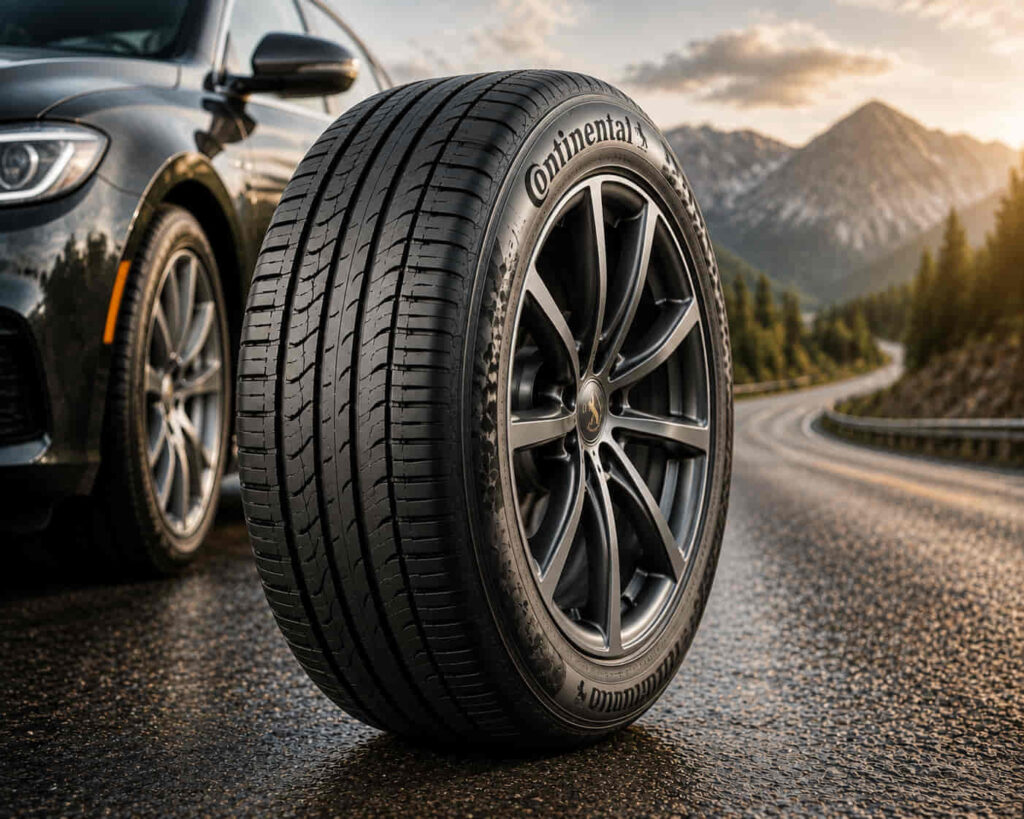
Continental tires are considered good quality because they combine advanced engineering, strong safety performance, reliable handling, and premium construction standards. The brand has built a reputation as one of the leading tire manufacturers by focusing on technologies that improve vehicle control, braking performance, and driving comfort across different vehicle categories.
Continental is especially recognized for its German engineering approach, where safety and precision are key factors in tire development. The company produces tires for passenger cars, SUVs, luxury vehicles, electric vehicles, and performance applications, making it a common choice for drivers who want dependable performance beyond basic transportation.
One of the main reasons Continental tires are highly regarded is their ability to balance multiple performance factors. A good tire must provide traction, stability, comfort, and durability at the same time, and Continental focuses heavily on creating products that perform consistently in everyday driving conditions.
However, whether Continental tires are the right choice depends on individual driving needs. Drivers who prioritize premium safety features, refined handling, and long-term reliability may find strong value in Continental, while those mainly searching for the lowest purchase price may prefer more budget-focused alternatives.
Continental offers different tire categories, including touring tires, performance tires, all-season tires, and SUV tires. Each product line has different design goals, meaning the overall experience depends on selecting the right model for the vehicle and driving conditions.
This guide explains how Continental tires perform, how long they last, their safety advantages, limitations, and whether they are worth the investment for different types of drivers.
Who Makes Continental Tires?
Continental tires are made by Continental AG, a German automotive technology company with a long history in tire manufacturing, vehicle safety systems, and mobility technology. The company has developed its reputation through engineering-focused tire development, with a strong emphasis on safety, precision, and consistent performance.
Continental was founded in Germany in 1871 and has grown into one of the world’s largest tire manufacturers. The brand produces tires for passenger vehicles, SUVs, commercial vehicles, electric vehicles, and high-performance applications, serving both replacement tire customers and vehicle manufacturers.
A major part of Continental’s identity comes from its focus on safety technology. The company invests heavily in tire research and development to improve areas such as braking performance, traction, handling stability, and driving comfort. This engineering approach has helped Continental become a common original equipment supplier for many vehicle manufacturers.
Continental’s connection with automotive manufacturers is an important part of its market position. Many vehicles are developed with specific tire characteristics in mind, and premium tire brands like Continental are often selected because their products are designed to match vehicle handling and safety requirements.
For example, a luxury sedan manufacturer may choose Continental tires because the tire’s characteristics support the vehicle’s braking systems, suspension design, and overall driving experience. At the same time, everyday drivers can also benefit from the company’s technology through replacement tire models designed for normal road use.
How Do Continental Tires Perform on Different Road Conditions?
Continental tires generally perform well across dry roads, wet surfaces, and highway driving conditions because they are designed around traction, stability, and vehicle control. The brand’s strongest characteristics are often associated with predictable handling, strong braking capability, and balanced everyday performance.
On dry roads, Continental tires provide stable handling and responsive steering. Their tread designs and rubber compounds are developed to maintain consistent contact with the road, which helps improve acceleration, cornering, and braking performance.
Wet performance is one of Continental’s most recognized strengths. Many Continental tire models focus on improving grip during rainy conditions through tread patterns that help move water away from the contact surface. This reduces the risk of losing traction and supports more confident braking when roads are wet.
Highway driving is another area where Continental tires perform well. Many drivers choose the brand because its tires provide a combination of stability, comfort, and low road noise during longer trips. This makes Continental suitable for commuters, families, and drivers who spend significant time on highways.
However, performance characteristics vary between models. A Continental performance tire designed for sporty handling will provide a different driving experience compared with a touring tire designed for comfort and long-distance use.
For example, a driver using Continental ExtremeContact tires on a performance vehicle may prioritize sharper handling and stronger grip, while a driver choosing Continental TrueContact tires for a daily commuter may value comfort, efficiency, and long-term reliability.
Read more: Is Discount Tire Warranty Worth It
Are Continental Tires Safe in Wet and Dry Conditions?
Continental tires are considered safe in both wet and dry conditions because the brand focuses heavily on braking performance, traction control, and predictable vehicle handling. Safety is one of the core attributes associated with Continental, and many of its tire designs prioritize maintaining control in situations where road conditions change quickly.
On dry roads, Continental tires provide stable grip and responsive handling by maintaining consistent contact between the tire and road surface. This helps drivers experience more controlled steering, shorter braking response, and improved confidence during acceleration or cornering.
Wet conditions are where tire engineering becomes especially important. Water on the road can reduce friction between the tire and pavement, increasing the risk of losing control. Continental addresses this challenge through tread designs and rubber compounds that help improve water evacuation and maintain traction during rainfall.
Braking performance is another important safety factor. A tire with strong wet and dry braking capability can help reduce stopping distances and provide drivers with better control during emergency situations. This is one reason Continental has developed a strong reputation among drivers who prioritize safety.
However, safety performance depends on selecting the correct tire model and maintaining the tires properly. Even a high-quality tire cannot perform effectively if it is underinflated, excessively worn, or incorrectly matched to the vehicle.
For example, a driver who frequently travels in rainy conditions may benefit from Continental tires because their wet traction characteristics support safer everyday driving. A driver who mainly drives in dry climates may still benefit from the brand’s stability and braking performance.
How Long Do Continental Tires Last?
Continental tires can provide strong durability, but their lifespan depends on the specific tire model, driving habits, maintenance practices, and road conditions. The brand produces different tire categories, and each one is designed with different priorities between performance, comfort, and tread longevity.
Touring and all-season Continental tires are generally designed for everyday drivers who want a balance between mileage, comfort, and reliable handling. These tires focus on delivering consistent performance over long periods of normal driving.
Performance-oriented Continental tires may have different durability characteristics because they prioritize grip and handling response. Tires designed for sports cars or high-performance vehicles often use compounds and tread designs that improve traction but may wear differently compared with comfort-focused models.
Maintenance plays an important role in maximizing tire life. Regular tire rotation, correct inflation, proper wheel alignment, and routine inspections help prevent uneven wear and allow the tire to perform as intended.
Driving behavior also affects longevity. Aggressive acceleration, hard braking, frequent high-speed driving, and heavy vehicle loads can increase tire wear regardless of brand quality.
For example, a driver using Continental touring tires on a daily commuter vehicle may experience strong long-term value because the tire is designed around durability and comfort. A performance driver using a high-grip Continental tire may accept shorter tread life in exchange for improved handling capability.
Are Continental Tires Good for SUVs and Luxury Cars?
Continental tires are a strong choice for SUVs and luxury vehicles because they provide a combination of comfort, safety, stability, and refined performance that matches the requirements of premium vehicles. Many luxury vehicle owners choose Continental because tire quality has a direct impact on ride comfort, handling precision, and overall driving experience.
SUVs require tires that can support heavier vehicle weight while maintaining stability during acceleration, braking, and cornering. Continental offers SUV-focused tire lines designed to provide balanced traction, comfortable rides, and reliable performance for both urban and highway driving.
Luxury vehicles often require a higher level of refinement. Drivers expect low road noise, smooth operation, and precise control, and Continental develops many products with these characteristics in mind.
The brand is also widely used as original equipment on various vehicle models because manufacturers often evaluate tires based on how well they complement suspension systems, braking technology, and vehicle dynamics.
However, the best Continental tire depends on the vehicle and driving purpose. An SUV used mainly for commuting may require comfort and durability, while a performance luxury vehicle may benefit from a tire designed for sharper handling.
For example, a premium SUV owner who values a quiet ride and stable highway performance may find Continental tires well suited to their needs, while a driver who regularly goes off-road may require a more specialized all-terrain tire.
What Are the Advantages of Continental Tires?
The main advantages of Continental tires are premium engineering, strong safety performance, refined driving comfort, and reliable handling across different driving conditions. These characteristics make Continental a popular choice for drivers who want higher-quality tires that provide more than basic transportation performance.
One of Continental’s biggest strengths is its focus on safety technology. The brand invests heavily in tire development to improve areas such as wet braking, traction control, and vehicle stability. These features are especially valuable because tires directly influence how effectively a vehicle responds during emergency situations or changing road conditions.
Another advantage is driving comfort. Many Continental tire models are designed to reduce road noise and provide a smoother ride, which is important for daily commuters, families, and luxury vehicle owners. A tire that balances grip with comfort can improve the overall driving experience without sacrificing reliability.
Continental also offers a wide product range for different vehicles and driving needs. The brand produces touring tires, performance tires, SUV tires, and specialized products for modern vehicles, including electric vehicles. This allows drivers to choose a tire based on their priorities rather than relying on a single tire design.
The brand’s premium reputation is also supported by its relationships with automotive manufacturers. When a vehicle manufacturer selects a tire as original equipment, the tire must meet specific requirements for handling, safety, and vehicle performance.
For example, a driver with a luxury sedan may choose Continental because the tires support a quiet and controlled driving experience, while an SUV owner may value the combination of stability, comfort, and wet-weather performance.
What Are the Limitations of Continental Tires?
The main limitations of Continental tires are their higher price, premium maintenance cost, and the fact that not every driver needs their advanced performance characteristics. While Continental provides strong quality and technology, the additional cost may not always be justified for drivers with basic transportation needs.
The biggest limitation is pricing. Continental is positioned as a premium tire brand, meaning many models cost more than mid-range alternatives. Drivers who mainly compare tires based on purchase price may find less expensive options that still satisfy their everyday requirements.
Another limitation is that premium performance does not automatically mean every Continental tire is the best choice for every situation. Different models are designed for different purposes, and choosing the wrong tire category can result in paying for features that do not match actual driving needs.
For example, a driver who only uses a vehicle for short city trips may not benefit significantly from premium handling technology compared with someone who regularly drives long highway distances or owns a performance vehicle.
Tire replacement costs should also be considered over the entire ownership period. Premium tires may provide advantages in safety, comfort, and performance, but drivers need to evaluate whether those benefits justify the higher initial investment.
Continental tires are therefore most valuable for customers who prioritize quality, safety, and refined performance. Drivers who only need basic transportation and the lowest possible replacement cost may find other brands more suitable.
Are Continental Tires Worth Buying?
Continental tires are worth buying for drivers who value safety, comfort, reliable performance, and premium tire technology. The brand provides strong overall value for customers who understand that tire quality affects vehicle control, braking ability, and driving comfort.
Drivers who frequently travel on highways, operate luxury vehicles, or want dependable performance in different weather conditions can benefit from Continental’s engineering approach. The brand’s focus on safety and handling makes it a strong option for vehicles where tire performance is an important part of the driving experience.
However, Continental is not necessarily the best choice for every buyer. Customers who prioritize the lowest possible cost may find more affordable alternatives that meet their basic needs. The decision should depend on factors such as vehicle type, driving environment, annual mileage, and personal expectations.
The value of Continental comes from the combination of engineering quality, safety performance, and long-term driving confidence. Instead of competing mainly through low prices, Continental focuses on delivering a more refined ownership experience.
For example, a family driving a premium SUV may consider Continental tires a worthwhile investment because they provide comfort, stability, and safety. A budget-focused driver with minimal driving demands may choose a less expensive option.
Are Continental Tires Good?
Continental tires are considered good because they deliver a strong combination of safety, performance, comfort, and premium engineering. The brand has built its reputation by focusing on technologies that improve traction, braking ability, vehicle control, and overall driving confidence across different types of vehicles.
For drivers who prioritize safety and refined performance, Continental can provide meaningful value. The brand’s strengths are especially noticeable in areas such as wet-road handling, braking performance, ride comfort, and stability during everyday driving. These characteristics make Continental a suitable choice for many passenger vehicles, SUVs, luxury cars, and performance applications.
However, Continental tires are not the ideal option for every driver. Customers who mainly focus on the lowest purchase price may find more affordable alternatives that meet their basic transportation needs. The higher cost of Continental tires should be evaluated based on the benefits that matter most to each driver, including safety, comfort, and long-term reliability.
The best choice depends on matching the tire model with the vehicle and driving environment. A luxury vehicle owner may benefit from Continental’s premium characteristics, while a budget-focused driver may prioritize cost savings over advanced tire technology.
Overall, Continental tires are a strong choice for drivers who want dependable performance, advanced safety features, and a more refined driving experience. For those willing to invest in premium tire quality, Continental provides a balance of engineering, reliability, and value.