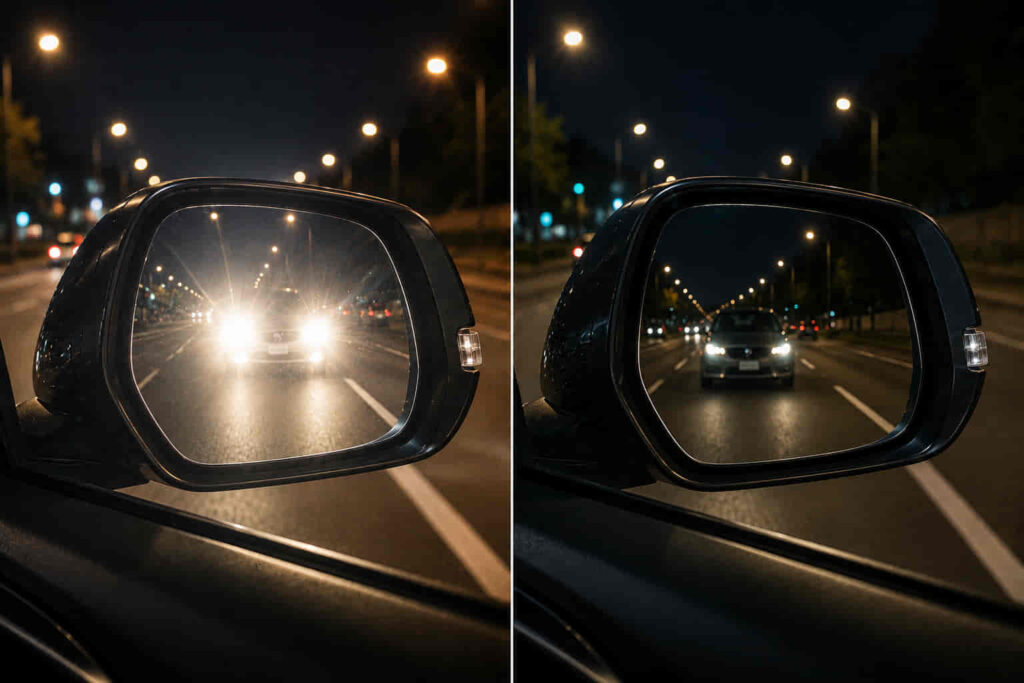
Auto-dimming side mirrors are worth it for drivers who frequently drive at night because they reduce headlight glare, improve visibility, and minimize eye fatigue without requiring any manual adjustment. Although this feature is often reserved for higher trim levels or premium vehicles, its value extends beyond convenience. By automatically reducing the intensity of reflected headlights from vehicles behind or beside your car, auto-dimming side mirrors help maintain clearer vision in low-light conditions, allowing drivers to stay focused on the road rather than reacting to sudden flashes of bright light. Whether the additional cost is justified depends primarily on how and where you drive, but for many motorists, especially those who regularly travel after sunset or on highways, the safety and comfort benefits outweigh the extra expense.
Modern vehicles continue to incorporate technologies that reduce driver workload while improving overall safety. Auto-dimming side mirrors are one example of this trend. Unlike conventional mirrors that reflect the same amount of light regardless of driving conditions, these mirrors continuously adjust their tint through electrochromic technology whenever they detect excessive glare. The transition happens automatically and almost instantly, allowing drivers to maintain awareness of surrounding traffic without experiencing temporary vision impairment caused by high-intensity LED or HID headlights.
The importance of this feature has increased as automotive lighting technology has evolved. Today’s vehicles commonly use brighter headlights than previous generations, making glare a more frequent problem during nighttime driving. Drivers of SUVs and sedans are particularly susceptible because taller vehicles often position their headlights directly into adjacent side mirrors. In these situations, repeatedly experiencing intense reflected light can contribute to visual discomfort, delayed reaction times, and increased fatigue during extended trips. Auto-dimming side mirrors address this issue by reducing reflected brightness while preserving enough visibility to monitor adjacent lanes safely.
For buyers comparing vehicle trims, this feature should not be viewed as a luxury reserved only for premium models. Instead, it represents an active driver-assistance technology that directly supports nighttime visibility. Drivers who regularly commute before sunrise, return home after dark, travel long highway distances, or frequently encounter heavy traffic at night are likely to experience measurable benefits. Conversely, individuals who primarily drive during daylight hours or within well-lit urban environments may notice less value, making the additional investment less compelling.
This guide explains whether auto-dimming side mirrors are worth the cost by examining how the technology works, the real-world advantages and limitations, ownership costs, compatibility with other vehicle safety systems, and the types of drivers who benefit most. By the end of the article, you will have a clear understanding of whether this feature aligns with your driving habits and whether it deserves a place on your next vehicle or upgrade list.
Are Auto Dimming Side Mirrors Worth It?
Yes, auto-dimming side mirrors are worth buying for drivers who regularly drive at night because they improve visibility, reduce glare from following vehicles, decrease eye strain, and create a more comfortable driving experience without requiring any driver input. Their greatest advantage lies in maintaining consistent rearward visibility even when surrounding traffic uses extremely bright LED, HID, or high-beam headlights. Rather than forcing the driver to look away or tolerate temporary vision impairment, the mirrors automatically darken to an appropriate level while still allowing vehicles, lane markings, and road conditions to remain visible.
The primary reason these mirrors deliver meaningful value is their ability to reduce visual distraction during nighttime driving. Glare is more than a momentary annoyance; it directly affects how quickly drivers process visual information. When intense reflected light enters the eyes, the pupils require time to readjust before normal vision returns. Even a brief delay can reduce awareness of nearby vehicles during lane changes or merging. Auto-dimming mirrors interrupt this process by limiting excessive reflected light before it reaches the driver’s eyes, helping preserve contrast and improving the ability to judge surrounding traffic.
The value becomes even more apparent during long-distance driving. Extended exposure to bright headlights can cause cumulative eye fatigue, making drivers feel tired sooner than expected. As visual fatigue increases, concentration gradually declines, reaction times become slower, and small driving errors become more likely. Because auto-dimming mirrors continuously regulate reflected brightness throughout the journey, they reduce one of the most common sources of nighttime driving discomfort. Drivers who frequently spend one or more hours on highways after dark often report that their eyes remain more relaxed compared with using conventional mirrors.
Vehicle type also influences whether the feature is worth the investment. Owners of compact cars and sedans often experience stronger headlight glare because many SUVs, pickup trucks, and crossover vehicles position their headlights higher than standard passenger cars. When these taller vehicles follow closely, conventional side mirrors reflect concentrated beams directly toward the driver’s face. Auto-dimming technology significantly reduces this effect, making the difference especially noticeable in mixed traffic conditions where vehicle heights vary considerably.
Cost should also be considered alongside long-term ownership. Factory-installed auto-dimming side mirrors generally represent a relatively small percentage of the overall vehicle price when included as part of a trim package. Over several years of ownership, the improvement in driving comfort and nighttime confidence often outweighs the initial premium, particularly for drivers who accumulate substantial annual mileage. However, buyers who rarely drive after sunset, use their vehicles mainly for short daytime trips, or operate exclusively in well-lit urban areas may not receive enough practical benefit to justify paying extra solely for this feature.
Overall, auto-dimming side mirrors provide genuine functional value rather than cosmetic appeal. They enhance visibility in challenging lighting conditions, reduce driver fatigue, and complement other modern safety technologies that aim to make driving less stressful. For motorists who spend significant time on the road after dark, they represent an investment in comfort and situational awareness rather than simply another premium vehicle option.
How Do Auto Dimming Side Mirrors Work?
Auto-dimming side mirrors work by using electrochromic technology that automatically darkens the mirror glass when it detects excessive light from vehicles behind or beside your car. Instead of relying on manual adjustments or mechanical components, the system continuously monitors surrounding light conditions and changes the mirror’s tint within seconds. This automatic response reduces glare while maintaining enough reflectivity for drivers to monitor adjacent lanes safely, making nighttime driving more comfortable and reducing visual strain.
The core component of an auto-dimming side mirror is an electrochromic glass assembly. Unlike conventional mirror glass, an electrochromic mirror consists of multiple layers, including two glass panels, a transparent conductive coating, an electrochromic material, and an electrolyte positioned between the layers. When an electrical current passes through the electrochromic material, ions move within the electrolyte, causing the mirror to darken gradually. Once the intense light source disappears, the electrical current changes direction or stops, allowing the ions to return to their original state and restoring the mirror to its normal reflectivity. This reversible chemical reaction enables the mirror to transition repeatedly without affecting image clarity under normal operating conditions.
The dimming process begins with light sensors that continuously measure brightness levels around the vehicle. Most factory-installed systems use one sensor facing forward to monitor ambient light conditions and another sensor facing rearward to detect intense light approaching from behind. The vehicle’s electronic control module compares the readings from both sensors to determine whether glare is significant enough to require dimming. When the difference exceeds a predetermined threshold, the control unit sends a low-voltage electrical signal to the electrochromic layer inside the mirror. Because the decision is based on real-time environmental data rather than a fixed brightness level, the mirrors respond accurately under different driving conditions, including highways, rural roads, tunnels, and poorly lit streets.
Many vehicles synchronize the side mirrors with the interior auto-dimming rearview mirror. In this configuration, the rearview mirror acts as the primary controller, processing sensor data before transmitting commands to both exterior mirrors. This integrated design ensures that all mirrors adjust simultaneously, providing consistent glare reduction across every reflective surface the driver uses. Some premium vehicles allow each exterior mirror to respond independently, enabling more precise dimming when glare originates from only one side of the vehicle, such as during overtaking or when another vehicle approaches from an adjacent lane.
The transition between clear and dimmed states is intentionally gradual rather than instantaneous. A smooth adjustment prevents sudden changes in reflected brightness that could distract the driver or temporarily reduce visibility. Depending on the manufacturer and environmental conditions, most auto-dimming side mirrors reach their optimal tint within a few seconds after detecting glare. When the bright light source moves away, the mirror slowly returns to its fully reflective state, maintaining continuous visibility without requiring driver intervention.
Auto-dimming side mirrors also work alongside several other vehicle technologies that enhance driver awareness. They are commonly integrated with heated mirrors, memory mirror positioning, blind spot monitoring, surround-view camera systems, and reverse tilt functions. Although these features operate independently, combining them within a single mirror assembly creates a multifunctional safety component that improves visibility in different driving situations. For example, while the electrochromic glass reduces glare from headlights, blind spot monitoring continues detecting vehicles in adjacent lanes, and heated mirror elements remove frost or condensation that could otherwise obstruct the driver’s view.
Because the system operates automatically, drivers rarely notice the technology itself. Instead, they experience the benefit through reduced eye fatigue, fewer distracting flashes from bright headlights, and more consistent visibility throughout nighttime journeys. This seamless operation is one of the primary reasons auto-dimming side mirrors have become increasingly common on premium vehicles and are gradually expanding into mid-range models as manufacturers continue prioritizing active safety and driver comfort.
What Are the Benefits of Auto Dimming Side Mirrors?
The primary benefit of auto-dimming side mirrors is their ability to reduce headlight glare automatically while maintaining clear visibility of surrounding traffic. Instead of reflecting the full intensity of headlights from vehicles behind or alongside your car, the electrochromic glass darkens just enough to minimize excessive brightness without obscuring the reflected image. This continuous adjustment helps drivers maintain visual awareness under changing lighting conditions, making nighttime driving safer and significantly more comfortable.
Reducing glare is the most immediate advantage because excessive reflected light directly affects a driver’s ability to perceive surrounding traffic. Modern LED and HID headlights produce a much brighter and more concentrated beam than traditional halogen bulbs. While these lighting systems improve visibility for the vehicle using them, they can create intense reflections in conventional side mirrors, especially when another vehicle follows closely or overtakes in an adjacent lane. Every burst of glare forces the eyes to adapt to changing light intensity, temporarily reducing contrast sensitivity and making it more difficult to judge the position and speed of nearby vehicles. Auto-dimming side mirrors interrupt this cycle by lowering reflected brightness before it reaches the driver’s eyes, allowing visual focus to remain on the road instead of recovering from repeated flashes of light.
Another significant benefit is improved nighttime visibility through consistent visual adaptation. Human vision naturally adjusts between bright and dark environments, but these adjustments require time. During night driving, the eyes remain optimized for low-light conditions until a sudden burst of headlight glare disrupts that adaptation. Even a brief exposure can reduce a driver’s ability to distinguish lane markings, road edges, pedestrians, or vehicles approaching from peripheral angles. Because auto-dimming mirrors continuously regulate reflected light, they help preserve the driver’s night vision throughout the journey. Maintaining this stable level of visual adaptation improves situational awareness, particularly on highways, rural roads, and poorly illuminated streets where rapid recognition of surrounding hazards is essential.
Auto-dimming side mirrors also reduce eye fatigue during extended driving sessions. Visual fatigue develops when the eyes repeatedly respond to fluctuating light intensity over long periods. Drivers who regularly travel at night often experience tired eyes, reduced concentration, and increased discomfort after continuous exposure to glare from surrounding traffic. By limiting the intensity of reflected headlights, electrochromic mirrors decrease the amount of visual stress placed on the eyes. The result is a more relaxed driving experience that allows motorists to remain attentive for longer periods, especially during long-distance highway travel or frequent evening commutes.
The technology also contributes to faster decision-making by improving the quality of information drivers receive from their mirrors. Safe lane changes depend on accurately identifying approaching vehicles, estimating their speed, and determining available space before moving into another lane. When mirror glare temporarily obscures these details, drivers may hesitate unnecessarily or misjudge traffic conditions. Auto-dimming mirrors preserve image clarity while reducing excessive brightness, making it easier to identify vehicles in adjacent lanes and respond confidently to changing traffic situations. Although the system does not replace attentive driving or advanced driver-assistance systems, it improves one of the driver’s primary sources of visual information.
Driver comfort is another important advantage that extends beyond simple convenience. Long periods of exposure to bright reflections can increase stress, particularly in dense traffic where vehicles frequently accelerate, brake, and change lanes. Automatic glare reduction creates a more stable visual environment by eliminating the need to repeatedly squint, adjust head position, or look away from side mirrors. This subtle improvement reduces mental workload because drivers no longer need to compensate manually for changing light conditions. Over months or years of vehicle ownership, this enhanced comfort becomes one of the most appreciated aspects of the technology, particularly among commuters and professional drivers who spend many hours on the road.
Auto-dimming side mirrors also complement other vehicle safety technologies rather than functioning as an isolated feature. Many modern vehicles combine electrochromic mirrors with blind spot monitoring, rear cross-traffic alert, surround-view camera systems, memory mirror positioning, and heated mirror elements. While each technology serves a different purpose, together they create a more comprehensive visibility system. For example, blind spot monitoring identifies vehicles outside the driver’s direct line of sight, while the auto-dimming mirror ensures the reflected image remains comfortable to view even when surrounding vehicles use exceptionally bright headlights. This integration improves overall driving confidence by allowing each safety feature to operate under optimal viewing conditions.
Another long-term benefit is the increasing relevance of glare reduction as automotive lighting technology continues to evolve. The widespread adoption of LED matrix headlights, adaptive lighting systems, and higher-mounted lighting on SUVs and pickup trucks has made nighttime glare more common than in previous decades. As vehicles become brighter and traffic density increases, conventional mirrors struggle to provide the same level of visual comfort they once did. Auto-dimming side mirrors address this challenge by adapting automatically to stronger light sources without requiring any changes to driving habits. Their value is therefore likely to increase as newer lighting technologies become standard across the automotive industry.
Perhaps the greatest advantage of auto-dimming side mirrors is that they improve safety without requiring driver interaction. Unlike manual day-night rearview mirrors that depend on the driver remembering to change positions, electrochromic side mirrors respond instantly and continuously whenever glare occurs. The automation removes one more distraction from the driving process, allowing motorists to keep both hands on the steering wheel and their attention focused entirely on surrounding traffic. This seamless operation illustrates why auto-dimming mirrors are increasingly regarded as an active safety feature rather than simply a premium convenience option.
What Are the Drawbacks of Auto Dimming Side Mirrors?
Although auto-dimming side mirrors improve nighttime visibility and driving comfort, they are not essential for every driver and come with several limitations that should be considered before paying for the feature. The most significant drawbacks include higher purchase costs, more expensive replacement parts, increased electronic complexity, and limited practical value for motorists who rarely drive after dark. Understanding these trade-offs helps determine whether the technology offers a worthwhile return on investment based on individual driving habits rather than marketing claims.
The most noticeable disadvantage is the additional cost. Auto-dimming side mirrors are typically available on higher trim levels or as part of premium technology packages rather than as a standalone option. In many cases, buyers pay for multiple bundled features, such as memory seats, heated mirrors, power-folding mirrors, or advanced driver-assistance systems, simply to obtain auto-dimming functionality. While the mirror itself represents only a small portion of the package price, the overall upgrade can add hundreds or even thousands of dollars to the vehicle’s purchase cost. For drivers who spend most of their time commuting during daylight hours, this additional investment may deliver only limited real-world benefits.
Replacement costs are another important consideration because electrochromic mirrors are substantially more expensive than conventional mirror glass. A standard side mirror usually consists of basic reflective glass housed inside a plastic casing, making replacement relatively inexpensive after minor accidents or stone impacts. Auto-dimming mirrors, however, contain electrochromic materials, conductive coatings, sensors, electrical connectors, and integrated control circuits. If the mirror glass becomes cracked or the electrochromic layer fails, replacing the entire assembly is often necessary instead of simply swapping the glass. Labor costs may also increase because technicians must disconnect electrical components, recalibrate vehicle systems, or reprogram mirror memory functions depending on the vehicle model.
Like any electronic automotive component, auto-dimming mirrors are also subject to wear over time. Although electrochromic technology is designed for long-term durability, continuous exposure to sunlight, moisture, temperature fluctuations, road vibrations, and repeated electrical cycling gradually affects performance. Aging mirrors may develop uneven tinting, slow response times, discoloration around the edges, or areas where the electrochromic layer no longer changes opacity uniformly. These issues typically appear only after many years of use, but when they occur, repair options are limited because the electrochromic layer is permanently sealed within the mirror assembly. In most cases, replacement is the only practical solution.
The effectiveness of auto-dimming mirrors also depends on the quality of the vehicle’s sensor system. The mirrors rely on ambient light sensors and rear-facing sensors to determine when glare is excessive enough to activate the electrochromic layer. Under certain environmental conditions, such as dense fog, heavy rain, snow, or rapidly changing light caused by tunnels and passing streetlights, the system may react more slowly or produce less noticeable dimming than drivers expect. These situations are relatively uncommon, but they illustrate that the technology operates according to programmed thresholds rather than human judgment. As a result, some drivers occasionally perceive the mirror as either dimming too conservatively or not reacting quickly enough to isolated bursts of glare.
Another limitation is that auto-dimming side mirrors cannot eliminate glare completely. Their purpose is to reduce reflected brightness to a comfortable level rather than block incoming light entirely. Extremely bright LED headlights, aftermarket lighting systems that exceed legal intensity limits, or vehicles with improperly aligned headlights may still produce noticeable glare despite the mirror darkening automatically. Drivers should therefore view the technology as a method of minimizing discomfort rather than a complete solution to nighttime visibility challenges. Safe driving still depends on maintaining appropriate following distances, monitoring blind spots, and adjusting speed according to road conditions.
Drivers should also recognize that the feature provides little measurable benefit during daytime operation. Auto-dimming mirrors remain fully reflective under normal daylight conditions because glare from vehicle headlights is generally absent. For motorists who primarily drive in urban environments during business hours, the technology spends most of its lifetime inactive. In these cases, investing in other safety features, such as blind spot monitoring, adaptive cruise control, or a 360-degree camera system, may provide greater day-to-day value than paying specifically for auto-dimming mirrors.
Compatibility can become another challenge for owners considering aftermarket upgrades. Factory-installed auto-dimming mirrors are integrated into the vehicle’s electrical architecture, allowing them to communicate with light sensors, memory functions, and other electronic systems. Retrofitting this functionality onto a vehicle that was not originally designed for it may require additional wiring, compatible control modules, replacement door harnesses, or specialized programming. These modifications increase installation complexity and can significantly raise the total cost of ownership. In some vehicles, achieving factory-level performance through aftermarket components is not possible because the necessary electronic infrastructure is absent.
Despite these limitations, it is important to place the drawbacks in context. Most disadvantages relate to cost and ownership rather than everyday functionality. Once installed, auto-dimming side mirrors operate automatically, require virtually no driver interaction, and generally remain reliable throughout much of a vehicle’s service life. For drivers who regularly encounter nighttime traffic, the improvement in visibility and driving comfort often outweighs the higher purchase and replacement costs. Conversely, motorists who rarely drive after sunset or who prioritize minimizing ownership expenses may find that conventional side mirrors adequately meet their needs without sacrificing meaningful safety in typical daytime conditions.
Who Should Buy Auto Dimming Side Mirrors?
Auto-dimming side mirrors are most valuable for drivers who frequently encounter nighttime traffic, bright headlights, or long hours behind the wheel. While the technology benefits nearly every driver under low-light conditions, its return on investment varies depending on driving habits, road environments, and the amount of time spent driving after sunset. For some motorists, auto-dimming mirrors become an everyday safety feature that noticeably improves comfort and visibility. For others, they remain a premium convenience that offers only occasional advantages.
Drivers who regularly commute at night are among the people who benefit the most from auto-dimming side mirrors. Morning commuters who leave before sunrise and evening commuters who return home after dark experience repeated exposure to headlight glare from surrounding vehicles. This constant cycle of bright reflections can strain the eyes and reduce overall driving comfort, particularly during heavy traffic when vehicles remain close together for extended periods. Auto-dimming mirrors automatically reduce this glare throughout the journey, allowing drivers to maintain consistent visibility without making manual adjustments or looking away from their mirrors.
Highway drivers also gain significant advantages because glare is generally more intense at higher speeds. Multi-lane highways create constant interactions with vehicles approaching from behind, overtaking from adjacent lanes, or following at relatively short distances. At highway speeds, drivers have less time to process visual information before making lane changes or responding to traffic conditions. Clear side mirror visibility therefore becomes increasingly important for maintaining situational awareness. By reducing intense reflections while preserving image clarity, auto-dimming mirrors help drivers judge vehicle distance and relative speed more accurately, contributing to safer lane changes and smoother traffic flow.
Drivers living in rural areas often experience benefits that differ from those in urban environments. Rural roads usually have fewer streetlights and lower ambient lighting, making the eyes more sensitive to sudden bursts of brightness. When another vehicle approaches with high-beam headlights or elevated SUV lighting, conventional mirrors can produce intense reflections that temporarily reduce visibility. Auto-dimming mirrors help preserve natural night vision by limiting these abrupt changes in brightness, allowing drivers to recognize curves, roadside hazards, wildlife, and intersections more easily after another vehicle passes.
Owners of compact cars, sedans, and sports cars are another group that can benefit substantially from this technology. The growing popularity of SUVs, pickup trucks, and crossover vehicles has increased the average headlight height on today’s roads. Because lower vehicles position their side mirrors closer to the height of these headlights, drivers often experience stronger glare than those driving similarly sized vehicles. Auto-dimming mirrors reduce the impact of these higher-mounted light sources, making nighttime driving noticeably more comfortable for drivers of smaller passenger vehicles.
Professional drivers who spend long hours on the road often consider auto-dimming side mirrors a practical investment rather than a luxury feature. Sales representatives, rideshare drivers, taxi operators, delivery personnel, and fleet drivers frequently accumulate thousands of nighttime miles every year. Over time, reducing eye fatigue becomes increasingly important because visual comfort directly affects concentration and driving endurance. A feature that automatically minimizes glare during every trip can contribute to a less stressful driving experience across years of vehicle ownership, especially when driving schedules extend into late evening or early morning hours.
Drivers with increased sensitivity to bright light may also find auto-dimming mirrors particularly beneficial. Some individuals naturally experience greater discomfort from intense headlights, while others become more sensitive following eye surgery or as part of the normal aging process. Although auto-dimming mirrors are not medical devices and cannot treat underlying vision conditions, they reduce one of the most common external sources of visual discomfort encountered during nighttime driving. By maintaining a more consistent level of reflected brightness, they help create a viewing environment that many sensitive drivers find easier to tolerate.
Luxury vehicle buyers are increasingly likely to encounter auto-dimming side mirrors because many premium manufacturers include them as standard equipment or bundle them within advanced technology packages. In these vehicles, the mirrors often operate alongside adaptive headlights, blind spot monitoring, surround-view cameras, memory seating, and other driver assistance systems. Rather than functioning as an isolated feature, the mirrors become part of a comprehensive visibility package designed to reduce driver workload and improve overall driving confidence. Buyers already considering higher trim levels may therefore receive additional value without paying specifically for the mirrors themselves.
On the other hand, not every driver needs auto-dimming side mirrors. Individuals who primarily drive during daylight hours, make short trips within well-lit urban areas, or use their vehicles only occasionally after sunset are unlikely to experience the feature frequently enough to justify paying a significant premium. Conventional side mirrors already provide adequate visibility under normal daytime conditions, and the automatic dimming function remains inactive when bright headlight glare is absent. For these drivers, allocating the budget toward safety features that operate continuously, such as blind spot monitoring, automatic emergency braking, or parking assistance systems, may produce greater everyday benefits.
Ultimately, the decision depends less on the vehicle itself and more on how the vehicle is used. Drivers who spend a substantial portion of their time on highways, rural roads, or nighttime commutes are likely to appreciate the continuous glare reduction and improved visual comfort that auto-dimming side mirrors provide. Conversely, drivers whose routines rarely involve low-light conditions may find the technology convenient but not essential. Evaluating personal driving patterns remains the most reliable way to determine whether this feature represents a worthwhile investment.
Are Auto Dimming Side Mirrors Better Than Standard Mirrors?
Auto-dimming side mirrors are generally better than standard mirrors for nighttime driving because they automatically reduce headlight glare while maintaining clear visibility of surrounding traffic. Standard side mirrors provide an accurate reflection under most driving conditions, but they cannot adapt to changes in light intensity. As vehicle lighting has become significantly brighter with the widespread adoption of LED, HID, and adaptive headlight systems, the ability to manage glare has evolved from a premium convenience into a practical safety enhancement for many drivers.
The most significant difference between the two mirror types is how they respond to bright light. Standard mirrors use a fixed reflective surface that continuously reflects the same amount of light regardless of driving conditions. When a vehicle with powerful headlights approaches from behind or overtakes in an adjacent lane, the reflected light reaches the driver’s eyes at full intensity. Auto-dimming side mirrors respond differently. Their electrochromic layer gradually darkens when excessive glare is detected, reducing reflected brightness while preserving sufficient image clarity to monitor surrounding traffic. This automatic adjustment allows drivers to continue checking adjacent lanes without experiencing sudden visual discomfort.
The improvement becomes particularly noticeable in real-world highway driving. Highways expose drivers to continuous interactions with vehicles traveling at different speeds, often resulting in repeated glare from overtaking traffic. Conventional mirrors force drivers to tolerate these bright reflections or briefly divert their eyes until their vision readjusts. Auto-dimming mirrors eliminate much of this interruption by maintaining a more consistent level of reflected light. As a result, drivers can perform mirror checks more comfortably and maintain better awareness of nearby vehicles throughout extended journeys.
Driver comfort also differs considerably between the two systems. Standard mirrors perform adequately during daytime operation because ambient light overwhelms headlight glare, making excessive reflections less noticeable. At night, however, repeated exposure to intense headlights increases visual fatigue and mental workload. Every time the eyes adapt to a bright reflection, they require additional time to recover their sensitivity to darker surroundings. Over the course of a long trip, these repeated adjustments contribute to tired eyes and reduced concentration. Auto-dimming mirrors minimize these fluctuations by stabilizing reflected brightness, allowing the driver’s visual system to remain adapted to nighttime conditions for longer periods.
Another distinction lies in automation. Standard mirrors require no electrical components, sensors, or control modules, making them mechanically simple and inexpensive to manufacture. Their simplicity contributes to lower maintenance costs and fewer potential failure points throughout the vehicle’s lifespan. Auto-dimming mirrors, on the other hand, rely on sensors, electronic control units, electrochromic materials, and electrical wiring to function correctly. Although modern systems are highly reliable, their increased complexity inevitably raises production costs and replacement expenses if damage or component failure occurs.
Maintenance requirements are generally low for both mirror types, but repair costs differ significantly. If a conventional side mirror is damaged, replacing the reflective glass or housing is often straightforward and relatively affordable. Auto-dimming mirrors frequently require replacement of the entire mirror assembly because the electrochromic layer, conductive coatings, and electronic components are integrated into a sealed unit. Depending on the vehicle manufacturer and trim level, this can increase repair costs substantially after collisions or accidental damage. For owners concerned primarily with minimizing long-term maintenance expenses, this difference deserves careful consideration.
The two mirror types also differ in how they support modern vehicle safety technologies. Conventional mirrors function independently and simply provide reflected images of surrounding traffic. Auto-dimming mirrors are increasingly integrated with advanced driver assistance systems, including blind spot monitoring, memory mirror positioning, heated mirror functions, reverse tilt assistance, and surround-view camera systems. This integration allows manufacturers to consolidate multiple safety and convenience features into a single mirror assembly, creating a more intelligent visibility system that responds automatically to changing driving conditions.
The value of each mirror type also depends on individual driving habits. Drivers who rarely travel after sunset may notice little practical difference because both mirror types perform similarly during daylight hours. In contrast, motorists who routinely drive on highways, commute at night, or travel through rural areas with limited street lighting are more likely to recognize the benefits of automatic glare reduction almost immediately. For these drivers, improved comfort and reduced eye fatigue accumulate over years of ownership, making the technology considerably more valuable than its initial purchase price might suggest.
From a long-term perspective, auto-dimming side mirrors align more closely with the direction of modern automotive design. Manufacturers continue introducing brighter lighting systems, additional driver assistance technologies, and greater levels of vehicle automation to improve both safety and driving comfort. Auto-dimming mirrors complement these developments by ensuring that increased headlight performance does not create unnecessary visual discomfort for surrounding drivers. Rather than replacing conventional mirrors entirely, they enhance a familiar component with technology that adapts continuously to real-world conditions.
Ultimately, neither mirror type is universally better for every driver. Standard side mirrors remain an effective, durable, and economical solution that satisfies the needs of millions of motorists. However, for drivers who frequently encounter nighttime traffic or spend substantial time behind the wheel after dark, auto-dimming side mirrors provide measurable improvements in visibility, comfort, and overall driving confidence. Their ability to reduce glare automatically without compromising awareness makes them the more capable option whenever low-light driving is a regular part of daily vehicle use.
How Much Do Auto Dimming Side Mirrors Cost?
The cost of auto-dimming side mirrors varies depending on whether they are factory-installed, purchased as aftermarket upgrades, or replaced after damage. For most buyers, the mirror itself represents only part of the total expense because pricing is influenced by vehicle make, trim level, integrated technologies, labor costs, and the availability of replacement parts. Understanding the complete cost of ownership is essential when deciding whether this feature delivers sufficient long-term value.
Factory-installed auto-dimming side mirrors are generally the most cost-effective way to obtain the technology. Most automakers offer them as standard equipment on premium trims or bundle them within technology, luxury, or convenience packages. Although these packages increase the vehicle’s purchase price, they typically include multiple complementary features such as heated side mirrors, memory mirror positioning, power-folding mirrors, blind spot monitoring, surround-view cameras, and premium interior equipment. Because the manufacturing and installation occur during vehicle production, buyers receive a fully integrated system that communicates seamlessly with the vehicle’s electronic architecture. This integration improves reliability while eliminating the compatibility concerns commonly associated with aftermarket installations.
Purchasing auto-dimming mirrors after buying a vehicle usually involves higher costs relative to the functionality gained. Aftermarket upgrades range from universal mirror glass replacements to complete OEM-style mirror assemblies designed for specific vehicle models. Universal products may offer basic electrochromic functionality but often lack integration with factory electronics, while premium aftermarket systems more closely replicate original equipment performance through additional wiring, control modules, and compatible sensors. Vehicle-specific OEM replacement assemblies generally provide the best appearance and functionality, but they also represent the highest-priced option because they are engineered to work with the manufacturer’s existing electrical systems.
Installation expenses vary according to vehicle complexity. Vehicles already equipped with compatible wiring harnesses and electronic control modules may require only mirror replacement and software activation. In contrast, models not originally designed for auto-dimming mirrors often require additional wiring, replacement door modules, sensor installation, programming, or electronic calibration before the feature functions correctly. These additional procedures increase labor time and overall installation costs. Luxury vehicles with advanced electronic architectures frequently require dealer programming or manufacturer-approved diagnostic equipment, making professional installation the preferred option for maintaining full functionality.
Replacement costs after accidental damage also deserve careful consideration because auto-dimming mirrors are significantly more sophisticated than conventional mirror assemblies. A damaged standard side mirror often requires replacing only the reflective glass or exterior housing. Auto-dimming mirrors incorporate electrochromic glass, electronic circuitry, temperature-resistant materials, sensors, and communication components within a sealed assembly. If any of these elements fail or the glass cracks, replacing the complete mirror unit is frequently necessary. Depending on the vehicle model, additional calibration may also be required to restore communication with blind spot monitoring systems, memory functions, or other integrated safety technologies.
Repair availability depends largely on the nature of the failure. Surface scratches or damage to the exterior housing may be repairable without replacing the electrochromic components. However, failures within the electrochromic layer itself cannot usually be repaired because the chemical materials and conductive coatings are permanently sealed between multiple layers of glass during manufacturing. Once discoloration, fluid leakage, uneven dimming, or electrical malfunction develops inside the mirror, complete replacement is generally the only practical solution. This design improves durability during normal operation but increases repair costs when failures eventually occur.
The long-term financial value of auto-dimming side mirrors should be evaluated over the entire ownership period rather than solely by their purchase price. A driver who travels thousands of highway miles each year, regularly commutes after sunset, or frequently drives in regions with heavy nighttime traffic may benefit from glare reduction almost every day. Over several years, the accumulated improvements in comfort, reduced eye fatigue, and enhanced confidence during lane changes can justify the initial investment. In contrast, drivers whose vehicles are used primarily for short daytime trips may experience the feature only occasionally, reducing its overall cost-effectiveness.
Vehicle resale value provides another factor that influences the overall economics of this technology. Buyers shopping for used premium vehicles increasingly expect features such as auto-dimming mirrors, heated mirrors, blind spot monitoring, and advanced driver assistance systems. Vehicles equipped with these technologies often appear more competitive within the used car market because they align with modern consumer expectations regarding comfort and safety. Although auto-dimming mirrors alone rarely produce a substantial increase in resale value, they contribute to a better-equipped vehicle package that may improve buyer interest and support stronger resale pricing when combined with other premium features.
Ultimately, the cost of auto-dimming side mirrors should be viewed in relation to how frequently the feature will be used rather than its purchase price alone. For drivers who regularly encounter nighttime glare, the technology provides continuous benefits throughout every journey and can become one of the vehicle’s most appreciated comfort features. For motorists whose driving rarely extends beyond daylight hours, the additional investment may offer only marginal practical value. Assessing driving habits, expected ownership duration, and the availability of bundled technology packages remains the most effective way to determine whether auto-dimming side mirrors represent a worthwhile financial investment.
Can You Add Auto Dimming Side Mirrors to Any Vehicle?
Auto-dimming side mirrors can be added to many vehicles, but compatibility depends on the vehicle’s electrical architecture, factory equipment, and available aftermarket solutions. Cars originally designed to support electrochromic mirrors typically require only compatible mirror assemblies and software activation, while vehicles without the necessary wiring or control modules often require additional hardware before the feature can function correctly.
Factory retrofits generally provide the highest level of performance because the mirrors integrate directly with the vehicle’s existing electronics. Many manufacturers design their wiring harnesses and door control modules to support multiple trim levels, allowing owners to upgrade using OEM components if the required connectors are already present. In these situations, the retrofit maintains factory appearance, seamless operation, and compatibility with other safety systems.
Older vehicles and entry-level models present a different challenge because they often lack the sensors and communication modules required for electrochromic operation. Installing auto-dimming mirrors on these vehicles may involve replacing door wiring, adding light sensors, installing new control units, or reprogramming the body control module. These modifications increase installation complexity and cost, making the upgrade less practical unless the owner specifically values nighttime driving comfort.
Aftermarket manufacturers also offer universal auto-dimming mirror kits, but their functionality varies considerably. Some products operate independently using built-in sensors, while others require external controllers to manage the dimming process. Although these solutions can reduce glare effectively, they rarely achieve the same level of integration, response speed, or reliability as factory-installed systems. Before purchasing an aftermarket kit, owners should verify vehicle compatibility, installation requirements, and long-term parts availability.
Do Auto Dimming Side Mirrors Work With Blind Spot Monitoring?
Auto-dimming side mirrors work seamlessly with blind spot monitoring because the two technologies perform different but complementary functions. Auto-dimming mirrors reduce glare to improve visual comfort, while blind spot monitoring detects vehicles that may not be visible through the mirror alone. Together, these systems enhance driver awareness without interfering with one another.
Blind spot monitoring relies on radar sensors, ultrasonic sensors, or camera systems positioned around the vehicle to identify approaching traffic in adjacent lanes. When another vehicle enters the monitored area, an indicator illuminates on or near the side mirror to alert the driver. The electrochromic glass continues adjusting its tint independently, ensuring that the warning indicator remains visible even when the mirror darkens to reduce headlight glare. Manufacturers carefully calibrate the brightness of these warning lights so they remain distinguishable under different lighting conditions.
Many premium vehicles integrate auto-dimming mirrors into broader driver assistance packages that include rear cross-traffic alert, lane change assistance, adaptive cruise control, and surround-view camera systems. Rather than functioning as isolated technologies, these features collectively improve situational awareness by providing multiple layers of visual and electronic assistance. While the driver remains responsible for checking mirrors and blind spots before changing lanes, combining automatic glare reduction with electronic vehicle detection creates a safer and more comfortable driving environment.
As advanced driver assistance systems continue evolving, manufacturers increasingly design mirror assemblies as multifunctional components capable of supporting several technologies simultaneously. This integration reduces hardware complexity while allowing visibility, safety, and convenience features to operate through a single exterior mirror housing.
Do Auto Dimming Side Mirrors Require Maintenance?
Auto-dimming side mirrors require very little routine maintenance because the electrochromic components are sealed inside the mirror glass and operate automatically throughout the vehicle’s lifespan. Unlike mechanical systems that require periodic adjustment or lubrication, electrochromic mirrors have no moving parts involved in the dimming process. Their reliability depends primarily on protecting the mirror surface and maintaining the vehicle’s electrical system rather than performing regular servicing.
Routine cleaning remains the most important maintenance practice. Dirt, road salt, insect residue, and water spots reduce mirror clarity regardless of whether the mirror uses electrochromic technology. Cleaning the glass with a microfiber cloth and automotive glass cleaner preserves visibility while preventing abrasive particles from scratching the mirror surface. Harsh chemicals or rough cleaning materials should be avoided because they may damage protective coatings applied to the mirror.
Drivers should also pay attention to the condition of surrounding sensors and electrical connections. Although the electrochromic layer itself requires no maintenance, damaged wiring, moisture intrusion, or malfunctioning light sensors can prevent the mirror from dimming correctly. If the mirror no longer responds to nighttime glare, remains permanently dark, or develops uneven discoloration, the issue should be inspected promptly to determine whether the problem originates from the mirror assembly or the vehicle’s electronic control system.
Under normal operating conditions, auto-dimming mirrors are designed to remain functional for many years. Most failures occur because of accidental impact, water damage, aging electronic components, or gradual degradation of the electrochromic layer after prolonged exposure to heat and ultraviolet radiation. Fortunately, these failures are relatively uncommon during typical ownership periods, making the technology one of the lower-maintenance electronic features found on modern vehicles.
Which Vehicles Commonly Include Auto Dimming Side Mirrors?
Auto-dimming side mirrors are most commonly found on luxury vehicles, premium trim levels, and modern SUVs equipped with advanced driver assistance technologies. Manufacturers increasingly include this feature as part of comprehensive visibility packages rather than offering it as a standalone option. As consumer demand for active safety features grows, auto-dimming mirrors continue expanding into mid-range vehicles across multiple market segments.
Luxury brands such as BMW, Mercedes-Benz, Audi, Lexus, Genesis, Volvo, and Cadillac have offered electrochromic exterior mirrors for many years, often pairing them with memory seating, heated mirrors, and blind spot monitoring as standard equipment. These manufacturers position automatic glare reduction as part of an overall premium driving experience focused on reducing driver workload and increasing nighttime comfort.
Mainstream manufacturers have also begun introducing the technology on higher trim levels of popular sedans, SUVs, and pickup trucks. Models from Toyota, Honda, Hyundai, Kia, Ford, Chevrolet, Nissan, and Mazda increasingly include auto-dimming mirrors within technology or convenience packages. Although entry-level trims may continue using conventional mirrors to control production costs, buyers selecting upper trims frequently receive electrochromic mirrors alongside additional comfort and safety equipment.
Electric vehicles have accelerated the adoption of auto-dimming mirrors because many EV manufacturers emphasize advanced technology as a core selling point. Vehicles from Tesla, Rivian, Lucid, Hyundai, Kia, and several premium European brands commonly integrate electrochromic mirrors into larger electronic ecosystems that include digital instrument clusters, adaptive lighting systems, and sophisticated driver assistance features. As vehicle technology continues advancing, automatic glare reduction is expected to become increasingly common across a wider range of price segments.
Read more: Are Wheel Locks Worth It
Frequently Asked Questions About Auto Dimming Side Mirrors
Many drivers wonder whether auto-dimming side mirrors operate during the day. The answer is generally no because the system activates only when sensors detect sufficient contrast between ambient darkness and intense incoming light. During normal daylight conditions, reflected brightness rarely reaches the threshold required for electrochromic activation, so the mirrors remain fully reflective.
Another common question concerns power consumption. Auto-dimming mirrors require only a very small electrical current to operate, making their impact on the vehicle’s battery negligible. The system draws power only when the ignition is on and continuously adjusts voltage according to changing light conditions, allowing efficient operation without placing a meaningful load on the electrical system.
Drivers also ask whether auto-dimming mirrors can be switched off. The answer depends on the manufacturer and vehicle design. Some vehicles allow drivers to disable automatic dimming through the infotainment system or by turning off the interior auto-dimming rearview mirror that controls the exterior mirrors. Other models operate automatically at all times without providing a manual override because manufacturers consider glare reduction a permanent safety feature.
Another frequent concern is whether replacing damaged auto-dimming mirrors is worthwhile. For drivers who regularly travel at night, replacing a failed electrochromic mirror with another auto-dimming unit usually preserves the vehicle’s original functionality and maintains the level of driving comfort expected from the factory. Replacing the mirror with a conventional unit may reduce repair costs but also eliminates one of the vehicle’s active visibility features.
Many buyers also wonder whether all auto-dimming mirrors use the same technology. Although most modern systems rely on electrochromic glass, manufacturers differ in sensor design, control software, dimming speed, tint levels, and system integration. Premium vehicles often provide faster response times, smoother transitions, and closer integration with other electronic safety systems than entry-level implementations. As a result, the overall driving experience can vary even though the underlying electrochromic principle remains largely the same.