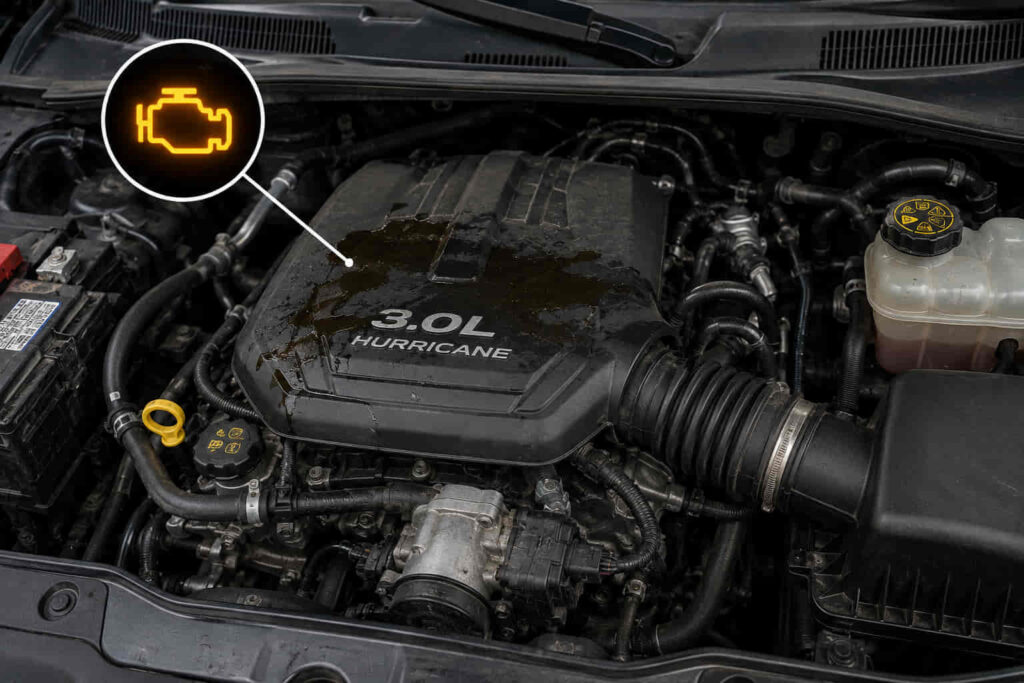
The 3.0L Hurricane engine is one of Stellantis’ most significant powertrain developments in recent years, replacing several naturally aspirated and V8 engines with a twin-turbocharged inline-six platform that delivers higher horsepower, greater torque, and improved fuel efficiency. Designed for vehicles such as the Ram 1500, Jeep Wagoneer, and Grand Wagoneer, the Hurricane engine combines modern turbocharging technology, direct fuel injection, and an advanced aluminum engine architecture to meet increasingly strict emissions regulations without sacrificing performance. While the engine has received praise for its impressive power output and smooth acceleration, many buyers and owners have raised questions about its long-term reliability because it is still a relatively new engine platform.
Like most newly introduced engines, the 3.0 Hurricane has experienced early production issues reported by owners, dealerships, and technicians. Some problems are related to software calibration, while others involve cooling components, oil management, fuel delivery, and turbocharger operation. These concerns do not necessarily indicate that every Hurricane engine will develop serious mechanical failures, but they demonstrate that early-generation engines often require continuous engineering updates as manufacturers collect real-world operating data.
Understanding these issues is particularly important for anyone considering purchasing a vehicle equipped with the Hurricane engine. Some problems have straightforward fixes through software updates or warranty repairs, while others may become expensive if ignored after the factory warranty expires. Knowing which issues are most common, what symptoms to watch for, and how proper maintenance influences reliability allows buyers to make a more informed purchasing decision.
This guide examines the most common 3.0 Hurricane engine problems, explains why they occur, evaluates the engine’s overall reliability, discusses repair costs, and identifies the maintenance practices that can help maximize engine longevity. By the end of this article, you will have a clear understanding of whether the Hurricane engine’s benefits outweigh its potential risks and whether it is the right choice for your driving needs.
What Are the Most Common 3.0 Hurricane Engine Problems?
The most common 3.0 Hurricane engine problems reported during the engine’s early production years include excessive oil consumption, coolant leaks, water pump failures, turbocharger-related concerns, engine misfires, fuel injector issues, software calibration problems, intermittent Check Engine Lights, and occasional overheating under specific operating conditions. While not every owner experiences these issues, they represent the problems most frequently discussed among dealerships, technicians, and early adopters. Because the Hurricane is still a relatively new powertrain, its long-term reliability profile continues to evolve as more vehicles accumulate higher mileage.
Oil consumption is one of the most closely monitored concerns because turbocharged direct-injection engines naturally operate under higher temperatures and cylinder pressures than naturally aspirated engines. The Hurricane’s twin-turbo configuration increases thermal stress throughout the lubrication system, placing greater importance on oil quality and maintenance intervals. Some owners have reported needing to add engine oil between scheduled services, particularly during the first several thousand miles of ownership. In many cases, oil consumption gradually stabilizes after the engine completes its break-in period, but excessive oil usage should never be dismissed without inspection because it may indicate turbocharger seal wear, piston ring sealing issues, or crankcase ventilation problems.
Oil leaks have also been reported on a limited number of vehicles, although they appear less common than oil consumption. Modern turbocharged engines contain numerous oil supply and return lines that lubricate the turbochargers while operating under extremely high temperatures. Each additional connection introduces another potential sealing point where leaks may develop over time. Minor seepage around valve covers, turbo oil feed lines, or gasket surfaces may not immediately affect engine performance, but unresolved leaks can reduce lubrication levels and increase the risk of component wear if left unrepaired. Routine inspections during scheduled maintenance remain the most effective way to identify these problems before they become more expensive repairs.
Cooling system concerns represent another area receiving considerable attention among early Hurricane owners. The engine’s twin-turbo layout generates substantially more heat than traditional naturally aspirated engines, requiring an efficient cooling system capable of regulating engine temperature under varying loads. Reports involving coolant leaks, water pump failures, thermostat malfunctions, and cooling hose defects have appeared in isolated cases. Although many of these issues are covered under the manufacturer’s warranty, a compromised cooling system should always be addressed immediately because even short periods of overheating can damage cylinder head gaskets, aluminum engine components, or turbochargers.
Turbocharger performance is another area that naturally attracts attention because the Hurricane engine depends on two turbochargers to achieve its high power output. Under normal operation, the twin-turbo system delivers rapid throttle response and strong low-end torque. However, some owners have reported unusual whistling sounds, delayed boost pressure, reduced acceleration, or warning messages indicating turbo-related faults. These symptoms do not always indicate a failed turbocharger. In some situations, software calibration, boost pressure sensors, wastegate actuators, or intake air leaks may produce similar symptoms. Because turbocharging systems operate through precise coordination between mechanical and electronic components, accurate diagnosis is essential before replacing expensive hardware unnecessarily.
Fuel delivery issues have also been observed in a small number of vehicles. The Hurricane engine uses high-pressure direct fuel injection to improve combustion efficiency and maximize power output. This advanced system relies on precisely calibrated fuel injectors operating under extremely high pressure. If injector performance becomes inconsistent, the engine may experience rough idle, hesitation during acceleration, reduced fuel economy, or intermittent misfires. Drivers may also notice the Check Engine Light illuminating as the engine management system detects combustion irregularities. In many cases, updated software or injector replacement resolves the issue before permanent engine damage occurs.
Engine misfires deserve particular attention because they often serve as symptoms rather than standalone failures. A misfire can originate from ignition coils, spark plugs, fuel injectors, sensor malfunctions, or electronic control software. Since the Hurricane engine continuously monitors combustion through numerous sensors, even brief irregularities may trigger diagnostic trouble codes before the driver notices significant performance changes. Early diagnosis allows technicians to identify the underlying cause while minimizing the risk of catalytic converter damage or increased engine wear.
Software calibration has become one of the defining characteristics of many modern engines, and the Hurricane platform is no exception. Unlike older engines that relied primarily on mechanical systems, the 3.0 Hurricane uses sophisticated engine management software to regulate turbo boost pressure, ignition timing, fuel injection, emissions controls, cooling operation, and transmission coordination. As Stellantis collects real-world operating data from thousands of vehicles, engineers periodically release updated software that improves drivability, refines throttle response, resolves false warning messages, and corrects calibration issues identified after production. Consequently, some problems reported by early owners have been resolved through software updates rather than mechanical repairs.
Intermittent Check Engine Light warnings have accompanied several of these early software and sensor-related issues. Although a warning light naturally causes concern, it does not necessarily indicate catastrophic engine failure. Modern diagnostic systems are intentionally sensitive because they monitor emissions compliance, combustion efficiency, turbocharger performance, and numerous other operating parameters. A temporary sensor fault, software anomaly, or fuel system irregularity may illuminate the warning light long before the driver notices any change in performance. Reading diagnostic trouble codes promptly remains the most effective way to determine whether the warning represents a minor calibration issue or a developing mechanical problem.
Overheating appears less frequently than the previously mentioned concerns but deserves immediate attention whenever it occurs. High-performance turbocharged engines generate significant thermal loads, particularly during towing, mountain driving, or operation in extremely hot climates. If coolant circulation becomes restricted because of a failing water pump, thermostat malfunction, coolant leak, or trapped air within the cooling system, engine temperatures can rise rapidly. Continuing to drive an overheating engine greatly increases the likelihood of severe internal damage, including warped cylinder heads, damaged head gaskets, or premature turbocharger failure. For this reason, any temperature warning should be treated as an urgent mechanical issue rather than a temporary inconvenience.
Despite these reported concerns, it is important to place the Hurricane engine’s reliability into proper context. Every newly introduced engine platform experiences a period during which manufacturers identify opportunities for refinement based on real-world customer usage. Many early issues involve limited production batches, isolated component failures, or software calibrations that are subsequently corrected through technical service bulletins, updated replacement parts, or revised manufacturing processes. As production continues and engineering improvements are incorporated into later model years, the long-term reliability profile of the 3.0 Hurricane engine is expected to become more clearly established. For prospective buyers, understanding these common issues provides a realistic perspective that balances the engine’s exceptional performance with the practical considerations of owning a sophisticated, twin-turbocharged powertrain.
Why Does the 3.0 Hurricane Engine Experience These Problems?
The 3.0 Hurricane engine experiences many of its reported problems because it combines several advanced technologies within a compact, high-output engine architecture. Twin turbochargers, direct fuel injection, high cylinder pressures, aggressive emissions calibration, and sophisticated electronic controls enable the engine to produce V8-level performance from a smaller displacement. While these technologies significantly improve power, torque, and fuel efficiency, they also create higher thermal loads and greater mechanical complexity than traditional naturally aspirated engines. As a result, the engine depends on precise coordination between mechanical components, electronic systems, and routine maintenance to operate reliably over the long term.
One of the biggest factors influencing reliability is the engine’s high specific output. The Standard Output version produces approximately 420 horsepower, while the High Output variant generates up to 540 horsepower from the same 3.0-liter displacement. Achieving this level of performance requires significantly higher combustion pressures than previous naturally aspirated engines such as the 5.7L HEMI V8. Every combustion cycle places greater stress on pistons, connecting rods, crankshaft bearings, cylinder walls, head gaskets, and turbocharger components. Although these parts are engineered to withstand demanding operating conditions, higher internal loads naturally reduce the margin for mechanical error if lubrication, cooling, or maintenance becomes inadequate.
Turbocharging itself introduces another layer of engineering complexity. Unlike naturally aspirated engines that rely solely on atmospheric pressure to draw air into the combustion chamber, the Hurricane engine compresses incoming air using two turbochargers driven by exhaust gases. Compressing air increases oxygen density, allowing more fuel to burn and generating substantially more power. However, this process also raises intake air temperature and exposes turbocharger bearings to extremely high rotational speeds that often exceed 150,000 revolutions per minute. Because these bearings depend entirely on a continuous supply of clean engine oil, even minor lubrication problems or delayed oil changes can accelerate wear over time.
Heat management is another critical factor behind many reported Hurricane engine issues. Every turbocharged engine generates considerably more heat than a naturally aspirated counterpart because exhaust gases must first pass through turbine housings before leaving the engine. Under heavy acceleration, towing, or prolonged highway driving, exhaust temperatures increase dramatically while turbochargers retain large amounts of thermal energy. To maintain safe operating temperatures, the Hurricane engine relies on a carefully engineered cooling system consisting of multiple coolant passages, electric water pumps, thermostats, intercoolers, engine oil cooling circuits, and electronic temperature management strategies. If any component within this network begins operating outside its intended range, engine temperatures can rise rapidly and place additional stress on surrounding components.
The direct fuel injection system also contributes to both the engine’s impressive performance and its engineering challenges. Direct injection delivers fuel into the combustion chamber at extremely high pressure, producing precise fuel atomization that improves combustion efficiency and reduces emissions. However, the system requires high-pressure fuel pumps, precision injectors, complex fuel rail assemblies, and advanced electronic control strategies. Because injector tolerances are extremely small, fuel contamination or injector wear can affect spray patterns and combustion quality. Irregular combustion may lead to rough idling, hesitation during acceleration, increased emissions, or engine misfires if corrective action is not taken promptly.
Modern emissions regulations have further increased engine complexity. The Hurricane platform was developed during a period when manufacturers faced increasingly strict requirements for fuel economy, greenhouse gas emissions, and exhaust pollutants. Meeting these regulations requires continuous adjustment of ignition timing, turbocharger boost pressure, fuel delivery, exhaust gas temperatures, and air-fuel ratios under thousands of different driving conditions. Rather than operating with fixed mechanical settings, the engine constantly adapts its performance using sophisticated software algorithms. While this improves efficiency and reduces emissions, it also means that software calibration plays a much larger role in engine reliability than it did in previous generations of powertrains.
This heavy reliance on software explains why some early Hurricane engine concerns have been resolved through calibration updates instead of mechanical repairs. The engine control module continuously analyzes information from dozens of sensors measuring air pressure, fuel pressure, exhaust oxygen levels, coolant temperature, oil pressure, crankshaft position, knock intensity, and turbocharger performance. Small differences between expected and actual sensor readings may trigger diagnostic codes or alter engine operation to protect internal components. As engineers collect real-world operating data from vehicles across different climates, elevations, and driving conditions, software refinements improve how the engine interprets these signals, reducing unnecessary warning lights while optimizing performance and reliability.
Another reason early production engines experience more reported issues is the natural development cycle of a new engine platform. Unlike long-established engines that have undergone many years of refinement, the Hurricane engine entered production with relatively limited long-term field data. Although extensive durability testing occurs before release, laboratory simulations cannot reproduce every combination of climate, fuel quality, towing demand, maintenance practices, and driving behavior encountered by thousands of customers worldwide. Early production vehicles therefore provide manufacturers with valuable operational data that often leads to revised components, updated manufacturing procedures, improved software, or Technical Service Bulletins addressing specific concerns discovered after launch.
Manufacturing tolerances also influence reliability, particularly during the first years of production. Every engine is assembled within carefully controlled dimensional specifications, but even slight variations in machining, gasket compression, seal installation, or component alignment can influence long-term durability. As production volume increases, manufacturers continuously refine assembly processes, improve supplier quality control, and update production techniques based on warranty data and field inspections. These incremental improvements often explain why later production years of an engine family demonstrate greater reliability than the earliest examples.
Driver behavior represents another significant factor affecting the occurrence of Hurricane engine problems. Turbocharged engines respond differently than naturally aspirated engines because they generate more heat and operate under higher mechanical loads. Frequent short trips that prevent the engine from reaching normal operating temperature can accelerate moisture accumulation inside the crankcase and reduce oil effectiveness. Aggressive acceleration immediately after cold starts increases wear because engine oil has not yet reached optimal viscosity. Likewise, repeatedly towing heavy loads without following recommended maintenance intervals increases stress on the cooling system, turbochargers, transmission, and lubrication system. While the Hurricane engine is designed for demanding applications, consistent adherence to manufacturer maintenance recommendations remains essential for maximizing long-term reliability.
Fuel quality also plays an important role in engine operation. The Hurricane engine is engineered to deliver maximum performance using premium gasoline because higher-octane fuel provides greater resistance to engine knock under elevated boost pressure. Although certain variants may operate on regular fuel with reduced performance, lower-octane gasoline can cause the engine management system to reduce ignition timing and turbocharger boost to protect internal components. This protective strategy prevents damage but may reduce efficiency and alter overall driving characteristics. Consistently using the recommended fuel grade helps maintain stable combustion, optimize power delivery, and minimize unnecessary stress on the engine.
Ultimately, the majority of reported 3.0 Hurricane engine problems are not caused by a single design flaw but by the interaction of advanced technologies that collectively push the engine to achieve exceptional performance while satisfying modern efficiency and emissions requirements. Higher power density, sophisticated electronics, complex turbocharging systems, and stringent environmental regulations inevitably increase engineering complexity compared with previous generations of naturally aspirated engines. As Stellantis continues refining production processes, updating software, and incorporating improvements based on real-world operating data, many early concerns are expected to become less common in later production models. For owners, understanding why these issues occur provides valuable context for making informed maintenance decisions that support long-term engine durability.
How Reliable Is the 3.0 Hurricane Engine?
The 3.0 Hurricane engine appears to be a reliable modern powertrain, but it is still too early to classify it alongside long-established engines with proven long-term durability. From an engineering perspective, the Hurricane platform incorporates robust internal components, an advanced twin-turbocharged inline-six design, and modern thermal management systems capable of supporting high power output. However, because the engine only entered mass production recently, there is limited high-mileage data available to determine how it performs after 150,000 or 200,000 miles. Current evidence suggests that most reported concerns involve early production refinements, software calibration, or isolated component failures rather than widespread structural weaknesses.
Reliability should always be evaluated within the context of an engine’s lifecycle. Every newly introduced engine undergoes an adjustment period during which manufacturers collect warranty claims, dealership repair records, and real-world operating data from thousands of vehicles. This information allows engineers to identify recurring issues that may not have appeared during laboratory durability testing. The Hurricane engine is currently in this phase. As more vehicles accumulate mileage under different climates, towing conditions, fuel qualities, and maintenance practices, Stellantis continues refining software calibrations, updating replacement parts, and issuing Technical Service Bulletins when necessary. This continuous improvement process is common across the automotive industry and does not automatically indicate that the engine is fundamentally unreliable.
One of the Hurricane engine’s greatest strengths is its underlying mechanical architecture. Unlike V6 engines that use two cylinder banks, the inline-six configuration is naturally balanced because opposing piston movements cancel much of the engine’s primary vibration. This balance reduces mechanical stress on rotating components, minimizes vibration transmitted throughout the drivetrain, and contributes to smoother operation over extended periods. Fewer vibration-related loads can improve the longevity of bearings, timing components, and accessory systems compared with engine layouts requiring additional balancing mechanisms.
The engine block itself reflects Stellantis’ intention to build a durable high-performance platform. Constructed from aluminum while incorporating reinforced structural areas designed to withstand elevated combustion pressures, the Hurricane engine was engineered to replace larger-displacement V8 engines without sacrificing towing capability or performance. Forged internal components, advanced cooling passages, and high-strength crankshaft materials indicate that durability was a primary design objective rather than an afterthought. These engineering decisions provide confidence that the engine’s core structure is capable of supporting its advertised performance when maintained correctly.
The twin-turbocharging system represents both a strength and a potential reliability consideration. Modern turbochargers are significantly more durable than earlier generations because improvements in bearing materials, lubrication systems, and thermal management have extended their service life. Nevertheless, turbochargers remain components operating under extreme conditions. High exhaust temperatures, elevated shaft speeds, and continuous oil circulation make routine maintenance particularly important. Following recommended oil change intervals, using manufacturer-approved lubricants, and avoiding prolonged operation with degraded engine oil all contribute directly to turbocharger longevity. Most turbocharger failures historically result from lubrication issues rather than inherent design defects, making preventive maintenance one of the most influential factors affecting long-term reliability.
Electronic complexity also shapes the Hurricane engine’s reliability profile. Compared with naturally aspirated engines introduced a decade ago, the Hurricane platform relies on significantly more sensors, control modules, and software algorithms to regulate combustion, turbocharger operation, emissions systems, and thermal management. While this complexity increases the number of components capable of generating diagnostic warnings, it also allows the engine management system to detect abnormalities much earlier than older mechanical designs. Many early owner reports involve software updates correcting sensor interpretation or drivability characteristics rather than replacing major engine components. This distinction is important because electronic calibration issues generally present lower long-term reliability risks than structural mechanical failures.
Maintenance practices play an even greater role in reliability than they did with previous naturally aspirated engines. Turbocharged direct-injection engines demand consistent servicing because they operate under higher temperatures and pressures throughout every drive cycle. Engine oil performs several critical functions simultaneously, including lubricating internal components, cooling turbocharger bearings, reducing friction, and removing contaminants generated during combustion. Extending oil change intervals beyond manufacturer recommendations or using oil that does not meet specified performance standards increases wear throughout the lubrication system. Conversely, owners who perform regular maintenance using approved fluids are more likely to achieve long service life with fewer mechanical complications.
Driving conditions also influence reliability outcomes. Vehicles used primarily for highway driving generally accumulate mileage under stable operating temperatures, allowing lubrication systems to perform efficiently and minimizing repeated thermal expansion cycles. Frequent short-distance trips create different conditions because the engine may never reach optimal operating temperature before being shut down again. Cold starts produce the greatest mechanical wear experienced during normal operation, and repeated short trips increase moisture accumulation inside the crankcase while reducing the effectiveness of oil additives. Drivers who routinely tow heavy trailers, climb steep grades, or operate in extremely hot climates also place greater thermal demands on the engine, emphasizing the importance of cooling system maintenance and timely fluid replacement.
Comparing the Hurricane engine with the 5.7L HEMI requires acknowledging the difference in maturity between the two platforms. The HEMI benefited from many years of continuous refinement, allowing manufacturers to address recurring problems and improve durability across multiple production generations. The Hurricane engine has not yet accumulated the same historical operating data. While its engineering appears highly capable, long-term reliability can only be fully assessed after substantial numbers of engines exceed 150,000 miles under normal ownership conditions. Early indications suggest that the Hurricane possesses the structural foundation necessary to reach these milestones, but additional real-world data will ultimately determine whether it achieves the same reputation for durability established by older Stellantis powertrains.
Warranty coverage provides additional confidence for early buyers. Most Hurricane-powered vehicles remain protected by comprehensive manufacturer warranties during the period when early production issues are most likely to appear. Software updates, component replacements, and repairs associated with verified manufacturing defects are generally addressed through authorized dealerships according to warranty terms. Buyers planning to keep their vehicles well beyond the warranty period may also consider extended coverage, particularly because advanced turbocharged engines contain more expensive electronic and induction components than traditional naturally aspirated designs.
Overall, the available evidence indicates that the 3.0 Hurricane engine is better described as an evolving platform than an unreliable one. Its core mechanical design demonstrates strong engineering principles, while most reported concerns involve refinements expected during the introduction of a completely new engine family. Owners who follow recommended maintenance schedules, use the correct fuel and lubricants, and respond promptly to diagnostic warnings are likely to experience reliability consistent with other modern turbocharged engines. As production continues and more high-mileage examples enter the market, the Hurricane engine’s long-term durability will become increasingly well defined, but current information suggests that it has the potential to become a dependable replacement for the naturally aspirated V8 engines it was designed to succeed.
Read more: Are Auto Dimming Side Mirrors Worth It
What Are the Symptoms of 3.0 Hurricane Engine Problems?
The symptoms of 3.0 Hurricane engine problems often appear gradually rather than all at once, making early diagnosis essential for preventing more expensive repairs. Because the Hurricane is a highly sophisticated twin-turbocharged engine managed by an advanced electronic control system, many faults are detected before they develop into major mechanical failures. Drivers who recognize changes in engine behavior, unusual sounds, warning messages, or fluid loss can often address problems while they are still covered under warranty or before secondary damage affects surrounding components.
One of the earliest warning signs is the illumination of the Check Engine Light. Although this warning does not always indicate a serious mechanical failure, it should never be ignored because the engine control module continuously monitors hundreds of operating parameters related to combustion, turbocharger performance, fuel delivery, emissions, and cooling efficiency. A fault code may be triggered by a temporary sensor irregularity, software calibration issue, ignition misfire, or fuel system imbalance long before noticeable drivability problems develop. Retrieving diagnostic trouble codes with a professional scan tool allows technicians to identify the root cause accurately instead of replacing components based on symptoms alone.
Rough idling is another common symptom that deserves immediate attention. Under normal operating conditions, the inline-six configuration delivers exceptionally smooth engine operation because of its naturally balanced design. If the engine begins vibrating excessively while idling, fluctuates between idle speeds, or feels unstable when stopped at traffic lights, the cause may involve fuel injector imbalance, ignition coil failure, spark plug wear, intake air leaks, or engine management software irregularities. Even minor combustion inconsistencies become more noticeable in an inline-six engine because its normal operating characteristics are exceptionally refined.
Drivers may also notice hesitation during acceleration or reduced engine performance. The Hurricane engine is designed to deliver strong torque at relatively low engine speeds through its twin-turbocharging system. If acceleration becomes sluggish, throttle response feels delayed, or the vehicle no longer develops power as expected, the problem may originate from reduced turbocharger boost, malfunctioning boost pressure sensors, wastegate control issues, air intake leaks, or fuel delivery problems. Because several different systems influence engine output simultaneously, accurate diagnosis requires evaluating both mechanical components and electronic control data rather than assuming the turbochargers themselves have failed.
Unusual sounds often provide valuable clues regarding developing mechanical issues. A high-pitched whistling noise during acceleration may indicate a boost leak within the intake system or a damaged intercooler hose allowing compressed air to escape before reaching the engine. A grinding or metallic noise originating near the turbochargers deserves immediate inspection because turbocharger bearings operate at extremely high rotational speeds and rely on continuous lubrication. Ignoring abnormal bearing noise can eventually lead to complete turbocharger failure, allowing metal fragments to circulate through the intake or lubrication system.
Knocking, ticking, or abnormal engine noises should also be investigated promptly. While modern direct-injection engines naturally produce a more pronounced injector ticking sound than older port-injected engines, sudden changes in engine noise may indicate insufficient lubrication, abnormal combustion, timing-related concerns, or excessive valve train wear. Distinguishing between normal operational sounds and developing mechanical faults requires familiarity with the Hurricane engine’s typical acoustic characteristics. If engine noise becomes noticeably louder or changes rapidly over a short period, professional inspection should not be delayed.
Excessive oil consumption represents another symptom that owners should monitor throughout the engine’s service life. A gradual decrease in engine oil level between scheduled maintenance intervals may occur during the initial break-in period, but frequent additions of engine oil after this stage require further investigation. Blue exhaust smoke during acceleration or after prolonged idling may indicate that engine oil is entering the combustion chamber through worn turbocharger seals, piston rings, or valve guide seals. Although such failures appear relatively uncommon, monitoring oil levels regularly provides one of the earliest opportunities to identify lubrication-related problems before severe engine damage develops.
Oil leaks can often be identified before performance changes become apparent. Small oil spots beneath the vehicle after parking, visible oil residue around turbocharger oil supply lines, damp valve cover areas, or the smell of burning oil after highway driving may indicate external leakage. Engine oil leaking onto hot exhaust components frequently produces a noticeable burning odor inside or around the vehicle, especially after extended driving. Addressing minor leaks promptly helps prevent contamination of surrounding components while reducing the risk of lubrication loss during prolonged operation.
Cooling system problems typically produce symptoms that become progressively more obvious if ignored. A persistent coolant smell inside or outside the vehicle, visible coolant beneath the engine compartment, repeated warnings indicating low coolant level, or fluctuating temperature gauge readings often suggest coolant leakage or inadequate circulation. The Hurricane engine generates substantial thermal energy because of its twin-turbocharged design, making cooling system performance critical to overall engine reliability. Continuing to drive with low coolant levels or repeated overheating warnings significantly increases the likelihood of damage to cylinder heads, head gaskets, and turbocharger components.
Engine overheating itself should always be treated as an emergency symptom rather than a temporary inconvenience. Rising coolant temperature, dashboard temperature warnings, reduced engine power triggered by protective operating modes, or steam escaping from the engine compartment indicate that the cooling system is no longer maintaining normal operating conditions. Modern engine management software may reduce engine output automatically to minimize internal damage, but this protective strategy cannot prevent mechanical failure indefinitely. Drivers should stop the vehicle safely and investigate the cause before resuming operation.
Fuel system irregularities often appear through reduced fuel economy, inconsistent throttle response, or repeated engine misfires under acceleration. Because the Hurricane engine relies on high-pressure direct fuel injection, even slight injector imbalance can alter combustion quality. Drivers may notice hesitation when accelerating onto highways, uneven power delivery during passing maneuvers, or occasional stumbling during cold starts. These symptoms may develop gradually, making them easy to overlook until diagnostic warning lights appear. Early inspection helps prevent prolonged operation with incomplete combustion that could eventually damage emissions components such as catalytic converters.
Turbocharger-related issues sometimes produce symptoms beyond reduced performance. Drivers may hear compressor surge, experience inconsistent boost pressure, or notice intermittent transitions between normal acceleration and reduced engine output. In some cases, the engine management system intentionally limits turbocharger boost after detecting abnormal operating conditions, placing the vehicle into a protective mode designed to reduce stress on internal components. While this strategy protects the engine from more serious damage, it also signals that a detailed inspection is necessary to determine the underlying mechanical or electronic cause.
Cold-start behavior can also reveal developing problems before they become evident during normal driving. Extended cranking, rough idle immediately after startup, excessive exhaust smoke, or delayed throttle response may indicate fuel pressure loss, ignition system irregularities, sensor calibration issues, or software updates requiring dealer attention. Because cold starts produce the highest mechanical loads experienced during routine engine operation, recurring startup abnormalities should be investigated promptly rather than dismissed as temporary conditions.
Perhaps the most important characteristic of Hurricane engine problems is that they rarely progress without warning. Modern diagnostic systems continuously monitor engine health and frequently identify abnormalities before significant mechanical damage occurs. Paying attention to warning lights, unusual noises, fluid levels, changes in engine performance, or temperature fluctuations allows owners to respond early while repairs remain relatively straightforward. Combined with routine maintenance and timely software updates, recognizing these symptoms at an early stage represents one of the most effective ways to maximize the reliability and service life of the 3.0 Hurricane engine.
How Much Does It Cost to Repair a 3.0 Hurricane Engine?
The cost to repair a 3.0 Hurricane engine depends on the failed component, the vehicle’s warranty status, labor rates, and whether original equipment manufacturer (OEM) or aftermarket parts are used. Minor software updates or sensor replacements may cost little or nothing while the vehicle remains under warranty, whereas major repairs involving turbochargers, fuel system components, or internal engine damage can become significantly more expensive once warranty coverage expires. Because the Hurricane is a newly developed twin-turbocharged engine with advanced electronics, repair costs are generally higher than those associated with older naturally aspirated engines that use fewer electronic and forced-induction components.
Software-related repairs represent the least expensive category because many early Hurricane engine issues originate from calibration improvements rather than mechanical failures. Modern engine management systems continuously evolve as manufacturers collect operational data from vehicles worldwide. When Stellantis releases updated engine control software to improve drivability, optimize turbocharger performance, or eliminate false diagnostic warnings, dealerships can usually install these updates during routine service appointments. Vehicles still covered by the factory warranty typically receive these software updates without additional repair costs, making early ownership considerably less expensive than maintaining an aging vehicle outside warranty protection.
Replacing electronic sensors is generally the next level of repair. The Hurricane engine relies on numerous sensors that monitor oil pressure, coolant temperature, intake air pressure, fuel pressure, crankshaft position, camshaft timing, turbocharger boost, oxygen content, and exhaust emissions. If one of these sensors fails or begins transmitting inaccurate data, the engine control module may illuminate the Check Engine Light or activate a reduced-power operating mode. Although the sensor itself is often relatively inexpensive compared with major mechanical components, diagnostic procedures and labor contribute substantially to the total repair bill because technicians must verify that the sensor rather than wiring or software is responsible for the fault.
Fuel system repairs can become more expensive because of the precision engineering involved in direct fuel injection. The Hurricane engine uses high-pressure fuel pumps and injectors that operate under extremely high pressure to maximize combustion efficiency and performance. When an injector becomes clogged, develops an inconsistent spray pattern, or fails electronically, the engine may experience rough idling, misfires, hesitation, or increased fuel consumption. Replacing injectors requires careful calibration and verification to ensure balanced fuel delivery across all six cylinders. Depending on the extent of the repair, owners may replace a single injector or multiple injectors if diagnostic testing identifies additional components operating outside specification.
Cooling system repairs vary considerably depending on the failed component. A damaged coolant hose or defective hose clamp typically represents one of the more affordable repairs because replacement parts are relatively simple and labor requirements remain limited. More complex failures involving the electric water pump, thermostat assembly, radiator, intercooler cooling circuit, or electronic coolant management components require additional labor and specialized diagnostic procedures. Because the Hurricane engine generates substantial thermal energy through its twin-turbocharged design, cooling system repairs should never be postponed. Continuing to operate the engine while overheating significantly increases the likelihood of secondary damage affecting cylinder heads, head gaskets, turbochargers, and internal engine components.
Turbocharger repairs represent one of the most expensive maintenance categories because the turbocharging system combines precision mechanical engineering with advanced electronic controls. A complete turbocharger replacement generally involves removing surrounding intake components, oil supply lines, coolant connections, heat shields, and exhaust assemblies before installing and testing the new unit. In many cases, technicians also inspect lubrication passages, intercoolers, boost control systems, and intake plumbing to confirm that no additional faults contributed to the original failure. Since the Hurricane engine uses two turbochargers, repair costs can increase substantially if both units require replacement during the vehicle’s lifetime, although simultaneous failures remain relatively uncommon under normal maintenance conditions.
Oil leak repairs range from relatively straightforward gasket replacements to more labor-intensive repairs involving turbocharger oil supply lines or engine sealing surfaces. Minor leaks detected early usually require less time and fewer replacement parts because surrounding components have not yet become contaminated with oil. Delaying repairs allows leaking oil to accumulate around exhaust components, electrical connectors, and engine mounts, increasing both labor requirements and the potential for additional component deterioration. Routine inspections during oil changes remain one of the most effective methods for identifying developing leaks before they become costly repairs.
Internal engine repairs represent the highest repair category but also the least common. Failures involving pistons, connecting rods, crankshaft bearings, cylinder walls, or valve train components generally occur only after severe lubrication failure, prolonged overheating, contaminated engine oil, or catastrophic mechanical malfunction. Because the Hurricane engine incorporates advanced manufacturing techniques and tightly integrated electronic systems, rebuilding the engine often requires specialized equipment and manufacturer-specific procedures. In certain situations, replacing the complete long block may prove more practical than rebuilding the existing engine, particularly when multiple internal components sustain damage simultaneously.
Labor rates significantly influence overall repair expenses because modern turbocharged engines require more disassembly than previous naturally aspirated designs. Accessing turbochargers, high-pressure fuel components, cooling circuits, and electronic control systems frequently involves removing intake manifolds, heat shields, underbody panels, or other surrounding components before repairs can begin. Labor costs therefore vary according to vehicle configuration, dealership pricing, regional service rates, and repair complexity. Vehicles equipped with additional luxury features or advanced driver assistance technologies may also require electronic recalibration after certain repairs, adding further diagnostic time.
Warranty coverage plays an essential role in determining actual ownership costs during the first several years of service. Most Hurricane-powered vehicles remain protected by Stellantis’ factory powertrain warranty during the period when manufacturing defects and early production issues are most likely to appear. Covered repairs typically include verified failures involving engine components, electronic control systems, turbochargers, and other manufacturer-approved warranty items, provided the vehicle has been maintained according to factory recommendations. Owners should retain maintenance records because proper servicing helps support warranty claims if mechanical issues arise.
Extended warranty coverage becomes an important consideration for buyers intending to keep Hurricane-powered vehicles well beyond the factory warranty period. Twin-turbocharged engines contain more advanced components than naturally aspirated powertrains, increasing the potential cost of major repairs later in the vehicle’s life. While extended warranty plans involve an upfront financial commitment, they can reduce long-term ownership risk by covering expensive components such as turbochargers, electronic control modules, fuel system hardware, and cooling system assemblies. Whether an extended warranty represents good value depends on expected ownership duration, annual mileage, and individual risk tolerance.
From a long-term ownership perspective, maintenance costs should be evaluated alongside repair costs rather than separately. Performing oil changes with manufacturer-approved synthetic oil, replacing filters on schedule, using the recommended fuel grade, maintaining the cooling system, and installing software updates promptly reduces the likelihood of expensive repairs throughout the engine’s service life. Preventive maintenance typically costs far less than correcting failures caused by neglected servicing, particularly in modern turbocharged engines operating under high thermal and mechanical loads.
Overall, the 3.0 Hurricane engine is not unusually expensive to maintain compared with other premium twin-turbocharged inline-six engines currently available on the market. Its repair costs reflect the advanced technology incorporated into its design rather than evidence of inherent unreliability. Owners who follow factory maintenance schedules and address warning signs promptly are more likely to experience predictable ownership costs while minimizing the risk of major mechanical repairs after warranty coverage expires.
Can You Prevent Common 3.0 Hurricane Engine Problems?
Most common 3.0 Hurricane engine problems can be minimized through proactive maintenance, proper driving habits, and timely software updates. While no engine is completely immune to mechanical or electronic failures, the Hurricane’s twin-turbocharged design responds particularly well to preventive maintenance because many of its major components operate under high thermal and mechanical loads. Consistently following the manufacturer’s maintenance schedule, using the correct fluids, and addressing small issues before they escalate significantly reduce the likelihood of premature wear and expensive repairs.
The single most important factor influencing the Hurricane engine’s long-term reliability is engine oil maintenance. Unlike naturally aspirated engines, the Hurricane relies on engine oil not only to lubricate internal moving parts but also to cool and protect its twin turbochargers. Turbocharger bearings rotate at extremely high speeds while being exposed to intense exhaust heat, making clean, high-quality synthetic oil essential for preventing bearing wear and maintaining proper lubrication. Delaying oil changes allows contaminants, oxidation, and thermal degradation to reduce the oil’s protective properties, increasing friction throughout the engine and accelerating wear on turbocharger components. Owners who consistently use the manufacturer-approved oil specification and avoid extending oil change intervals beyond recommended limits provide the engine with its strongest defense against long-term mechanical problems.
Monitoring engine oil level between scheduled services is equally important. Modern turbocharged engines may consume small amounts of oil during normal operation, particularly while new or during sustained high-load driving. Allowing the oil level to fall below the recommended range reduces lubrication throughout the engine and increases operating temperatures inside the turbochargers. Regularly checking the dipstick or electronic oil monitoring system enables drivers to detect unusual oil consumption before it develops into a more serious mechanical issue requiring extensive repairs.
Using the recommended fuel grade also plays a significant role in protecting the Hurricane engine. The engine was engineered to produce high power output through elevated turbocharger boost pressure and advanced ignition timing. Premium gasoline provides greater resistance to pre-ignition and engine knock under these demanding operating conditions. Although certain versions of the engine can operate on lower-octane fuel, the engine management system must often reduce ignition timing and boost pressure to protect internal components. Repeated operation under these protective adjustments does not necessarily cause immediate damage, but consistently using the recommended fuel allows the engine to operate closer to its intended design parameters while minimizing unnecessary thermal and combustion stress.
Proper warm-up procedures help reduce internal engine wear, especially during cold starts. Most mechanical wear occurs during the first few minutes after startup because engine oil has not yet reached its optimal operating temperature or fully circulated throughout the lubrication system. Aggressive acceleration immediately after starting the engine places high loads on pistons, bearings, turbochargers, and valve train components before adequate lubrication is established. Allowing the engine to reach normal operating temperature under moderate driving conditions gives engine oil sufficient time to circulate while reducing unnecessary stress on critical components.
Cooling the turbochargers after heavy operation is another practice that contributes to long-term durability. Following prolonged highway driving, mountain climbs, towing, or spirited acceleration, the turbochargers retain substantial heat generated by exhaust gases. Shutting the engine off immediately after these demanding conditions stops oil circulation while residual heat remains trapped within the turbocharger housings. Although the Hurricane engine incorporates modern cooling strategies that reduce this risk compared with older turbocharged engines, allowing the engine to idle briefly after sustained heavy loads provides additional time for temperatures to stabilize before shutdown. This practice helps preserve oil quality within the turbocharger bearings and reduces long-term thermal stress.
Maintaining the cooling system is equally essential because thermal management directly affects nearly every major engine component. Coolant should remain at the proper level, and any signs of coolant leakage, overheating, fluctuating temperature readings, or unusual coolant odors should be investigated without delay. Even relatively minor cooling system defects can rapidly become major mechanical failures if overheating occurs. Replacing worn hoses, maintaining coolant quality according to factory recommendations, and inspecting the water pump and thermostat during scheduled service help ensure the engine continues operating within its intended temperature range.
Software updates represent another often-overlooked aspect of preventive maintenance. Modern vehicles rely extensively on electronic calibration to optimize engine performance, emissions, fuel economy, and component protection. As Stellantis gathers operational data from vehicles worldwide, engineers periodically release updated software that improves throttle response, turbocharger management, ignition timing, diagnostic sensitivity, and overall drivability. Installing these updates during dealership service appointments ensures the engine benefits from the latest engineering refinements while reducing the likelihood of false diagnostic warnings or operating irregularities corrected through revised calibration.
Routine inspections provide an opportunity to identify developing problems before they require major repairs. During scheduled maintenance, technicians can inspect turbocharger plumbing, oil supply lines, coolant hoses, electrical connectors, drive belts, intake components, and engine seals for early signs of wear or leakage. Detecting a minor coolant seep, loose intake connection, or oil residue around a turbocharger fitting often prevents a relatively inexpensive repair from developing into a costly mechanical failure later in the vehicle’s life.
Driving style has a greater influence on Hurricane engine longevity than many owners realize. Rapid acceleration before the engine reaches operating temperature, repeated short trips that never fully warm the engine, frequent towing beyond recommended capacities, and aggressive driving under extreme temperatures all increase mechanical stress. By contrast, smooth acceleration, maintaining consistent operating temperatures, avoiding prolonged engine overloading, and following recommended towing procedures help reduce cumulative wear throughout the engine and drivetrain. Modern powertrains are designed for demanding conditions, but minimizing unnecessary stress always contributes to longer service life.
Owners should also respond promptly to warning indicators rather than delaying diagnosis. The Check Engine Light, oil pressure warning, coolant temperature alerts, or unusual engine noises frequently appear before significant mechanical damage develops. Modern diagnostic systems are intentionally designed to detect abnormalities early, providing an opportunity to correct relatively small issues before they affect major engine components. Ignoring these warnings in hopes that they will disappear often results in more extensive repairs and higher ownership costs.
Long-term reliability also depends on maintaining complete service records. Documenting oil changes, software updates, coolant replacements, inspections, and warranty repairs creates a detailed maintenance history that benefits both the current owner and future buyers. A well-documented service history demonstrates that the engine has received proper care throughout its life, supporting stronger resale value while providing technicians with valuable information if future diagnostic work becomes necessary.
Ultimately, preventing common 3.0 Hurricane engine problems is less about performing extraordinary maintenance and more about following disciplined ownership practices consistently over time. The engine’s advanced twin-turbocharged design rewards owners who prioritize regular servicing, quality lubricants, recommended fuel, cooling system maintenance, and early diagnosis of developing issues. While no preventive strategy can eliminate every possible failure, these practices significantly reduce mechanical risk and provide the best opportunity for achieving the long service life the Hurricane engine was engineered to deliver.
Which Vehicles Use the 3.0 Hurricane Engine?
The 3.0 Hurricane engine powers a growing number of Stellantis vehicles as the company gradually replaces several naturally aspirated V8 engines with a more efficient twin-turbocharged inline-six platform. Developed to deliver higher horsepower, stronger low-end torque, improved fuel economy, and lower emissions, the Hurricane engine has become the foundation of Stellantis’ next generation of gasoline-powered trucks and SUVs. Its introduction represents a significant shift in engineering philosophy, emphasizing forced induction and advanced engine management instead of increasing engine displacement.
The Ram 1500 is one of the first and most recognizable vehicles to receive the Hurricane engine. Beginning with recent model years, Stellantis introduced both the Standard Output and High Output versions to replace the long-running 5.7L HEMI V8 in many configurations. The Standard Output engine produces performance that exceeds the outgoing V8 in both horsepower and torque while improving overall fuel efficiency. The High Output version targets customers seeking maximum towing capability and stronger acceleration, providing performance levels previously associated with larger-displacement performance engines. For Ram buyers, the Hurricane represents not only an engine replacement but also a significant upgrade in torque delivery, especially at lower engine speeds where towing and hauling demand the greatest pulling power.
The Jeep Wagoneer also adopts the Hurricane engine as part of Jeep’s strategy to modernize its premium SUV lineup. Designed as a full-size luxury SUV capable of transporting large families while maintaining substantial towing capacity, the Wagoneer benefits from the Hurricane’s combination of smooth inline-six operation and abundant turbocharged torque. Compared with previous V8-powered models, the Hurricane engine provides stronger low-speed acceleration while reducing fuel consumption under typical driving conditions. The engine’s refined power delivery also complements the Wagoneer’s focus on long-distance comfort and quiet highway cruising.
The Grand Wagoneer receives the High Output version of the Hurricane engine, reflecting its position as Jeep’s flagship luxury SUV. Producing substantially more horsepower than the Standard Output variant, the High Output engine delivers performance expected in the premium full-size SUV segment without relying on a naturally aspirated V8. The increased power allows the Grand Wagoneer to maintain confident acceleration despite its considerable size and weight while supporting towing capacities expected by buyers in this vehicle class. The combination of turbocharged performance and advanced engine management also aligns with stricter emissions requirements affecting luxury vehicles worldwide.
Stellantis continues expanding Hurricane engine availability across additional models as production increases. Future applications are expected to include performance-oriented Dodge vehicles, larger Jeep products, and other Ram models requiring a balance between fuel economy, towing capability, and high-output performance. Because the Hurricane platform was engineered with multiple power levels from the beginning, manufacturers can adapt the engine to different vehicle segments without developing entirely new powertrains. This scalability reduces engineering complexity while allowing the company to standardize parts, manufacturing processes, and software development across multiple brands.
The growing adoption of the Hurricane engine also reflects broader trends within the automotive industry. Manufacturers increasingly replace large-displacement naturally aspirated engines with smaller turbocharged alternatives that generate comparable or greater power while improving fuel efficiency and reducing emissions. Similar strategies can be observed across competing brands that have introduced turbocharged inline-six engines to replace traditional V8 platforms. The Hurricane therefore represents Stellantis’ long-term gasoline engine strategy rather than a temporary alternative to the HEMI.
For prospective buyers, understanding which vehicles use the Hurricane engine provides important context when evaluating reliability information. Because the same basic engine architecture appears across multiple models, improvements introduced in one application often benefit others through revised components, updated software calibrations, and shared engineering developments. As production volumes increase and additional vehicles accumulate higher mileage, the collective reliability data from all Hurricane-powered models will provide a clearer picture of the engine’s long-term durability than any single vehicle alone.
Is the 3.0 Hurricane Engine Better Than the 5.7 HEMI?
The 3.0 Hurricane engine is technically more advanced than the 5.7 HEMI and outperforms it in several measurable categories, including horsepower, torque, fuel efficiency, and emissions compliance. However, determining whether it is objectively better depends on the priorities of the individual buyer. Drivers seeking modern performance, stronger low-speed torque, and improved efficiency are likely to prefer the Hurricane engine, while those who value long-term reliability, mechanical simplicity, and decades of proven durability may still favor the naturally aspirated HEMI V8.
Performance represents the Hurricane engine’s greatest advantage. Even the Standard Output version generates more horsepower and torque than the outgoing 5.7L HEMI, while the High Output variant substantially exceeds the performance of most previous production V8 engines offered by Stellantis. More importantly, the Hurricane delivers peak torque at much lower engine speeds because its twin turbochargers compress intake air almost immediately after acceleration begins. This broader torque curve produces stronger initial acceleration, more confident highway merging, and improved towing performance without requiring high engine speeds. The HEMI, by comparison, develops its power more progressively as engine revolutions increase, producing the traditional V8 driving character many enthusiasts continue to appreciate.
Fuel economy is another area where the Hurricane demonstrates clear engineering progress. Smaller displacement combined with turbocharging allows the engine to consume less fuel during light-load driving while still producing substantial power whenever additional acceleration is required. Advanced combustion control, direct fuel injection, and sophisticated engine management systems further improve efficiency by continuously adjusting fuel delivery and ignition timing according to operating conditions. Although real-world fuel consumption varies depending on vehicle weight, driving style, and towing demands, the Hurricane generally delivers better efficiency than the larger naturally aspirated HEMI under comparable conditions.
From an emissions perspective, the Hurricane engine also reflects modern regulatory requirements. Its design helps Stellantis reduce fleet-wide carbon dioxide emissions while meeting increasingly stringent environmental standards in North America and international markets. The HEMI remains an exceptionally capable engine, but its larger displacement and naturally aspirated architecture make achieving future emissions targets considerably more challenging without significant redesign. The Hurricane therefore represents not only a performance upgrade but also an essential component of Stellantis’ long-term compliance strategy.
Reliability, however, presents a more balanced comparison. The 5.7 HEMI has accumulated millions of miles across numerous vehicle platforms during nearly two decades of production. Throughout that time, engineers addressed recurring concerns, refined manufacturing processes, and improved component durability through multiple production updates. As a result, the HEMI established a well-documented reliability history that allows buyers to estimate long-term maintenance costs with reasonable confidence. The Hurricane engine has not yet accumulated comparable high-mileage data because it remains in the early stages of its production lifecycle. While its engineering appears robust, its long-term durability beyond 200,000 miles remains largely unproven compared with the established reputation of the HEMI.
Maintenance requirements also differ significantly between the two engines. The naturally aspirated HEMI features fewer high-pressure systems, no turbochargers, and a simpler induction layout, making certain repairs less complex and potentially less expensive as the vehicle ages. The Hurricane incorporates twin turbochargers, direct fuel injection, additional cooling circuits, and more sophisticated electronic controls. These technologies improve performance and efficiency but also increase the number of components requiring specialized diagnostics or replacement if failures occur outside warranty coverage. Owners willing to follow strict maintenance schedules are unlikely to view this complexity as a disadvantage, but those prioritizing mechanical simplicity may still prefer the HEMI.
Towing performance highlights another important distinction. While both engines are capable tow vehicles, the Hurricane’s higher low-end torque provides stronger pulling power during initial acceleration and while climbing grades. Turbocharging allows maximum torque to become available earlier in the engine’s operating range, reducing the need for frequent downshifts when hauling heavy loads. The HEMI remains highly capable for towing, but it generally requires higher engine speeds to achieve comparable pulling force. Drivers who tow trailers regularly may therefore appreciate the Hurricane’s broader torque curve and more responsive power delivery.
Ownership expectations ultimately determine which engine represents the better choice. Buyers planning to lease or own a vehicle during the factory warranty period may benefit from the Hurricane’s superior performance, improved efficiency, and manufacturer support covering early production refinements. Long-term owners intending to keep a vehicle for hundreds of thousands of miles may place greater value on the HEMI’s extensive reliability history and proven durability. Neither decision is inherently right or wrong because each engine excels under different ownership priorities.
Rather than viewing the Hurricane as a direct replacement that simply surpasses the HEMI in every category, it is more accurate to consider it the next stage in Stellantis’ engine evolution. The Hurricane introduces advanced engineering solutions designed to meet future efficiency and emissions requirements while delivering performance beyond what the previous V8 could achieve. The HEMI remains an icon of naturally aspirated engine design, whereas the Hurricane represents the direction modern gasoline engines are taking as manufacturers balance power, efficiency, and environmental regulations. Which engine is ultimately better depends on whether a buyer values proven longevity or next-generation engineering more highly.
How Long Can a 3.0 Hurricane Engine Last?
The 3.0 Hurricane engine is expected to last between 200,000 and 300,000 miles when maintained according to Stellantis’ recommended service schedule and operated under normal driving conditions. Because the engine remains relatively new, there are not yet enough high-mileage vehicles to establish a definitive lifespan based on long-term owner data. However, its engineering design, reinforced internal components, twin-turbo cooling strategy, and advanced lubrication system indicate that the platform was developed to achieve durability comparable to other premium turbocharged inline-six engines currently available in the market.
Engine lifespan is determined by much more than manufacturing quality alone. The Hurricane engine operates under higher combustion pressures and temperatures than traditional naturally aspirated engines, meaning maintenance quality has a greater influence on long-term durability. Consistent oil changes using the correct synthetic oil specification help protect the crankshaft bearings, camshafts, timing components, and turbocharger bearings from accelerated wear. Because the turbochargers rely entirely on engine oil for lubrication and cooling, extending oil change intervals beyond the manufacturer’s recommendations gradually increases the likelihood of bearing wear, sludge accumulation, and reduced turbocharger efficiency over time.
Cooling system maintenance is equally important because excessive heat remains one of the primary causes of premature engine deterioration. The Hurricane’s cooling system regulates not only engine temperature but also turbocharger operating conditions and combustion stability. Coolant that has degraded chemically or fallen below the recommended level loses its ability to transfer heat efficiently, increasing thermal stress throughout the engine. Regular coolant inspections, prompt repair of minor leaks, and timely replacement of wear components such as water pumps or thermostats contribute directly to extending engine life.
Driving habits also influence how long the engine will remain reliable. Vehicles that accumulate mostly highway mileage generally experience less mechanical stress than those used primarily for short urban trips. Highway driving allows engine oil to reach and maintain its optimal operating temperature while minimizing repeated cold starts, which account for a significant percentage of normal engine wear. Short trips, on the other hand, often prevent moisture and fuel vapors from evaporating completely from the lubrication system, gradually reducing oil quality and increasing internal contamination if maintenance intervals are ignored.
Towing practices also affect longevity. The Hurricane engine was specifically engineered to deliver substantial towing capability, but repeated operation near maximum towing capacity increases heat generation throughout the engine, transmission, cooling system, and turbochargers. Following recommended towing procedures, monitoring coolant temperatures, allowing adequate cooling after sustained heavy loads, and shortening maintenance intervals when towing frequently all help preserve engine durability over hundreds of thousands of miles.
Fuel quality plays an important supporting role in long-term engine health. Premium gasoline allows the engine to maintain optimal ignition timing and turbocharger boost pressure without excessive knock correction. Stable combustion reduces thermal stress on pistons, valves, and turbochargers while helping the engine operate within its intended efficiency range. Although the engine management system can compensate for lower-octane fuel under many conditions, consistently using the recommended fuel provides the most favorable environment for long-term mechanical durability.
Software updates should also be considered part of routine reliability maintenance rather than optional improvements. Modern engine control software continuously evolves as engineers analyze data collected from vehicles operating in different climates and driving environments. Updated calibrations often improve fuel delivery, turbocharger control, cooling system management, and diagnostic accuracy while addressing minor drivability concerns identified after production. Keeping the vehicle’s software current ensures the engine benefits from ongoing engineering refinements throughout its service life.
The durability of the Hurricane engine will ultimately depend on how well owners balance performance with maintenance discipline. Drivers who perform scheduled servicing on time, respond quickly to warning indicators, inspect fluid levels regularly, and avoid unnecessary mechanical stress are likely to experience engine longevity comparable with other modern premium turbocharged powertrains. While only time will confirm its full durability potential, the engine’s structural design suggests that it possesses the engineering foundation necessary to become a long-lasting platform as more high-mileage examples enter service.
Should You Buy a Vehicle With the 3.0 Hurricane Engine?
Buying a vehicle equipped with the 3.0 Hurricane engine is a worthwhile decision for drivers seeking modern performance, strong towing capability, and improved fuel efficiency, provided they understand the maintenance requirements associated with a sophisticated twin-turbocharged powertrain. The Hurricane represents a significant advancement over previous naturally aspirated gasoline engines by delivering substantially higher torque, greater horsepower, and more responsive acceleration while meeting increasingly strict emissions standards. For buyers who prioritize driving performance without moving to a diesel or hybrid powertrain, the Hurricane offers one of the strongest combinations currently available within the Stellantis lineup.
Drivers who regularly tow trailers, travel long highway distances, or carry heavy loads will appreciate the engine’s broad torque curve and immediate power delivery. Unlike naturally aspirated engines that require higher engine speeds to develop maximum performance, the Hurricane produces strong torque across a wider operating range through its twin-turbocharging system. This characteristic improves acceleration when merging onto highways, climbing steep grades, or pulling heavy trailers, reducing the need for frequent downshifts while creating a more relaxed driving experience.
Daily drivers also benefit from the engine’s refinement. The naturally balanced inline-six configuration produces smoother operation than many V6 engines, while advanced engine management systems optimize fuel delivery according to driving conditions. Combined with improved fuel economy compared with larger-displacement V8 engines, these characteristics make the Hurricane suitable not only for heavy-duty applications but also for routine commuting and long-distance travel.
Prospective buyers should nevertheless recognize that the Hurricane is a technologically advanced engine requiring more attentive maintenance than older naturally aspirated powertrains. Routine oil changes, premium-quality lubricants, recommended fuel, software updates, and cooling system inspections become increasingly important because of the higher operating temperatures associated with turbocharging. Owners willing to follow these maintenance requirements are likely to experience far fewer problems than those who postpone scheduled servicing or ignore early warning signs.
Buying a new Hurricane-powered vehicle offers an additional advantage because factory warranty coverage protects against many early production issues that occasionally appear during the introduction of an entirely new engine platform. Software updates, manufacturing improvements, and revised replacement components continue enhancing reliability as production matures. Buyers purchasing new vehicles therefore benefit from ongoing engineering refinements while maintaining warranty protection during the period when initial defects are most likely to appear.
Used vehicle buyers should approach the Hurricane engine differently. Because the platform has only recently entered the market, relatively few examples have accumulated very high mileage. A thorough pre-purchase inspection remains essential, particularly for vehicles that have been used extensively for towing or commercial applications. Reviewing maintenance records, confirming software updates have been installed, inspecting for coolant or oil leaks, and scanning for stored diagnostic trouble codes provide valuable insight into how the vehicle has been maintained throughout its ownership history.
The Hurricane engine is particularly attractive for buyers planning to own the vehicle during its warranty period or maintain it carefully over the long term. Drivers expecting minimal maintenance or seeking the mechanical simplicity of older naturally aspirated engines may find previous V8 platforms more aligned with their expectations. However, those comfortable maintaining a modern turbocharged engine will likely appreciate the Hurricane’s superior efficiency, stronger performance, and more advanced engineering.
Overall, the 3.0 Hurricane engine should not be viewed solely through the lens of its early production issues. Nearly every modern engine platform experiences an initial period of refinement as manufacturers analyze real-world operating data and introduce engineering improvements. Current evidence suggests that most reported concerns involve software calibration, isolated component failures, or early production adjustments rather than widespread design defects. As production continues and additional long-term reliability data becomes available, the Hurricane is well positioned to establish itself as Stellantis’ primary high-performance gasoline engine for the next generation of trucks and SUVs.
For most buyers, the answer is yes. The 3.0 Hurricane engine is worth considering because it delivers exceptional performance, competitive efficiency, and a modern engineering platform capable of replacing larger V8 engines without sacrificing capability. Buyers who understand its maintenance requirements and commit to proper servicing are likely to find that its advantages outweigh the manageable risks associated with any newly introduced engine family.