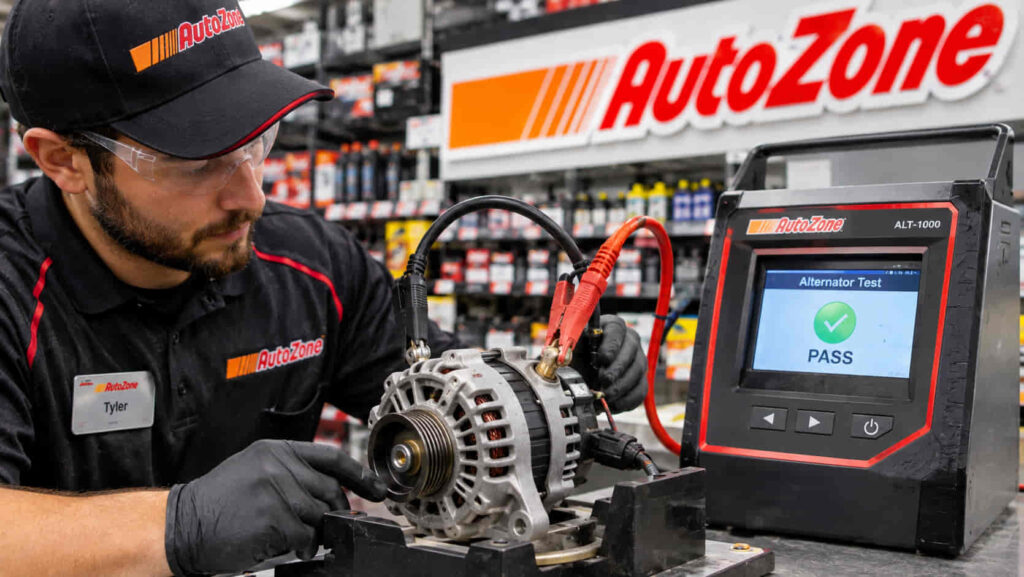
Yes, AutoZone tests alternators for free using professional-grade diagnostic equipment. The auto parts retailer offers two testing methods: in-vehicle testing and bench testing. You can bring your vehicle to an AutoZone store without removing the alternator or bring a previously removed alternator for individual testing. According to AutoZone, an alternator test typically takes less than five minutes, requires no appointment, and provides a pass or fail result. AutoZone+1
Alternator testing helps determine whether the alternator generates sufficient electrical power to recharge the battery and operate the vehicle’s electrical systems. Common signs of charging system problems include dim headlights, repeated battery discharge, slow engine cranking, and an illuminated battery warning light. Testing the alternator before purchasing a replacement helps prevent unnecessary expenses, particularly when the underlying problem originates from a defective battery, damaged wiring, or slipping serpentine belt.
Although AutoZone alternator testing is a useful initial diagnostic procedure, it does not guarantee the detection of every charging system fault. Intermittent electrical failures and vehicle-specific charging system issues may require further professional diagnosis. Service availability also depends on store location, testing equipment, and vehicle compatibility. Understanding how AutoZone tests alternators, how reliable the results are, and what those results mean helps you determine the appropriate repair or replacement solution.
Does AutoZone Test Alternators for Free?
Yes, AutoZone provides free alternator testing for both installed and removed alternators. The service helps vehicle owners determine whether their alternator is functioning properly without paying a diagnostic fee. Customers are not required to purchase a replacement alternator to receive this service, making it a practical first step when troubleshooting charging system problems.
AutoZone’s free alternator testing evaluates the alternator’s ability to generate electrical power and maintain the charging system’s operation. An alternator that fails to produce sufficient electrical output cannot adequately recharge the battery or support electrical components, such as headlights, ignition systems, and onboard electronics. Identifying inadequate charging performance before purchasing replacement parts helps reduce unnecessary repair expenses.
Free alternator testing at AutoZone differs from a comprehensive electrical system diagnosis performed by a professional mechanic. While AutoZone evaluates alternator performance under specific testing conditions, an automotive repair shop can investigate additional problems, such as damaged wiring, excessive electrical resistance, faulty control modules, and intermittent charging failures.
AutoZone’s free testing service is particularly useful for vehicle owners who want to confirm a suspected alternator problem before committing to a repair. However, vehicle compatibility and testing equipment availability may vary by store, so contacting your local AutoZone before visiting is recommended.
How Does AutoZone Test Alternators?
AutoZone tests alternators using two diagnostic methods: in-vehicle testing with a portable diagnostic device and bench testing with a dedicated alternator testing machine. In-vehicle testing measures charging performance while the alternator operates within the vehicle’s electrical system, whereas bench testing evaluates the performance of an alternator independently of the vehicle. Both methods help identify charging deficiencies, but they differ in testing conditions and diagnostic scope. AutoZone+1
During an in-vehicle alternator test, an AutoZone employee connects a portable diagnostic tester to the battery terminals before starting the engine. Once the engine runs, the equipment measures charging voltage to determine whether the alternator supplies sufficient electrical power. The employee also checks for visible abnormalities and unusual operating noises that indicate potential mechanical problems.
In-vehicle testing is the most convenient option because it does not require alternator removal. Removing an alternator involves disconnecting electrical connections, releasing drive belt tension, and removing mounting bolts. Testing the component while it remains installed eliminates unnecessary labor, particularly when the alternator is functioning correctly and the charging problem originates elsewhere in the electrical system.
Bench testing evaluates an alternator that has already been removed from the vehicle. AutoZone uses the Duralast DuraTest machine to rotate the alternator pulley, establish electrical connections, and simulate operating conditions. The computerized equipment measures electrical output and determines whether the alternator satisfies its testing criteria.
According to AutoZone, its bench testing procedure checks whether the alternator generates between 14.0 and 15.0 volts and maintains adequate output under an electrical load. This voltage range describes AutoZone’s bench testing procedure rather than a universal specification for every vehicle. AutoZone
Load testing is important because an alternator can produce acceptable voltage under minimal electrical demand but fail when additional electrical components require power. Headlights, air conditioning systems, blower motors, and rear window defrosters increase electrical demand during normal vehicle operation. An alternator with deteriorated internal components may struggle to maintain adequate output under these conditions.
The primary advantage of bench testing is its ability to isolate the alternator from external charging system components. Problems such as corroded battery terminals, damaged charging cables, and insufficient drive belt tension can affect charging performance without an internal alternator defect. However, bench testing cannot reproduce every operating condition encountered during actual driving, including temperature-related faults and vehicle-specific electronic charging controls.
In-vehicle testing is preferable when the alternator remains installed and the vehicle can be operated safely. Bench testing is appropriate when the alternator has already been removed or when further evaluation of the individual component is necessary.
Read more: does autozone test batteries
How Long Does an Alternator Test Take at AutoZone?
An alternator test at AutoZone typically takes less than five minutes. According to AutoZone, its professional diagnostic equipment evaluates alternator performance and delivers a pass or fail result within this timeframe. Vehicle owners do not need to schedule an appointment before requesting the service. AutoZone+1
The actual duration of an AutoZone visit depends on customer demand, employee availability, vehicle accessibility, and battery condition. For example, a severely discharged battery may require charging before an in-vehicle alternator test can produce meaningful results.
The five-minute testing duration refers to the diagnostic procedure rather than the entire time required to identify a charging system problem. Additional inspections of the battery, electrical connections, or serpentine belt extend the diagnostic process when the initial alternator test does not explain the vehicle’s symptoms.
How Accurate Is AutoZone Alternator Testing?
AutoZone alternator testing is generally reliable for detecting charging performance problems, but it does not identify every alternator or electrical system fault. AutoZone uses professional-grade diagnostic equipment to evaluate alternator output during both in-vehicle testing and bench testing. However, the retailer does not publish a specific diagnostic accuracy percentage or independent validation data for its testing equipment. AutoZone+1
The accuracy of an AutoZone alternator test depends on five primary factors: battery condition, electrical connections, serpentine belt condition, intermittent alternator faults, and vehicle-specific charging system characteristics. These factors influence electrical measurements and the interpretation of charging performance during the diagnostic procedure.
Battery condition affects alternator testing because the battery and alternator operate as interconnected components. A deeply discharged or defective battery places additional electrical demand on the alternator and complicates the interpretation of charging voltage. Testing the battery alongside the alternator helps distinguish insufficient energy storage from inadequate electrical generation.
Loose or corroded electrical connections introduce resistance into the charging circuit, resulting in voltage drops between the alternator and battery. For example, an alternator may generate sufficient voltage at its output terminal while damaged wiring prevents the battery from receiving adequate charging voltage. An in-vehicle test may detect poor charging performance without identifying the alternator as the actual source of the problem. AutoZone+1
Serpentine belt wear and insufficient belt tension also affect charging performance. The alternator converts mechanical energy from the engine into electrical energy through a belt-driven pulley. A slipping belt reduces the effective rotational speed of the alternator, potentially causing inadequate electrical output even when its internal components remain functional.
Intermittent alternator failures are particularly difficult to detect during a short diagnostic test. Worn brushes, defective voltage regulators, and temperature-sensitive electrical components may operate normally when the vehicle is cold but malfunction after prolonged driving. Consequently, a passing test does not necessarily rule out an intermittent alternator defect.
Modern vehicles equipped with computer-controlled charging systems introduce additional diagnostic complexity because charging voltage changes according to battery condition, engine operating conditions, and electrical demand. These vehicles may require manufacturer-specific diagnostic procedures to distinguish normal voltage fluctuations from actual charging faults.
AutoZone alternator testing is therefore a valuable initial diagnostic procedure rather than a definitive assessment of the entire charging system. Vehicle owners experiencing persistent electrical problems despite a passing alternator test should seek further diagnosis using vehicle-specific specifications, voltage drop testing, and appropriate diagnostic equipment.
What Do AutoZone Alternator Test Results Mean?
AutoZone alternator test results indicate whether the alternator meets the electrical performance criteria measured during the diagnostic procedure. A passing result indicates acceptable alternator performance under the tested conditions, while a failed result indicates inadequate or abnormal electrical output. The interpretation of these results depends on whether the alternator was tested inside the vehicle or independently on a test bench.
A passing alternator test means the component generated sufficient electrical output during the diagnostic procedure. However, this result does not confirm that every component within the charging system functions correctly. A vehicle with a passing alternator test may still experience battery discharge due to parasitic electrical draws, deteriorated battery cells, or excessive resistance in the charging circuit. Further electrical diagnosis is necessary when symptoms persist despite a passing result.
A failed in-vehicle alternator test indicates that the charging system is not operating within the expected parameters. However, the alternator itself is not always responsible for the failure. Damaged charging cables, poor ground connections, and defective belt tensioners can prevent an otherwise functional alternator from delivering sufficient electrical power to the battery.
A failed bench test provides more direct evidence of an internal alternator problem because the component operates independently of the vehicle’s battery, wiring, and drive belt system. Internal defects, such as worn brushes, damaged rectifier diodes, and malfunctioning voltage regulators, interfere with electrical generation and voltage regulation.
Vehicle owners should interpret alternator test results alongside the vehicle’s symptoms and the condition of related charging system components. Confirming the underlying cause of charging failure before replacing the alternator reduces the risk of unnecessary repairs and recurring electrical problems.
What Do You Need to Get Your Alternator Tested at AutoZone?
You only need to bring your vehicle or a removed alternator to an AutoZone store to receive free alternator testing. AutoZone does not require customers to schedule an appointment before requesting this service. Vehicle owners can visit during regular business hours and ask an employee to perform an alternator test. AutoZone+1
For in-vehicle testing, the battery must have sufficient charge to start the engine and allow the alternator to operate. Providing the vehicle’s year, make, model, and engine specifications helps employees identify the appropriate replacement alternator if a defect is confirmed.
Contact your local AutoZone before visiting to confirm testing availability and vehicle compatibility. According to AutoZone, in-store services vary depending on location, available personnel, and vehicle characteristics. AutoZone
Avoid driving to AutoZone if your vehicle exhibits severe charging system problems, such as repeated engine stalling or sudden electrical power loss. A failing alternator can leave the battery without sufficient power to sustain engine operation. Professional roadside assistance or towing is a safer alternative in these circumstances.
What Are the Signs That Your Alternator Needs Testing?
There are seven common signs that your alternator needs testing: an illuminated battery warning light, dim or flickering headlights, frequent battery discharge, slow engine cranking, malfunctioning electrical accessories, unusual engine compartment noises, and unexpected engine stalling. These symptoms indicate potential charging system problems that require diagnostic testing before replacing electrical components.
An illuminated battery warning light is one of the most recognizable indicators of a charging system malfunction. Despite displaying a battery symbol, this dashboard warning light does not necessarily indicate a defective battery. It alerts the driver when the charging system operates outside its expected parameters, which may result from alternator failure, damaged wiring, or insufficient drive belt tension.
Dim or flickering headlights and malfunctioning electrical accessories indicate an unstable electrical supply. A deteriorating alternator struggles to maintain adequate output when multiple electrical components operate simultaneously. For example, headlights may become noticeably dimmer when the blower motor or rear window defroster is activated.
Frequent battery discharge and slow engine cranking occur when the battery lacks sufficient stored energy to operate the starter motor effectively. An underperforming alternator prevents the battery from recovering the electrical energy consumed during engine startup, gradually reducing its state of charge.
Unusual grinding or whining noises from the engine compartment may indicate worn alternator bearings or other pulley-related problems. Mechanical deterioration increases friction and interferes with normal alternator operation, although similar noises can originate from belt tensioners and other engine accessories.
Unexpected engine stalling represents a potentially serious charging system problem. When alternator output becomes insufficient and the battery’s remaining charge is depleted, essential electronic components, such as fuel injection systems and engine control modules, may stop functioning.
Alternator testing is necessary to distinguish these symptoms from other electrical and mechanical faults. Symptoms alone do not establish that the alternator requires replacement.
Can AutoZone Tell If Your Battery or Alternator Is Bad?
Yes, AutoZone can help distinguish a bad battery from a bad alternator by testing both components individually. AutoZone offers free battery and alternator testing to determine whether electrical problems originate from insufficient energy storage or inadequate charging output. Testing both components is important because battery failure and alternator failure produce similar symptoms, particularly starting difficulties and repeated battery discharge. AutoZone+1
The battery stores electrical energy and supplies the power required to start the engine. A defective battery loses its ability to retain sufficient electrical charge due to internal deterioration, sulfation, or damaged cells. Consequently, the vehicle may struggle to start even when the alternator operates correctly.
The alternator generates electrical power while the engine runs, replenishing the battery and supplying electricity to the vehicle’s electrical systems. A defective alternator prevents the battery from maintaining an adequate state of charge. For example, a recently installed battery may become discharged after several trips because the alternator fails to replenish the energy consumed during vehicle operation.
AutoZone also provides free battery charging when testing identifies a discharged but otherwise functional battery. Recharging the battery and evaluating alternator output helps establish whether the charging system is responsible for recurring battery discharge. AutoZone
When both components pass their respective tests but electrical problems persist, further diagnosis is necessary to identify parasitic battery drain, damaged wiring, defective ground connections, or electronic control module faults. Replacing either component without identifying the underlying problem increases repair costs without necessarily restoring normal charging system operation.
What Should You Do If Your Alternator Fails an AutoZone Test?
Confirm the underlying cause of the charging failure before repairing or replacing the alternator. A failed AutoZone alternator test indicates abnormal electrical performance, but additional inspection may be necessary to determine whether the problem originates from the alternator itself or another charging system component.
Inspect the charging cables, ground connections, serpentine belt, and belt tensioner before purchasing a replacement alternator. These components directly influence the transmission of mechanical energy and electrical power within the charging system. For example, replacing an alternator will not resolve insufficient charging caused by a corroded battery ground connection.
Repair or replace the alternator when an internal defect is confirmed. Alternator repair involves replacing damaged internal components, such as bearings, brushes, rectifier diodes, or voltage regulators. Complete replacement is appropriate when internal damage is extensive or rebuilding the existing alternator is not economically practical.
Replacement alternators are available in two common categories: new and remanufactured alternators. New alternators contain newly manufactured components, while remanufactured alternators use previously manufactured units that have undergone disassembly, inspection, component replacement, and performance testing. Both options must match the vehicle’s mounting configuration, electrical connections, amperage requirements, and charging system specifications.
Vehicle owners with appropriate mechanical experience and tools can perform alternator replacement themselves. Professional installation is preferable for vehicles with restricted engine compartment access or complex electronic charging systems.
Retest the charging system after installing the replacement alternator to confirm that the battery receives adequate charging voltage and the vehicle’s electrical components operate correctly. This final diagnostic step verifies that the repair has addressed the original charging problem.
Where Else Can You Get Your Alternator Tested for Free?
O’Reilly Auto Parts and Advance Auto Parts offer free alternator testing as alternatives to AutoZone in the United States. Both automotive parts retailers provide in-vehicle testing and bench testing to help vehicle owners identify potential charging system problems without paying a diagnostic fee.
O’Reilly Auto Parts tests alternators and starter motors using portable diagnostic equipment and specialized bench testers. Vehicle owners can bring their vehicles to a store for charging system evaluation or bring a removed alternator for individual performance testing. O’Reilly Auto Parts+1
Advance Auto Parts provides free battery, starter, and alternator testing for compatible vehicles at participating locations. Its testing services evaluate starting and charging system performance to help determine whether component replacement is necessary. Advance Auto Parts+1
Professional automotive repair shops provide more comprehensive diagnostic services when free alternator testing fails to identify the underlying electrical problem. Although these services generally involve a diagnostic fee, mechanics can perform voltage drop testing, inspect charging system circuits, and analyze manufacturer-specific diagnostic data. Professional diagnosis is particularly valuable for intermittent charging failures and vehicles equipped with computer-controlled charging systems.