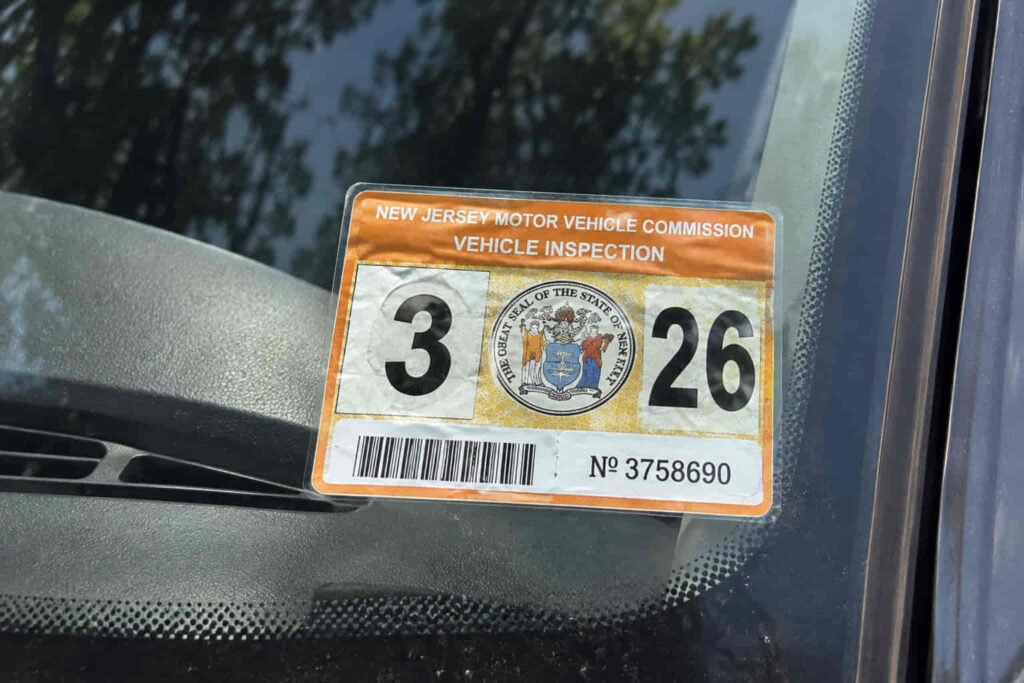
An NJ inspection sticker shows that a vehicle has completed the applicable New Jersey vehicle inspection requirements and identifies when its next inspection is due. Issued through the New Jersey Motor Vehicle Commission (NJMVC) inspection program, the sticker is displayed on the windshield and helps vehicle owners determine whether their inspection status is current. Driving with an expired inspection sticker can result in enforcement consequences, making it important to understand the expiration date and renewal requirements.
Most eligible passenger vehicles in New Jersey must undergo periodic emissions inspections every two years, while qualifying new vehicles receive an initial five-year inspection period. However, inspection requirements depend on the vehicle’s model year, classification, and eligibility for exemptions. Vehicle owners should check the expiration month and year displayed on their inspection sticker rather than assume that the inspection deadline matches their registration renewal date.
Renewing an NJ inspection sticker generally requires visiting an authorized inspection station, presenting the required vehicle documents, and passing the applicable inspection. Vehicles that fail inspection must address the identified problems before receiving approval, while lost or damaged stickers require a separate replacement procedure.
This guide explains NJ inspection sticker requirements, expiration dates, renewal procedures, vehicle exemptions, and the steps to take when an inspection sticker expires or a vehicle fails inspection.
What Is an NJ Inspection Sticker and What Does It Mean?
An NJ inspection sticker is an official windshield sticker that identifies a vehicle’s inspection status under the New Jersey Motor Vehicle Commission (NJMVC) inspection program. An approval sticker indicates that the vehicle has passed the inspection requirements applicable to its classification and displays the month and year when its next inspection is due. For most covered passenger vehicles, New Jersey’s periodic inspection program focuses on emissions compliance rather than a comprehensive mechanical safety inspection.
The inspection sticker serves two primary purposes: documenting a successful inspection and identifying the vehicle’s next inspection deadline. After an eligible vehicle passes its required inspection at a state inspection station or licensed private inspection facility, an approval sticker is placed on the windshield. The displayed expiration date allows the vehicle owner and enforcement authorities to determine whether the vehicle is within its assigned inspection period. However, a valid sticker does not guarantee that every mechanical component remains in safe operating condition between inspections.
An NJ inspection sticker is different from vehicle registration and proof of insurance. Registration establishes that a vehicle is registered for operation under New Jersey law, while insurance documentation demonstrates that the required coverage is in place. The inspection sticker addresses a separate requirement: whether the vehicle has satisfied the applicable inspection program. For example, a vehicle can have valid registration and insurance but still have an expired inspection sticker. Maintaining one document does not automatically satisfy the requirements associated with the others.
The expiration month and year printed on the sticker are particularly important because inspection deadlines do not necessarily match registration renewal dates. A vehicle owner who renews registration without checking the inspection sticker may overlook an approaching inspection deadline. Understanding what the sticker represents, where it is displayed, and when it expires provides the foundation for maintaining compliance with New Jersey’s vehicle inspection requirements.
Which Vehicles Need an NJ Inspection Sticker?
Most eligible gasoline-powered passenger vehicles registered in New Jersey must undergo periodic emissions inspections and display a valid inspection sticker. The requirement generally applies to gasoline-powered passenger vehicles from model year 1996 or newer, subject to the state’s age-based inspection exemptions. Eligible vehicles ordinarily follow a two-year inspection cycle after their initial inspection period. The exact requirement depends on the vehicle’s model year, fuel type, weight classification, and registration category rather than passenger vehicle status alone.
Qualifying new vehicles receive an initial five-year inspection period under New Jersey’s new vehicle inspection program. During this period, the vehicle receives an inspection sticker showing its assigned expiration date without following the standard two-year inspection schedule immediately after purchase. Once the initial inspection period ends, the vehicle generally enters the regular biennial inspection cycle if it remains subject to inspection. For example, an eligible new gasoline-powered passenger vehicle may have a five-year initial inspection period before requiring its first periodic emissions inspection.
New Jersey also provides exemptions for specific vehicle categories. Fully electric vehicles are exempt from the state’s periodic emissions inspection program because they do not produce tailpipe exhaust emissions. Gasoline-powered passenger vehicles from model year 1995 or older are also exempt from the regular emissions inspection requirement. Other exempt categories include qualifying historic vehicles and certain specialized vehicles, although eligibility depends on their classification and the applicable NJMVC rules. An exemption from periodic inspection does not eliminate the owner’s responsibility to maintain the vehicle in legally required operating condition.
Diesel-powered vehicles and commercial vehicles require additional classification checks because their inspection obligations differ from those of ordinary gasoline-powered passenger cars. For example, certain diesel vehicles are subject to separate inspection requirements based on gross vehicle weight rating, while commercial vehicles may fall under distinct inspection programs. Applying the standard passenger vehicle inspection schedule to every diesel truck or commercially registered vehicle can therefore produce an incorrect compliance deadline.
Vehicle owners should verify their inspection eligibility through NJMVC using the vehicle’s model year, fuel type, registration classification, and applicable weight rating. This is especially important when purchasing a used vehicle, registering a vehicle from another state, or determining whether a newly acquired vehicle qualifies for an exemption. Confirming the correct inspection category establishes whether the vehicle needs an NJ inspection sticker and which renewal schedule applies.
Read more: chevy 350 firing order
How Do You Read the Expiration Date on an NJ Inspection Sticker?
The expiration date on an NJ inspection sticker identifies the month and year when a vehicle’s current inspection period ends. The sticker is displayed on the windshield and provides a visible reference for determining when the next inspection is required. For vehicles subject to New Jersey’s periodic inspection program, the printed expiration information should be used to schedule the next inspection rather than relying on the vehicle’s registration renewal date or the date of its previous service appointment.
To read the expiration date, locate the inspection sticker on the windshield and identify the month and year displayed on it. The month indicates the inspection expiration period, while the year identifies when that period ends. For example, a sticker showing September 2027 indicates that the vehicle’s inspection period expires in September 2027. Under the standard monthly expiration system, the vehicle should complete its required inspection no later than the end of that month unless an official extension or a different applicable deadline changes the requirement.
The inspection expiration date is separate from the vehicle registration expiration date because the two requirements serve different purposes. Vehicle registration establishes the vehicle’s registration status, while the inspection sticker documents compliance with the applicable inspection program. A driver whose registration expires in March may have an inspection sticker that remains valid until September. Renewing the registration in March does not automatically renew the inspection sticker, and completing an emissions inspection does not replace the registration renewal process.
Vehicle owners should also distinguish an ordinary approval sticker from a rejection sticker issued after a failed inspection. An approval sticker displays the assigned inspection expiration period, while a rejection sticker identifies a vehicle that did not satisfy the applicable inspection requirements. A rejection sticker should not be interpreted as a new approval period. If the windshield sticker is damaged, missing, or unreadable, the owner should contact an authorized New Jersey inspection facility to determine the appropriate replacement procedure instead of estimating the expiration date.
Checking the expiration month before scheduling an inspection helps prevent an avoidable lapse in compliance. New Jersey generally permits eligible vehicles to undergo inspection up to two months before their assigned expiration month. For example, a vehicle with a September expiration can ordinarily be presented for inspection beginning in July. This early inspection window gives owners time to arrange an appointment, address an emissions-related problem, or complete any necessary repairs before the existing inspection period ends.
How Often Do You Need to Renew an NJ Inspection Sticker?
Most New Jersey passenger vehicles subject to the standard periodic inspection program must renew their inspection sticker every two years, while qualifying new vehicles receive an initial five-year inspection period. The inspection interval is determined by the vehicle’s classification and eligibility under NJMVC rules. These schedules apply to covered vehicles rather than every vehicle registered in the state, because certain vehicle categories are exempt or subject to different inspection requirements.
The two-year inspection cycle applies to eligible passenger vehicles after their initial inspection period has ended. Once a vehicle passes its required inspection, it receives an approval sticker showing the next assigned expiration month and year. For example, an eligible passenger vehicle that completes its regular inspection in September 2026 would generally receive a sticker expiring in September 2028. The sticker establishes the next inspection deadline, so the owner should use its displayed date when planning the following renewal.
Qualifying new vehicles follow a different schedule during their first inspection period. Under New Jersey’s new vehicle inspection program, eligible new vehicles receive an initial five-year inspection period before entering the regular inspection cycle. This means that an eligible new vehicle does not need to undergo the standard biennial emissions inspection immediately after purchase. Once the five-year period ends, the vehicle generally becomes subject to inspections every two years unless its classification or eligibility changes.
New Jersey allows owners of eligible vehicles to complete their periodic inspection up to two months before the expiration month printed on the sticker. This scheduling window is especially useful when a vehicle requires emissions-related repairs or when inspection stations experience increased demand. For example, an owner with a December expiration can ordinarily begin the renewal process in October rather than waiting until the final days of December. Completing the inspection within the permitted early window provides additional time to resolve a failed test without allowing the current sticker to expire.
Inspection frequency can differ for exempt vehicles, diesel-powered vehicles, and commercial vehicles. Fully electric vehicles are exempt from periodic emissions inspections, while certain older gasoline-powered vehicles and qualifying historic vehicles also fall outside the standard inspection program. Commercial and diesel vehicle requirements depend on the applicable vehicle classification and inspection rules. Owners should therefore confirm the correct schedule before assuming that every New Jersey vehicle requires a new inspection sticker every two years.
Temporary extensions must also be distinguished from permanent changes to the inspection schedule. When NJMVC authorizes an extension for a specified group of expiration dates, that extension applies only to the vehicles and periods identified in the official notice. It does not automatically change the normal two-year inspection interval or the five-year initial period for qualifying new vehicles. Checking the current NJMVC guidance alongside the expiration date on the windshield sticker provides the most reliable basis for determining when an inspection is due.
How Do You Renew an NJ Inspection Sticker?
To renew an NJ inspection sticker, take your vehicle to an authorized New Jersey inspection facility, present the required documents, and pass the applicable vehicle inspection. The New Jersey Motor Vehicle Commission (NJMVC) operates state inspection stations and licenses private inspection facilities that perform inspections for eligible vehicles. Once the vehicle passes, the inspection facility issues a new approval sticker showing the next expiration month and year.
Before visiting an inspection station, confirm the expiration date on your current windshield sticker and verify that your vehicle is subject to periodic inspection. New Jersey generally allows eligible vehicles to undergo inspection up to two months before their assigned expiration month. For example, if your sticker expires in November, you can ordinarily complete the inspection beginning in September. Scheduling within this window provides time to address potential inspection failures before the existing inspection period expires.
Drivers must bring a valid driver’s license, current vehicle registration, and proof of New Jersey automobile insurance. These documents allow inspection personnel to verify the driver’s identification, the vehicle’s registration status, and the required insurance coverage. The vehicle should also be in suitable operating condition for testing. For vehicles equipped with an onboard diagnostic system, an illuminated check engine light or unresolved emissions-related diagnostic trouble codes can prevent the vehicle from passing the emissions inspection.
At the inspection facility, technicians perform the tests required for the vehicle’s model year, fuel type, and inspection classification. For most eligible gasoline-powered passenger vehicles, the inspection focuses on emissions compliance, including the onboard diagnostic system when applicable. The inspection process may evaluate the malfunction indicator light, emissions-related readiness monitors, and diagnostic trouble codes. A vehicle with incomplete readiness monitors may be unable to complete the inspection successfully, even if no active engine problem is immediately apparent.
After the vehicle passes inspection, the facility places a new approval sticker on the windshield. The sticker displays the next assigned expiration period, which is generally two years later for vehicles following the standard biennial inspection schedule. Inspections at NJMVC-operated state inspection stations are generally provided without a separate inspection charge for eligible vehicles, while licensed private inspection facilities may charge service fees. Vehicle owners should confirm the applicable fee before choosing a private facility.
An NJ inspection sticker is renewed through a successful vehicle inspection, not through online vehicle registration renewal. Paying registration fees or renewing automobile insurance does not extend the inspection sticker’s expiration date. Drivers should retain any inspection documentation provided by the facility and verify that the new sticker displays the correct expiration information before leaving.
What Happens If Your NJ Inspection Sticker Expires?
Driving a vehicle with an expired NJ inspection sticker can result in a traffic citation because the vehicle is no longer within its assigned inspection period. New Jersey requires vehicles subject to periodic inspection to maintain current inspection status. An expired sticker does not automatically invalidate vehicle registration or insurance, but it represents a separate compliance issue that can be enforced during a traffic stop.
The expiration month and year displayed on the windshield sticker determine the vehicle’s ordinary inspection deadline. For example, a vehicle displaying an expiration date of October 2026 generally must complete its required inspection by the end of October 2026, unless an applicable NJMVC extension changes that deadline. Continuing to drive after the applicable deadline exposes the owner or driver to potential enforcement action. The exact consequences depend on the applicable law, circumstances, and any officially authorized extension.
If the inspection sticker has already expired, the owner should arrange an inspection promptly at an authorized NJMVC state inspection station or licensed private inspection facility. Before visiting, the driver should prepare the required identification, registration, and insurance documents and check whether the vehicle has unresolved emissions-related problems. A check engine light, damaged emissions components, or incomplete onboard diagnostic readiness monitors may prevent approval and require additional attention before the vehicle can pass.
An expired sticker should not be confused with a failed inspection. Expiration means the vehicle’s assigned inspection period has ended, while a failed inspection means the vehicle did not satisfy the applicable testing requirements. A vehicle that fails inspection may receive a rejection sticker and a Vehicle Inspection Report identifying the issues that require correction. Receiving a rejection sticker does not automatically eliminate the consequences associated with an expired inspection deadline.
New Jersey can also authorize temporary inspection extensions under specific circumstances. For example, NJMVC announced a 90-day extension for qualifying inspection stickers originally expiring between April and July 2026. This extension applies to the expiration periods and conditions identified in the official notice rather than to every vehicle registered in New Jersey. Owners must distinguish these temporary administrative extensions from the standard inspection schedule and confirm whether their vehicle qualifies before relying on a later deadline.
The appropriate response to an expired NJ inspection sticker is to verify the applicable deadline and complete the required inspection as soon as possible. Drivers should consult current NJMVC guidance for any active extensions, locate an authorized inspection facility, and address problems that could prevent the vehicle from passing. Completing the inspection and obtaining a new approval sticker restores the vehicle’s inspection status under the applicable program, provided all other registration and operating requirements are satisfied.
What Happens If Your Vehicle Fails NJ Inspection?
If your vehicle fails an NJ inspection, the inspection facility issues a Vehicle Inspection Report identifying the reason for failure and may place a red rejection sticker on the windshield. A failed inspection means the vehicle did not meet the applicable New Jersey inspection requirements and must have the identified problems corrected before receiving a new approval sticker. For most passenger vehicles subject to periodic emissions testing, inspection failures are associated with emissions-related problems rather than a comprehensive mechanical safety evaluation.
The Vehicle Inspection Report provides the information needed to determine why the vehicle failed. For vehicles equipped with an onboard diagnostic system, common causes include an illuminated check engine light, emissions-related diagnostic trouble codes, and incomplete readiness monitors. For example, a vehicle with a malfunctioning oxygen sensor may trigger an emissions-related diagnostic code that prevents it from passing inspection. A vehicle that recently had its battery disconnected may also have incomplete readiness monitors because the onboard computer has not collected enough operating data to complete its self-tests.
After receiving a failed inspection result, the owner should review the inspection report and arrange repairs or diagnostic work appropriate to the identified problem. Emissions-related repairs may involve components such as oxygen sensors, evaporative emissions controls, catalytic converters, or other parts of the engine management system. However, a diagnostic trouble code does not automatically prove that the component named in the code is defective. Accurate diagnosis is necessary because wiring faults, vacuum leaks, and related system problems can produce similar results.
New Jersey generally provides a reinspection process for vehicles that fail their initial inspection. The owner must correct the applicable defects and return the vehicle for the required follow-up inspection within the period specified by NJMVC. The inspection report and rejection documentation should be retained because they identify the original failure and may be needed during reinspection. Passing the follow-up inspection allows the vehicle to receive an approval sticker with its assigned expiration date.
A rejection sticker is not the same as a valid inspection approval sticker and does not automatically provide protection from traffic citations. The vehicle’s existing inspection deadline, the reason for failure, and the applicable NJMVC requirements determine the owner’s compliance obligations. If the original inspection period has already expired, receiving a rejection sticker should not be treated as an automatic extension. Owners should follow the instructions on their inspection report and verify any applicable deadlines directly with NJMVC.
The most effective response to a failed NJ inspection is to identify the documented failure, complete the necessary repairs, and obtain a passing reinspection result. Replacing parts without confirming the underlying problem can increase repair costs without resolving the inspection failure. A systematic approach based on the Vehicle Inspection Report helps restore emissions compliance and prevents repeated unsuccessful inspection attempts.
How Do You Replace a Lost or Damaged NJ Inspection Sticker?
To replace a lost or damaged NJ inspection sticker, the vehicle owner must follow the NJMVC replacement procedure and provide the information needed to verify the vehicle’s inspection status. Replacement may be necessary when a windshield is replaced, an inspection sticker becomes unreadable, or the original sticker is damaged or removed. The appropriate procedure depends on the circumstances and whether the vehicle has an existing, verifiable inspection record.
A windshield replacement is a common reason for requesting a new inspection sticker. Because the sticker is attached to the windshield, removing the original glass can also remove the visible proof of inspection. For example, a vehicle with an inspection sticker that remains valid for another year may need a replacement sticker after a cracked windshield is replaced. The owner should preserve any available documentation from the windshield replacement and contact NJMVC or an authorized inspection facility to confirm the required replacement process.
Vehicle identification is important because a replacement sticker must correspond to the correct vehicle and inspection record. Owners should be prepared to provide current vehicle registration and other documentation requested by the inspection authority. The vehicle identification number, registration details, and existing inspection information may be used to establish whether the vehicle previously passed inspection and whether its assigned inspection period remains valid. Requirements can differ depending on whether the sticker was lost, damaged, or removed during windshield service.
A replacement inspection sticker should not be confused with an inspection renewal. Renewal involves completing the inspection required for a new approval period, while replacement addresses a missing or damaged sticker associated with an existing inspection status. If the original inspection period has expired, the owner generally needs to complete the applicable inspection rather than simply request another copy of the old sticker. A replacement sticker also should not be assumed to extend the vehicle’s original inspection deadline.
Drivers should avoid creating, purchasing, or applying an unofficial inspection sticker. New Jersey inspection stickers are official compliance documents, and an unauthorized sticker does not establish that a vehicle has satisfied the state’s inspection requirements. If the original sticker is missing or unreadable, the appropriate response is to obtain instructions from NJMVC or an authorized inspection facility rather than attempting to reproduce the sticker independently.
The correct replacement procedure begins with confirming the vehicle’s existing inspection status and the reason the sticker is missing. Owners should contact NJMVC or an authorized inspection facility, prepare the requested registration and identification documents, and follow the instructions for obtaining a legitimate replacement. Verifying the original expiration date helps ensure that the replacement reflects the correct inspection period instead of being mistaken for a new inspection approval.
Where Can You Get an NJ Inspection Sticker and How Much Does It Cost?
You can get an NJ inspection sticker at a New Jersey Motor Vehicle Commission (NJMVC) state inspection station or a licensed private inspection facility after your vehicle passes the required inspection. State inspection stations generally provide routine inspections free of charge for eligible vehicles, while private inspection facilities set their own service fees. Both options can issue an official approval sticker when the vehicle meets the applicable New Jersey inspection requirements.
NJMVC operates inspection stations throughout New Jersey, allowing eligible vehicle owners to complete their periodic emissions inspections without paying a standard inspection service fee. These facilities follow the state’s inspection procedures and evaluate vehicles according to their model year, fuel type, and inspection classification. For example, an eligible gasoline-powered passenger vehicle undergoing its regular biennial emissions inspection can use a state inspection station without paying a private inspection service charge. Drivers should check the official NJMVC inspection station directory for current locations, operating hours, and any service restrictions before visiting.
Licensed private inspection facilities provide an alternative for drivers who prefer a particular location or want to combine inspection with other automotive services. These businesses are authorized to perform applicable vehicle inspections but may charge for the inspection service. The total price depends on the facility’s posted rates and the services performed. New Jersey separately limits the amount a private facility may charge for an inspection approval sticker to $2.50; this sticker charge is distinct from the facility’s inspection service fee. Vehicle owners should request the complete inspection price in advance rather than assuming the sticker charge represents the total cost.
Inspection availability also differs between facilities. State inspection stations generally operate according to published hours and may offer wait-time information, while private facilities establish their own appointment and service policies. Drivers should verify whether an appointment is necessary, whether the facility handles their vehicle classification, and which documents are required. A valid driver’s license, current vehicle registration, and proof of New Jersey automobile insurance should be available when presenting a vehicle for inspection.
The most cost-effective option for an eligible passenger vehicle is generally an NJMVC state inspection station because routine inspections are provided without a standard service charge. A licensed private inspection facility may be more convenient when its location, scheduling options, or additional repair services better match the owner’s needs. Regardless of the facility selected, the vehicle must pass the applicable inspection before receiving a new approval sticker. Checking the current NJMVC inspection station directory and confirming the facility’s requirements helps owners complete the renewal process without unnecessary delays or unexpected fees.