Ford Fusion thermostat replacement involves removing a faulty thermostat, installing a compatible replacement, and restoring proper coolant circulation through the engine cooling system. The process typically requires basic automotive tools, replacement seals, and engine coolant, but the thermostat location and removal procedure vary by model year and engine type.
A faulty Ford Fusion thermostat can cause engine overheating, slow engine warm-up, inconsistent cabin heating, or a check engine light with diagnostic trouble code P0128. A thermostat stuck closed restricts coolant flow to the radiator, increasing the risk of overheating. A thermostat stuck open allows coolant to circulate before the engine reaches its intended operating temperature, potentially reducing fuel efficiency and heating performance.
Replacing the thermostat requires identifying the correct component, allowing the engine to cool completely, draining coolant as necessary, removing the thermostat housing, and installing the new thermostat with the appropriate seal. The cooling system must then be refilled, purged of trapped air according to the vehicle’s service procedure, and checked for leaks.
This guide explains Ford Fusion thermostat locations, required tools and parts, step-by-step replacement procedures, estimated repair costs, and post-installation troubleshooting. It also covers differences between the 2.5L Duratec and EcoBoost engines to help owners identify the correct repair approach.
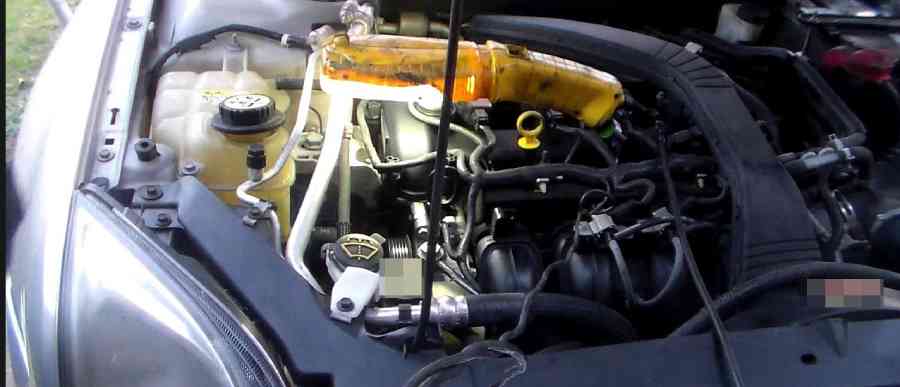
How Do You Replace a Ford Fusion Thermostat?
To replace a Ford Fusion thermostat, allow the engine to cool completely, locate the thermostat housing, drain enough coolant to prevent excessive spillage, remove the faulty thermostat, install the correct replacement, and refill the cooling system. The repair is completed by removing trapped air, checking for coolant leaks, and confirming that the engine reaches and maintains its normal operating temperature.
The replacement procedure depends on the Ford Fusion’s model year and engine configuration. The 2.5L Duratec, 1.5L EcoBoost, and 2.0L EcoBoost engines have different cooling system layouts, thermostat assemblies, and access requirements. Some configurations use a thermostat installed inside a separate housing, while others require servicing a larger housing assembly. Identifying the engine and matching the replacement part to the vehicle’s VIN prevents compatibility and installation problems.
A successful thermostat replacement also requires proper coolant handling. Opening a pressurized cooling system while the engine is hot can release scalding coolant and steam. After installation, the cooling system must be filled with coolant that meets the vehicle’s specified Ford requirements and purged according to the applicable service procedure. Trapped air or insufficient coolant can cause overheating even when the new thermostat operates correctly.
Where Is the Thermostat Located on a Ford Fusion?
The Ford Fusion thermostat is located within the engine cooling system, typically in a housing connected to the engine’s coolant passages and radiator hoses. Its exact position depends on the engine design and model year, so identifying the engine configuration is necessary before removing components.
On Ford Fusion models equipped with the naturally aspirated 2.5L Duratec engine, the thermostat is installed in a housing associated with the engine’s coolant outlet and hose connections. Access may require moving nearby components and disconnecting coolant hoses. The housing’s position and attachment arrangement should be confirmed using the service diagram for the specific model year rather than assuming that every 2.5L Ford Fusion uses an identical layout.
Ford Fusion EcoBoost models, including vehicles equipped with 1.5L and 2.0L turbocharged engines, use cooling system arrangements that differ from the naturally aspirated engines. Thermostat assemblies, coolant connections, and surrounding components vary between engine generations. Turbocharger-related coolant plumbing can also make component identification more complicated. Owners should locate the thermostat using an engine-specific cooling system diagram and verify whether the replacement part includes the housing, thermostat element, and seals.
The thermostat can be identified by tracing the relevant radiator hose connections to the engine and comparing the housing with the correct parts diagram. However, not every coolant outlet or hose junction contains the thermostat. A VIN-matched service manual or OEM parts diagram provides a more reliable identification method than hose tracing alone.
Before beginning the repair, check the vehicle’s model year, engine displacement, and engine code. These details determine the thermostat’s location, replacement assembly, fastener specifications, and any components that must be removed for access. Correct identification reduces unnecessary disassembly and helps prevent damage to plastic coolant fittings, hoses, and electrical connectors.
What Tools and Parts Are Needed for Ford Fusion Thermostat Replacement?
Ford Fusion thermostat replacement requires a socket wrench set, ratchet, torque wrench, hose-clamp pliers, coolant drain pan, replacement thermostat, appropriate seals, and compatible engine coolant. The exact tools and replacement components depend on the vehicle’s model year, engine configuration, and thermostat housing design. Using the correct equipment helps prevent damaged fasteners, coolant leaks, and improper thermostat installation.
A metric socket set with extensions is essential for accessing thermostat housing bolts, particularly when surrounding engine components restrict working space. Hose-clamp pliers help release spring clamps without damaging radiator hoses, while a drain pan collects coolant removed during disassembly. A torque wrench is necessary because thermostat housings, especially plastic assemblies, can crack or deform when fasteners are overtightened. The correct tightening torque must come from the service specifications for the specific engine.
The replacement thermostat must match the original component’s dimensions, operating temperature specification, and housing configuration. Ford Fusion engines use different thermostat designs, and some applications require replacing the complete thermostat housing assembly rather than only the internal thermostat. Depending on the design, a replacement gasket or O-ring may be supplied with the thermostat or purchased separately. Reusing a compressed, damaged, or deteriorated seal increases the risk of coolant leakage after installation.
The following table summarizes the main tools and parts used during a Ford Fusion thermostat replacement.
| Tool or Part | Purpose |
|---|---|
| Metric socket set and ratchet | Remove thermostat housing fasteners |
| Socket extensions | Access bolts in confined engine areas |
| Torque wrench | Tighten fasteners to specified torque |
| Hose-clamp pliers | Disconnect coolant hose clamps |
| Coolant drain pan | Collect drained engine coolant |
| Replacement thermostat | Restore coolant temperature regulation |
| Thermostat housing | Replace damaged or integrated assemblies when required |
| Gasket or O-ring | Seal the thermostat housing connections |
| Compatible engine coolant | Refill the cooling system |
| Funnel or vacuum filling tool | Assist coolant refilling and air removal |
| Safety gloves and eye protection | Reduce exposure to coolant and debris |
Coolant selection is particularly important because Ford Fusion models across different production years do not all use the same coolant specification. The replacement coolant must meet the Ford specification listed in the vehicle’s owner’s manual or applicable service information. Coolant color alone is not a reliable indicator of compatibility, and mixing incompatible formulations can compromise corrosion protection and cooling system performance.
Before purchasing parts, confirm the vehicle’s model year, engine displacement, and VIN. These identifiers help distinguish between thermostat-only replacements and complete housing assemblies. Comparing the new component with the original thermostat before installation also helps identify differences in mounting points, coolant connections, seals, and electrical fittings where applicable.
How Do You Replace a Ford Fusion Thermostat Step by Step?
To replace a Ford Fusion thermostat, prepare the cooling system, remove the thermostat housing, install the correct replacement thermostat, refill the coolant, and verify normal engine operating temperature. The procedure varies between the 2.5L Duratec and EcoBoost engines because thermostat locations, housing designs, and surrounding components differ. Use the factory service instructions for the vehicle’s model year and engine to confirm removal sequences, tightening specifications, and coolant bleeding requirements.
How Do You Prepare a Ford Fusion for Thermostat Replacement?
Prepare the Ford Fusion for thermostat replacement by parking on a level surface, switching off the engine, allowing it to cool completely, and identifying the thermostat housing. The cooling system operates under pressure when hot, and removing the coolant reservoir cap or disconnecting a hose before the engine cools can release scalding coolant and steam.
Once the engine is completely cold, inspect the coolant reservoir and surrounding hoses for visible leaks or damage. Remove the reservoir cap slowly, only after confirming the system is no longer hot or pressurized. Position a suitable drain pan beneath the designated coolant drain point and drain enough coolant to lower its level below the thermostat housing. Follow the vehicle-specific service procedure if additional draining or component removal is required.
Identify any engine covers, intake ducts, brackets, or coolant hoses that obstruct access to the thermostat. Remove only the components specified for the engine configuration, keeping track of fasteners and electrical connections. Protect exposed openings from dirt and debris because contamination can interfere with thermostat operation and damage cooling system components.
How Do You Remove the Old Ford Fusion Thermostat?
Remove the old Ford Fusion thermostat by accessing its housing, disconnecting the necessary coolant hoses, removing the housing fasteners, and extracting the thermostat or integrated assembly. The thermostat may be installed separately inside a housing or incorporated into a larger replacement component, depending on the engine.
Start by releasing the hose clamps connected to the thermostat housing. Carefully separate the hoses from their fittings without pulling excessively on plastic connections. Coolant hoses can become attached to fittings after years of heat exposure, so use an appropriate hose removal tool when necessary. Inspect the hoses for cracks, swelling, or deterioration before reinstallation.
Next, loosen the thermostat housing bolts using the correct socket and extension. Support the housing while removing the final fasteners to prevent stress on connected fittings. Separate the housing from the engine carefully, avoiding excessive force or prying against plastic sealing surfaces.
Remove the old thermostat and its gasket or O-ring where the design permits separate removal. Inspect the thermostat for visible damage, corrosion, or deformation, and examine the housing for cracks or damaged sealing surfaces. A thermostat can fail internally without visible damage, so its appearance alone does not establish whether it operates correctly. Clean the mating surfaces using methods approved for the housing material, ensuring that debris does not enter the cooling passages.
How Do You Install the New Ford Fusion Thermostat?
Install the new Ford Fusion thermostat by confirming part compatibility, positioning the thermostat in its specified orientation, fitting a new seal, and securing the housing to the engine. Correct thermostat orientation and proper sealing are essential for controlling coolant flow and preventing leaks.
Compare the replacement thermostat with the removed component before installation. Check the housing shape, mounting points, hose connections, and gasket design. For thermostats installed separately inside a housing, follow the manufacturer’s orientation instructions. Do not assume that the spring position or air-bleed feature is identical across Ford Fusion engines.
Fit the new gasket or O-ring into its designated groove, ensuring that it remains seated during assembly. Apply sealant only when required by the applicable service instructions. Adding sealant to a housing designed for a dry-installed O-ring can interfere with sealing and introduce unwanted material into the cooling system.
Position the thermostat housing against the engine without forcing it into place. Install the mounting bolts by hand to prevent cross-threading, then tighten them evenly using the engine-specific torque specification. Excessive tightening can crack plastic housings, distort sealing surfaces, or damage threads. Reconnect the coolant hoses and secure their clamps in the correct positions before refilling the system.
How Do You Refill and Bleed the Ford Fusion Cooling System?
Refill and bleed the Ford Fusion cooling system by adding coolant that meets the vehicle’s required specification, removing trapped air using the engine-specific procedure, and checking coolant temperature and system integrity. Air pockets can interfere with coolant circulation and produce abnormal temperature readings or overheating after thermostat replacement.
Begin by confirming that the drain point is closed and all hoses, clamps, and housing connections are secure. Fill the coolant reservoir according to the manufacturer’s procedure using the specified coolant mixture. Some Ford Fusion cooling systems require particular filling or air-purging steps, and certain procedures may call for vacuum filling equipment. Follow the applicable service instructions rather than assuming that running the engine with the reservoir cap removed will remove all trapped air.
Once the initial filling procedure is complete, operate the engine according to the service instructions while monitoring coolant temperature and inspecting the thermostat housing for leaks. An OBD-II scanner displaying engine coolant temperature can help verify warm-up behavior. Confirm that the temperature stabilizes within the expected operating range and that the cooling system functions normally.
After the engine has cooled completely, recheck the coolant level and adjust it to the specified cold-fill mark if necessary. Inspect the thermostat housing, hose connections, and drain points for seepage. A successful replacement should restore normal temperature regulation without coolant leakage, persistent overheating, or recurring temperature-related diagnostic trouble codes.
Do not continue operating or driving the vehicle if the temperature warning appears, coolant leaks are detected, or the engine begins overheating. Shut down the engine safely and diagnose the cause before further operation.
How Much Does Ford Fusion Thermostat Replacement Cost?
Ford Fusion thermostat replacement typically costs an estimated $200–$500 at a professional repair shop, while a DIY replacement may cost approximately $40–$180 in parts and coolant. These are general US budgeting estimates rather than verified current repair quotes. Actual expenses depend on the model year, engine configuration, thermostat housing design, local labor rates, and replacement part selection.
The thermostat itself is generally less expensive than the complete repair because labor and related cooling system components contribute to the final bill. A basic thermostat may be available as a separate replacement part, while certain Ford Fusion configurations require a more expensive thermostat housing assembly. The 2.5L Duratec and EcoBoost engines have different component arrangements, making engine-specific part identification essential when estimating repair expenses.
The following table provides approximate cost ranges for planning a Ford Fusion thermostat replacement.
| Replacement expense | Estimated cost (USD) |
|---|---|
| Thermostat only | $15–$60 |
| Thermostat housing assembly | $40–$150 |
| Gasket or O-ring, if separate | $5–$20 |
| Replacement coolant | $15–$40 |
| Professional labor | $120–$300 |
| Typical DIY total | $40–$180 |
| Typical professional repair total | $200–$500 |
These figures are illustrative ranges, not additive line items. A complete housing assembly may already include the thermostat and seal, while labor charges can exceed the stated range when access is difficult or additional repairs are necessary.
Professional repair costs are influenced by the number of components that must be removed to reach the thermostat. Labor rates also vary by location and repair facility. Independent automotive shops and Ford dealerships may charge different hourly rates, and diagnostic testing can add to the total when the cause of the cooling system problem has not been confirmed.
Replacing a Ford Fusion thermostat yourself eliminates professional labor charges but introduces equipment costs and installation responsibilities. A DIY repair is most economical when the owner already has suitable tools, can access the thermostat safely, and follows the correct service procedure. Incorrect installation, coolant contamination, or incomplete air removal can result in additional repairs that outweigh the initial labor savings.
Before approving a professional repair, request an itemized estimate identifying the thermostat or housing assembly, coolant, labor, and any diagnostic charges. Confirming whether the estimate includes a complete thermostat housing or only the thermostat element makes it easier to compare repair quotes accurately.
How Long Does It Take to Replace a Ford Fusion Thermostat?
Ford Fusion thermostat replacement may take approximately 1–3 hours for a professional mechanic and 2–5 hours for a DIY repair, depending on thermostat accessibility, engine configuration, and the condition of surrounding components. These are planning estimates, not verified Ford labor-time specifications for every model year.
Thermostat accessibility is a major factor in repair duration. On configurations where the housing is accessible without extensive disassembly, removing the old component and installing the replacement requires less time. Engines with restricted access, additional coolant connections, or obstructing intake components require more disassembly and reassembly. Corroded fasteners, deteriorated hoses, and damaged fittings can further extend the repair.
Coolant draining, refilling, and air removal must also be included in the total repair time. The replacement is not complete immediately after the thermostat housing is secured. The technician must restore the coolant level, follow the correct air-purging procedure, inspect for leaks, and verify stable engine temperature. These checks help identify installation problems before the vehicle returns to normal operation.
DIY replacement generally takes longer because a first-time mechanic must identify components, organize tools, and verify each installation step. Allowing additional time for the engine to cool completely is essential and may extend the overall job beyond the estimated hands-on repair duration. Owners should avoid rushing the coolant filling and inspection process to meet a particular completion time.
What Are the Symptoms of a Bad Ford Fusion Thermostat?
The main symptoms of a bad Ford Fusion thermostat are engine overheating, slow engine warm-up, weak cabin heating, abnormal coolant temperature readings, and a check engine light associated with code P0128. These symptoms depend on whether the thermostat is stuck open, stuck closed, or operating inconsistently. Because other cooling system faults produce similar symptoms, thermostat failure should be confirmed before replacement.
A Ford Fusion thermostat stuck closed prevents sufficient coolant circulation through the radiator. As the engine generates heat, restricted coolant flow causes the coolant temperature to rise beyond its normal operating range. The dashboard temperature gauge may climb rapidly, or an engine overheating warning may appear. Continued operation under these conditions can damage the cylinder head, head gasket, and other engine components. Stop driving safely and shut off the engine when an overheating warning occurs.
A thermostat stuck open produces a different set of symptoms. Coolant circulates through the radiator before the engine reaches its intended operating temperature, extending engine warm-up time. This condition can reduce cabin heater performance, particularly during cold weather, because the heater core receives coolant that has not reached its expected temperature. Prolonged operation below the intended temperature can also affect fuel efficiency and engine management.
Diagnostic trouble code P0128 is another indication of a possible thermostat problem. The powertrain control module sets this code when monitored coolant temperature behavior fails to meet its expected regulating-temperature criteria under specified operating conditions. A stuck-open thermostat is a common cause, but low coolant, inaccurate temperature sensor readings, and other cooling system problems can produce similar results. P0128 alone does not confirm that the thermostat needs replacement.
The following table summarizes common symptoms and their possible causes.
| Symptom | Possible thermostat condition | Other possible causes |
|---|---|---|
| Engine overheating | Thermostat stuck closed | Low coolant, cooling fan failure, water pump fault |
| Slow engine warm-up | Thermostat stuck open | Inaccurate coolant temperature sensor |
| Weak cabin heating | Thermostat stuck open | Low coolant, heater core restriction |
| Temperature fluctuations | Intermittent thermostat operation | Trapped air, coolant loss, sensor faults |
| Check engine light with P0128 | Thermostat stuck open | Low coolant, sensor or wiring problems |
Coolant leakage near the thermostat housing is another reason to inspect the assembly. Plastic housings can develop cracks, and deteriorated gaskets or O-rings can allow coolant to escape. A leaking housing does not necessarily mean the thermostat’s internal mechanism has failed, but the housing or sealing components may require replacement. Identifying the exact leak source helps avoid replacing functional parts unnecessarily.
How Do You Test a Ford Fusion Thermostat Before Replacing It?
Test a Ford Fusion thermostat by checking coolant level, monitoring engine warm-up behavior, reading coolant temperature data with an OBD-II scanner, and comparing the results with the manufacturer’s specifications. These checks help distinguish thermostat failure from coolant leaks, temperature sensor faults, and other cooling system problems. Testing should begin with the engine cold to reduce the risk of burns.
First, inspect the coolant reservoir and visible cooling system connections after the engine has cooled completely. Low coolant can cause unstable temperature readings, poor heater performance, and overheating even when the thermostat functions correctly. Check for coolant residue around the thermostat housing, radiator hoses, water pump, and reservoir. Address significant coolant loss before relying on temperature behavior to diagnose the thermostat.
Next, connect an OBD-II scanner capable of displaying live engine coolant temperature data. With the engine cold, compare the reported coolant temperature with the surrounding ambient temperature. The readings should be reasonably close after the vehicle has been parked long enough for the engine to cool. A substantial difference may indicate a sensor, wiring, or data interpretation problem that requires further investigation.
Start the engine and observe how the coolant temperature changes during warm-up. A functioning thermostat generally restricts radiator circulation while the engine is cold and allows increased flow as coolant approaches its specified regulating temperature. If the coolant warms unusually slowly and remains below the expected operating range, a stuck-open thermostat is a possible cause. However, the correct temperature threshold varies by engine and thermostat specification, so a universal opening temperature should not be applied to every Ford Fusion.
A suspected stuck-closed thermostat requires particular caution. Rapidly rising coolant temperature, overheating warnings, or abnormal cooling system pressure can indicate restricted circulation. These symptoms can also result from a failed water pump, blocked radiator, trapped air, or insufficient coolant. Do not continue running an overheating engine to complete a diagnostic test. Shut it down and allow it to cool before further inspection.
Code P0128 provides additional diagnostic information but must be interpreted alongside live temperature readings and cooling system conditions. For example, a Ford Fusion that takes unusually long to reach its specified operating temperature and records P0128 may have a thermostat stuck open. If the engine warms normally but the scanner reports implausible temperatures, the coolant temperature sensor or its electrical circuit deserves further inspection.
A thermostat can also be tested after removal when its design permits separate testing. A technician can observe its opening behavior in a controlled heated-water test and compare the results with the component’s rated opening temperature. This method is not suitable for every integrated thermostat assembly and should follow the component manufacturer’s testing instructions. Replacing a thermostat without verifying the underlying fault can leave the original cooling system problem unresolved.
Read more: Ford F150 Thermostat Replacement: Step-by-Step Guide
Why Is a Ford Fusion Overheating After Thermostat Replacement?
A Ford Fusion may overheat after thermostat replacement because of trapped air, insufficient coolant, incorrect thermostat installation, restricted coolant circulation, or malfunctioning cooling system components. Replacing the thermostat does not automatically resolve overheating when the original problem involves another component. The cooling system must be inspected to identify the underlying cause before the vehicle returns to normal operation.
Trapped air is a common concern after opening the cooling system. Air pockets can interfere with coolant circulation, reduce heat transfer, and cause inconsistent temperature readings. If the system was not filled and purged according to the engine-specific procedure, the temperature gauge may rise unexpectedly even when the replacement thermostat functions correctly. Proper air removal requires following Ford’s specified filling procedure for the particular engine, rather than relying on a universal bleeding method.
Insufficient coolant can also cause overheating after thermostat replacement. Coolant may escape through a loose hose connection, damaged gasket, cracked thermostat housing, or improperly secured drain point. As coolant volume decreases, the system becomes less effective at transferring engine heat to the radiator. Inspect the reservoir level only after the engine has cooled completely, and examine the thermostat housing and surrounding connections for visible leakage. Repeated coolant loss indicates a problem that requires diagnosis rather than continuous topping off.
Incorrect thermostat installation can restrict coolant flow or prevent the housing from sealing correctly. Installing an incompatible thermostat, positioning a separate thermostat incorrectly, or displacing its O-ring during assembly can interfere with normal cooling system operation. A replacement thermostat must match the vehicle’s engine configuration and specified operating characteristics. If overheating begins immediately after installation, verify the part number and installation procedure before assuming the new thermostat is defective.
Other cooling system components can produce overheating symptoms even after a successful thermostat replacement. A malfunctioning radiator fan can reduce heat dissipation, especially when the vehicle is stationary or moving slowly. A faulty water pump can restrict coolant circulation, while a blocked radiator can limit heat transfer. Engine coolant temperature sensor faults may also produce inaccurate readings, although an incorrect sensor reading does not necessarily indicate actual overheating.
The following table summarizes potential causes and the appropriate inspection points.
| Possible cause | Typical indication | Recommended inspection |
|---|---|---|
| Trapped air | Unstable coolant temperature after refilling | Verify engine-specific air-purging procedure |
| Low coolant | Falling reservoir level or overheating | Check coolant level and inspect for leaks |
| Incorrect thermostat | Abnormal temperature behavior after installation | Verify part compatibility and orientation |
| Damaged thermostat housing | Coolant leakage near the housing | Inspect housing and sealing surfaces |
| Cooling fan malfunction | Overheating during idling or slow driving | Check fan operation and control system |
| Water pump problem | Inadequate coolant circulation | Inspect pump operation and related components |
| Radiator restriction | Persistent overheating despite thermostat replacement | Inspect radiator condition and coolant flow |
Stop driving immediately when the Ford Fusion displays an overheating warning or shows signs of severe engine overheating. Continuing to operate an overheated engine can cause cylinder head distortion, head gasket damage, and other expensive mechanical failures. Allow the engine to cool completely before inspecting the coolant system, and seek professional diagnosis when the cause cannot be identified safely.
When Should You Replace a Ford Fusion Thermostat?
Replace a Ford Fusion thermostat when diagnostic testing confirms that it no longer regulates coolant temperature correctly, or when the thermostat assembly has a failure that requires replacement. Common reasons include a thermostat stuck open, a thermostat stuck closed, internal mechanical failure, or a damaged integrated housing. Ford Fusion thermostats do not have one universal replacement interval that applies to every model year and engine configuration.
A thermostat stuck open should be replaced when testing confirms that it prevents the engine from reaching its specified operating temperature. This condition can produce extended warm-up times, reduced cabin heating performance, and diagnostic trouble code P0128. Although a stuck-open thermostat does not generally create the same immediate overheating risk as a stuck-closed thermostat, prolonged operation below the intended temperature can affect fuel efficiency and engine performance.
A thermostat stuck closed requires more urgent attention because it can restrict coolant circulation through the radiator and cause rapid engine overheating. Replacement is necessary when the thermostat is confirmed to be responsible for the restricted flow. However, overheating alone does not establish thermostat failure. Low coolant, radiator restrictions, water pump problems, and cooling fan malfunctions must also be considered during diagnosis.
Thermostat replacement may also be appropriate when the housing is cracked, the sealing surfaces are damaged, or an integrated assembly develops a coolant leak. On designs where the thermostat and housing form a single serviceable unit, replacing the complete assembly may be necessary even when the thermostat’s temperature-regulating mechanism still operates correctly. The replacement decision should follow the component design and the manufacturer’s service recommendations.
Preventive thermostat replacement is not automatically required during every coolant service. A properly functioning thermostat can remain in service unless the vehicle’s maintenance instructions specify otherwise or its condition justifies replacement. When major cooling system work already requires thermostat removal, inspecting the component and considering replacement may reduce future disassembly, particularly if the thermostat is old or its service history is unknown.
Before replacing the thermostat, confirm the Ford Fusion’s model year, engine configuration, diagnostic findings, and replacement part compatibility. A diagnosis-based replacement prevents unnecessary parts expenses and reduces the risk of leaving the actual cooling system fault unresolved.