You can fill the gap between captain’s chairs using six practical solutions: foam gap fillers, removable center consoles, seat gap organizers, custom cushions, storage bins, and pet bridges. Each option serves a different purpose, from preventing small items from falling between the seats to adding storage space or creating a supported surface for pets.
Second-row captain’s chairs are common in three-row SUVs and minivans because they provide individual seating and convenient access to the third row. However, the open space between these seats can allow phones, toys, and other belongings to fall onto the floor. It also limits usable storage space and creates an unsupported area for pet travel.
The best way to fill the gap between captain’s chairs depends on the gap’s dimensions, your vehicle’s seating configuration, and how you intend to use the space. Foam inserts and custom cushions work for covering small gaps, while removable consoles and organizers provide additional storage. Purpose-built pet bridges require adequate structural support and secure installation.
This guide explains six ways to fill the space between second-row captain’s chairs, how to measure the gap, and how to choose and install a suitable solution without interfering with seat movement, seat belts, or third-row access.
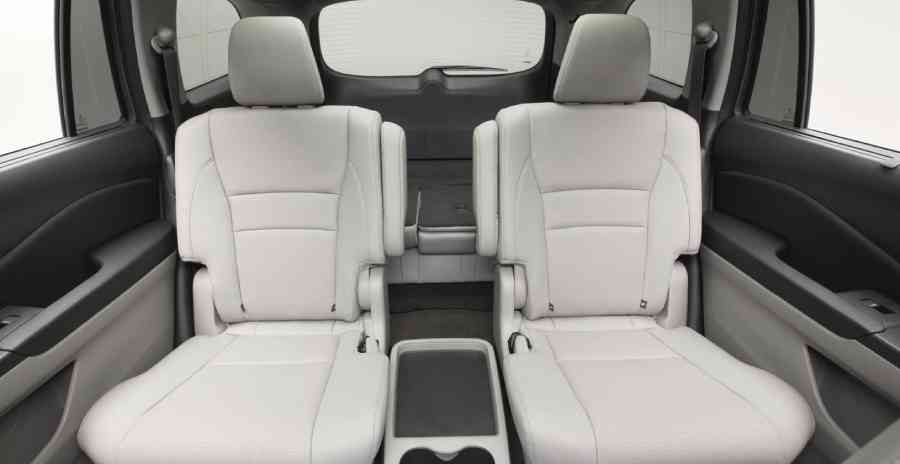
How Can You Fill the Gap Between Captain’s Chairs?
You can fill the gap between second-row captain’s chairs using six solutions: foam inserts, removable center consoles, seat gap organizers, custom cushions, storage bins, and pet bridges. Foam inserts and cushions cover open spaces, while consoles and organizers provide additional storage. Pet bridges create a supported surface for animals when designed and installed for that purpose.
The right solution depends on the distance between the seats, the vehicle’s floor layout, and whether passengers need access to the third row. Removable accessories offer greater flexibility because they can be taken out when passengers need to walk between the seats.
What Are the 6 Best Ways to Fill the Gap Between Captain’s Chairs?
1. Foam gap fillers
Foam gap fillers occupy the open space between captain’s chairs and help prevent small objects from falling onto the floor. High-density upholstery foam can be cut to match the gap’s width and shape. A removable fabric cover protects the foam from dirt and makes cleaning easier. Foam inserts work best for covering gaps rather than supporting passengers, pets, or heavy objects.
2. Removable center consoles
A removable center console fills part of the space between captain’s chairs while providing storage compartments, cup holders, or both. These accessories are useful for families who need additional space for drinks, snacks, and travel essentials. Choose a console that fits the floor contours and can be secured according to its manufacturer’s instructions without obstructing seat mechanisms.
3. Seat gap organizers
Seat gap organizers provide compact storage for phones, charging cables, toys, and other small belongings. Unlike full-width fillers, organizers occupy only part of the available space. Their narrow construction makes them suitable for vehicles where maintaining a clear center aisle is important. Check the organizer’s dimensions because products designed for front-seat console gaps may not fit between second-row captain’s chairs.
4. Custom cushions
Custom cushions cover irregularly shaped gaps that standard accessories cannot accommodate. They combine a foam core with an upholstery cover cut to match the available space. A custom cushion can create a more continuous-looking surface between the seats, but it must not be treated as an additional passenger seat or an independently load-bearing platform.
5. Storage bins
A properly sized storage bin uses the floor space between captain’s chairs to organize blankets, toys, cleaning supplies, or other travel items. Low-profile bins are easier to remove and can preserve visibility between the seats. Select a bin that does not obstruct seat tracks or passenger access and secure it against movement during braking or turns.
6. Pet bridges
A purpose-built pet bridge spans the gap between captain’s chairs to provide a supported surface for dogs during travel. Unlike ordinary foam fillers, pet bridges need structural support and a load rating appropriate for the animal. The bridge must fit the vehicle’s seating layout and must not replace an appropriate pet restraint.
The following table compares the six solutions by their primary functions.
| Solution | Primary purpose | Removable |
|---|---|---|
| Foam gap filler | Cover open gaps | Yes |
| Center console | Add storage and cup holders | Model-dependent |
| Seat gap organizer | Store small items | Yes |
| Custom cushion | Cover irregular gaps | Yes |
| Storage bin | Organize larger belongings | Yes |
| Pet bridge | Support a pet travel surface | Model-dependent |
For most owners, the choice comes down to whether they want to cover the gap, add storage, or accommodate a pet. These purposes require different products, and no single solution is suitable for every captain’s chair configuration.
Which Captain’s Chair Gap Filler Should You Choose?
Choose a captain’s chair gap filler based on its intended function, dimensions, material, and compatibility with your vehicle’s second-row seating configuration. Foam inserts work best for covering empty spaces, removable center consoles provide storage, and purpose-built pet bridges offer a supported surface for animals. The right product must fit securely without interfering with seat adjustments, seat belts, or access to the third row.
The intended use determines which type of gap filler is most suitable. A high-density foam insert is appropriate for preventing phones, toys, and other small objects from falling between the seats. A removable center console is better for storing drinks and travel accessories, while a low-profile organizer provides storage without occupying the entire center aisle. For transporting dogs, choose a pet bridge with a suitable load rating and secure attachment system rather than a standard cushion.
Material selection affects durability, cleaning, and stability. High-density upholstery foam maintains its shape better than soft, loosely filled cushions when compressed repeatedly. Removable fabric covers simplify cleaning, while non-slip backing helps reduce movement against compatible surfaces. Plastic storage organizers resist moisture and are easier to wipe clean, although rigid edges and poorly fitted bases can contact seat mechanisms or interior trim.
Vehicle compatibility is equally important because captain’s chair spacing varies between SUVs, minivans, and individual seating configurations. A filler that fits one vehicle may be too wide, too tall, or unstable in another. Check the manufacturer’s compatibility information and compare the product’s dimensions with the available space before purchasing.
For vehicles that regularly carry third-row passengers, a lightweight, removable gap filler is generally the most practical choice because it allows the center aisle to be cleared when necessary.
How Do You Measure the Gap Between Captain’s Chairs?
Measure the width, depth, height, and available clearance between the captain’s chairs before selecting or making a gap filler. These four measurements determine whether an accessory will fit the space, remain stable, and allow the seats to function normally. Use a measuring tape and record the dimensions in inches or centimeters.
Start by positioning both captain’s chairs in their normal seating positions. Measure the horizontal distance between the inner edges of the seats at the front, middle, and rear of the intended installation area. Record the narrowest measurement because seat contours and armrests can make the gap narrower at certain points. For example, a gap measuring 10 inches at the front and 8 inches near the seatbacks requires a filler that accommodates the narrower section.
Next, measure the usable depth from the front of the intended installation area toward the rear, accounting for seat bases and other obstructions. Measure the available height from the floor to the desired top of the accessory. A floor-mounted storage bin requires different height clearance than a foam insert positioned near the seat cushions.
Check seat movement and clearance before finalizing the dimensions. Slide, recline, or fold each seat through its permitted range while observing the available space. Keep the proposed installation area clear of seat tracks, seat belt buckles, child restraint hardware, and other moving components. If the vehicle has a walk-through aisle, confirm that the accessory can be removed without obstructing third-row access.
For a custom foam insert, create a cardboard template using the recorded measurements and test its fit before cutting the foam. The template should fit without forcing the seats apart or contacting moving mechanisms. This process reduces measurement errors and helps produce an insert that matches the vehicle’s interior layout.
How Do You Make a DIY Gap Filler for Captain’s Chairs?
You can make a DIY gap filler for captain’s chairs by measuring the space, cutting high-density upholstery foam to fit, adding a removable fabric cover, and checking the insert’s stability. This approach works for irregular gaps that standard accessories cannot accommodate. A custom foam insert helps prevent small objects from falling between the seats without requiring permanent modifications to the vehicle’s interior.
What Materials Do You Need for a DIY Gap Filler?
Making a DIY captain’s chair gap filler requires six basic materials: high-density upholstery foam, a measuring tape, cardboard, a marker, a suitable foam-cutting tool, and upholstery fabric. Non-slip material can also be added to reduce movement where it is compatible with the surrounding surfaces.
High-density upholstery foam is the main structural material for a non-load-bearing gap insert because it can be shaped to match the contours of the seats while resisting ordinary compression. Choose foam thick enough to fill the intended space without forcing the seats apart. Upholstery fabric or synthetic leather provides a protective outer layer, while a removable cover allows easier cleaning after spills or everyday use.
Cardboard serves as a cutting template, reducing the risk of wasting foam on inaccurate measurements. A serrated foam knife or electric carving knife can produce controlled cuts, depending on the foam’s thickness. The finished insert should have smooth edges and no exposed fasteners that could damage the seat upholstery.
How Do You Make a Foam Gap Filler Step by Step?
Making a foam gap filler involves five steps: measuring the gap, creating a template, cutting the foam, covering the insert, and testing its fit. Complete the process with the vehicle parked on a level surface and the captain’s chairs positioned for normal use.
1. Measure the available space. Record the gap’s width at several points, along with its usable depth and height. Identify any seat tracks, buckles, or moving components that the insert must avoid.
2. Create a cardboard template. Cut cardboard to match the intended shape and place it between the seats. Adjust the template until it fits without pressing against the seat mechanisms or obstructing access.
3. Cut the upholstery foam. Transfer the template’s outline onto the foam using a marker. Cut along the marked edges with a suitable foam-cutting tool, keeping the sides as even as possible.
4. Add a removable cover. Wrap the foam in upholstery fabric or synthetic leather and secure the cover using stitching or a closure positioned away from contact surfaces. Add compatible non-slip backing where needed.
5. Test the finished insert. Position the gap filler between the captain’s chairs and check for excessive movement, compression, or interference. Remove or reshape the insert if it contacts seat hardware or prevents normal seat operation.
A DIY foam filler should remain removable and should not be used as a passenger seat, step, or load-bearing platform. Its purpose is to cover unused space and prevent lightweight belongings from falling between the captain’s chairs.
How Do You Install a Gap Filler Between Captain’s Chairs?
Install a captain’s chair gap filler by positioning it in the measured space, securing it according to the product manufacturer’s instructions, and verifying that it does not interfere with the vehicle’s seating or safety systems. Installation methods differ between foam inserts, storage organizers, removable consoles, and pet bridges because each accessory has a different shape, weight, and support requirement.
For a foam insert or custom cushion, place the accessory into the intended gap without forcing it against the seat frames. The filler should sit evenly and remain stable during normal vehicle movement. Non-slip backing can help reduce shifting, but it does not replace a proper attachment system where one is required. Avoid using improvised straps or fasteners around seat rails, wiring, or seat belt components.
Removable center consoles and storage bins require additional attention to stability. Position the accessory on a suitable floor surface and use only attachment methods approved for that product and vehicle. Unsecured rigid accessories can become dangerous projectiles during sudden braking or a collision. A console that cannot be adequately secured should not be used while the vehicle is moving.
After positioning the gap filler, check the full range of permitted seat adjustments. Slide, recline, and fold the captain’s chairs as applicable, making sure the accessory does not contact moving mechanisms or obstruct seat belt buckles. Check the vehicle owner’s manual for restrictions involving seat-mounted airbags, child restraint systems, and accessory placement.
Finally, verify that passengers can enter and exit the third row without obstruction. If the center aisle serves as a primary access route, choose an accessory that can be removed quickly and stored securely elsewhere in the vehicle.
A correctly installed gap filler should fit the available space, remain secure during travel, and preserve the normal operation of the surrounding seats. If any of these conditions cannot be met, remove the accessory and select a different solution.
Is It Safe to Fill the Gap Between Captain’s Chairs?
Filling the gap between captain’s chairs is safe when the accessory is compatible with the vehicle, properly secured, and does not interfere with seat belts, airbags, seat adjustments, or passenger access. Foam inserts, removable organizers, and center consoles serve different purposes, but none should compromise the vehicle’s original safety systems. An accessory that blocks essential equipment or moves freely during travel creates an avoidable safety risk.
The primary safety concerns involve unsecured objects, restricted seat movement, and interference with occupant protection systems. A rigid storage console or heavy organizer can become a projectile during sudden braking or a collision if it lacks adequate restraint. Foam inserts present different concerns because an oversized or tightly compressed filler can obstruct seat mechanisms or interfere with seat belt access. Vehicle owners should follow the accessory manufacturer’s installation instructions and check the vehicle owner’s manual before using aftermarket products.
Can a Gap Filler Interfere With Seat Belts or Airbags?
A captain’s chair gap filler can interfere with seat belts or airbags if it covers belt buckles, obstructs restraint components, or enters an airbag deployment area. Second-row captain’s chairs may contain seat-mounted side airbags, while seat belt buckles and pretensioner components can be located near the inner edges or bases of the seats. Their positions vary by vehicle model and seating configuration.
A gap filler positioned against a seat belt buckle can make the buckle difficult to access or prevent the belt from being fastened correctly. Similarly, accessories attached to seat frames or placed within designated airbag deployment zones can interfere with occupant protection. Check the owner’s manual for airbag locations and prohibited accessory placement areas. Keep all restraint components accessible, and never attach a gap filler to seat belt hardware or airbag-related components unless the vehicle manufacturer specifically permits it.
Can a Gap Filler Affect Child Car Seat Installation?
A gap filler can affect child car seat installation if it obstructs lower anchors, seat belt routing, or the space required for the child restraint to fit correctly. Child safety seats must be installed in approved seating positions using the vehicle’s seat belt or compatible lower anchor system, following both the vehicle and child restraint manufacturers’ instructions.
For example, a wide center console placed between captain’s chairs may contact the side of a child restraint or make it difficult to reach an inboard seat belt buckle. A foam insert positioned near the seat base may also obstruct access to lower anchors or other installation components. Remove or reposition the accessory if it interferes with the required installation or use of the child restraint.
A gap filler must never be used as an additional passenger seat. It does not provide an approved seating position, integrated seat belt, or crash-tested occupant protection system. Passengers must use designated vehicle seats with appropriate restraints, regardless of how firmly the gap filler fits between the captain’s chairs.
Can You Fill the Gap Between Captain’s Chairs Without Blocking Third-Row Access?
You can fill the gap between captain’s chairs without blocking third-row access by using removable foam inserts, compact seat gap organizers, or low-profile storage accessories that leave the center aisle accessible. The best solution depends on how passengers enter the third row and whether the second-row seats need to slide, fold, or tilt forward.
In three-row SUVs and minivans, the space between captain’s chairs often serves as a walk-through passage. Installing a permanent center console or oversized gap filler can obstruct this route, forcing passengers to use the seat-folding mechanism instead. A removable foam insert allows the gap to remain covered during normal use while providing the flexibility to clear the aisle when passengers need access. However, the insert must be removed and securely stored before anyone uses the passage.
Low-profile organizers are suitable for vehicles that need both storage and convenient third-row access. A compact organizer positioned on the floor can hold small belongings without occupying the entire space between the seats. Its height, width, and attachment method must allow passengers to move safely through the aisle. Avoid placing loose storage bins, cushions, or other accessories where passengers could trip over them.
Before selecting a gap filler, test the vehicle’s normal third-row entry and exit procedures. Check whether the accessory interferes with seat sliding, folding mechanisms, or the path passengers use to reach the rear seats. Keep designated exit routes unobstructed and follow the vehicle manufacturer’s guidance on seating and passenger access.
How Do You Fill the Gap Between Captain’s Chairs for Dogs?
You can fill the gap between captain’s chairs for dogs using a purpose-built pet bridge or seat extender designed to provide a stable, supported surface between the second-row seats. Unlike ordinary foam inserts, pet bridges must support the dog’s weight and resist movement during travel. They should also be compatible with the vehicle’s seating configuration and an appropriate pet restraint system.
The open space between captain’s chairs can create an unstable area for dogs traveling in the second row. A dog attempting to move between the seats may step into the gap, lose its footing, or fall toward the floor. A properly supported pet bridge covers this opening and creates a more continuous surface. However, covering the gap does not protect a dog during sudden braking or a collision. Dogs still need an appropriate vehicle restraint or secured travel crate.
How Do You Choose a Safe Dog Seat Gap Bridge?
Choose a dog seat gap bridge based on its load capacity, structural support, vehicle compatibility, attachment system, and surface traction. These five factors determine whether the product is suitable for the dog’s size and the available space between the captain’s chairs.
Load capacity is particularly important because a pet bridge must support the animal without excessive bending or collapsing. For example, a bridge intended for a 20-pound dog should not automatically be considered suitable for a 70-pound dog. Check the manufacturer’s stated weight limit and installation requirements rather than relying on the product’s appearance. A bridge without a documented load rating should not be assumed to support an animal safely.
Structural support and attachment methods also affect stability. A suitable bridge should use the support points specified by its manufacturer and remain secure during normal vehicle movement. Non-slip surfaces help dogs maintain their footing, while padded coverings improve comfort and protect interior upholstery. Avoid products that depend on unsupported foam, loose cushions, or improvised attachments to seat belt hardware.
A pet bridge does not replace a crash-tested restraint system. Use an appropriately sized travel crate or a vehicle-compatible dog harness with suitable safety evidence, following the restraint manufacturer’s instructions. The bridge must not interfere with the restraint, seat belts, airbags, or normal seat operation.
For vehicles that regularly carry third-row passengers, a removable pet bridge provides greater flexibility. Remove and securely store the bridge whenever passengers need to use the center aisle, and verify that the remaining seating and restraint systems operate normally.
Read more: 6.7 Powerstroke Injector Torque Specs & Guide
Do Captain’s Chair Gap Fillers Fit Every SUV or Minivan?
Captain’s chair gap fillers do not fit every SUV or minivan because second-row seat spacing, floor configurations, armrest positions, and seat adjustment mechanisms vary between vehicles. Universal gap fillers accommodate a range of dimensions, while vehicle-specific accessories are designed for particular seating layouts. Neither type guarantees compatibility without checking the product’s measurements and installation requirements.
The distance between second-row captain’s chairs depends on the vehicle’s interior design. Three-row SUVs such as the Toyota Highlander, Kia Telluride, and Honda Pilot offer captain’s chair configurations in certain model years and trims, but their center aisle dimensions and seating mechanisms are not identical. Minivans may also have sliding or removable second-row seats that change the available space. These differences affect whether a foam insert, center console, or storage organizer will fit correctly.
Universal gap fillers are suitable when their dimensions and installation requirements match the available space. Adjustable foam inserts and compact organizers offer flexibility, particularly when the gap has a relatively simple shape. However, a universal product may leave uncovered areas, shift during travel, or interfere with seat movement if its dimensions do not match the vehicle’s interior.
Vehicle-specific gap fillers are designed around particular seat dimensions and interior features. They may provide a closer fit around floor contours, armrests, and seat bases, but compatibility still depends on the vehicle’s model year, trim level, and seating configuration. Check the manufacturer’s fitment information before purchasing, especially when the vehicle has sliding captain’s chairs or integrated seat-mounted safety equipment.
For the most reliable fit, compare the accessory’s width, depth, height, and mounting requirements with your vehicle’s measurements. Confirm that the installed product preserves seat adjustments, seat belt accessibility, and third-row entry before using it during travel.
Can You Replace Captain’s Chairs With a Bench Seat?
Replacing second-row captain’s chairs with a bench seat is possible only when the vehicle supports an approved bench-seat configuration and the necessary mounting and occupant restraint systems are compatible. A gap filler cannot convert two captain’s chairs into a certified three-passenger bench seat because it does not provide the structural support, seat belt system, or occupant protection required for an additional seating position.
Some SUVs are manufactured with either second-row captain’s chairs or a bench seat, depending on the model year and trim level. However, the availability of both configurations does not mean their seat assemblies are interchangeable. Mounting brackets, floor reinforcements, seat belt anchorages, electrical connections, and occupant detection systems may differ between versions.
A proper seat conversion requires manufacturer-approved components and verification of vehicle compatibility. Installing an aftermarket bench seat without confirming these requirements can compromise occupant protection and may violate applicable vehicle safety regulations. A qualified automotive professional should assess the conversion using the manufacturer’s technical documentation before any original seating components are removed.
For owners who simply want to eliminate the open space between captain’s chairs, a removable gap filler or compatible center console is a less invasive alternative. These accessories preserve the original seating configuration and avoid the structural modifications associated with replacing seats. However, they must still be installed safely and cannot provide an additional passenger position.