The 6.7 Powerstroke injector hold-down bolt torque is 22 lb-ft (30 Nm), followed by an additional 90-degree turn, according to Ford service procedures for selected model years. This two-stage tightening process secures the fuel injector against the cylinder head and establishes the clamping force needed for proper sealing. The injector fuel line fittings require separate torque specifications, which must be verified for the vehicle’s model year.
Correct injector torque is essential for maintaining a secure connection between the fuel injector, hold-down clamp, and cylinder head. Insufficient tightening can compromise injector sealing and allow combustion gases to escape. Excessive tightening can damage mounting threads, deform components, or overstress the fastener. Following the specified torque and angle procedure helps prevent these installation problems.
The Ford 6.7L Power Stroke diesel engine uses a high-pressure common rail fuel injection system, making accurate installation and clean fuel connections particularly important. Injector service procedures can differ across engine generations and component revisions, so technicians should confirm the applicable specifications using Ford service information.
This guide covers 6.7 Powerstroke injector torque specifications, model-year considerations, required tools, hold-down bolt tightening procedures, and fuel line connections. It also explains common torque mistakes, fastener replacement requirements, and post-installation leak checks to help Ford Super Duty owners and diesel technicians complete injector service correctly.
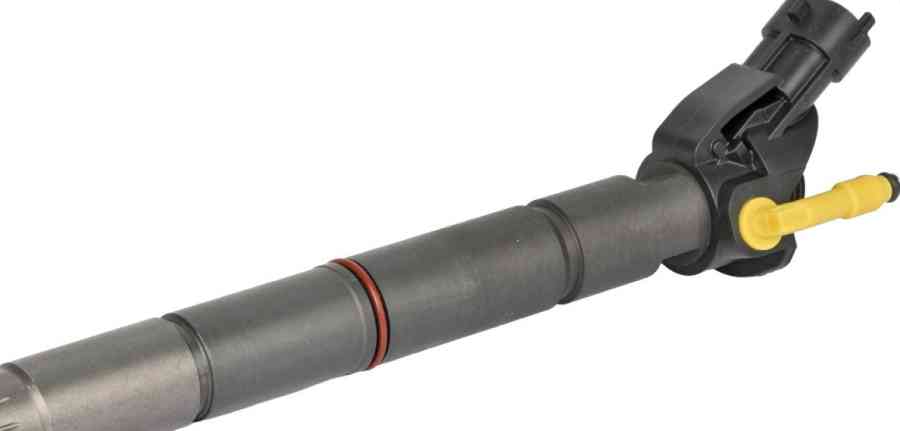
What Are the 6.7 Powerstroke Injector Torque Specs?
The 6.7 Powerstroke injector hold-down bolt torque specification is 22 lb-ft (30 Nm), followed by an additional 90-degree rotation, according to Ford service procedures for selected engine model years. The initial torque seats the injector hold-down assembly, while the final angular rotation establishes the required fastener tension. Both stages are necessary to achieve the specified clamping force.
The injector hold-down bolt secures the fuel injector inside the cylinder head through a retaining clamp. Correct tightening maintains contact between the injector sealing surfaces and prevents movement under combustion pressure. The tightening procedure requires a calibrated torque wrench for the initial stage and an angle-measuring tool for the final rotation. Ford service instructions for the applicable engines also require a new hold-down bolt during installation.
The following table separates the injector hold-down specification from other fuel system connections.
| Component | Torque Specification | Installation Requirement |
|---|---|---|
| Injector hold-down bolt | 22 lb-ft (30 Nm) + 90° | Two-stage tightening with a new bolt |
| Injector high-pressure fuel line fitting | Model-specific | Verify the correct Ford service procedure |
| Fuel rail line connection | Model-specific | Follow the specified fitting and line installation instructions |
The 22 lb-ft plus 90-degree specification applies to the injector hold-down bolt, not to the high-pressure fuel line fittings. These components perform different mechanical functions. The hold-down bolt provides injector clamping force, whereas the fuel line fittings seal connections carrying pressurized diesel fuel. Applying the hold-down bolt tightening procedure to a fuel line fitting can damage the connection or compromise its seal.
Fuel line torque specifications must be matched to the exact engine configuration and connection type. Ford’s high-pressure common rail system operates at pressures capable of causing serious injection injuries, making correct fitting installation and leak inspection essential.
Do 6.7 Powerstroke Injector Torque Specs Vary by Model Year?
The 6.7 Powerstroke injector torque procedure must be verified by model year because Ford has revised engine components and fuel injection systems during the engine’s production history. The 6.7L Power Stroke was introduced for the 2011 model year and has undergone several updates involving fuel delivery, injection equipment, and engine hardware. A torque value confirmed for one engine version should not automatically be applied to another.
The injector hold-down procedure of 22 lb-ft (30 Nm) followed by 90 degrees appears in service information for selected 2011, 2020, and 2023 applications. However, those references do not establish a verified specification for every intervening model year or every fuel system connection.
| Model Years | Injector Hold-Down Torque | Verification Status |
|---|---|---|
| 2011–2016 | 22 lb-ft + 90° documented for 2011 | Verify remaining years individually |
| 2017–2019 | Not independently confirmed | Consult year-specific Ford service information |
| 2020–2022 | 22 lb-ft + 90° documented for 2020 | Verify remaining years individually |
| 2023 and newer | 22 lb-ft + 90° documented for 2023 | Verify subsequent years individually |
Why Model-Year Verification Matters
Ford introduced significant updates to the 6.7L Power Stroke over successive generations, including changes to fuel injection components and operating characteristics. These revisions make it important to identify the correct engine application before selecting torque specifications or replacement parts.
The vehicle identification number (VIN), model year, and engine configuration provide the starting information for locating the appropriate Ford workshop instructions. Technicians should also identify the specific fastener or fitting being tightened, since the injector hold-down bolt, injector-side fuel line fitting, and fuel rail connection do not necessarily share the same torque requirements.
For example, a technician replacing an injector on a 2015 F-250 should verify the 2015 service procedure rather than assume that specifications from a 2023 F-350 apply. Even when two engines use the same hold-down torque, their fuel line installation requirements or replacement hardware may differ.
The correct reference is the Ford Workshop Manual procedure for the vehicle’s exact model year and engine application. It identifies the required tightening stages, replacement fasteners, and fuel system precautions. Using the applicable procedure helps maintain injector sealing integrity and reduces the risk of damage during installation.
What Tools Are Needed to Torque 6.7 Powerstroke Injectors?
Torquing 6.7 Powerstroke fuel injectors requires a calibrated torque wrench, a torque-angle gauge, correctly sized sockets, and new injector hold-down bolts. These tools allow technicians to apply the specified initial torque and complete the additional angular rotation without damaging the injector mounting hardware.
A torque wrench measures the rotational force applied to the injector hold-down bolt. The wrench must cover the required 22 lb-ft (30 Nm) setting and be properly calibrated. A click-type or digital torque wrench is suitable when used according to its manufacturer’s instructions. Applying torque outside the wrench’s recommended operating range can reduce measurement accuracy and produce inconsistent fastener tension.
A torque-angle gauge measures the additional 90-degree rotation required after the initial tightening stage. Unlike a conventional torque wrench, which measures applied torque, an angle gauge tracks fastener rotation. This distinction matters because the final tightening stage controls bolt elongation and clamping force through angular displacement rather than a second torque value.
The following tools and materials are needed for injector installation:
| Tool or Material | Purpose |
|---|---|
| Calibrated torque wrench | Applies the initial 22 lb-ft (30 Nm) torque |
| Torque-angle gauge | Measures the additional 90-degree rotation |
| Correctly sized sockets | Engage the injector mounting fasteners |
| New injector hold-down bolts | Provide the required fastening condition |
| Suitable line wrenches | Tighten fuel line fittings without damaging their surfaces |
| Approved cleaning materials | Remove contamination from accessible mounting surfaces |
| Ford service information | Confirms procedures and specifications for the exact engine application |
Replacement sealing components and fuel lines must also be available when required by the applicable Ford service procedure. The high-pressure fuel system must be depressurized using the manufacturer’s instructions before any fuel connection is disconnected. Clean tools, protected fuel openings, and properly prepared mounting surfaces help prevent contamination during injector service.
How Do You Torque 6.7 Powerstroke Injector Hold-Down Bolts?
To torque a 6.7 Powerstroke injector hold-down bolt, tighten the new bolt to 22 lb-ft (30 Nm), then rotate it an additional 90 degrees, where this two-stage specification is confirmed by the applicable Ford workshop procedure. The first stage establishes the initial seating load, while the second stage produces the specified final clamping condition.
The procedure depends on correct injector positioning, clean mounting surfaces, and proper fastener installation. Applying the specified torque to an incorrectly seated injector can produce an inaccurate clamping condition even when the torque wrench indicates the correct value.
How Do You Prepare the Injector and Hold-Down Clamp?
Prepare the injector and hold-down clamp by inspecting the mounting components, cleaning the accessible seating surfaces, and positioning the injector according to Ford’s installation instructions. The injector must sit correctly in its cylinder head bore before the retaining clamp is tightened.
Inspect the injector bore for contamination, damaged sealing surfaces, and debris left from the previous installation. Carbon deposits or foreign material can prevent proper injector seating and interfere with the combustion seal. Use only cleaning methods approved for the engine, and prevent loosened material from entering the cylinder or fuel passages.
Install the specified new injector sealing components and position the injector in its designated bore. The hold-down clamp must engage the injector correctly and align with the mounting location. Incorrect clamp positioning can create uneven loading and compromise the injector’s sealing contact with the cylinder head.
Install a new hold-down bolt where required by the Ford service procedure. Start the bolt by hand to confirm correct thread engagement and prevent cross-threading. Do not apply the final tightening stages until the injector, clamp, and mounting hardware are properly positioned.
How Do You Apply the Initial Injector Bolt Torque?
Apply the initial injector hold-down bolt torque by tightening the fastener to 22 lb-ft (30 Nm) with a calibrated torque wrench. This stage establishes the specified preliminary tightening condition before the additional angular rotation.
Attach the correctly sized socket to the torque wrench and position it securely on the hold-down bolt. Apply force smoothly while keeping the tool aligned with the fastener. Continue tightening until the wrench indicates that the specified torque has been reached. Avoid sudden movements or repeated tightening after the torque wrench signals completion.
The initial torque stage helps seat the fastener and establishes a controlled starting condition for the final rotation. Friction between the bolt threads, mounting surfaces, and clamp affects the relationship between applied torque and bolt tension. Following the manufacturer’s specified fastener condition and tightening method helps control these variables.
Do not substitute a higher torque value for the required angular tightening stage. For example, increasing the initial torque beyond 22 lb-ft does not reproduce the specified 90-degree rotation. The two stages perform different functions and must be completed in the prescribed order.
How Do You Apply the Final 90-Degree Tightening Angle?
Apply the final tightening stage by rotating the injector hold-down bolt an additional 90 degrees from its position after the initial torque stage. Use a torque-angle gauge or an approved electronic torque-angle wrench to measure the rotation accurately.
Set the angle gauge to zero after completing the initial 22 lb-ft tightening stage. Hold the gauge reference arm securely and rotate the bolt smoothly through one-quarter turn. A 90-degree rotation represents one-quarter of a complete 360-degree revolution, providing a clear reference for the required angular movement.
The additional rotation advances the bolt through its threaded mounting point and increases fastener tension. This controlled movement establishes the final clamping condition specified by the manufacturer. Stopping before the required angle can leave insufficient clamping force, while rotating beyond the specified angle can overstress the fastener or damage the mounting threads.
Avoid loosening and retightening the bolt to correct an inaccurate angle without consulting the Ford service procedure. When a single-use fastener has already undergone its final tightening stage, restarting the procedure may require replacing that fastener.
After completing the final rotation, verify that the injector clamp remains correctly positioned and that no visible mounting damage has occurred. Continue with fuel line installation, electrical connections, and system inspection according to the applicable Ford workshop instructions. Do not start the engine until all required connections and safety checks have been completed.
How Do You Tighten 6.7 Powerstroke Injector Fuel Line Fittings?
Tighten 6.7 Powerstroke injector fuel line fittings by aligning the high-pressure fuel line correctly, starting the fittings by hand, and applying the torque specified in the Ford Workshop Manual for the exact model year and connection. Injector-side fittings and fuel rail connections must be identified separately because their installation requirements are not necessarily identical.
The 6.7L Power Stroke uses a high-pressure common rail injection system that delivers pressurized diesel fuel from the fuel rail to individual injectors. Each high-pressure line must form a secure metal-to-metal seal at its connection points. Proper alignment and controlled tightening help maintain sealing contact without damaging the fitting threads or sealing surfaces.
Before installing a high-pressure fuel line, inspect its connection points for contamination, deformation, or damaged sealing surfaces. Replace the line when required by Ford’s service instructions. Certain high-pressure fuel lines are designated for replacement after removal, so reusing an existing line without checking the applicable procedure can compromise connection reliability.
Position the fuel line between the injector and fuel rail without forcing either connection into alignment. Start the fitting nuts by hand to confirm correct thread engagement. A fitting that does not thread smoothly may be misaligned or cross-threaded. Correct the alignment before applying torque rather than using a wrench to force the connection into position.
Use the specified line wrench or approved torque adapter to tighten each connection according to the manufacturer’s procedure. When a torque adapter changes the effective length of the torque wrench, the required wrench setting may need adjustment based on the adapter’s orientation and dimensions. An incorrect setup can produce a different tightening torque than intended.
Do not use the injector hold-down bolt specification of 22 lb-ft plus 90 degrees for high-pressure fuel line fittings. That specification controls injector retention, not fuel line sealing. The correct fitting torque must be verified using the vehicle’s VIN, model year, and applicable Ford service instructions.
After tightening the fittings, reinstall the required fuel system components and complete the prescribed fuel system priming and leak inspection procedures. Never loosen a high-pressure fuel connection while the engine is running. High-pressure diesel fuel can penetrate the skin and cause severe injuries, even when a leak appears small.
Do 6.7 Powerstroke Injector Hold-Down Bolts Need to Be Replaced?
Yes, 6.7 Powerstroke injector hold-down bolts must be replaced when the applicable Ford service procedure specifies new fasteners during injector installation. The documented 22 lb-ft plus 90-degree tightening procedure for selected model years includes the use of a new hold-down bolt to establish the intended clamping condition.
The injector hold-down bolt secures the retaining clamp against the cylinder head, keeping the fuel injector firmly seated during engine operation. Combustion pressure produces substantial mechanical loading around the injector assembly. Maintaining the specified clamping force helps prevent injector movement and preserves the seal between the injector and combustion chamber.
The two-stage tightening method combines an initial torque value with a measured angular rotation. During the final 90-degree stage, the bolt advances farther into its threaded mounting point, increasing tension and establishing the specified clamp load. The resulting bolt elongation is one reason the manufacturer’s replacement requirements must be followed.
A torque-angle tightening procedure does not automatically mean every fastener is torque-to-yield. Torque-to-yield describes a fastening method that intentionally stretches a bolt into its plastic deformation range. Whether a particular injector bolt operates in that range depends on its design and the manufacturer’s engineering specifications. The requirement to install a new bolt should therefore be based on Ford’s service instructions rather than an assumption about all torque-angle fasteners.
Reusing a bolt designated for replacement introduces uncertainty about its remaining mechanical properties and ability to develop the intended clamping force. Previous tightening, thread damage, corrosion, or permanent elongation can affect fastener performance. An inaccurate clamp load can contribute to injector movement, sealing problems, or mounting hardware failure.
Install the correct replacement bolt specified for the engine application and confirm that its threads and contact surfaces meet the manufacturer’s installation requirements. Do not apply lubricants, thread-locking compounds, or other coatings unless the service procedure specifically instructs their use. Changes in thread friction can alter the relationship between tightening torque and bolt tension.
For example, when reinstalling an injector on a 6.7 Powerstroke engine with a documented new-bolt requirement, the technician should obtain the correct replacement hold-down bolt before beginning the final tightening procedure. Using the specified fastener and completing both tightening stages helps establish a consistent clamping condition.
The replacement requirement also applies when a previously tightened single-use bolt must be removed during installation correction. Rather than loosening and retightening the same bolt without authorization, follow the Ford Workshop Manual instructions for replacing the fastener and repeating the installation procedure.
What Happens if 6.7 Powerstroke Injector Bolts Are Over-Torqued?
Over-torquing 6.7 Powerstroke injector hold-down bolts can overstress the fasteners, damage cylinder head threads, deform retaining components, and compromise injector clamping force. These problems occur when the applied tightening force or angular rotation exceeds the manufacturer’s specified limits. Excessive tightening does not improve injector sealing because the mounting assembly is designed to operate within a controlled clamping range.
The injector hold-down bolt transfers tension through the retaining clamp to secure the injector against its cylinder head seat. As the bolt is tightened, its tension increases and creates the force needed to maintain injector position. When tightening exceeds the specified limit, the additional loading can permanently stretch the bolt or damage the threaded mounting point. Severe over-tightening can cause fastener fracture or thread stripping, requiring additional repairs before the injector can be installed securely.
Excessive clamping force can also place abnormal stress on the injector retaining clamp. A distorted clamp may distribute pressure unevenly across the injector mounting surface, affecting the stability of the installed assembly. Although the injector may initially appear secure, damaged mounting components can reduce the reliability of the connection during repeated combustion cycles.
For example, the documented tightening procedure for selected 6.7 Powerstroke applications requires an initial torque of 22 lb-ft (30 Nm), followed by a 90-degree rotation. Applying an additional 90 degrees after completing the specified final angle would exceed the prescribed tightening procedure. The resulting bolt tension cannot be determined accurately from the additional rotation alone because it depends on fastener dimensions, material properties, and joint conditions.
An injector hold-down bolt tightened beyond the specified limit should not be corrected simply by loosening it. Stop the installation and follow the applicable Ford service instructions for inspecting the mounting components and replacing affected fasteners. If cylinder head threads or the retaining clamp are damaged, those components must be evaluated before the injector is reinstalled.
What Happens if 6.7 Powerstroke Injector Bolts Are Under-Torqued?
Under-torquing 6.7 Powerstroke injector hold-down bolts can produce insufficient clamping force, allowing injector movement, combustion gas leakage, and deterioration of the injector sealing interface. These problems develop when the retaining clamp cannot maintain the specified pressure between the injector and its mounting seat.
The injector operates in an environment exposed to repeated combustion pressure, engine vibration, and thermal expansion. Its retaining clamp must maintain sufficient force to keep the injector correctly positioned throughout these operating conditions. When bolt tension falls below the required level, the injector assembly may experience small movements that place additional stress on its sealing surfaces.
Insufficient clamping force can compromise the seal between the injector and cylinder head. Combustion gases may escape past the injector sealing washer when the sealing interface no longer maintains proper contact. Persistent leakage can leave carbon deposits around the injector bore and contribute to sealing surface deterioration. These deposits can also make subsequent injector removal and cleaning more difficult.
For example, tightening an injector hold-down bolt to the initial 22 lb-ft (30 Nm) value but omitting the required additional 90-degree rotation leaves the specified two-stage procedure incomplete. The initial torque establishes the starting tightening condition, while the angular stage develops the intended final fastener tension. Completing only the first stage does not establish the manufacturer’s specified clamp load.
Potential warning signs of an improperly secured injector include combustion gas leakage around the injector mounting area, unusual localized engine noise, and visible carbon accumulation near the injector bore. However, these symptoms are not exclusive to an under-torqued bolt. Damaged sealing washers, contaminated mounting surfaces, and incorrectly installed components can produce similar conditions.
Correcting an under-torqued injector requires identifying why the specified clamping condition was not achieved. If the installation procedure was interrupted or the bolt has already undergone its final tightening stage, consult the applicable Ford service instructions before attempting additional tightening. Replace single-use fasteners when required, inspect the injector sealing components, and repeat the approved installation procedure.
Maintaining the specified injector hold-down torque helps preserve the mechanical connection between the injector, retaining clamp, and cylinder head. Accurate tightening must be combined with proper injector seating, undamaged mounting hardware, and the correct sealing components to maintain reliable injector installation.
Read more: 5.9 Cummins Injector Torque Specs by Year (1989–2007)
How Do You Check for Leaks After Installing 6.7 Powerstroke Injectors?
Check for leaks after installing 6.7 Powerstroke injectors by inspecting the high-pressure fuel connections, examining the injector sealing areas, and performing the leak verification procedure specified by Ford. These inspections help identify improperly seated fittings, damaged sealing components, and installation errors before the engine returns to normal operation.
The 6.7L Power Stroke uses a high-pressure common rail fuel injection system that delivers diesel fuel through precisely sealed connections. A loose fitting, damaged sealing surface, or incorrectly installed fuel line can allow pressurized fuel to escape. Because diesel injection pressures can cause serious skin penetration injuries, technicians must never use their hands or fingers to locate fuel leaks.
Begin with a visual inspection while the engine is off and the fuel system is in the safe condition specified by Ford. Examine the injector-side fuel line connections, fuel rail fittings, and accessible fuel system components for damaged threads, incorrect alignment, or visible fuel residue. Confirm that all connections have been installed according to the applicable service procedure. A fitting that appears properly seated is not necessarily tightened to its specified torque.
Inspect the injector mounting area for evidence of combustion gas leakage. The injector sealing washer forms a barrier between the combustion chamber and the injector bore. An incorrectly seated injector, damaged sealing washer, or insufficient hold-down clamping force can compromise this barrier. Carbon deposits, combustion residue, or localized gas leakage around the injector mounting area may indicate a sealing problem.
After completing the required assembly checks, follow Ford’s specified fuel system priming and leak verification procedure. Some fuel leaks become apparent only when the system is pressurized, so a dry connection during an engine-off inspection does not confirm that the system is leak-free. Use approved diagnostic methods and maintain a safe distance from pressurized connections.
Never loosen injector fuel line fittings while the engine is running or while residual high pressure remains in the system. A high-pressure diesel spray can penetrate skin without producing a large visible wound. Suspected fuel injection injuries require immediate emergency medical attention, even when the injury initially appears minor.
If a leak is detected, stop the inspection or engine operation as appropriate and follow the manufacturer’s shutdown and depressurization instructions. Identify the affected connection and inspect its sealing surfaces, alignment, and replacement requirements before reassembly. Do not attempt to stop a pressurized leak by tightening a fitting while the system is operating.
A successful post-installation inspection confirms that the injector mounting hardware is secure, the fuel connections meet the specified installation requirements, and no leakage is detected during the approved verification procedure. These checks are essential before returning the vehicle to service.
What Are Common 6.7 Powerstroke Injector Torque Mistakes?
The five common 6.7 Powerstroke injector torque mistakes are using incorrect torque specifications, reusing bolts designated for replacement, skipping the final tightening angle, using unsuitable torque tools, and confusing hold-down bolt torque with fuel line fitting torque. Each mistake can affect injector clamping force, fuel system sealing, or the integrity of the mounting hardware.
1. Using incorrect torque specifications
Applying a torque value from the wrong engine application or model year can produce an incorrect fastener load. Ford has revised the 6.7L Power Stroke engine and its fuel injection components across different production years, making application-specific service information essential.
For example, a technician working on a 2018 F-350 should verify the appropriate 2018 injector installation procedure rather than assume that a specification documented for a 2023 engine applies without modification. The correct reference identifies the required torque stages, fastener replacement instructions, and relevant fuel system connections.
2. Reusing injector hold-down bolts designated for replacement
Reusing a hold-down bolt when Ford specifies a new fastener can compromise the intended tightening condition. Previous installation loads, permanent elongation, thread damage, and changes in friction can affect the relationship between applied torque and clamping force.
A replacement bolt must match the specified engine application and hardware requirements. Technicians should also inspect the cylinder head threads and retaining clamp before installation. Installing a new bolt into damaged threads does not correct the underlying mounting problem.
3. Skipping the final 90-degree tightening stage
Omitting the final angular rotation leaves the documented two-stage injector hold-down procedure incomplete. The initial 22 lb-ft (30 Nm) torque establishes the preliminary tightening condition, while the additional 90-degree rotation develops the specified final fastener tension.
For example, stopping after the initial torque stage does not provide the same clamping condition as completing both stages. The injector may appear firmly secured even though the installation procedure has not been completed. Use a torque-angle gauge or an approved electronic torque-angle wrench to measure the final rotation accurately.
4. Using unsuitable or incorrectly calibrated torque tools
An inaccurate torque wrench can apply more or less torque than its indicated setting. Incorrect socket engagement, unsuitable wrench capacity, or improper use of torque adapters can also affect tightening accuracy.
A torque wrench should operate within its manufacturer’s recommended range and receive calibration at the required intervals. When using an extension that changes the wrench’s effective lever length, technicians must account for the resulting torque measurement difference. Standard socket extensions that do not change the effective lever length generally do not require the same mathematical correction.
5. Confusing injector hold-down bolt torque with fuel line fitting torque
The injector hold-down bolt and high-pressure fuel line fittings have different mechanical functions and tightening requirements. The hold-down bolt provides injector retention, while the fuel line fittings create sealed connections between fuel system components.
Applying the 22 lb-ft plus 90-degree hold-down procedure to a fuel line fitting can overstress the connection and damage its sealing surfaces. Fuel line fitting torque must be obtained from the Ford Workshop Manual for the specific engine application and connection location.
Avoiding these five mistakes requires identifying each fastener correctly, using verified service specifications, replacing designated single-use components, and completing every required tightening stage. Accurate injector installation also depends on clean mounting surfaces, proper component alignment, and approved post-installation inspections.