The 5.9 Cummins injector torque specs vary by engine year, fuel injection system, and fastener type. The 1989–1998 12-valve, 1998.5–2002 24-valve, and 2003–2007 common rail engines use different injector mounting configurations, making it essential to identify the correct specifications before installation. Applying the wrong torque can damage cylinder head threads, compromise injector sealing, or cause fuel and compression leaks.
For the 2003–2007 5.9L Cummins common rail engine, commonly documented specifications include 89 in-lb (10 Nm) for injector hold-down bolts, 37 ft-lb (50 Nm) for high-pressure connector tube nuts, and 22 ft-lb (30 Nm) for high-pressure fuel line fittings. These values apply to specific service procedures and must be verified against the appropriate engine-year service manual. Earlier 12-valve and VP44-equipped 24-valve engines require separate specifications because their injector designs and mounting hardware differ.
This guide covers 5.9 Cummins injector torque specifications by engine generation, including injector hold-down bolts, connector tubes, and fuel line fittings. It also explains the correct tightening sequence, required tools, and common problems caused by over-tightening or insufficient torque. Each section focuses on helping diesel truck owners and mechanics install fuel injectors securely while protecting the injection system and cylinder head.
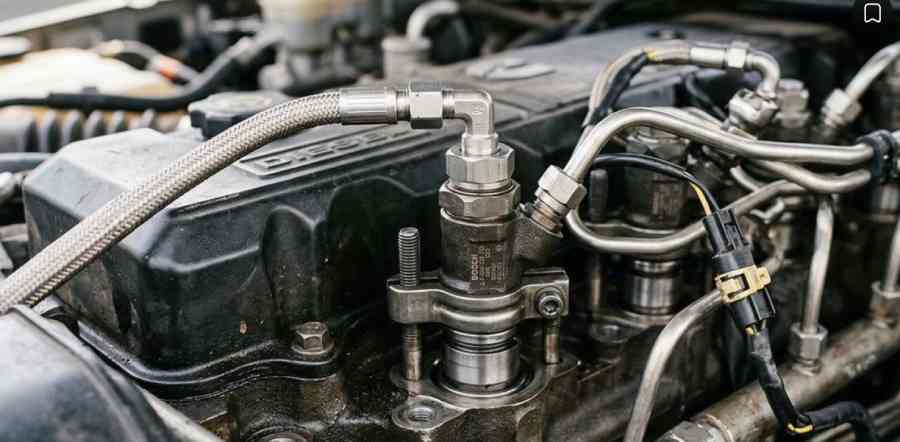
What Are the 5.9 Cummins Injector Torque Specs by Engine Year?
The 5.9 Cummins injector torque specifications depend on three engine generations: 1989–1998 12-valve, 1998.5–2002 24-valve, and 2003–2007 common rail. Each generation uses a different fuel injection configuration, which affects injector mounting hardware, fuel line connections, and tightening procedures. Torque values must be matched to the specific fastener rather than applied universally across all 5.9L Cummins engines.
The following table summarizes the documented common-rail specifications and identifies earlier applications requiring model-specific verification.
| Engine generation | Injector-related component | Torque specification |
|---|---|---|
| 1989–1998 12-valve | Injector retaining hardware | Verify by engine year and injector design |
| 1998.5–2002 24-valve | Injector hold-down hardware | Verify by engine year |
| 1998.5–2002 24-valve | Connector tube nut | 28 ft-lb (38 Nm) for the revised connector specified in a 1998 service bulletin |
| 2003–2007 common rail | Injector hold-down bolts | 89 in-lb (10 Nm) |
| 2003–2007 common rail | High-pressure connector tube nut | 37 ft-lb (50 Nm) |
| 2003–2007 common rail | High-pressure fuel line fitting | 22 ft-lb (30 Nm) |
The common-rail values above are documented in a 2006 Dodge Ram service procedure. They are useful reference figures for this engine family but should not be treated as independently verified for every model year from 2003 through 2007.
What Are the Injector Torque Specs for a 1989–1998 5.9 Cummins 12-Valve?
The 1989–1998 5.9 Cummins 12-valve uses mechanically operated fuel injectors, and its injector retaining arrangement differs from the later common-rail design. Early engines use a Bosch VE rotary injection pump, while later 12-valve applications use the Bosch P7100 inline injection pump. Both systems deliver fuel through external high-pressure injection lines rather than electronically controlled common-rail injectors.
Injector installation requires the correct torque for the retaining hardware and fuel line connections. These specifications must be obtained from the service documentation corresponding to the engine serial number and injector configuration. The 89 in-lb common-rail injector hold-down specification must not be substituted for the earlier mechanical injector arrangement.
What Are the Injector Torque Specs for a 1998.5–2002 5.9 Cummins 24-Valve?
The 1998.5–2002 5.9 Cummins 24-valve uses a Bosch VP44 electronically controlled distributor injection pump with mechanically actuated injectors. Its injector connector arrangement and fuel delivery system differ from both the 12-valve engine and the later common-rail system.
A 1998 Chrysler technical service bulletin specifies 28 ft-lb (38 Nm) for the connection associated with a revised injector connector tube. This specification is applicable to the revised component addressed by that bulletin, not automatically to every VP44 injector connection. Injector hold-down and other fuel fitting torque values require confirmation from the service manual for the specific engine application.
What Are the Injector Torque Specs for a 2003–2007 5.9 Cummins Common Rail?
The 2003–2007 5.9 Cummins common-rail engine uses electronically controlled injectors supplied by a high-pressure common fuel rail. Each injector is secured in the cylinder head by mounting hardware and connected to the fuel supply through a high-pressure connector tube.
A documented 2006 service procedure specifies three distinct final tightening values: 89 in-lb (10 Nm) for injector hold-down bolts, 37 ft-lb (50 Nm) for the connector tube nut, and 22 ft-lb (30 Nm) for the high-pressure fuel line fitting. The procedure also uses preliminary tightening stages of 44 in-lb (5 Nm) for the injector hold-down bolts and 11 ft-lb (15 Nm) for the connector tube nut.
The tightening sequence matters because the injector and connector tube must align correctly at their sealing surfaces. Final tightening without following the prescribed installation sequence can produce improper seating or connection problems even when the torque wrench reaches the specified value. Technicians should therefore follow the model-specific service procedure rather than tighten each component independently.
What Is the Torque Spec for 5.9 Cummins Injector Hold-Down Bolts?
The 5.9 Cummins common-rail injector hold-down bolt torque is 89 in-lb (10 Nm), according to the 2006 Dodge Ram 5.9L diesel service procedure. The bolts receive an initial torque of 44 in-lb (5 Nm) before the connector tube is tightened and the injector mounting bolts receive their final torque. Earlier 12-valve and VP44-equipped 24-valve engines use different injector retaining arrangements, so this specification must not be applied to those engines without checking their service manuals.
Injector hold-down bolts secure the injector inside the cylinder head and maintain the clamping force required to keep its sealing surfaces properly seated. On common-rail engines, the injector clamp distributes this force across the injector body while the copper sealing washer helps seal combustion pressure at the injector tip. Insufficient clamping force can allow combustion gases to escape around the injector, while excessive tightening can damage mounting threads or distort components.
For the 2006 5.9 Cummins common-rail engine, the injector hold-down procedure involves three main stages:
- Initial tightening: Tighten the injector hold-down bolts evenly to 44 in-lb (5 Nm), following the specified service procedure.
- Connector tube installation: Position the high-pressure connector tube correctly and tighten its retaining nut through the prescribed stages.
- Final tightening: Tighten the injector hold-down bolts to 89 in-lb (10 Nm) after completing the required connector tube alignment and tightening operations.
A calibrated inch-pound torque wrench is essential because 89 in-lb equals approximately 7.4 ft-lb, not 89 ft-lb. Confusing these units produces a torque nearly 12 times greater than specified, creating a substantial risk of stripping cylinder head threads or damaging injector mounting hardware. Technicians should also inspect the injector clamp, mounting bolts, and threaded holes before installation and follow any fastener replacement requirements in the applicable service manual.
What Are the 5.9 Cummins Injector Connector Tube Torque Specs?
The 5.9 Cummins common-rail injector connector tube nut torque is 37 ft-lb (50 Nm) in the 2006 Dodge Ram service procedure, following an initial tightening stage of 11 ft-lb (15 Nm). This specification applies to the high-pressure connector tube connection, not the injector hold-down bolts or external fuel line fittings. Earlier VP44-equipped engines use a different connector arrangement, including a revised component addressed by a 1998 Chrysler service bulletin specifying 28 ft-lb (38 Nm).
The connector tube provides a sealed fuel passage between the external high-pressure fuel line and the injector inlet. On common-rail engines, the connection must withstand substantial fuel injection pressure without allowing fuel to escape. The connector tube’s sealing tip contacts the injector inlet, making correct positioning and controlled tightening essential for maintaining a reliable metal-to-metal seal.
For the 2006 5.9L common-rail application, connector tube installation requires the following operations:
- Inspect the connector tube: Check the sealing tip, threads, and contact surfaces for wear, contamination, scoring, or deformation. Replace components that fail the manufacturer’s inspection requirements.
- Position the connector tube: Insert the connector tube into the cylinder head and align its sealing tip with the injector inlet without forcing the connection.
- Apply preliminary torque: Tighten the connector tube retaining nut to 11 ft-lb (15 Nm) at the stage specified by the service procedure.
- Apply final torque: Tighten the connector tube nut to 37 ft-lb (50 Nm) in the prescribed sequence relative to the injector hold-down bolts.
Correct connector tube torque is especially important because tightening force affects the contact pressure between the connector tip and injector inlet. Under-tightening can leave the sealing interface insufficiently compressed, potentially causing high-pressure fuel leakage or poor fuel delivery. Over-tightening can damage the sealing surfaces or connection threads, making it difficult to establish a reliable seal even after the components are reinstalled.
The 37 ft-lb connector tube specification and 89 in-lb injector hold-down specification are not interchangeable. Although both components participate in securing the injector assembly, they perform different mechanical functions and require separate torque settings. The exact installation order and any additional alignment requirements must be confirmed against the service manual for the engine year being repaired.
What Are the Fuel Line Fitting Torque Specs for a 5.9 Cummins?
The high-pressure fuel line fitting torque for the 2006 5.9 Cummins common-rail engine is 22 ft-lb (30 Nm), according to the Dodge Ram service procedure. This specification applies to the high-pressure fuel line connections between the fuel rail and injector connector tubes. It differs from the 37 ft-lb (50 Nm) connector tube nut torque and the 89 in-lb (10 Nm) injector hold-down bolt torque. Earlier 12-valve and VP44-equipped engines require fuel line specifications from their corresponding service manuals.
High-pressure fuel lines deliver pressurized diesel fuel from the common rail to individual injector connector tubes. Their fittings use precision-machined sealing surfaces designed to maintain a leak-resistant connection under operating pressure. Correct torque creates sufficient contact pressure between the mating surfaces without damaging the threads or deforming the sealing interface.
Fuel line alignment is equally important because tightening a misaligned fitting can place mechanical stress on the tubing and connector. Before applying final torque, technicians should ensure the fuel line seats naturally against both connection points and that the fitting nuts engage smoothly by hand. Forcing a misaligned connection can damage sealing surfaces or introduce stress that contributes to fuel leakage during engine operation.
The 22 ft-lb (30 Nm) specification should not be applied to every fuel system connection. Fuel rail fittings, injector connector tube nuts, and other fuel system components have distinct tightening requirements. Always verify the correct torque and any fuel line replacement instructions in the service manual for the specific engine year.
How Do You Properly Torque 5.9 Cummins Fuel Injectors?
To properly torque 5.9 Cummins fuel injectors, clean the injector mounting surfaces, install the correct sealing components, align the injector and connector tube, and tighten each fastener in the manufacturer’s specified sequence. The following procedure describes the general installation process for the 2006 5.9L Cummins common-rail engine. Mechanical 12-valve and VP44-equipped 24-valve engines require different installation procedures because their injector mounting and fuel delivery systems differ.
Step 1: Prepare the engine and fuel injection system.
Turn off the engine, disconnect the negative battery cables as directed by the service manual, and allow the engine to cool. Never loosen high-pressure fuel connections while the engine is running or while residual fuel pressure may remain in the system. Common-rail diesel fuel can penetrate skin under high pressure and cause severe injury. Follow the manufacturer’s fuel pressure safety procedures before disconnecting any injection components.
Step 2: Clean the injector bore and inspect the sealing surfaces.
Remove dirt, carbon deposits, and other contamination from the injector mounting area using approved cleaning methods. Inspect the injector bore and cylinder head sealing surface for damage that could prevent the injector from seating correctly. Ensure debris does not enter the combustion chamber or fuel passages. Contamination at the injector seat can interfere with sealing even when the hold-down bolts are tightened to the specified torque.
Step 3: Install the injector sealing components.
Fit the correct copper sealing washer and any required O-rings or seals according to the injector manufacturer’s instructions. Inspect the replacement injector for damaged sealing surfaces, incorrect components, or contamination. Position the injector carefully inside the cylinder head without forcing it into place. The copper washer forms the combustion seal at the injector tip, while other seals protect their designated interfaces.
Step 4: Install the injector clamp and apply preliminary torque.
Position the injector hold-down clamp and engage the mounting bolts by hand. For the documented 2006 common-rail procedure, tighten the injector hold-down bolts initially to 44 in-lb (5 Nm). This preliminary tightening helps position the injector while allowing the connector tube installation to establish the correct alignment. Do not apply the final hold-down torque before completing the intermediate operations required by the service manual.
Step 5: Install and torque the injector connector tube.
Insert the high-pressure connector tube into its cylinder head passage and align its sealing tip with the injector inlet. Engage the connector tube nut by hand to avoid cross-threading. The documented 2006 procedure specifies an initial connector tube nut torque of 11 ft-lb (15 Nm) and a final torque of 37 ft-lb (50 Nm). Follow the prescribed order relative to the injector hold-down bolts to maintain correct contact between the injector and connector tube.
Step 6: Apply the final injector hold-down bolt torque.
Tighten the injector hold-down bolts to 89 in-lb (10 Nm) at the stage specified by the service procedure. Use a calibrated inch-pound torque wrench with an appropriate operating range. Apply force smoothly and stop when the wrench indicates the required torque. Avoid additional tightening after reaching the specified value, as excessive clamping force can damage the cylinder head threads or injector mounting components.
Step 7: Reinstall the high-pressure fuel lines.
Position each fuel line between the fuel rail and injector connector tube without bending or forcing the tubing. Start the fitting nuts by hand and verify that the connections align correctly. Tighten the applicable high-pressure fuel line fittings to 22 ft-lb (30 Nm) for the documented 2006 application, following the manufacturer’s tightening sequence and any fuel line reuse or replacement requirements.
Step 8: Inspect the installation and check for leaks.
Reinstall the remaining components, restore the electrical connections, and follow the manufacturer’s fuel system priming and starting procedures. Check for diagnostic trouble codes, abnormal engine operation, and signs of fuel leakage. Never use your fingers or hands to locate a suspected high-pressure fuel leak. Use the approved inspection method and shut down the engine before investigating any suspected connection failure.
Correct injector installation depends on both accurate torque values and the specified tightening sequence. A properly calibrated torque wrench cannot compensate for contaminated sealing surfaces, damaged hardware, incorrect sealing washers, or misaligned connector tubes. Inspecting these components before installation and following the appropriate service documentation helps maintain injector sealing integrity and reliable fuel delivery.
What Happens If You Over-Torque 5.9 Cummins Injectors?
Over-torquing 5.9 Cummins injectors can damage cylinder head threads, distort injector hold-down clamps, deform sealing surfaces, and compromise fuel injector alignment. These problems occur when excessive tightening force exceeds the mechanical limits of the mounting hardware or sealing components. For the documented 2006 5.9L Cummins common-rail application, the injector hold-down bolt specification is 89 in-lb (10 Nm), while the connector tube nut requires 37 ft-lb (50 Nm). Applying the wrong specification to either component increases the risk of mechanical damage.
Cylinder head thread damage is one of the most serious consequences of excessive injector hold-down torque. The mounting bolts engage threaded holes in the cylinder head, and excessive tightening can stretch the bolts or strip the internal threads. Once the threads are damaged, the fastener may no longer maintain the required clamping force. Repairing stripped threads may require an approved thread repair procedure or additional cylinder head work, depending on the extent of the damage.
Excessive connector tube torque can also damage the precision-machined sealing interface between the connector tip and injector inlet. The connector tube relies on controlled contact pressure to maintain a high-pressure fuel seal. Tightening beyond the specified value can deform the mating surfaces or damage the retaining threads. Replacing a damaged connector tube may not resolve the problem if the injector inlet sealing surface has also been compromised.
Prevent over-torquing by using a calibrated torque wrench, selecting the correct measurement unit, and following the engine-specific tightening sequence. For example, 89 in-lb equals approximately 7.4 ft-lb, making it substantially lower than the 37 ft-lb connector tube specification. If a fastener has already been over-tightened, inspect the affected threads, clamp, injector, and sealing surfaces according to the service manual rather than simply loosening the fastener and retightening it.
What Happens If You Under-Torque 5.9 Cummins Injectors?
Under-torquing 5.9 Cummins injectors can cause insufficient clamping force, combustion gas leakage, fuel leakage, injector movement, and premature sealing component failure. These problems develop when mounting bolts or fuel connections are tightened below their specified values, preventing the components from maintaining the required contact pressure during engine operation.
Insufficient injector hold-down torque can prevent the copper sealing washer from maintaining an effective seal between the injector tip and cylinder head. Combustion pressure repeatedly acts against this interface during engine operation. If the injector is not secured correctly, combustion gases can escape around the injector seat, potentially producing carbon deposits, abnormal combustion noise, or damage to the sealing surfaces. Continued operation can make injector removal and cylinder head cleaning more difficult.
Under-tightened connector tube nuts create a different problem because they affect the high-pressure fuel connection rather than the combustion seal. The connector tube must maintain adequate contact pressure against the injector inlet to prevent fuel from escaping. Insufficient tightening can contribute to fuel pressure loss, hard starting, rough idle, or fuel system diagnostic trouble codes. However, these symptoms also occur with defective injectors, damaged fuel lines, and other fuel delivery problems, so they do not independently confirm incorrect connector tube torque.
Correcting an under-torqued injector requires more than tightening the affected fastener to its final specification. Inspect the injector seat, copper sealing washer, connector tube, and mounting hardware for damage before reassembly. For the documented 2006 common-rail procedure, the injector hold-down bolts receive an initial torque of 44 in-lb (5 Nm) and a final torque of 89 in-lb (10 Nm), with connector tube tightening operations performed in the prescribed sequence. Following the complete installation procedure helps restore the intended clamping force and sealing alignment.
Read more: 6.0 Powerstroke Injector Torque: 24 vs 26 lb-ft
What Tools Do You Need to Torque 5.9 Cummins Injectors?
The essential tools for torquing 5.9 Cummins injectors include a calibrated inch-pound torque wrench, a foot-pound torque wrench, correctly sized sockets, fuel line wrenches, injector removal tools, and injector bore cleaning equipment. Tool selection depends on the engine generation because 12-valve, VP44-equipped 24-valve, and common-rail engines use different injector mounting and fuel delivery configurations.
A calibrated inch-pound torque wrench is particularly important for common-rail injector hold-down bolts. The documented 2006 5.9L Cummins specification is 89 in-lb (10 Nm), which equals approximately 7.4 ft-lb. A torque wrench designed for low-torque applications provides better control than a large foot-pound wrench operating near the bottom of its measurement range. Connector tube nuts and high-pressure fuel line fittings require a separate torque wrench capable of accurately applying 37 ft-lb (50 Nm) and 22 ft-lb (30 Nm), respectively.
The following tools support accurate injector installation:
| Tool | Primary function |
|---|---|
| Inch-pound torque wrench | Tightens injector hold-down bolts to the specified low torque |
| Foot-pound torque wrench | Tightens connector tube nuts and fuel line fittings |
| Correctly sized sockets | Engage injector mounting bolts without damaging fastener heads |
| Fuel line or crowfoot wrench | Accesses fuel line fittings and connector tube nuts |
| Injector removal tool | Removes injectors without damaging the cylinder head |
| Injector bore cleaning tools | Remove carbon deposits and contamination from injector seating areas |
| Inspection light and mirror | Help identify damaged threads, sealing surfaces, and fuel connections |
Crowfoot attachments require additional attention because their orientation can change the effective lever length of a torque wrench. When an attachment extends the wrench’s effective length, the indicated setting may need adjustment to achieve the intended fastener torque. Follow the torque wrench manufacturer’s instructions for the specific attachment configuration.
Clean, correctly sized tools also reduce installation errors. Damaged sockets can round fastener heads, while contaminated cleaning equipment can introduce debris into injector bores or fuel passages. Use manufacturer-approved cleaning methods and keep high-pressure fuel system components protected from contamination throughout the repair.
How Can You Tell If a 5.9 Cummins Injector Is Not Seated Correctly?
A 5.9 Cummins injector that is not seated correctly may produce combustion gas leakage, carbon buildup around the injector, fuel leakage, rough idle, hard starting, or abnormal engine noise. The symptoms depend on whether the problem affects the injector’s combustion seal, mounting clamp, or high-pressure fuel connection. These symptoms are diagnostic indicators rather than definitive proof of incorrect injector seating.
Combustion leakage is a significant indicator of a compromised injector-to-cylinder-head seal. The copper sealing washer is designed to prevent combustion gases from escaping around the injector tip. When the injector is improperly positioned or the washer cannot maintain an effective seal, combustion pressure can force gases past the sealing surface. This may leave black carbon deposits around the injector bore and produce a repetitive chuffing or hissing noise during engine operation.
Fuel leakage and starting problems can indicate an improperly seated connector tube or damaged high-pressure sealing surface. On common-rail engines, the connector tube must align precisely with the injector inlet. A damaged or misaligned connection can interfere with fuel pressure retention and injector operation. Hard starting, unstable idle, and fuel pressure diagnostic codes may result, although these symptoms can also originate from injector internal leakage, fuel supply restrictions, or pressure control faults.
Injector seating problems should be diagnosed through four checks:
- Inspect the injector mounting area. Look for carbon deposits, damaged hold-down hardware, or evidence of combustion gas leakage around the injector bore.
- Check the fuel connections. Inspect accessible components for fuel leakage using manufacturer-approved procedures. Never touch or place your hands near a suspected high-pressure leak while the system is pressurized.
- Review engine operating symptoms. Identify hard starting, rough idle, abnormal combustion noise, or relevant diagnostic trouble codes and compare them with other possible fuel system faults.
- Verify the installation procedure. After safely depressurizing and disassembling the affected components as required, inspect the injector seat, copper washer, connector tube, and mounting hardware before reinstallation.
A torque wrench reading alone cannot confirm that an injector is seated correctly. Dirt beneath the injector, a damaged copper washer, misaligned connector tube, or distorted mounting clamp can prevent proper sealing even when the fasteners reach their specified torque values. Correct injector seating requires clean contact surfaces, undamaged sealing components, accurate alignment, and the manufacturer-approved tightening sequence.
For the documented 2006 5.9L Cummins common-rail application, the final injector hold-down torque is 89 in-lb (10 Nm), the connector tube nut torque is 37 ft-lb (50 Nm), and the high-pressure fuel line fitting torque is 22 ft-lb (30 Nm). These values must be checked against the service documentation for the specific engine before performing repairs.