The 4L60E transmission fluid capacity ranges from approximately 5 quarts for a typical pan drop and filter replacement to 11–12 quarts for a complete dry fill, depending on the transmission configuration. A standard pan service replaces only part of the automatic transmission fluid (ATF), while a dry fill accounts for the transmission, torque converter, and associated fluid circuits.
The exact amount of fluid a 4L60E requires depends on three primary factors: transmission pan depth, torque converter configuration, and the type of maintenance performed. For example, a Chevrolet Silverado equipped with a factory transmission pan may require a different refill quantity than a 4L60E fitted with an aftermarket deep pan. Fluid retained in the torque converter and transmission cooler also affects how much new ATF is needed after draining.
Using the correct fluid quantity is essential for maintaining hydraulic pressure, proper gear engagement, and transmission cooling. Overfilling can cause fluid aeration, while insufficient fluid can lead to slipping, overheating, and accelerated internal wear. The final fluid level must therefore be checked using the procedure specified for the vehicle rather than relying on capacity estimates alone.
This guide covers 4L60E fluid capacities by service type, torque converter requirements, compatible transmission fluids, and the correct methods for filling and checking ATF levels.
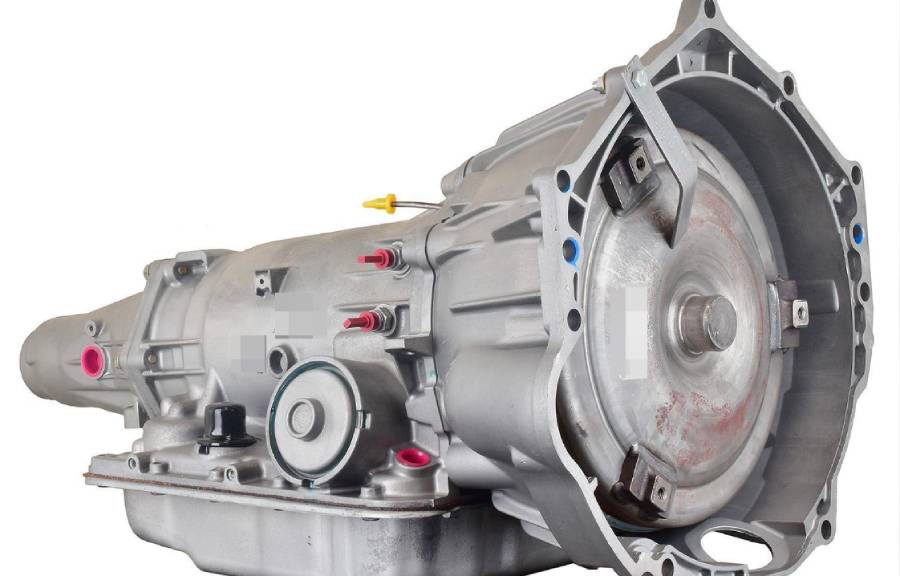
How Much Transmission Fluid Does a 4L60E Take?
The 4L60E transmission typically takes approximately 5 quarts (4.7 liters) of automatic transmission fluid for a pan drop and filter replacement, while a complete dry fill requires approximately 11–12 quarts (10.4–11.4 liters). The exact capacity depends on the transmission pan, torque converter, vehicle application, and amount of fluid remaining in the system.
The table below summarizes the approximate 4L60E transmission fluid capacity for three common service procedures.
| Service Type | Fluid Capacity (US Quarts) | Fluid Capacity (Liters) |
|---|---|---|
| Pan drop and filter replacement | Approximately 5 qt | 4.7 L |
| Transmission overhaul | Approximately 11–11.2 qt | 10.4–10.6 L |
| Complete dry fill | Approximately 11–12 qt | 10.4–11.4 L |
These figures are reference values rather than fixed refill requirements. A pan drop removes fluid from the transmission pan but leaves ATF inside the torque converter, valve body passages, transmission cooler, and cooler lines. A complete dry fill involves a substantially larger fluid volume because the transmission and associated components contain little or no remaining ATF.
For example, a 4L60E that requires approximately 5 quarts after a routine pan service should not automatically receive 11 quarts. Adding the full dry-fill quantity without accounting for retained fluid can overfill the transmission and interfere with its hydraulic operation.
Pan drop and filter replacement: A typical 4L60E pan service requires approximately 5 quarts of replacement ATF. The actual refill amount depends on how much fluid drains during pan removal and whether the transmission uses a factory shallow pan or a higher-capacity aftermarket pan. The correct procedure is to add fluid gradually, circulate it through the transmission, and verify the level under the specified operating conditions.
Transmission overhaul: A rebuilt 4L60E generally requires approximately 11–11.2 quarts when the transmission and associated fluid circuits have been substantially drained. However, the refill amount changes when the original torque converter or transmission cooler retains fluid. Rebuilders must account for these components before determining the final ATF quantity.
Complete dry fill: A fully drained 4L60E transmission system typically requires approximately 11–12 quarts, including the fluid distributed through the torque converter and cooling circuit. This quantity is most relevant when installing a rebuilt transmission, replacing a torque converter, or assembling a transmission system with drained components. The exact amount must be confirmed against the applicable service specifications.
The most reliable way to determine the correct 4L60E refill quantity is to combine the service-specific capacity reference with a final transmission fluid level check. Fluid capacity establishes the approximate amount needed, while the dipstick reading under the manufacturer’s specified conditions confirms whether the transmission contains the correct operating volume.
What Affects 4L60E Transmission Fluid Capacity?
Four main factors affect 4L60E transmission fluid capacity: transmission pan depth, torque converter size, vehicle configuration, and the amount of fluid retained after draining. These variables determine how much automatic transmission fluid (ATF) the transmission holds and how much replacement fluid is required during maintenance.
Transmission pan depth: The 4L60E uses different transmission pan configurations, including factory shallow pans and aftermarket deep pans. A deep transmission pan holds more ATF because its increased internal volume provides additional fluid storage below the valve body. For example, an aftermarket deep pan advertised with a 2-quart additional capacity increases the transmission’s total fluid volume by approximately 2 quarts compared with the pan it replaces. However, the exact increase depends on the pan’s dimensions and design. A deep pan also requires a compatible filter and pickup arrangement to maintain proper fluid supply.
Torque converter size: The torque converter stores a substantial portion of the transmission’s total fluid volume. Its internal capacity depends on converter diameter, internal construction, and design. A 4L60E equipped with a different torque converter may therefore have a different total dry-fill requirement. During a routine pan drop, most of the converter’s fluid remains inside because the converter is not directly drained when the transmission pan is removed. This explains why a standard pan service requires significantly less ATF than a complete dry fill.
Vehicle configuration: The 4L60E was installed in General Motors vehicles, including the Chevrolet Silverado, GMC Sierra, Chevrolet Tahoe, and Chevrolet Suburban. Although these vehicles use the same transmission family, their fluid requirements can differ because of transmission pan configurations, torque converter specifications, and cooling systems. For example, a truck equipped with an auxiliary transmission cooler has additional fluid passages compared with an otherwise similar vehicle without that cooler. The vehicle’s model year and factory service specifications should be checked before selecting a refill quantity.
Retained transmission fluid: The amount of ATF remaining inside the transmission after draining directly affects the required refill volume. Fluid stays in components such as the torque converter, valve body, internal hydraulic passages, transmission cooler, and cooler lines. Removing the transmission pan does not empty these components. By contrast, rebuilding the transmission or replacing the torque converter can remove a larger portion of the original fluid, increasing the amount needed during refilling.
The distinction between total system capacity and actual refill quantity is particularly important when servicing a 4L60E. Total capacity describes the fluid volume of the complete transmission system under specified conditions, while refill quantity represents the amount needed to restore the correct operating level after a particular service. Adding fluid according to the total capacity figure after a partial drain can cause overfilling, even when the published capacity itself is accurate.
For accurate servicing, identify the transmission pan configuration, confirm the vehicle-specific fluid specifications, and determine which components were drained or replaced. Add the appropriate initial quantity of ATF, then verify the final level using the manufacturer’s recommended temperature and dipstick-checking procedure.
How Much Transmission Fluid Does a 4L60E Torque Converter Hold?
A 4L60E torque converter typically holds approximately 2–4 quarts (1.9–3.8 liters) of automatic transmission fluid (ATF), depending on its diameter, internal design, and operating conditions. This is a general estimate rather than a universal converter specification. The torque converter’s fluid volume contributes to the transmission’s total system capacity and explains why a complete dry fill requires substantially more ATF than a routine pan drop.
The torque converter transfers engine power to the transmission through hydraulic fluid circulation. It contains three primary components: the impeller, turbine, and stator. As the engine rotates the impeller, transmission fluid transfers rotational energy to the turbine, allowing the transmission input shaft to turn. The converter also contains a lockup clutch in applicable 4L60E configurations, which reduces slippage during certain driving conditions.
During a standard transmission pan removal, most of the ATF inside the torque converter remains trapped because the converter is not directly drained. For example, removing approximately 5 quarts from the transmission pan does not mean the entire transmission system is empty. Fluid remains inside the converter, transmission cooler, cooler lines, and hydraulic passages. Consequently, adding the full dry-fill capacity after a pan drop would introduce more fluid than the transmission requires.
Replacing or rebuilding the torque converter changes the refill procedure because a replacement converter may contain little or no ATF. Transmission installers commonly add an initial quantity of compatible fluid to the converter before installation, following the converter manufacturer’s instructions. The converter must also be fully seated in the transmission before the transmission is attached to the engine to prevent damage to the front pump and related components.
Torque converter capacity should not be added separately to a published 4L60E total system capacity when that specification already includes the converter. Instead, use the applicable dry-fill or service-refill reference, add fluid in stages, and verify the final level under the manufacturer’s specified operating conditions.
What Type of Transmission Fluid Does a 4L60E Use?
The 4L60E transmission uses automatic transmission fluid meeting the applicable General Motors DEXRON specification, with DEXRON-III specified for many original applications and licensed DEXRON-VI approved as a replacement for earlier DEXRON fluids in applicable GM automatic transmissions. The correct ATF must provide suitable friction characteristics, hydraulic performance, oxidation resistance, and lubrication for the transmission’s internal components.
DEXRON-III was widely specified for 4L60E transmissions produced before the introduction of DEXRON-VI. It was designed to support hydraulic pressure control, torque converter operation, clutch engagement, and internal lubrication. However, GM discontinued the DEXRON-III licensing program, making the original specification different from a current licensed fluid product.
DEXRON-VI was introduced by General Motors for newer automatic transmission applications and is backward-compatible with many earlier GM automatic transmissions originally requiring DEXRON-III. It provides updated requirements for friction durability, viscosity stability, and oxidation resistance. For example, a 4L60E originally specified for DEXRON-III may be serviced with an appropriately licensed DEXRON-VI fluid when supported by GM’s service guidance.
Using an incorrect ATF specification can affect transmission operation because automatic transmission fluid serves as both a lubricant and a hydraulic control medium. Its friction properties influence clutch engagement and torque converter clutch operation, while its viscosity affects fluid flow and hydraulic response. Selecting fluid solely by brand name or price without checking its specification can therefore introduce compatibility problems.
Can You Use Dexron-VI in a 4L60E Transmission?
Yes, licensed DEXRON-VI automatic transmission fluid can be used in 4L60E transmissions originally specified for DEXRON-III under GM’s backward-compatibility guidance. DEXRON-VI was developed to meet updated General Motors transmission fluid performance requirements while supporting earlier compatible automatic transmissions.
DEXRON-VI has improved oxidation resistance and friction durability requirements compared with older DEXRON specifications. These characteristics help maintain consistent fluid performance during repeated heating and cooling cycles. The fluid also uses a different viscosity specification from older DEXRON-III formulations, so compatibility should be established through GM approval rather than viscosity comparisons alone.
For example, an older Chevrolet Silverado equipped with a 4L60E and originally requiring DEXRON-III can generally use licensed DEXRON-VI for a routine transmission fluid change. However, vehicle-specific service information should take priority, particularly when the transmission has been rebuilt with aftermarket components or modified for specialized use.
When purchasing transmission fluid, check the container for the appropriate DEXRON licensing or approval information. Products described only as suitable for DEXRON applications are not necessarily equivalent to officially licensed DEXRON-VI fluids. The correct fluid specification should be confirmed before filling the transmission, regardless of whether the service involves a pan drop, filter replacement, or complete rebuild.
How Do You Fill a 4L60E Transmission After a Fluid Change?
To fill a 4L60E transmission after a fluid change, add the correct automatic transmission fluid (ATF) through the transmission dipstick tube, circulate the fluid through the hydraulic system, and check the final level with the engine running at the specified operating temperature. A typical pan drop and filter replacement requires approximately 5 quarts (4.7 liters), although the actual refill quantity depends on how much fluid was drained.
Follow these six steps to refill a 4L60E transmission after replacing the fluid and filter.
1. Park the vehicle on a level surface. Apply the parking brake and secure the vehicle against movement. Confirm that the transmission pan, drain plug if equipped, and cooler line connections are properly installed before adding fluid.
2. Locate the transmission dipstick tube. The 4L60E typically uses a transmission fluid dipstick accessible from the engine compartment. Remove the dipstick and insert a clean funnel designed for automatic transmission fluid.
3. Add the initial ATF quantity. For a typical pan-and-filter service, begin with approximately 4 quarts (3.8 liters) of the specified ATF rather than immediately adding the entire estimated refill capacity. This leaves room for adjustment because some fluid remains inside the transmission and torque converter.
4. Start the engine and circulate the fluid. With the service brake firmly applied and the vehicle stationary, start the engine and allow it to idle. Move the gear selector slowly through the available gear positions, pausing briefly in each position before returning to Park. This allows transmission fluid to circulate through the hydraulic circuits.
5. Bring the transmission to the specified checking temperature. Allow the transmission to reach the temperature required by the vehicle’s service procedure. Transmission fluid expands as it warms, so a reading taken when the fluid is cold may differ from the reading at normal operating temperature.
6. Check and adjust the fluid level. With the vehicle level and the engine idling in Park, where specified by the applicable GM procedure, remove the dipstick, wipe it clean, reinsert it fully, and check the reading. Add small amounts of ATF until the level reaches the appropriate dipstick range. Avoid adding large quantities without rechecking.
The final fluid level is more important than matching an estimated refill quantity exactly. For example, a 4L60E that drains 4.5 quarts during a pan service may require less replacement fluid than another unit that drains 5 quarts. Adding fluid incrementally helps prevent overfilling while maintaining the correct hydraulic fluid supply.
This procedure applies to a routine fluid and filter service on a transmission that already contains fluid in its torque converter and cooler circuit. Filling a completely dry or rebuilt 4L60E requires a different initial fluid quantity and additional precautions specified by the transmission rebuilder or vehicle manufacturer.
How Do You Check the 4L60E Transmission Fluid Level?
To check the 4L60E transmission fluid level, park the vehicle on level ground, bring the transmission to the specified checking temperature, leave the engine idling in Park when required, and read the transmission dipstick after wiping and reinserting it. The fluid should fall within the appropriate temperature-marked range rather than above or below the specified level.
Most dipsticks used with 4L60E-equipped vehicles have temperature-related markings, commonly identified as COLD and HOT. The COLD range provides a preliminary reference during initial filling, while the HOT range is used to verify the fluid level at the specified operating temperature. The exact temperature requirements and dipstick markings vary by vehicle application, so the owner’s manual or factory service information should determine the checking conditions.
For example, a transmission showing a fluid level near the COLD mark immediately after startup should not automatically be filled to the HOT mark before the ATF reaches the required temperature. Doing so can produce an overfilled condition after the fluid expands. Similarly, a reading below the HOT range at the correct checking temperature indicates that additional fluid may be required, provided the measurement procedure has been followed correctly.
The fluid’s appearance can also provide useful maintenance information. Healthy ATF is generally red or reddish when new, although its color can darken during normal service. A burnt odor, visible metal particles, or significant contamination may indicate internal wear or overheating. Fluid color alone, however, does not establish whether the transmission is mechanically healthy.
Check the 4L60E fluid level again after a short drive and once the transmission reaches the specified operating temperature. Recheck for leaks around the transmission pan gasket, cooler lines, and related connections after servicing. A stable fluid level within the correct dipstick range confirms the refill quantity more reliably than a generic capacity estimate.
What Happens If You Overfill a 4L60E Transmission?
Overfilling a 4L60E transmission can cause fluid foaming, unstable hydraulic pressure, transmission overheating, and shifting problems. Excess automatic transmission fluid (ATF) may contact rotating internal components, introducing air into the fluid and reducing the hydraulic system’s ability to maintain consistent pressure. The severity of these effects depends on how far the fluid level exceeds the specified range.
Fluid aeration is one of the primary risks of excessive transmission fluid. When rotating components churn overfilled ATF, air bubbles can become suspended in the fluid. Unlike liquid ATF, air is compressible, which interferes with the hydraulic pressure required to apply transmission clutches and bands. This can contribute to delayed gear engagement, inconsistent shifts, and clutch slippage.
Excessive fluid can also increase internal churning and contribute to overheating. Aerated ATF transfers hydraulic force less consistently and may reduce effective lubrication and cooling. In severe cases, fluid may escape through the transmission vent, creating external leaks or fluid accumulation around the transmission housing.
Common symptoms of an overfilled 4L60E include erratic shifting, delayed engagement, foamy transmission fluid, and fluid leaking from the vent. These symptoms are not exclusive to overfilling and can also result from other transmission faults.
To correct an overfilled 4L60E, verify the fluid level using the vehicle manufacturer’s specified temperature and dipstick procedure. Remove the excess ATF using suitable fluid extraction equipment or an appropriate service method, then recheck the level. Avoid operating the transmission under heavy loads until the fluid level is corrected.
Read more: How to Reset Transmission Control Module Without Scanner
What Happens If a 4L60E Transmission Is Low on Fluid?
Low transmission fluid in a 4L60E can cause delayed gear engagement, transmission slipping, overheating, and accelerated clutch wear. The transmission depends on a continuous supply of ATF to generate hydraulic pressure, lubricate internal components, and remove heat. When the fluid level drops below the required operating range, the transmission pump may draw air instead of maintaining a consistent fluid supply.
Insufficient hydraulic pressure directly affects gear engagement. The 4L60E uses hydraulically applied clutch packs and bands to control its four forward gear ratios and reverse operation. When the available pressure is inadequate, friction components may fail to engage firmly, allowing excessive slippage. For example, a driver may notice an engine speed increase without a corresponding increase in vehicle speed during acceleration.
Low ATF levels can also interfere with transmission cooling. Automatic transmission fluid absorbs heat from the torque converter, clutch assemblies, and other internal components before circulating through the transmission cooling system. An insufficient fluid supply reduces the system’s ability to maintain normal lubrication and heat transfer, increasing the risk of overheating and friction material deterioration.
Four warning signs of low 4L60E transmission fluid are delayed engagement, gear slipping, abnormal transmission temperatures, and inconsistent shifting. A delayed response when selecting Drive or Reverse can indicate inadequate hydraulic pressure, while slipping during acceleration may suggest that clutch components are not receiving sufficient apply pressure. However, these symptoms can also result from worn clutches, valve body problems, or other mechanical and electronic faults.
Fluid loss commonly occurs through damaged transmission pan gaskets, worn seals, loose cooler line connections, or leaking transmission cooling components. Because the 4L60E does not normally consume ATF during operation, a repeatedly declining fluid level indicates a leak or another condition requiring inspection.
To address a low-fluid condition, check the ATF level under the specified operating conditions and add the correct fluid in small increments. Inspect the transmission pan, cooler lines, seals, and surrounding components for leakage. If slipping or delayed engagement continues after correcting the fluid level, further diagnosis is necessary to determine whether internal transmission damage has occurred.
How Often Should You Change 4L60E Transmission Fluid?
The 4L60E transmission fluid change interval depends on the vehicle’s model year, maintenance schedule, and driving conditions. Some GM maintenance schedules specify transmission fluid and filter replacement at approximately 50,000 miles (80,000 km) under severe operating conditions and 100,000 miles (160,000 km) under normal conditions. These intervals are application-specific rather than universal requirements for every 4L60E-equipped vehicle.
Transmission fluid deteriorates through repeated heating, mechanical shear, and contamination from internal friction components. The 4L60E relies on ATF to operate its hydraulic control system, lubricate planetary gear assemblies, engage clutch packs, and transfer heat away from the torque converter. As fluid ages, oxidation and contamination can reduce its ability to maintain consistent lubrication and friction performance.
Driving conditions directly influence how quickly transmission fluid deteriorates. Highway driving with moderate loads generally produces less transmission stress than frequent stop-and-go traffic, heavy towing, or repeated operation at elevated temperatures. For example, a Chevrolet Silverado used primarily for commuting may follow a different maintenance schedule from a similar truck regularly towing a trailer near its rated capacity.
Transmission fluid and filter replacement should follow the maintenance schedule specified for the vehicle rather than a single mileage recommendation based on the 4L60E transmission model. The owner’s manual identifies the applicable service interval and defines the operating conditions that qualify as severe service.
Regular fluid level inspections are also important between scheduled changes. A transmission with leaking cooler lines, a damaged pan gasket, or deteriorated seals can lose ATF before reaching its next maintenance interval. Checking for leaks and monitoring shift quality helps identify problems that a routine fluid change alone may not resolve.
Does Towing Affect 4L60E Transmission Fluid Change Intervals?
Yes, frequent towing can shorten the recommended 4L60E transmission fluid change interval because towing increases transmission load and operating temperature. Many GM maintenance schedules classify frequent trailer towing as severe service, requiring more frequent ATF and filter replacement than normal driving.
Towing increases the torque transmitted through the transmission, particularly during acceleration, hill climbing, and low-speed operation. When the torque converter operates without its lockup clutch fully engaged, the difference between impeller and turbine speeds generates additional heat in the transmission fluid. Sustained high temperatures accelerate ATF oxidation and can reduce the durability of internal seals and friction materials.
For example, a GMC Sierra equipped with a 4L60E and used regularly to tow a heavy trailer experiences greater transmission heat exposure than the same vehicle operating without a trailer under comparable road conditions. Repeated towing in mountainous terrain or high ambient temperatures further increases the transmission’s cooling requirements.
A properly functioning transmission cooler helps control ATF temperature by transferring heat from the fluid to the surrounding air or engine cooling system, depending on the vehicle’s configuration. However, an auxiliary transmission cooler does not automatically extend the manufacturer’s recommended fluid change interval. Cooler performance depends on airflow, cooling capacity, vehicle load, and the condition of the transmission cooling circuit.
Owners who regularly tow trailers should follow the severe-service maintenance schedule specified in their vehicle’s owner’s manual. They should also inspect the transmission for leaks, verify the fluid level using the correct procedure, and investigate persistent overheating or abnormal shifting rather than relying on fluid replacement to correct an existing mechanical problem.